
Reviewed · SAMURAI EXPERIENCES
Tokyo: Samurai Experience with a real sword
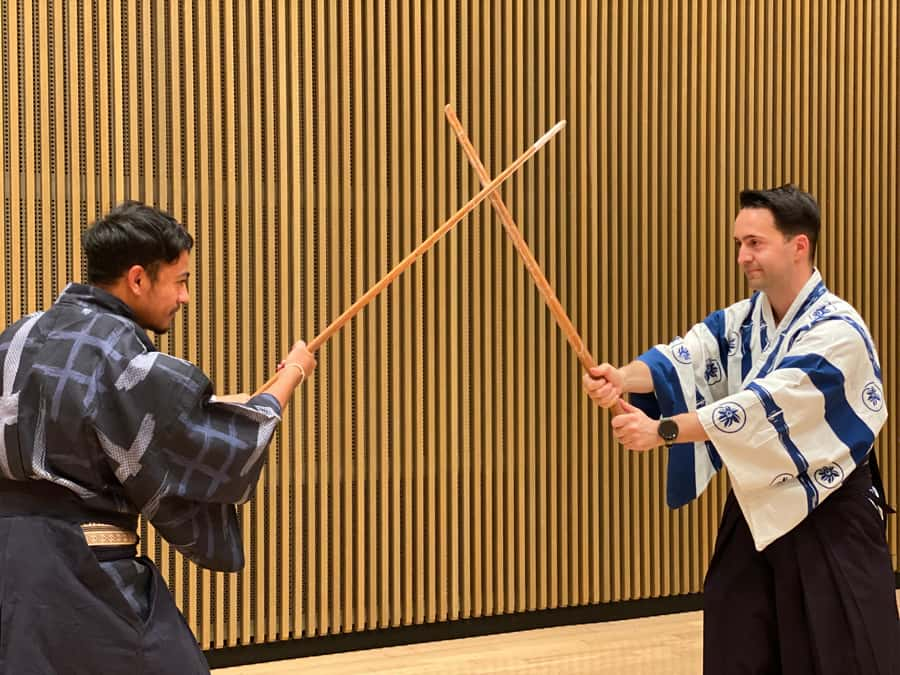
A real sword, a traditional kimono, and two hours of instruction make this one of Tokyo’s more unusual cultural activities. You learn how to draw and sheath a katana, practice basic forms, and take part in a controlled sword-to-sword fight before trying to cut objects with a genuine samurai sword.
I like the strong sense of ceremony, especially the seated bowing etiquette called zarei, and I like that the experience gives you a video and photos, not just a quick costume snapshot. The main caution is that this is a short introduction, not a full martial arts course, and the cutting portion is limited to participants aged 12 and above.
Key points at a glance
- Real sword handling: Learn how to hold, draw, sheath, and move with a genuine samurai sword under professional instruction.
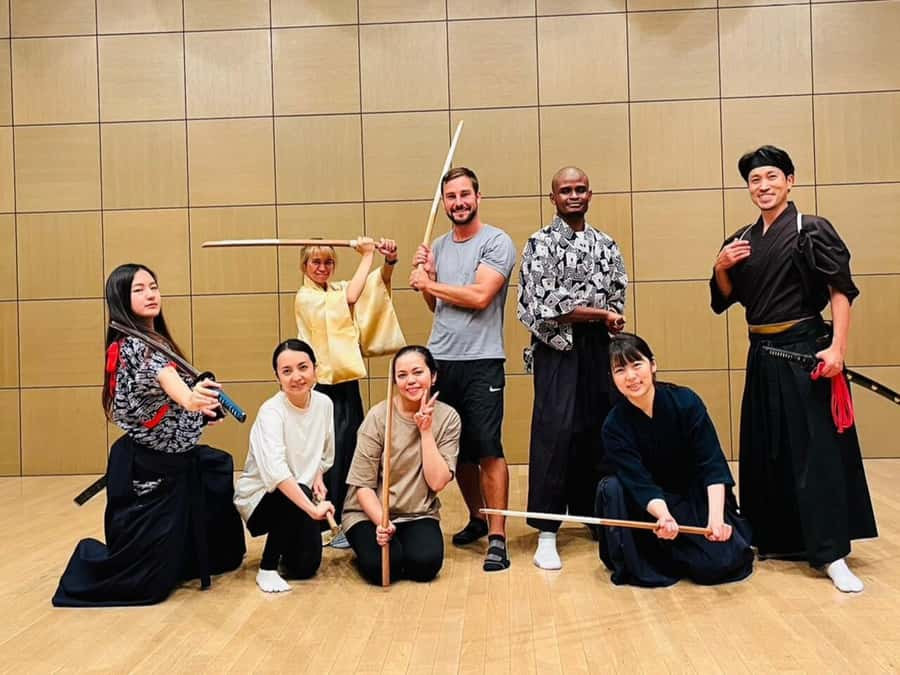
- Full samurai clothing: Change into a kimono and hakama, with height and weight used to help prepare your outfit.
- Shiden-ryu demonstration: Watch trained swordsmanship, including iai techniques and formal movements.
- Controlled combat practice: Take part in uchikomi, a structured sword-to-sword exercise.
- Recorded keepsake: Receive photographs and a video of the session, including the cutting activity when available.
- Two-hour format: The program includes dressing, instruction, combat practice, recording, photos, changing, and a formal close.
The appeal of handling a real samurai sword
Many Tokyo cultural activities let you wear a costume and pose for a picture. This one adds actual instruction. You are shown how to handle a sword properly, how to move through basic samurai forms, and how to treat the weapon with care.
That difference matters. The session is not simply a photo opportunity with a sword placed in your hand. The opening lesson covers etiquette and proper behavior, including zarei, the seated bow used in formal settings. This gives the activity a calm structure before the faster sword exercises begin.
You should still keep your expectations in check. Two hours is enough for a memorable introduction, but not enough to master iai, the art of drawing the sword, or any wider school of Japanese swordsmanship. Think of it as a guided first lesson with theatrical appeal and real physical practice.
The price is $102 per person. That is not a budget activity, but the fee includes the instructor, English-speaking staff, venue, experience, photography, and the recorded keepsakes. Compared with a short costume rental or a basic studio photo session, you receive far more instruction and a fuller afternoon activity.
More Samurai Experiences in Tokyo
- Tokyo: Samurai Restaurant Show Ticket with 2 Drinks
★ 4.5 · 1,307 reviews - Tokyo: Samurai Ninja Museum Guided tour and Experience
★ 4.6 · 1,010 reviews - Tokyo: Samurai Sword & Archery Class from Samurai Descendant
★ 5.0 · 603 reviews
Meeting the staff and getting into kimono and hakama
You begin at the designated meeting point after leaving the station ticket gates. Use the west exit, go down to ground level, and look for the McDonald’s. Staff will be holding a meeting board there.
Arrive 20 minutes early. The meeting location can change within Tokyo depending on the date, so check the final instructions carefully. The staff then take you to the training center or activity venue.
The first practical step is changing into traditional clothing. You wear a kimono and hakama, the pleated garment associated with formal Japanese dress and martial arts. You are asked to provide your height and weight on the reservation form, which helps the staff prepare suitable clothing.
Bring comfortable clothes for wearing underneath and a change of clothes for afterward. The outfit is part of the experience, but it can also make movement feel unfamiliar. You will want to avoid anything bulky or difficult to change out of.
This is not a wheelchair-accessible activity, and it is not suitable for pregnant women. You should also bring water in a bottle with a secure lid. Loose drinks are a bad match for a room where swords and formal clothing are in use.
Learning zarei, the etiquette of the samurai
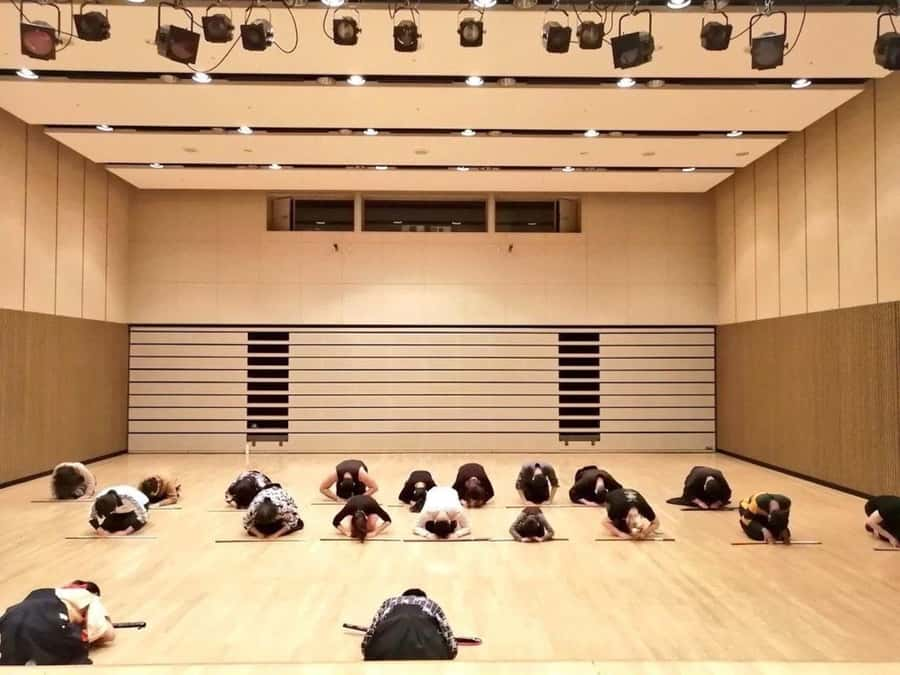
Before anyone begins swinging a sword, you receive an introduction to samurai etiquette. Zarei, the seated bow, is included near the beginning and again toward the end.
This may sound like a small detail, but it helps explain the difference between a sword as a weapon and a sword as part of a disciplined tradition. The bowing, posture, and careful movements create a clear boundary between casual play and formal practice.
The instructor also explains basic sword etiquette and how to handle the weapon safely. Pay close attention here. The lesson is likely to feel slower than the combat portion, but it gives meaning to everything that follows.
English-speaking staff are provided. One account of the session names Hiryu as an especially engaging presence, with strong knowledge of samurai history and philosophy. English ability may vary among the hosts, and Google Translate has been useful during parts of the experience. Demonstrations and repetition help, but this is worth keeping in mind if you want detailed technical explanations in English.
Watching Shiden-ryu iai and swordsmanship
The demonstration is one of the most valuable parts of the session. You watch Shiden-ryu swordsmanship and iai, including the controlled act of drawing and sheathing a katana.
I like this section because it lets you see the precision before you are asked to copy basic movements. A sword draw is not a wild flourish. It involves posture, timing, hand position, and careful control of the blade.
The demonstration also gives you a useful reference point. You are not expected to move like a trained practitioner after one lesson, but you can see why the art takes years to refine. The instructor then breaks the movements into simpler forms for you to practice.
The activity is designed for participation, not silent observation. You learn basic forms, footwork, and sword handling before moving into the more active exercises. If you have never used a sword, the lesson gives you a manageable way to start.
Same trip, a completely different kind of day:
- 1-Day Tokyo Bus Tour
★ 5.0 · 14,250 reviews - Tokyo: TOKYO SKYTREE® Admission ticket
★ 4.5 · 11,192 reviews - Tokyo: teamLab Planets TOKYO Digital Art Museum Entry Ticket
★ 4.6 · 9,779 reviews - Tokyo: Sumo Show Experience with Chicken Hot Pot and a Photo
★ 4.8 · 6,678 reviews
Taking part in uchikomi, the sword-to-sword exercise
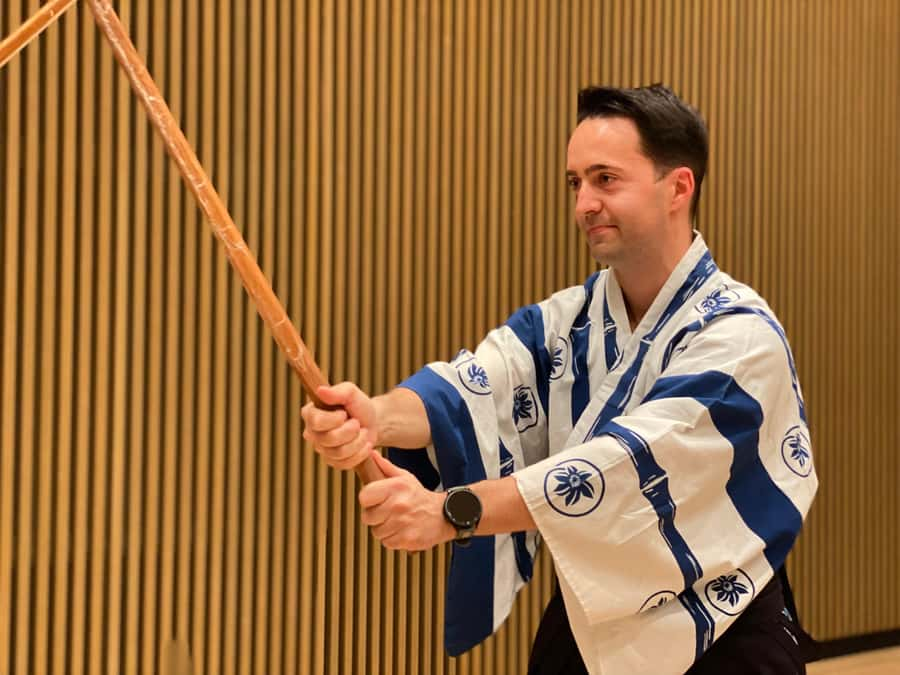
The combat section is called uchikomi. It is a structured sword-to-sword activity rather than an uncontrolled fight.
That distinction matters. You are not being sent into a free-for-all with a sharp blade. The instructor provides direction and teaches the movements used in the exercise. Follow the pace given to you, keep your attention on the instructions, and treat the practice as a martial arts lesson rather than a stage battle.
This is likely to be the most exciting part for families, couples, and friends who want to do something together. You get a direct physical task instead of watching a demonstration from the sidelines.
At the same time, anyone expecting a long duel may find the combat portion brief. The two-hour schedule must also allow time for dressing, etiquette, instruction, recording, cutting, photos, and changing clothes. The program gives you several different elements rather than one extended sword fight.
Cutting objects with a genuine sword
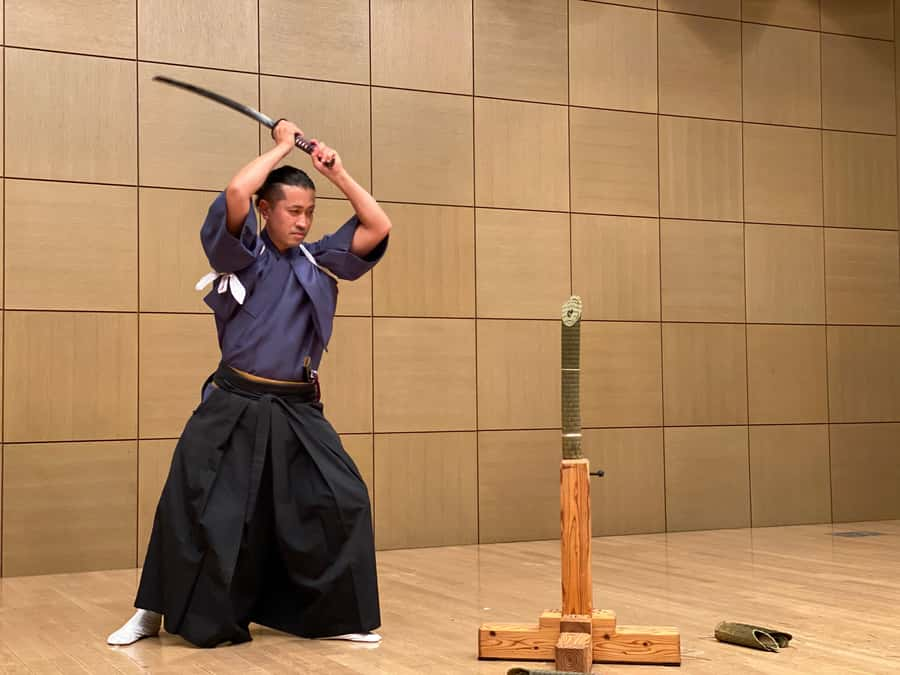
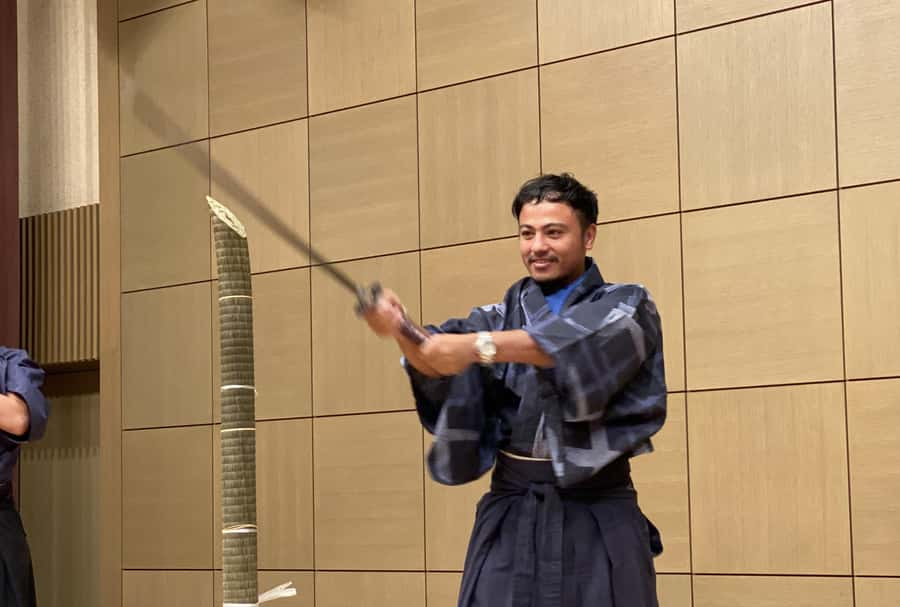
The cutting activity brings the session to its most memorable point. You use a real samurai sword to cut objects while the action is recorded on video.
This is available to participants aged 12 and above. Younger children may still be able to take part in other parts of the experience, but the provided information specifically limits real-sword cutting to those 12 and older.
The instructor’s guidance is especially important here. Do not treat this as a chance to test your strength. The point is controlled movement, correct form, and following directions. The video gives you a record of the attempt, including the moment when the blade meets the target.
Because the activity uses a genuine sword, the tone is more serious than a foam-sword performance. You should be comfortable listening closely and staying patient. If you want only a quick photo in costume, this program may feel more involved than necessary. If you want a hands-on introduction, the cutting section is a major reason to book.
Photos, video, and the final formal close
The experience includes photography and a video of your samurai session. The recording is particularly useful because the action happens quickly. You may remember the feeling of the sword and the clothing, but a video lets you see your posture, movements, and cutting attempt afterward.
There is also a commemorative photo session. This gives you the traditional portrait element without making it the whole activity.
The program closes with another zarei, followed by changing clothes and returning to the meeting point. The formal ending helps the session feel complete rather than like a costume rental that simply stops when the clock runs out.
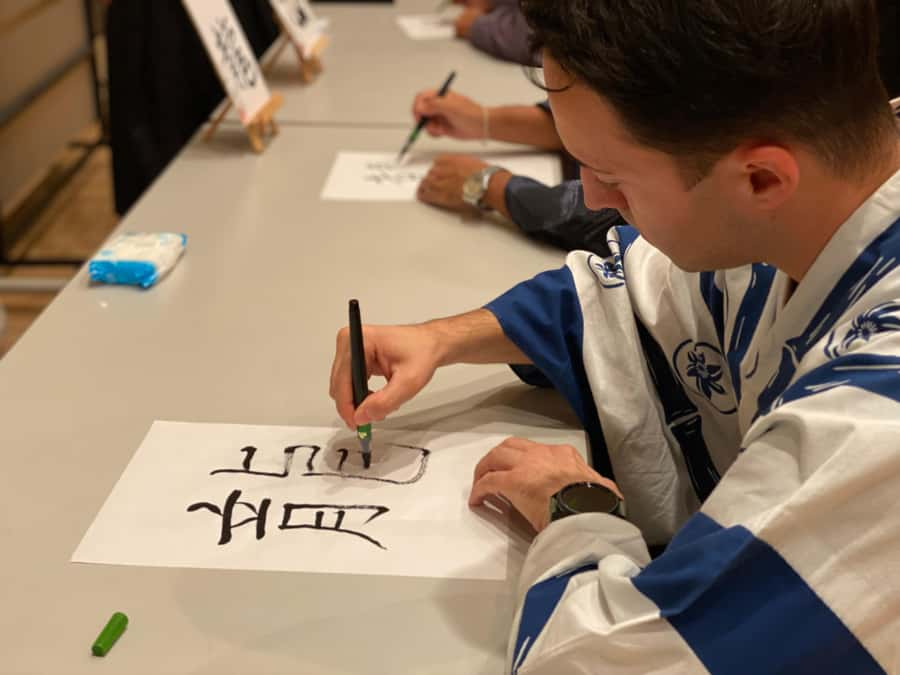
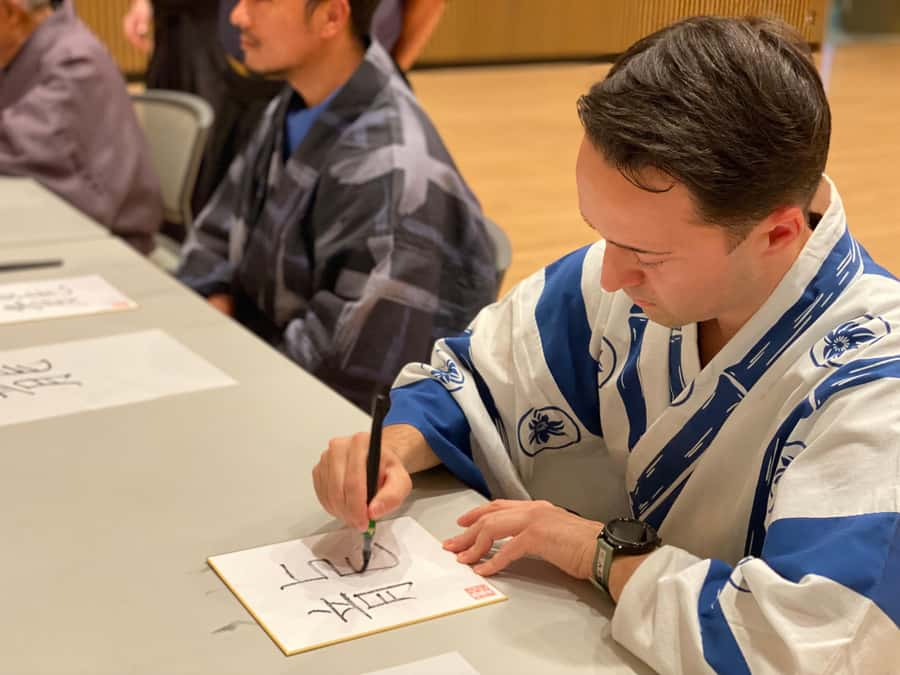
Some sessions have also included calligraphy and a small meal, but these extras are not listed as standard parts of the activity details. I would not book this expecting food or calligraphy every time. Treat them as possible additions, not guaranteed features.
How the two hours are likely to feel
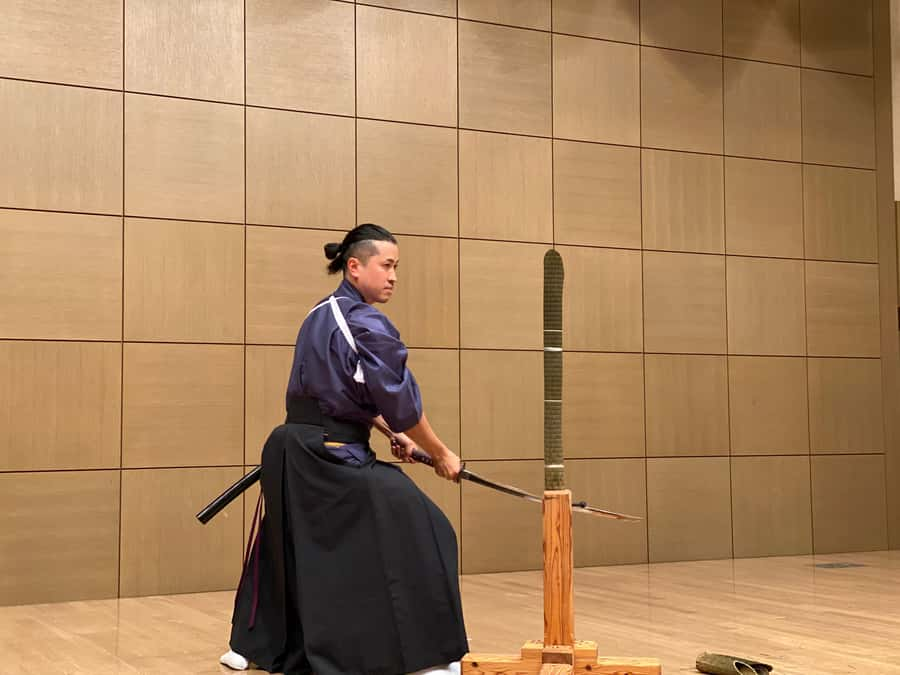
The schedule has several stages packed into a short period:
- Meeting staff and traveling to the venue
- Receiving and changing into kimono and hakama
- Learning samurai etiquette and zarei
- Practicing sword handling, forms, and movement
- Watching the Shiden-ryu demonstration
- Taking part in uchikomi
- Recording the sword-cutting activity
- Taking commemorative photos
- Changing clothes and ending at the meeting point
The result is varied. You are not repeating one drill for two hours, and you are not spending the whole time posing. The tradeoff is that no single part can receive extensive instruction.
I would wear comfortable clothes, arrive early, and keep your schedule clear around the two-hour duration. The listed duration covers the activity itself, while the meeting transfer and changing process can affect how much time you spend away from your planned sightseeing.
Is $102 a fair price?
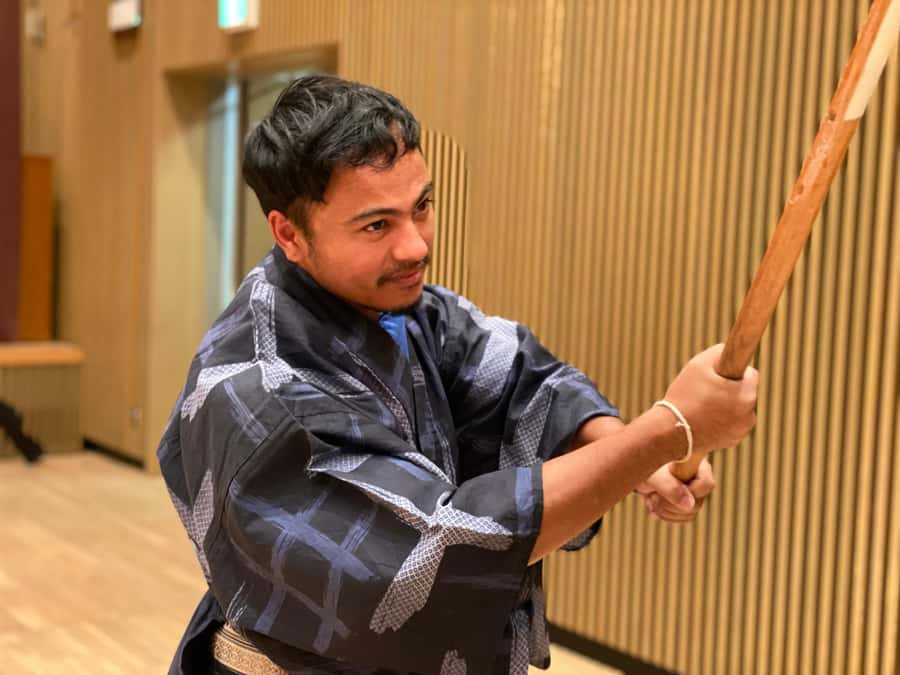
At $102, this belongs in the midrange for a special Tokyo activity. The value depends on what you want from a cultural experience.
You receive professional coaching, English-speaking support, the venue, the full session, photography, and a video souvenir. You also get access to activities that are difficult to arrange independently, especially handling a genuine sword and taking part in a supervised cutting exercise.
The strongest value comes from the combination. A kimono rental alone would not provide sword instruction. A museum visit would explain samurai culture but would not let you practice the movements. A martial arts class might offer instruction but not the costume, video, formal photo session, and cutting activity.
The weaker value is time. Two hours passes quickly once changing and introductions are included. If you are already an experienced martial artist looking for advanced technical training, this will probably feel introductory. If you are visiting Tokyo and want one memorable cultural activity with a physical element, the price is easier to justify.
Who will enjoy this most
I would recommend it to adults, teenagers, couples, families with older children, and anyone who prefers doing something over simply looking at exhibits. It works especially well for people who have an interest in samurai films, Japanese martial arts, traditional clothing, or photography.
The cutting portion makes the minimum age important. Participants aged 12 and above can use the real sword for cutting, while the full session may not suit very young children because it involves concentration, formal behavior, and careful handling.
You should also be comfortable wearing traditional clothing and following instructions. The activity is not ideal for pregnant women, wheelchair users, or anyone who wants a completely relaxed, no-effort photo experience.
Practical advice before booking
Give yourself extra time to reach the meeting point and arrive 20 minutes before the scheduled start. The west exit and McDonald’s directions apply to the stated meeting arrangement, but the location may change within Tokyo on your date.
Enter your height and weight accurately on the reservation form. Bring comfortable clothing, a change of clothes, and a drink with a secure lid. Smoking is not allowed, and alcoholic drinks are not allowed in the vehicle.
Cancellation is free up to 14 days before the activity for a full refund. That generous cutoff is useful when Tokyo plans are still changing, but check the exact booking terms before you commit.
Should you book this samurai experience?
Book it if you want more than a costume photo. The best parts are the careful sword-handling lesson, the Shiden-ryu demonstration, the formal etiquette, and the chance to use a genuine sword under supervision. The video and photos add lasting value.
Skip it if you want advanced sword training, a long combat session, or a fully accessible activity. You should also avoid booking if you dislike structured instruction or cannot arrive early at the meeting point.
For most visitors, this is a memorable two-hour introduction to samurai practice, with enough ceremony to feel meaningful and enough action to keep it lively. At $102, it is a fair splurge for a hands-on Tokyo experience that gives you something tangible to take home.
FAQ
How long does the samurai experience last?
The activity lasts two hours. The session includes dressing, etiquette, sword instruction, demonstration, combat practice, recording, cutting, photos, changing clothes, and the formal conclusion.
Where do I meet the staff?
After exiting the station ticket gates, use the west exit and go down to ground level, where you will find McDonald’s. Meet the staff there while they hold a meeting board. The location may change within Tokyo depending on the date.
How early should I arrive?
Arrive 20 minutes before the scheduled meeting time.
Is the experience conducted in English?
Yes. English-speaking staff and an English-speaking instructor are provided. English ability may vary among individual hosts, and translation tools may be useful during some parts of the session.
Can I use a real sword during the activity?
The experience includes handling a genuine samurai sword. Cutting objects with a real sword is available to participants aged 12 and above.
What should I bring?
Bring comfortable clothing, a change of clothes, and water in a bottle with a secure lid.
Do I receive photos or video?
Yes. The experience includes a commemorative photo session, photography, and a video of the samurai experience. The cutting activity can also be recorded.
Is the activity suitable for wheelchair users or pregnant women?
No. The activity is not suitable for wheelchair users or pregnant women.
Can I cancel for a refund?
You can cancel up to 14 days in advance for a full refund.
Just added around Tokyo
- Kawagoe Japanese Food Tour : Unagi Kaiseki and Sake near Tokyo★ 5.0 · 30 reviews
- Kawagoe 4hr Private Tour with Licensed Guide (Kawagoe Dep)★ 5.0 · 13 reviews
- Little EDO Sushi Making workshop in Kawagoe★ 5.0 · 18 reviews
- 【R34】Tokyo:Private Daikoku tour in Modified R34★ 4.9 · 92 reviews
- :Tokyo,Shibuya/ Pro Photography in Kimono / English-Friendly★ 5.0 · 26 reviews
- Tokyo:Celebrate Unique Japanese New Year Tradition Festivity★ 3.9 · 20 reviews
- Tokyo: Allstar Food Tour★ 4.7 · 29 reviews
- Tokyo: West-Side Cycling and Food Tour with Guide★ 5.0 · 37 reviews
Samurai Experiences, compared.

Browse the lists this tour appears in