
Reviewed · SAMURAI EXPERIENCES
Tokyo: Samurai Adventure! Authentic Sword Experience
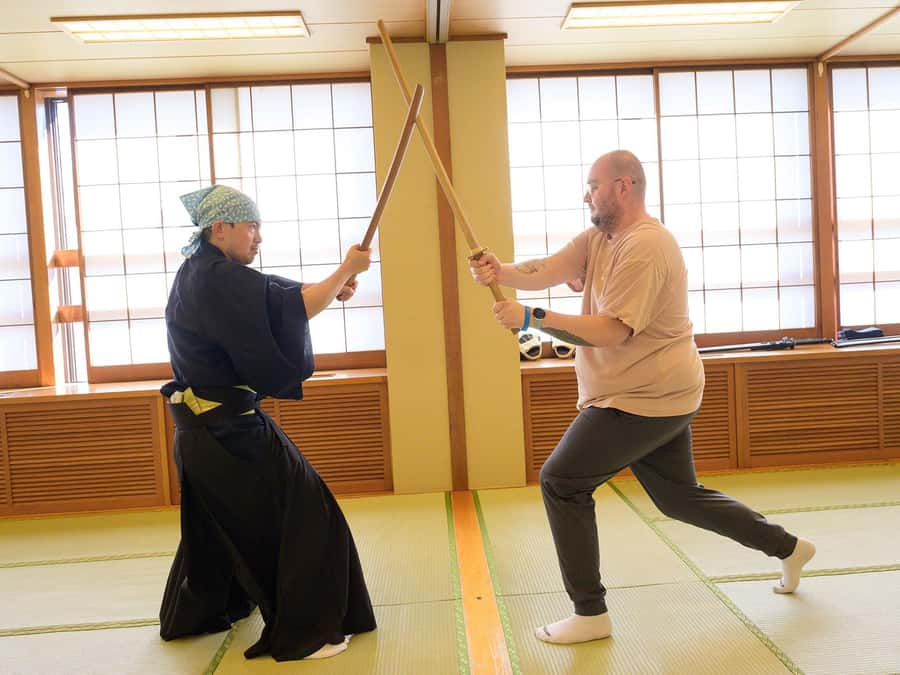
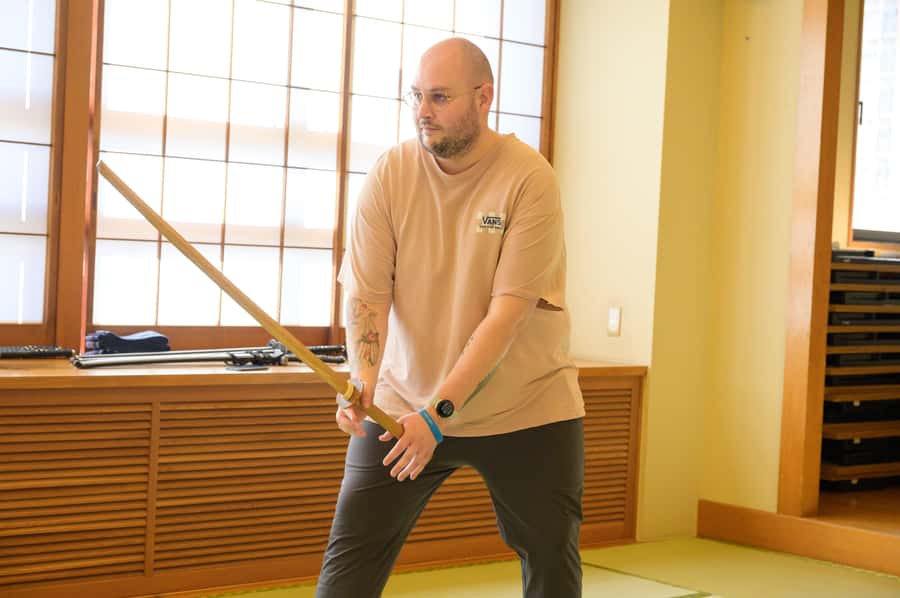
The most interesting part of this Tokyo experience is that you do not simply watch a samurai show. You learn the basic movements yourself, from stance and grip to controlled strikes, then practice with a professional action actor using a wooden sword. Dai and Kume guide the session in Japanese and English, keeping it active but safe.
I like the mix of live performance and hands-on practice, plus the chance to join a public class with Japanese students training for action work. The price, $24 per person, is also easy to justify for an activity that includes instruction, demonstrations, equipment, and photos. The main consideration is that this is a short introduction, not formal swordsmanship training, and it may not suit anyone with back problems, vertigo, a medical condition, or limited mobility.
Key points to know before you book
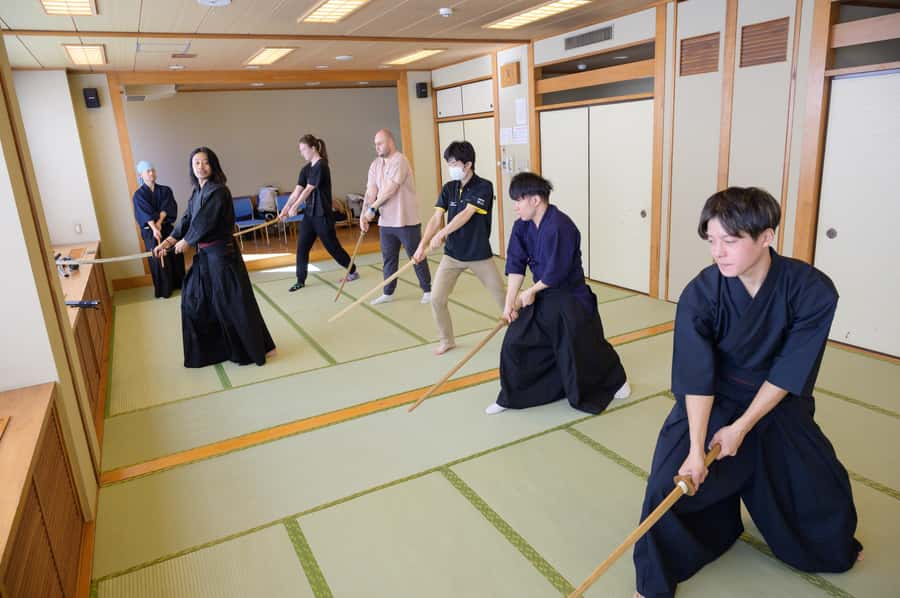
- You practice with wooden swords: Learn grip, posture, basic swings, defensive movements, and controlled paired drills.
- Dai and Kume lead the session: Both are professional action actors who demonstrate the movements and help you correct your technique.
- Public and private formats are available: The public class may include Japanese actors in training, while a private class can be adjusted to your level and goals.
- The activity is close to Tokyo Station, Ginza, and Tsukiji: Search Google Maps for Samurai Experience Photo Studio ICHI.
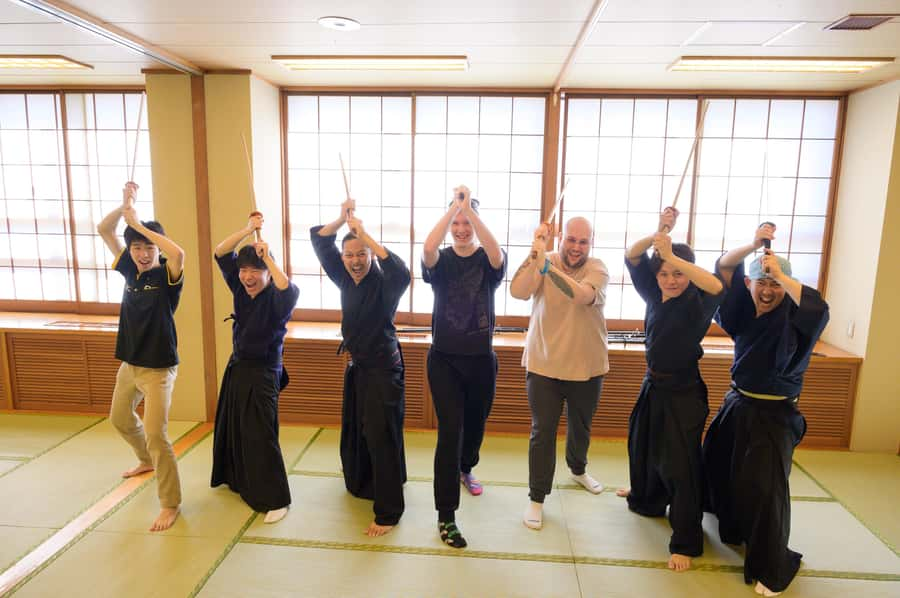
- Photos finish the experience: You can pose with the samurai after the lesson, with costume hire available as an option.
- Come ready to move: Wear comfortable clothes and closed-toe shoes, and arrive 15 minutes early.
Learning samurai movement instead of just watching a show
Many Tokyo cultural activities put you behind a rope and ask you to take pictures. This one gets you on the practice floor. You watch trained action actors work, then copy the movements under their direction.
That difference matters. A sword can look simple in a display case, but handling one correctly involves posture, balance, hand position, timing, and controlled movement. You will not be handed a sharp blade or asked to fight for real. The lesson uses wooden practice swords, and the focus is on learning a safe version of the movements used in samurai action scenes.
I like that the session treats the physical work as part of the lesson. You start with warm-ups, then move through basic positions and sword handling. The class gradually builds toward paired practice, so you get a clear sense of how a choreographed fight is put together.
The instructors are action actors rather than historical reenactors or competitive swordsmen in the information provided. That makes the experience especially useful if you are curious about film combat, stage movement, or the discipline behind a dramatic sword scene.
More Samurai Experiences in Tokyo
- Tokyo: Samurai Restaurant Show Ticket with 2 Drinks
★ 4.5 · 1,307 reviews - Tokyo: Samurai Ninja Museum Guided tour and Experience
★ 4.6 · 1,010 reviews - Tokyo: Samurai Sword & Archery Class from Samurai Descendant
★ 5.0 · 603 reviews
What happens at Samurai Experience Photo Studio ICHI
The meeting point is listed on Google Maps as Samurai Experience Photo Studio ICHI. The activity ends at the same meeting point, which keeps the plan simple. It is located within easy reach of Tokyo Station, Ginza, and Tsukiji, so you can fit the lesson into a day of sightseeing in central Tokyo.
Allow time to arrive 15 minutes early. You may need to check in, prepare, and get settled before the physical work begins. Comfortable clothes and closed-toe shoes are the sensible choice. High heels are not allowed, and loose or restrictive clothing could make the movements harder, so dress for easy movement.
The session begins with an introduction to samurai history and culture. This part is brief in the private format, but it gives the physical exercises some context. You learn that the activity is not only about swinging a sword for a photograph. It is about posture, form, discipline, and the controlled movements used in performance.
A warm-up follows. This helps prepare you for the stance changes, arm movements, and swings ahead. The warm-up also gives you a chance to see how the instructors communicate and how much physical effort the lesson will require.
Grip, stance, and the first wooden-sword drills
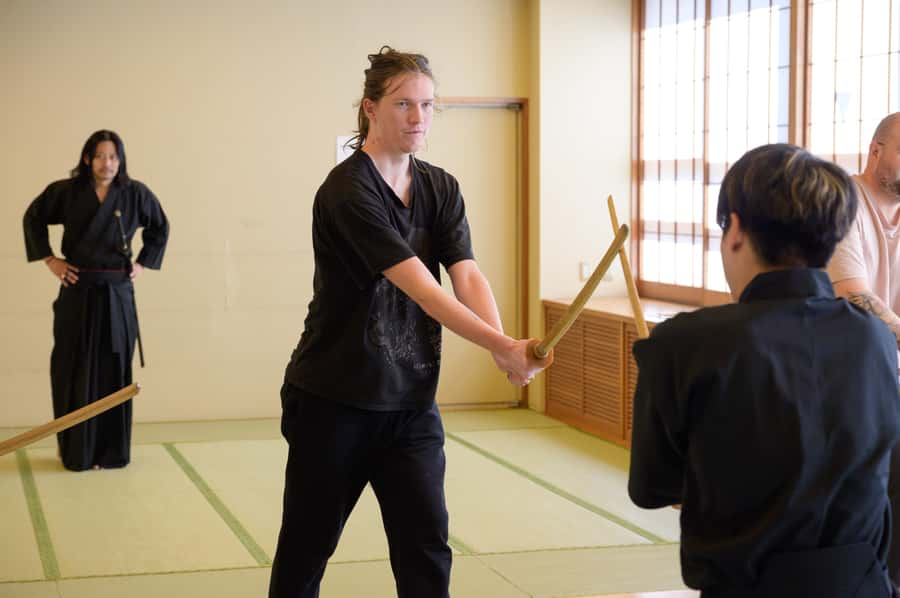
The first technical section covers the basics: how to grip the sword, how to hold it, how to stand, and how to swing. These details can feel surprisingly precise. A small change in hand position or body alignment changes the look of the movement.
You practice with wooden swords supplied at the workshop. The equipment keeps the activity suitable for beginners and lets the instructors focus on movement rather than danger. The lesson does not involve actual sword fighting, and the controlled pace makes it easier for you to follow along.
The instruction is hands-on. Dai and Kume demonstrate a movement, then guide you through it. If you have never handled a practice sword before, that is fine. Beginners are welcome, and the teaching is designed to introduce the basic forms gradually.
This part may feel more like a physical acting class than a martial arts lesson. That is a useful distinction to keep in mind. You are learning how samurai movement is performed and presented, not earning a rank or receiving a complete martial arts education in one session.
Paired practice with a professional action actor
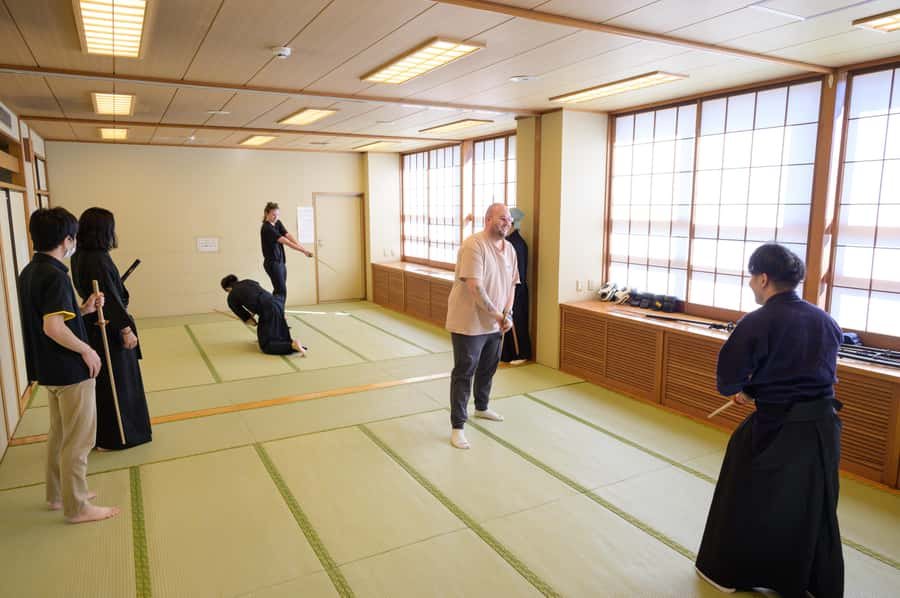
Once you have worked through the basic movements, you practice in pairs with a professional samurai action actor. This is the moment when the separate exercises begin to look like a scene from a movie.
The practice remains controlled. You are not engaging in a real sword fight, and the wooden swords are used for safe training. The value comes from learning timing and sequence. You see how one movement leads into another, how an opponent responds, and how the actors create drama without losing control.
Dai and Kume are described as warm, patient instructors who offer corrections and practical tips. That matters here because paired practice can feel awkward at first. A good instructor helps you relax, keeps the sequence clear, and makes sure the activity remains fun rather than intimidating.
The session can work well for families and mixed-age groups. One three-generation group found the activity memorable, and the class can also suit couples or solo visitors. You should still consider the physical demands before booking, since the activity is not recommended for pregnant women or people with back problems, vertigo, pre-existing medical conditions, or mobility limitations.
Same trip, a completely different kind of day:
- 1-Day Tokyo Bus Tour
★ 5.0 · 14,250 reviews - Tokyo: TOKYO SKYTREE® Admission ticket
★ 4.5 · 11,192 reviews - Tokyo: teamLab Planets TOKYO Digital Art Museum Entry Ticket
★ 4.6 · 9,779 reviews - Tokyo: Sumo Show Experience with Chicken Hot Pot and a Photo
★ 4.8 · 6,678 reviews
Watching the samurai demonstration up close
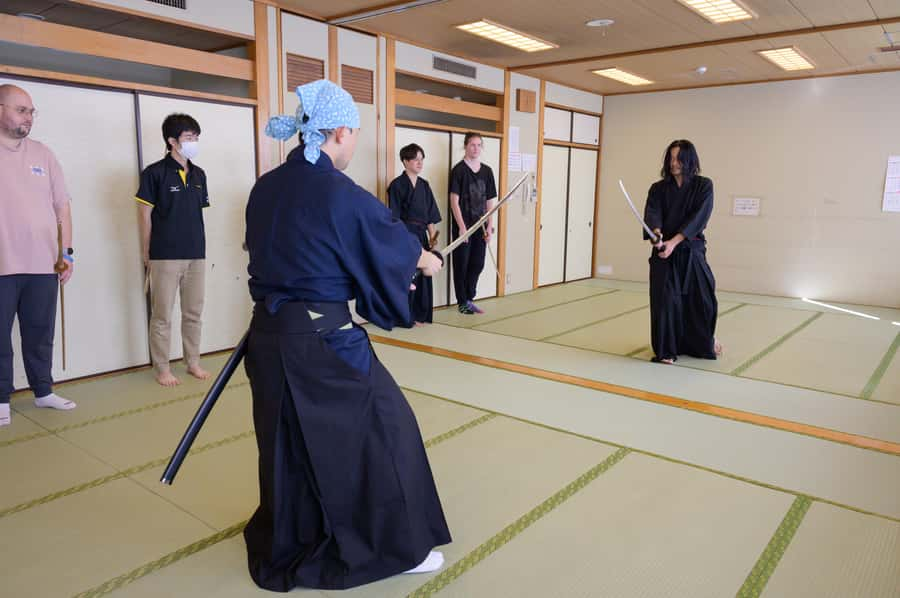
The live demonstration is one of the strongest parts of the experience. After you have tried the movements yourself, you can watch the professionals perform them with speed, precision, and control.
Seeing the demonstration after your own practice changes how you watch it. A fast sword movement may look effortless, but you will already understand the basic stance, grip, and body position behind it. You can notice the timing and control rather than seeing only a blur of action.
This is also a good moment to appreciate the difference between your beginner movements and professional performance. The instructors are action actors, so they know how to make a sequence clear and dramatic. They can show you what the finished movement should look like, while keeping the lesson accessible to people with no previous experience.
If you are unsure about joining the physical part, simply observing can still be enjoyable. The activity information specifically allows for this, although the best value comes from taking part in at least some of the basic practice if you are able.
Public class or private lesson?
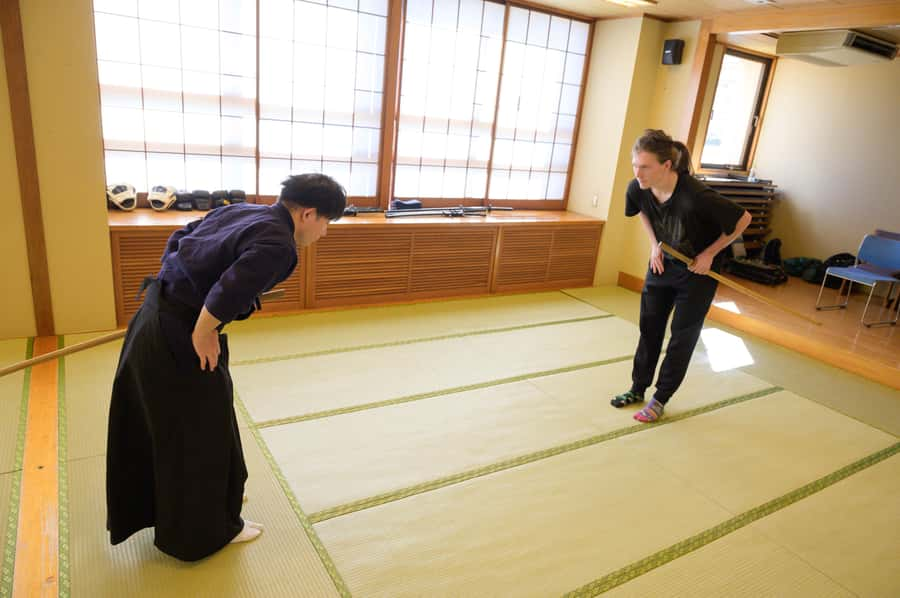
You can choose between a public course and a private course. The public class places you alongside aspiring Japanese actors who are learning samurai action. That gives the session a more social feel and lets you see how local students approach the same training.
I would choose the public course if you enjoy meeting people and want a livelier class setting. You may practice alongside Japanese students and interact with them as you learn. The class also gives you a look at the training process behind Japanese action performance, rather than presenting a session designed only for international visitors.
The private course is a better choice if you want close instruction or have a specific goal. It begins with a short introduction to samurai history and culture, then an action actor adjusts the lesson to your level and aims. Martial arts practitioners and people with a strong interest in Japanese culture may prefer this format.
The supplied price is $24 per person, but no private-course price is given, so check the current amount before booking. The public option offers especially good value at the listed price. A private lesson may be worth the extra cost if you want more personal correction or a more focused session.
Group size and session length are not specified. That means you should not assume a private-feeling class unless you book the private option. One couple happened to have no other participants in their session and received a private-style experience, but that will not be guaranteed.
Samurai clothing, photos, and what is really included
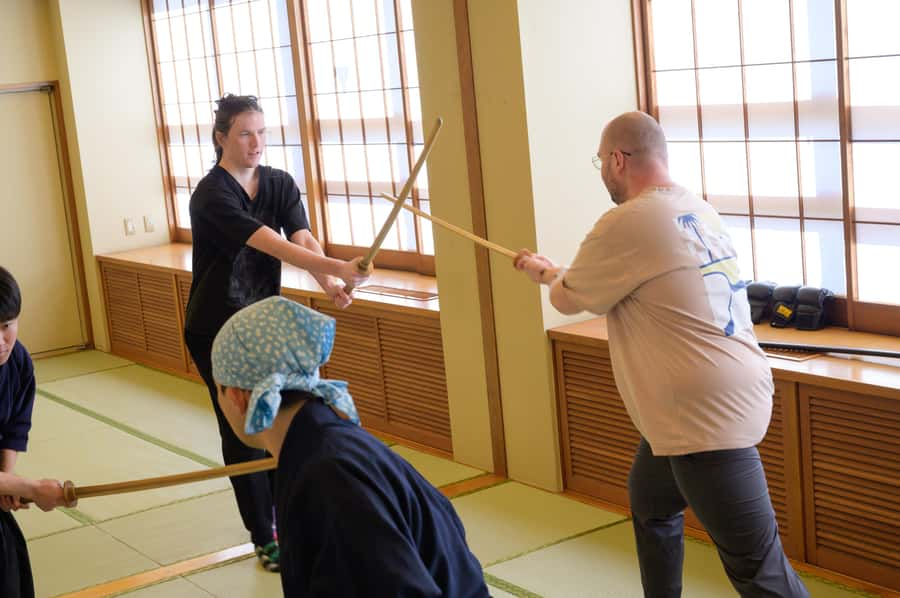
The activity includes the practice swords and a photo session with the samurai. A costume is available as an option, but it is not included in the basic price. Plan for an additional charge if wearing samurai clothing is important to you.
Some participants have worn samurai clothing or a kimono during the session, and dressing up can make the final photographs more memorable. Still, check the costume option when booking rather than assuming it comes with the $24 price.
The photos provide a clear finish to the experience. After learning the movements and watching the demonstration, you can pose with the instructors and keep a visual reminder of the activity. This is particularly useful for families and couples who want something more personal than standard sightseeing photographs.
Do not expect a full historical costume fitting, a museum visit, or a long lecture. The clothing and photos support the workshop, but the main event is the physical lesson.
Is $24 good value in Tokyo?
At $24 per person, I consider this a strong-value activity for central Tokyo. You receive an introduction to samurai culture, a live demonstration, instructor-led sword practice, wooden equipment, paired training, and a photo opportunity.
The value is strongest if you take part rather than only watch. You are paying for access to professional action actors and a structured lesson, not simply a photo with a performer. The experience also gives you a better understanding of the work behind samurai scenes, which can make films and stage performances more interesting afterward.
The price does not include food, drinks, transportation, or costume hire. Those exclusions are easy to manage, since the workshop is near major central areas and does not require a full-day commitment. You can eat before or after in the Tokyo Station, Ginza, or Tsukiji area.
A single class cannot teach the full art of swordsmanship. The experience is prepared for visitors and offers an introduction rather than extended training. I would not book it expecting formal martial arts certification or serious combat instruction. I would book it for a memorable cultural activity with real participation and a clear connection to action performance.
Who will enjoy this experience most?
I would recommend it to first-time visitors who want a cultural activity that feels active rather than passive. It suits couples, families, solo visitors, and anyone curious about how samurai action is performed.
It is also a good choice for people who enjoy:
- Japanese history and culture
- Film and stage combat
- Hands-on workshops
- Family activities with a strong visual element
- Trying something unusual near central Tokyo
- Learning a few basic movements with friendly guidance
Martial arts practitioners may prefer the private course because the instructor can tailor the lesson to their level and goals. People already familiar with Japanese culture may also appreciate the additional focus of a private class.
I would think twice if you have a back problem, vertigo, a pre-existing medical condition, or difficulty with physical activity. The experience is not suitable for pregnant women, wheelchair users, or people who use electric wheelchairs. Smoking, alcohol, drugs, drones, and explosive substances are not allowed.
Practical planning for your visit
Wear comfortable clothes and closed-toe shoes suitable for movement. High heels are not allowed. Arrive 15 minutes before the start so you do not miss the opening explanation or warm-up.
The experience is offered in Japanese and English. That makes it accessible to international visitors, though the activity is physical, so watching the demonstration closely will be just as important as listening to every word.
You can reserve now and pay later, which helps if your Tokyo schedule is still changing. Cancellation is available up to 24 hours in advance for a full refund. Transportation to the studio is not included, so plan your own route to Samurai Experience Photo Studio ICHI and confirm the current meeting instructions before setting out.
Should you book the samurai workshop?
Book it if you want a low-cost, hands-on Tokyo activity led by professional action actors. The combination of Dai and Kume’s careful instruction, wooden-sword practice, paired movement, live demonstrations, and photographs gives you much more than a costume snapshot.
Choose the public course for the social setting and the chance to train alongside Japanese students. Choose private instruction if you want a tailored lesson, have martial arts experience, or want more individual attention.
Skip it if you are looking for a long historical lecture, a full martial arts course, or genuine sword combat. For most visitors who can manage light physical activity, though, this is an entertaining and affordable way to spend part of a Tokyo day, with a souvenir photo and a better feel for the discipline behind samurai action.
FAQ
Where does the samurai experience meet?
Meet at Samurai Experience Photo Studio ICHI, the name used on Google Maps. The activity ends back at the same meeting point.
How much does the experience cost?
The listed price is $24 per person. The price of a private course is not specified, so confirm it before booking.
Is the activity suitable for beginners?
Yes. Beginners are welcome, and the instructors teach basic stance, grip, sword handling, swings, and defensive movements from the start.
Do I use a real sword?
No. You use wooden practice swords. The lesson does not involve actual sword fighting.
Who teaches the class?
Professional action actors lead the lesson. The instructors named for the experience are Dai and Kume.
Is the experience offered in English?
Yes. The listed languages are Japanese and English.
Can I choose a private lesson?
Yes. You can choose between a public course and a private course. The private lesson is adjusted to your level and goals.
Is a samurai costume included?
No. Samurai costume hire is listed as an optional extra, not as part of the basic inclusions.
What should I wear?
Wear comfortable clothing and closed-toe shoes suitable for physical activity. High-heeled shoes are not allowed.
Who should not book this activity?
It is not suitable for pregnant women, wheelchair users, people with back problems, vertigo, or pre-existing medical conditions. Electric wheelchairs are also not permitted.
Just added around Tokyo
- Kawagoe Japanese Food Tour : Unagi Kaiseki and Sake near Tokyo★ 5.0 · 30 reviews
- Kawagoe 4hr Private Tour with Licensed Guide (Kawagoe Dep)★ 5.0 · 13 reviews
- Little EDO Sushi Making workshop in Kawagoe★ 5.0 · 18 reviews
- 【R34】Tokyo:Private Daikoku tour in Modified R34★ 4.9 · 92 reviews
- :Tokyo,Shibuya/ Pro Photography in Kimono / English-Friendly★ 5.0 · 26 reviews
- Tokyo:Celebrate Unique Japanese New Year Tradition Festivity★ 3.9 · 20 reviews
- Tokyo: Allstar Food Tour★ 4.7 · 29 reviews
- Tokyo: West-Side Cycling and Food Tour with Guide★ 5.0 · 37 reviews
Samurai Experiences, compared.
Browse the lists this tour appears in