

Reviewed · TRADITIONAL CRAFTS
Natural Indigo Dyeing with Local Masters (Private Atelier)
A 300-year-old indigo studio is the setting here, not a polished craft room built for tourists. You’ll work with fermented indigo vats, learn folding and binding techniques, and watch green cloth turn blue in the air.
I like the direct help from the artisan team, with bilingual support from hosts such as Sakura. I also like the small group size, capped at six, which gives you room to ask questions and work at your own pace. The main consideration is access: the traditional studio has wooden floorboards and no wheelchair access.
Key points at a glance
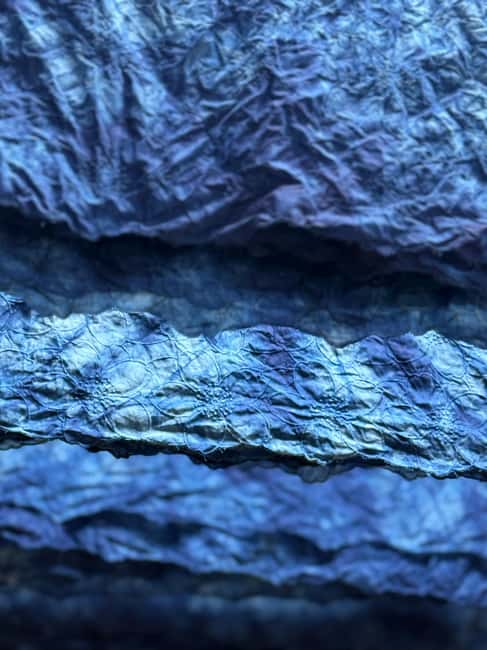
- A real working dye house: See the large vats used for serious textile work, including kimono fabrics.
- Natural sukumo indigo: The dye comes from fermented indigo rather than a chemical substitute.
- A useful take-home piece: The basic workshop includes one cotton furoshiki, about 45 to 50 centimeters square.
- Clear bilingual help: English and Japanese support is available, with Sakura singled out for her careful interpretation.
- Small and personal: The group limit is six, making this a good choice for families and hands-on learners.
Entering a 300-year-old indigo studio
This experience begins in western Kyoto, roughly 30 minutes from Kyoto Station by train and on foot. The exact address is sent after booking, so you should not expect to simply walk up to a clearly marked attraction. That private setting is part of the appeal, but it also means you need to allow enough time for the journey and follow the arrival instructions closely.
Inside, you find a traditional workshop with wooden floorboards, working tools, display pieces, and large dye vats. This is a family-run operation with several generations connected to the craft. The atmosphere is practical rather than theatrical. You are seeing a place where fabric is made and dyed, not a replica designed to suggest old Kyoto.
The opening talk lasts about 15 minutes. You learn how indigo has been used in Japan, why the color carries cultural meaning, and how the dyeing process depends on time, care, and chemical balance. The workshop also explains the path from indigo plant to finished cloth.
The phrase natural indigo matters here. The studio uses sukumo, fermented indigo leaves prepared for the dye vat. That process is more involved than mixing a powdered color with water, and it helps explain why traditional indigo work takes patience. You will not simply splash fabric into blue liquid and leave with an instant souvenir.
More Craft Workshops in Kyoto
- Authentic knife making experience at a blacksmith in Kyoto
★ 4.8 · 350 reviews - Roketsu dyeing experience: M course Roketsu Dyeing Experience
★ 5.0 · 163 reviews - Kyoto Michelin Ramen Workshop or Painting Ramen Essentials
★ 4.9 · 100 reviews
What happens during the 60-minute dyeing session
The practical portion takes about an hour. You receive an apron, gloves, and shoe covers, a sensible arrangement since indigo can stain clothing and footwear. Still, wear casual clothes that can get dirty. There is no clothing change room.
The basic included item is a cotton furoshiki, approximately 45 to 50 centimeters square. Furoshiki are traditional Japanese wrapping cloths, useful for carrying small items, wrapping gifts, or displaying at home. That makes this a more practical souvenir than a tiny decorative object.
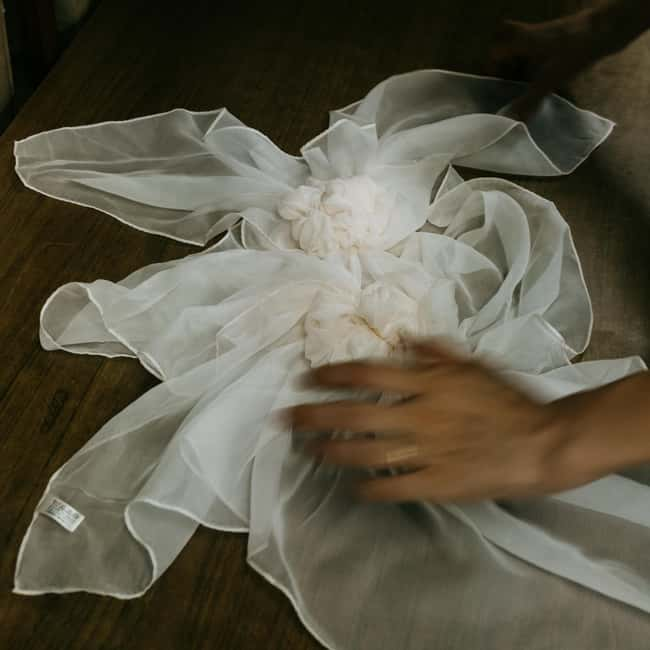
The cloth is prepared through folding and binding. These steps create areas where the dye cannot reach, producing patterns when the fabric is opened. The staff demonstrate the method and guide you through it one step at a time. You do not need prior craft experience, and the activity is suitable from age eight.
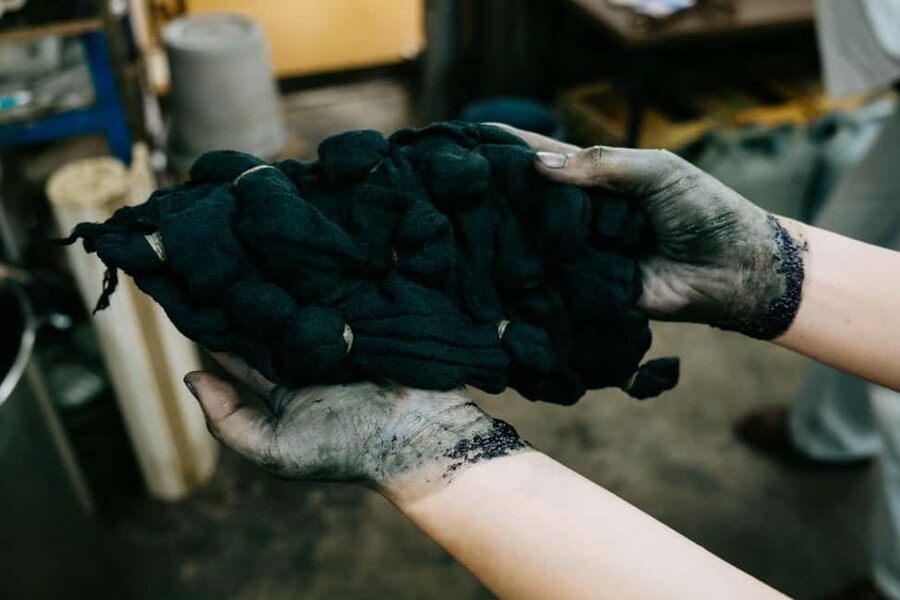
The most satisfying moment comes when the cloth leaves the vat. At first, indigo-dyed fabric can look greenish. Exposure to air causes oxidation, and the color shifts toward blue. Watching that change happen in your own hands gives the process a bit of drama without turning it into a staged performance.
Your result will depend on how you fold, bind, and dip the cloth. It may not look exactly like a sample on display, and that is part of the point. Traditional dyeing leaves room for variation. The staff are there to help you create a strong result, but they cannot make every piece identical.
Choosing a scarf instead of the included furoshiki
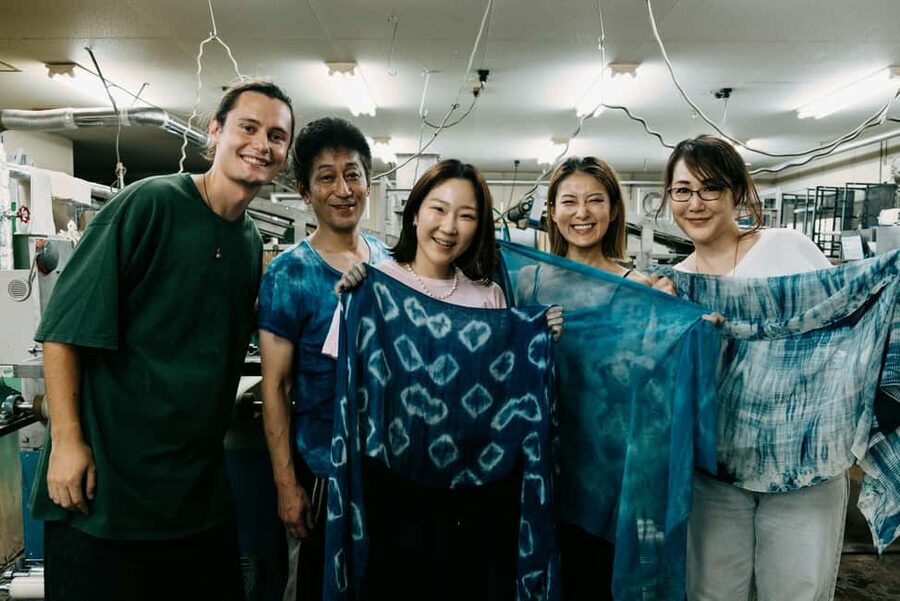
You can upgrade on site if you want a larger or more wearable item. Options include a lightweight cotton scarf, a silk scarf, or a wool stole made from Mongolian wool. The extra charges vary by item, and the activity details do not provide the amounts, so ask before choosing an upgrade.
A cotton scarf is the most straightforward step up if you want something light and easy to wear. Silk gives you a more luxurious fabric and can show off deep indigo tones. The wool stole is the largest-feeling option and may appeal if you want a substantial cold-weather accessory.
I would decide based on how much you want to carry and use the piece later. The included furoshiki offers good value and is closely tied to Japanese daily life. An upgraded scarf costs more, but it gives you a souvenir you can wear rather than store in a drawer.
The studio also has dyed pieces for sale, including more elaborate work. You may see stitched and dyed furoshiki, kimono textiles, and other finished goods in the gallery or shop area. Bring extra money only if you are comfortable browsing and possibly buying something beyond the workshop fee. Purchases are not part of the $95 price.
Why fermented indigo changes the experience
The $95 price covers two hours, materials, artisan instruction, one cotton furoshiki, tea, a small souvenir, and access to a private historic workshop. That is more than the cost of a basic craft class, but you are paying for the setting, the small group, the specialist material, and the time of the artisan team.
The use of sukumo is the strongest reason this is not simply a blue-printing activity. Fermented indigo vats need care, and the color comes from a traditional method preserved by the dyeing family. You get a short lesson in how that system works, then use the same type of dye in your own project.
This also gives the price some context. A cheaper workshop might offer a quick pattern-making session with prepared materials. Here, the studio visit and explanation of the dye house are part of the experience. If you are mainly looking for the lowest-cost souvenir, this may feel expensive. If you care about Japanese textile traditions, the price is easier to justify.
The workshop has received a perfect rating from 19 verified bookings, with repeated praise for the patient staff, clear explanations, and hands-on work. The strongest pattern is not simply that people like the final cloth. They value seeing the large vats, learning how the dye house operates, and getting help during the folding and dyeing.
Same trip, a completely different kind of day:
- PERFECT KYOTO 1-Day Bus Tour
★ 5.0 · 13,518 reviews - Kyoto: Fushimi Inari, Kinkakuji, Bamboo Grove 1 Day Bus Tour
★ 4.8 · 4,316 reviews - Kyoto: Tea Ceremony in a Traditional Tea House in Kiyomizu
★ 4.9 · 3,519 reviews - Kyoto Geisha Walking Tour: Gion District & Hidden Gems
★ 4.7 · 3,273 reviews
Tea, stories, and the final reveal
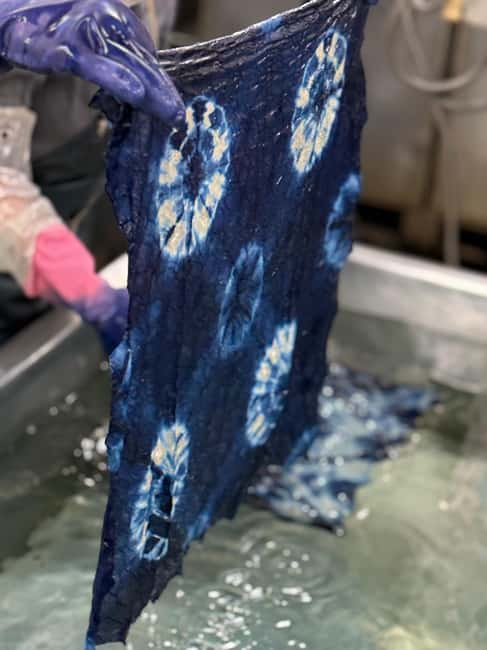
After the dyeing session, you settle down with indigo leaf tea for about 15 to 20 minutes. This is not a meal, and there is no snack included, but it gives you time to look closely at your finished cloth.
The tea also slows the pace. Much of the workshop is active, with folding, binding, dipping, and rinsing. The closing period lets you ask questions about the process and the role of indigo in Japanese life. Your bilingual host helps connect the artisan’s explanation with what you have just done.
You can take photos with your completed work. The gallery and kimono displays provide more examples of what skilled dyeing can achieve. This is a useful point in the visit because your own small piece is only an introduction to the craft. The more complex work helps you see the difference between a beginner’s pattern and the output of a master artisan.
The small souvenir is included, but its exact form is not specified. Shipping your dyed piece is not included either. Shipping may be available on request for an extra fee, which could be useful if you choose a larger scarf or stole and do not want to carry it around Japan.
The bilingual support and group size
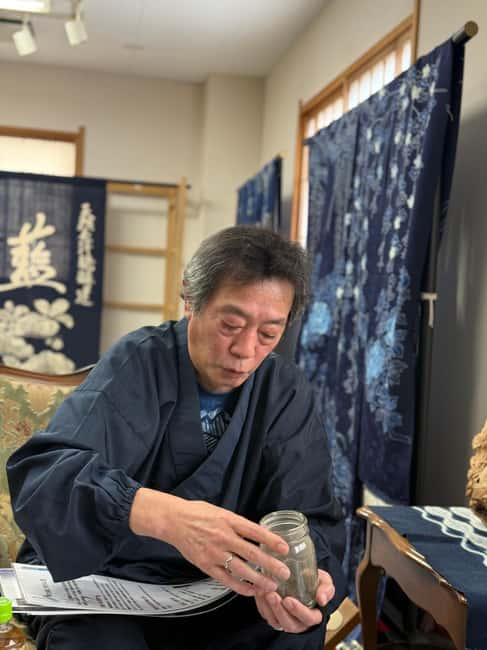
The official languages are English and Japanese. The bilingual cultural host helps explain the artisan’s comments, demonstrates the process, and answers practical questions. Sakura receives particular praise for translating clearly and keeping the explanations easy to follow.
This matters because indigo dyeing has its own vocabulary and sequence. You need to understand how to fold the cloth, when to open it, and how to handle the material around the vat. Clear interpretation makes the session more than a silent demonstration.
The maximum group size is six. That is small enough for the team to watch your work and help when a fold or binding needs correction. It also suits families, since the minimum age is eight and the activity has worked well for both children and adults.
The group may still include people with different interests. Someone may care about natural dyes, another person may simply want a Kyoto souvenir, and a child may be most interested in the color change. The format gives each person something to do, rather than requiring everyone to listen for two hours.
Practical details before you book
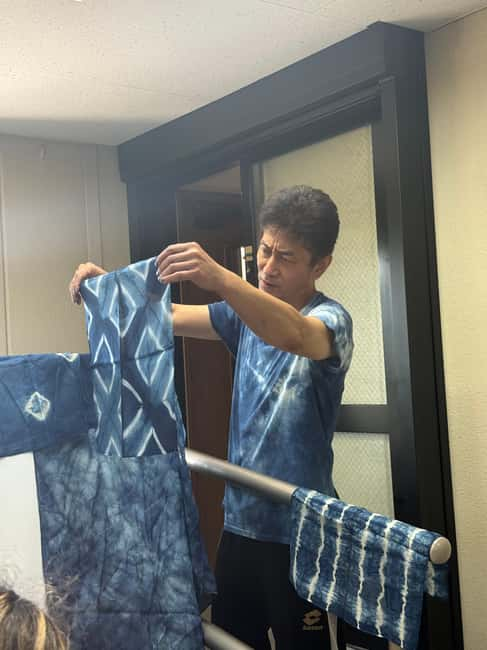
Plan for 1.5 to 2 hours, though the advertised duration is two hours. The basic breakdown is about 15 minutes for the welcome and studio tour, 60 minutes for dyeing, and 15 to 20 minutes for tea and closing questions. The remaining time allows for preparation, photos, and handling the finished cloth.
Wear comfortable shoes because you will travel by train and walk to the studio. The wooden floorboards may also make firm, comfortable footwear preferable to delicate shoes. Choose clothing that can get dirty, even though the provided apron, gloves, and shoe covers offer protection.
A restroom is available on site. Wheelchair access is not available, and the traditional floor layout may be difficult for anyone who needs a step-free space. If access is important to you, contact the provider before booking rather than assuming the studio can accommodate every mobility need.
Transportation is not included. From Kyoto Station, allow about 30 minutes by train and on foot, then add a little extra time for finding the meeting point. Since the exact address is shared only after booking, keep your phone available for the directions.
The experience is offered in a private historic studio, with the address provided after confirmation. The provider offers free cancellation up to 24 hours before the start time, and you can reserve now and pay later. Those options help if your Kyoto schedule is still shifting.
Who will enjoy this workshop most
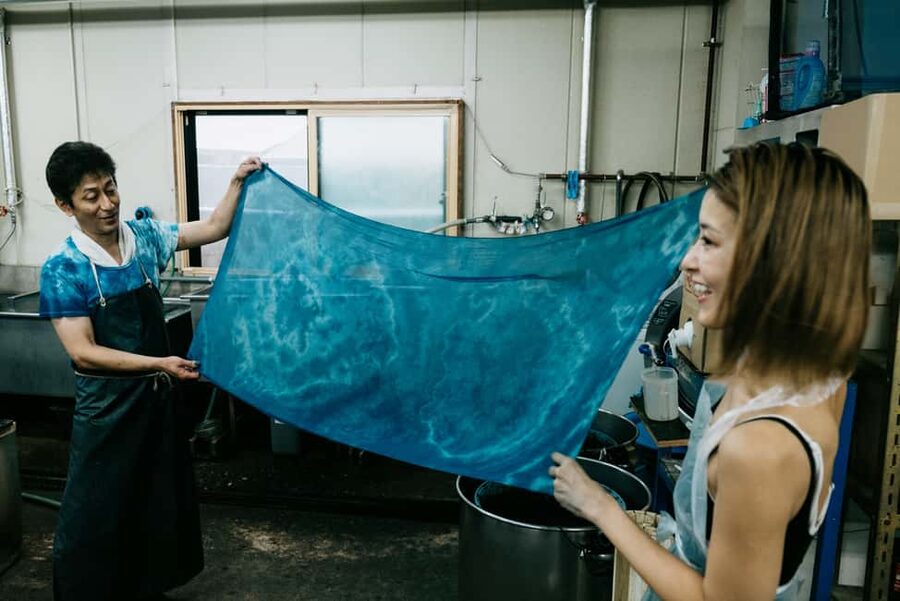
I would choose this for anyone who likes to understand how a souvenir is made. You do not need to be a textile expert, but an interest in fabric, natural materials, Japanese culture, or traditional crafts will make the studio tour more rewarding.
It is also a good family activity for children aged eight and older. The work is tactile, the color change is easy to understand, and the staff provide hands-on assistance. Younger children may need close supervision around the vats and dyeing equipment.
Couples and solo visitors can enjoy the calm pace, especially if they prefer a craft experience to another temple visit. The group size keeps the session personal without making it feel like a private lesson.
I would think twice if your schedule is packed or if you want a short, highly polished attraction near central Kyoto. The western district requires a train and walk, and the workshop takes real time. I would also skip it if you need wheelchair access or want a large garment dyed during the session. Only one furoshiki is included, and large-size fabric or garment dyeing is not offered.
Should you book the indigo workshop?
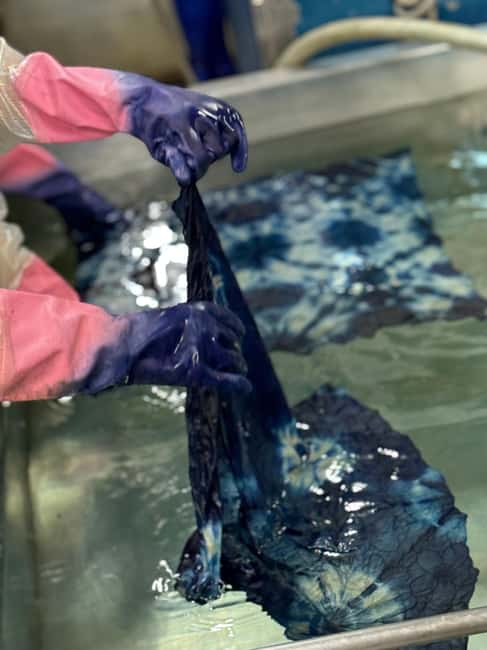
Book it if you want a genuine look at a working Kyoto craft studio and enjoy making something with your own hands. The combination of the 300-year-old setting, fermented sukumo vats, careful English support, and small group size gives the $95 fee a reasonable value.
Choose the included furoshiki if you want the best price balance. Upgrade to a scarf or stole if wearing the finished piece matters more than keeping costs down. Wear clothes that can get dirty, leave room in your schedule for the journey, and remember that the studio is traditional rather than fully accessible.
This is not the right choice for a quick souvenir stop. It is a good choice for a thoughtful two-hour visit where you learn the process, meet the people keeping it alive, and leave with a cloth that carries the marks of your own hands.
FAQ
Where does the indigo dyeing workshop take place?
It takes place in a historic indigo dye studio in western Kyoto. The exact address is provided after booking.
How long does the experience last?
The activity lasts about 1.5 to 2 hours, with two hours listed as the standard duration.
How much does the workshop cost?
The price is $95 per person.
What item is included in the basic workshop?
One cotton furoshiki cloth, approximately 45 to 50 centimeters, is included.
Can I dye a scarf instead?
Yes. You can upgrade on site to a cotton scarf, silk scarf, or wool stole. Extra charges apply, but the amounts are not specified in the activity details.
Is natural indigo used?
Yes. The studio uses natural fermented indigo known as sukumo.
Is English support available?
Yes. The experience is offered in English and Japanese, with bilingual cultural support. Sakura is one of the team members who may provide English interpretation.
Is the workshop suitable for children?
Yes. The minimum age is eight.
What should I wear?
Wear comfortable clothes and shoes, and choose clothing that can get dirty. An apron, gloves, and shoe covers are provided.
Is the studio wheelchair accessible?
No. Wheelchair access is not available, and the studio has traditional wooden floorboards.
Is transportation included?
No. You arrange your own transportation to and from the studio. The journey from Kyoto Station takes about 30 minutes by train and on foot.
Can I cancel for a refund?
You can cancel up to 24 hours in advance for a full refund. Reserve now and pay later is also available.
Just added around Kyoto
- Sekka Cotton Furoshiki Class★ 5.0 · 19 reviews
- Kyoto Sword Experience – includes Museum Ticket/Ninja Experience★ 4.5 · 149 reviews
- Scenic Green Tea Fields of Hidden Kyoto & Local Tea Exp (Private)★ 5.0 · 32 reviews
- Secret Eastern Kyoto Biking Adventure★ 5.0 · 44 reviews
- Private Sake Tasting in Central Kyoto with Sake Sommelier★ 5.0 · 32 reviews
- Samurai School in Kyoto: Samurai for a Day★ 5.0 · 202 reviews
- Samurai Performance and Casual Experience: Kyoto Ticket★ 4.5 · 115 reviews
- SHIRAKAWA Japanese Culture Experiences with private English staff★ 5.0 · 16 reviews
Traditional Crafts, compared.
Tokyo Sumo Experience: Chanko & Mochi with a Former Pro
Our verdict →
Kintsugi Experience: Art of Golden Joinery in Tokyo
Our verdict →

Matcha Making Experience with Mochi Sweets in Asakusa
Our verdict →
Authentic knife making experience at a blacksmith in Kyoto
Our verdict →
Roketsu dyeing experience: M course Roketsu Dyeing Experience
Our verdict →Browse the lists this tour appears in