
Reviewed · FOOD TOURS
Tokyo West-Side Cycling & Food Tour
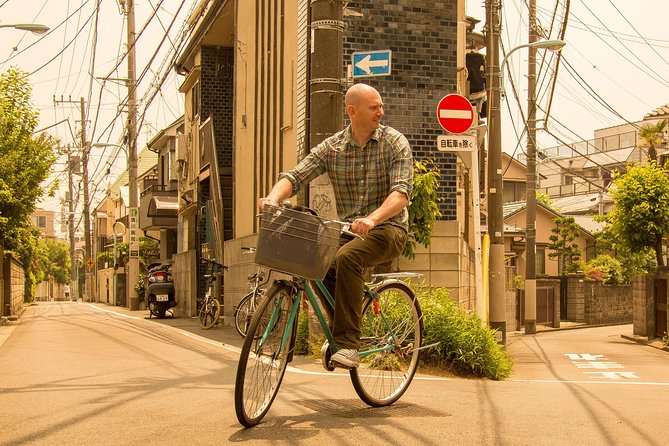
Tokyo West-Side Cycling & Food Tour trades famous sights for ordinary Tokyo life. You pedal through Koenji, Nakano, and Asagaya, following narrow lanes, neighborhood streets, and the Zenpukuji River rather than chasing the city’s big landmarks. Guide Andy brings more than route directions: he explains housing, schooling, religion, food, bicycle parking, and the habits that shape daily life.
I like the small maximum of eight, which makes it easier to ask questions and keep the group together. I also like the mix of riding, walking, snacks, and a local lunch. The main consideration is the cycling itself: you need to handle a bike in narrow, sometimes crowded streets for 12 to 15 kilometers, and food choices may be limited for strict dietary needs.
Key details at a glance
- Three west-Tokyo neighborhoods: Ride through Koenji, Nakano, and Asagaya, areas many first-time visitors miss.
- A local-style bicycle: Use a salvaged Japanese mamachari with a front basket and a helmet available on request.
- Food built into the ride: Stop for popular local snacks, drinks, and a Japanese-style lunch at a typical neighborhood eatery.
- A flat urban route: The ride is generally easy and mostly flat, but narrow streets and uneven surfaces still demand basic city cycling skills.
- A guide who lives locally: Andy is an English-speaking guide who has lived in Japan for more than 20 years and adds context about everyday life.
- A true small-group outing: The maximum is eight people, with the tour lasting about three and a half to four hours.
Starting at Koenji Station and meeting the mamachari
The tour begins at Koenji Station in Suginami City and ends back at the same meeting point. Koenji is a useful starting place because it quickly puts you on the west side of Tokyo, away from the major sightseeing corridors around Shibuya and Shinjuku.
You’ll be introduced to your bicycle, a salvaged Japanese mamachari. These are practical neighborhood bikes, usually built for short urban trips rather than speed. The bicycles may be a little creaky or squeaky, but they are described as well maintained and suited to the route. Each has a front basket large enough for a standard backpack.
That detail matters. You do not need a racing bike or special equipment, but you should be comfortable starting, stopping, steering, and balancing around pedestrians, parked bicycles, cars, and tight corners. Bikes are Japanese-sized, and the recommended minimum height is 140 centimeters. Helmets can be provided if requested.
The group limit of eight keeps the opening instructions manageable. It also means you are not trying to follow a long line of cyclists through a complicated city. Andy can talk with the group rather than deliver a speech from the front.
More Bike Tours in Tokyo
- Tokyo Guided Small-Group Biking Tour
★ 5.0 · 1,250 reviews - Tokyo Great Cycling Tour
★ 5.0 · 811 reviews - Tokyo Top Highlights 3h Guided E-bike Tour
★ 5.0 · 714 reviews
Koenji back streets and the rhythm of daily life
The early part of the route takes you through Koenji, a neighborhood known here less as a sightseeing stop than as a place where people live, shop, commute, and meet friends. The appeal is not one grand monument. It is the accumulation of small details: residential lanes, local businesses, bicycle storage, compact homes, and the way traffic moves through spaces that can feel too tight for a city this large.
This is where the tour’s purpose becomes clear. You are not simply being taken from one attraction to another. You are learning how Tokyo works at street level. Andy uses the ride to explain local customs and the practical side of Japanese life, including how people use bicycles and how the city organizes its limited space.
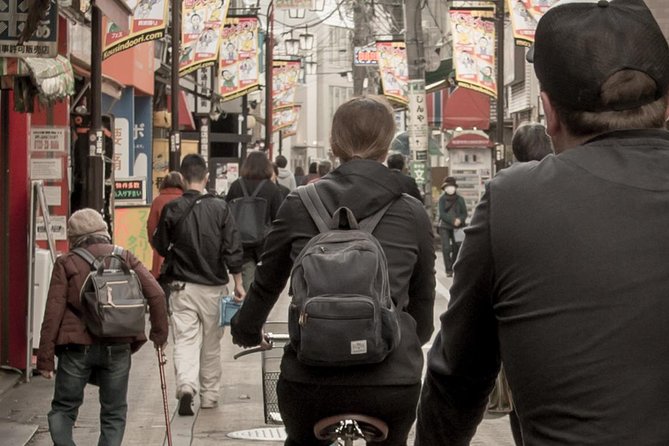
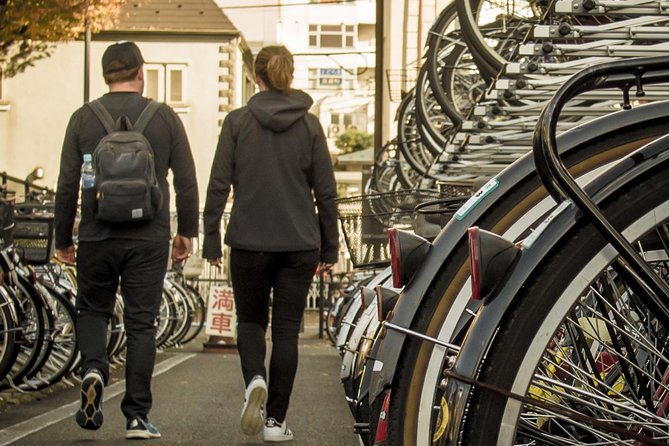
One distinctive part of the experience is learning about Tokyo’s bicycle parking systems. That may sound minor, but it is exactly the kind of detail that gives a neighborhood tour value. It shows how a crowded city handles everyday problems without turning every street into a car park.
You should also expect frequent pauses. The tour combines cycling and walking, with stops for conversation, food, and local details. That makes the outing social rather than athletic. The pace is designed for looking around and talking, not for covering ground as quickly as possible.
Nakano and Asagaya, away from the standard route
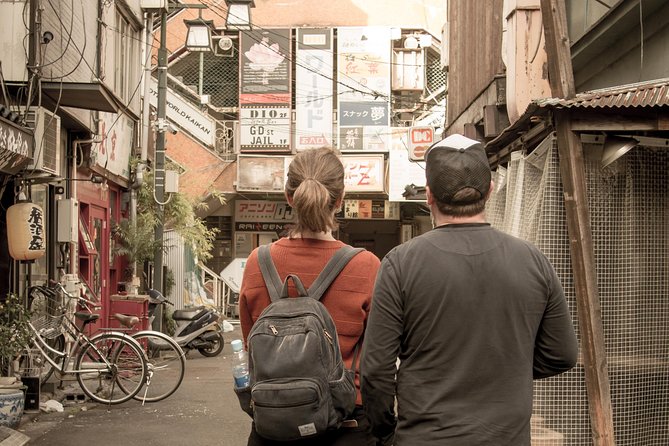
From Koenji, the ride continues through Nakano and Asagaya. These areas provide a useful contrast with Tokyo’s better-known districts. You may already have spent time among the signs and crowds of Shinjuku, but the west side offers a quieter view of the same metropolis.
The route uses twisting back streets and neighborhood paths. You may need to concentrate more than you would on a dedicated cycle trail, especially where streets narrow or surfaces become uneven. The payoff is a closer look at the places people pass through every day, rather than a polished sightseeing circuit.
Andy’s role is important here. He has lived in the area for more than two decades, and the experience is built around his local understanding. His explanations cover subjects such as schooling, housing, work, religion, food, and social customs. The reviews repeatedly praise his friendly manner, clear English, and willingness to answer questions, so this is a good fit if you enjoy conversation as much as scenery.
I would think of this section as a moving neighborhood lesson. You will not collect a checklist of Tokyo’s major landmarks. Instead, you will understand more about what sits between the landmarks, and why ordinary residential districts can tell you so much about a city.
The Zenpukuji River ride
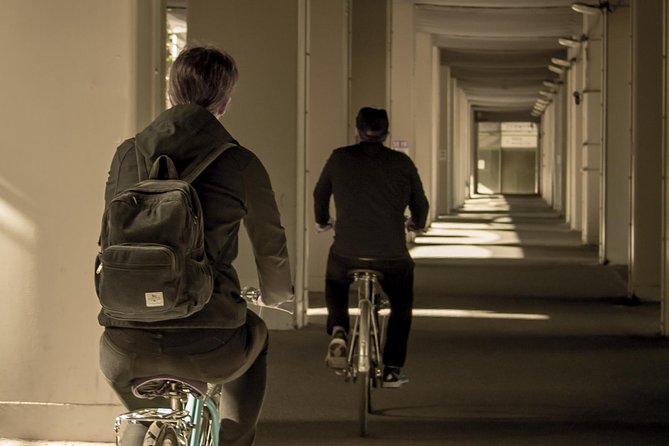
A stretch along the Zenpukuji River gives the route a change of pace. After navigating narrow urban streets, a riverside path offers room to coast and look around. It is one of the more scenic portions of the outing, though the experience remains firmly local rather than grand or postcard-focused.
The route is generally flat, which makes the distance manageable for people with basic cycling ability. Still, 12 to 15 kilometers is a meaningful ride, especially when combined with stops and walking. You should not book this expecting a short spin around one block.
The all-season, all-weather format also shapes the experience. The tour generally proceeds in light rain, with basic ponchos provided, but outdoor conditions can affect comfort and timing. If poor weather causes the operator to cancel, you are offered another date or a full refund.
More Food Tours in Tokyo
- Tokyo: Shinjuku Food Tour (13 Dishes at 4 Local Eateries)
★ 5.0 · 6,603 reviews - Tokyo Tsukiji Fish Market Food and Culture Walking Tour
★ 5.0 · 3,184 reviews - Tokyo: Shinjuku Food Tour (15 Dishes and 4 Eateries)
★ 4.9 · 2,033 reviews - Best of Shinjuku: Izakaya Food Tour (4 Stops, 14+ Tastings)
★ 5.0 · 1,863 reviews
Snacks, drinks, and a neighborhood lunch
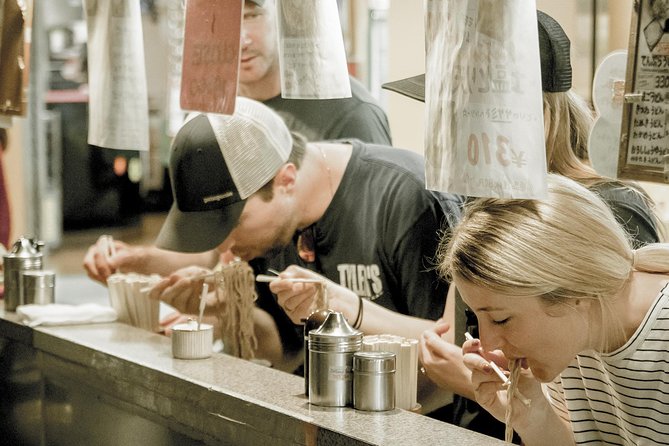
Food is not an extra add-on here. It is part of the route and helps explain the areas you are visiting. You’ll stop for a tailored selection of popular local snacks, drinks, and a Japanese-style lunch at a typical neighborhood eatery.
The food stops are intentionally casual. This is not a fine-dining tour, and you should not expect a parade of famous restaurants or a formal tasting menu. The appeal is that you are introduced to foods and places you might not feel confident ordering on your own.
Lunch takes place in the kind of setting used by local workers, including the possibility of sharing counter space with hungry salarymen. That kind of stop gives the meal a more everyday feel, but it also means you should be flexible. Seating, service, menu choices, and the pace of the meal may not match what you find in a tour built around restaurants for visitors.
Dietary restrictions deserve careful thought. Japanese food often includes meat, seafood, and dashi, a common broth base. The tour visits typical local eateries, so it may be difficult to handle strict allergies, vegetarian requirements, or highly specific preferences. If food is the main reason you are booking, this is best approached as a local eating experience rather than a guaranteed menu.
What makes the guide’s commentary useful
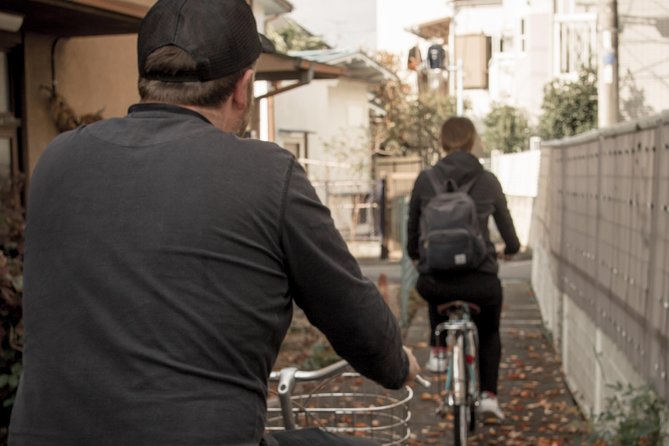
Andy’s strongest contribution is the connection between the route and daily life. He does not simply point out a street and name it. He uses the surroundings to explain how people live, work, eat, park bicycles, raise children, and move through the city.
That can be especially useful on your first day in Tokyo. A ride through quiet streets gives you time to ask basic questions that might not fit into a packed sightseeing schedule. Several people have also found the tour useful as a way to get oriented, and Andy has provided follow-up suggestions after the ride tailored to individual interests.
The tone appears relaxed and sociable. If you want a serious historical lecture or a fast-moving list of facts, this may feel too informal. If you want someone who can explain the everyday details behind what you see, it should suit you well.
Is $99.49 a fair price?
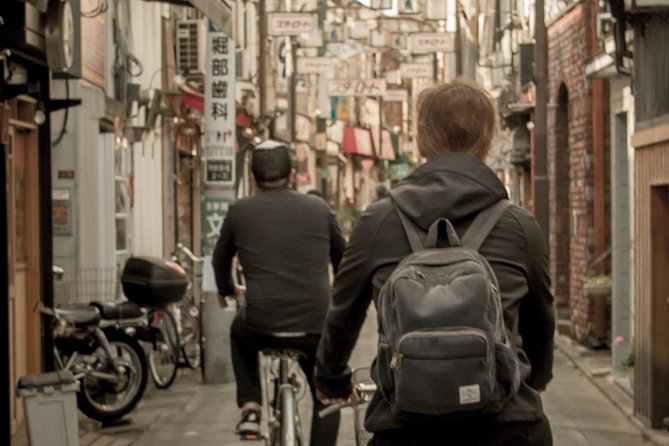
At $99.49 per person, the tour costs more than renting a bicycle and wandering around on your own. But the comparison is not quite that simple. The price includes the bicycle, the guide, snacks, drinks, lunch, and a planned route through several neighborhoods.
You are also paying for access to local context. Without a guide, you could certainly cycle through west Tokyo, but you might miss the meaning behind the bicycle parking system, the neighborhood layout, the food stops, and the social customs. The small group adds value because you are not receiving a generic city lecture meant for dozens of people.
The price makes the most sense if you want several experiences combined into one morning or afternoon: transport by bike, local food, neighborhood exploration, and cultural explanation. It makes less sense if you mainly want famous sights, fine dining, or a strenuous cycling workout.
Group discounts may be available, and the ticket is mobile, which keeps the meeting process simple. The activity normally lasts three and a half to four hours, depending on group size, weather, eating speed, and cycling pace.
Who should book this ride?
I would recommend it to people who already enjoy casual cycling and want a different side of Tokyo. Families can fit the format too, provided everyone can ride confidently in an urban setting and meets the height guidance. An 11-year-old has taken part, but the key issue is cycling ability, not age alone.
It is also a good choice for repeat visitors. If you have already seen the main districts, west Tokyo offers a fresh angle without requiring a full-day trip out of the city. The ride can also work well near the start of your stay, since Andy can answer questions and help you get your bearings.
You should think twice if you dislike riding near traffic, struggle with narrow streets, need a guaranteed specialist diet, or want a major sightseeing itinerary. The bikes are practical rather than sleek, the route is local rather than iconic, and the food is casual rather than polished.
For safety, you are expected to have comprehensive travel insurance. Cycling liability insurance is included for the cycling portion, but the operator makes clear that an urban outdoor activity carries some personal risk.
Booking, weather, and timing
The tour is often reserved well ahead, with an average booking time of about 57 days before departure. That suggests you should book early if your Tokyo dates are fixed, especially if you want a particular day or are traveling as a small group.
Free cancellation is available up to 24 hours before the start time for a full refund. Changes or cancellations inside that 24-hour window are not accepted for a refund. The experience also requires a minimum number of participants, so a cancellation by the operator can lead to another date, another experience, or a full refund.
Because the ride normally returns to Koenji Station, you do not need to arrange a separate pickup or navigate across Tokyo after lunch. Allow extra time after the stated three and a half hours, since the real outing can run closer to four hours.
FAQ
Where does the Tokyo West-Side Cycling and Food Tour start?
It starts at Koenji Station, at 4-chōme-48-2 Kōenjiminami, Suginami City, Tokyo 166-0003, Japan.
Where does the tour finish?
The tour ends back at the Koenji Station meeting point.
How long does the tour last?
The advertised duration is about three hours and 30 minutes. A practical guide is three and a half to four hours, depending on the group, weather, eating pace, and cycling speed.
How far do you cycle?
You should expect to cycle roughly 12 to 15 kilometers, or about 7.5 to 9.5 miles.
What neighborhoods does the route visit?
The ride explores parts of Koenji, Nakano, and Asagaya, along with back streets and the Zenpukuji River area.
How many people can join the tour?
The maximum group size is eight people.
What kind of bicycles are used?
The tour uses salvaged Japanese mamachari bicycles. They have front baskets that can hold a standard-sized backpack.
Are helmets available?
Yes. Helmets can be provided for all participants on request.
Is food included?
Yes. The experience includes local snacks and a Japanese-style lunch, along with drinks. It is not designed as a fine-dining tour.
Can the tour accommodate dietary restrictions?
Japanese food often contains meat, seafood, and dashi. Since the tour uses typical local eateries, strict dietary requirements and food allergies may be difficult to accommodate.
Should you book it?
Book this tour if you want to see how Tokyo feels between the famous sights. The combination of a small group, easy mostly flat riding, local food, and Andy’s practical commentary gives you a useful look at west Tokyo that is hard to recreate on your own.
Skip it if you want landmark-heavy sightseeing, formal dining, or a completely traffic-free bike path. For the right rider, though, $99.49 buys much more than a bicycle rental: it buys a well-planned route, a meal, local introductions, and several hours of seeing Tokyo at street level.
More Food & Drink in Tokyo
- Tokyo: Tsukiji Fish Market Food and Walking tour
★ 5.0 · 1,724 reviews - Eat and Drink Like a Local: Tokyo Ueno Food Tour-Taverns&Ramen
★ 5.0 · 957 reviews - Tokyo: Shibuya Food Tour (13 dishes and 4 Eateries)
★ 5.0 · 770 reviews - Tokyo: Tsukiji Fish Market Food and Culture Walking Tour
★ 4.7 · 757 reviews
Just added around Tokyo
- Kawagoe Japanese Food Tour : Unagi Kaiseki and Sake near Tokyo★ 5.0 · 30 reviews
- Kawagoe 4hr Private Tour with Licensed Guide (Kawagoe Dep)★ 5.0 · 13 reviews
- Little EDO Sushi Making workshop in Kawagoe★ 5.0 · 18 reviews
- 【R34】Tokyo:Private Daikoku tour in Modified R34★ 4.9 · 92 reviews
- :Tokyo,Shibuya/ Pro Photography in Kimono / English-Friendly★ 5.0 · 26 reviews
- Tokyo:Celebrate Unique Japanese New Year Tradition Festivity★ 3.9 · 20 reviews
- Tokyo: Allstar Food Tour★ 4.7 · 29 reviews
- Tokyo:Calligraphy &Make your original folding fan in Asakusa★ 5.0 · 62 reviews
Food Tours, compared.
Shinjuku Food Tour (13 Dishes at 4 Local Eateries)
Our verdict →
Kyoto Night Foodie Tour in Gion (9+ dishes + 6 Sake tastings)
Our verdict →
Osaka Local Foodie Walking Tour in Dotonbori and Shinsekai
Our verdict →
Food Tour in Ueno with 10+ Tastings of Japanese Classics
Our verdict →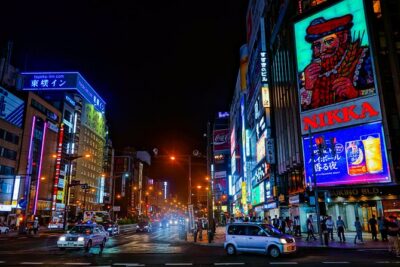
Browse the lists this tour appears in