
Reviewed · CYCLING TOURS
Tokyo Guided Small-Group Biking Tour
Tokyo makes more sense from a bicycle. In six and a half hours, you move from Shinjuku skyscrapers to quiet residential lanes, major shrines, fashionable Omotesando, Tokyo Bay, Ginza, and the Imperial Palace. The route gives you a broad first look at the city without trapping you inside a coach.
I like the small group of up to five, which makes it easier to keep together on busy roads and ask questions. I also like the contrast between famous sights and ordinary neighborhoods, especially the small local shrine, Aoyama Cemetery, and the supermarket stop for a bento lunch. The main catch is simple: this is about 20 miles of city cycling, and you need to feel comfortable riding near traffic on a standard cross-city bike.
Key points to know
- About 20 miles of riding: The route is mostly flat, but the distance and city traffic require moderate fitness.
- A true Tokyo overview: You visit Shinjuku, Meiji Jingu, Yoyogi Park, Roppongi, Ginza, the Imperial Palace, Tokyo Bay, and more.
- Small-group attention: The maximum is five people, though a cancellation could leave you with a nearly private tour.
- Local-style lunch: You buy a bento at a supermarket, carry it in your backpack, and eat beside the waterfront.
- A strong final view: The tour ends at the Tokyo Metropolitan Government Building, with Tokyo spread out below you.
- Not an e-bike tour: You ride a flat-handlebar cross-city bike, not a relaxed cruiser.
Why a bicycle works so well in Tokyo
Tokyo is too large to understand on foot in one day. The train system is excellent, but trains jump you from one station to the next. A bicycle shows you the pieces in between: narrow lanes, small shrines, quiet homes, office districts, parks, and the changing feel of each neighborhood.
This route uses a relaxed pace, with regular stops to walk, look around, and hear about the places you are seeing. You are not simply ticking off a list of attractions. You get a sense of how Tokyo shifts from one block to the next.
The route is also carefully varied. You start under the tall buildings of Shinjuku, pass through traditional religious sites, ride along polished shopping streets, stop at the waterfront, and finish high above the city. For a first day in Tokyo, that range is useful. You get your bearings fast.
Still, do not mistake relaxed pace for easy mileage. The full ride is roughly 20 miles, and parts of it use busy roads. Tokyo drivers are generally patient, but you must steer well, watch pedestrians, follow the guide, and be comfortable with a multi-speed bicycle.
More Bike Tours in Tokyo
- Tokyo Great Cycling Tour
★ 5.0 · 811 reviews - Tokyo Top Highlights 3h Guided E-bike Tour
★ 5.0 · 714 reviews - 3h Tokyo E-Bike Tour: Hidden Gems, and Local Life with guide
★ 5.0 · 670 reviews
Shinjuku backstreets and a small neighborhood shrine
The meeting point is in Nishishinjuku, among the major towers and busy streets of western Tokyo. From there, the guide leads you away from the grand buildings and into smaller roads.
That first change is one of the most enjoyable parts of the morning. You see how quickly Tokyo can become quiet. A local shrine in a residential area offers an early look at the city’s traditional side without the crowds that gather at its famous religious sites.
This stop also sets up one of the tour’s main themes: modern Tokyo and older customs exist almost side by side. A high-rise may be just a few minutes from a modest shrine, a neighborhood shop, or a peaceful side street.
Guide Gaku is frequently singled out for his friendly manner, careful pacing, clear route explanations, and attention to safety. Other guide names appear in the experience details with slightly different spellings, so your assigned guide may vary. The important point is that the guide leads from the front and tells you how long each section will take before you set off again.
Meiji Jingu and Yoyogi Park
From the neighborhood lanes, you ride toward Yoyogi Park and Meiji Jingu, Tokyo’s best-known Shinto shrine. You leave the bikes to walk around the shrine grounds and surrounding gardens.
Meiji Jingu is a welcome pause after the first stretch of riding. The setting feels removed from the city, even though Harajuku and Shinjuku are nearby. The contrast is part of the appeal. You are still in central Tokyo, yet the shrine area gives you space, trees, and a slower rhythm.
Yoyogi Park is especially appealing in spring, when cherry blossoms bloom. The park also helps break up the day physically. A tour that kept you on the saddle for six straight hours would be tiring, but this itinerary mixes riding with walks and sightseeing.
You should not expect a long, formal temple lecture at every stop. The value here is seeing the site in context, with a guide who can explain the customs and place the shrine within the larger city. The tour is more about experiencing Tokyo than taking an academic history course.
Omotesando, Roppongi, and Aoyama Cemetery
After Meiji Jingu, the route heads toward Omotesando. This broad avenue is known for high-end shops, striking architecture, and a polished urban feel. It is a very different Tokyo from the residential lanes you have just left.
You then make your way toward Roppongi Hills, a major entertainment and shopping complex. This section shows Tokyo as an international business and leisure center. The city feels more formal here, with larger buildings, wider streets, and much more commercial activity.
The route then turns into a backstreet and reaches Aoyama Cemetery. This is a particularly smart addition because it gives you a quieter glimpse of the city. The cemetery can feel like Tokyo from another era, far removed from the shops and towers nearby.
I like this sequence because it prevents the day from becoming a string of famous photo stops. Omotesando and Roppongi show the city’s public face. Aoyama offers a calmer, more local-feeling interval. You get to see how different parts of central Tokyo fit together.
Traffic is a consideration here. You will ride on busy roads, not only on park paths or car-free lanes. Stay close to the guide and do not assume that every section will feel comfortable if your cycling experience is limited to quiet suburban streets.
Same trip, a completely different kind of day:
- 1-Day Tokyo Bus Tour
★ 5.0 · 14,250 reviews - Tokyo: TOKYO SKYTREE® Admission ticket
★ 4.5 · 11,192 reviews - Tokyo: teamLab Planets TOKYO Digital Art Museum Entry Ticket
★ 4.6 · 9,779 reviews - Tokyo: Sumo Show Experience with Chicken Hot Pot and a Photo
★ 4.8 · 6,678 reviews
Buying lunch at a local supermarket
Around the middle of the tour, you stop at a local supermarket to choose a bento box. Food and drinks are not included in the $106.12 price, so you pay for your own lunch.
This is a small detail, but it adds useful local flavor. A supermarket lets you see the everyday choices people make for a quick meal, and it gives you more control than a fixed restaurant stop. You can choose a bento, sushi, snacks, or a drink that suits you.
You then carry the food in your backpack or messenger bag. The lunch spot is about 25 minutes away by bicycle, so pack it securely and avoid buying more than you want to carry.
The meal takes place on the waterfront beside Rainbow Bridge, with views toward the Tokyo skyline and the Aqua City Odaiba complex. This is one of the day’s most pleasant breaks. You have time to eat, look across the water, and rest your legs before the afternoon ride.
The tradeoff is that lunch is not a seated restaurant experience. If you want table service or a long meal, this may feel basic. If you like seeing how locals shop and prefer a flexible lunch, it works well.
Zojo-ji Temple and Tokyo Tower
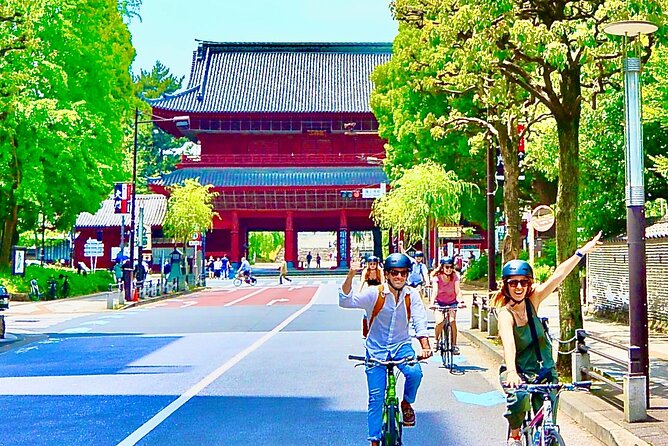
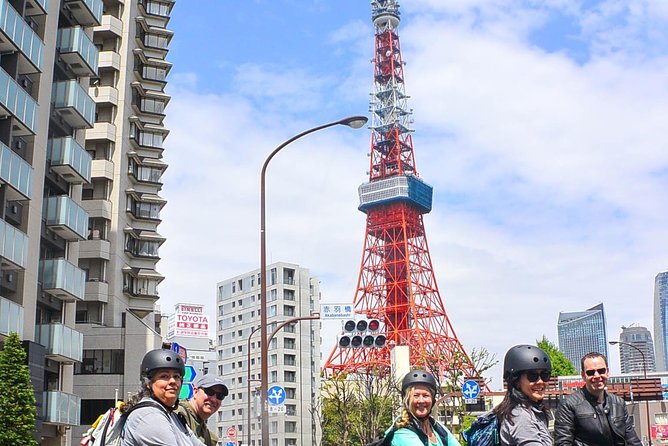
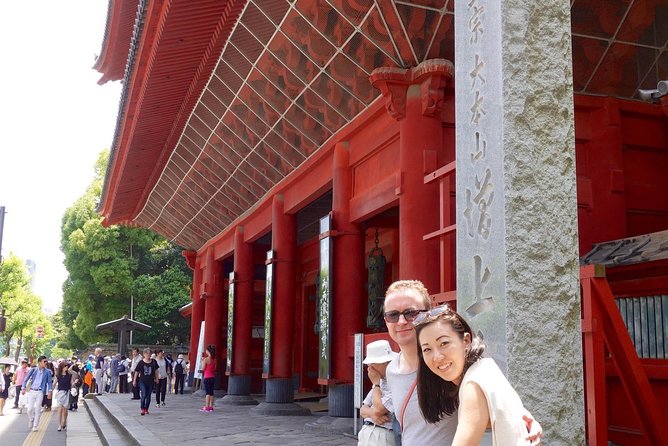
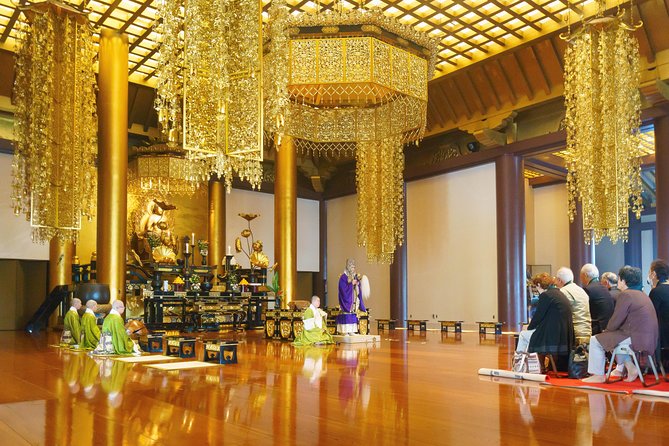
The route includes Zojo-ji Temple, one of the major temple stops of the day. Tokyo Tower rises behind it, creating one of the city’s classic contrasts: a traditional Buddhist temple in the foreground and a tall modern tower beyond.
This is a strong photo stop, but it also helps connect Tokyo’s older religious life with its postwar city identity. You do not need to travel to a remote district to see that contrast. It appears right in the middle of the capital.
The temple stop also adds variety after Meiji Jingu. The morning has already included a Shinto shrine, and Zojo-ji gives you a Buddhist site later in the route. The two places feel different, even when visited on the same day.
Expect time to look around rather than an extended visit inside every building. The tour covers a great deal of ground, so the guide must keep the schedule moving.
Ginza and the Imperial Palace
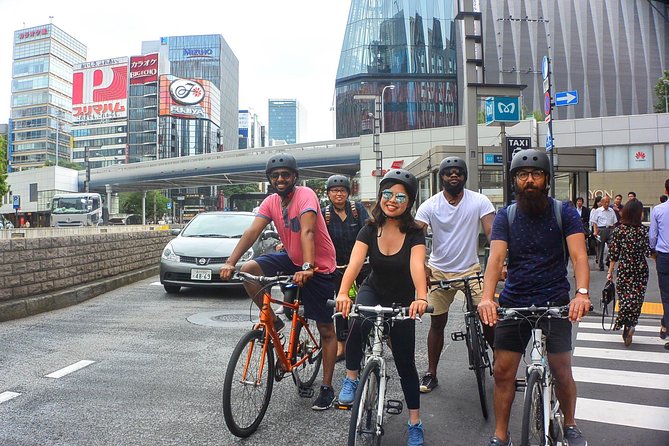
After lunch, you cycle through Ginza, Tokyo’s famous upscale shopping district. The main streets show the city at its most polished, while the smaller roads provide a closer look at how the district functions beyond its grand facades.
Ginza is not only about shopping. It is a useful stop because it shows another side of central Tokyo, one built around department stores, brand names, restaurants, offices, and carefully maintained streets. You can compare it with Omotesando and Roppongi, then see how each commercial district has its own character.
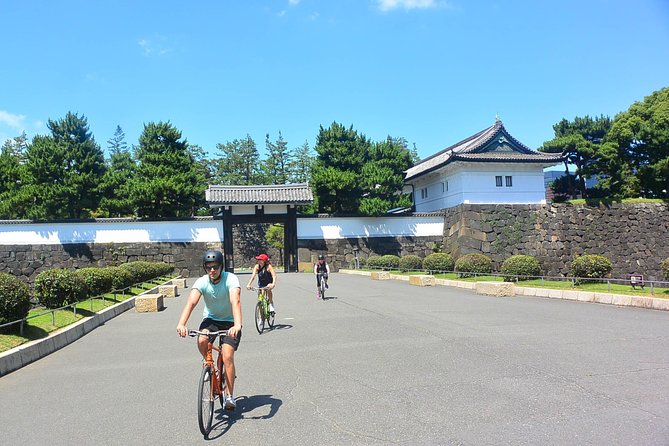
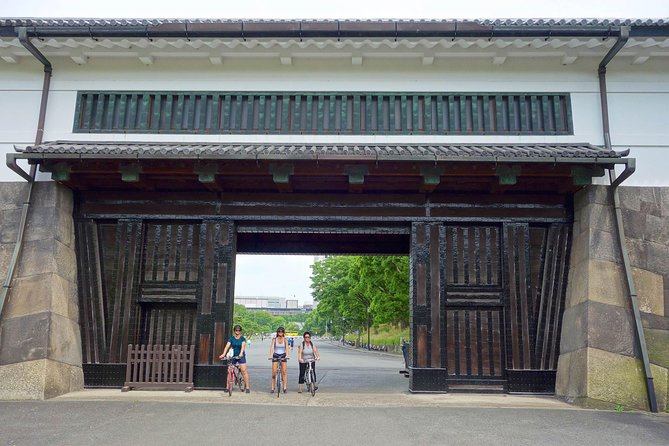
The route continues to the Imperial Palace. You ride through two outer gates and follow sections of the palace moat. The traditional gardens, tea pavilion, stone walls, and water give you a strong sense of the imperial compound without requiring an all-day palace visit.
This part of the tour is especially valuable for first-time visitors. The Imperial Palace can be difficult to place on a normal sightseeing route because it covers a broad central area. Reaching it by bicycle makes the distance manageable and lets you see the moat and outer grounds in one continuous visit.
Access inside the palace complex is limited, and attractions can be changed or skipped for operational reasons. Think of this as an exterior and garden-area visit, not a tour of private palace interiors.
The final climb to Tokyo’s best city view
The tour returns toward Shinjuku and finishes at the Tokyo Metropolitan Government Building. A high-speed elevator takes you to the top of the 48-story building, where you can look across the city in every direction.
This is an effective ending because you have just crossed Tokyo at street level. From the observation area, you can look back over the places you passed and understand the city’s size. On a clear day, you may see Tokyo Skytree and even Mount Fuji.
Weather matters here. Haze, cloud, rain, and heat can reduce the view, so do not book the tour only for Mount Fuji. The observation stop is still useful as a broad city overview, but Fuji is a bonus.
Afterward, it is about a five-minute ride back to the original meeting point. The day ends where it began, which is convenient if you have evening plans or need to collect luggage elsewhere in Shinjuku.
Price, group size, and what you receive
At $106.12 per person, this is not the cheapest way to sightsee in Tokyo. You could visit many of the same districts by train and on foot for less money.
The value comes from the route planning, the bicycle, the guide, the small group, and the amount of ground covered in one day. You do not have to work out how to connect Shinjuku, Meiji Jingu, Roppongi, Tokyo Bay, Ginza, the Imperial Palace, and the government building on your own.
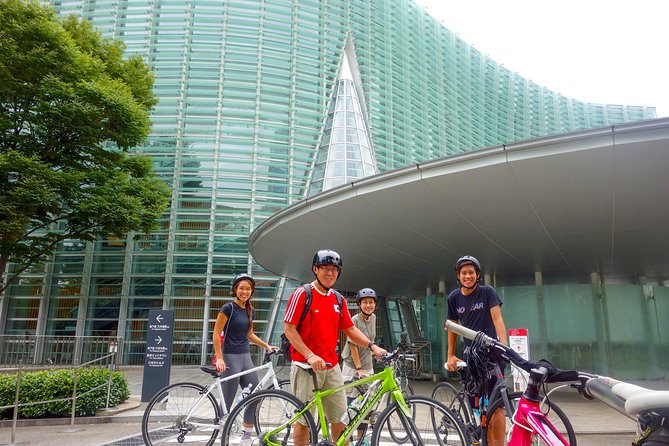
The group limit is five people per booking, and the overall activity also has a maximum of five participants. If others cancel, the tour can feel almost private. That makes it easier to adjust stops based on what you have already seen and to ask questions during the ride.
The price includes the professional guide, bicycle, and helmet. It does not include lunch, drinks, hotel pickup, or drop-off. You meet at 3-chōme-20-2 Nishishinjuku, and the activity returns there.
Free cancellation is available up to 24 hours before the start time. Bad weather, including rain or a heatwave, can cancel the ride, with a full refund offered in that case. The guide is expected to email you by 7 a.m. on the morning of the tour if it is canceled.
Who should book this ride
This tour suits you if you:
- Want a broad introduction to Tokyo in one day
- Enjoy active sightseeing more than riding trains between stops
- Can comfortably ride a multi-speed bicycle for about 20 miles
- Are willing to cycle on busy city roads
- Like a mix of major sights and less famous streets
- Are at least 12 and no older than 69
- Fit the bike height range of 125 to 190 centimeters
- Prefer a small group with direct guide attention
You should think twice if you rarely cycle, dislike traffic, or want a slow luxury tour. This is not an electric-bike ride or a gentle cruiser outing. The route is mostly flat, but distance, heat, road crossings, and stop-and-go riding still require energy.
Wear comfortable clothing and bring a backpack or messenger bag for your lunch and personal items. Check every participant’s height carefully when booking. The supplied bike must fit properly, and an incorrect height can prevent you from riding without a refund.
FAQ
How long is the Tokyo biking tour?
The tour lasts approximately six hours and 30 minutes. The full route is about 20 miles, with time set aside for walking, sightseeing, lunch, and the observation deck.
What sights are included?
The route includes Shinjuku backstreets, a local shrine, Meiji Jingu Shrine, Yoyogi Park, Omotesando, Roppongi Hills, Aoyama Cemetery, Zojo-ji Temple, Tokyo Bay, Ginza, the Imperial Palace, and the Tokyo Metropolitan Government Building.
Is lunch included?
No. You buy a bento box and drinks at a local supermarket at your own expense, carry them in your bag, and eat beside the waterfront near Rainbow Bridge.
Is this an electric-bike tour?
No. The tour uses a cross-city bike with a flat handlebar. It is not a cruiser bike with a high riser handlebar, and an electric bike is not listed as part of the experience.
What age and height limits apply?
The minimum age is 12 and the maximum age is 69. Riders must be between 125 and 190 centimeters tall so the bike can be fitted properly.
What happens if the weather is poor?
Cycling may be canceled because of rain, extreme heat, or other poor conditions. You will be offered another date or a full refund, and the guide will email you by 7 a.m. if the tour is canceled.
Should you book it?
Book this tour if you want to understand Tokyo by moving through it, not just by stopping at isolated attractions. The combination of quiet lanes, major shrines, commercial districts, palace walls, waterfront views, and a high observation deck gives you a useful first-day map of the city.
The strongest reason to go is the route. You cover far more ground than you could on foot, yet you still notice the small streets and neighborhood details that a coach would miss. Gaku’s attentive guiding style is another plus when available.
Skip it if 20 miles sounds daunting or if riding beside traffic makes you uneasy. For reasonably fit cyclists who want an active, highly varied introduction to Tokyo, the price is fair and the day offers far more than a simple sightseeing loop.
Just added around Tokyo
- Kawagoe Japanese Food Tour : Unagi Kaiseki and Sake near Tokyo★ 5.0 · 30 reviews
- Kawagoe 4hr Private Tour with Licensed Guide (Kawagoe Dep)★ 5.0 · 13 reviews
- Little EDO Sushi Making workshop in Kawagoe★ 5.0 · 18 reviews
- 【R34】Tokyo:Private Daikoku tour in Modified R34★ 4.9 · 92 reviews
- :Tokyo,Shibuya/ Pro Photography in Kimono / English-Friendly★ 5.0 · 26 reviews
- Tokyo:Celebrate Unique Japanese New Year Tradition Festivity★ 3.9 · 20 reviews
- Tokyo: Allstar Food Tour★ 4.7 · 29 reviews
- Tokyo: West-Side Cycling and Food Tour with Guide★ 5.0 · 37 reviews
Cycling Tours, compared.
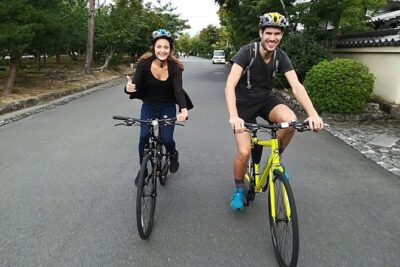
Arashiyama Bamboo Forest & Hidden Gems Bike Tour (Early Bird)
Our verdict →
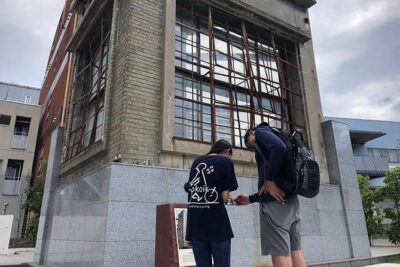
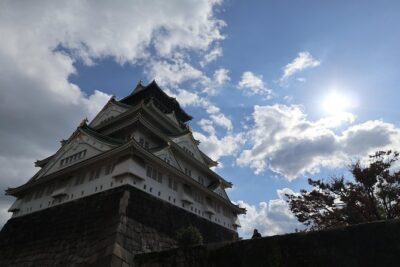
5-Hour Osaka Bike Tour to the Neighborhood of Osaka Castle
Our verdict →Browse the lists this tour appears in