
Reviewed · TRADITIONAL CRAFTS
Tokyo: Knife Making Workshop (Sharpening, Engraving)
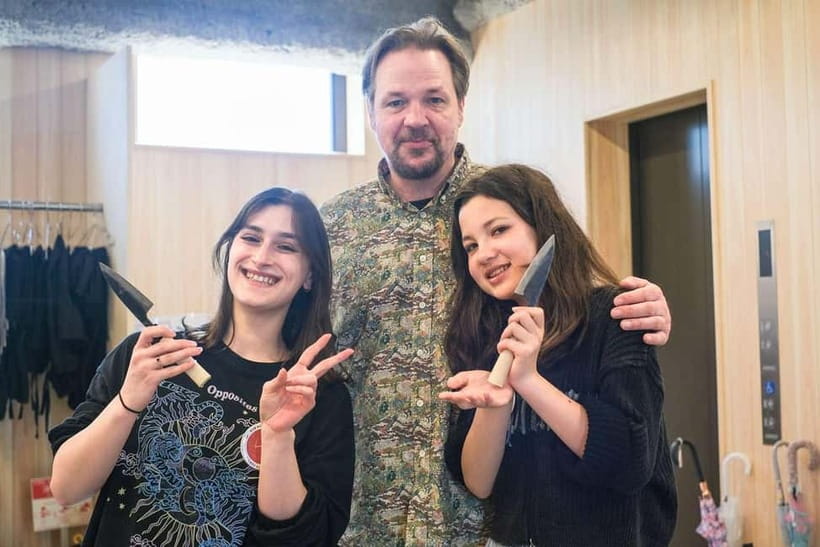
Sharpening a Japanese knife by hand is the heart of this Asakusa workshop. You work slowly over the blade, learn the right angle, and finish by attaching a handle with a traditional hammer. It is part craft lesson, part cultural introduction, and part practical kitchen skill.
I like the useful souvenir and the easygoing instruction. You do not simply buy a knife and carry it home. You help shape its finish, add your name in Japanese, and leave with a story attached to it. I also like the short introduction to Japanese knives and swords, which gives the hands-on work some cultural context.
The main consideration is the price: $161 per person is a serious spend for a 90-minute activity, especially if you only want a basic kitchen knife. Larger or more specialized blades cost extra, and your finished knife must go in checked luggage or be shipped.
Key points to know before booking
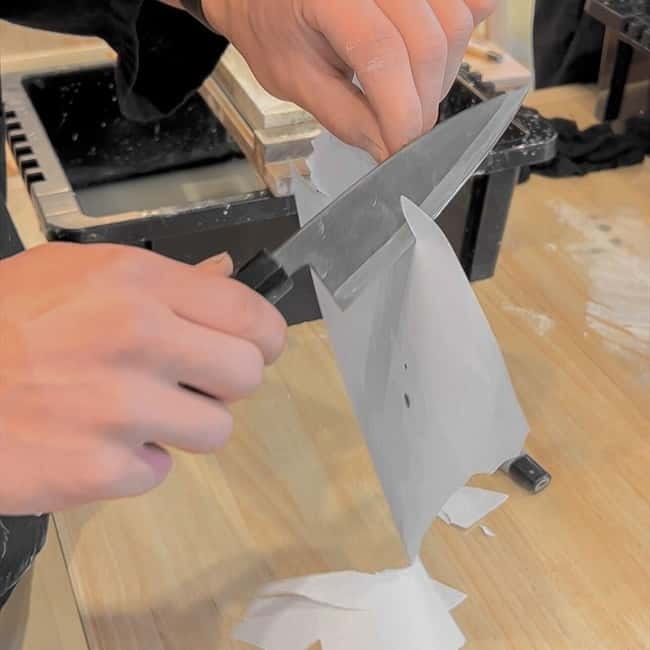
- Sharpen your own Japanese kitchen knife: The main task is careful, hands-on blade work, with staff correcting your movements.
- Choose from several knife types: Up to five styles may be available, with additional charges for options such as usuba, deba, and petit yanagiba.
- Add your name in Japanese: Engrave the handle, or try a simple picture or design with staff assistance.
- Meet English-speaking instructors: Mori, Agata, Lisa, Joe, and other bilingual staff are praised for clear explanations and patient help.
- Leave with more than a blade: The package includes snacks, drinks, a key-holder, and attractive presentation packaging.
- Plan for airline rules: Put the knife box in checked luggage, or ask the center about shipping it.
A hands-on knife lesson in the heart of Asakusa
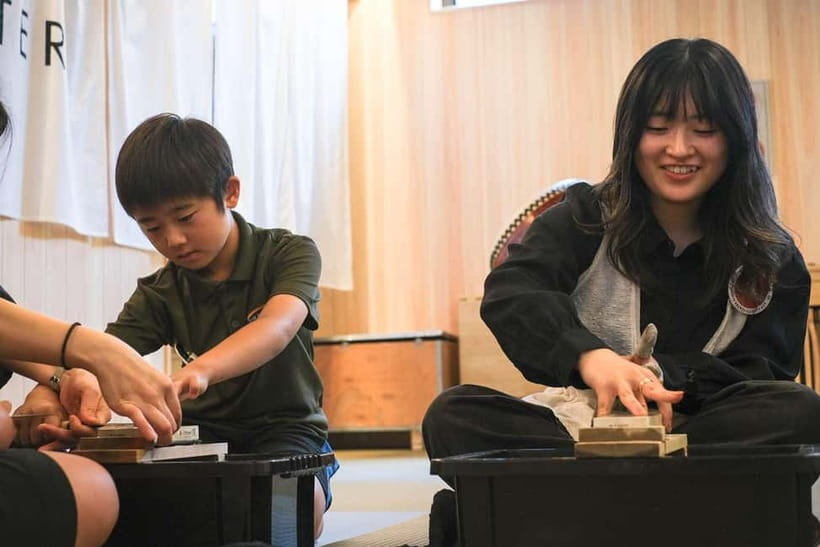
The workshop takes place at BUB Activity Center, at 2 Chome 6-11 in Asakusa’s Taito-ku district. The center is on the fifth floor of the Heiwa Building, so take the elevator rather than searching for a street-level shop.
Its central Tokyo location makes this an easy activity to pair with a day in Asakusa. You can reach the area by public transport, though transportation to the center is not included in the price. Allow enough time to find the building and reach the fifth floor, especially if you are keeping a tight sightseeing schedule.
The session lasts about 90 minutes. That is long enough to learn the basic process without turning the workshop into a full-day craft course. Still, the work is physical and focused, so do not expect a quick demonstration followed by a polished knife handed to you.
You begin by putting on a light haori, a Japanese kimono-style jacket supplied by the staff. It helps protect your clothes from stains and gives the session a nice sense of occasion without requiring special clothing.
You also receive a badge with your name written in Japanese letters. This is a small detail, but it helps set up the language and engraving parts of the activity.
More Craft Workshops in Tokyo
- Tokyo Sumo Experience: Chanko & Mochi with a Former Pro
★ 4.8 · 567 reviews - Kintsugi Experience: Art of Golden Joinery in Tokyo
★ 5.0 · 467 reviews - Tokyo Chopstick Making Workshop with Artisan
★ 5.0 · 466 reviews
Tea, a short history lesson, and your knife choice
Before the sharpening begins, you sit down with tea, juice, or another soft drink. Japanese snacks are also included during the experience.
The opening talk covers the cultural background of Japanese knives and swords. You learn about the difference between Japanese katana and Western swords, along with the role of various kitchen knives. This matters because the blade choice is not just a matter of appearance. Each shape is made for a different kind of kitchen task.
The standard included knife is described as a multi-tasking size. It is the sensible choice if you want a general-purpose souvenir without adding to the cost. The activity may also offer up to five knife types, including larger or more specialized options.
Possible upgrades include an usuba, deba, or petit yanagiba. These names may mean little if you are not familiar with Japanese cooking, so ask the staff what each blade is designed to do before paying extra. The point of the upgrade is to choose a knife that suits your interests, not simply to buy the biggest blade available.
The base price is $161 per person. That includes the standard knife, instruction, drinks, snacks, packaging, the customization work, and a unique key-holder. The value is strongest if you care about learning the technique and want a personal keepsake. It is weaker if you only want a basic knife, since Japanese kitchen knives can also be purchased elsewhere in Tokyo.
One practical advantage is that the knife is not a generic souvenir. You choose the type and size, then take part in sharpening and handle assembly. That personal work gives the item more meaning than a boxed blade bought from a shop.
The quiet work of sharpening
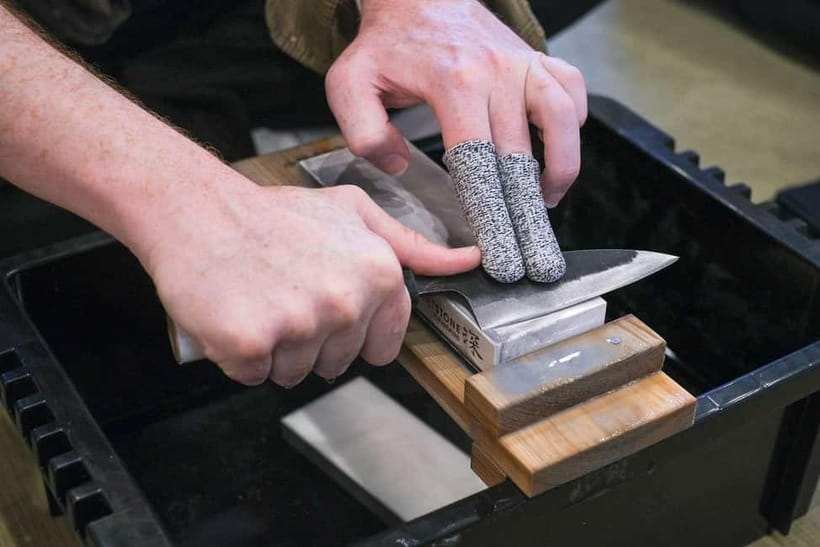
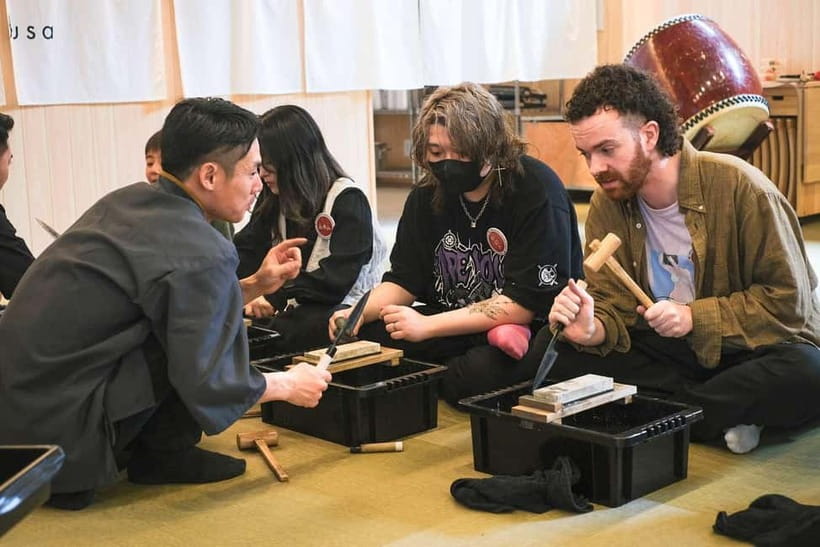
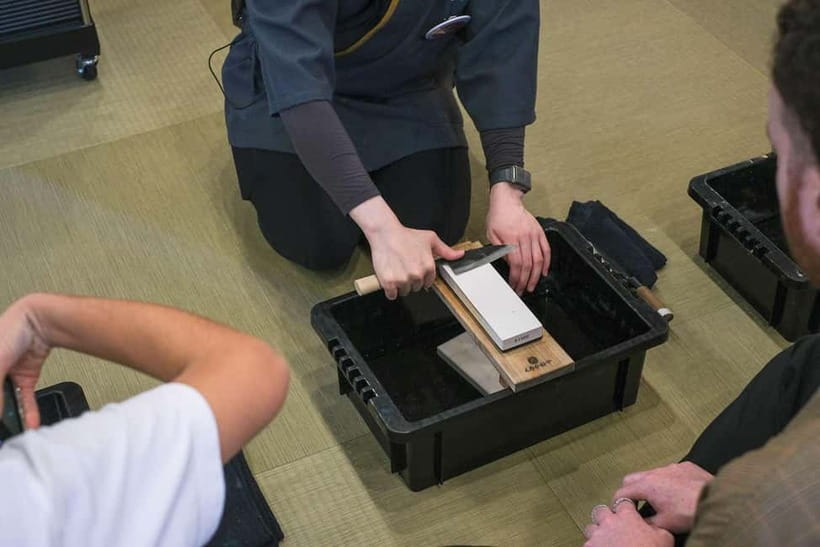
The sharpening stage is the center of the workshop. You work the blade against a sharpening stone, following the angle and movement shown by the instructors.
This is a slow process. Several people describe it as hard work, but also relaxing because it demands concentration. I can see why: you must pay attention to pressure, movement, and consistency. It is not a passive demonstration, and you may need patience before the edge begins to feel right.
The staff stays close to help. English-speaking instructors correct your technique and offer individual advice, which is especially useful for beginners. The session is designed for people with no previous experience, so you do not need to know how to sharpen a knife before arriving.
Names attached to the workshop include Mori, Agata, Lisa, and Joe. The teaching team may vary by session, but the important point is that bilingual staff guide the work and explain the process in clear English. Agata is described as friendly and informative, while Lisa and Joe receive praise for working well as a team. Mori is also noted as an energetic guide.
Do not expect to produce a perfect edge entirely on your own. Your goal is to learn the movements and take part in the process. The instructors may help finish the blade if time becomes tight or if your technique needs correction.
That hands-on approach is valuable. You leave with a better idea of how Japanese knives are cared for, rather than simply owning one more object in your luggage. If you cook at home, the lesson can remain useful long after the Tokyo visit.
Engraving your name and fitting the handle
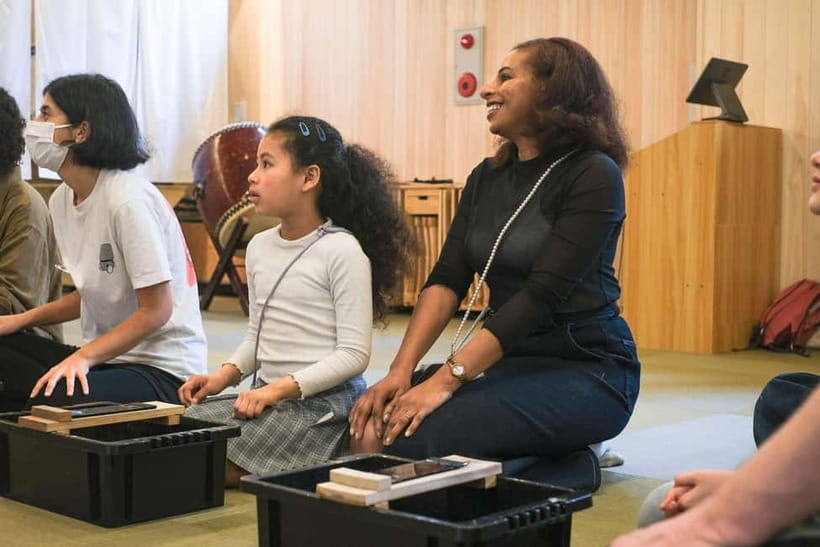
After sharpening, you personalize the handle. The basic idea is to engrave your name in Japanese letters, though you can also attempt a picture or another simple design.
Staff help with the Japanese lettering, so you do not need to know Japanese. They can explain the basics and guide you through the writing. The engraving itself may be challenging. It is handmade work, and the final result may look less tidy than a machine-printed name.
That imperfection is part of the appeal, but it is also the clearest quality concern. One participant felt the handle quality could be better and wanted more engraving options. If you expect a flawless presentation piece, keep your expectations in check. This is a beginner workshop, not a professional blade-making apprenticeship.
You then attach the handle using a traditional hammer. The sound of the hammer and the physical effort make this part feel different from a standard souvenir-painting class. You are finishing an object that can be used, not just decorating a trinket.
The package also includes a customized key-holder with a unique design. It is a smaller gift, but it adds value for anyone who wants a second memento without paying for another knife.
Same trip, a completely different kind of day:
- 1-Day Tokyo Bus Tour
★ 5.0 · 14,250 reviews - Tokyo: TOKYO SKYTREE® Admission ticket
★ 4.5 · 11,192 reviews - Tokyo: teamLab Planets TOKYO Digital Art Museum Entry Ticket
★ 4.6 · 9,779 reviews - Tokyo: Sumo Show Experience with Chicken Hot Pot and a Photo
★ 4.8 · 6,678 reviews
What the finished knife is really worth
The knife you take home is both a practical tool and a reminder of the afternoon. The standard multi-tasking knife should suit someone looking for a flexible kitchen blade, while the upgraded choices may appeal to cooks who already understand the differences between Japanese knife styles.
The final result may not have the refinement of a professionally finished knife. Your engraving can be uneven, and the handle may feel more basic than the price suggests. Still, the point is not to compete with a specialist knife shop. The point is to understand some of the work behind the object and take home something you helped complete.
The cost makes more sense for couples, families, and friends who want a shared activity. A 10-year-old has enjoyed the class with a parent, though the sharpening and hammering still require attention and staff guidance. Children should be comfortable following instructions around a blade.
The observation option can help couples manage the price. One person can participate and receive the knife while the other watches, though an observation fee is charged on site. This is useful when two people want to learn together but do not need two knives.
If both of you cook and want matching souvenirs, paying for two places may be worthwhile. If you only want to watch, confirm the observation fee before arriving.
The practical details that matter after class
The knife cannot go through airport security in your carry-on luggage. Put the knife box into your checked bag, or ask the staff about shipping it. This is easy to overlook when you are moving between hotels or flying soon after the workshop.
The attractive packaging helps protect the item, but it does not change airline rules. Keep the knife safely boxed and follow the instructions for your flight.
The activity is wheelchair accessible. English is the listed activity language, and bilingual staff provide assistance throughout the session.
Free cancellation is available up to 24 hours before the start time for a full refund. You can also reserve now and pay later, which is helpful if your Tokyo plans are still shifting. Alcohol and drugs are not allowed.
The center asks visitors who have trouble finding the fifth-floor location to contact the activity provider. That is sensible advice in Tokyo, where a building entrance can be easy to miss among signs and narrow commercial fronts.
Who will enjoy this workshop most
I would choose this experience for someone who likes cooking, Japanese craft, hands-on souvenirs, or small cultural lessons with a practical result. It also suits a parent and child, friends, or couples who want to do something more active than visit another shop.
It is a particularly good match if you have been planning to buy a Japanese kitchen knife anyway. The class gives you a basic understanding of blade care before you spend more money in Tokyo’s kitchenware districts. Afterward, you can visit a knife shop with a better idea of what you want.
It is less suitable if you dislike repetitive hand work or want a fast, polished product. The sharpening takes concentration, and the engraving is not guaranteed to look professionally finished. You also pay for instruction and the cultural setting, not only for the metal and handle.
The staff’s approach helps balance the difficulty. English-speaking guides keep checking your technique, explain the process in plain language, and make room for jokes and conversation. That friendly teaching is one of the strongest reasons to book instead of buying a knife on your own.
Should you book the Asakusa knife workshop?
Book it if you want a personal souvenir and enjoy learning by doing. The 90-minute format gives you a clear introduction to Japanese knife and sword traditions, a real sharpening lesson, handle assembly, engraving, snacks, and a packaged knife to take home.
At $161, it is not a bargain purchase. The price becomes easier to justify when you count the instruction, customization, key-holder, refreshments, and the memory of making the item yourself. Ask about upgraded blades before committing, and decide if the standard knife is enough for your needs.
My practical advice is to schedule it when you have room afterward. Some sessions run longer than expected when staff help finish a knife or when the group takes its time. Bring a relaxed attitude, wear clothes you do not mind protecting with the supplied haori, and leave space in your checked luggage.
For a hands-on Tokyo activity with a useful result, this is a strong choice. For a cheap souvenir or a professional knife fitting, shop elsewhere.
FAQ
Where does the knife-making workshop take place?
It takes place at BUB Activity Center, Tokyo, Taito-ku, Asakusa, 2 Chome 6-11, Heiwa Building. Take the elevator to the fifth floor.
How long does the activity last?
The scheduled duration is approximately 90 minutes, or 1.5 hours.
What kind of knife is included?
The price includes a standard-size, multi-tasking kitchen knife to take home.
Can I choose a different knife?
Yes. Up to five knife types may be available. Usuba, deba, and petit yanagiba knives require an additional fee.
Do I need previous sharpening experience?
No. The workshop is suitable for beginners, and staff guide you through the sharpening process.
Is the instruction available in English?
Yes. English is the activity language, and bilingual staff assist with explanations and technique.
Can I engrave something besides my name?
You can engrave your name in Japanese letters and may also try a picture or another design with staff assistance.
Can a friend or family member watch?
Yes, but an observation fee is charged on site for someone who attends without participating.
How should I take the finished knife home?
Put the knife box in your checked luggage, or ask the staff about shipping it. Do not plan to carry it through airport security in your hand luggage.
Just added around Tokyo
- Kawagoe Japanese Food Tour : Unagi Kaiseki and Sake near Tokyo★ 5.0 · 30 reviews
- Kawagoe 4hr Private Tour with Licensed Guide (Kawagoe Dep)★ 5.0 · 13 reviews
- Little EDO Sushi Making workshop in Kawagoe★ 5.0 · 18 reviews
- 【R34】Tokyo:Private Daikoku tour in Modified R34★ 4.9 · 92 reviews
- :Tokyo,Shibuya/ Pro Photography in Kimono / English-Friendly★ 5.0 · 26 reviews
- Tokyo:Celebrate Unique Japanese New Year Tradition Festivity★ 3.9 · 20 reviews
- Tokyo: Allstar Food Tour★ 4.7 · 29 reviews
- Tokyo: West-Side Cycling and Food Tour with Guide★ 5.0 · 37 reviews
Traditional Crafts, compared.
Tokyo Sumo Experience: Chanko & Mochi with a Former Pro
Our verdict →
Kintsugi Experience: Art of Golden Joinery in Tokyo
Our verdict →

Matcha Making Experience with Mochi Sweets in Asakusa
Our verdict →
Authentic knife making experience at a blacksmith in Kyoto
Our verdict →

Roketsu dyeing experience: M course Roketsu Dyeing Experience
Our verdict →Browse the lists this tour appears in