
Reviewed · TRADITIONAL CRAFTS
Tokyo: Kintsugi Workshop to Learn the Art of Golden Joinery
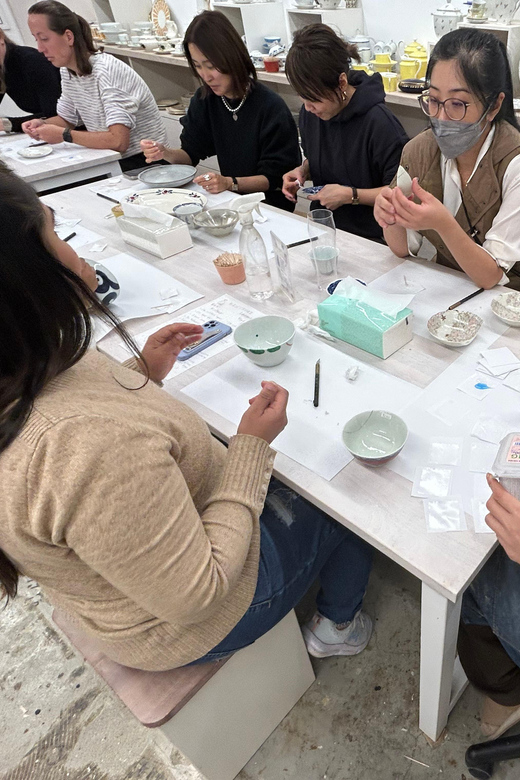
Broken pottery gets a second life in this small Tokyo workshop, where cracks become golden seams instead of flaws to hide. I like the hands-on pace and the quiet reflection built into the work, especially when you have time to handle each step yourself. I also like that your finished piece becomes a personal souvenir, not another mass-produced trinket.
The main point to check is the size of the project. One experience produced only a small repaired section, while another resulted in a bowl with a single gold crack. At ¥63, plus ¥1,000 to ¥2,000 for the plate, this is worthwhile if you want a thoughtful craft lesson, but less so if you expect to restore a whole large bowl.
Key points at a glance
- A two-hour introduction to kintsugi: Learn the craft and its philosophy at a relaxed, manageable pace.
- Small groups of up to six: You get more room for questions and individual help than in a large class.
- English instruction: The workshop is offered in English, with instructors including Anne and Chiara.
- The repair piece costs extra: Budget ¥1,000 to ¥2,000 for the plate you will work on.
- Hands-on work includes filing: One participant noted that pottery filing can take about half an hour, so this is not a passive demonstration.
- Your work goes home with you: The repaired piece becomes a useful reminder of preservation, patience, and imperfection.
Why kintsugi makes a memorable Tokyo activity
Kintsugi, written 金継ぎ, means golden joinery. The practice dates to the 15th century and uses lacquer plus powdered gold, silver, or platinum to repair cracked or broken ceramics. Instead of pretending the damage never happened, the repair marks become part of the object’s story.
That idea connects with wabi-sabi, a Japanese aesthetic that values imperfection, impermanence, and the marks of time. You do not need a background in Japanese art to understand the appeal. A chipped plate is no longer something to throw away. Its history becomes visible.
I like this workshop because the idea is not left in a museum label or a lecture. You work with the material yourself. The process asks you to slow down, pay attention, and accept that a handmade result may not look factory-perfect. That is useful after several busy days in Tokyo, when an activity with no rush can feel like a welcome change.
The class also gives you a souvenir with a story. You are not simply buying an object made somewhere else. You are taking home the piece you repaired, along with a better sense of why the repair matters.
More Craft Workshops in Tokyo
- Tokyo Sumo Experience: Chanko & Mochi with a Former Pro
★ 4.8 · 567 reviews - Kintsugi Experience: Art of Golden Joinery in Tokyo
★ 5.0 · 467 reviews - Tokyo Chopstick Making Workshop with Artisan
★ 5.0 · 466 reviews
Meeting your guide near Gakugei Daigaku Station
The meeting point is Gakugei Daigaku Station, where you meet the guide before heading to the workshop. The guide sends a picture of themselves before the meeting time, a practical touch that should make the first meeting easier in a busy city.
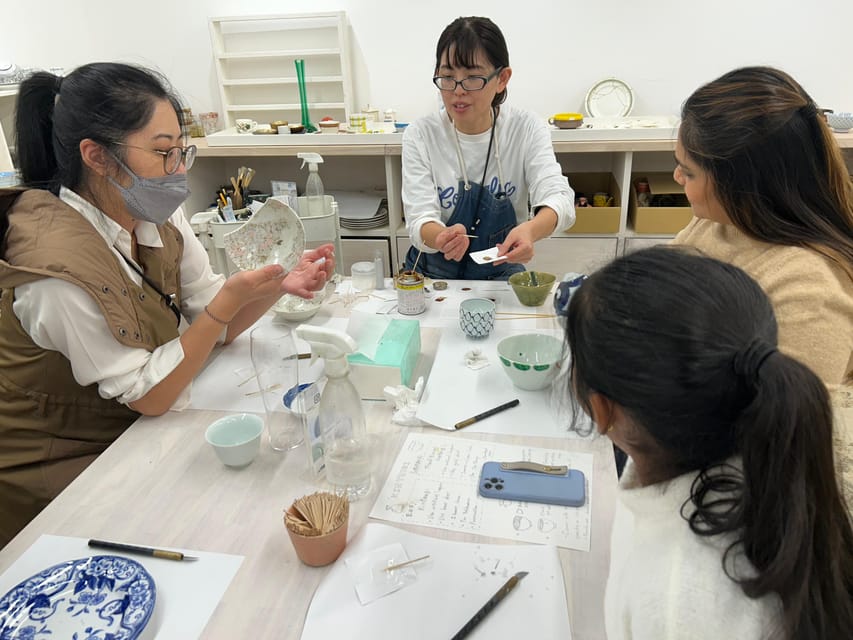
The class is conducted in English. The named instructors include Anne and Chiara. Anne is described as having planned the materials and teaching process carefully, while Chiara guided one participant through each step with help from a translator who also knew the craft. The exact instructor may vary, so check your booking details.
The group is limited to six people. That matters here. Kintsugi involves small, careful movements, and you may need someone to steady your hand or explain a technique again. A group of six still allows conversation, but it should not feel like an assembly line.
Allow extra time to reach the station and locate the guide. The meeting instructions are simple, but you should not arrive at the last minute for an activity with a fixed two-hour session.
Choosing the plate and setting expectations
The plate is not included in the listed price. You arrange it separately for about ¥1,000 to ¥2,000. The workshop provides the main tools, including lacquer and gold powder, but this extra cost is important when comparing the total price with other craft classes in Tokyo.
The information describes broken pottery as part of the supplied materials, yet the separate plate charge means you should confirm exactly what your booking includes. The size and amount of damage also affect the final result. A small repair and a full bowl restoration are very different projects.
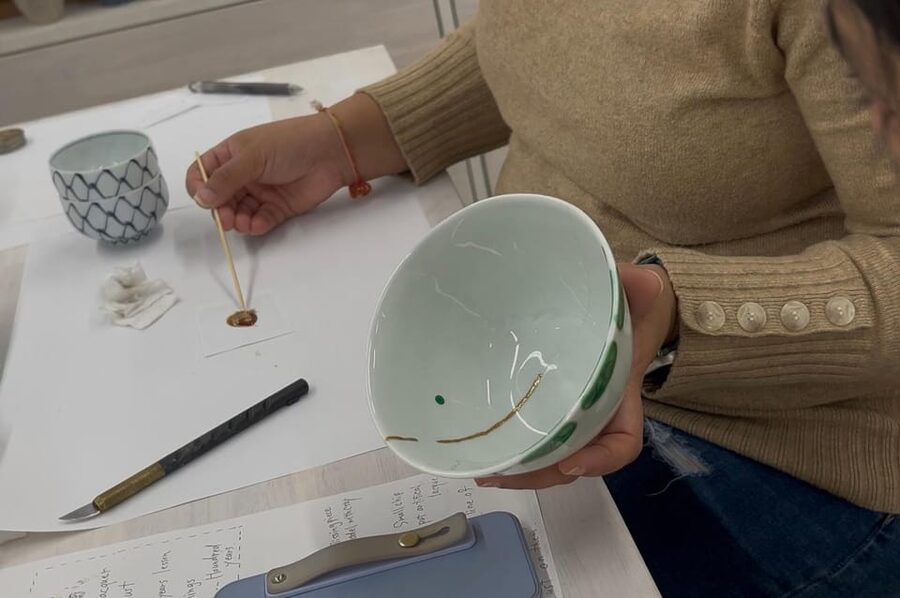
This is the most important practical point. One participant expected to repair an entire bowl but instead worked on a tiny section. Another finished a bowl with one gilded crack and loved it. The class seems best understood as an introduction to the method, not a guaranteed full restoration of a large vessel.
Ask about the available piece if the scale of the project matters to you. If you want a simple, clearly defined repair, a smaller plate may suit you. If you hope to mend a large bowl, confirm that before booking.
The opening lesson: craft, history, and wabi-sabi
The workshop begins with a brief introduction to kintsugi and its philosophy. You learn why Japanese craft traditions may preserve an object rather than replace it, and how visible repair can add meaning rather than reduce value.
The historical explanation also covers the materials. One class included a story about how the adhesive was made in earlier times, giving the practical work a useful connection to the past. This short background helps you see the gold line as more than decoration.
Do not expect a long academic lecture. The introduction is brief, then the focus moves to your own pottery. That balance suits a two-hour session. You get enough context to understand the activity without spending most of the class watching someone else talk.
The philosophy may also change how you judge your result. The finished seam does not need to be perfectly even. A handmade line, slight variation, or visible repair is part of the point.
Same trip, a completely different kind of day:
- 1-Day Tokyo Bus Tour
★ 5.0 · 14,250 reviews - Tokyo: TOKYO SKYTREE® Admission ticket
★ 4.5 · 11,192 reviews - Tokyo: teamLab Planets TOKYO Digital Art Museum Entry Ticket
★ 4.6 · 9,779 reviews - Tokyo: Sumo Show Experience with Chicken Hot Pot and a Photo
★ 4.8 · 6,678 reviews
Filing, joining, and applying the gold
The work is hands-on. You do not simply watch an instructor repair a prepared item while you take photographs. You take responsibility for the steps, with guidance available when needed.
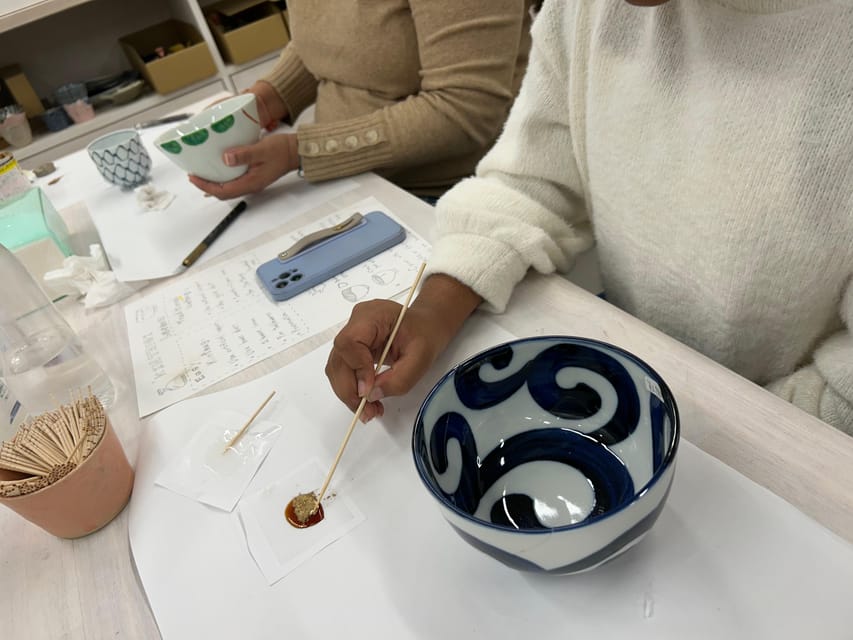
One participant noted that filing the pottery can take about half an hour. This is useful to know before booking. The task may sound simple, but it takes patience and care. Families with younger children should pay attention to this part, since a long period of filing may be difficult for small children. One participant considered the activity a good fit for children over 12.
After the pieces are prepared, artificial lacquer is used to join or fill the damaged area. Gold powder then brings out the repair line. The workshop supplies these materials, so you do not need to purchase lacquer or gold separately.
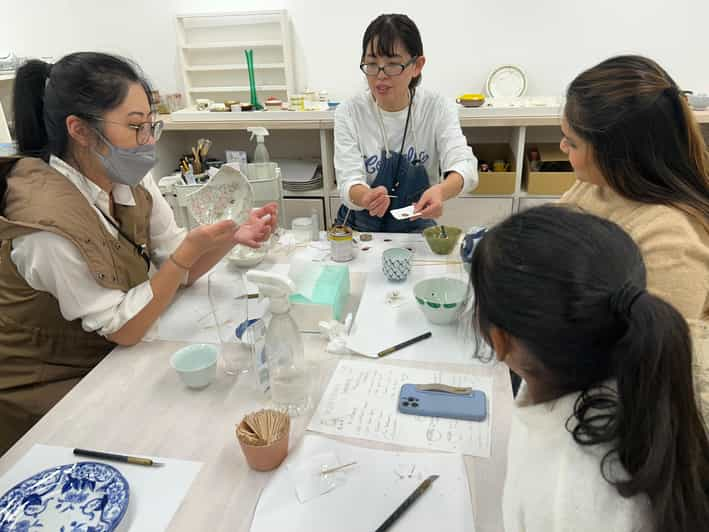
The instructor explains each step, then lets you do the work. That teaching style gives the class its value. You can ask questions, try the technique, and receive a steadying hand if needed. Anne and Chiara are both specifically connected with clear, supportive instruction, though the instructor for your session may be different.
The gold is not meant to erase the break. It draws your eye to it. That is the central lesson of kintsugi, and you understand it best when the repaired area is your own work.
A calm two hours rather than a rushed craft stop
Two hours is a good length for this activity. A shorter class might leave you with a quick demonstration and little time to work. Here, you have room to follow the stages, ask questions, and talk with the instructor or other members of the group.
The pace also makes the workshop calming. Filing, applying lacquer, and handling gold powder require attention. You cannot rush every movement, which encourages you to put your phone away and focus on the piece in front of you.
That calm mood is one of the strongest reasons to choose this over another standard souvenir-making activity. You still learn a practical skill, but the class also gives you time to think about repair and renewal. The setting is not described in detail, so do not book it expecting a grand studio or a formal cultural performance. Its appeal is the work itself.
The small group adds to the relaxed feel. With no more than six participants, you can interact with the instructor and see how other people approach the same process.
What you take home, and what may surprise you
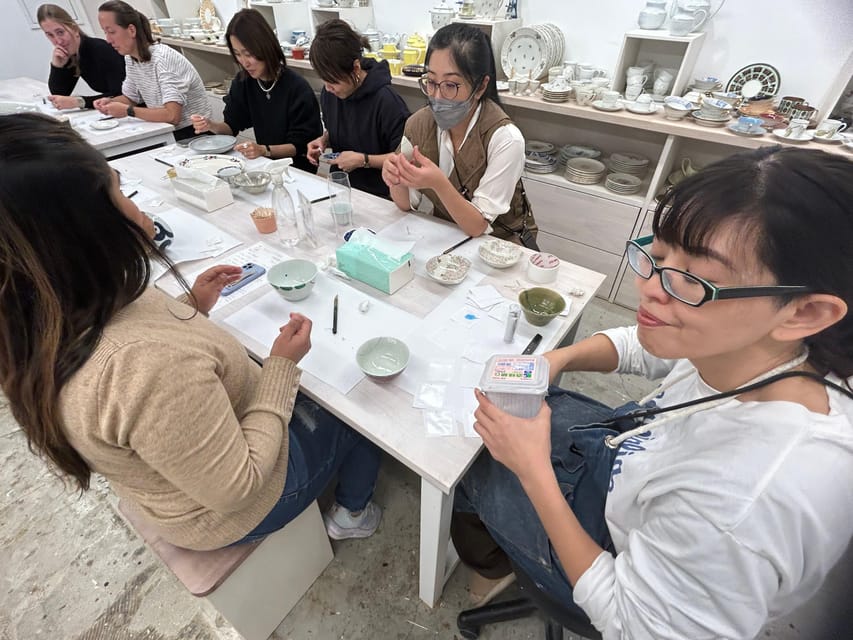
At the end, you take home your repaired piece. Depending on the pottery and the extent of the repair, this may be a plate, bowl, or another small ceramic item. The finished piece has a visible gold seam and your own fingerprints in the process.
That makes it a stronger keepsake than a generic souvenir. It recalls a specific morning or afternoon in Tokyo, the station where you met, the technique you learned, and the patience needed to finish the repair.
Still, keep your expectations realistic. The class does not promise a large bowl, many cracks, or a dramatic before-and-after result. The amount of repair may be limited. If you measure value by the size of the finished object, ¥63 plus the plate charge may feel high.
If you measure value by the lesson, the personal effort, and the idea behind the craft, the price is easier to justify. You are paying for instruction, materials such as lacquer and gold powder, a small group setting, and a piece you can keep.
Who will enjoy this workshop most
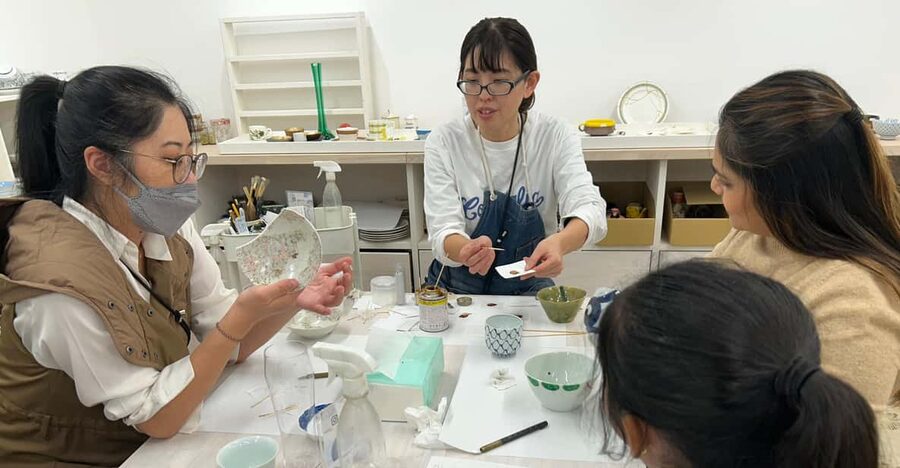
I would recommend this activity to solo visitors, couples, friends, and families with older children. It gives solo visitors an easy way to meet a few people without committing to a full-day group tour. Couples and friends can work side by side, then compare their finished pieces.
It also suits anyone who wants a quieter activity between Tokyo’s major sights. The workshop is not a sightseeing tour, so it will not show you famous landmarks or provide a broad city overview. Its value is focused and personal.
Art and craft enthusiasts will get the most from it, but you do not need artistic skill. The instructor explains each step, and the process is structured. You should be comfortable working carefully with pottery and spending a portion of the class filing the piece.
You may want to skip it if you need a fast activity, dislike repetitive handwork, or expect to repair a large object from start to finish. The class is also not a good choice for babies under one year.
The accessibility information needs checking before you reserve. One part of the information describes the activity as wheelchair accessible, while another says it is not suitable for wheelchair users. Because those statements conflict, contact the provider before booking if you use a wheelchair.
Is ¥63 good value?
The listed price is $63 per person, with the plate costing another ¥1,000 to ¥2,000. That is not cheap for a two-hour activity, especially if your repair is small.
The price becomes more reasonable when you value the small group and direct instruction. A group of six or fewer gives the class a more personal feel than a large craft demonstration. You also receive the tools and materials needed for the repair, including artificial lacquer and gold powder.
The main value is the experience, not the raw amount of pottery. If you want a substantial object, ask what kind of plate is available and how much of it you will repair. If you want a reflective cultural activity with a personal keepsake, the total cost may feel fair.
The rating is 4.8 from 27 reviews, with especially strong praise for the instructors, careful preparation, clear explanations, and relaxed two-hour pace. The one clear warning is about the amount of pottery repaired. Treat that as a booking question, not a minor detail.
Booking details worth knowing
You can cancel up to 24 hours before the activity for a full refund. A reserve-now, pay-later option is also available, which helps if your Tokyo schedule may change.
Starting times vary, so check availability for your date. If no slot appears, the provider asks you to contact them through WhatsApp, since they may be able to adjust the schedule.
The activity is offered in English and is limited to six people. Meet at Gakugei Daigaku Station, and watch for the guide’s identification photo before the meeting time.
Should you book this kintsugi workshop?
Book it if you want a thoughtful, hands-on Tokyo activity and you like the idea of carrying home something you repaired yourself. The English instruction, small group, patient two-hour format, and strong teaching make it a good choice for solo visitors, couples, friends, and families with children over 12.
Before paying, confirm the size of the plate and the amount of repair included. That is the deciding factor. If you expect to restore an entire large bowl, you may be disappointed. If you are happy with a smaller ceramic piece and value the lesson behind the golden seam, this workshop offers a personal souvenir and a clear introduction to one of Japan’s most meaningful craft traditions.
FAQ
Where does the workshop meet?
You meet the guide at Gakugei Daigaku Station. The guide will send a picture of themselves before the meeting time.
How long does the kintsugi workshop last?
The activity lasts two hours.
How much does the workshop cost?
The listed price is $63 per person. The plate is not included and costs about ¥1,000 to ¥2,000.
Is the plate included?
No. You need to arrange the plate separately for approximately ¥1,000 to ¥2,000.
What materials are provided?
The workshop provides the main tools, including artificial lacquer and gold powder. Broken pottery is also part of the activity materials, but confirm the exact plate arrangement when booking.
Is the workshop taught in English?
Yes. The instructor language is English.
How many people are in the group?
The group is limited to six participants.
Can I take my repaired piece home?
Yes. You take home the piece you repair as a personal keepsake.
Can I cancel for a full refund?
Yes. You can cancel up to 24 hours in advance for a full refund.
Is the activity suitable for children?
The activity is not suitable for babies under one year. Because filing the pottery may take about half an hour, it is suggested for children over 12.
Just added around Tokyo
- Kawagoe Japanese Food Tour : Unagi Kaiseki and Sake near Tokyo★ 5.0 · 30 reviews
- Kawagoe 4hr Private Tour with Licensed Guide (Kawagoe Dep)★ 5.0 · 13 reviews
- Little EDO Sushi Making workshop in Kawagoe★ 5.0 · 18 reviews
- 【R34】Tokyo:Private Daikoku tour in Modified R34★ 4.9 · 92 reviews
- :Tokyo,Shibuya/ Pro Photography in Kimono / English-Friendly★ 5.0 · 26 reviews
- Tokyo:Celebrate Unique Japanese New Year Tradition Festivity★ 3.9 · 20 reviews
- Tokyo: Allstar Food Tour★ 4.7 · 29 reviews
- Tokyo:Calligraphy &Make your original folding fan in Asakusa★ 5.0 · 62 reviews
Traditional Crafts, compared.
Tokyo Sumo Experience: Chanko & Mochi with a Former Pro
Our verdict →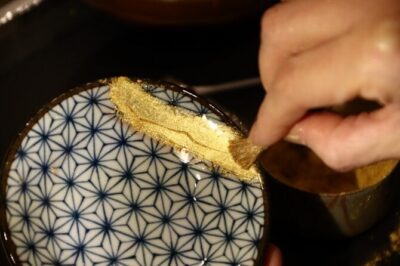
Kintsugi Experience: Art of Golden Joinery in Tokyo
Our verdict →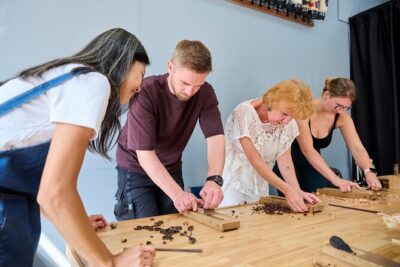
Matcha Making Experience with Mochi Sweets in Asakusa
Our verdict →
Authentic knife making experience at a blacksmith in Kyoto
Our verdict →

Roketsu dyeing experience: M course Roketsu Dyeing Experience
Our verdict →Browse the lists this tour appears in