
Reviewed · FOOD TOURS
Tokyo: Best of Shibuya Food Tour
Shibuya’s famous crossing is only the front door. This tour leads you into small restaurants, narrow lanes, and food counters where the city feels less like a postcard and more like a place where people come to eat. You may try sushi, okonomiyaki, ramen, regional dishes, and traditional sweets, with a guide explaining what is on the table and why it matters.
I like the five-stop format, which gives you a broad taste of Japan in three hours, and I like the way the guides add practical Tokyo advice along the walk. Guides including Alex, Jane, Saika, Maya, and Kumie have been praised for their warmth, humor, and ability to adjust to families or food restrictions.
The main drawback is that this is a walking and standing tour, and the full three-hour schedule can feel long if you need frequent seats. At $170 per person, it is also best for people who value guidance, variety, and cultural context rather than simply wanting the cheapest meal in Shibuya.
Key points to know before booking
- Five food stops in three hours: Expect a tasting route rather than one long restaurant meal.
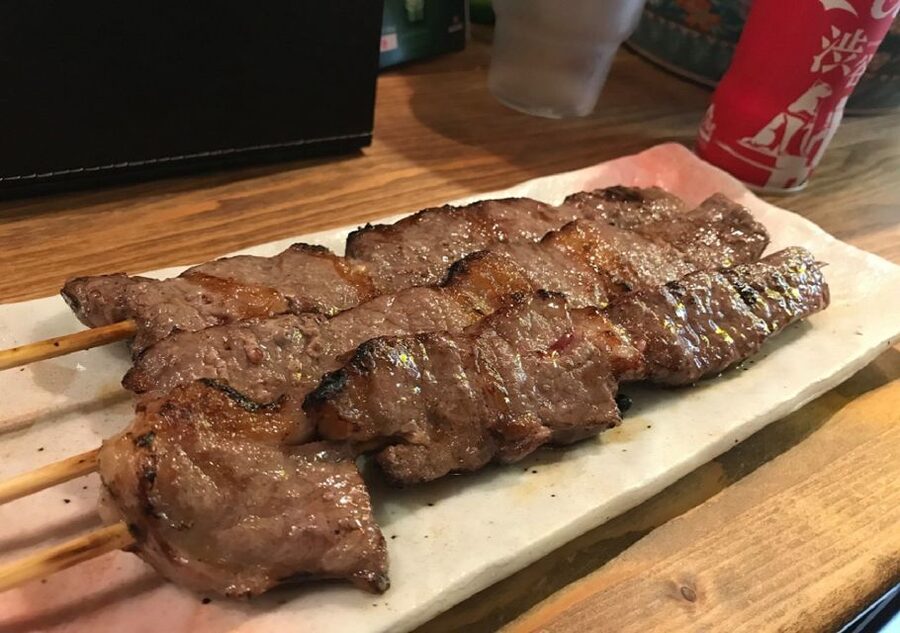
- Dishes can vary: Past routes have included sushi, okonomiyaki, izakaya food, ramen, takoyaki, Kobe beef, and Japanese desserts.
- A useful introduction to Shibuya: The walk goes beyond the Scramble Crossing and into local eating streets.
- Small groups: The advertised maximum is 10 people, though an older outing had 12, so confirm the current group size when booking.
- Two drinks and dessert included: Extra food and drinks cost more.
- Strict meeting rule: Meet at the colorful Hachiko wall mural, not at the crowded statue, and arrive early.
Shibuya beyond the Scramble Crossing
Most first visits to Shibuya begin with the famous crossing, a sea of umbrellas, screens, and camera phones. This tour uses that familiar spot as a starting point, then turns you toward a quieter side of the district. You walk through backstreets, enter compact restaurants, and see how much eating goes on above street level, below department stores, and inside tiny storefronts.
That change of pace is the tour’s real value. Shibuya can feel confusing because the big signs point you toward shopping centers and major chains. A local guide helps you read the smaller clues: where a restaurant entrance is tucked away, how a Japanese menu works, and which dishes are worth trying when you cannot easily interpret the signs.
The guides bring different personalities and backgrounds. Alex has been praised for mixing food talk with stories about Japanese and Mexican culture. Saika has been noted for excellent English, humor, photos, and extra time with her group. Kumie made a point of working around food restrictions while still helping everyone try something interesting. Your guide will determine much of the evening’s tone, but the small-group format gives you a good chance to ask questions.
More Food Tours in Tokyo
- Tokyo: Shinjuku Food Tour (13 Dishes at 4 Local Eateries)
★ 5.0 · 6,603 reviews - Tokyo Tsukiji Fish Market Food and Culture Walking Tour
★ 5.0 · 3,184 reviews - Tokyo: Shinjuku Food Tour (15 Dishes and 4 Eateries)
★ 4.9 · 2,033 reviews
Five stops, five ways to eat
The exact menu can change, so I would not book this expecting one fixed list of dishes. The experience is designed around five food stops, and past routes have covered several classic Japanese styles.
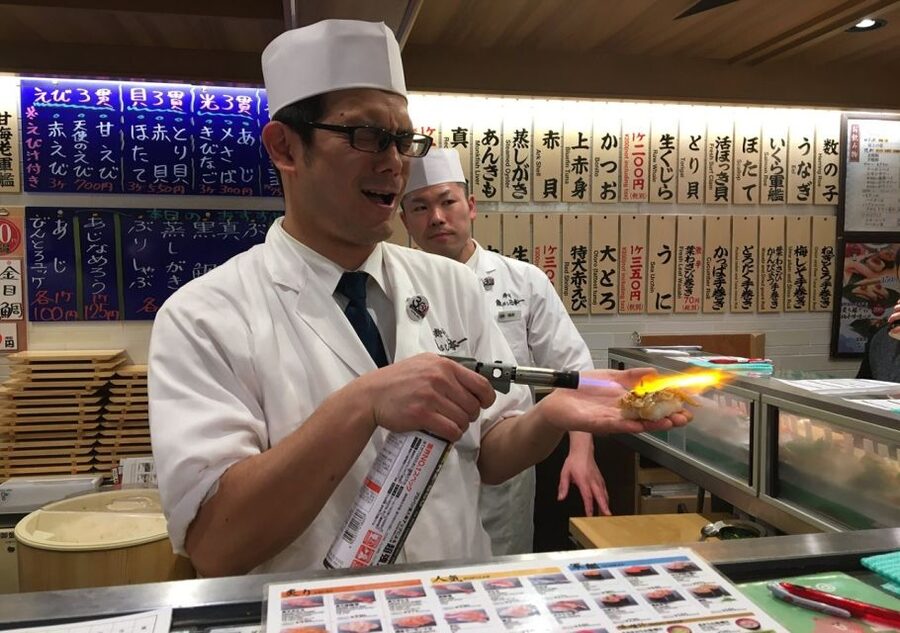
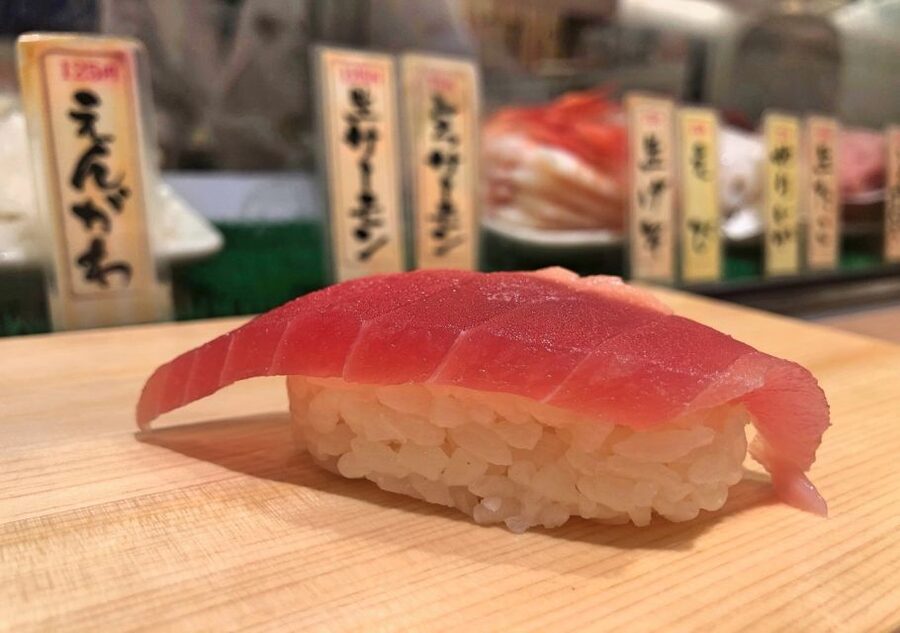
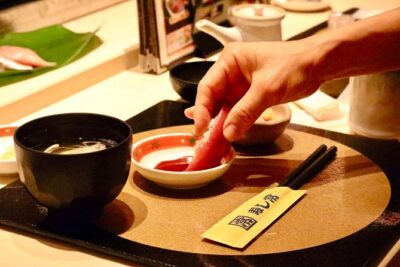
A standing sushi restaurant has been part of one especially well-liked route. This kind of stop gives you a quick look at a practical side of Tokyo dining, where a meal can be fresh, focused, and fast. It also offers a useful contrast with the large dining rooms and polished counters many first-time visitors seek out.
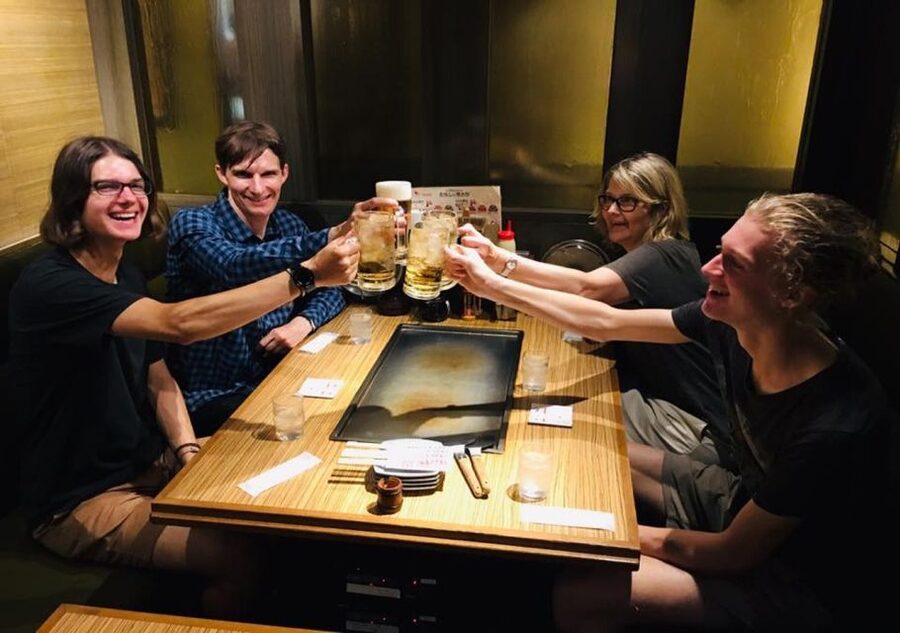
An izakaya stop may follow. An izakaya is a Japanese drinking and dining place with small plates meant to share. It is a good setting for learning how people order several dishes instead of choosing one large main course. Since two drinks are included, this part of the tour can also help you try a Japanese drink without having to decode an entire beverage menu alone.
Okonomiyaki has appeared on past routes, including a place serving regional versions of the savory pancake. The dish is cooked with a mixture that can include cabbage and other ingredients, then finished with sauces and toppings. It is social food, and watching it being prepared adds something that a quick taste at a food court cannot provide.
Ramen is another possible stop. A small ramen restaurant gives you a chance to see a more focused kind of Japanese meal, with the broth, noodles, and toppings doing most of the work. One past group visited a ramen street restaurant, while another praised the variety of food that included takoyaki and Kobe beef. These examples show the route’s range, but they are not promises of a particular menu on your date.
The final stop is dessert, often tied to a visit through a Shibuya depachika. These underground or department-store food halls are a useful part of Tokyo’s food culture. You will see carefully presented sweets, prepared foods, and gift items in a setting that feels polished and distinctly Japanese. Ending with dessert gives the tour a clear finish and prevents the experience from becoming a string of savory dishes.
Why the guide matters
Food tours succeed or fail on the guide, and this one has a strong record of guides who do more than point at dishes. The best moments come when you ask simple questions: Why is this eaten this way? What is the regional connection? How does an izakaya work? What should I order later in the trip?
Alex has been singled out repeatedly for being fun, informed, and generous with recommendations for other parts of Tokyo and Japan. Maya has been praised for choosing good stops and adding history and small cultural details. Jane has led groups to independent restaurants that would be difficult to find without help. Other named guides, including Shion, Michie, Ryan, Ramona, Norma, and Akira, have also been praised for food knowledge, English, and friendly company.
That variety can be useful if you are nervous about ordering unfamiliar food. The guide can explain what you are eating and help with the rhythm of each stop. One group even received photos taken during the walk and shared afterward, though you should treat that as a personal touch from a particular guide, not a guaranteed inclusion.
The tour can also work well for families. Children as young as six have enjoyed the food and the relaxed storytelling, and another family with children aged eight and ten had a good experience. Still, your children need to be open to new flavors and able to walk or stand for much of the afternoon or evening.
Food variety, portions, and dietary needs
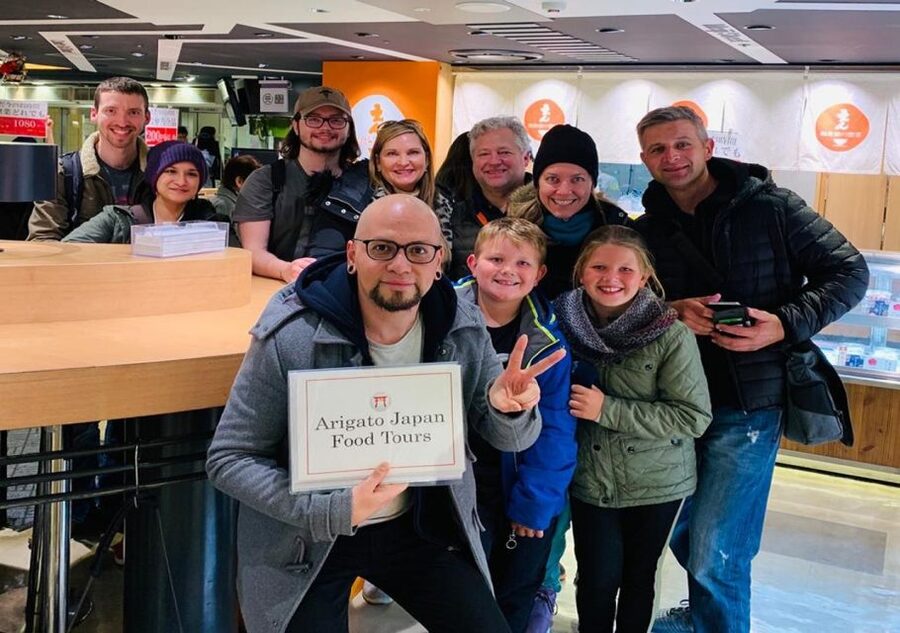
You should arrive hungry. The included food is described as generous, and one past participant found the portions so filling that half portions or smaller samples would have been useful. This is not a tour where you nibble one bite at each stop and then go searching for dinner immediately afterward.
The variety is a major strength. You may move from sushi to a cooked dish, then to noodles and sweets, which gives you a wider look at Japanese food than a single restaurant meal. The guide can also explain regional differences, traditional preparation, and the customs tied to certain dishes.
Food restrictions need to be discussed before you book or as early as possible. Kumie was able to help a group with restrictions try a broad selection, but the tour description does not promise a specific dietary program or a fully adapted menu. If you have allergies, serious intolerances, or religious food rules, ask the operator what can be accommodated.
Do not assume every stop offers a formal seated meal. One older group reported that only one of its food places had seats. That point matters for anyone with limited mobility, small children, or a strong preference for a slower dinner. Comfortable shoes are listed as essential, and I would take that advice seriously.
Same trip, a completely different kind of day:
- 1-Day Tokyo Bus Tour
★ 5.0 · 14,250 reviews - Tokyo: TOKYO SKYTREE® Admission ticket
★ 4.5 · 11,192 reviews - Tokyo: teamLab Planets TOKYO Digital Art Museum Entry Ticket
★ 4.6 · 9,779 reviews - Tokyo: Sumo Show Experience with Chicken Hot Pot and a Photo
★ 4.8 · 6,678 reviews
The walk, the group size, and the pace
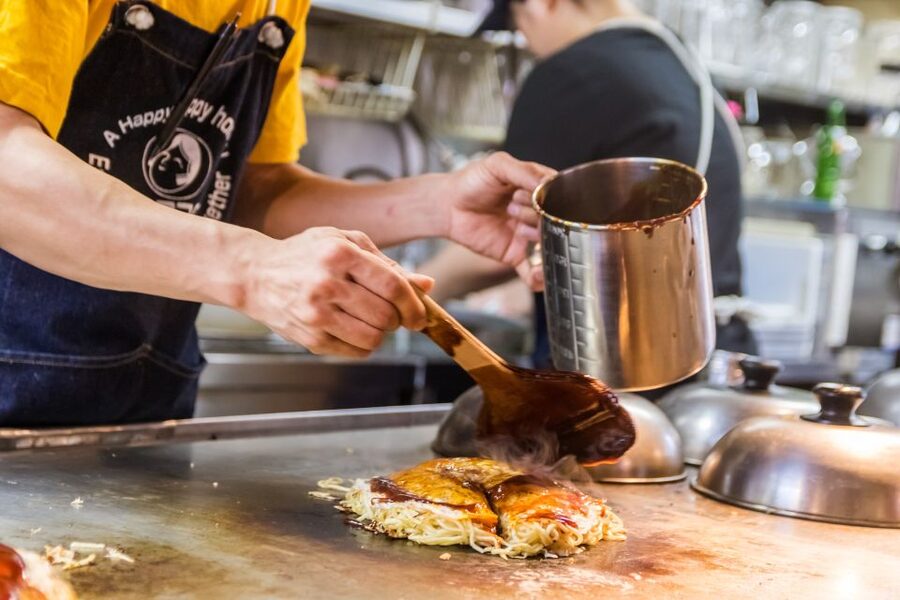
Three hours is long enough to build a real sense of place without taking an entire day from your Tokyo plans. You get food, neighborhood orientation, and cultural explanation in one block of time. I would schedule it early in your Tokyo stay if possible, since the guide’s restaurant suggestions can help shape later meals.
The advertised group limit is 10 people. That is a sensible size for small restaurants, where a large party can take over the room and make ordering harder. One older experience had 12 people and found the group too large, especially when another group was visiting the same places. The current maximum is stated as 10, but it is worth checking the booking details if group size matters to you.
Expect city walking, short stops, and time spent standing. You are not being driven between restaurants, and transportation costs are not included. Hotel pickup is not part of the standard package, although it can be arranged for an additional fee.
The meeting point needs special care. Go to the colorful Hachiko wall mural just outside the station at the Hachiko exit. Do not wait at the famous Hachiko statue. The mural is visible as you leave the station, and you should face the large intersection with the mural behind you.
Arrive early. The guide can wait only five extra minutes, and once the group leaves, the guide cannot provide directions or phone assistance. Shibuya station is confusing enough when you are relaxed. Give yourself extra time to find the correct exit.
What $170 buys you
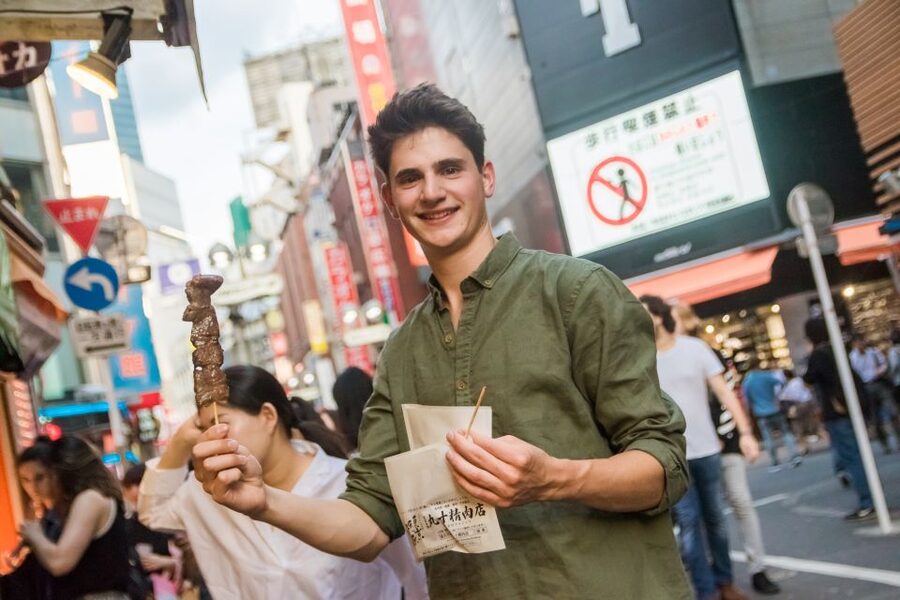
At $170 per person, this is a premium food walk. The price includes a variety of dishes at five stops, two drinks, dessert, and an English-speaking guide. It does not include additional food, extra drinks, transportation, gratuity, or hotel pickup.
The value depends on how you travel. If you are comfortable ordering from Japanese menus, happy to search out restaurants yourself, and mainly want a low-cost meal, you can spend less by eating independently. You might also prefer to put that money toward one carefully chosen dinner.
If you want an easy introduction to Shibuya’s food culture, the price makes more sense. You are paying for access to several places, help with ordering, cultural explanation, and three hours of local orientation. You also reduce the risk of spending your first evening in a chain restaurant simply because it is easy to find.
The small group adds value, especially if your guide is as warm and flexible as Alex, Jane, Saika, Maya, or Kumie have been. Still, the route and guide can vary, so I would book this for the structure and range rather than for one specific restaurant or dish.
Free cancellation is available up to 24 hours before the start, and you can reserve while delaying payment. Bring your passport, since a copy of passport information is required for participants aged 10 and older. The activity is conducted in English.
Who will enjoy this most
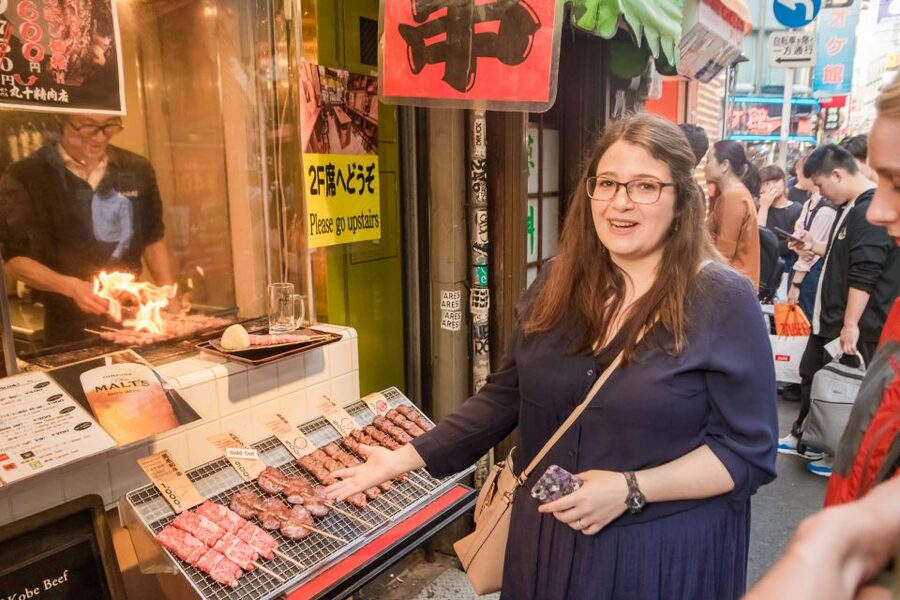
I would recommend the tour to a first-time Tokyo visitor who wants to understand Shibuya before exploring it alone. It is also a good fit for people who like to try several foods in one sitting and want a guide to explain unfamiliar dishes without turning the experience into a classroom lecture.
Families can enjoy it if children are adventurous eaters and prepared to walk. The tour has worked well for groups with young children, but the standing time and full portions may test tired legs. If your family needs frequent seating, ask about the expected route before booking.
Couples and small groups may find the format especially comfortable. A two-person booking once became a private outing, though that depends on how many people reserve your departure. Solo diners can also benefit, since the guide handles the awkward parts of ordering and makes it easier to share several dishes.
This is less suitable for anyone seeking a slow, formal dinner, a fully seated experience, or a guaranteed list of restaurants. It is also not ideal if you arrive late, dislike walking, or want complete control over every dish.
Should you book the Shibuya food tour?
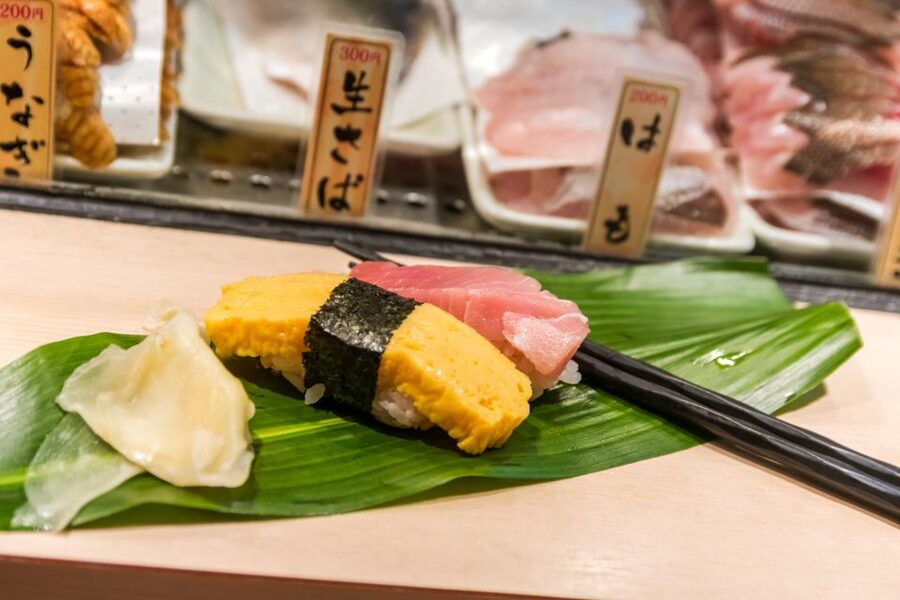
Book it if you want variety, local guidance, and a practical introduction to Shibuya in one evening. The food is only half the experience. The other half is learning how to look past the bright main streets and find the compact restaurants, food halls, and dining habits that make the district work.
I would book early in a Tokyo trip, arrive at the Hachiko mural well before the start time, wear comfortable shoes, and avoid eating a large meal beforehand. Keep an open mind about the exact menu, since the stops can change.
Skip it if $170 feels too high for a meal, if you need plenty of seating, or if you prefer to explore restaurants on your own. For everyone else, this is a well-organized way to get your bearings fast, try several Japanese dishes, and leave with useful ideas for the rest of your time in Tokyo.
FAQ
How long does the Shibuya food tour last?
The tour lasts three hours.
How many food stops are included?
The experience includes five food stops, along with two drinks and dessert.
Where is the meeting point?
Meet in front of the Hachiko wall mural outside Shibuya Station at the Hachiko exit. Do not meet at the Hachiko statue.
What language is the tour conducted in?
The tour is conducted in English by a live English-speaking guide.
What should I bring?
Bring your passport and comfortable shoes. A copy of passport information is required for every participant aged 10 and over.
Can I cancel the booking?
You can cancel up to 24 hours in advance for a full refund. You can also reserve now and pay later.
More Food & Drink in Tokyo
- Best of Shinjuku: Izakaya Food Tour (4 Stops, 14+ Tastings)
★ 5.0 · 1,863 reviews - Tokyo: Tsukiji Fish Market Food and Walking tour
★ 5.0 · 1,724 reviews - Eat and Drink Like a Local: Tokyo Ueno Food Tour-Taverns&Ramen
★ 5.0 · 957 reviews - Tokyo: Shibuya Food Tour (13 dishes and 4 Eateries)
★ 5.0 · 770 reviews
Just added around Tokyo
- Kawagoe Japanese Food Tour : Unagi Kaiseki and Sake near Tokyo★ 5.0 · 30 reviews
- Kawagoe 4hr Private Tour with Licensed Guide (Kawagoe Dep)★ 5.0 · 13 reviews
- Little EDO Sushi Making workshop in Kawagoe★ 5.0 · 18 reviews
- 【R34】Tokyo:Private Daikoku tour in Modified R34★ 4.9 · 92 reviews
- :Tokyo,Shibuya/ Pro Photography in Kimono / English-Friendly★ 5.0 · 26 reviews
- Tokyo:Celebrate Unique Japanese New Year Tradition Festivity★ 3.9 · 20 reviews
- Tokyo: Allstar Food Tour★ 4.7 · 29 reviews
- Tokyo: West-Side Cycling and Food Tour with Guide★ 5.0 · 37 reviews
Food Tours, compared.
Shinjuku Food Tour (13 Dishes at 4 Local Eateries)
Our verdict →
Kyoto Night Foodie Tour in Gion (9+ dishes + 6 Sake tastings)
Our verdict →
Osaka Local Foodie Walking Tour in Dotonbori and Shinsekai
Our verdict →
Food Tour in Ueno with 10+ Tastings of Japanese Classics
Our verdict →
Browse the lists this tour appears in