
Reviewed · FOOD TOURS
Shinjuku Golden Gai Food Tour
Shinjuku changes character after dark, and this three-hour walk takes you straight into its most famous night districts. You’ll move from postwar food alleys to Kabukicho and finish among the tiny bars of Golden Gai, with ramen, yakitori, sushi, and two drinks along the way.
I like the way the tour combines food with local stories, especially at Omoide Yokocho and Hanazono Shrine. I also like the small group size, capped at 10 people, and guides such as Sandra, Ray, Wesley, Alex, and Yoshi have earned strong praise for making the evening friendly and informative.
The main caution is price. At $217 per person, this is not simply a cheap dinner with a guide. Restaurant seating and food quality can vary, and a few people found the route less polished than expected for the cost.
Key points to know before booking
- Four food stops cover classic Japanese bites: Expect dishes such as yakitori, ramen, sushi, and seasonal specialties, though exact stops can change.
- Golden Gai is the grand finale: The tour ends near Araku Bar, among more than 200 small pubs, karaoke bars, and drinking spots.
- Two drinks are included: One drink is specifically tied to the Golden Gai portion, with the other served during the food-focused route.
- The guide matters: Sandra, Ray, Wesley, Alex, Yoshi, Giulia, and others have been praised for cultural context, food explanations, and good group energy.
- Come hungry: The food adds up quickly, and several people found the portions generous for a walking tour.
- Expect a real city walk: You need moderate fitness, and some venues may involve standing or tight seating.
A first taste of Shinjuku after dark
The tour begins at 5 pm near Tajimaya Coffee, at 1-chome Nishishinjuku. That start time is well chosen. You get enough daylight to find the meeting point, then watch Shinjuku shift into its evening mode as the route unfolds.
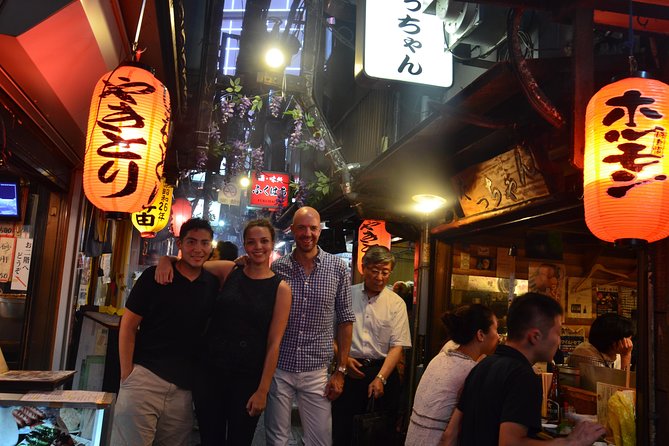
You’ll meet an English-speaking guide and set off toward Omoide Yokocho, a narrow area whose name means Memory Lane. The name fits. This compact lane carries the look of an older Tokyo, with small bars and food counters that have remained much as they were since around 1950.
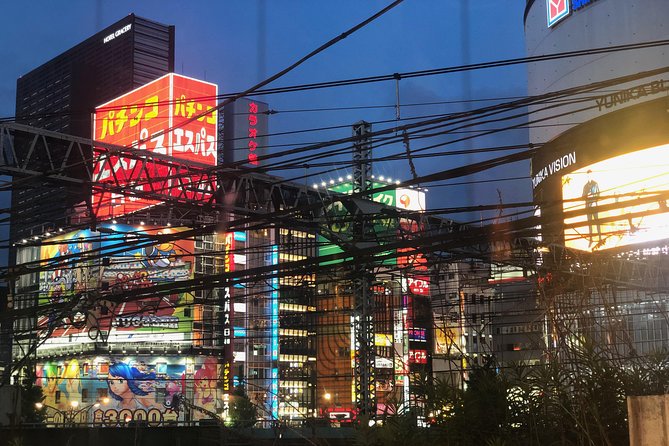
I like this opening because it gives you a useful contrast. Shinjuku is often pictured as giant screens, department stores, and crowds around the station. Omoide Yokocho shows a tighter, more personal side of the district. You can eat beside locals, watch cooks work in cramped spaces, and get a feel for how little neighborhood drinking spots fit into a modern city.
The route only lists a short scheduled visit here, but the value is not measured by the clock. This is a place where the guide’s commentary helps. Yoshi, Giulia, Sandra, Ray, Wesley, and other hosts have been praised for explaining Japanese food customs, city life, and the area’s past in a way that keeps the walk moving.
More Food Tours in Tokyo
- Tokyo: Shinjuku Food Tour (13 Dishes at 4 Local Eateries)
★ 5.0 · 6,603 reviews - Tokyo Tsukiji Fish Market Food and Culture Walking Tour
★ 5.0 · 3,184 reviews - Tokyo: Shinjuku Food Tour (15 Dishes and 4 Eateries)
★ 4.9 · 2,033 reviews
Omoide Yokocho and the taste of old Tokyo
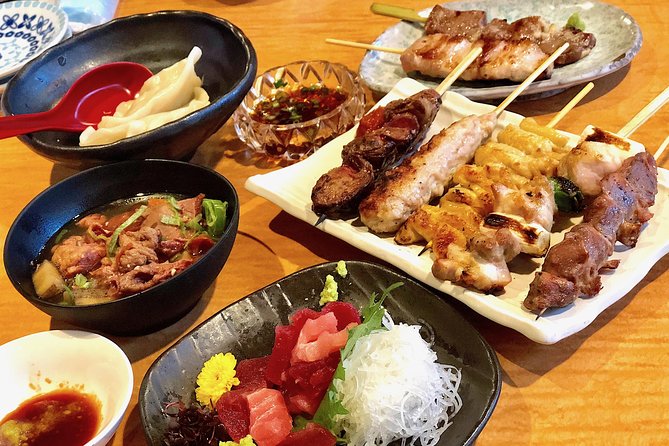
Food on the tour is served at several stops rather than in one large restaurant. The plan calls for four food venues, with examples including yakitori, ramen, sushi, and seasonal dishes. Exact restaurants can change because of restaurant schedules, public holidays, weather, or other conditions.
That flexibility cuts both ways. It allows the guide to adjust the route, but it means you should not book expecting one fixed menu or a particular restaurant. Some evenings have included three food venues followed by a bar, while the advertised plan describes four food stops. Think of the food list as a guide to the style of the evening, not a legally fixed tasting menu.
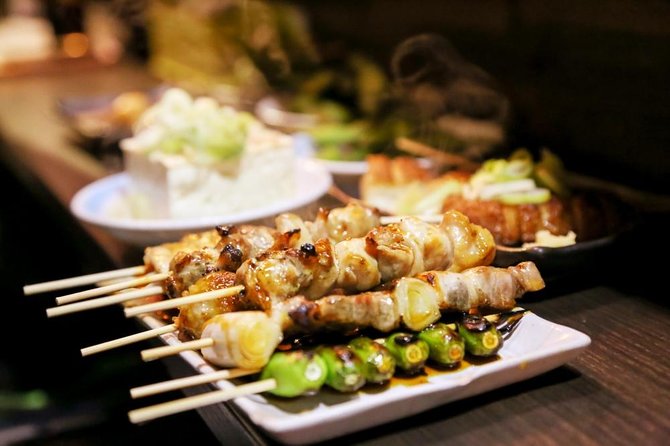
Yakitori is a natural match for this neighborhood. These grilled chicken skewers are easy to share, and they suit the small counter restaurants found around Shinjuku. You may try different cuts or seasonal choices, but the supplied information does not promise a specific skewer selection.
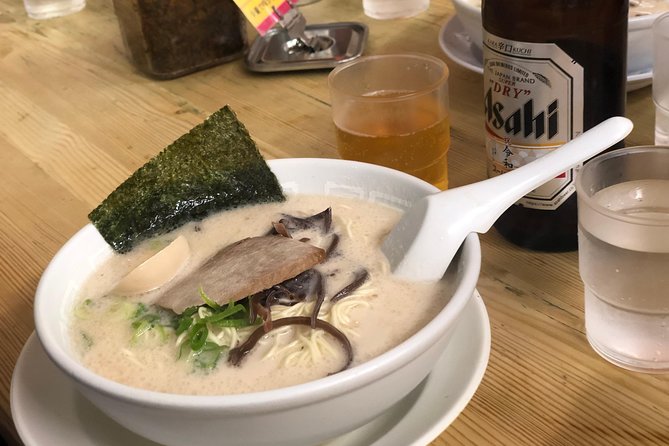
Ramen is another key stop. Several people singled out the ramen as the strongest dish of the night, with one calling it the best ramen of their Tokyo visit. That is personal taste, of course, but it tells you where the tour can be at its best: a hot, straightforward bowl after walking through the evening streets.
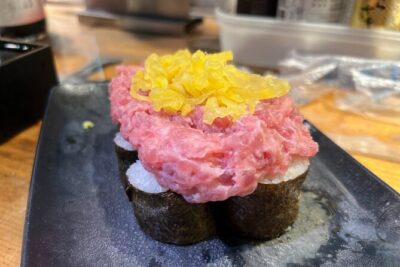
Sushi is also included in the expected range of dishes. Here, expectations matter. A few people loved the sashimi stop, while another found the sushi disappointing and wanted more explanation about what was being served. If you are a serious food enthusiast hunting for top-end sushi, this tour is unlikely to replace a specialist restaurant.
Kabukicho, Tokyo’s famous entertainment district
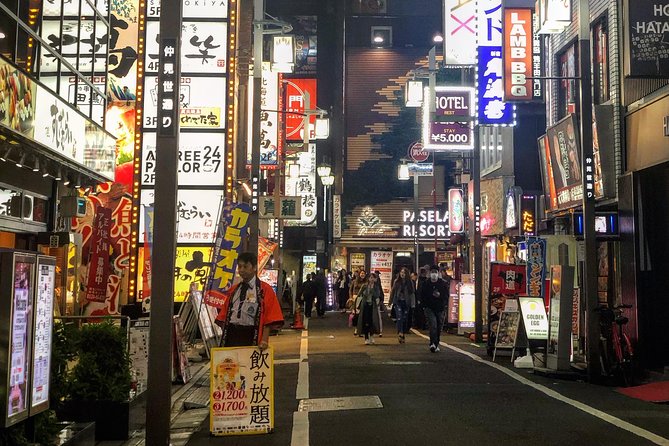
From Omoide Yokocho, the route heads into Kabukicho. This is one of Tokyo’s best-known entertainment areas, with restaurants, bars, clubs, hotels, and nightlife packed into a small part of Shinjuku.
The tour presents Kabukicho as the largest and safest red-light district in Asia. That description is part of the area’s identity, but you should still expect an adult-oriented night district rather than a quiet historic quarter. The guide helps you understand what you are seeing and how the neighborhood developed.
This is where the tour becomes more useful than a restaurant reservation. You are not only eating. You are learning how to read the streets, spot the difference between a tiny local bar and a place aimed at visitors, and understand why the district has such a strong reputation.
Several guides received especially warm praise for this part of the evening. Sandra was noted for explaining Tokyo, Shinjuku, and Golden Gai clearly, while Wesley, Alex, Ray, and Osmar were praised for mixing food information with stories about local culture. Guides are not guaranteed by name, but the repeated strength of the guiding is one of the tour’s best reasons to book.
The route can be noisy. One guide, Sandra, was specifically praised for making sure everyone could hear. That matters in Kabukicho, where narrow streets, traffic, music, and groups of people can compete with the guide’s voice.
Hanazono Shrine and a change of pace
The route also includes Hanazono Shrine, a small but important pause in the middle of the evening. The shrine gives the walk a different rhythm after the restaurant streets and before the close-packed bars of Golden Gai.
The available details do not promise a long stop or a formal shrine visit, so do not treat this as a full sightseeing tour of the site. Its value is as a cultural marker along the route. You get a reminder that religious spaces, food streets, nightlife, and office towers can sit close together in Tokyo.
That contrast is one of the tour’s strengths. You move through several versions of Shinjuku in a single evening, and the guide provides the connecting thread. The food gives you a reason to stop, but the route gives you a wider look at the district.
Same trip, a completely different kind of day:
- 1-Day Tokyo Bus Tour
★ 5.0 · 14,250 reviews - Tokyo: TOKYO SKYTREE® Admission ticket
★ 4.5 · 11,192 reviews - Tokyo: teamLab Planets TOKYO Digital Art Museum Entry Ticket
★ 4.6 · 9,779 reviews - Tokyo: Sumo Show Experience with Chicken Hot Pot and a Photo
★ 4.8 · 6,678 reviews
Golden Gai, where the evening gets intimate
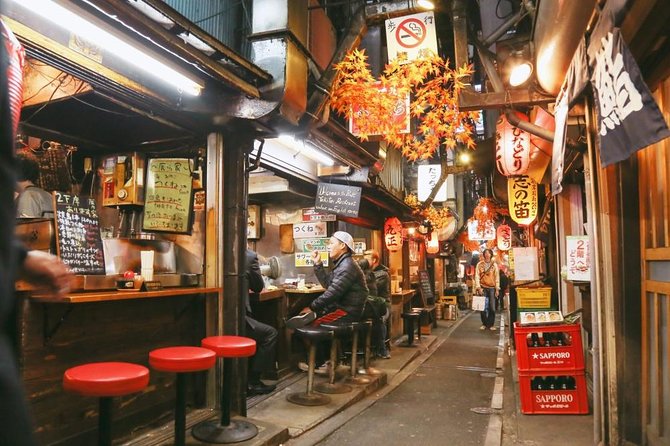
The final neighborhood is Shinjuku Golden Gai. More than 200 tiny pubs, stalls, and karaoke bars fill a tight network of narrow lanes. Many venues are extremely small, with only a handful of seats, and that is part of the appeal.
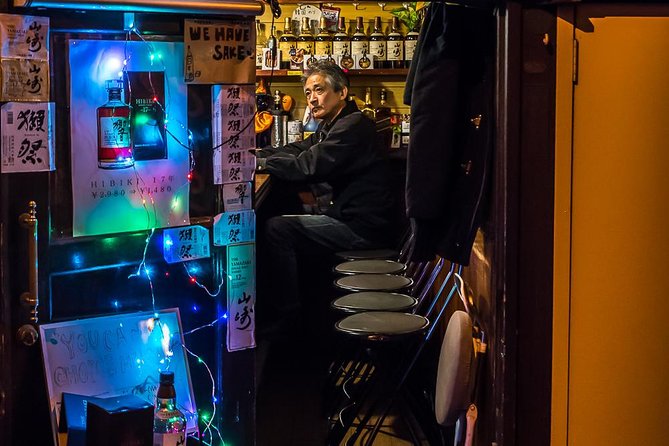
Golden Gai can be confusing on your own. Bars may be upstairs, tucked behind small doors, or easy to miss while you are trying to decide if you are welcome. A guide removes much of that uncertainty and gives you a more comfortable way into the area.
The tour ends at Araku Bar in Golden Gai. You receive an included drink here, and the evening may continue with karaoke if you choose the available after-party option. Karaoke was a highlight for some groups, especially when the guide helped bring everyone together.
Do not expect a large Western-style bar. Golden Gai works because the venues are intimate, quirky, and compact. That can be fun if you enjoy conversation and small rooms. It can be less comfortable if you need space, dislike noise, or want a relaxed seated dinner.
One practical point deserves attention: seating is not guaranteed at every stop. A few people found that the guide had trouble fitting the group into venues, with one final location offering standing room only. At this price, you are entitled to expect smoother restaurant arrangements. The group limit of 10 helps, but it cannot remove the space limits of Golden Gai’s tiny bars.
What the food is really worth at $217
At $217 per person, the tour asks you to pay for more than food. The package includes a local guide, four food stops, and two drinks. You are also paying for route planning, translation help, introductions to places you might not enter alone, and a small group during a busy evening.
That can be good value for a first night in Tokyo, especially if you want a social introduction to Shinjuku and do not want to research restaurants. A well-run evening can save you from wandering past dozens of doors without knowing where to go. Several people also found the tour especially useful early in their Tokyo visit because it helped them understand the district.
Still, this is not the right purchase for everyone. If your priority is the finest sushi, a high-end kaiseki meal, or a carefully designed tasting menu, you may get more from booking a single excellent restaurant. One person who expected a serious food tour felt the dishes lacked substance for the price.
Food quality can also depend on the exact stops and guide. The strongest experiences included delicious food, clear explanations, smooth coordination, and a fun group. The weaker ones involved average sushi, dry yakitori, limited food explanations, or a less organized sequence.
My advice is simple: book this for access, context, and variety, not for luxury dining. The food should fill you up, but the main product is a guided night through Shinjuku.
Who will enjoy this walk most
This experience suits first-time visitors who want an easy introduction to Shinjuku’s nightlife. It also works well for couples and small groups who like tasting several dishes instead of sitting through one long meal.
You should enjoy it if you:
- Want to visit Golden Gai but feel unsure about entering tiny bars alone
- Like Japanese food in casual settings
- Prefer stories about neighborhoods and customs along with your meal
- Enjoy meeting other people in a small group
- Want the option of karaoke after the main tour
- Can walk for about three hours and manage crowded streets
Vegetarians and pescetarians can be accommodated, according to the tour information. If you have dietary needs, tell the provider when booking and repeat them to your guide at the start. The listed flexibility does not mean every dish or venue will suit every restriction.
This is less suitable if you want a quiet evening, a fixed menu, guaranteed seating, or advanced food analysis. The tour is also for adults aged 20 and above only.
Timing, meeting point, and practical details
The tour starts at 5 pm, near Tajimaya Coffee in Nishishinjuku. Check the exact meeting address carefully before setting out. Shinjuku Station has many exits and a complicated set of underground passages, so allow extra time to reach the starting point.
A mobile ticket is provided. The tour lasts about three hours and ends in the Golden Gai area at Araku Bar. You will need to make your own way to the start and arrange your return afterward. Public transportation is nearby, but transportation costs are not included.
Wear comfortable shoes. The walk is not described as strenuous, but you need moderate physical fitness, and the route includes busy streets, narrow lanes, and potentially crowded venues. The group can have up to 10 people, which is small enough for conversation but not small enough to guarantee a seat in every bar.
The tour is subject to changes for weather, holidays, restaurant schedules, and other unexpected problems. It requires good weather and a minimum number of participants. If the provider cancels for those reasons, you can choose another date or receive a full refund. You can also cancel for a full refund up to 24 hours before the start time.
Is the Shinjuku Golden Gai Food Tour worth booking?
I would book this tour if you want a guided first look at Shinjuku, especially if Golden Gai feels intimidating or hard to decode. The combination of Omoide Yokocho, Kabukicho, Hanazono Shrine, several Japanese dishes, and a Golden Gai drink gives you a lively three-hour introduction.
I would skip it if your main goal is elite dining. At $217, the price is high for a meal that may include ordinary rather than exceptional versions of sushi or yakitori, and seating arrangements can occasionally be awkward.
Book early if the date matters, since this experience is commonly reserved well ahead of time. Come hungry, wear good shoes, and treat the evening as a guided neighborhood adventure with food, not as a formal restaurant tasting. That is when the tour makes the most sense.
FAQ
Where does the Shinjuku Golden Gai Food Tour start?
It starts near Tajimaya Coffee at 1-chome Nishishinjuku, Shinjuku City, Tokyo. The listed start time is 5 pm.
Where does the tour end?
The tour ends at Araku Bar in the Golden Gai area of Kabukicho.
How long does the tour last?
The experience lasts approximately three hours.
How many people can join the tour?
The maximum group size is 10 people.
What food is included?
The tour includes four food stops. Expected dishes include yakitori, ramen, sushi, and other local or seasonal foods. Exact stops can change.
How many drinks are included?
Two drinks are included with the tour.
Is karaoke included?
A karaoke after-party is available. The provided tour details do not state that it is part of the standard package.
Can vegetarians or pescetarians join?
Yes. The tour is described as suitable for pescetarians and vegetarians. Tell the provider about your dietary needs when booking.
Is the tour suitable for children?
No. Participants must be at least 20 years old.
Can I cancel for a refund?
Yes. You can cancel at least 24 hours before the start time for a full refund. Cancellations or changes made less than 24 hours before the start time are not accepted for a refund.
More Food & Drink in Tokyo
- Best of Shinjuku: Izakaya Food Tour (4 Stops, 14+ Tastings)
★ 5.0 · 1,863 reviews - Tokyo: Tsukiji Fish Market Food and Walking tour
★ 5.0 · 1,724 reviews - Eat and Drink Like a Local: Tokyo Ueno Food Tour-Taverns&Ramen
★ 5.0 · 957 reviews - Tokyo: Shibuya Food Tour (13 dishes and 4 Eateries)
★ 5.0 · 770 reviews
Just added around Tokyo
- Kawagoe Japanese Food Tour : Unagi Kaiseki and Sake near Tokyo★ 5.0 · 30 reviews
- Kawagoe 4hr Private Tour with Licensed Guide (Kawagoe Dep)★ 5.0 · 13 reviews
- Little EDO Sushi Making workshop in Kawagoe★ 5.0 · 18 reviews
- 【R34】Tokyo:Private Daikoku tour in Modified R34★ 4.9 · 92 reviews
- :Tokyo,Shibuya/ Pro Photography in Kimono / English-Friendly★ 5.0 · 26 reviews
- Tokyo:Celebrate Unique Japanese New Year Tradition Festivity★ 3.9 · 20 reviews
- Tokyo: Allstar Food Tour★ 4.7 · 29 reviews
- Tokyo: West-Side Cycling and Food Tour with Guide★ 5.0 · 37 reviews
Food Tours, compared.
Shinjuku Food Tour (13 Dishes at 4 Local Eateries)
Our verdict →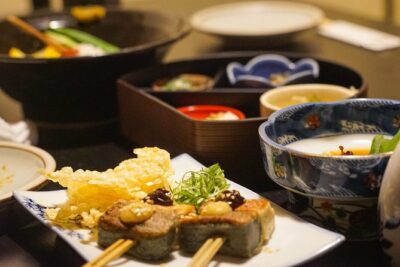
Kyoto Night Foodie Tour in Gion (9+ dishes + 6 Sake tastings)
Our verdict →
Osaka Local Foodie Walking Tour in Dotonbori and Shinsekai
Our verdict →
Food Tour in Ueno with 10+ Tastings of Japanese Classics
Our verdict →
Browse the lists this tour appears in