
Reviewed · SAMURAI EXPERIENCES
Samurai Training Experience KENDO in Osaka
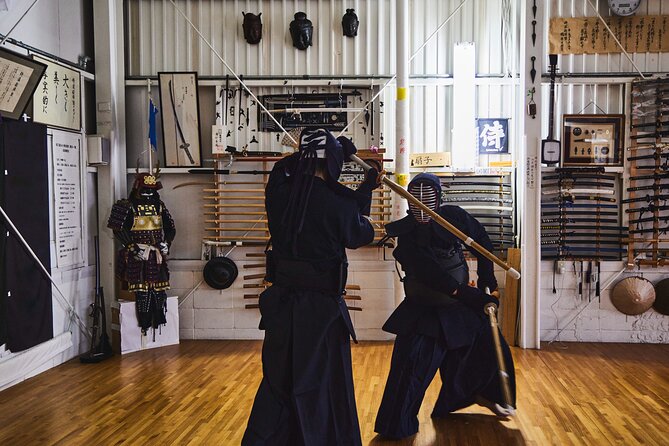
A bamboo sword, a proper kendo uniform, protective armor, and a real dojo make this much more than a samurai dress-up stop. You begin with the customs and ideas behind the art, then work through stance, footwork, strikes, and a supervised match. Toshi and Kumiko keep the tone friendly while taking the practice seriously.
I like the small class size, capped at 12, because beginners get room to ask questions and receive corrections. I also like the practical finish: you can spar with another participant and may be invited to test your skills against the instructor, while photos and videos record the session.
The main consideration is physical effort. Two hours in armor can be warm and tiring, especially during repeated strikes and footwork. The lesson is adjusted to your comfort, but this is a hands-on martial arts class, not simply a photo opportunity.
Key points at a glance
- Real dojo setting: Practice kendo in a working training space that also displays samurai artifacts and memorabilia.
- English instruction: Toshi leads the training, with his wife Kumiko helping explain the history, customs, and techniques.
- Full beginner lesson: Learn basic stance, movement, strikes, combinations, and match etiquette in one session.
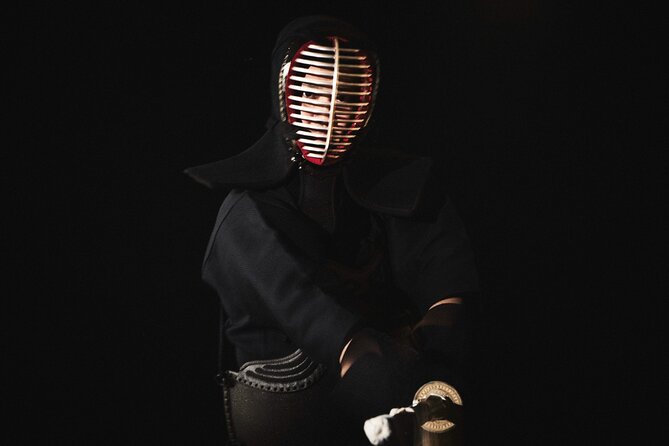
- Armor and bamboo sword: Change into authentic kendo clothing and protective equipment before the more active part of the class.
- Photos and videos included: Digital pictures and recordings are sent as a souvenir after the experience.
- Useful facilities: The dojo has changing rooms, showers, air conditioning, and heating.
Entering a real Osaka dojo
The experience begins at 1-chōme-18-2 Honjōhigashi in Osaka’s Kita Ward. It is near public transportation, and the activity ends at the same place, so you do not need to arrange a separate return transfer.
The setting matters. A studio designed only for photographs would give you the costume, but not much sense of how kendo is practiced. Here, the dojo also functions as a small museum, with samurai objects and related memorabilia around the training area. That gives the opening talk a useful backdrop.
You can expect a clean, well-maintained facility with changing rooms and showers. Air conditioning and heating are available, which is welcome when you are about to put on layered clothing and protective armor. Bring water and wear something easy to change out of, though the supplied information does not require a particular outfit.
The group limit is 12 people. That is not the same as a private lesson, but it is small enough to keep the class manageable. If only a few people book, the instruction can feel especially personal. One solo participant even received one-on-one attention, though you should not assume every session will be private.
More Samurai Experiences in Osaka
- OSAKA NIGHT FUSION Japanese Taiko Kabuki Samurai Dance Show
★ 4.8 · 155 reviews - Osaka: Samurai Training Experience KENDO in Osaka
★ 5.0 · 111 reviews - Osaka: A Modern Samurai, Kabuki, Taiko, & Dance Show
★ 4.5 · 66 reviews
The samurai introduction comes first
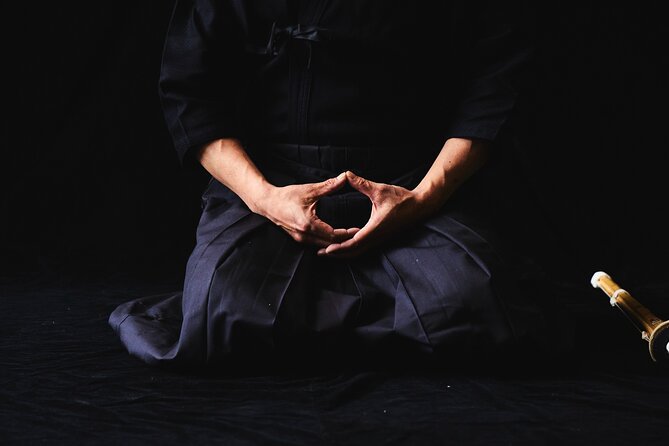
Before anyone starts swinging a shinai, the instructors explain the connection between kendo and the older fighting traditions of the samurai. You will also hear about Bushidō and the manners that shape practice.
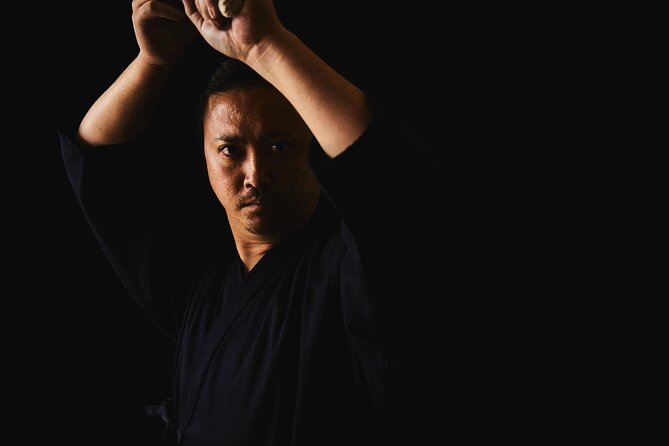
This opening is brief enough to leave plenty of time for training, but it adds meaning to the movements. Kendo is not presented as random swordplay. The way you stand, bow, hold yourself, and approach practice all form part of the lesson.
I appreciate this balance. You get cultural context without sitting through a long lecture before the action begins. Toshi handles the practical teaching, while Kumiko helps with English explanations and the historical side of the session. Their friendly husband-and-wife approach makes it easier to ask questions, even if you have never tried a Japanese martial art.
Keep your expectations realistic. In two hours, you will learn the basics and take part in a simulated match. You will not become an accomplished kendoka in one visit. The value is in getting a clear first taste of the discipline and seeing how the physical movements connect with its customs.
Changing into kendo clothing and armor
Next comes the transformation from sightseeing clothes to kendo student. You change into a traditional uniform and then put on protective equipment for the active portion of the class.
This is one of the most memorable parts, but it is also where the experience becomes less effortless. Armor adds weight and warmth, and movement can feel awkward at first. That is useful. You quickly understand why posture, balance, and controlled footwork matter.
The equipment also creates good photo opportunities. The instructors can help you pose in full gear, and the digital pictures and videos provide a souvenir beyond the usual snapshot in front of a landmark. Several participants particularly valued having their practice and final matches recorded.
The facility has changing rooms and showers, so you have somewhere to prepare and cool down afterward. That is a real advantage if you schedule the class during a hot day in Osaka or plan to continue sightseeing afterward.
For children aged 3 to 5, the focus is limited to wearing the uniform and armor and taking photos safely. The active training is not described for that age group. Older children can take part, and the teaching is adjusted to ability and comfort.
Learning stance, footwork, and basic strikes
The actual lesson builds step by step. You start with the basic position and body alignment, then work on footwork and controlled movements with a bamboo sword, known as a shinai.
You will practice the main strikes and combinations, with the instructors correcting your form as you go. The class is suitable for complete beginners, so you do not need previous martial arts experience or any knowledge of Japanese commands.
The practice can be relaxed or demanding. If you want a gentle introduction, the instructors can keep the pace comfortable. If you are fit and eager to work harder, the lesson can become a solid workout. The important thing is to follow the teacher rather than rush into dramatic swings.
This is where a small class helps. You have space to move and time to repeat an unfamiliar action. The class also gives the instructors a chance to adjust the level for families, couples, solo participants, and mixed groups.
The safest approach is to treat every movement as a technical exercise. Do not focus only on hitting a target. Listen to instructions about distance, control, and manners, then let the speed come later. That makes the lesson more enjoyable and keeps the activity within its intended beginner level.
More Martial Arts Experiences in Osaka:
- Osaka: Kendo Workshop Experience
★ 4.9 · 28 reviews - Kyoto: Kendo and Samurai Experience with Uniform and Gear
★ 4.9 · 815 reviews - Tokyo: Samurai Sword & Archery Class from Samurai Descendant
★ 5.0 · 603 reviews - Japanesel Archery Experience HIROSHIMA CASTLE SHARAKU
★ 5.0 · 387 reviews
The supervised match brings the lesson together
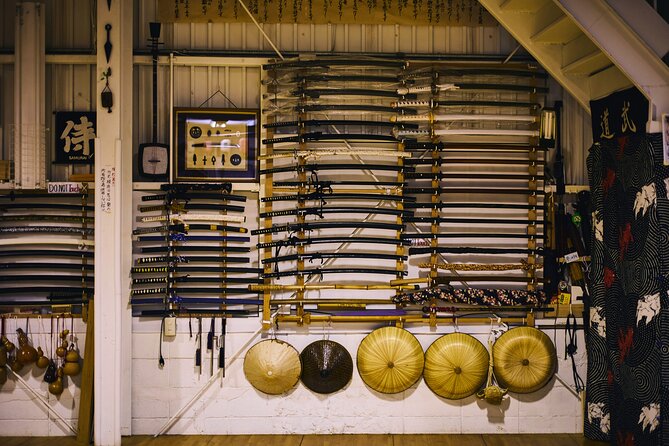
After practicing the separate techniques, you learn how they work in a match-style setting. You are shown how to face an opponent, move into range, and apply the techniques with control.
This is usually the most exciting part. Couples, friends, and families can face each other, and the instructors record parts of the action. The match gives you a reason to remember the earlier exercises. Stance and footwork suddenly matter when another person is moving in front of you.
You may also have the chance to challenge Toshi. The supplied experience describes this as a supervised test, and several participants found the instructor remarkably quick. You should view it as a demonstration and a bit of fun, not a contest you are expected to win.
The instructors can adapt the intensity. If you are nervous, older, less active, or simply interested in the cultural side, you can keep the exchange controlled. If you want a more energetic bout, ask what level is suitable for you. Follow the teacher’s direction, since the armor and shinai do not make careless movement harmless.
The match is also why this experience works better for families and friends than a passive museum visit. You are not only looking at samurai objects. You are learning a small set of movements, then using them with the people who came with you.
Photos, videos, snacks, and the human touch
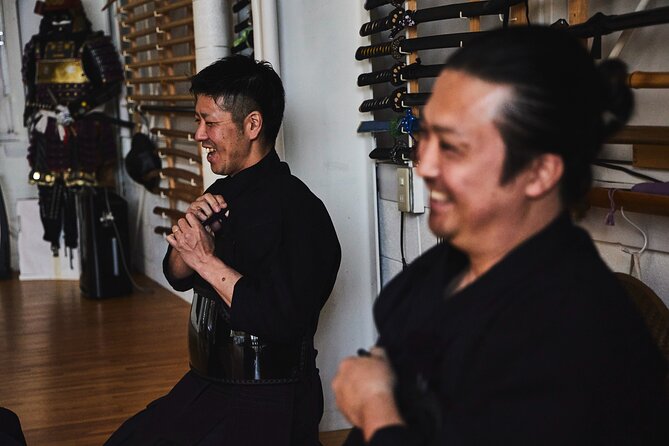
The instructors take photos and videos during the class and send the digital files afterward. This is included, rather than being an extra purchase at the end. The files may arrive after the session, so do not expect an instant download before you leave.
The recordings are useful because you will not see much of your own technique while wearing a helmet and armor. They also preserve the small details of the day: the first stance, the dressed-up portraits, and the final match.
Some sessions include water, drinks, and Japanese snacks afterward. That is a pleasant way to cool down and ask follow-up questions. Toshi and Kumiko have also offered local suggestions to participants continuing their time in Japan, though the main purpose remains the kendo class.
The warmth of the instruction is a major part of the experience. Toshi is described as patient and professional, while Kumiko helps create an easy bridge for English-speaking visitors. Their humor makes the class less intimidating, but they still emphasize proper technique and respect.
Is $131.32 good value?
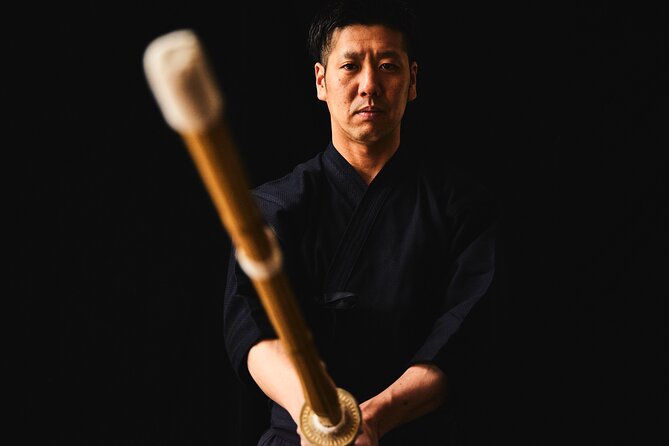
At $131.32 per person, this is not a budget activity. The price makes more sense if you treat it as a two-hour private cultural encounter rather than a basic martial arts taster.
You are paying for instruction, equipment, the use of a real dojo, changing facilities, photos, videos, and the chance to take part in a supervised match. The group limit of 12 also gives the session a more personal feel than a large demonstration.
The value is strongest for someone who wants to take part in Japanese culture rather than just look at it. A museum ticket costs less, but it will not put you in armor or teach you the basic movements. A general photo session may offer costumes, but this activity includes actual instruction and practice.
For a family, the cost can add up quickly. I would book it when the class is a main event of your Osaka visit, not when you are trying to fill an hour between cheaper sightseeing stops. Martial arts fans, history enthusiasts, and families with samurai-keen children are likely to get the most from it.
The mobile ticket is convenient, and confirmation is provided at booking. Free cancellation is available if you cancel at least 24 hours before the start time. Changes or cancellations inside that window are not accepted for a refund.
Who should book this kendo class?
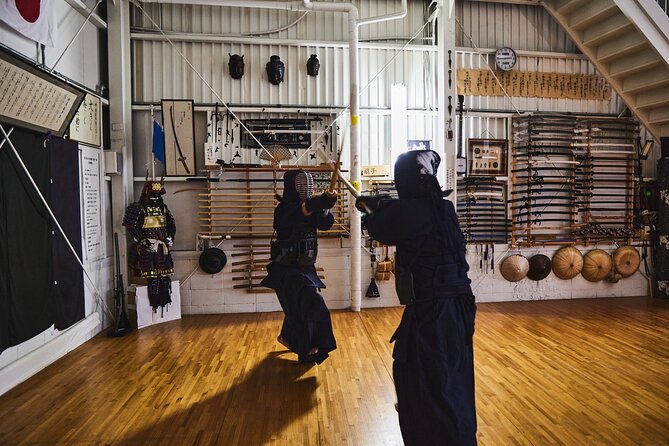
You should consider it if you want:
- A hands-on introduction to Japanese martial arts
- An activity that works for couples, families, and solo participants
- English instruction with cultural background
- A clean indoor activity for Osaka weather
- Photos and videos that capture more than a posed costume portrait
- A small-group experience with a chance to ask questions
It is also a good choice if you have already visited temples, castles, and museums and want a different kind of cultural activity. The class gives your body something to do while your mind learns why the customs matter.
You may want to skip it if you dislike physical activity, feel uncomfortable in warm protective gear, or want a quiet historical talk. The class includes explanation, but the central feature is practice. It is not a performance where you simply watch a professional.
Children aged 3 to 5 are limited to safe dressing and photographs. Older children can participate, but parents should consider their child’s comfort with instructions, armor, and a mock match.
Practical details before you book
Plan around two hours at the dojo, with the session starting and ending at the listed meeting point in Kita Ward. Since the activity is near public transportation, you can build it into a day in central Osaka, but allow time to arrive calmly and change before training.
The experience is conducted in English and no previous kendo experience is required. Most people can participate, and service animals are allowed. The information does not give a detailed list of physical restrictions, so contact the provider if you have an injury or concern that could affect movement, balance, or wearing armor.
Bring a willingness to listen. Kendo etiquette is part of the lesson, and the class will be more enjoyable if you treat the bowing, stance, and controlled movements as meaningful rather than as obstacles before the sparring.
I would also leave room in your schedule after the class. You may want to shower, review the photos with your companions, or simply recover before taking on another major Osaka sight.
Should you book Samurai Training Experience KENDO in Osaka?
I would book this if you want an active, personal introduction to samurai culture and are willing to pay for a well-equipped two-hour session. The combination of Toshi’s instruction, Kumiko’s English support, full armor, a real dojo, and a supervised match gives the experience more substance than a costume photo stop.
The best reason to go is the progression. You begin with history and manners, learn the movements, put them into practice, and finish with a match you can remember through photos and video. The main caution is simple: you will work for the experience.
For martial arts fans, families, couples, and curious first-time visitors, this is one of Osaka’s more memorable cultural activities. If your ideal afternoon means sitting quietly and listening, choose a museum instead. If you want to learn by doing, this kendo class earns its place on your itinerary.
FAQ
Where does the kendo experience take place?
It takes place at 1-chōme-18-2 Honjōhigashi, Kita Ward, Osaka, 531-0074, Japan.
How long does the experience last?
The activity lasts approximately two hours.
Does the experience end at the meeting point?
Yes. The activity ends back at the same meeting point.
Is the class taught in English?
Yes. The experience is conducted in English, with Toshi leading the instruction and an assistant helping with explanations.
Do I need previous kendo or martial arts experience?
No. The class is beginner-friendly and does not require prior experience.
Will I wear kendo armor?
Yes. You change into a kendo uniform and protective armor before practicing techniques with a bamboo sword.
Are photos and videos included?
Yes. Digital photos and videos from the experience are provided as a souvenir.
What is the cancellation policy?
You can cancel at least 24 hours before the local start time for a full refund. Cancellations or changes made less than 24 hours before the experience are not accepted for a refund.
Just added around Osaka
- Exclusive Sushi Making Experience with a Master Chef – Osaka Area★ 5.0 · 25 reviews
- Private Home-Style Cooking Class in Osaka with Local Mom Yoshiko★ 5.0 · 46 reviews
- Hidden Osaka – Yukaku Red Light Tour & Culinary Adventure★ 4.8 · 96 reviews
- Osaka: Walking Tour and Top Highlights★ 4.8 · 104 reviews
- Osaka: Private Ceramic Painting Workshop★ 5.0 · 13 reviews
- Pickleball in Osaka, Kobe & Kyoto with Locals!★ 4.7 · 80 reviews
- Eat Like a Local in Osaka – Private Custom Street Food Tour★ 4.3 · 33 reviews
- Osaka:SUMO BEATS SHOWCASE: Taiko Drum and Wagyu burger!★ 4.2 · 37 reviews
Samurai Experiences, compared.

Browse the lists this tour appears in