
Reviewed · SUSHI EXPERIENCES
Private Art Sushi Roll Class in Kyoto
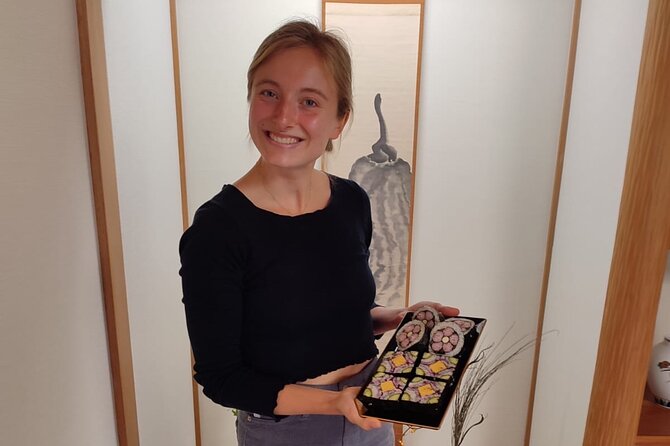
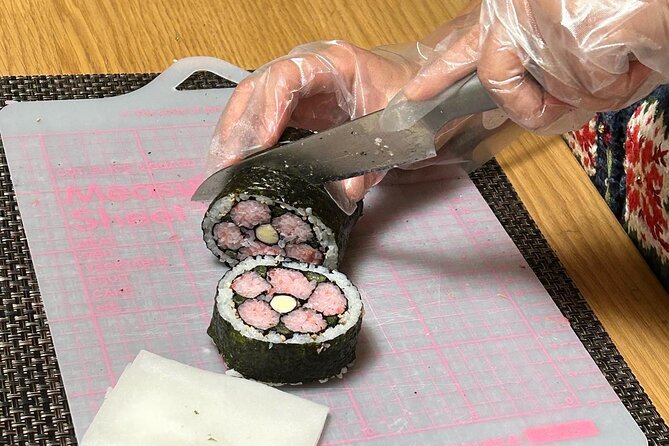
Kyoto’s kazarimaki sushi class turns lunch into edible artwork. Under instructor Aya’s guidance, you’ll arrange rice, fillings, and plant-based colors so a peach-flower pattern appears when you slice the finished roll. It is part cooking lesson, part craft project, and a pleasant change from simply ordering another plate of sushi.
I like the private format, since Aya can slow down when you need help. I also like the traditional setting, including the chance to wear a kimono or other Japanese clothing while working on tatami. The one drawback is the short one-hour schedule: beginners can complete the project, but the class moves at a steady pace, and the food-art technique may suit people with some basic kitchen confidence best.
Key points to know before booking
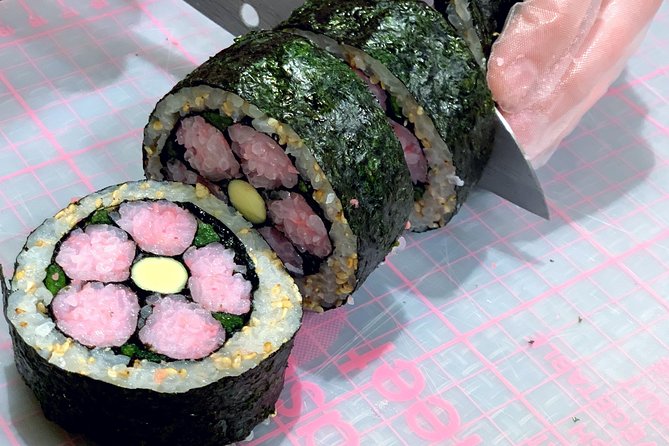
- A peach flower appears inside the roll: You build the design piece by piece, then slice the finished sushi to reveal the pattern.
- Aya leads a private English-language class: Your group receives direct instruction rather than sharing the room with unrelated participants.
- Traditional clothing is part of the experience: Women receive a kimono option, while men and children can wear other traditional garments.
- Natural food colors keep the project plant-based: The class uses edible pigments extracted from plants, with vegan and vegetarian choices available.
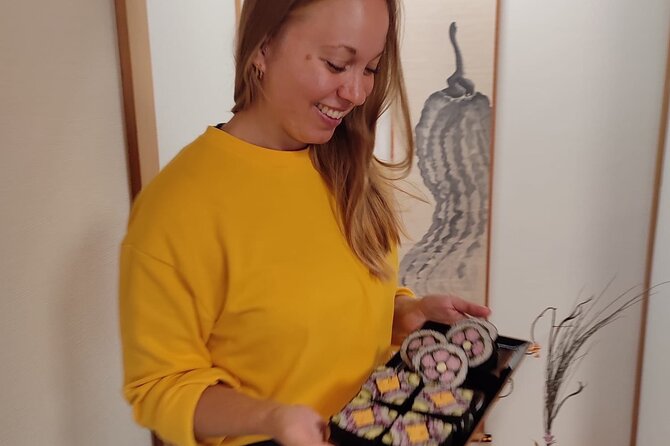
- You leave with more than lunch: A booklet and certificate are included, along with the sushi you make.
- Bring socks and arrive early: The tatami room requires socks, and arriving more than 15 minutes late means you cannot join.
Making a flower inside a sushi roll
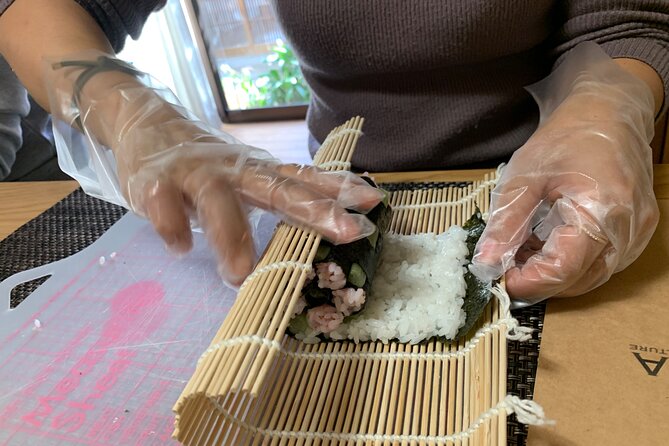
Regular makizushi looks simple from the outside. Kazarimaki is different. The goal is to build a picture inside the roll, using separate strips and sections of colored rice and other ingredients. When the roll is cut, the arrangement creates a recognizable design.
The class focuses on a peach-flower pattern. You are not merely spreading rice across seaweed and adding a filling. You are measuring, placing, shaping, and joining several parts so the image holds together. That is why the activity feels closer to edible paper craft than to an ordinary sushi lesson.
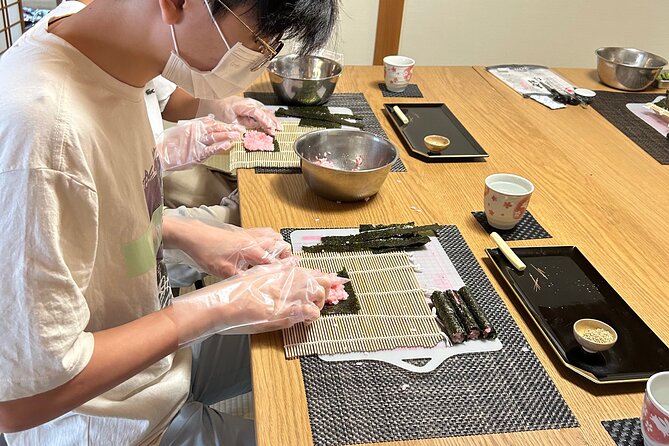
Aya explains the process in English and demonstrates each stage. The class is designed for beginners, though the pace is not leisurely. One hour is enough to finish the project, but you should pay attention from the start and follow the sequence carefully.
The natural colors are one of the appealing details. The class uses edible pigments extracted from plants, rather than treating the sushi as a plate of artificial colors. Vegan and vegetarian options are available, which makes the activity easier to fit into a mixed-diet holiday.
You will not simply watch a demonstration. Your hands do the work. You shape the pieces, assemble the roll, and discover the flower only after cutting it open. That final reveal gives the class a small moment of theater without turning the activity into a staged show.
More Sushi Experiences in Kyoto
- Sushi Making in Kyoto! Same-day bookings welcome!
★ 5.0 · 713 reviews - The Original Small-Group Sushi Making Class in Kyoto
★ 5.0 · 436 reviews - Kyoto: Small-Group Authentic Sushi Making Workshop
★ 5.0 · 137 reviews
A private class with Aya near Nijo Castle
The meeting point is SAKURA Experience Japanese Culture Nijo Home, at 660 Izumicho in Nakagyo Ward. The activity begins at 4:30 p.m. and ends at the same location, so you do not need to arrange separate transportation back to your hotel or the next sightseeing stop.
The venue is near public transportation, but the supplied details do not name a particular station or give walking times. Check the route before class and allow extra time for finding the entrance. Kyoto addresses can be less intuitive than a simple street-number system, and the late-arrival rule is strict.
Aya teaches the class, and her husband, Manabu Ito, may help with photographs and cleanup. That detail matters for families and small private groups. You can concentrate on the sushi while someone else helps document the activity and keeps the workspace in order.
The private setup is the main practical advantage. Only your own group participates. If you are traveling with grandparents, teenagers, or children, you can ask questions without worrying about holding up strangers. Aya can also give more direct help when a roll begins to lose its shape.
At the same time, private does not mean completely unstructured or slow. The scheduled class lasts about 60 minutes. You will get the most from it if everyone arrives ready to listen and work.
Wearing a kimono on the tatami
The traditional clothing adds atmosphere without taking over the class. Women are provided with a kimono, while men and children can wear other traditional garments. The clothing helps make this more than a standard cooking workshop in a modern kitchen.
The room uses tatami, and you must wear socks before entering. This is a simple Japanese custom, but it is easy to overlook when packing for a warm day in Kyoto. Put a clean pair in your day bag, even if you are wearing sandals.
Babies and toddlers can sit or sleep on the tatami, which makes the experience workable for families with very young children. Still, the activity itself requires attention and table space, so an adult will need to supervise small children while the rest of the group works.
The traditional setting also calls for a little care. Keep the pace calm around the tatami, follow the host’s instructions, and avoid treating the room like a quick photo stop. The clothing and setting are part of the cultural experience, not just decoration for pictures.
What happens during the 60-minute itinerary
The entire activity takes place at SAKURA Experience Japanese Culture Nijo Home. There is no second sightseeing stop or transfer. That makes the schedule easy to understand, but it also means you should not expect a full afternoon of food tasting or a tour of Kyoto.
You begin by meeting Aya and getting settled in the traditional room. The clothing is provided as part of the activity, and the class includes bottled water, tea or coffee, and all sushi ingredients. Those inclusions reduce the need to prepare anything besides socks and a willingness to work with your hands.
Aya then explains the basic idea of kazarimaki and introduces the ingredients. The key lesson is arrangement. Each part of the roll must be placed in the right position so the peach flower appears in the center after slicing.
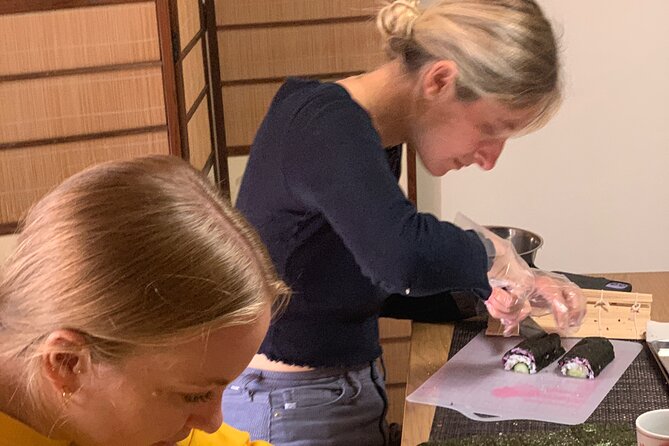
The construction stage is where most of the practical learning happens. You work with rice and colorful ingredients, following Aya’s instructions as you form the flower sections and bring them together. Beginners should not rush this part. A small shift in one component can change the final picture.
Once the roll is assembled, you cut it into pieces. This is the payoff, since the design is difficult to judge from the outside. The completed sushi is both lunch and a record of the technique you have learned.
At the end, you receive a booklet and certification. The booklet is useful because kazarimaki has several stages that are easy to forget once you return home. The certificate is a pleasant souvenir, especially for children and families who want a physical reminder of the activity.
The class does not promise advanced sushi-chef training. It teaches you one attractive design in a compact format. That is a sensible approach for a Kyoto holiday, where you may want a memorable hands-on activity without giving up half a day.
Same trip, a completely different kind of day:
- PERFECT KYOTO 1-Day Bus Tour
★ 5.0 · 13,518 reviews - Kyoto: Fushimi Inari, Kinkakuji, Bamboo Grove 1 Day Bus Tour
★ 4.8 · 4,316 reviews - Kyoto: Tea Ceremony in a Traditional Tea House in Kiyomizu
★ 4.9 · 3,519 reviews - Kyoto Geisha Walking Tour: Gion District & Hidden Gems
★ 4.7 · 3,273 reviews
Why the private format matters
A private group changes the feel of a cooking lesson. In a large class, the instructor must move at one speed, and you may spend part of the session waiting for someone else to catch up. Here, your group is the only group in the activity.
I would especially consider this class for families with different ages. Teenagers can take the design seriously without being pushed into a formal culinary lesson, while grandparents can participate at a comfortable pace. The private setting also makes it easier to ask about ingredients, rolling technique, or how to repeat the design at home.
The class is also well suited to couples or friends who want a shared activity rather than another guided walk. You have a clear project to complete together, and the final sushi gives everyone something to discuss and photograph.
There is a small trade-off. A private class usually feels more personal, but the price is higher than a basic group cooking lesson. At $93.32 per person, the cost reflects the instructor’s time, the private room, traditional clothing, ingredients, drinks, booklet, and certificate. It is not the cheapest way to eat sushi in Kyoto. It is a fairer comparison to a private cultural workshop than to a restaurant meal.
Is $93.32 good value?
The value depends on what you want from the hour. If your aim is simply to eat sushi, this is expensive. Kyoto offers many less costly meals, and the sushi you produce is not meant to replace a full restaurant dinner.
If you want direct instruction, a private room, cultural clothing, and a project you can repeat at home, the price makes more sense. You are paying for access to a specialized technique that even experienced Japanese chefs may find difficult without specific training.
The included extras help. You do not need to purchase rice, seaweed, fillings, colorings, tea, coffee, or water separately. The booklet gives you a reference after the class, and the certificate adds a keepsake that a normal meal does not provide.
Group discounts may improve the price for larger parties. Since the activity is private, families and friends should check the total cost for their group rather than judging the per-person rate alone.
The short duration also works in its favor. You can fit the class into a sightseeing day, starting at 4:30 p.m. and finishing at the same address. You will not lose an entire morning or afternoon. On the other hand, anyone seeking a long, detailed study of sushi preparation may find one hour too brief.
What the strong points tell you
The most convincing part of this experience is the combination of clear instruction and a finished object. You do not leave with only a memory of watching someone else cook. You take home a method, a booklet, and a certificate, and you can try the flower roll again with family or friends.
The hosts also appear to put care into the social side of the activity. Aya’s husband Manabu helps with photographs and cleanup, and the home setting creates a more personal meeting than a commercial demonstration room. That can make the class feel relaxed, though visitors who prefer a polished studio may find the home atmosphere less formal.
English instruction is another practical strength. Aya explains the stages clearly, and the class is operated by an English speaker. Food preparation depends on precise directions, so this matters more here than it would on a simple tasting tour.
The only caution I would stress is skill level. One person found the class patient and enjoyable but felt it might suit someone with a little sushi-making experience. You do not need to be an expert, but you should be comfortable following several instructions in sequence and working carefully with rice.
Who should book this Kyoto activity?
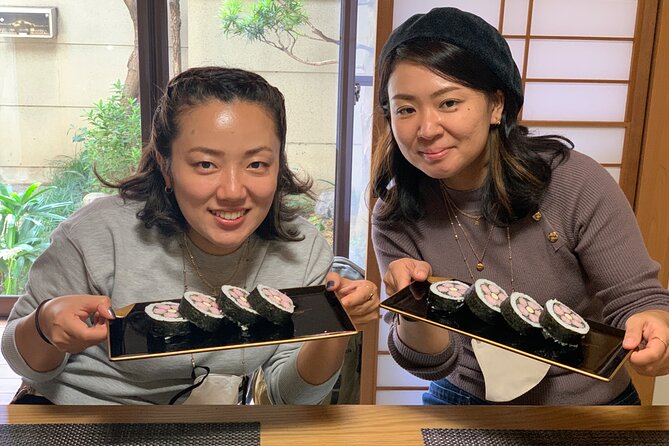
Book it if you want a hands-on cultural experience with a clear result. It suits families, couples, friends, and small private groups that enjoy making things together. It is also a strong choice if you want an activity that works in less-than-perfect weather and does not require a long trip outside central Kyoto.
Families should note the age rule. Anyone under 18 must attend with a parent or guardian who is over 21. Babies and toddlers can sit or sleep on the tatami, but adults remain responsible for them.
Vegetarians and vegans have options, thanks to the available plant-based choices. If your group has other dietary needs, confirm them before booking, since the supplied details only specify vegan and vegetarian availability.
I would be less likely to recommend it to someone who dislikes guided crafts, has little patience for careful assembly, or wants an extensive culinary course. The point is not to master every kind of sushi. The point is to make one attractive design in a friendly private setting.
The 4:30 p.m. start suits an afternoon plan near Nijo Castle and leaves the evening open. Just do not arrive at the last minute. More than 15 minutes late means you cannot join, and the class cannot accept changes made within 24 hours of the start time. Free cancellation is available up to 24 hours before the activity.
Should you book the peach-flower sushi class?
I would book this for a small group that values personal instruction, Japanese presentation, and a souvenir you create yourself. The private format, traditional clothing, clear English guidance from Aya, and unusual flower design give the hour more substance than a basic roll-making lesson.
At $93.32 per person, it is a special-occasion activity rather than a budget meal. Book it when you want a compact Kyoto experience that brings people together and gives you a skill to try at home. Skip it if you only want to eat sushi or if your schedule cannot allow careful arrival before 4:30 p.m.
Bring socks, arrive early, and keep your expectations realistic. You will not become a sushi master in an hour, but you can leave with a very good story, a pretty roll, and the confidence to try kazarimaki again.
FAQ
Where does the sushi class take place?
The class takes place at SAKURA Experience Japanese Culture Nijo Home, 660 Izumicho, Nakagyo Ward, Kyoto, 604-0015, Japan.
What time does the class start?
The scheduled start time is 4:30 p.m.
How long does the class last?
The activity lasts approximately one hour.
Is the class private?
Yes. Only your own group participates in the activity.
Who teaches the class?
Aya teaches the class in English. Her husband, Manabu Ito, may also assist with photographs and cleanup.
What kind of sushi will I make?
You will make a peach-flower pattern sushi roll using the kazarimaki technique.
Are vegetarian or vegan ingredients available?
Yes. Vegan and vegetarian options are available.
What is included in the price?
The price includes all sushi ingredients, bottled water, tea or coffee, traditional clothing, a booklet, and certification.
Do I need to bring anything?
You must bring socks because shoes cannot be worn on the tatami. The class provides the sushi ingredients and drinks.
Can children participate?
Yes, but anyone under 18 must attend with a parent or guardian over 21. Babies and toddlers may sit or sleep on the tatami.
What happens if I arrive late?
If you arrive more than 15 minutes late, you cannot join the class.
Can I cancel for a full refund?
Yes. You can cancel up to 24 hours before the start time for a full refund. Cancellations and changes made less than 24 hours before the activity are not accepted.
Just added around Kyoto
- Sekka Cotton Furoshiki Class★ 5.0 · 19 reviews
- Secret Eastern Kyoto Biking Adventure★ 5.0 · 44 reviews
- Kyoto Sword Experience – includes Museum Ticket/Ninja Experience★ 4.5 · 149 reviews
- Scenic Green Tea Fields of Hidden Kyoto & Local Tea Exp (Private)★ 5.0 · 32 reviews
- Private Sake Tasting in Central Kyoto with Sake Sommelier★ 5.0 · 32 reviews
- Samurai School in Kyoto: Samurai for a Day★ 5.0 · 202 reviews
- SHIRAKAWA Japanese Culture Experiences with private English staff★ 5.0 · 16 reviews
- A Privately Guided Photoshoot in Beautiful Kyoto by a Pro★ 5.0 · 18 reviews
Sushi Experiences, compared.
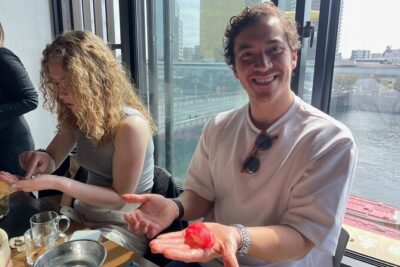
Sushi Making Tokyo Roll and Authentic Japanese Sushi Class
Our verdict →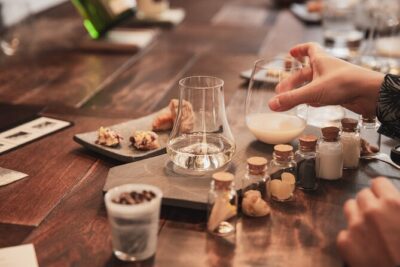
Sake Omakase in Tokyo: Guided Tasting by Certified Sommeliers
Our verdict →
Browse the lists this tour appears in