
Reviewed · SUSHI EXPERIENCES
Kyoto: Small-Group Authentic Sushi Making Workshop
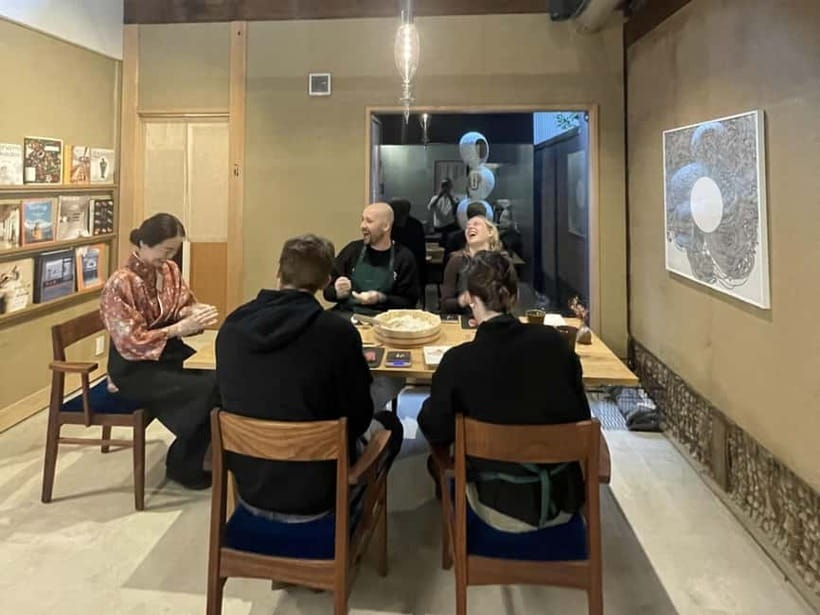
Kyoto’s original small-group sushi workshop turns lunch into a useful cultural lesson. In 90 minutes, you season rice, shape nigiri, roll maki, and learn why a small change in pressure can make or break sushi. Kana leads the English-language class, with help from hosts such as Aya, Ayumi, Karim, or Kenneth depending on the session.
I like the eight-person limit, which keeps the class calm and gives you time to ask questions. I also like the setting: a restored Kyoto townhouse in the Kyoto Wand building, close to Kiyomizu-Gojō Station and within walking distance of Gion and Kiyomizu-dera. The main caution is simple: this is not a vegetarian class, and wheelchair users cannot take part.
Key points at a glance
- A true hands-on class: You season rice and make your own nigiri, maki, and other sushi rather than simply watching a demonstration.
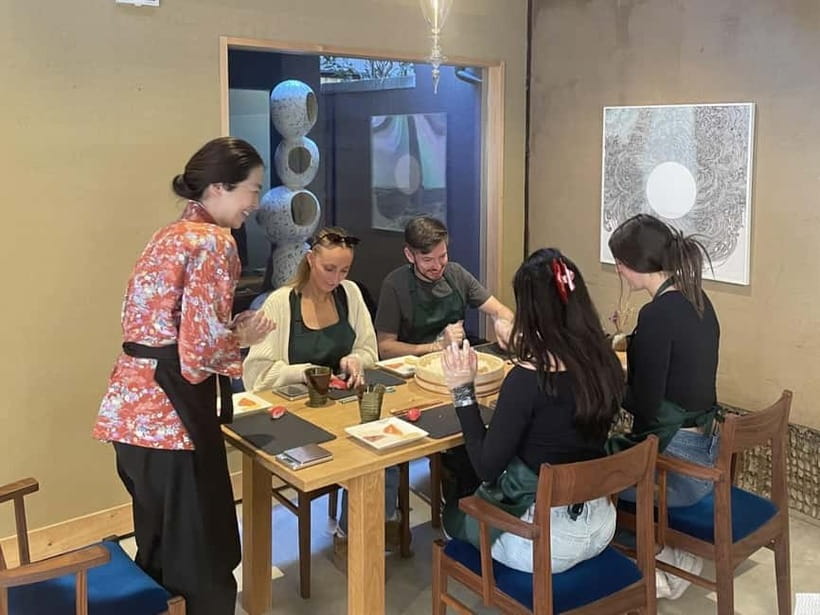
- Small groups of up to eight: The format leaves room for individual help and questions in English.
- Fresh local ingredients: Fish is prepared for the class, with sessions using fish sourced from Kyoto’s Nishiki Market.
- A generous lunch: You eat the sushi you make, along with miso soup. The quantity can be surprisingly large.
- A useful take-home gift: You receive a sushi rolling mat, chopsticks, recipe card, gloves, and an apron.
- An easy central location: The Kyoto Wand building is a short walk from Kiyomizu-Gojō Station and near major sights.
Why this sushi class works so well in Kyoto
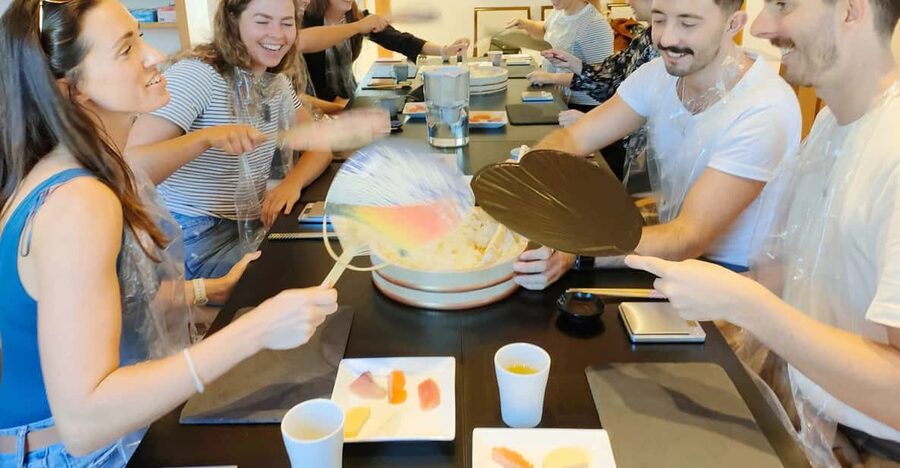
Many cooking classes give you a recipe, a quick demonstration, and a plate of food. This one gives you a clearer sense of how sushi is built. You handle the rice, fish, and nori yourself, so the meal becomes a lesson in touch, balance, and presentation.
That matters in Kyoto, where food is often treated as a careful craft rather than a rushed fuel stop. You will not become a sushi chef in 90 minutes, but you can leave knowing how to make a tidy maki roll, how to form rice for nigiri, and how much filling a sheet of nori can actually hold before everything escapes.
The class also has a social side. Kana is known for talking about Japanese culture, Kyoto, local food, and her own life between Osaka and Kyoto. The conversation can add a useful layer to the cooking, especially if you want more than a basic recipe lesson.
The mood is friendly and informal, but not chaotic. That is a good fit after a morning of temples and crowded shopping streets. You get to sit down, work with your hands, and enjoy a meal you helped create.
More Sushi Experiences in Kyoto
- Sushi Making in Kyoto! Same-day bookings welcome!
★ 5.0 · 713 reviews - The Original Small-Group Sushi Making Class in Kyoto
★ 5.0 · 436 reviews - Sushi – Authentic Japanese Cooking Class – the best souvenir from Kyoto!
★ 5.0 · 93 reviews
Arriving near Kiyomizu-Gojō Station
The workshop takes place in the Kyoto Wand building, a few minutes on foot from Kiyomizu-Gojō Station on the Keihan Main Line. The address is central enough to pair with a day around Gion, Kiyomizu-dera, or the Higashiyama streets.
Use the exact meeting information when you book. The listed Google Plus Code is XQVC+J7 Kyoto, which can help if your map app has trouble with the building name. There is no hotel pickup or drop-off, so you need to make your own way there.
The location is one of the activity’s practical strengths. You can fit the class into a sightseeing day without making a long trip across the city. I would allow a little extra time to find the entrance, especially if you are coming from a temple visit and are navigating Kyoto’s narrow streets.
You enter a traditional-style setting rather than a large modern cooking studio. The restored townhouse atmosphere helps the class feel connected to Kyoto, though anyone expecting a professional restaurant kitchen should adjust expectations. The focus is on learning and eating, not watching chefs work behind a counter.
The first lesson: seasoning the sushi rice
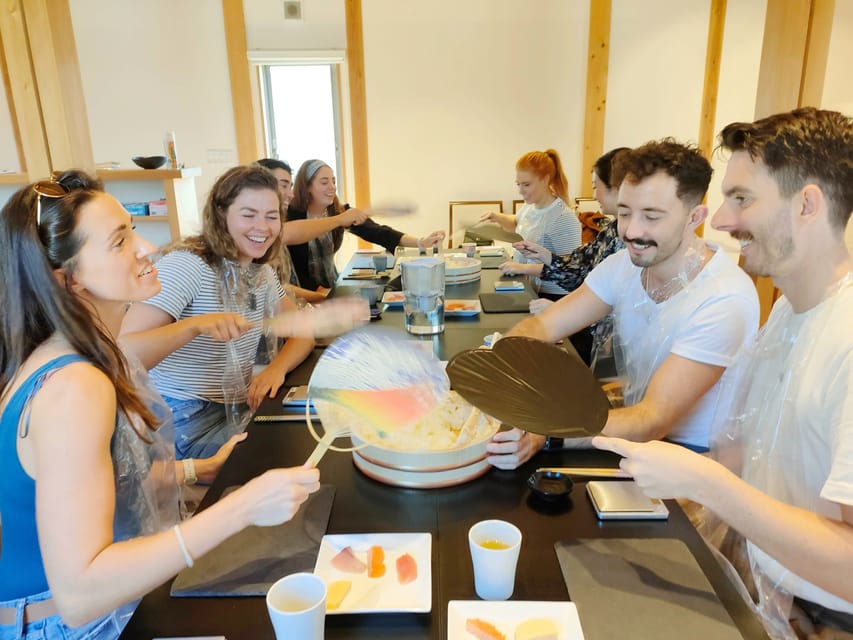
The class begins with the foundation of the meal, the rice. This is more important than it sounds. Sushi rice needs the right balance of seasoning, temperature, and texture, and poor rice can overwhelm even very good fish.
You are shown how to work with the cooked rice and seasoning before shaping it. The instructions are designed for beginners, with each step demonstrated slowly enough for you to copy. The small group means the instructor can look at your technique and correct it before you build the rest of the meal.
Rice quality is a point of pride here. One family session was told that the rice came from Kana’s own family, while other classes have used carefully selected local ingredients. The exact ingredients can vary, but the attention to the rice is clear from the way the class is structured.
This is also where you begin to see the difference between making sushi at home and making it with guidance. At home, you may press the rice too firmly or use too much vinegar. In class, you can ask why the rice feels different and get an answer while the problem is still in your hands.
Making nigiri, maki, and gunkan
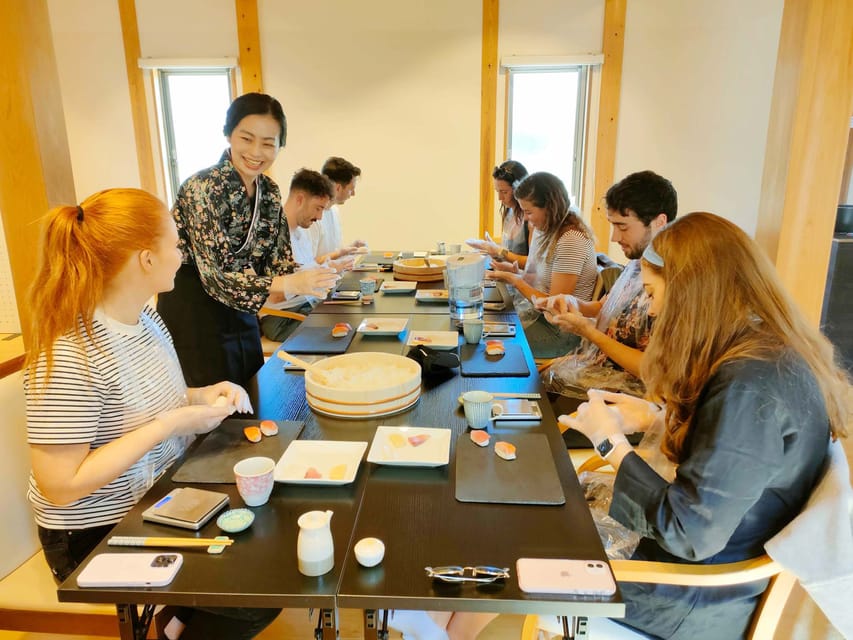
Once the rice is ready, the class moves to the fun part. You shape nigiri by forming a small portion of rice and placing fish on top. The motion looks easy when someone else does it. Your first attempt may be a little wide, loose, or uneven, which is exactly why personal instruction helps.
You may work with fish such as salmon, tuna, squid, and yellowtail, along with egg omelette. The class also includes maki rolls, often with combinations such as salmon and avocado, and some sessions have included gunkan sushi with corn or tuna salad.
The ingredients are prepared before you begin, so this is not a fish-cutting workshop. One participant specifically wished there had been a chance to cut the fish, but that is not part of the advertised experience. The trade-off is a smoother 90-minute class that keeps the attention on shaping, assembly, and food culture.
Your instructor demonstrates each form before you try it. Kana’s teaching style is patient and precise, with plenty of help around the table. If you have made sushi before, you can ask about traditional methods and refine your technique. If you are a complete beginner, the pace is gentle enough to follow.
The maki portion is particularly satisfying because the result is easy to see. You spread rice, add filling, roll with the mat, and cut the finished cylinder into pieces. A rolling mat is included in your gift bag, so this is one skill you can repeat at home rather than leave behind in Kyoto.
Same trip, a completely different kind of day:
- PERFECT KYOTO 1-Day Bus Tour
★ 5.0 · 13,518 reviews - Kyoto: Fushimi Inari, Kinkakuji, Bamboo Grove 1 Day Bus Tour
★ 4.8 · 4,316 reviews - Kyoto: Tea Ceremony in a Traditional Tea House in Kiyomizu
★ 4.9 · 3,519 reviews - Kyoto Geisha Walking Tour: Gion District & Hidden Gems
★ 4.7 · 3,273 reviews
Eating your own sushi for lunch
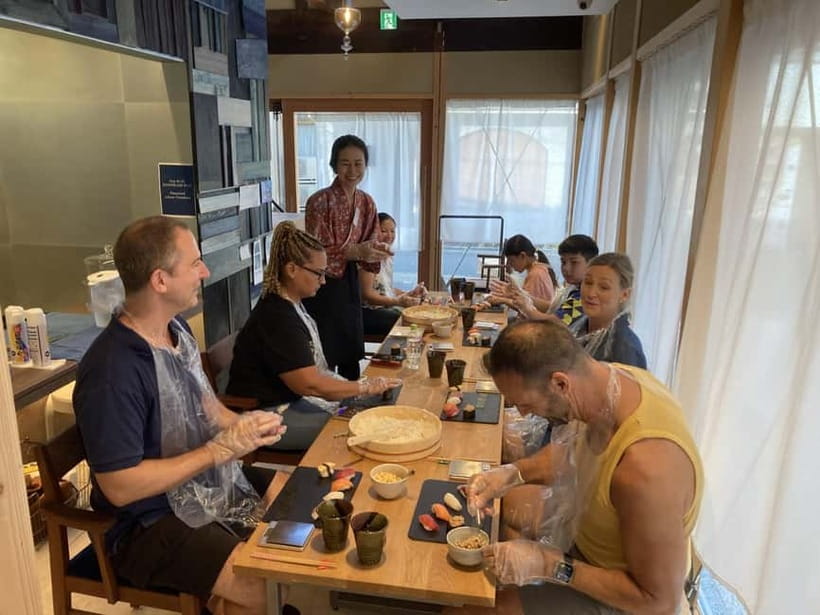
After the making comes the best reward: you eat the sushi you prepared. Miso soup is included, along with the usual accompaniments such as soy sauce, wasabi, and ginger when appropriate to the meal.
The portions are generous. Some people have made enough sushi to feel very full, so avoid scheduling this immediately before a large dinner. You are not receiving a tiny tasting plate. This is a proper lunch built around your work at the table.
The quality of the fish is another strong point. Sessions have used fresh fish from Nishiki Market, and the fish is handled and prepared for the class before you arrive. That makes this a good option for anyone nervous about raw seafood. Still, you should only book if you are comfortable eating the ingredients served, since the activity is not designed for vegetarians.
The meal also gives you time to compare techniques with the other people in the group. Families, couples, solo participants, and mixed groups can all fit the format. A family of seven has attended together, while some sessions have had only two or three participants, creating an even more personal lesson.
The hosts make the difference
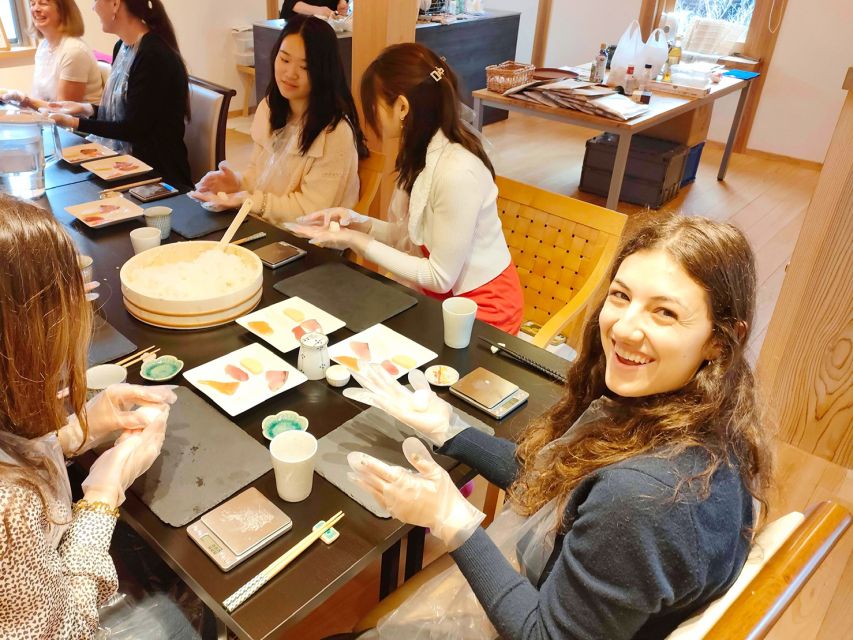
The cooking itself is useful, but the hosts are a major part of the experience. Kana is the main name connected with the workshop, and sessions may also include Aya, Ayumi, her husband Karim, or an assistant such as Kenneth.
The teaching is not limited to food. You can ask about Japanese customs, Kyoto history, local restaurants, travel routes, or everyday life. Kana has spoken about growing up in Osaka and moving to Kyoto, and she has a strong interest in Japanese history. That gives the conversation a local angle without turning the class into a formal lecture.
English is the working language, and the instruction is meant to be easy to follow. The hosts greet participants personally and make a point of helping around the table. That suits people who want encouragement while they work, rather than a demonstration from a distance.
The class can sometimes run beyond the stated 90 minutes if there is time for conversation. One couple stayed about 30 minutes longer chatting with the hosts. You should not count on extra time if you have a tight schedule, but the relaxed atmosphere is part of the appeal.
What the $60 price includes
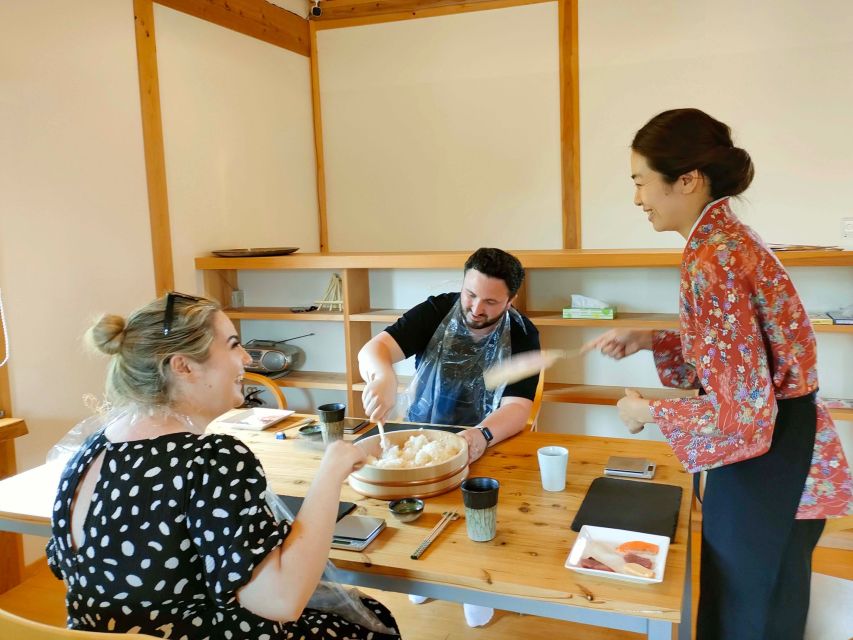
At $60 per person, the workshop is priced above a quick market snack but below many private cooking lessons. The value depends on what you want from the activity.
You receive:
- A 90-minute English-language sushi workshop
- All sushi you make for lunch
- Miso soup
- Fresh fish and selected ingredients
- Disposable gloves and an apron
- A sushi rolling mat
- Chopsticks
- A recipe card
The take-home kit improves the value. You leave with tools and instructions, not just a memory and a full stomach. If you make sushi again at home, the class has done more than entertain you for an afternoon.
The price also covers a small group and personal guidance. You are not paying only for ingredients. You are paying for a patient teacher, a central Kyoto setting, and the chance to ask questions while you practice. For a first sushi lesson, that is a fair package.
Still, this is not the right choice if you mainly want the cheapest possible meal. A restaurant will feed you faster, and a market stall will cost less. Choose this class because you want to learn while you eat.
Who should book this workshop
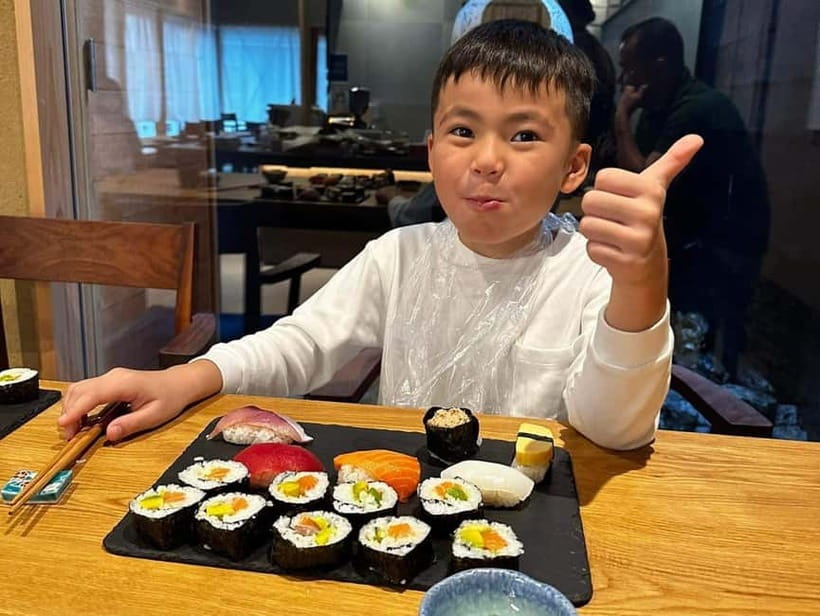
I would recommend it to first-time sushi makers, families with older children, couples, and food-focused visitors who want an activity that is both restful and practical. The class has worked well for a 10-year-old and a parent, for a family spanning grandparents to grandchildren, and for adults who already make sushi at home.
It is also a good break from sightseeing. After several days of temples, shopping, and long walks, sitting at a table in a quiet townhouse can feel like a reset. You remain active, but the pace is calm.
The class suits people who enjoy conversation as much as instruction. If you want to ask about Japanese culture or get local food suggestions, the hosts make room for that. If you prefer a silent, highly technical chef’s course, this may feel more social than expected.
You should not book if you are vegetarian, since the experience is specifically built around fish and other sushi ingredients. Wheelchair users cannot take part, and you should tell the provider about dietary restrictions when booking.
A practical way to fit it into your day
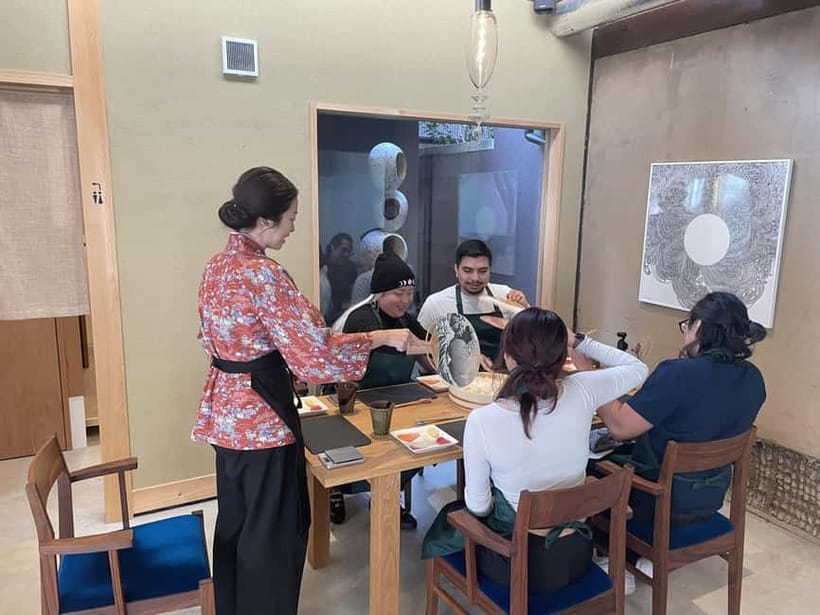
The workshop is easiest to pair with sights in southern Higashiyama. You could visit Kiyomizu-dera or walk through Gion before or after class, since both are within the wider central area. Check your exact starting time before planning a tight temple route.
Arrive ready to work with food. An apron and disposable gloves are provided, but comfortable clothing still makes sense. You may also want to leave space in your day for the included lunch, since the serving can be substantial.
The cancellation policy is helpful if your Kyoto plans are still shifting: you can cancel up to 24 hours ahead for a full refund. You can also reserve now and pay later, which gives you some flexibility while arranging a Japan itinerary.
Should you book it?
Book this class if you want more than a meal and less than a formal culinary course. The small group, English instruction, fresh ingredients, generous lunch, and take-home tools make the $60 price reasonable.
I especially like it for families and curious beginners because the hosts keep the tone warm without losing the practical lesson. Just remember that raw fish is central, the class is not wheelchair accessible, and the 90-minute schedule does not include hotel transport.
If those limits work for you, this is an easy way to connect food, local culture, and a useful skill in one Kyoto afternoon.
FAQ
How long does the Kyoto sushi workshop last?
The workshop lasts 90 minutes. Some sessions may include extra conversation if time allows, but you should plan around the stated 90-minute duration.
Is the sushi class taught in English?
Yes. The workshop includes an English-speaking host and English instruction throughout the activity.
What types of sushi will I make?
You will learn to make several types, including nigiri and maki rolls. Some sessions also include gunkan sushi, with ingredients such as tuna salad or corn.
Is lunch included?
Yes. You eat the sushi you make, and miso soup is included. The portions can be large, so plan accordingly.
What do I take home from the class?
The gift bag includes a sushi rolling mat, chopsticks, and a recipe card. Disposable gloves and an apron are provided for use during the workshop.
Can vegetarians or wheelchair users join?
No. The activity is not suitable for vegetarians or wheelchair users. You should advise the provider of any dietary restrictions when booking.
Just added around Kyoto
- Sekka Cotton Furoshiki Class★ 5.0 · 19 reviews
- Kyoto Sword Experience – includes Museum Ticket/Ninja Experience★ 4.5 · 149 reviews
- Scenic Green Tea Fields of Hidden Kyoto & Local Tea Exp (Private)★ 5.0 · 32 reviews
- Secret Eastern Kyoto Biking Adventure★ 5.0 · 44 reviews
- Private Sake Tasting in Central Kyoto with Sake Sommelier★ 5.0 · 32 reviews
- Samurai School in Kyoto: Samurai for a Day★ 5.0 · 202 reviews
- SHIRAKAWA Japanese Culture Experiences with private English staff★ 5.0 · 16 reviews
- A Privately Guided Photoshoot in Beautiful Kyoto by a Pro★ 5.0 · 18 reviews
Sushi Experiences, compared.
Sushi Making Tokyo Roll and Authentic Japanese Sushi Class
Our verdict →
Sake Omakase in Tokyo: Guided Tasting by Certified Sommeliers
Our verdict →
Browse the lists this tour appears in