
Reviewed · CALLIGRAPHY CLASSES
Osaka: Temple Tour and Traditional Calligraphy Lesson
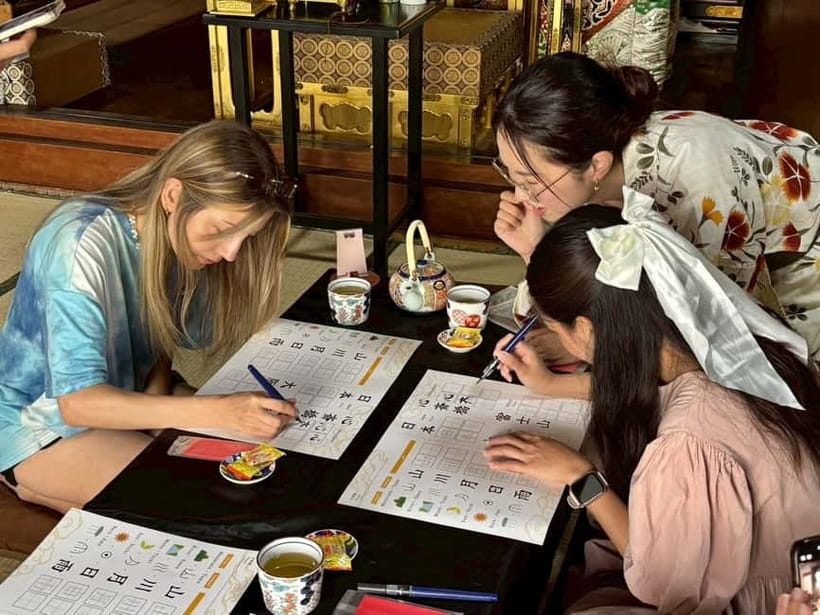
The most memorable part of this Osaka experience is the setting: you practice Japanese calligraphy inside a working temple, only three minutes from Yotsubashi Station. The hour begins with a short lesson on Osaka and the difference between temples and shrines, then moves into breathing meditation and slow brushwork.
I like the calm pace, the chance to interact with resident monks, and the useful keepsakes: a kanji name card, your mini shikishi, and a small ceramic plate. The main drawback is the short one-hour format. You get a meaningful introduction, but not a long lesson in calligraphy or meditation.
Key points to know
- Temple setting: Saishoji Temple puts a quiet, traditional activity right in central Osaka.
- English instruction: The lesson and cultural guidance are provided in English.
- Mindful start: Zazen meditation and breathing help you settle before using the brush.
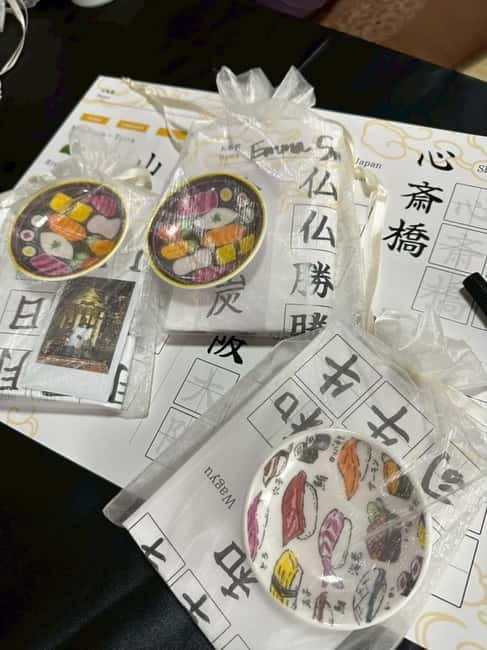
- Personal souvenir: You write one favorite kanji on a mini shikishi and receive a name card explaining your Japanese kanji.
- Small-group feel: The format is designed for personal attention, including for solo participants.
- Low price: At $20 per person, this is an inexpensive way to add a hands-on cultural activity to a day in Osaka.
Why this temple hour works in busy Osaka
Osaka is easy to enjoy at full speed. You can eat, shop, ride trains, and cover a lot of ground in one day. This experience gives you a reason to slow down.
Saishoji Temple is in Kitahorie, close to the Shinsaibashi and Yotsubashi shopping areas. That location matters. You do not need to spend half a day getting to a remote temple, and you can pair the activity with shopping, lunch, or a walk toward Namba.
The temple setting also changes the tone. This is not a craft class in a generic studio. You sit in a sacred place, hear about Japanese customs, and use the brush with monks and instructors nearby. The experience is brief, but it gives ordinary sightseeing a more thoughtful edge.
I especially like the balance between explanation and activity. You are not expected to simply listen to a lecture about Japanese culture. You learn a little, breathe a little, then put your hands to work.
More Calligraphy Classes in Osaka
- Osaka: Private Japanese Calligraphy Experience
★ 5.0 · 66 reviews - Calligraphy Workshop in Namba, Dotonbori
★ 5.0 · 57 reviews - Learning Zen of Japanese Calligraphy in kimono near Osaka Castle
★ 4.5 · 53 reviews
Starting with Osaka history and temple customs
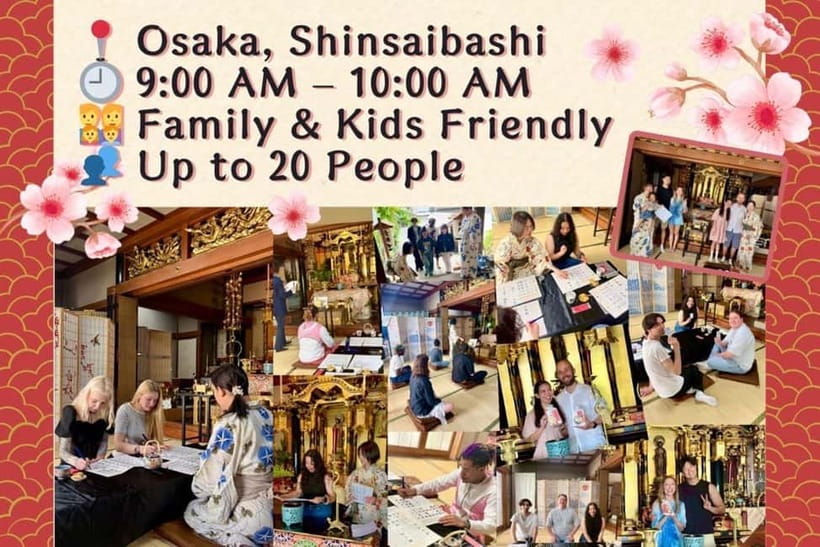
The first part covers the history of Shinsaibashi, Yotsubashi, and Osaka Castle. You also learn the basic difference between a Japanese temple and shrine. That may sound simple, but it is useful context when you are visiting Japan.
Many first-time visitors see gates, incense, statues, and places for prayer without knowing what they mean. A short explanation helps you notice more during the rest of your trip. You can also ask about conversational phrases and cultural expressions, making this more than a silent art lesson.
The language element is aimed at a wide range of ability. Beginners can follow the basic phrases, while more advanced learners can use the setting to practice mindful communication and cultural vocabulary. The instructor works in English, so you do not need Japanese language skills to take part.
Keep your expectations measured. This is not a full history course on Osaka, and the one-hour schedule leaves limited time for long questions. Think of the opening lesson as a helpful orientation before the meditation and calligraphy.
Zazen meditation before the brush comes out
The meditation section helps separate the experience from the noise of the city. You are guided to clear your mind and focus on your breathing. That preparation makes sense because calligraphy depends on controlled movement, patience, and attention.
You do not need prior meditation experience. The point is not to reach some special state or perform perfectly. You simply get a quiet moment before beginning the brushwork.
The calm atmosphere is one of the strongest reasons to book this activity. People who come alone can take part without needing a partner or group. The staff are described as polite, kind, and reassuring, which matters if you feel nervous about trying something unfamiliar.
The limitation is time. A one-hour visit cannot provide an extended meditation session. If you want formal Zen training or a long period of silence, this is too short. If you want a gentle introduction that fits between other Osaka plans, the length is just right.
Learning calligraphy without needing perfect handwriting
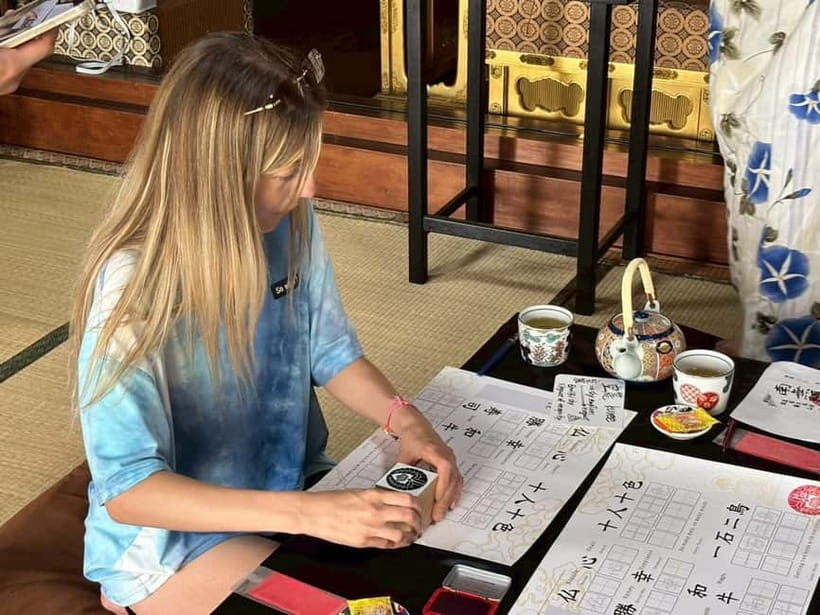
The calligraphy lesson begins with basic practice. You learn how to hold and move the brush before choosing one favorite kanji for your mini shikishi.
This is a good approach for first-timers. You are not thrown straight into a final artwork, and you do not need to arrive with beautiful handwriting. The practice stage lets you get used to the ink, brush pressure, and slower pace of Japanese writing.
Calligraphy can look simple until you try it. A single character may require careful control from the first stroke to the last. The meditation beforehand helps you approach the task with patience rather than rushing to make a souvenir.
The finished mini shikishi gives the activity a clear ending. You leave with something you made, not only a photograph or a general memory. You may choose a kanji that represents a quality you admire, a personal idea, or a word connected to your trip. The supplied information does not specify a fixed list of characters, so ask the instructor what choices are available when you arrive.
The instructors are used to beginners, and the activity has received especially strong praise for clear explanations and calm support. That makes it suitable for children and adults who have never touched a calligraphy brush, though the listing does not give a minimum age.
More Temple & Shrine Tours in Osaka
- Osaka: Minoh, Katsuoji Temple, & Minoh Falls Full-day Tour
★ 4.9 · 172 reviews - Osaka: Mind & Spirit Balance Temple Reiki Healing
★ 5.0 · 41 reviews - Osaka: Minoh Waterfall & Katsuo-ji Temple Half-Day Tour
★ 4.7 · 27 reviews - Osaka Half-day E-bike Adventure: Minoh Falls & Katsuoji Temple
★ 5.0 · 25 reviews
The kanji name card adds a personal touch
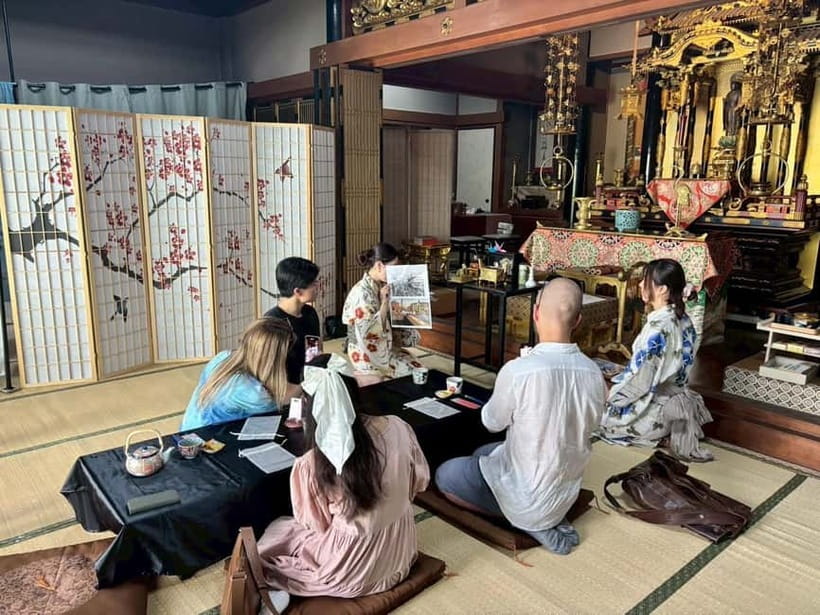
You also receive a name card with Japanese kanji and its meaning. This is a small detail, but it gives the visit a more personal feel.
A name card can help you connect the sound or meaning of your name with Japanese writing. It also makes a handy keepsake for your journal or luggage. Since the exact process for choosing the kanji is not specified, you should ask the instructor how your card is prepared.
This part works well alongside the calligraphy lesson. You first see how kanji can carry meaning, then practice writing a character yourself. It gives you a little more context than copying a symbol without knowing what it represents.
Matcha and the wider cultural program
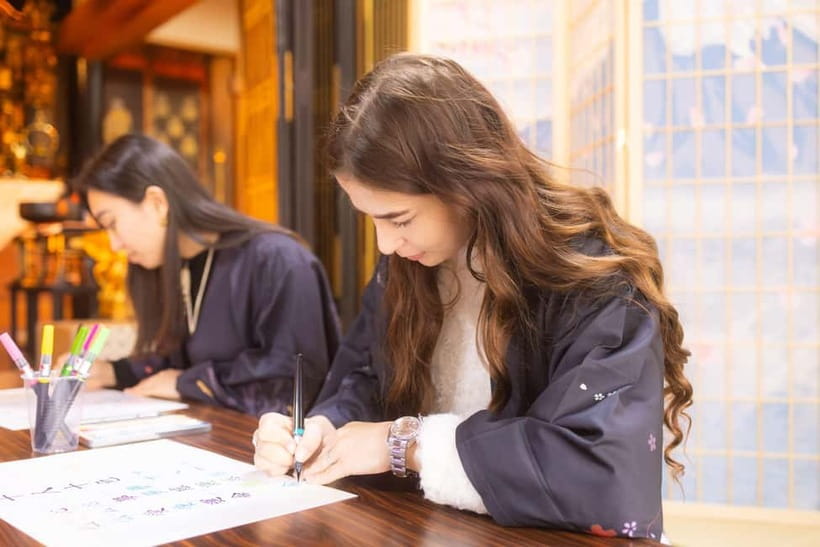
The activity description includes a traditional matcha tea ceremony along with Zazen meditation and calligraphy copying. These parts reinforce the same idea: Japanese cultural practices reward attention to small movements.
The available details do not set out the exact order or length of the tea ceremony, so the schedule may depend on the group and the day. Treat it as part of the cultural program rather than a long standalone tea lesson.
The mention of interaction with resident monks is important. You are not only watching a demonstration from a distance. The format allows you to ask questions and receive guidance in the temple environment. That personal contact is one reason the experience feels more substantial than a souvenir-making class.
Still, do not book this expecting a full tea masterclass, advanced brush training, and a long temple tour in one hour. You are getting a compact introduction to several traditions.
What you take home from Saishoji Temple
The main handmade souvenir is your mini shikishi with one kanji. You also receive a small ceramic plate measuring about 8 centimeters in diameter.
The plate is modest in size, but that is useful for packing. It should fit easily into a suitcase or day bag, assuming you protect it carefully. The exact design is not specified, so do not book this expecting a particular color or pattern.
The calligraphy piece is more personal because you create it during the lesson. The name card adds another layer, explaining your Japanese kanji and its meaning. Together, the three items give you a physical reminder of the temple visit without turning the activity into a shopping stop.
The temple also has intricate stamps, according to the experience details shared by participants. If stamps are part of the day’s program, they can be a nice extra detail, but the guaranteed inclusions are the listed materials, name card, mini shikishi, and ceramic plate.
A practical look at the $20 value
At $20 per person, this is priced below many guided cultural activities in major Japanese cities. The value comes from the combination of an English lesson, temple access, meditation, calligraphy materials, monk interaction, and several keepsakes.
You are also paying for convenience. Saishoji Temple is close to three major areas:
- Yotsubashi Station is about a three-minute walk away, using Exit 4 on the Osaka Metro Yotsubashi Line.
- Shinsaibashi Station is about a 10-minute walk away on the Osaka Metro Midosuji Line.
- Namba Station is about a 15-minute walk away.
That makes this easy to add to a day in central Osaka. You can schedule it before shopping around Shinsaibashi or after exploring Namba. Check the available start times when booking, since the activity runs for one hour and the exact departure times are not listed here.
The value is strongest if you want active participation. If you only want to step inside a temple for a few minutes, you can visit other religious sites on your own. If you want guidance, materials, an English explanation, and a finished piece of calligraphy, $20 is a fair price.
Who will enjoy this most
I would recommend this for first-time visitors who want a cultural activity without giving up most of a sightseeing day. The short format fits neatly into an Osaka itinerary.
It is also a good choice for solo visitors. You do not need to bring a partner, and the staff can give individual attention in the small-group setting. The relaxed instruction helps remove the awkwardness that sometimes comes with arriving alone at a class.
Families may enjoy it as well, especially if children are interested in Japanese writing or hands-on activities. The available information does not provide age rules, so confirm suitability for young children before booking.
Language learners have an extra reason to consider it. The activity combines English guidance with Japanese history, phrases, cultural expressions, and kanji. You will not become fluent in an hour, but you will gain useful cultural context for the rest of your trip.
It also suits anyone who wants a quieter pause between Osaka’s food and shopping districts. The meditation and brushwork offer a change of pace without requiring a full retreat.
Who should choose something else
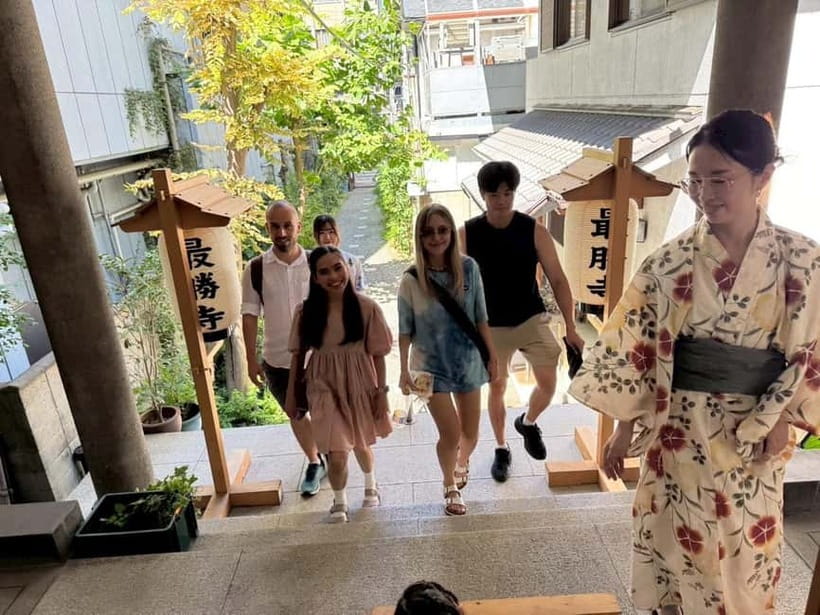
You may want a different activity if you are looking for advanced calligraphy instruction. The lesson covers the basics and one chosen kanji, so it is built for access rather than mastery.
The same goes for visitors seeking a long, formal Zen session. The meditation is brief and guided. It helps you focus, but it is not a full monastic program.
You should also be aware that the experience includes several elements within one hour. That means each part receives an introduction, not an extended treatment. Some people will appreciate the variety; others may prefer to spend the entire hour on calligraphy.
Booking details worth knowing
The meeting point is Saishoji Temple at 1-6-18 Kitahorie, Nishi-ku, Osaka, 550-0014. Use Yotsubashi Station Exit 4 if you want the simplest route.
The instructor language is English. All materials needed for the activities are included, along with the cultural lesson and interaction with resident monks.
You can cancel up to 24 hours before the activity for a full refund. The reserve-now, pay-later option also helps if your Osaka schedule is not settled. Confirm the starting time and availability before booking, since the activity lasts one hour but the supplied details do not list fixed daily departures.
Should you book the Saishoji Temple experience?
Book it if you want a short, affordable, hands-on look at Japanese culture in central Osaka. The strongest reasons are the peaceful temple setting, patient English instruction, beginner-friendly brushwork, and the personal souvenirs.
I would make this a priority for solo visitors, language learners, first-time calligraphy students, and anyone who wants a quiet hour near Shinsaibashi. I would skip it only if you want advanced calligraphy, a long meditation, or a full-day temple program.
For $20, you get more than a quick photo stop. You get a pause, a lesson, a brush in your hand, and a small piece of Japanese writing to carry home.
FAQ
Where does the experience take place?
It takes place at Saishoji Temple, 1-6-18 Kitahorie, Nishi-ku, Osaka, 550-0014, Japan.
How close is Saishoji Temple to Yotsubashi Station?
The temple is about a three-minute walk from Yotsubashi Station, using Exit 4 on the Osaka Metro Yotsubashi Line.
How far is the temple from Shinsaibashi Station?
Saishoji Temple is about a 10-minute walk from Shinsaibashi Station on the Osaka Metro Midosuji Line.
How far is the temple from Namba Station?
The temple is about a 15-minute walk from Namba Station.
How long does the experience last?
The activity lasts one hour.
Is the experience offered in English?
Yes. The instructor language is English.
Is previous calligraphy experience required?
No previous experience is stated as a requirement. The activity includes basic calligraphy practice and is designed for beginners as well as more advanced language learners.
What will I do during the experience?
You can expect a Japanese history and language lesson, breathing meditation or Zazen, calligraphy practice, writing one favorite kanji on a mini shikishi, and cultural activities that include a traditional matcha tea ceremony.
What souvenirs are included?
You receive a kanji name card with its meaning and a small ceramic plate measuring about 8 centimeters in diameter. You also create a mini shikishi with one kanji.
Can I cancel for a full refund?
Yes. You can cancel up to 24 hours in advance for a full refund.
Just added around Osaka
- Exclusive Sushi Making Experience with a Master Chef – Osaka Area★ 5.0 · 25 reviews
- Private Home-Style Cooking Class in Osaka with Local Mom Yoshiko★ 5.0 · 46 reviews
- Hidden Osaka – Yukaku Red Light Tour & Culinary Adventure★ 4.8 · 96 reviews
- Osaka: Walking Tour and Top Highlights★ 4.8 · 104 reviews
- Osaka: Private Ceramic Painting Workshop★ 5.0 · 13 reviews
- Pickleball in Osaka, Kobe & Kyoto with Locals!★ 4.7 · 80 reviews
- Eat Like a Local in Osaka – Private Custom Street Food Tour★ 4.3 · 33 reviews
- Osaka:SUMO BEATS SHOWCASE: Taiko Drum and Wagyu burger!★ 4.2 · 37 reviews
Calligraphy Classes, compared.
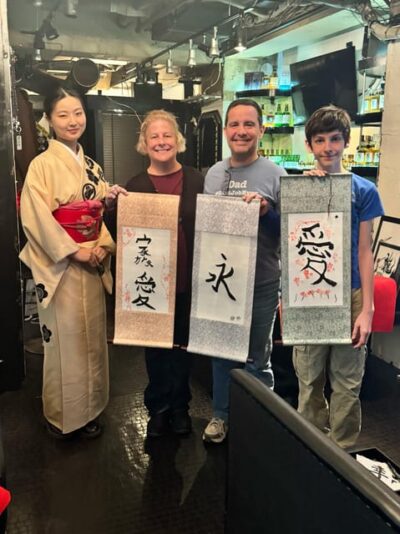
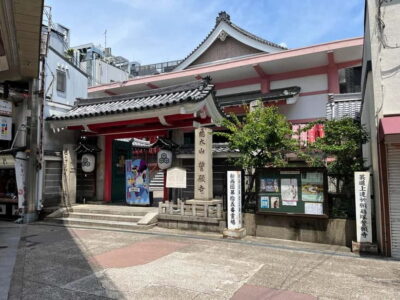
Calligraphy class at Buddhist temple in city center
Our verdict →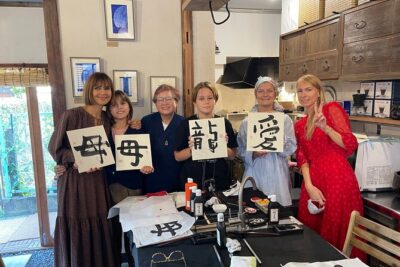
Let’s experience calligraphy in YANAKA, Taito-ku, TOKYO !!
Our verdict →
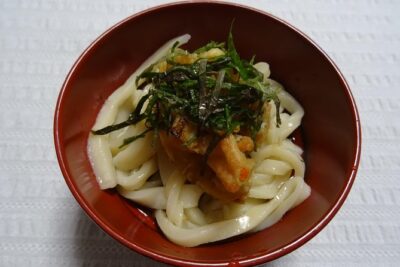
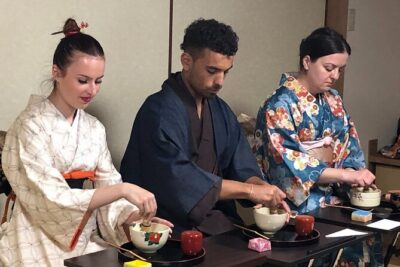
An Amazing set of Cultural experience: Kimono, Tea Ceremony and Calligraphy
Our verdict →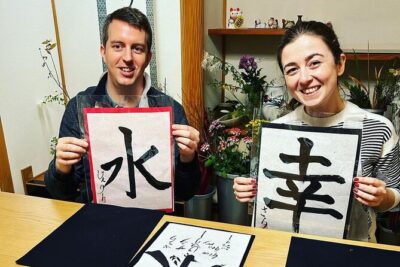
Private Japanese Calligraphy in Kyoto – Learn Shodō with a Master
Our verdict →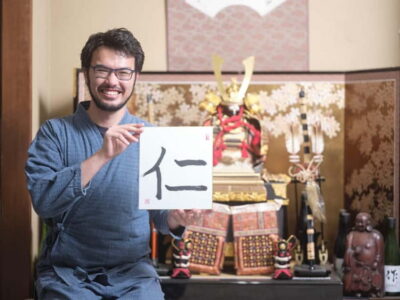
Browse the lists this tour appears in