
Reviewed · SAMURAI EXPERIENCES
Nijo Castle Samurai Inside Story — Top-Rated Guide (Max 8)
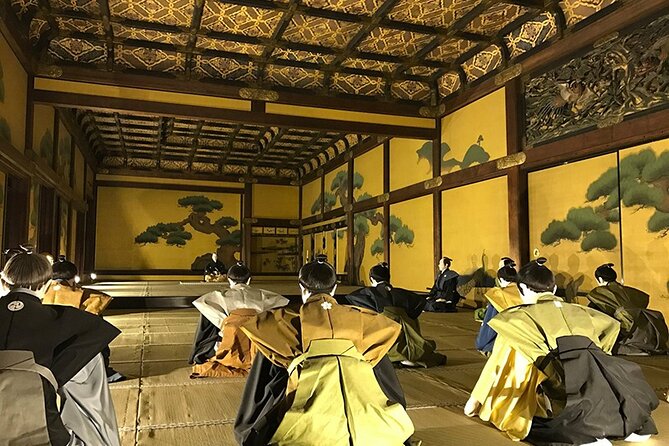
Nijo Castle is much more than a handsome Kyoto landmark. Its rooms, gates, gardens, and famous nightingale floors reveal how samurai power worked in daily life. Guide Richard focuses on the parts easy to miss, including unspoken rules, secret duties, and the changing balance between the shogun and emperor.
I like the small group limit of eight, which gives you room to ask questions. I also like that the full castle admission and green tea break are included in the $98 price. The main caution is the pace: three hours on foot may feel long for young children, and the tour is not recommended for small children.
Key points before you book
- Richard’s specialty is context: He connects the castle to samurai life, Japanese customs, the shogun, and the emperor.
- The tour covers Nijo Castle’s full course: Admission is included, so you can focus on the site rather than arranging a separate ticket.
- Groups are capped at eight people: This is small enough for questions and personal attention.
- A green tea break is built in: The pause gives you a chance to rest and absorb what you have seen.
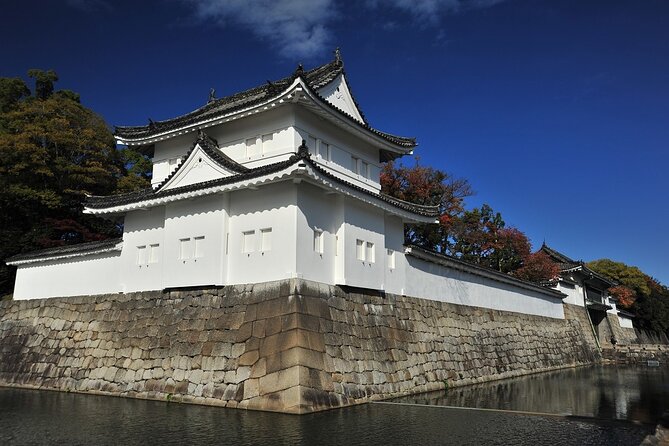
- Meet at the large white gate on the west side: Be at the main gate meeting point before the scheduled start.
- The experience lasts about three hours: Plan for a substantial walking and standing visit, not a quick photo stop.
Why Nijo Castle is best understood with a guide
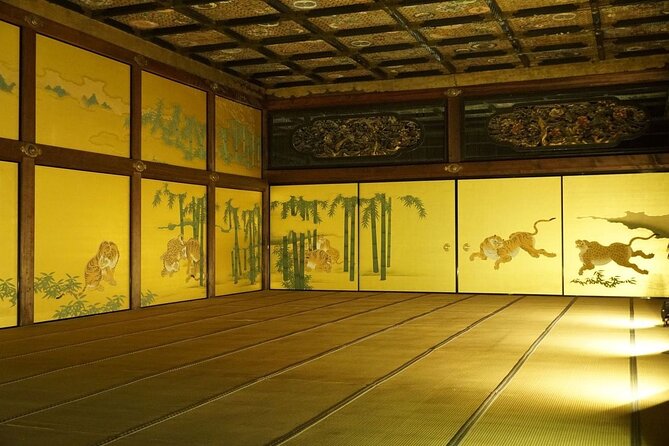
Nijo Castle can look straightforward at first: grand gates, elegant buildings, gardens, and wide paths. Yet its real story is about control. This was a place where political power was displayed through architecture, movement, ceremony, and strict behavior.
I like this tour because it treats the castle as a working system rather than a collection of pretty buildings. Richard explains the role of samurai, the rules that shaped life inside the castle, and the larger relationship between the shogun and the imperial court.
That matters because many of the site’s details are easy to pass without context. A doorway, a floor, or a room arrangement can seem decorative until you learn why it was built that way. With a guide, you have someone pointing out what deserves your attention and explaining how the pieces fit together.
The tour also connects the castle to Japanese culture. You are not limited to a list of dates or names. The aim is to understand how authority, etiquette, duty, and daily life worked together. That broader view is especially useful if you are visiting the Imperial Palace or other historic sites during the same Kyoto stay.
More Castle Tours in Kyoto
- Kyoto: Nijo-jo Castle and Ninomaru Palace Guided Tour
★ 4.7 · 1,020 reviews - Kyoto: Nijo Castle, Kiyomizu & Fushimi Inari Guided Tour
★ 4.7 · 700 reviews - Kyoto: Imperial Palace & Nijo Castle Guided Walking Tour
★ 4.7 · 453 reviews
Meeting Richard at the west gate
The meeting point is in front of Nijo Castle’s main gate, identified as the large white gate on the west side of the castle. The official starting location is 541 Nijojocho, Nakagyo Ward, Kyoto, 604-8301.
This detail is worth taking seriously. Nijo Castle has more than one entrance and a broad surrounding area, so do not simply arrive near the castle and assume you will see the guide at once. Allow enough time to reach the west-side gate and locate the meeting point before the start.
The castle is near public transportation, which makes this practical to add to a day of sightseeing in central Kyoto. The activity begins and ends at the same meeting point. Private transportation is not provided, so you handle your own journey to and from the castle.
A mobile ticket keeps the entry process simple. Confirmation arrives when you book, and admission to the full castle course is included.
Inside the castle: samurai life beyond the armor
The heart of the experience is the guided walk through the castle grounds and buildings. Richard explains the physical setting while using it to discuss the people who lived, worked, and served there.
The focus is not only on famous warriors. You learn about the less visible roles that kept the castle functioning, along with the behavior expected inside a place where rank mattered. Rules and routines could communicate power as clearly as weapons could.
That is one of the most useful parts of the tour. Samurai history is often reduced to armor, swords, and dramatic battles. At Nijo Castle, the emphasis is also on administration, ceremony, loyalty, and controlled movement. You get a more practical view of how a ruling system operated.
Richard’s explanations also cover the castle’s place in the Edo period and the relationship between the shogun and emperor. This gives the visit a political frame. You can better understand why the castle mattered, not simply what it looks like.
The tour is a good fit if you enjoy asking questions. Several detailed comments about the experience point to Richard’s clear English, enthusiasm, and willingness to discuss Japanese history and culture beyond the immediate building. That makes the visit feel more like a conversation than a memorized speech.
The details most people walk past
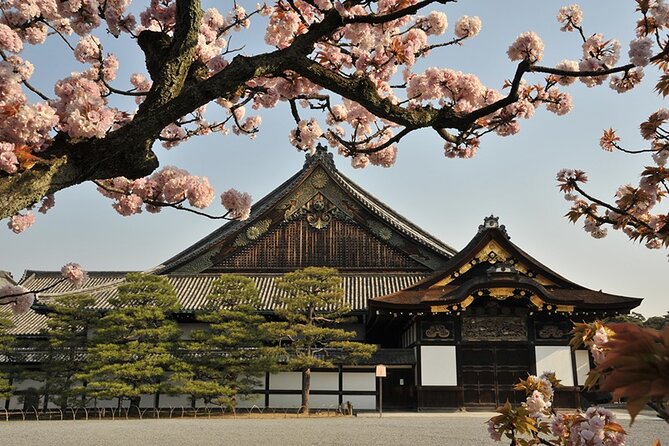
A guide earns the price of admission by showing you what to notice. At Nijo Castle, the small details carry much of the meaning.
Richard draws attention to the castle’s hidden systems and unspoken rules. These details help explain how people entered, moved through, and behaved in different areas. You may find that a room’s position or a route through the grounds says something about status and security.
The tour also covers the lives of the castle’s inhabitants. That human angle keeps the visit from becoming a dry lesson in architecture. You get a sense of the duties, customs, and expectations that shaped ordinary life inside an extraordinary setting.
I especially like the connection between the visible and invisible sides of the castle. The grand gates and formal spaces show public power. The less obvious arrangements reveal how that power was managed day after day.
Because the group is limited to eight, you should have a better chance of hearing the guide and stopping for questions than you would in a large coach group. The small size does not make the tour private, but it does create a more personal setting.
More Samurai Experiences in Kyoto
- Kyoto Samurai Experience
★ 5.0 · 1,294 reviews - Kyoto: Kendo and Samurai Experience with Uniform and Gear
★ 4.9 · 815 reviews - Kyoto: Samurai Sword Class by Experts in Traditional Arts
★ 4.9 · 657 reviews - Skip the lines Basic Ticket at SAMURAI NINJA MUSEUM KYOTO
★ 4.5 · 632 reviews
The green tea break in the middle
A cup of green tea is included during a break in the middle of the tour. This is a small feature, but it improves the rhythm of a three-hour visit.
Nijo Castle involves walking and standing, and a pause gives you time to rest. It also creates a natural moment to ask about something you have just seen or to clarify a point before continuing.
I would not book this tour for the tea alone. Think of it as a useful courtesy that adds comfort to a longer cultural visit. The break also fits the subject of the tour, since food, hospitality, and everyday customs are part of understanding Japanese life.
The exact length and setting of the break are not specified, so do not expect a full meal or a formal tea ceremony. It is described as a refreshing green tea pause.
Three hours at Nijo Castle: the right amount of time?
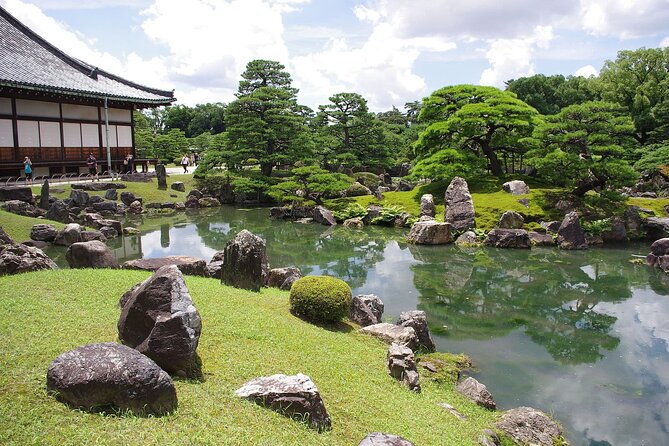
Three hours is a serious visit, but it makes sense for the amount of material covered. A short tour can show you the main buildings and leave you with a few dates. This experience aims to explain the castle’s systems, samurai roles, political meaning, and cultural setting.
I would choose the full three-hour format if you want history explained in detail or if this is one of your main Kyoto priorities. It suits visitors who prefer to understand a place rather than simply photograph it.
The length may be less appealing if you have a tight schedule or several young children with you. The activity is specifically not recommended for small children, and the time on site may feel demanding for anyone who prefers a quick, independent visit.
Most travelers can participate, but the information provided does not give a detailed accessibility breakdown. If you have specific mobility needs, confirm the practical arrangements before booking rather than assuming every part of the route will suit you.
What the $98 price includes
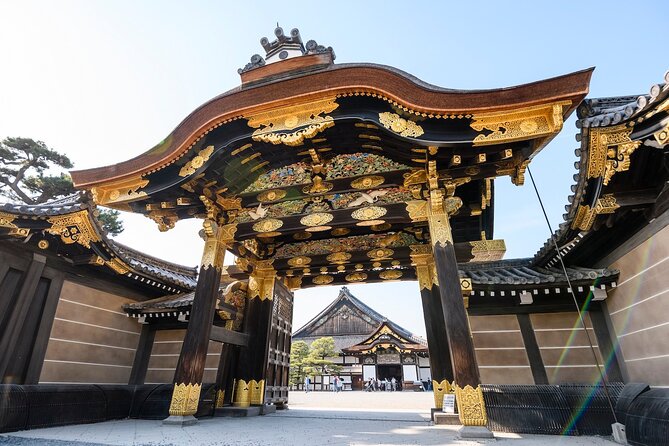
At $98 per person, this is not a budget entrance ticket. You are paying for a guided cultural experience, not only access to Nijo Castle.
The price includes full admission, a guide for approximately three hours, and green tea during the break. It also buys you a structured route through a large historic site, with someone explaining the meaning behind details you might otherwise overlook.
For me, the value depends on your travel style. If you are comfortable reading signs and exploring independently, the admission cost alone will make the tour feel expensive. If you want a clear explanation of samurai life, castle etiquette, and Japanese political history, the price is easier to justify.
The group limit helps. A maximum of eight people is small enough to support questions and direct conversation, without the higher price of a fully private tour. Keep in mind that private transportation and gratuities are not included. Tips are optional, though appreciated if you feel the guide provided a strong experience.
What the strongest praise tells you
The most consistent positive point is Richard himself. His strengths are clear English, strong command of Japanese history and culture, enthusiasm, and a personable manner.
I would pay attention to that combination. A guide can know many facts and still make a site feel dull. Richard’s approach appears to connect facts to larger questions about power, custom, and how people understood their place in society.
The feedback also points to the tour being thorough. That is good news if you want more than a quick introduction. It may be less appealing if you prefer to wander without pauses for explanation.
Some people also found it useful to compare Nijo Castle with the Imperial Palace during the same day. Treat that as added historical discussion rather than a guaranteed Imperial Palace visit, since the activity itself is centered on Nijo Castle.
A few limits to keep in mind
The tour has a clear focus on samurai history and Japanese culture. If you mainly want gardens, architecture, or quiet independent time, a guided visit may feel too structured.
The tour also depends on good weather. If poor weather forces cancellation, you are offered another date or a full refund. Since the experience takes place at a large outdoor site, check the forecast and keep a little flexibility in your Kyoto plans.
The start and end point are the same, which is convenient, but you arrange your own transportation. The activity is near public transportation, not supplied with a private vehicle.
Cancellation is free when made at least 24 hours before the start time. Cancellations or changes made less than 24 hours in advance are not refunded or accepted.
Who should book this Nijo Castle tour?
I would choose this tour if you want the castle’s political and social meaning explained in plain English. It is particularly suited to adults, history fans, first-time visitors to Kyoto, and anyone who wants to connect samurai stories with Japanese customs and government.
It is also a useful choice if you are visiting several imperial or shogunal sites and want help comparing them. Richard’s experience discussing the Imperial Palace alongside Nijo Castle can help you see the difference between imperial and military authority.
I would skip it if you want a fast visit, dislike guided commentary, or have small children who may struggle with a three-hour walking program. You should also check the meeting point carefully, since the west-side gate matters.
Should you book it?
Book this experience if the idea of Nijo Castle as a place of rules, ceremony, and political power interests you. The small group, included admission, green tea break, and Richard’s focus on overlooked details give the visit more substance than a simple castle walk.
At $98, it is best viewed as a history tour with castle access, not as a cheap sightseeing ticket. For a deeper understanding of samurai life and Kyoto’s political past, it offers solid value. For a quick look at the grounds, explore independently instead.
FAQ
How long does the Nijo Castle samurai tour last?
The tour lasts approximately three hours and ends back at the meeting point.
Who is the guide?
The guide identified for this experience is Richard. He explains samurai life, Japanese history, Japanese culture, and the significance of Nijo Castle.
What is included in the price?
The $98 price includes admission to Nijo Castle’s full course and coffee or tea, described as a green tea break during the tour.
Where does the tour meet?
You meet in front of Nijo Castle’s main gate, the large white gate on the west side of the castle. The listed address is 541 Nijojocho, Nakagyo Ward, Kyoto, 604-8301, Japan.
How many people can join the tour?
The tour has a maximum of eight travelers.
What happens if bad weather cancels the experience?
If poor weather causes the tour to be canceled, you will be offered a different date or a full refund. You can also cancel for a full refund if you do so at least 24 hours before the start time.
Just added around Kyoto
- Sekka Cotton Furoshiki Class★ 5.0 · 19 reviews
- Secret Eastern Kyoto Biking Adventure★ 5.0 · 44 reviews
- Kyoto Sword Experience – includes Museum Ticket/Ninja Experience★ 4.5 · 149 reviews
- Scenic Green Tea Fields of Hidden Kyoto & Local Tea Exp (Private)★ 5.0 · 32 reviews
- Private Sake Tasting in Central Kyoto with Sake Sommelier★ 5.0 · 32 reviews
- Samurai School in Kyoto: Samurai for a Day★ 5.0 · 202 reviews
- SHIRAKAWA Japanese Culture Experiences with private English staff★ 5.0 · 16 reviews
- A Privately Guided Photoshoot in Beautiful Kyoto by a Pro★ 5.0 · 18 reviews
Samurai Experiences, compared.


Browse the lists this tour appears in