
Reviewed · SUSHI EXPERIENCES
Kyoto Sushi Making Experience with a Professional Sushi Chef
Kyoto’s sushi lesson gives you more than a meal. You watch a professional Taisho chef handle the knife, shape nigiri, and explain the craft before making sushi yourself. The menu includes nine nigiri pieces and roll sushi, followed by tempura, sake, matcha, and Japanese sweets.
I like the mix of hands-on cooking and cultural detail. The fresh fish and excellent tempura make the meal worthwhile, while the small group of up to eight gives you room to ask questions. The only real caution is the price: at $163.30 per person, this is a special occasion outing rather than a cheap lunch.
Key points at a glance
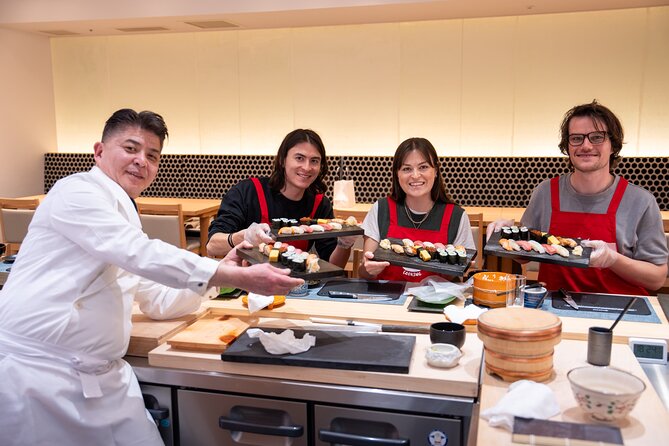
- Nine nigiri and roll sushi: Make your own sushi under a professional chef’s guidance, with the chef handling the slicing.
- A full food-and-drink program: The price includes tempura, two drinks, sake tastings, Japanese sweets, and matcha.
- Professional Taisho chef: Watch precise knife work and learn how sushi is shaped before you try it.
- English-speaking support: Guides such as Ayuri explain the food, process, and cultural background without requiring Japanese.
- Small Kyoto group: The activity is limited to eight people and lasts about three and a half hours.
- Family-friendly format: Children age four and older are welcome, and you do not need previous cooking skills.
From Japanese sweets to the sushi counter
The afternoon begins at 3:30 p.m. at Diesel604 Banochō in Kyoto’s Nakagyo Ward. From there, an English-speaking guide leads you to a local shop for traditional Japanese sweets.
This first stop gives the outing a gentle start. Rather than rushing straight to the sushi counter, you choose sweets that return later in the program with your matcha. That small detail helps connect the beginning and end of the afternoon.
I also like the timing. A 3:30 p.m. start fits neatly between major sightseeing and dinner. You can spend the morning visiting Kyoto’s temples, take a slower lunch, then arrive for an activity that carries you into the evening. The meeting point is near public transportation, though the supplied details do not specify a particular station or walking time.
The sweet shop portion is guided, but the exact selection and length of the stop are not stated. You should think of it as part of the cultural introduction, not as a separate long tasting session. The sweets matter most later, when you enjoy them with your freshly whisked matcha.
More Sushi Experiences in Kyoto
- Sushi Making in Kyoto! Same-day bookings welcome!
★ 5.0 · 713 reviews - The Original Small-Group Sushi Making Class in Kyoto
★ 5.0 · 436 reviews - Kyoto: Small-Group Authentic Sushi Making Workshop
★ 5.0 · 137 reviews
Meeting the Taisho chef in an authentic sushi restaurant
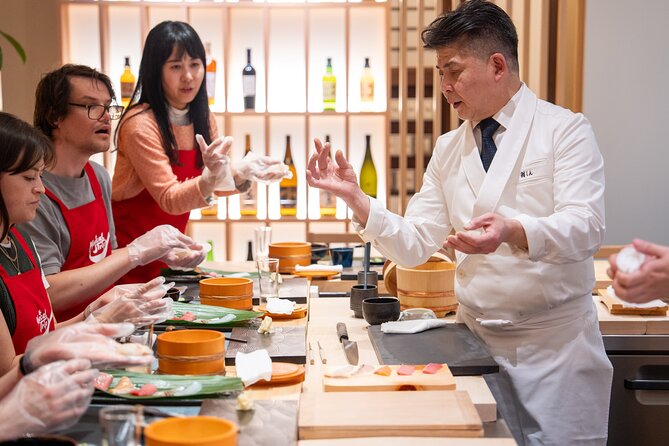
Next comes the main event: an authentic sushi restaurant and a meeting with a professional Taisho chef. Taisho is the Japanese term used for a sushi chef who directs the counter and prepares the food with practiced precision.
You first watch the chef demonstrate the craft. The knife work is part of the lesson, but you are not expected to copy the difficult slicing. The chef handles that part while you focus on shaping and assembling your sushi. That makes the class accessible to beginners and removes one of the biggest worries people often have about a sushi lesson.
The demonstration also gives you a better sense of why sushi is more than fish placed on rice. The shape, pressure, and handling all matter. You get to see the careful movements before trying them yourself, which is far more useful than simply receiving a plate and a short explanation.
The group limit of eight is important here. Sushi instruction works best when you can see the chef’s hands and receive a little personal help. A larger class could make the demonstration harder to follow, but this format should feel more manageable.
Making nine nigiri and roll sushi
After watching the chef, you make your own sushi. The course includes nine nigiri pieces as well as roll sushi, so you get practice with two different forms.
Nigiri requires you to shape rice and place the topping neatly. Roll sushi uses a different motion and gives you a second skill to take home. You can share the rolling technique with friends and family later, which is one of the more practical parts of the class.
The chef remains responsible for the slicing. This is good news if you want a relaxed activity rather than a knife-skills workshop. You still take part in the main work, but the chef keeps the sharp and technical stage under control.
Your sushi is eaten on the spot, so the lesson has a clear reward at the end. The supplied details do not state the exact fish selection, allergies policy, or whether vegetarian substitutions are available. If any of those issues matter to you, ask before booking rather than assuming the menu can be changed.
One point deserves emphasis: the fish is presented as fresh, and the meal is a central part of the experience. The combination of a professional demonstration and your own handmade pieces gives the activity more substance than a standard restaurant meal.
Tempura adds a hot contrast
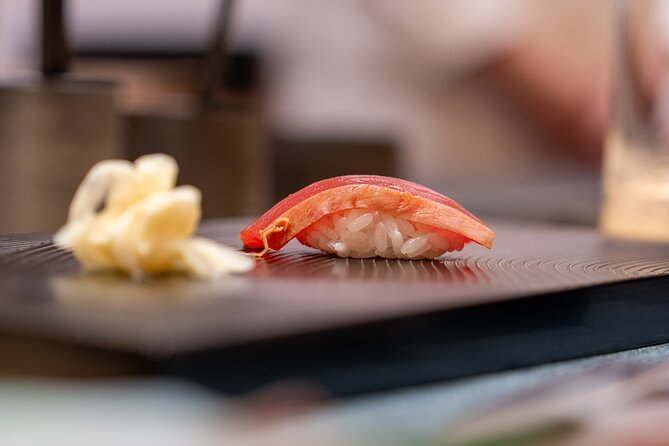
After the sushi, the chef prepares a tempura set. This changes the pace and texture of the meal. Sushi is cool, neat, and delicate, while tempura arrives as a hot cooked dish prepared by the chef.
The tempura has received especially strong praise, and it is worth considering when judging the price. You are not paying only for time at a table or a basic rolling lesson. You also receive a chef-prepared meal with fresh seafood and a tempura course.
The details do not list the exact tempura ingredients or portion size. I would treat this as a set course rather than an unlimited meal. If you are booking mainly for a large dinner, the information provided does not promise that. If you want a structured tasting with several parts, the format makes better sense.
Two drinks are included, along with sake tastings. The activity therefore works well for people who enjoy food pairing and want more explanation than a simple pour at dinner.
Same trip, a completely different kind of day:
- PERFECT KYOTO 1-Day Bus Tour
★ 5.0 · 13,518 reviews - Kyoto: Fushimi Inari, Kinkakuji, Bamboo Grove 1 Day Bus Tour
★ 4.8 · 4,316 reviews - Kyoto: Tea Ceremony in a Traditional Tea House in Kiyomizu
★ 4.9 · 3,519 reviews - Kyoto Geisha Walking Tour: Gion District & Hidden Gems
★ 4.7 · 3,273 reviews
Sake tasting with practical pairing tips
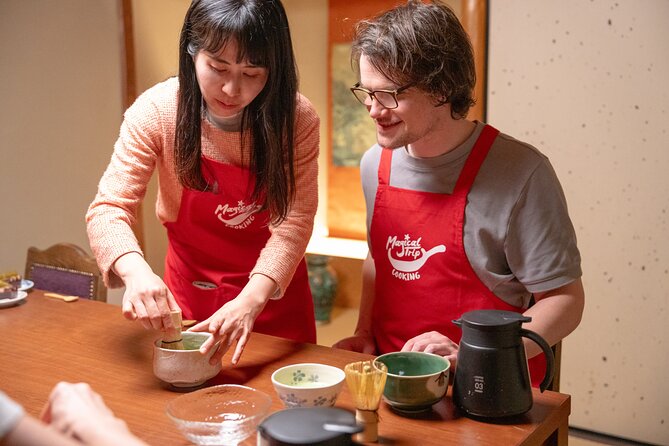
The sake portion introduces different types of sake and explains how they pair with sushi. This is a useful addition because sake can seem confusing when you are faced with unfamiliar labels and styles.
You are not simply handed a drink and left to guess. The guide and chef explain how the sake works with the food, giving you a better way to notice differences from one sample to the next. The exact number or names of the sake samples are not specified, so you should not expect a fixed tasting list beyond the stated sake tasting.
Two drinks are included in the wider course. If you do not drink alcohol, the provided information does not state what nonalcoholic alternatives are available. Ask ahead if that is important to you.
Because the sushi and tempura are served during the same outing, the pairing advice has immediate use. You can taste the sake with the food rather than trying to remember the lesson later. For me, that makes this portion more useful than a stand-alone lecture about Japanese drinks.
Matcha and sweets in a Kyoto-style garden
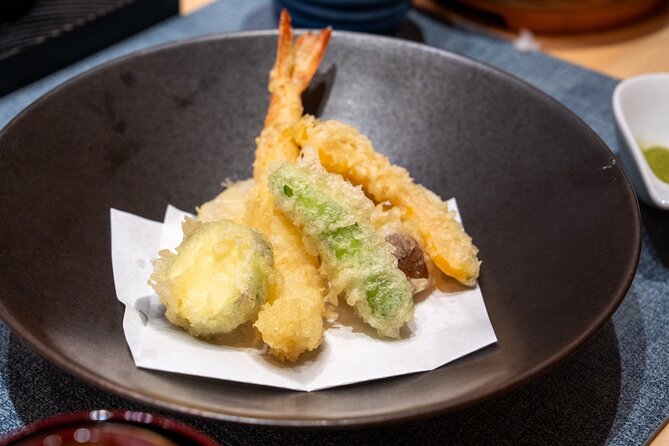
The final stage moves away from the sushi counter and into a peaceful Kyoto-style garden. Here, your guide teaches you how to whisk matcha and serves it with the traditional sweets you selected at the start.
This ending gives the afternoon a different mood. After the practical work of shaping sushi and the sensory focus of eating, matcha asks you to slow down and pay attention to the preparation. You make the drink yourself, but the lesson remains beginner-friendly.
The sweets are not an afterthought. Since you chose them earlier, they return as part of a small thread running through the program. That gives the outing a sense of progression without making it feel like a formal ceremony.
The exact garden location and weather arrangements are not provided. Since this portion takes place in a Kyoto-style garden, you may want to consider the forecast when dressing. The experience ends back at the original meeting point, so you do not need to arrange a separate pickup from the final stop.
What the $163.30 price really covers
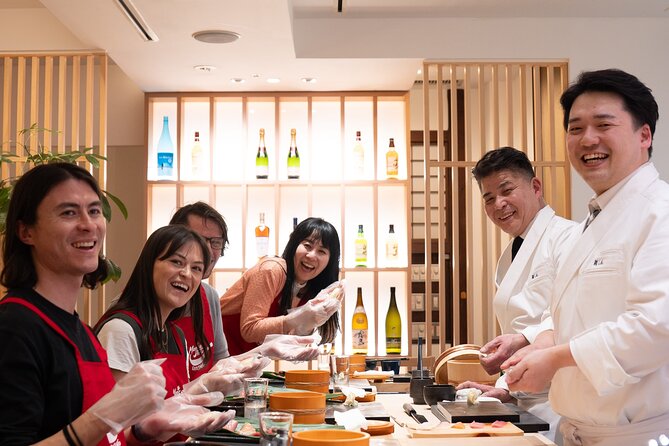
At $163.30 per person, this is expensive compared with simply ordering sushi in Kyoto. The value depends on how much you want from the afternoon.
The price covers about three and a half hours, a professional chef demonstration, your own sushi making, nine nigiri pieces, roll sushi, a tempura set, two drinks, sake tastings, traditional sweets, and matcha instruction. It also includes an English-speaking guide and a maximum group size of eight.
That is a substantial package. You are paying for instruction, food, drinks, and a guided cultural program rather than only a meal. The professional chef is a key part of the calculation. If you have always wanted to understand how sushi is shaped, the lesson may justify the higher cost.
The value is weaker if you mainly want a large dinner or already have extensive sushi-making experience. The available details do not promise a long technical course, a specific premium fish menu, or unlimited food. I would book this for the combination of chef access, food, sake, and matcha, not simply for the amount on the plate.
Who will get the most from this Kyoto class
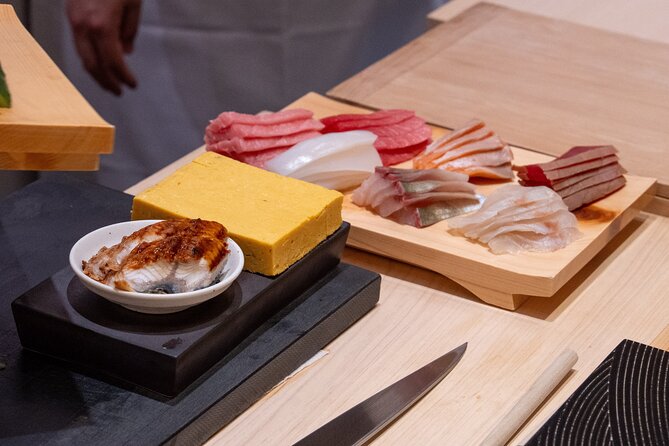
This outing suits families with children age four and older, solo visitors, couples, and food-focused people who want an activity with structure. You do not need Japanese skills because an English-speaking guide is included.
Families should appreciate that the chef handles the slicing while children can focus on shaping and rolling. Since the group is capped at eight, the class should be easier for a family to follow than a large public cooking school.
Solo visitors also have a good reason to consider it. The guided format creates natural conversation, and the food gives you something to do beyond simply sitting through a lecture. The available information does not state whether solo participants are paired with others, so you should not expect a private class.
This is also a good choice for someone who has already seen Kyoto’s major temples and wants a food-centered activity. It does not replace a traditional tea ceremony or a full cooking course, but the matcha lesson adds a small taste of that world.
People with strict dietary needs should contact the provider before booking. The published details do not specify vegetarian, vegan, allergy-friendly, or nonalcoholic options.
Timing, group size, and booking advice
The class starts at 3:30 p.m. and lasts about three hours and thirty minutes. Since it ends back at the starting point, plan your evening around a return to Nakagyo Ward rather than assuming you will finish near another Kyoto sight.
The experience is booked, on average, 24 days ahead. That suggests you should reserve early if your Kyoto dates are fixed, especially because the group is limited to eight people. Confirmation arrives when you book, and the ticket is mobile.
Free cancellation is available up to 24 hours before the start time for a full refund. Changes or cancellations made inside that 24-hour window are not accepted or refunded, using the local Kyoto time as the cutoff.
Give yourself enough time to reach Diesel604 Banochō. The meeting point is near public transportation, but the supplied details do not identify the exact transit stop. Do not arrive at the last second, since the first stop begins at the scheduled start.
Should you book this sushi and matcha outing?
Book it if you want a polished food activity that combines real chef instruction with a full tasting program. The strongest reasons are the fresh fish, chef-prepared tempura, sake pairing guidance, and the calm matcha finish. Ayuri, one of the named guides, is described as warm and helpful, and the English support makes the class easy to follow.
Skip it if $163.30 feels too high for a three-and-a-half-hour activity, or if you want a serious professional cooking course. The chef handles the slicing, the menu details are fixed, and the exact fish, sweets, sake, and tempura selections are not listed.
For most food-curious visitors, I see this as a worthwhile splurge. You leave with more than a full stomach: you have tried making sushi, tasted sake with guidance, learned a matcha ritual, and spent an afternoon in a small Kyoto group.
FAQ
Where does the Kyoto sushi-making experience begin?
It begins at Diesel604 Banochō, Nakagyo Ward, Kyoto, 604-8172, Japan.
What time does the activity start?
The scheduled start time is 3:30 p.m.
How long does the experience last?
It lasts approximately three hours and thirty minutes.
Where does the experience finish?
The activity ends back at the meeting point.
How many people can join the group?
The activity has a maximum of eight participants.
Is an English-speaking guide included?
Yes. An English-speaking guide leads the activity, so Japanese language skills are not required.
What food and drinks are included?
The course includes nine nigiri sushi, roll sushi, a tempura set, two drinks, sake tastings, Japanese sweets, and matcha.
Are children allowed to join?
Yes. Families with children age four and older are welcome.
What is the cancellation policy?
You can cancel up to 24 hours before the local start time for a full refund. Cancellations or changes made less than 24 hours before the start are not accepted or refunded.
Just added around Kyoto
- Sekka Cotton Furoshiki Class★ 5.0 · 19 reviews
- Kyoto Sword Experience – includes Museum Ticket/Ninja Experience★ 4.5 · 149 reviews
- Scenic Green Tea Fields of Hidden Kyoto & Local Tea Exp (Private)★ 5.0 · 32 reviews
- Secret Eastern Kyoto Biking Adventure★ 5.0 · 44 reviews
- Private Sake Tasting in Central Kyoto with Sake Sommelier★ 5.0 · 32 reviews
- Samurai School in Kyoto: Samurai for a Day★ 5.0 · 202 reviews
- Samurai Performance and Casual Experience: Kyoto Ticket★ 4.5 · 115 reviews
- SHIRAKAWA Japanese Culture Experiences with private English staff★ 5.0 · 16 reviews
Sushi Experiences, compared.
Sushi Making Tokyo Roll and Authentic Japanese Sushi Class
Our verdict →
Sake Omakase in Tokyo: Guided Tasting by Certified Sommeliers
Our verdict →
Browse the lists this tour appears in