
Reviewed · TEMPLES & SHRINES
Kyoto: Fushimi Inari Hidden Hike (Private)
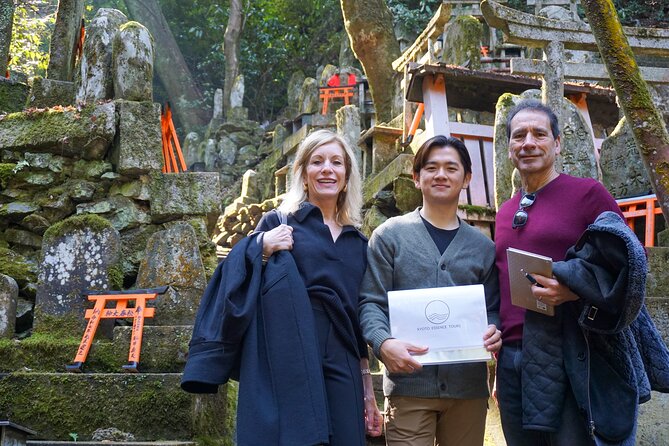
Fushimi Inari is famous for its endless orange gates, but the best part of this tour comes before you reach the crowded shrine paths. Your private guide leads you from the Tofukuji area through quieter mountain trails, bamboo, and lesser-used approaches to Mount Inari. I like the private format, which lets your guide adjust the pace and answer your questions without a group slowing you down.
I also like the way the route adds views of Tofukuji and Fushimi Momoyama Castle instead of treating Fushimi Inari as a single photo stop. The tradeoff is simple: this is a real uphill walk, and three hours on mountain paths calls for moderate fitness, good shoes, and sensible weather planning.
Key points to know before booking
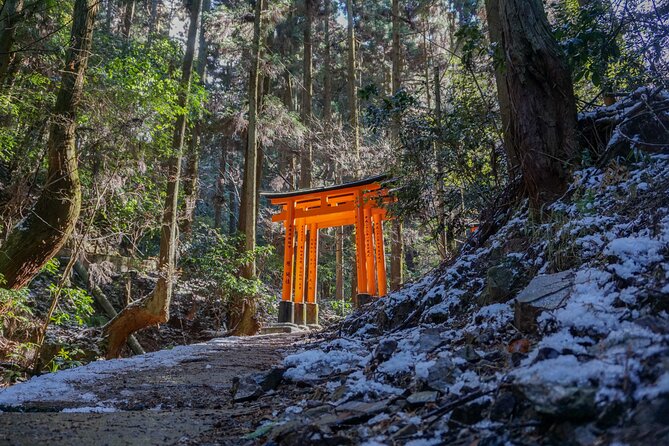
- The quiet approach is the main attraction: You reach Fushimi Inari through calmer Mt. Inari trails rather than starting at the busiest entrance.
- Louis may be your guide: He leads the walk in English and explains Japanese culture, history, and Shinto beliefs along the way.
- The route mixes nature and shrine architecture: Expect bamboo groves, mountain paths, vermilion torii gates, and the famous Senbon Torii.
- You get private attention: Only your own group takes part, with no strangers joining the hike.
- The finish is convenient: The walk ends at the Romon Gate, just before Fushimi Inari Taisha’s Main Hall.
- Photos are included: Complimentary DSLR photos are shared after the tour.
Why the quiet route changes Fushimi Inari
Fushimi Inari Taisha is one of Kyoto’s most recognizable sights. Its orange-red torii gates appear on postcards, guidebooks, and nearly every first-time Kyoto itinerary. The trouble is that the famous approach can feel crowded, especially around the lower shrine buildings and the best-known gate passages.
This tour takes a different tack. You meet at 8:30 am near FamilyMart Nakai Tofukuji, then head toward Mount Inari with your guide. Instead of simply arriving at the front gate and following the largest stream of people uphill, you use quieter paths first.
That matters for two reasons. First, you get a more peaceful start, with room to notice the bamboo, trees, and mountain setting. Second, the guide helps you understand how the shrine fits into Japanese religious life rather than reducing it to a bright orange backdrop for photographs.
I like this approach because Fushimi Inari works best when you see both sides of it. The shrine is a major Kyoto sight, but Mount Inari also has a quiet, wooded character. The private walk gives you time with both.
More Temple & Shrine Tours in Kyoto
- Kyoto: Fushimi Inari, Kinkakuji, Bamboo Grove 1 Day Bus Tour
★ 4.8 · 4,316 reviews - Kyoto: Tea Ceremony in a Traditional Tea House in Kiyomizu
★ 4.9 · 3,519 reviews - Kyoto: Tea Ceremony Ju-An at Jotokuji Temple
★ 4.9 · 3,207 reviews
Starting near Tofukuji and seeing Kyoto from above
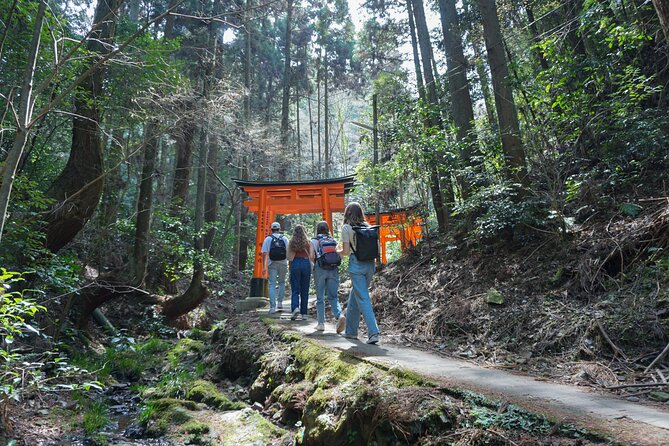
The first notable view comes on the way toward Mount Inari. Your route includes views of Tofukuji, one of Kyoto’s Five Great Zen Temples. You do not spend the tour visiting Tofukuji itself, so keep your expectations clear. It is a scenic reference point and part of the approach, not a separate temple tour.
This opening section gives the walk some useful context. Tofukuji represents Zen Buddhism, while Fushimi Inari is a Shinto shrine. A guide can explain the difference between these traditions and how religious sites fit into everyday Japanese culture. That kind of explanation is much harder to get from a quick solo walk.
The route then turns toward the wooded slopes of Mount Inari. Since the guide knows the paths, you do not need to spend your morning checking a phone map at every turn. That is especially useful here because the shrine grounds connect to many paths, and the most rewarding route is not always obvious from the main entrance.
Hiking through bamboo and quieter mountain paths
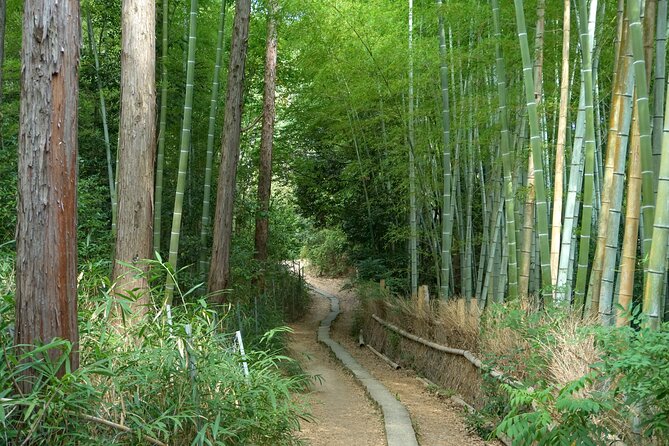
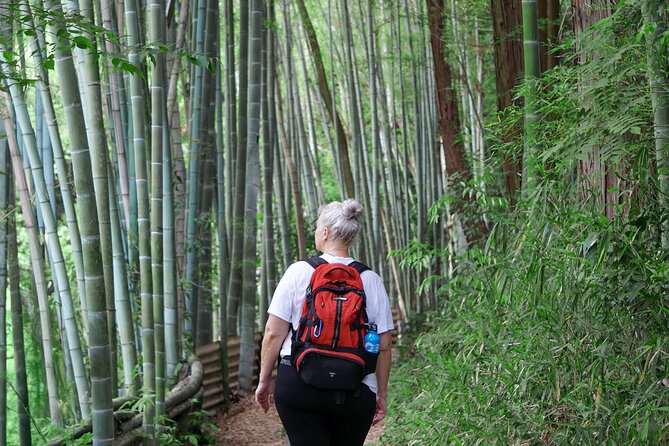
The central portion of the tour takes about two hours and combines walking with stops for explanation and photographs. You pass through wild bamboo groves and quieter sections of the mountain before reaching the better-known torii passages.
This is not a flat sightseeing stroll. The tour requires a moderate level of physical fitness, and the route includes an uphill climb. The supplied details do not give an exact elevation gain or distance, so you should judge the walk by the terrain rather than by the three-hour duration alone. Three hours on a mountain path can feel more demanding than three hours on Kyoto streets.
Wear shoes with a firm sole. Bring water, especially in warm weather, and allow yourself enough time to walk without rushing. The experience requires good weather, so rain may affect the schedule. If poor weather forces cancellation, you can choose another date or receive a full refund.
The quiet paths are valuable because they make the shrine feel like a living religious site rather than only a popular attraction. Your guide can point out details connected to Shinto practice and explain the meaning of what you are seeing. You get a better sense of why torii gates mark a transition into sacred space, and why the mountain route contains more than one famous photo point.
Passing through the Senbon Torii gates
Eventually, the walk reaches the iconic Senbon Torii, the Thousand Torii gates. This is the section most people picture when they think of Fushimi Inari. The gates create a long corridor of vermilion, with changing light and narrow views through the structure.
Your guide’s timing and route knowledge are useful here. The tour does not promise an empty gate passage, and you should not expect one. Fushimi Inari is a major Kyoto sight. Still, approaching through the quieter trails gives the famous gates more impact than arriving cold from a crowded street.
The guide also provides complimentary photographs taken with a DSLR camera. This is a practical bonus for couples, families, and solo visitors who want more than phone selfies. Photos are shared after the tour, so you can concentrate on walking and listening instead of constantly trying to frame the perfect shot.
The torii are not all identical in age or size, and the route gives you time to notice their repetition and variation. The orange-red color is striking in photographs, but the physical experience is better when you pay attention to the shifting shade, the sound of footsteps, and the way the gates follow the mountain.
Same trip, a completely different kind of day:
- PERFECT KYOTO 1-Day Bus Tour
★ 5.0 · 13,518 reviews - Kyoto Geisha Walking Tour: Gion District & Hidden Gems
★ 4.7 · 3,273 reviews - Kyoto: Gion Magical Night Walking Tour with Geisha Trivia
★ 4.9 · 2,393 reviews - Kyoto: 45-Minute Tea Ceremony Lesson Experience
★ 4.3 · 2,378 reviews
Understanding Fushimi Inari beyond the orange gates
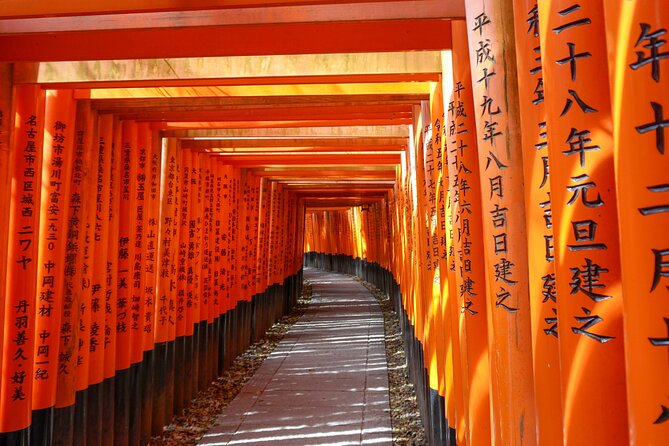
Fushimi Inari Taisha is dedicated to Inari, a Shinto kami associated with rice, prosperity, and commerce. Fox figures are common at Inari shrines because foxes are regarded as messengers of Inari. The exact amount of explanation you receive can vary with the guide and your questions, but this tour specifically includes English narration about Shintoism, Japanese culture, and history.
That cultural layer is one of the strongest reasons to book a private guide. Without context, the torii can seem like a repeating design element. With explanation, you begin to understand why people donate gates, why the mountain contains smaller worship sites, and how shrine customs differ from Buddhist temple practices.
The private setting lets you ask direct questions. If you are curious about purification, offerings, fox statues, shrine etiquette, or the relationship between a major shrine and the surrounding mountain, you can ask as you go. You are not limited to a fixed speech designed for a large group.
I would not choose this tour if you only want a quick photograph at the lower gate tunnel. You can visit the main shrine on your own for that. The value here comes from walking farther, taking a less direct route, and having someone explain the place as you go.
The view toward Fushimi Momoyama Castle
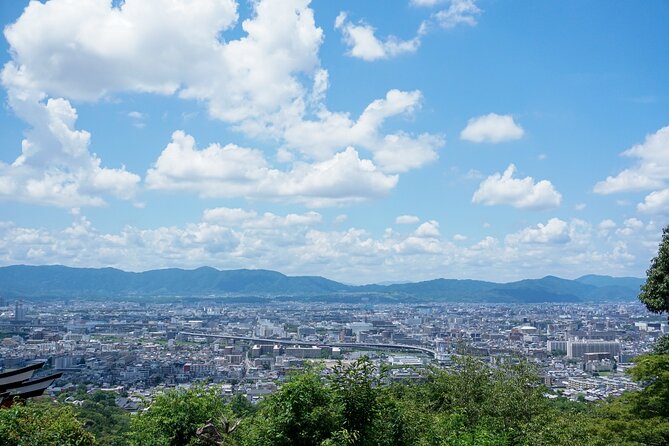
On the way down toward the main shrine, the route includes scenic views of Fushimi Momoyama Castle from the mountainside. This creates a useful change of pace after the torii passages and wooded trails.
The castle view is not the main reason to book the tour, and the details do not indicate a stop inside the castle grounds. Think of it as a distant scenic view along the descent. It adds another layer to the walk by connecting the shrine area with Kyoto’s wider history.
This is also a reminder that Mount Inari gives you more than one direction to look. The torii focus your attention inward, along the sacred path. The view from the mountain opens it outward toward the city and nearby landmarks.
Finishing at the Romon Gate
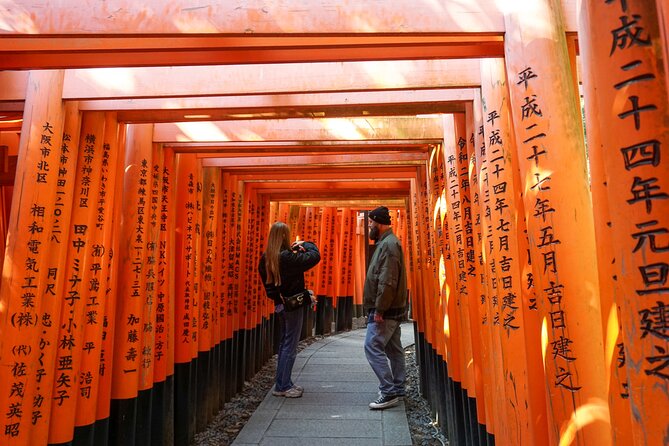
The tour ends in front of the Romon Gate, just before the Main Hall of Fushimi Inari Taisha. This is a practical finish because you remain at the shrine complex instead of being returned to the original meeting point.
From there, you can continue exploring on your own, visit the Main Hall, take more photographs, or make your way toward public transportation. Hotel pickup and drop-off are not included, so you need to arrange your own way to the meeting point and your onward travel after the walk.
The meeting point is at FamilyMart Nakai Tofukuji, at 12-chome-232 Honmachi in Kyoto’s Higashiyama Ward. The end point is Fushimi Inari Shrine Tower Gate, at 68 Fukakusa Yabunouchicho in Fushimi Ward. Both locations are near public transportation, but the tour does not include a transfer between them.
Is the private price good value?
The listed price is $62.26 per person, with group discounts available. For a private three-hour walk, that is a reasonable price if you value personal attention, interpretation, and help with navigation.
The comparison is not simply between $62.26 and a free visit. You can enter Fushimi Inari Taisha without paying an admission fee, but a self-guided visit does not give you the quieter approach, a dedicated English-speaking guide, cultural explanations, or complimentary DSLR photographs.
The value improves for couples, families, and small groups who can share the private booking. You get the same guide focused only on your group, and you can set the pace through conversation. Solo visitors pay more per person for that privacy, but may still find it worthwhile if the cultural explanation and photo service matter.
Food and drinks are not included. Plan to eat before or after, and bring water for the uphill walk. The early start is another part of the value. Beginning at 8:30 am helps you use the cooler part of the day and gives you a chance to reach the shrine before the later crowds build.
The tour is often booked about 32 days ahead, so it is sensible to reserve early if your Kyoto dates are fixed. Confirmation is provided at booking, and free cancellation is available if you cancel at least 24 hours before the start time.
What Louis adds to the walk
Louis is identified as a Kyoto-based English-speaking guide, and the strongest praise centers on the way he handles the route and the quiet sections. His walk leads away from the main tourist paths before reaching the famous torii corridors.
That route choice matters more than a long list of facts. You can find basic information about Fushimi Inari in any guidebook. The useful part is having someone decide when to leave the main path, where to pause, and how to connect the scenery with Japanese history and Shinto beliefs.
His approach also appears adaptable to conditions. A rainy walk still went ahead as a positive experience, with the quieter area making the visit feel different from entering through the main shrine approach. Rain will change the footing and the views, so bring suitable clothing if the forecast is uncertain, but do not assume poor weather automatically means the tour will be unpleasant.
The private format means you can ask Louis to spend more time on subjects that interest you. The tour includes commentary, but it is not described as a rigid lecture. That makes it a better match for curious visitors than for people who want only a rapid sightseeing circuit.
Who should book this Fushimi Inari hike?
This tour fits you best if you want to see Fushimi Inari in a more thoughtful way and are comfortable walking uphill. It works especially well for:
- First-time Kyoto visitors who want help understanding Shinto customs
- Couples and families who prefer a private guide
- Photography-minded visitors who want complimentary DSLR images
- People who dislike following only the busiest route
- Anyone who wants to combine nature, mountain views, shrine gates, and cultural background
It is less suitable if you have limited mobility, dislike uneven or uphill walking, or want a short visit confined to the lower shrine buildings. The physical requirements are moderate, but the route is still a mountain hike rather than a flat city walk.
The early start may also require planning around breakfast and transportation. That is a small inconvenience, but it is worth accepting if you want a calmer beginning and cooler conditions.
Should you book it?
Book this private Fushimi Inari hike if you want more than the standard gate photograph. The quieter Mount Inari trails, bamboo groves, views toward Tofukuji and Fushimi Momoyama Castle, and English explanation of Shinto make the route more memorable than a simple walk from the front entrance.
The $62.26 price is easiest to justify for a couple, family, or small group sharing the booking. You also receive private attention and complimentary DSLR photographs, which add useful value.
Skip it if you want to avoid hills or prefer to explore independently at no cost. For everyone else, this is a well-planned way to see Fushimi Inari with less confusion, more context, and a better sense of the mountain behind the famous gates.
FAQ
How long does the Fushimi Inari Hidden Hike take?
The tour lasts approximately three hours. About two hours are assigned to the Fushimi Inari and Mount Inari portion of the route.
What time does the tour start?
The tour starts at 8:30 am.
Where does the tour meet?
You meet at FamilyMart Nakai Tofukuji, 12-chome-232 Honmachi, Higashiyama Ward, Kyoto, 605-0981, Japan.
Where does the tour finish?
The walk ends in front of the Romon Gate, just before the Main Hall of Fushimi Inari Taisha, at Fushimi Inari Shrine Tower Gate, 68 Fukakusa Yabunouchicho, Fushimi Ward, Kyoto, 612-0882, Japan.
Is this a private tour?
Yes. Only your group takes part, and the tour includes the undivided attention of a private English-speaking local guide.
Are shrine admission fees, food, or transportation included?
There is no admission fee listed for the shrine portion. Food and drinks are not included, and hotel pickup and drop-off are not provided.
What happens if bad weather cancels the tour?
The experience requires good weather. If it is canceled because of poor weather, you can choose a different date or receive a full refund. You can also cancel for a full refund if you do so at least 24 hours before the start time.
More Hiking Tours in Kyoto
- Fushimi Inari Hidden Hiking Tour (Private Option Available)
★ 5.0 · 1,750 reviews - Kyoto: 3-Hour Fushimi Inari Shrine Hidden Hiking Tour
★ 4.9 · 270 reviews - Kyoto Hiking Tour: The Nature and Legends of Kurama and Kibune
★ 5.0 · 75 reviews - Kyoto: Hike and Hot Springs in Kurama
★ 5.0 · 49 reviews
Just added around Kyoto
- Sekka Cotton Furoshiki Class★ 5.0 · 19 reviews
- Secret Eastern Kyoto Biking Adventure★ 5.0 · 44 reviews
- Kyoto Sword Experience – includes Museum Ticket/Ninja Experience★ 4.5 · 149 reviews
- Scenic Green Tea Fields of Hidden Kyoto & Local Tea Exp (Private)★ 5.0 · 32 reviews
- Private Sake Tasting in Central Kyoto with Sake Sommelier★ 5.0 · 32 reviews
- Samurai School in Kyoto: Samurai for a Day★ 5.0 · 202 reviews
- SHIRAKAWA Japanese Culture Experiences with private English staff★ 5.0 · 16 reviews
- A Privately Guided Photoshoot in Beautiful Kyoto by a Pro★ 5.0 · 18 reviews
Temples & Shrines, compared.

Tea Ceremony in a Traditional Tea House in Kiyomizu
Our verdict →

Meiji Shrine, Asakusa, Skytree Bus Tour and Cruise
Our verdict →
Fushimi Inari Hidden Hiking Tour (Private Option Available)
Our verdict →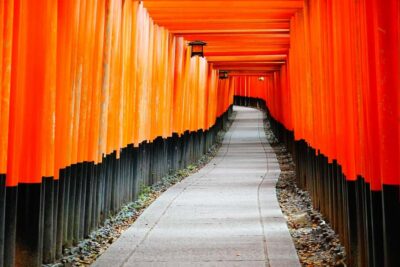
Osaka/Kyoto:Kinkakuji,Arashiyama,FushimiInariShrine,NaraPark
Our verdict →
Nikko: Kegon Falls, Lake Chuzenji & Toshogu Temple
Our verdict →
Kamakura & Enoshima Day Trip including Temple Tickets
Our verdict →Browse the lists this tour appears in