
Reviewed · TEMPLES & SHRINES
Nikko: Kegon Falls, Lake Chuzenji & Toshogu Temple
Nikko gives you a rare two-for-one day outside Tokyo: Toshogu Shrine’s gold-bright carvings and Tokugawa power followed by Kegon Falls and Lake Chuzenji in the mountains. I like the way the tour joins culture and scenery in one outing, and I like the guides’ clear timing, practical help, and easy bilingual commentary. Guides such as Melody, Jorge, Beru, and Eric have been especially good at explaining symbols, customs, and meeting points.
I also like that you get genuine free time at the main stops instead of being marched from one photo spot to the next. The catch is the distance. You spend roughly six hours on the coach, and weekend traffic can stretch the day, so this is best for anyone who values convenience over a quick, independent train trip.
Key points at a glance
- Toshogu is the cultural heart of the day: Choose the ticket-inclusive option if you want to enter the decorated gates and buildings with the guide.
- Kegon Falls is a powerful mountain stop: The nearly 100-meter cascade is viewed from an observation deck and is especially striking in autumn.
- Lake Chuzenji adds calm after the shrine: You have about 40 minutes to walk by the shore and take photos.
- Shinkyo Bridge is seen from the coach: You get a sweeping view of Nikko’s famous red bridge rather than a listed walking visit.
- The guide can make or break the long drive: Bilingual guides explain Japanese culture, temple symbols, basic language, and practical meeting details.
- Your package matters: Shrine admission and lunch are included only with selected options, so check the booking details before paying.
Why Nikko makes a strong day outside Tokyo
Nikko is far enough from Tokyo to feel like a real change of scene, but close enough for a long day trip. The city gives way to mountain roads, cedar woods, shrines, waterfalls, and a volcanic lake. You will not see every corner of Nikko in 11 hours, but you will get its best-known cultural and natural sights in one sweep.
The central appeal is the contrast. Toshogu is deliberate, crowded with carved details, and tied to the Tokugawa shogunate. Kegon Falls and Lake Chuzenji are open, quiet, and shaped by mountain weather. I find that pairing more satisfying than a day spent only inside temples or only chasing scenic views.
The timing also matters. The listed duration is 11 hours, with about 2.5 hours to reach the Nikko area and more than three hours for the return journey. Add the shorter rides between stops, and you should prepare for a substantial amount of sitting. The coach is air-conditioned, and several people have found the drivers calm and skilled on tight mountain roads, but no bus can remove the basic fact that Tokyo and Nikko are not next-door neighbors.
More Temple & Shrine Tours in Nikko
- Tokyo: Nikko Toshogu Shrine and Kegon Waterfall Tour
★ 4.5 · 1,266 reviews - Chartered Private Tour – Tokyo to Nikko, Toshogu, Edo Wonderland
★ 5.0 · 105 reviews - From Tokyo: Nikko Toshogu Day tour with Traditional Lunch
★ 3.9 · 72 reviews
Starting in Ginza and crossing into the mountains
The meeting point is at Ginza Inz 2, though the exact arrangement can depend on the package you book. Get there early enough to find the correct coach and guide without starting the day in a rush. The return is also to Ginza Inz 2, making this simple if your hotel or evening plans are in central Tokyo.
The first part of the ride is a useful transition from city to countryside. Guides fill the drive with details about Japanese customs, language, food, and history. Jorge has been praised for switching smoothly between English and Spanish, while Melody, Beru, Eric, and Francisco have each been noted for clear explanations and friendly help. The exact guide changes, so book this for the tour format rather than for a particular person.
One practical bonus is that a planned stop may give you a chance to withdraw cash and buy breakfast. Still, carry some Japanese yen. One guide specifically helped people use a restaurant ticket machine at lunch, and cash was useful for local food and small purchases.
Shinkyo Bridge from the coach window
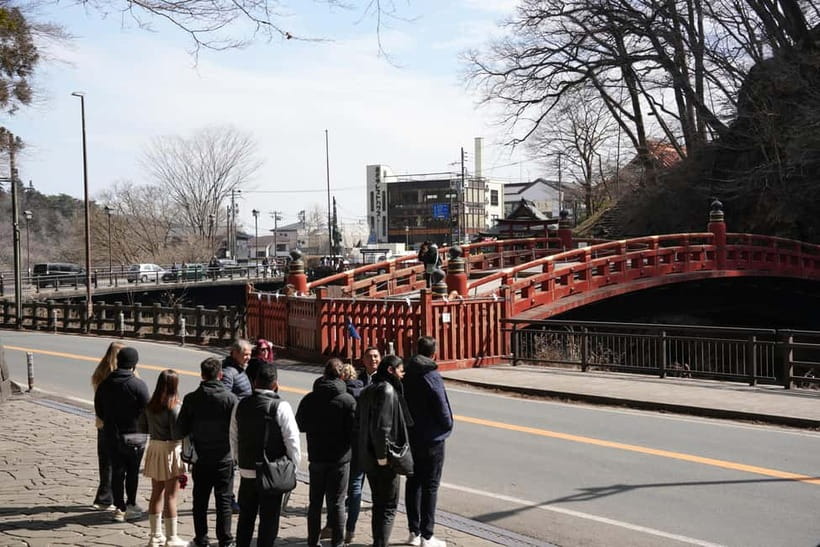
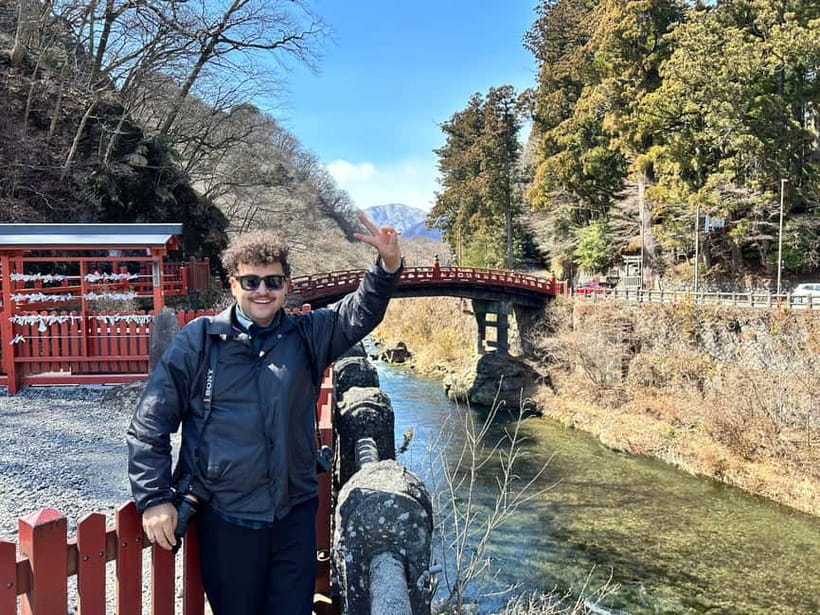
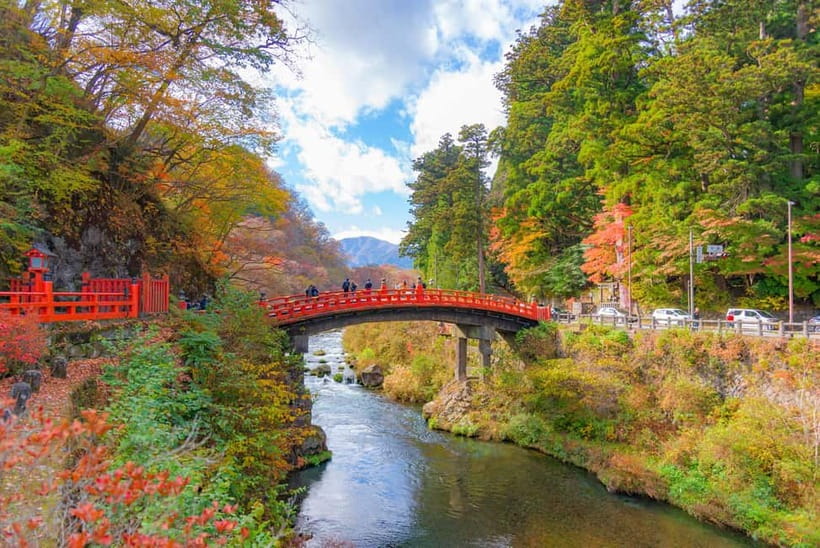
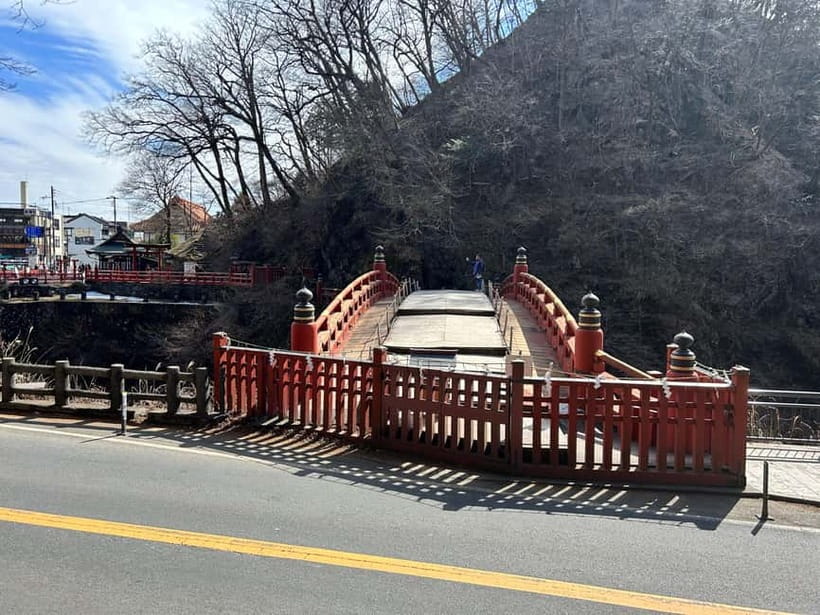
As the coach reaches Nikko, you get a panoramic view of Shinkyo Bridge. Its deep red structure crosses the Daiya River and marks the entrance to the sacred area. Framed by trees and hills, it is one of those sights that makes you reach for your camera before the bus has moved on.
Be realistic about this stop. The advertised experience is a scenic drive and panoramic view from the bus, not a long independent visit on the bridge. Sit by a window if you can, keep your camera ready, and listen for the guide’s explanation. If walking across Shinkyo Bridge is a personal priority, you would need to arrange that separately, and the schedule may not leave room.
Toshogu Shrine and the symbols worth noticing
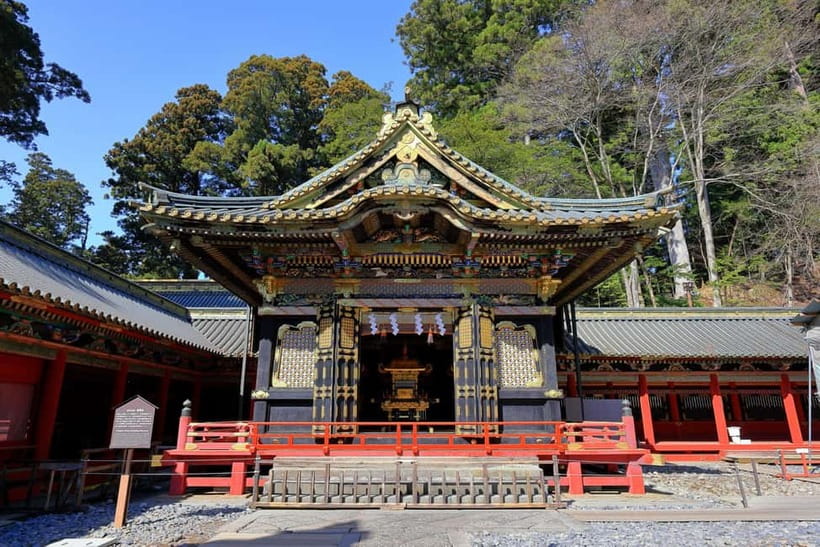
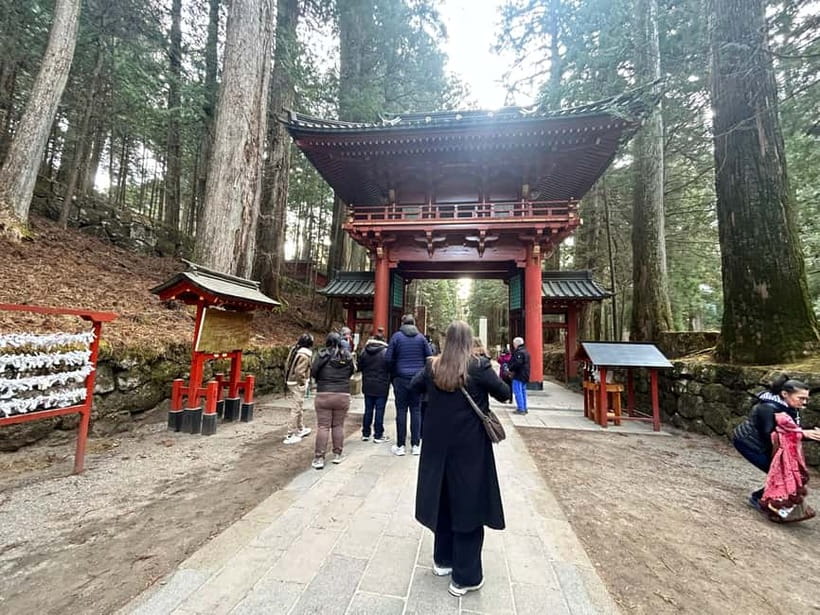
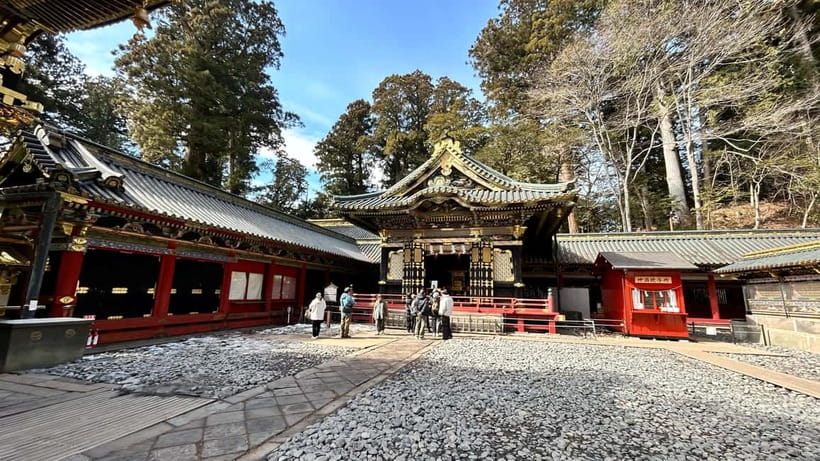
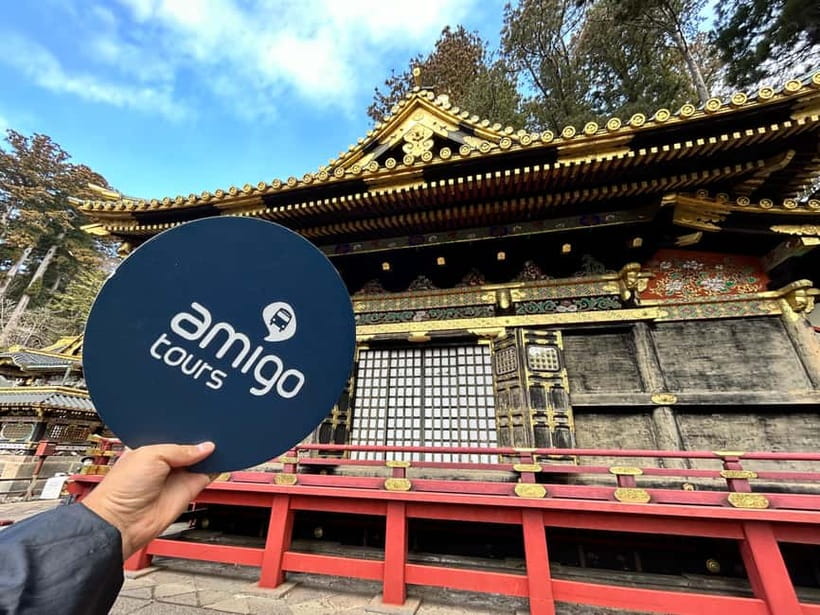
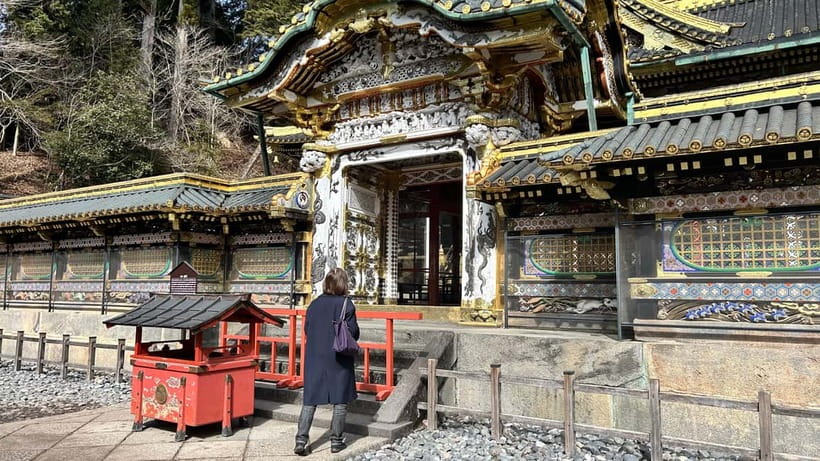
Toshogu receives the longest scheduled visit, about 2 hours and 15 minutes, and rightly so. The shrine complex is part of Nikko’s UNESCO World Heritage listing and honors Tokugawa Ieyasu, the founder of the shogunate that ruled Japan for generations. The setting matters as much as the buildings: tall cedar trees create a dark, solemn frame for gates, carvings, gold accents, and painted details.
The famous three wise monkeys are the easiest symbols to spot. They represent the familiar principle of seeing no evil, hearing no evil, and speaking no evil. But do not stop there. The shrine is packed with animals, legends, religious ideas, and visual messages, and this is where a guide adds real value.
Several guides have been praised for explaining what individual carvings mean and for giving visitors a clear plan of the complex. Francisco, for example, has been especially good at explaining where the main sights are and how long each section may take. That sort of briefing helps because the grounds contain many gates, stairs, halls, and side paths. Without a plan, you can spend your whole visit photographing the first ornate gate and miss important parts farther inside.
The ticket choice is important. The ticket-inclusive option gives you entry to the decorated gates and sacred buildings, and I would choose it if this is your first visit to Nikko. Several people felt the shrine ticket was worth having, especially because the guide’s explanations make the carvings easier to understand. One person felt the ticket price was high and that buying it separately online could be cheaper, so compare the package price before booking.
If you choose a package without shrine admission, you have free time to explore the surrounding area independently, but you will not have the same access to the interior sections. For a landmark this significant, the cheaper option can turn into a false economy.
Expect stairs and walking around the shrine grounds. Comfortable shoes are essential. The site is not suitable for wheelchair users according to the tour information, and anyone with mobility concerns should think carefully about the terrain and the time available.
Same trip, a completely different kind of day:
- Nikko Full-Day Private Tour with Government-Licensed Guide
★ 5.0 · 259 reviews - From Tokyo: Nikko World Heritage Site Private Full-Day Trip
★ 4.9 · 243 reviews - Nikko: Edo Wonderland Edomura Cultural Theme Park Ticket
★ 4.3 · 205 reviews - Tokyo: Nikko World Heritage Private Day Trip Hotel Pick-up
★ 4.8 · 145 reviews
Lunch near Kegon Falls
After Toshogu, the coach climbs toward the mountain area and Kegon Falls. Lunch is scheduled around this stop, with about 85 minutes for food and free time combined. Lunch is included only with the premium option, so read the package description closely.
The restaurant arrangement is practical rather than leisurely. You may choose from local food at the stop, and a guide can help you use a ticket machine if the ordering system is unfamiliar. Bring cash, since some food outlets may not accept every payment method. The time should be enough for a meal and a quick look around, but it is not designed as a long restaurant experience.
I like this setup because it keeps the day moving. You do not lose an hour searching for somewhere to eat in an unfamiliar mountain town. The tradeoff is less freedom. If you have dietary restrictions or want a specific meal, check what the selected package and restaurant arrangement allow before you go.
Kegon Falls from the observation deck
Kegon Falls is the day’s big natural spectacle. Water drops nearly 100 meters over a rocky cliff, and the viewing area gives you a direct look at the cascade and the valley below. Mist, changing light, and seasonal color can alter the scene from one visit to the next.
Autumn is especially photogenic, with red and gold foliage around the falls and along the mountain roads. Winter has its own severe beauty, but it also brings the most important seasonal change to this tour. During January and February, weather conditions mean the Kegon Falls and Lake Chuzenji visits are replaced by panoramic views of Rinnoji Temple and Futarasan Shrine.
That replacement is not a minor timetable adjustment. If the waterfall and lake are your main reasons for booking, avoid those months or confirm the current operating plan before you pay. You still receive a cultural view of Nikko, but it is a different day from the one described by the warmer-season route.
The stop gives you free time, so you can take photos and enjoy the view without needing to stay beside the guide every minute. Keep an eye on the meeting time. The itinerary is tight enough that a late return could affect the next stop.
Lake Chuzenji and Mount Nantai views
A short coach ride takes you to Lake Chuzenji, with about 40 minutes to walk along the shore. The lake formed through volcanic activity and sits below Mount Nantai. Forested slopes, open water, and misty mountain views create a quiet break after the ornate shrine and the power of the waterfall.
Forty minutes is enough for a shoreline stroll and photographs. It is not enough for a full lakeside walk, a long café stop, or a relaxed exploration of every viewpoint. I would use this time for the view rather than trying to do too much. Take a few photos, breathe the mountain air, and be back at the coach before the guide’s deadline.
The lake is also a good reason to bring a hat, sunscreen, and water. Weather can shift in the mountains, and the open shore may feel quite different from the shaded shrine grounds. Comfortable shoes help at every stop.
The long ride home and the value question
The advertised price begins at $89 per person, but the final value depends on your selected option. Transportation from Tokyo and a bilingual English and Spanish guide are included. Toshogu admission and lunch are included only in certain packages, so do not compare the base price with a premium option without checking what is covered.
At $89, the tour can make sense if you want a full day arranged for you. You avoid planning the road journey, changing transport, finding the shrine entrance, working out the mountain route, and locating lunch. The guide also gives context that is hard to get from a quick walk around the grounds.
The price feels less attractive if you want long, quiet visits or dislike coach travel. You are paying for convenience, transport, and interpretation, not just entry to three sights. The nearly six hours on the road is the main cost in time.
The drivers receive repeated praise for safe, smooth handling on mountain roads. That matters in Nikko, where the route includes bends and elevation changes. On the return, guides often keep the group occupied with Japanese culture, everyday customs, stories, and simple language lessons. It will not make the ride short, but it can make the time useful.
Traffic and weather can change the order and timing. The guide may rearrange the stops to avoid the worst crowds, as Francisco did for one group, but no operator can control Tokyo traffic, mountain weather, or local events. Keep your evening plans flexible and do not book a nonrefundable dinner immediately after the stated return time.
Who should book this Nikko day trip?
I would recommend it to a first-time visitor who has limited time in Tokyo and wants Nikko’s main sights without handling the transport alone. It suits people who enjoy a guide’s explanation, families who prefer a fixed plan, and anyone who wants both a major shrine and mountain scenery in one day.
It is also a good match if you speak English or Spanish and want cultural explanations in one of those languages. The best guides do more than recite dates. They explain temple symbols, Japanese manners, basic expressions, and the practical details that help you find your way back to the coach.
I would hesitate if you need step-free access, want a slow photographic outing, or dislike long bus journeys. Independent visitors who are comfortable planning trains, local transport, meals, and shrine admission may prefer more control. January and February require extra thought because the waterfall and lake portion is replaced.
For most first-time visitors, choose the option with Toshogu admission. Add the lunch package if you value simplicity, but carry cash anyway. Pack water, sun protection, a hat, a camera, and good shoes. Book this tour when you want Nikko made manageable in one ambitious day, not when you want to linger over every cedar path.
FAQ
How long does the Nikko tour last?
The tour lasts 11 hours, including travel from Tokyo, sightseeing in Nikko, and the return to Ginza.
Where does the tour start and finish?
The listed starting and drop-off point is Ginza Inz 2. The exact meeting arrangement may vary depending on the option booked.
Is Toshogu Shrine admission included?
Admission is included only with the ticket-inclusive option. Check the selected package carefully before booking.
Is lunch included?
Lunch is included only with the premium option. Other packages may provide time to buy lunch independently.
Which languages are available?
The live guide service is available in English and Spanish.
Will I visit Kegon Falls and Lake Chuzenji in January or February?
During January and February, those visits are replaced because of weather conditions with panoramic views of Rinnoji Temple and Futarasan Shrine.
Is the tour suitable for wheelchair users?
No. The tour information says it is not suitable for wheelchair users. Comfortable shoes are recommended for the walking portions.
Just added around Nikko
- Tokyo: Nikko Day Tour Shrines, Lake Chūzenji & Kegon Falls★ 4.9 · 26 reviews
- Tokyo: Nikko Private Day Tour With Guide★ 4.9 · 18 reviews
- Tokyo: Nikko Day Tour with English Driver and Flexible …★ 4.8 · 22 reviews
- Nikko: Private Walking Tour with Local Guide★ 4.8 · 35 reviews
- Nikko Private Custom Tour with Local Guide★ 5.0 · 16 reviews
- From Tokyo: Guided Day Trip to Nikko World Heritage Sites★ 4.8 · 51 reviews
- From Tokyo: Nikko Customize private Tour With English Driver★ 4.9 · 13 reviews
- Tokyo → Nikko:Private Customizable Day Trip (English Driver)★ 4.9 · 26 reviews
Temples & Shrines, compared.

Tea Ceremony in a Traditional Tea House in Kiyomizu
Our verdict →

Meiji Shrine, Asakusa, Skytree Bus Tour and Cruise
Our verdict →
Fushimi Inari Hidden Hiking Tour (Private Option Available)
Our verdict →
Osaka/Kyoto:Kinkakuji,Arashiyama,FushimiInariShrine,NaraPark
Our verdict →

Kamakura & Enoshima Day Trip including Temple Tickets
Our verdict →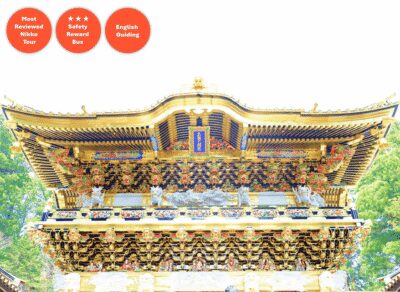
Browse the lists this tour appears in