
Reviewed · HISTORICAL TOURS
History of Hiroshima Group Walking Tour
Hiroshima’s Peace Memorial Park can feel orderly and quiet, but every monument carries a human story. This two-hour walk helps you connect the sites, from the Gates of Peace and the Children’s Peace Monument to the Atomic Bomb Dome and the actual hypocenter.
I like the way the tour combines historical context with personal stories, and I like the practical route for a short stay. Guides such as Cva, Malek, Moe, and Shiva have been praised for clear explanations, warmth, humor, and thoughtful answers. The main drawback is the pace: you cover nine stops in roughly two hours, so you will get a strong introduction rather than time to study every exhibit.
Key points at a glance
- A Peace Studies perspective: The guide explains why Hiroshima was targeted and how the bombing shaped world history.
- Nine meaningful stops: You see memorials, surviving buildings, the Peace Bell, and the Atomic Bomb Dome.
- Stories behind the symbols: The Children’s Peace Monument connects Sadako’s paper cranes with the children who died.
- A compact route: The walk suits you if Hiroshima is a short stop on a wider Japan trip.
- Small practical cost: At $32.84 per person, the price pays for structure and interpretation, not admission tickets.
- A serious subject handled with care: Guides use warmth and occasional humor without losing sight of the tragedy.
Why this two-hour Hiroshima walk works
Hiroshima Peace Memorial Park is easy to enter but not always easy to understand. Plaques and monuments are spread across a broad area, and the meaning of each site is not always obvious at first glance. A good guide gives you the order, context, and human detail needed to make sense of the place.
This tour begins at Ristorante Mario, at 4-11 Nakajimacho, and finishes at the Hiroshima Atomic Bomb Hypocenter Monument. That ending matters. Instead of stopping only at the better-known Atomic Bomb Dome, the route takes you to the point identified as ground zero.
The guide has a degree in Peace Studies, which gives the walk a clear purpose. You are not simply looking at ruins and memorials. You are being asked to consider the bombing, the people caught in it, and Hiroshima’s later role as a symbol of peace and resilience.
I would allow a little extra time before the meeting point so you can arrive without rushing. The tour itself is listed at about two hours, and the scheduled stops add up to close to that length.
More Historical Tours in Hiroshima
- Hiroshima Historical Walking Tour – Why A-Bomb was Dropped
★ 4.8 · 893 reviews - Hiroshima Peace (Heiwa) Walking Tour at World Heritage Sites
★ 5.0 · 872 reviews - Miyajima Half-day Trip Historical Walking Tour
★ 5.0 · 284 reviews
Gates of Peace: the opening frame
The first stop is the 10 Gates of Peace, where the guide explains why an atomic bomb was dropped on Hiroshima and how the event changed world history. Nine of the gates represent the circles of hell in Dante’s Inferno, while the tenth is associated with the survivors’ experience. The supplied details only identify the first nine directly, so your guide will provide the fuller explanation on site.
This is a useful starting point because it puts the bombing into a wider political and historical setting before the walk turns to individual victims. You begin with the scale of the event, then move toward the people affected by it.
The stop lasts about 20 minutes and has no admission fee. That is a good amount of time for an opening explanation, though the subject is dense. If you want a long discussion of the bombing’s military and political background, you may need to ask focused questions or continue learning after the walk.
Mother and Baby in the Storm
The Arashi no Naka no Boshi Statue, also known as the Mother and Baby in the Storm monument, is a brief but emotionally direct stop. It honors mothers who sacrificed their lives while trying to save their children.
Only about five minutes are scheduled here. That is enough for the guide to explain the monument, but not enough for a long pause or extended reflection. I see this as one of the walk’s smaller stops, yet it helps shift the focus from military events to family life and instinctive acts of protection.
For many people, these short explanations are what make the park more than a collection of stone and bronze. You are given a specific human relationship to hold in mind as you continue.
The cenotaph and the names of the dead
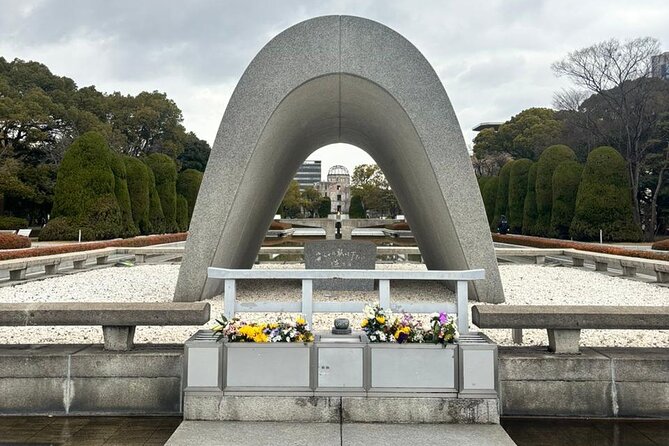
The Hiroshima Peace City Monument, also called the Cenotaph for the Atomic Bomb Victims, is scheduled for about 20 minutes. The monument is tied to the names of those who died in the bombing.
This is one of the moments when a guide adds real value. Without context, the cenotaph may look like a simple memorial arch. With an explanation, you can better understand its role in Hiroshima’s remembrance and peace message.
I like that the tour does not rush straight to the Atomic Bomb Dome. The cenotaph gives you time to consider the victims before you reach the most famous surviving structure. At the same time, 20 minutes is still a limited window if you want to read every detail or reflect in silence, so you may wish to return later on your own.
More Walking Tours in Hiroshima
- Hiroshima City 4hr Private Walking Tour with Licensed Guide
★ 5.0 · 437 reviews - Hiroshima Walking Tour Why A Bomb was dropped to Hiroshima
★ 5.0 · 347 reviews - Hiroshima: History of Hiroshima Group Walking Tour
★ 4.8 · 266 reviews - Hiroshima: Food and Culture Guided Walking Tour with Dinner
★ 4.9 · 212 reviews
Hiroshima National Peace Memorial Hall
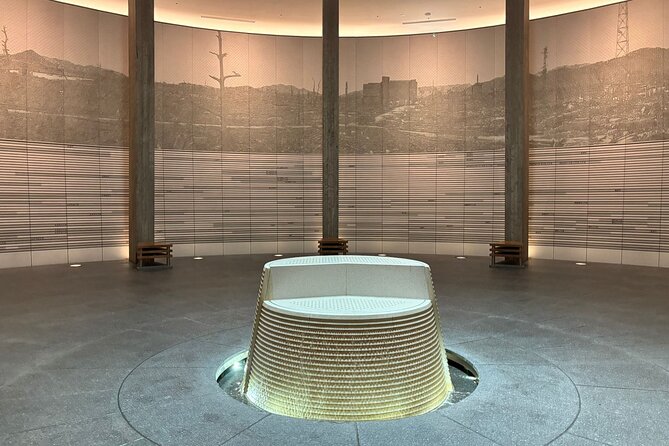
The Hiroshima National Peace Memorial Hall for the Atomic Bomb Victims receives another 20-minute stop. The hall shows the destruction of the city and adds a more direct record of what happened.
This part of the tour can be especially useful if you are seeing Hiroshima for the first time. The guide helps link the physical remains in the park with the destruction that reached across the city. You are not left to guess how the bombing affected ordinary neighborhoods and families.
The itinerary does not promise a long museum visit or extensive time inside every display. Think of this stop as an introduction. If you prefer a slow museum experience, plan extra time outside the tour to explore the hall at your own pace.
The Rest House and the reality of survival
The Rest House of Hiroshima Peace Park is described as the only building to survive so close to ground zero, at about 170 meters away. The tour allows around 15 minutes here.
That fact gives the building unusual weight. The Atomic Bomb Dome is the better-known survivor, but the Rest House brings the story into a more ordinary setting. It helps you imagine how the blast reached everyday buildings and people, not just official landmarks.
This is also a good place to ask questions. The guides praised for this experience, including Cva and Shiva, are described as willing to explain details and respond to questions. A group of up to 30 people can be fairly large for a walking tour, so stand where you can hear clearly and speak up when you need clarification.
The Children’s Peace Monument and Sadako’s cranes
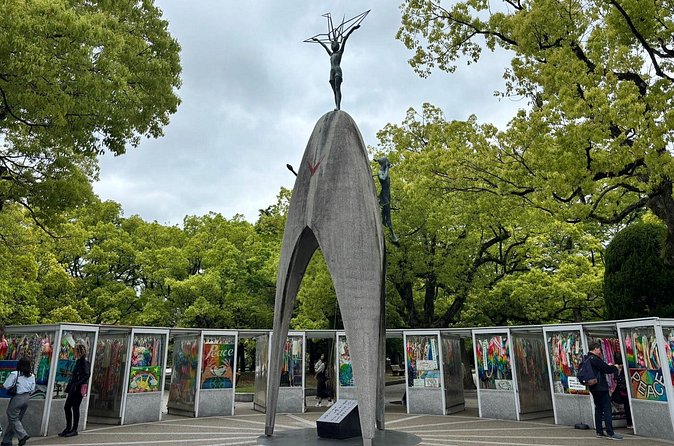
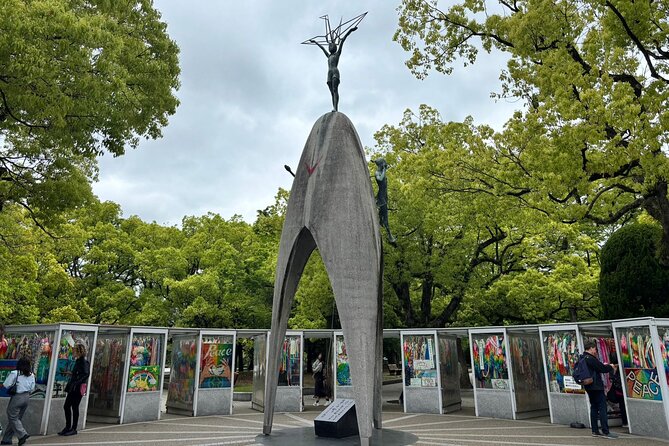
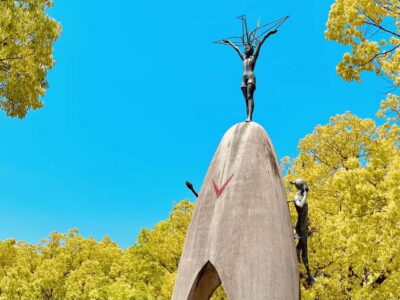
The Children’s Peace Monument is scheduled for 10 minutes. It honors Sadako and other children who died in the bombing, and it explains the paper crane as a symbol of peace.
This is one of the most recognizable parts of Peace Memorial Park, but its meaning is easy to reduce to a single familiar image. The guide gives you the story behind the crane and connects it to the children remembered at the monument.
I find this kind of explanation particularly useful for families and younger visitors. The subject remains painful, but the symbol offers a way to talk about peace, memory, and hope without turning the history into something abstract.
Ten minutes is short. You will hear the main story, but you may want to stay afterward if the monument speaks to you or if you want a quieter look.
The Korean Victims and Survivors Monument
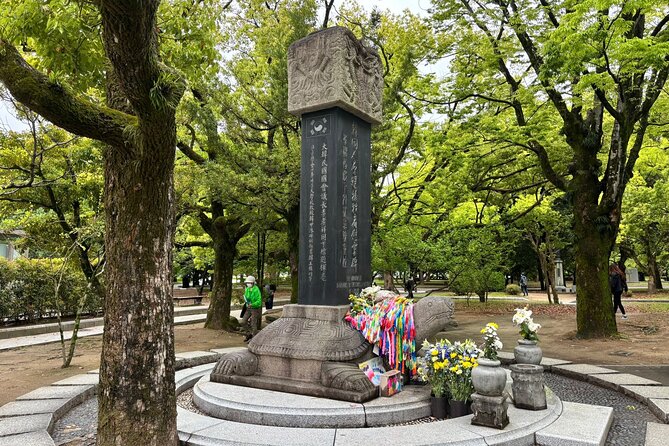
The five-minute stop at the Monument to Korean Victims and Survivors widens the story beyond Hiroshima’s Japanese population. The monument is dedicated to Koreans who were victims of the bombing.
This is a valuable inclusion. Hiroshima’s wartime history involved people from across the Japanese empire, and the memorial landscape should not be understood only through a single national viewpoint. The brief stop reminds you that the bombing affected different communities.
Because only five minutes are scheduled, the explanation will be concise. If this aspect of the history is important to you, make a note of it and ask your guide for further context during the walk.
The Peace Bell
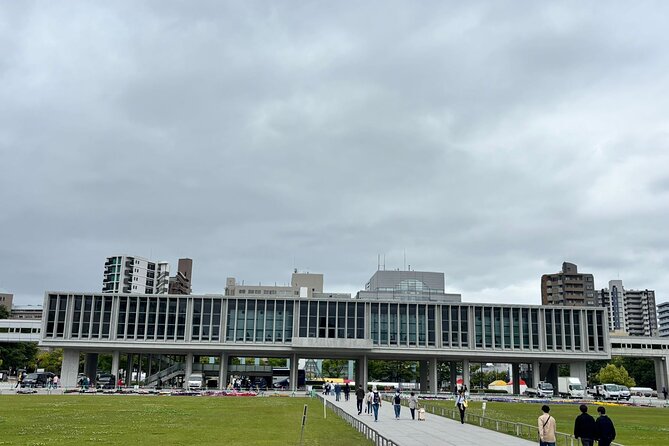
The Peace Bell is a quick, five-minute stop. Its message fits the larger purpose of the park: remembrance joined with a call for peace.
The bell gives the tour a brief pause between memorials and the final historic sites. It is not a long activity, and the tour does not list a separate bell-ringing experience, so you should not expect a lengthy ceremony. Its value comes from the guide’s explanation and from seeing how the park expresses its peace message through public symbols.
The Atomic Bomb Dome
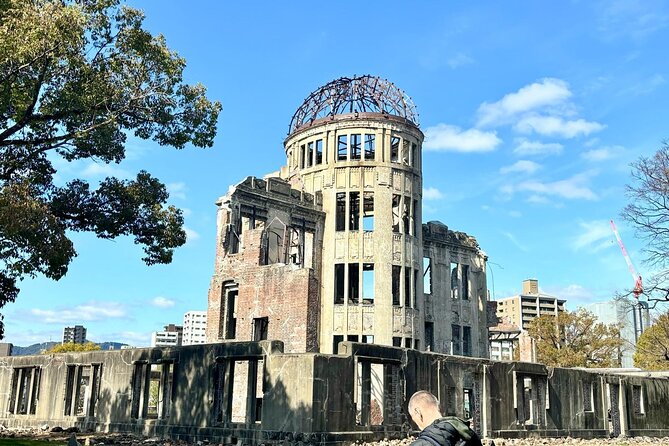
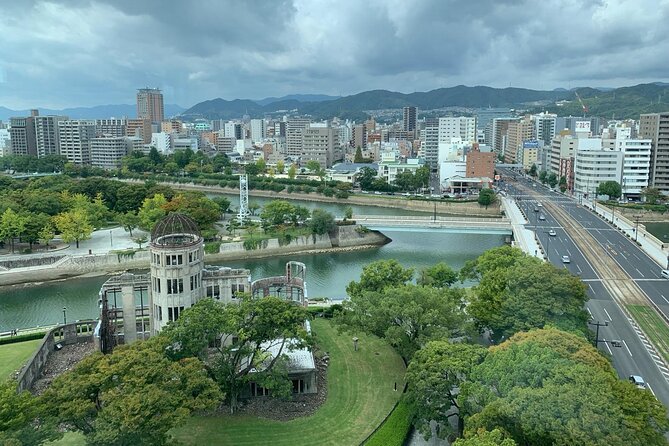
The Atomic Bomb Dome receives about 15 minutes and is likely the most familiar sight on the route. The building survived the atomic bombing and remains one of Hiroshima’s clearest physical reminders of August 1945.
A guide can help you look past the famous outline. The Dome is not simply an old building for photographs. Its damaged structure represents the force of the blast and the decision to preserve a ruin rather than erase it.
This is also where the walk’s emotional tone may shift. Earlier stops focus on names, families, and memorial symbols. Here, the evidence is architectural and stark. Guides such as Cva and Malek have been praised for keeping the tour engaging and for using light humor carefully when the subject becomes heavy. That balance can help you stay attentive, but you should still expect a serious experience.
Finishing at ground zero
The tour ends at the Hiroshima Atomic Bomb Hypocenter Monument, listed at 1-5-25 Otemachi. This is the point identified as the bombing’s ground zero.
Ending here gives the walk a strong sense of direction. You start with the broader question of why Hiroshima was targeted, move through memorials and survivor buildings, and finish at the central point of the blast. The route is not just a string of attractions. It builds toward a place that makes the scale of the event more immediate.
The tour ends here rather than returning you to the starting restaurant. That is convenient if you plan to continue around the Peace Park, but you should be aware of it when arranging the rest of your day.
What $32.84 buys you
At $32.84 per person, this is not an entry-ticket package. Every listed stop is free, and lunch or any other food is not included. You are paying for the guide’s time, route planning, historical explanation, and answers to questions.
I consider that a reasonable price if you have only a short time in Hiroshima or if you want help making sense of the memorial park. The value is strongest for a first visit. You could walk through the park without paying, but you would need to build your own route and find the meaning of each monument yourself.
The price is less compelling if you already know Hiroshima’s history well and prefer to read quietly at your own pace. In that case, the fixed two-hour schedule and group format may feel restrictive.
Group discounts are available, and the tour allows up to 30 people. Two children aged 0 to 10 can join free of charge. With a full group, the experience may feel less personal than a private walk, although the guides’ ability to answer questions remains an important part of the offering.
Who should book this walk
I would choose this tour if you have a half-day or less in Hiroshima, want a clear introduction, or feel that the memorial park deserves more than a self-guided stroll. It also suits you if you value the human stories behind monuments and want to ask questions as you go.
Families can benefit from the short stops and the story of Sadako and the paper cranes. Couples and solo visitors may appreciate the compact route and the chance to hear a thoughtful explanation without committing to a full-day activity.
This is not the best fit if you want a silent, private visit, extensive museum time, or a leisurely photography walk. A group of up to 30 people and a two-hour schedule mean you will keep moving.
Booking and cancellation details
You receive confirmation when booking, and the meeting point is near public transportation. The tour requires good weather and a minimum number of participants. If poor weather or low participation cancels the experience, you are offered another date or experience, or a full refund.
For your own cancellation, you can receive a full refund if you cancel at least 24 hours before the start time. Cancellations or changes within 24 hours are not refunded or accepted. The cut-off follows Hiroshima local time.
My verdict: a useful first look at Hiroshima
I would book this walk for a first visit, especially if my time in Hiroshima were tight. The strongest features are the Peace Studies background, the careful sequence of sites, and the inclusion of the Korean victims’ monument, the Rest House, and the final ground zero stop.
The tour will not replace a full visit to the Peace Memorial Museum or a slower return to the park. It does something different: it gives you a human and historical framework in about two hours. At $32.84, that is good value when you want to understand what you are seeing, not simply pass by it.
FAQ
How long does the Hiroshima walking tour last?
The tour lasts approximately two hours.
What sites are included?
The route includes the Gates of Peace, Arashi no Naka no Boshi Statue, the Cenotaph for the Atomic Bomb Victims, Hiroshima National Peace Memorial Hall, the Rest House, Children’s Peace Monument, Monument to Korean Victims and Survivors, Peace Bell, Atomic Bomb Dome, and the Hiroshima Atomic Bomb Hypocenter Monument.
Where does the tour start?
The meeting point is Ristorante Mario, 4-11 Nakajimacho, Naka Ward, Hiroshima, 730-0811, Japan.
Where does the tour finish?
The walk ends at the Hiroshima Atomic Bomb Hypocenter Monument, 1-5-25 Otemachi, Naka Ward, Hiroshima, 730-0051, Japan.
Is food included?
No. Lunch and all other food are excluded.
Can children join the tour?
Two children aged 0 to 10 can join free of charge.
What happens if I need to cancel?
You receive a full refund if you cancel at least 24 hours before the experience starts. Cancellations or changes made within 24 hours are not refunded or accepted.
Just added around Hiroshima
- Full Day Hiroshima and Miyajima Tour by Bullet Train from Kyoto★ 4.5 · 120 reviews
- Hiroshima Saijo Sake Tasting Tour with visit to 7 Breweries★ 5.0 · 104 reviews
- The Peace Memorial to Miyajima : Icons of Peace and Beauty★ 4.5 · 31 reviews
- Shore Excursion from Hiroshima Port : Private Tour in Hiroshima★ 5.0 · 17 reviews
- Okunoshima Rabbit Island Cycling Tour with Local Guide★ 4.5 · 17 reviews
- Hiroshima & Miyajima All-Inclusive Tour w/Licensed guide Pancho★ 5.0 · 54 reviews
- Private Full Day Hiroshima Tour★ 4.5 · 29 reviews
- Hiroshima Private Tour with a Local – Highlights & Hidden Gems★ 4.5 · 24 reviews
Historical Tours, compared.
Imperial Palace and Shogun Historical Walking Tour
Our verdict →
World Heritage Kyoto & Nara Uji Authentic Matcha Experience
Our verdict →
Kyoto Gion: 2-Hour Geisha Culture & History Walking Tour
Our verdict →
Hiroshima Historical Walking Tour – Why A-Bomb was Dropped
Our verdict →
Yanaka Walking Tour: Historic and Traditional District of Tokyo
Our verdict →
Shinjuku Historical Walking Tour & Secret Backstreets
Our verdict →
Mt. Fuji Heritage Tour: Traditional Villages, Lakes & Shrine
Our verdict →Browse the lists this tour appears in