
Reviewed · HISTORICAL TOURS
Hiroshima: History of Hiroshima Group Walking Tour
The most powerful part of this two-hour Hiroshima walking tour is the way it connects famous monuments with personal stories. You do not simply look at the Atomic Bomb Dome and move on. You learn what the city was like before August 6, 1945, why Hiroshima was selected, what happened that morning, and how people rebuilt their lives afterward.
I like two things especially. First, the guides bring strong academic backgrounds in subjects such as history, anthropology, tourism, and peace studies. Second, several guides, including Moe and Cva, have shared family connections to survivors, giving the tour a human voice without turning it into a performance. The main consideration is pace: two hours covers many stops, so you will get a thoughtful overview rather than every detail in the park.
Key points at a glance
- Survivor stories add a personal voice: Guides may connect the monuments with family accounts and testimonies from people affected by the bombing.
- The route covers the park’s major symbols: You visit the Peace Cenotaph, Flame of Peace, Children’s Monument, Peace Bell, Atomic Bomb Dome, and the hypocenter.
- The Peace Memorial Hall is included: This gives you indoor time with records and remembrance material during a mostly outdoor walk.
- The route begins at the Gates of Peace: You finish near the Atomic Bomb Hypocenter Monument, with the Atomic Bomb Dome visited shortly before the end.
- English delivery is the focus: The tour is offered in English with a live guide and is wheelchair accessible.
- The price is modest for a guided introduction: At $35 per person, the value comes from interpretation, context, and a route that would be easy to misunderstand on your own.
Why this Hiroshima walk matters
Hiroshima Peace Memorial Park can feel orderly and quiet. That calm can make it hard to grasp the scale of what happened here. The park contains monuments, fountains, bells, museums, and open paths, but each feature carries a specific story.
I find a guide useful here because the meaning is not always obvious from the monument itself. The Flame of Peace, for example, is more than a striking feature beside the river. The Children’s Peace Monument is not just a place for photographs. The burial mound, Korean Atomic Bomb Victims Cenotaph, and memorial halls broaden the story beyond the best-known landmarks.
The tour also places the bombing in a wider frame. You learn about Hiroshima before the attack, the decision-making that made it a target, the immediate destruction on August 6, 1945, and the long recovery that followed. That balance matters. The experience is emotional, but it is not presented as a simple sequence of dates and ruins.
Guides have included Cva, Moe, Tomas, Toma, Aya, Nisa, Sada, Ali, and others. Names and assignments can change, but the repeated strengths of this team are clear: strong English, careful storytelling, patience with questions, and a respectful tone. Cva in particular has been praised for inviting questions and involving the whole group, while Moe and Aya have brought local family connections into their explanations.
More Historical Tours in Hiroshima
- Hiroshima Historical Walking Tour – Why A-Bomb was Dropped
★ 4.8 · 893 reviews - Hiroshima Peace (Heiwa) Walking Tour at World Heritage Sites
★ 5.0 · 872 reviews - Miyajima Half-day Trip Historical Walking Tour
★ 5.0 · 284 reviews
Starting at the Gates of Peace
The meeting point is in front of the Gates of Peace, beside the Italian restaurant Mario. This is a useful place to begin because the gates immediately set the tone of the walk. You are entering a memorial space, not simply a city park.
Your guide introduces the route and begins with Hiroshima before the bombing. That opening is important. It reminds you that this was a living city with ordinary families, workplaces, schools, and routines. Hiroshima should not be understood only through the moment of destruction.
The first stop is Mother and Baby in the Storm. In a few minutes, you begin to see how the park uses sculpture to express the human cost of the attack. The stop is brief, but it helps shift your attention from military history to civilians and families.
Fountains, memorials, and the city’s first response
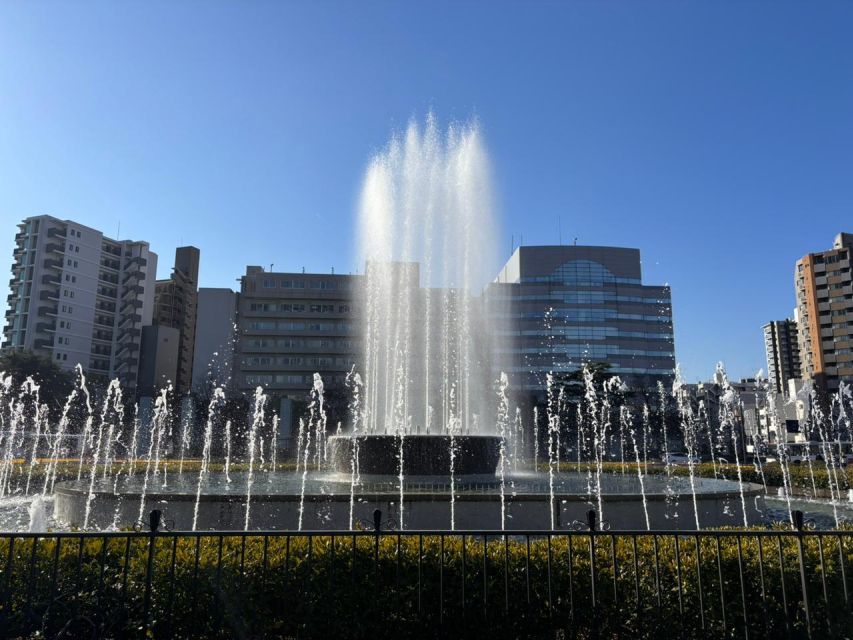
The Prayer Fountain follows, with time to look at the views along the way. Water appears often in Hiroshima’s memorial spaces, and your guide explains why it carries such weight in the story of the bombing and its aftermath.
Next comes the Hiroshima Victims Memorial Cenotaph. This is one of the central places in the park, and the guide helps you understand the inscription, shape, and position of the cenotaph rather than treating it as a quick photo stop. The Flame of Peace follows, with about five minutes devoted to its meaning.
These early stops are short, so you should expect focused explanations rather than long periods at each monument. That helps the group cover a lot of ground, though you may want to return later if one particular memorial catches your attention.
Fifteen quiet minutes at the National Peace Memorial Hall
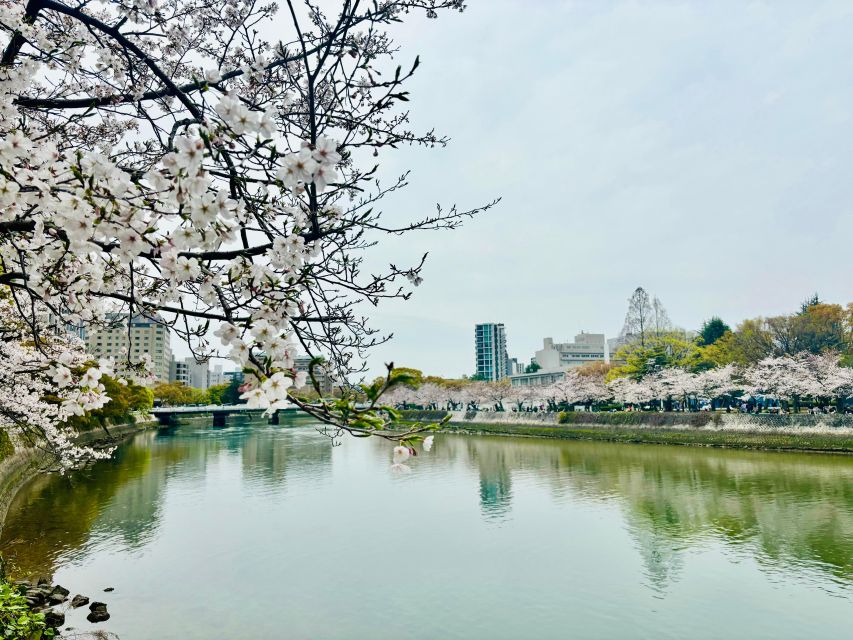
The Hiroshima National Peace Memorial Hall for Atomic Bomb Victims is one of the most useful indoor portions of the tour. Entrance is included, and you have about 15 minutes with a guide.
This visit adds names, faces, and personal records to the larger historical account. The outdoor monuments can feel symbolic and monumental. The hall brings attention back to individuals and families. I value that change of setting, especially during a two-hour walk that otherwise moves from one outdoor memorial to another.
You should keep your expectations realistic. Fifteen minutes is enough for an introduction, not a full museum visit. If you want extended time with exhibits and survivor accounts, plan to return independently after the tour.
More Walking Tours in Hiroshima
- Hiroshima City 4hr Private Walking Tour with Licensed Guide
★ 5.0 · 437 reviews - Hiroshima Walking Tour Why A Bomb was dropped to Hiroshima
★ 5.0 · 347 reviews - Hiroshima: Food and Culture Guided Walking Tour with Dinner
★ 4.9 · 212 reviews - Hiroshima: Peace Walking Tour of World Heritage Sites
★ 4.9 · 190 reviews
A pause for questions and reflection
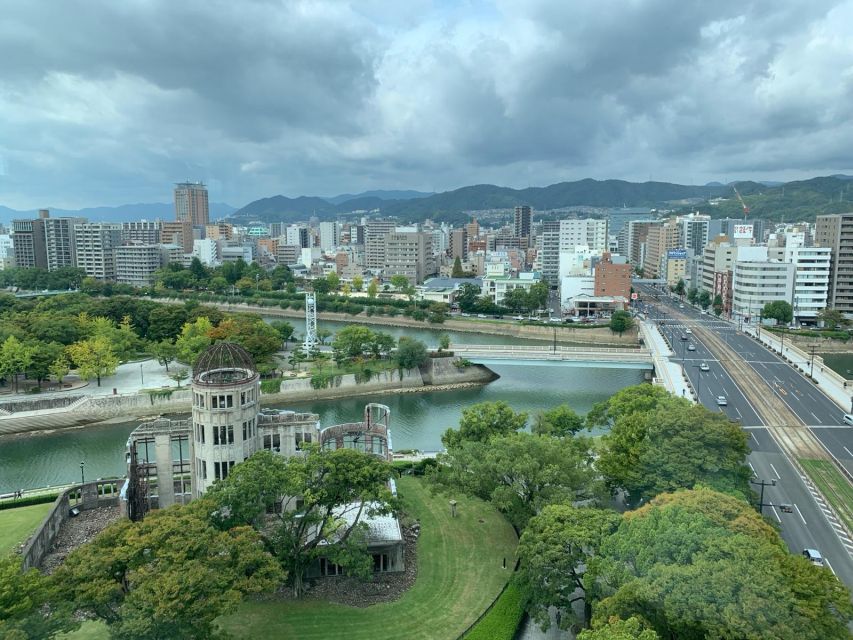
The itinerary allows roughly 20 minutes for a visit and free time at one of the park’s significant areas. This is where the tour can become less scripted. You can ask about a detail that was unclear, return to a memorial, or take a quiet moment before the group continues.
This pause also helps with the emotional weight of the subject. The best guides do not rush from one painful story to the next. Several people have praised the pacing of guides such as Cva and Sada, noting that they made room for questions and reflection while keeping the walk moving.
Group size can affect this part. One person described a particularly large group as less comfortable, even while praising the guide’s work. A bigger group can make it harder to hear or ask personal questions, so stay close to the guide and speak up when needed.
The Children’s Peace Monument and the cost of innocence
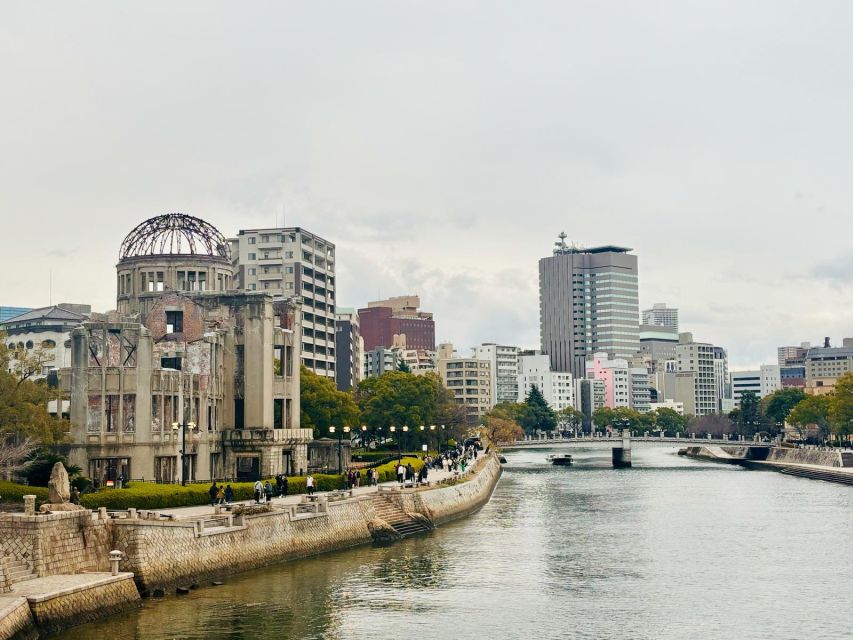
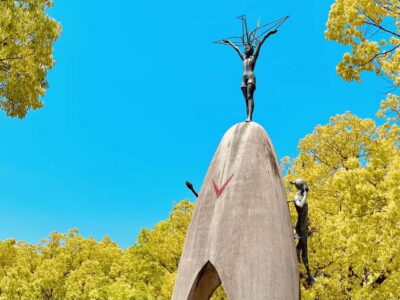
The Children’s Peace Monument is one of the most recognizable places in the park. It is linked to the children who died in the bombing and to those who suffered later from radiation-related illness.
The guide explains the monument’s connection to the story of Sadako Sasaki and the paper cranes associated with her memory. The exact presentation may vary by guide, but this is a stop where the broad history becomes easier to understand through one child’s experience.
You will have time for photographs, but the setting calls for care. This is a memorial, not just a landmark. I appreciate that the tour pairs the visual symbol with the human story behind it.
Burial mound and the wider circle of victims
The Atomic Bomb Memorial Burial Mound offers a different perspective. It recalls victims whose remains could not be identified or returned to families. This stop makes the scale of the disaster harder to reduce to famous individuals or well-known buildings.
The Korean Atomic Bomb Victims Cenotaph widens the story again. People from Korea were among those affected by the bombing, and this memorial ensures that their experiences are not left outside the main narrative.
That inclusion is one of the tour’s strongest features. Hiroshima’s memory is not limited to one nationality, one neighborhood, or one category of victim. A short visit to this cenotaph can encourage you to think about the wider structures of war and empire that shaped the city in 1945.
The Peace Bell and the meaning of peace
At the Bell of Peace, you get another photo stop and guided explanation. The bell is a simple object, but it gives the tour a more active message. Peace is not only something remembered here. It is something the city asks people to choose and protect.
Several guides have ended their explanations with an appeal to carry hope forward rather than resentment. That does not erase the suffering or avoid difficult questions. It gives the park’s message a present-day purpose.
The tone matters. A guide needs to keep the story serious without making the walk feel like a lecture. The strongest guides reported here have used warmth and occasional humor carefully, helping families and mixed-age groups stay engaged without making light of the subject.
The Atomic Bomb Dome, Hiroshima’s unforgettable image
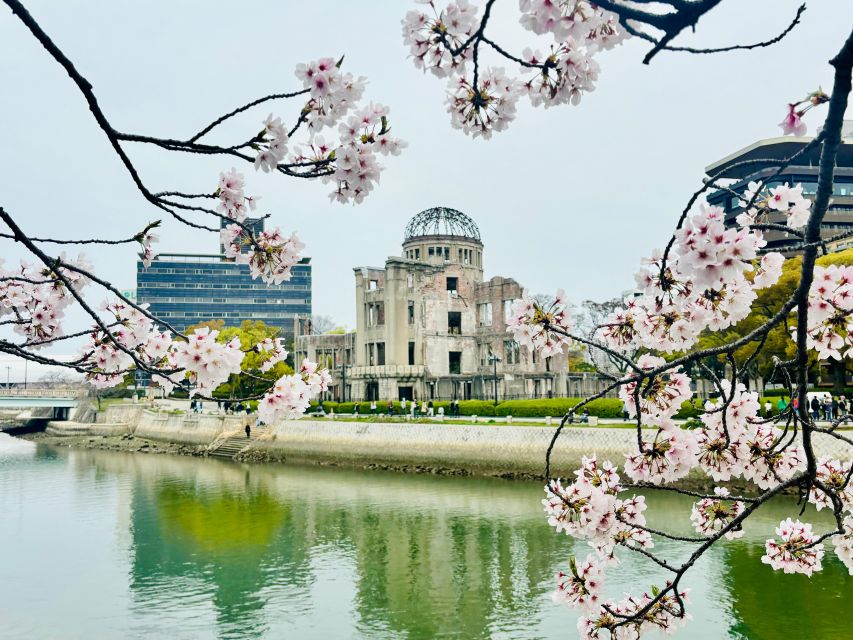
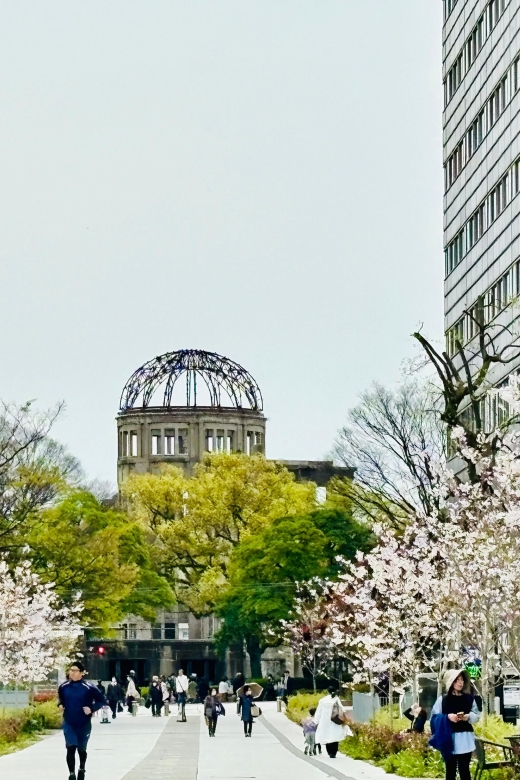
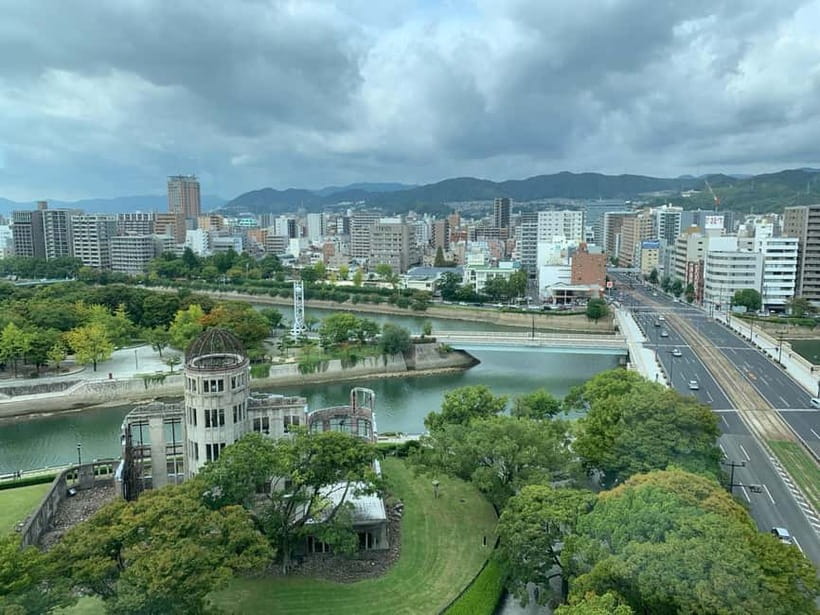
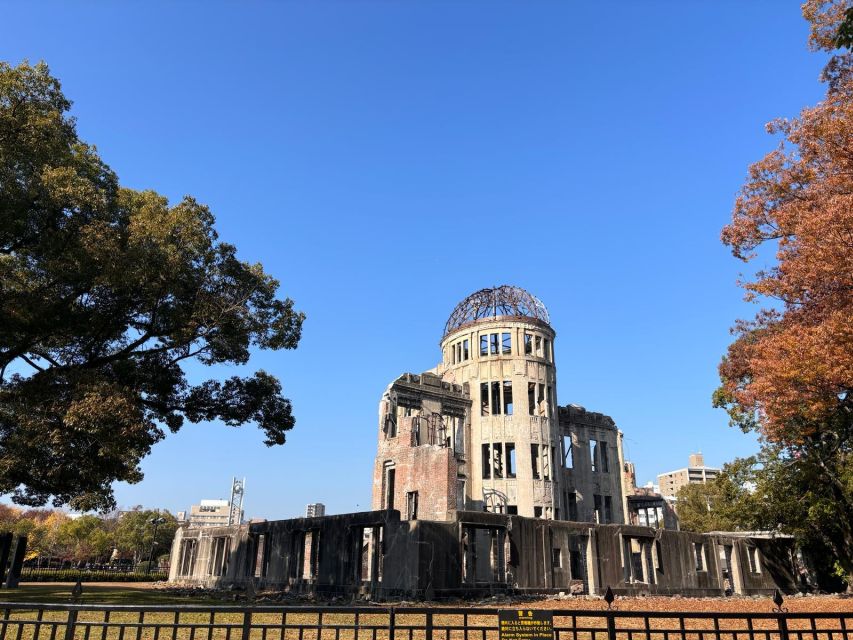
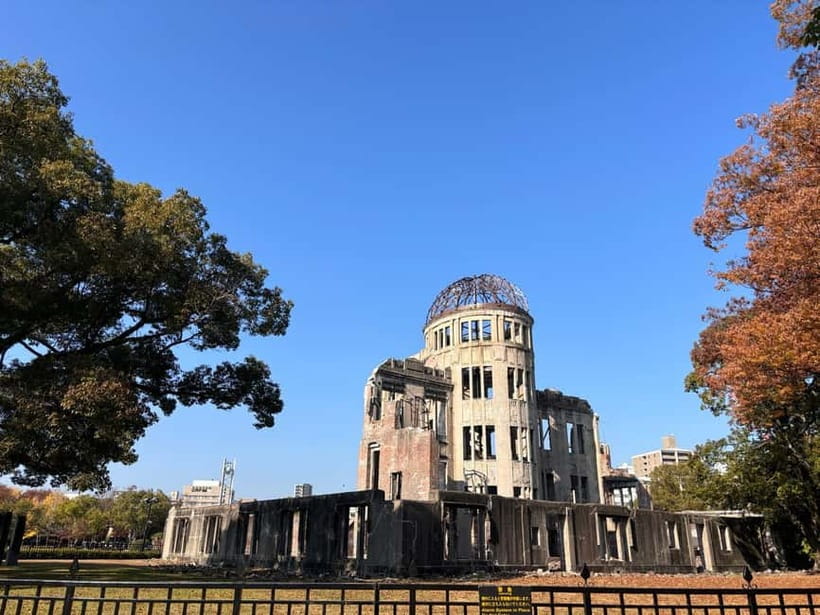
The Atomic Bomb Dome is the visual center of the tour for many people. It is the only structure specifically identified in this experience as having remained standing after the blast, and its damaged frame sits beside the river as a memorial to those killed.
Your guide explains what the building was before the bombing and why its remains were preserved. Seeing it at the end of the route works well. By this point, you have heard about the people, memorials, and consequences behind the image, so the Dome feels less like an isolated ruin.
The stop lasts about 15 minutes and includes sightseeing and photographs. You should not expect to enter the building. The value is in viewing it from the surrounding area and understanding its place in Hiroshima’s memory.
Finishing at the hypocenter
The tour finishes at the Atomic Bomb Hypocenter Monument, marking the point directly below the explosion. The location is visually modest, which is part of its force. There is no grand ruin here to carry the meaning for you.
After walking through monuments that express grief, hope, and remembrance, you arrive at the physical center of the event. The guide explains what happened at that point and how the destruction spread outward through Hiroshima.
Ending here gives the tour a clear shape. You begin with the city and its people, move through memorials and survivor stories, then finish at the place where the bombing occurred. You may find that the quiet final stop stays with you longer than the larger monuments.
What the guides do best
The guide is the main reason to book this rather than simply follow a map. Academic training helps, but it is the ability to explain clearly and listen carefully that matters most.
Cva has been praised for asking questions, involving the whole group, and answering difficult points without losing the thread. Moe has shared family experiences connected to the bombing. Aya has offered local stories that are easy to miss without guidance. Sada has combined history with discussion of Hiroshima’s culture, food, recovery, and present-day life.
Other guides, including Tomas, Toma, Nisa, Ali, Wajid, Han, Shiva, and Camille, have also been described as warm, fluent, patient, and engaging. You cannot select a particular guide from the information available, so book this for the tour format and subject matter, not for one named person.
The strongest moments may come when you ask a specific question. If you already know the basic chronology, ask about prewar Hiroshima, the city’s recovery, the memorials to non-Japanese victims, or how local families remember August 6. Guides are prepared to go beyond the standard script.
Is $35 a fair price?
At $35 per person, this is a good-value introduction to Hiroshima Peace Memorial Park. You receive two hours with a live English guide, entrance to the National Peace Memorial Hall, and a carefully arranged route through many significant sites.
The value is not in admission fees alone. Most of the park’s outdoor memorials can be visited without paying for a tour. You are paying for the links between them: why each monument exists, how individual stories fit the larger event, and how Hiroshima moved from devastation toward a public message of peace.
The limitation is time. You cannot explore every memorial at length in two hours, and the National Peace Memorial Hall visit is brief. If you want a slow, museum-heavy day, use this as an introduction and continue on your own afterward.
Practical details before you go
Wear comfortable shoes. The tour is on foot and includes many stops across the park. Dress for the weather because much of the experience takes place outdoors, with only part of the time inside the Peace Memorial Hall.
The tour is offered in English with a live guide. It is wheelchair accessible, which makes it a practical option for many visitors, though the route still involves moving between multiple outdoor sites.
You meet in front of the Gates of Peace next to Mario. Check the exact starting time when booking, since the tour operates at scheduled times. Free cancellation is available up to 24 hours in advance, and you can reserve now and pay later if you need flexibility.
The subject is heavy. I would avoid placing this immediately before a packed evening of entertainment. Give yourself a little breathing room afterward, especially if you tend to need quiet time after confronting painful historical material.
Should you book this Hiroshima tour?
Book it if you want a clear, human introduction to Hiroshima in two hours. It suits first-time visitors, families with older children, people who want an English-speaking guide, and anyone who would rather understand the memorials than simply photograph them.
I would also recommend it to people who already know the basic story. Strong guides such as Cva and Moe add personal accounts, local context, and answers to questions that a guidebook cannot provide.
Skip it only if you prefer to explore entirely alone or want several hours inside the museums. For most visitors, the best plan is to take this walk early in your Hiroshima stay, then return to the Peace Memorial Museum or National Peace Memorial Hall with the historical framework already in place. At $35, it is a sensible way to begin a visit to one of Japan’s most important places.
FAQ
How long does the Hiroshima history walking tour last?
The tour lasts two hours.
Where does the tour begin?
Meet your guide at the Gates of Peace, next to the Italian restaurant Mario.
Where does the tour finish?
The tour finishes at the Hiroshima Atomic Bomb Hypocenter Monument.
Is entrance to the Hiroshima National Peace Memorial Hall included?
Yes. Entrance to the Hiroshima National Peace Memorial Hall for Atomic Bomb Victims is included.
Is the tour offered in English?
Yes. The activity includes a live English-speaking guide.
Is the tour wheelchair accessible?
Yes. The activity is listed as wheelchair accessible.
Just added around Hiroshima
- Full Day Hiroshima and Miyajima Tour by Bullet Train from Kyoto★ 4.5 · 120 reviews
- The Peace Memorial to Miyajima : Icons of Peace and Beauty★ 4.5 · 31 reviews
- Hiroshima Saijo Sake Tasting Tour with visit to 7 Breweries★ 5.0 · 104 reviews
- Shore Excursion from Hiroshima Port : Private Tour in Hiroshima★ 5.0 · 17 reviews
- Okunoshima Rabbit Island Cycling Tour with Local Guide★ 4.5 · 17 reviews
- Hiroshima & Miyajima All-Inclusive Tour w/Licensed guide Pancho★ 5.0 · 54 reviews
- Private Full Day Hiroshima Tour★ 4.5 · 29 reviews
- Hiroshima Private Tour with a Local – Highlights & Hidden Gems★ 4.5 · 24 reviews
Historical Tours, compared.
Imperial Palace and Shogun Historical Walking Tour
Our verdict →
World Heritage Kyoto & Nara Uji Authentic Matcha Experience
Our verdict →
Kyoto Gion: 2-Hour Geisha Culture & History Walking Tour
Our verdict →
Hiroshima Historical Walking Tour – Why A-Bomb was Dropped
Our verdict →
Yanaka Walking Tour: Historic and Traditional District of Tokyo
Our verdict →
Shinjuku Historical Walking Tour & Secret Backstreets
Our verdict →
Mt. Fuji Heritage Tour: Traditional Villages, Lakes & Shrine
Our verdict →Browse the lists this tour appears in