
Reviewed · WALKING TOURS
Hiroshima Walking Tour Why A Bomb was dropped to Hiroshima
Hiroshima is best understood on foot, where a castle, a sports arena, a ruined dome, and a quiet memorial park reveal how one city moved from wartime destruction toward a message of peace. This tour links those places while explaining the political and military background of the atomic bombing, its human cost, and its lasting effect on Japan.
I like the small-group format, which keeps the walk personal and leaves room for questions. I also like the use of maps, photographs, and family stories. Guides including Thomas, Chihiro, Katya, and Emi have been praised for clear explanations, warmth, and an ability to make difficult history understandable for adults and children.
The main point to consider is scope. Most of the walk is flat and the sights are close, but the tour gives only about 20 minutes at Hiroshima Castle and does not include an inside visit. One person also found the presentation too focused on general Japanese history, so this may feel less focused on the bomb than the title suggests.
Key points to know before you book
- The route connects two eras: Begin at Hiroshima Gokoku Shrine and Hiroshima Castle, then walk toward the Atomic Bomb Dome and Peace Memorial Park.
- The most praised guides use visual aids: Thomas and other guides have used maps, photographs, and short seated talks to explain the events leading to 1945.
- Personal stories may add emotional weight: Some guides have family connections to bomb survivors, though the guide you receive will vary.
- The tour ends at the Peace Memorial Museum: Museum entry is not listed as included, giving you the option to continue inside afterward.
- Plan for a serious but manageable morning or afternoon: The walk lasts about 2 hours and 30 minutes, with several pauses and plenty of time for questions.
- The group size needs checking at booking: The tour is promoted as a small group of up to 12, while the additional booking information gives a maximum of 15.
Why this walk helps make sense of Hiroshima
The subject is heavy, but the route gives it shape. Instead of treating the bombing as one isolated stop at the Atomic Bomb Dome, the tour first places Hiroshima in its earlier setting. You see the former political center of the city, learn about Japan before the attack, and then move toward the places tied directly to August 6, 1945.
That order matters. Hiroshima today is a working city with shops, roads, sports facilities, and ordinary daily life. The tour helps you see both the city that existed before the bombing and the city rebuilt afterward. You are not simply moving from one memorial to another. You are following a story of military power, destruction, survival, reconstruction, and a public commitment to peace.
The guides are central to the experience. Several have been praised for speaking clear English and explaining complicated events without losing the thread. Thomas, in particular, has been described as easy to talk with and good at keeping children interested. One useful trick was his Pokémon knowledge, which helped younger members of a family stay engaged during a serious subject.
The best guides also know when to slow down. Short talks while seated give you a break from walking and allow time to explain why the bomb was used, what happened afterward, and how the attack affected Hiroshima. The tone is generally calm, sympathetic, and sometimes lightly humorous, rather than grim from beginning to end.
More Walking Tours in Hiroshima
- Hiroshima Historical Walking Tour – Why A-Bomb was Dropped
★ 4.8 · 893 reviews - Hiroshima Peace (Heiwa) Walking Tour at World Heritage Sites
★ 5.0 · 872 reviews - Hiroshima City 4hr Private Walking Tour with Licensed Guide
★ 5.0 · 437 reviews
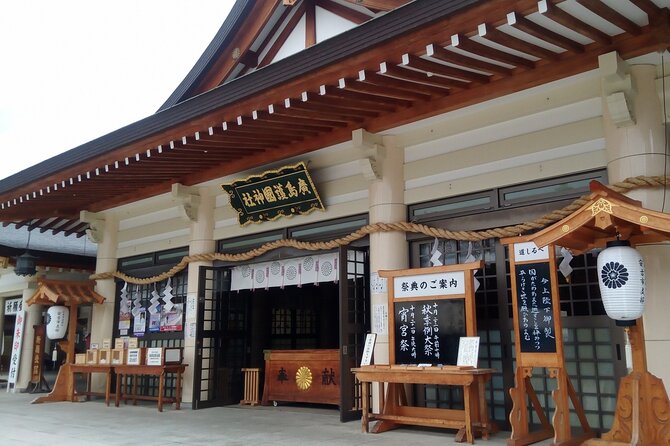
Hiroshima Gokoku Shrine and the city before 1945
The meeting point is Hiroshima Gokoku Shrine, at 21-2 Motomachi. The shrine has an elegant design and a quiet setting, a useful contrast to the busy city nearby. It was originally established to honor protective deities connected with the Hiroshima domain.
You begin with a place that is not directly a bombing memorial. That is useful because it gives you a sense of Hiroshima as a historic Japanese city rather than only as the site of a catastrophe. Your guide may use this opening to explain the city’s political and cultural background before moving into the wartime story.
Admission to the shrine is free. The meeting point is near public transportation, though the supplied information does not specify a particular station or route. Check the exact map pin before setting out, especially if you are walking from central Hiroshima.
Hiroshima Castle, with only a short look inside
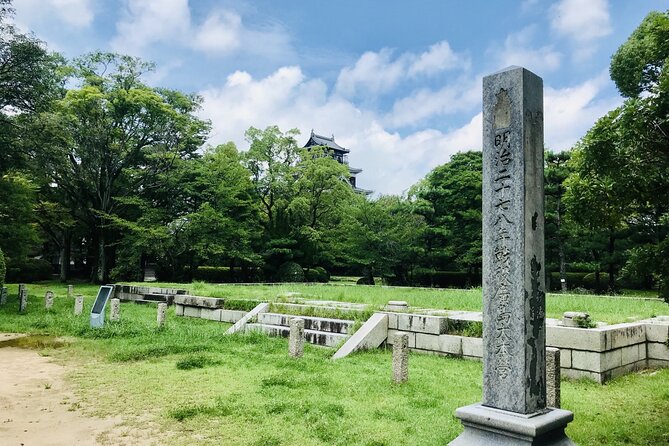
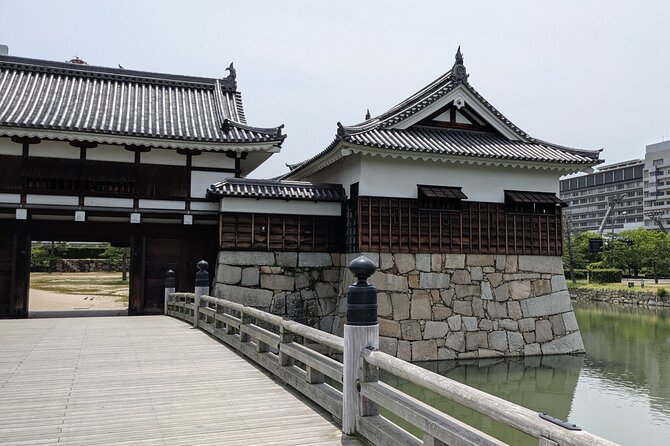
The next stop is Hiroshima Castle, also called Carp Castle. Built in the 1590s, it served as the home of the daimyō who ruled the Hiroshima domain. Its setting helps explain the city’s earlier importance and the role of feudal power in Japanese history.
You spend about 20 minutes here, and the visit covers the grounds rather than an inside tour. That distinction matters. If you want to explore the castle museum or spend time examining the building, plan a separate visit. This walk uses the castle mainly as historical context, not as a full castle sightseeing stop.
I like that the route includes Hiroshima Castle because it prevents the tour from becoming a narrow account of the atomic bomb alone. Still, the short stop will feel brief if castle architecture is one of your main interests. Treat it as an introduction and a photo opportunity, not the centerpiece.
Hiroshima Green Arena and useful pauses on the route
Hiroshima Green Arena is a modern sports center used for events and competitions. At first, it may seem like an odd stop on a history walk. Its value is the contrast it creates. You see a functioning part of present-day Hiroshima, not only sites preserved for remembrance.
The itinerary allows about 30 minutes here, although the exact style of the stop can depend on the guide and the group. Several accounts describe pauses where guides sat with the group and explained Japanese history, the road to war, and the facts surrounding the bombing. These breaks are helpful on a walk that deals with difficult material.
The route is described as mostly flat, with the main sights relatively close together. That makes it manageable for most participants, but you still need comfortable shoes. There is no bottled water included, so bring your own, particularly in warm weather.
Same trip, a completely different kind of day:
- Peaceful Hiroshima & Miyajima UNESCO 1 Day Bus Tour
★ 5.0 · 5,309 reviews - Hiroshima: Hiroshima and Miyajima UNESCO Sites 1-Day Tour
★ 4.9 · 2,330 reviews - Hiroshima / Miyajima Full-day Private Tour with Government Licensed Guide
★ 5.0 · 1,298 reviews - Osaka/Kyoto: Hiroshima Miyajima Bus Tour & Shinkansen Ticket
★ 4.7 · 919 reviews
Orizuru Tower and the transition toward Peace Park
Orizuru Tower is a modern 13-story building beside Hiroshima Peace Memorial Park. It opened in 2016 and adds a newer architectural note to the route. The supplied schedule lists the stop but does not give a visit length or clearly state that entry is included.
That makes this part worth clarifying before you book. You may see the building from outside or pause nearby, but you should not assume that an observation deck visit or other paid activity is part of the tour. All fees and taxes for the listed experience are included, yet no separate Orizuru Tower admission is specified.
Its position is still meaningful. The building sits beside the memorial area and reflects Hiroshima’s present-day identity. After learning about the destruction of 1945, you are moving through a city that has continued to build, work, and welcome people while keeping its past in public view.
The Atomic Bomb Dome, the tour’s most powerful visual stop
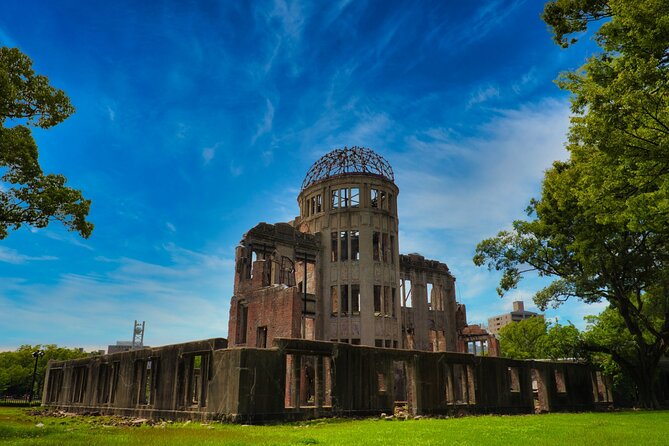
The Atomic Bomb Dome is the clearest physical reminder of the bombing. Before 1945, the structure was the Hiroshima Prefectural Industrial Promotion Hall. It was close to the blast’s epicenter and survived in damaged form, making it one of the most recognizable places in the city.
You spend around 20 minutes here. That is enough for a careful explanation and photographs, but not a long architectural study. The guide’s role is especially important because the building alone cannot explain what happened. You need the timeline, the location, and the human context to understand why this damaged shell has become a symbol of nuclear danger and peace.
This is also where the tour can feel most emotional. A good guide will give you room to look and think rather than filling every second with words. The experience is not designed as entertainment, and you should expect a respectful tone.
Children’s Peace Monument and the human cost
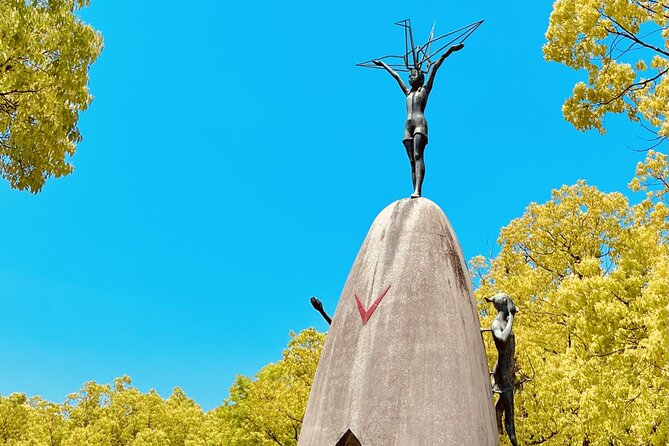
The Children’s Peace Monument commemorates Sadako Sasaki and the many children who died as a result of the bombing. Sadako’s story, and the paper-crane tradition associated with her, gives the larger tragedy a personal focus.
The stop lasts about 10 minutes. That may sound short, but the monument is part of a broader sequence through Peace Memorial Park. Your guide can explain why it matters and connect it to the city’s continuing message of peace.
Families may find this stop especially useful. The tour is serious, but children can understand a memorial more easily when it is linked to one person and one story. The guide’s approach will shape how accessible the explanation feels. Thomas, for example, has been praised for keeping young children interested during the historical sections.
The Victims Memorial Cenotaph and Peace Memorial Park
The final major stop is the Hiroshima Victims Memorial Cenotaph in Peace Memorial Park, with about 30 minutes allocated to the area. The park is dedicated to those who died in the atomic bombing on August 6, 1945, and it lies near the blast’s epicenter.
This is the point where the separate parts of the walk come together. You have seen the old feudal center, present-day civic buildings, the surviving dome, and a monument to children. Here, the tour focuses directly on remembrance and Hiroshima’s call for a peaceful future.
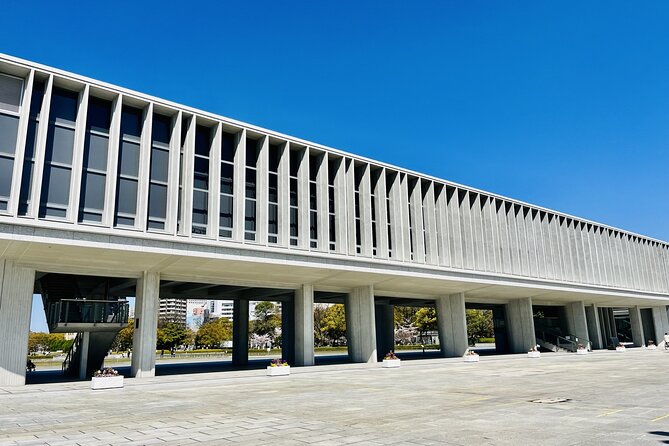
The route ends in front of the Hiroshima Peace Memorial Museum. Museum admission is not included, but the ending is practical. If you still have the energy, you can continue into the museum and examine the exhibits at your own pace. The guided walk gives you a framework first, which can help you process the museum’s material with more context.
Allow extra time if the museum is important to you. The tour itself finishes there, and the stated 2.5-hour duration does not include a museum visit.
What the guides do particularly well
The strongest part of this experience is the guide’s delivery. The praise is consistent for clear English, strong preparation, warmth, and an ability to answer questions. Chihiro has been noted for adding a personal element, while Katya has been praised for explaining both Hiroshima’s past and its rebuilding after the war.
Family connections can make the experience more personal. One guide was described as a granddaughter of a bomb survivor, and another shared family information that gave extra weight to the walk. You should not assume your guide will have that background, but the possibility is one reason a live guide can offer more than a printed route.
Visual material also helps. Maps and old photographs can show how the city looked before the blast, where key buildings stood, and how the attack affected the area. The guides praised most strongly do not simply recite dates. They explain cause, context, and aftermath in a way that gives you a quick working understanding.
There is one caution. The quality may vary with the individual guide and the group. One participant felt the tour spent too much time on general Japanese history and offered too little depth on Hiroshima and the atomic bomb. If you want a highly academic treatment of wartime decision-making, ask questions early and use the walk as an introduction rather than your only source.
Price, pace, and who gets good value
At $28 per person, this is a reasonable price for a 2-hour-30-minute guided walk through Hiroshima’s main historical sights. You are paying for structure, local explanation, and the chance to ask questions. The attractions themselves are mostly viewed from public spaces, so the value comes from the guide rather than admission tickets.
I would book it if you are visiting Hiroshima for the first time, want a clear route, or feel unsure how to approach the city’s difficult history. It also suits families, since the walk is mostly flat and guides have kept children interested with stories and accessible explanations.
History enthusiasts should set expectations carefully. The tour covers the background to the bombing, but it is not a long specialist seminar. You may want to add the Peace Memorial Museum afterward and seek further reading if the question of why the bomb was dropped is your main reason for coming.
The group is described as a maximum of 12 in the tour overview, while the additional information gives a maximum of 15. Ask about the expected group size if an intimate experience is important to you. The tour includes all listed fees and taxes, but not bottled water or museum admission.
Free cancellation is available up to 24 hours before the start time for a full refund. Cancellations or changes made inside that window are not accepted for a refund.
Should you book the Hiroshima walking tour?
Book this tour if you want a guided introduction that connects Hiroshima’s older history, the 1945 bombing, and the city’s peace message in one walk. The combination of a local guide, maps, photographs, personal stories, and a route ending at the museum gives you a useful first layer of understanding.
I would be more cautious if you want every minute focused on the atomic bomb or expect a full castle visit. In that case, use the tour as a starting point, then spend extra time at the museum and memorial sites.
For most first-time visitors, the price is fair and the route is well chosen. The best outcome depends on your guide, but names such as Thomas, Chihiro, Katya, and Emi have been linked with thoughtful, clear presentations. Bring water, wear comfortable shoes, leave time for the museum, and approach the walk ready for a serious conversation about Hiroshima’s past and its hopes for the future.
FAQ
How long does the Hiroshima walking tour last?
The tour lasts approximately 2 hours and 30 minutes.
Where does the tour begin?
It begins at Hiroshima Gokoku Shrine, located at 21-2 Motomachi, Naka Ward, Hiroshima, 730-0011, Japan.
Where does the tour end?
The tour ends in front of the Hiroshima Peace Memorial Museum at 1-2 Nakajimacho, Naka Ward, Hiroshima, 730-0811, Japan.
Is admission to the Hiroshima Peace Memorial Museum included?
No. The tour ends at the museum, but museum admission is not listed as included.
Is Hiroshima Castle visited from the inside?
No. The experience visits the grounds of Hiroshima Castle rather than offering an inside visit.
What is the cancellation policy?
You can cancel up to 24 hours before the start time for a full refund. Cancellations or changes made less than 24 hours before the start time are not accepted for a refund.
Just added around Hiroshima
- Full Day Hiroshima and Miyajima Tour by Bullet Train from Kyoto★ 4.5 · 120 reviews
- Hiroshima Saijo Sake Tasting Tour with visit to 7 Breweries★ 5.0 · 104 reviews
- The Peace Memorial to Miyajima : Icons of Peace and Beauty★ 4.5 · 31 reviews
- Shore Excursion from Hiroshima Port : Private Tour in Hiroshima★ 5.0 · 17 reviews
- Okunoshima Rabbit Island Cycling Tour with Local Guide★ 4.5 · 17 reviews
- Hiroshima & Miyajima All-Inclusive Tour w/Licensed guide Pancho★ 5.0 · 54 reviews
- Private Full Day Hiroshima Tour★ 4.5 · 29 reviews
- Hiroshima Private Tour with a Local – Highlights & Hidden Gems★ 4.5 · 24 reviews
Walking Tours, compared.
Kyoto Geisha Walking Tour: Gion District & Hidden Gems
Our verdict →
Imperial Palace and Shogun Historical Walking Tour
Our verdict →
Shinjuku Local Bar and Izakaya Guided Walking Tour
Our verdict →

Nishiki Market Brunch Walking Tour (7 Tastings + Brunch)
Our verdict →
Kyoto Arashiyama Walking Tour: Bamboo, Monkeys, Gardens & Secrets
Our verdict →
Tokyo Castle & Imperial PalaceーShogun Walking Tour
Our verdict →Browse the lists this tour appears in