
Reviewed · HISTORICAL TOURS
Kyoto: Private 2.5 Hour Historical Walking Tour
Kyoto’s famous sights make far more sense when someone explains the customs, people, and beliefs behind them. This private walk links Yasaka Shrine, Entokuin, and Kiyomizu Temple in a compact route, with quiet temple rooms and dry gardens balancing the grand views and photo stops.
I like the guide’s use of hand-drawn maps and illustrations, which help untangle Japan’s shoguns, emperors, Buddhism, and Shinto. I also like the small-group format: up to five people can ask questions and pause for photos without being swept along by a large crowd. The main consideration is cost beyond the tour fee, since temple admission, food, drinks, and transport to the meeting point are not included.
Key points to know before booking
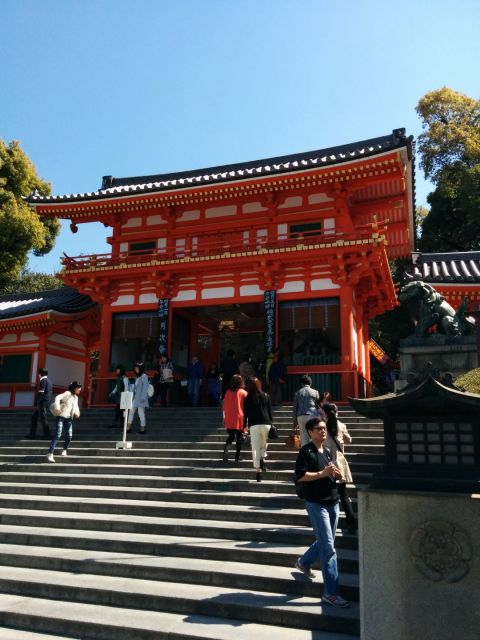
- Start at Yasaka Shrine: Meet at the west, or red, gate, near Gion.
- See Entokuin’s Zen setting: Expect traditional rooms, dry gardens, and painted sliding doors.
- Learn shrine and temple customs: Your guide explains how to worship and how to tell Shinto sites from Buddhist temples.
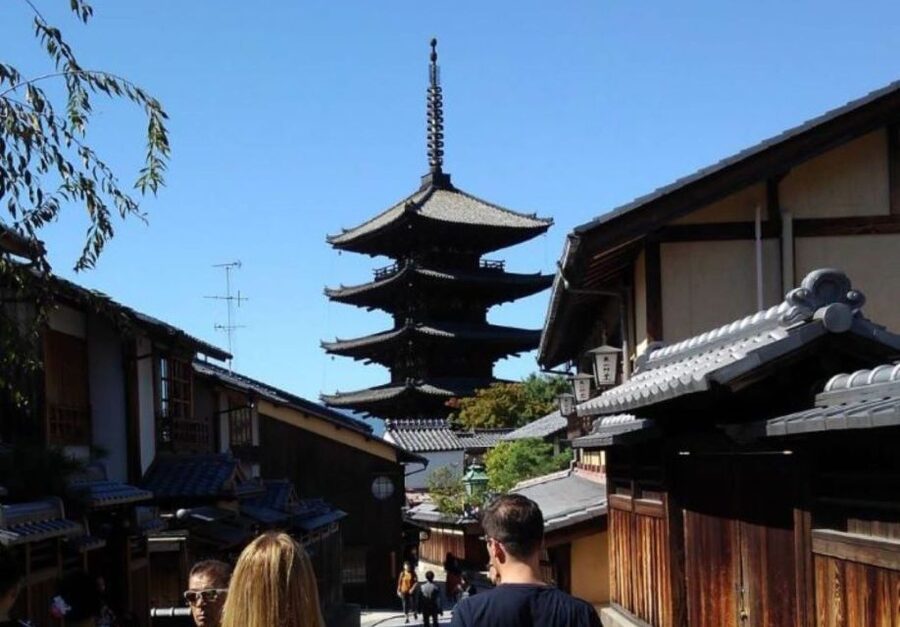
- Photograph Yasaka-no-to: The five-storied pagoda is viewed from outside near Koshindo.
- Finish at Kiyomizu Temple: The wooden stage, Koyasu Pagoda, sacred water, and Jishu Shrine provide the final lessons.
- Best value for curious visitors: The $80 group price covers up to five people, but entrance fees are extra.
A useful introduction to Kyoto’s old city
This tour works best as an orientation walk, not as a rapid checklist of every major sight. You move through one of Kyoto’s most atmospheric areas while your guide supplies the background that signs and statues rarely provide.
The route is scheduled for about two and a half hours in the detailed program, although the activity information also lists a two-hour duration. The walking itself is modest, with several stops and roughly 35 minutes of movement between them. Plan for a relaxed half-day window, especially if you want time for photographs or questions.
The private format matters here. Kyoto’s religious sites can feel confusing at first: one building may be a shrine, the next a temple, and each has its own gestures and visual clues. A guide can explain what you are seeing at the moment you encounter it, rather than leaving you to sort it out later.
Several guides have been praised for this personal approach, including Hisako, Hiroko, Hiroshita, and Takayuki Ishii. The exact guide depends on availability, but the experience is designed around an English-speaking local guide. Some guides use their own drawings, folders, maps, and prepared notes. Hisako, in particular, is known for linking Kyoto’s religious sites with the political history of Japan and for answering questions well beyond the formal route.
More Historical Tours in Kyoto
- Kyoto Gion: 2-Hour Geisha Culture & History Walking Tour
★ 5.0 · 1,186 reviews - Kyoto: Nijo-jo Castle and Ninomaru Palace Guided Tour
★ 4.7 · 1,020 reviews - Kyoto: Imperial Palace & Nijo Castle Guided Walking Tour
★ 4.7 · 453 reviews
Starting beneath Yasaka Shrine’s red gate
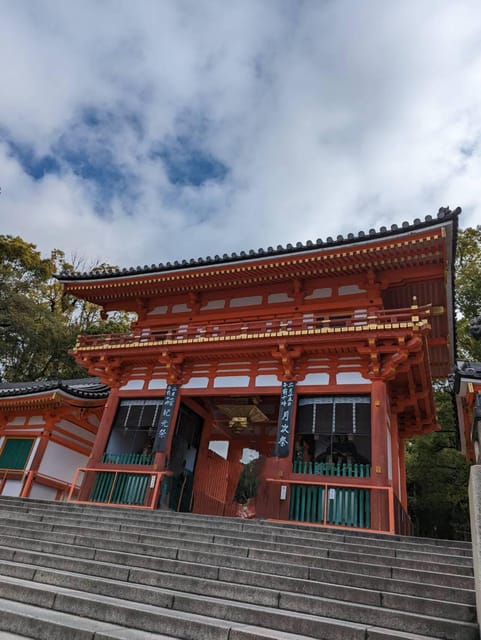
Meet at the west gate of Yasaka Shrine, called the Nishiromon Gate. This is a practical meeting point near Gion, but give yourself time to find it if you are not familiar with Kyoto’s busy streets.
From Keihan’s Gion Shijo Station or Hankyu’s Kawaramachi Station, walk east along Shijo Street, then go up the stone steps toward the red gate. From a bus, get off at Gion and look for the steps before the gate. Transportation to this point is your responsibility.
Your guide begins with a map of Kyoto. That simple opening is useful because it gives you a sense of the city before the walk narrows into lanes and temple grounds. You also receive an introduction to Yasaka Shrine and an explanation of how to worship at a Shinto shrine.
This is one of the tour’s most practical features. You do not just see a shrine entrance and copy the nearest person. You learn the basic purpose of the site and the appropriate way to approach it. The explanation also gives you a framework for recognizing other Shinto shrines during the rest of your Japan trip.
Maruyama Park and the story behind Nene-no-michi
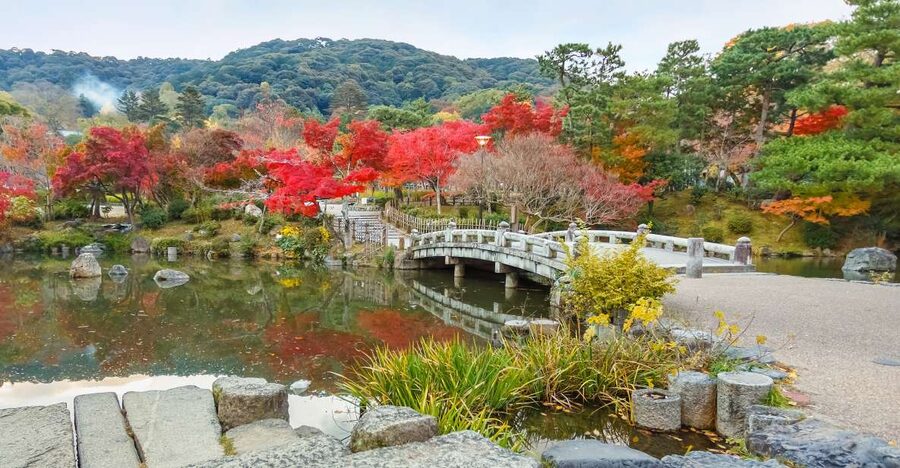
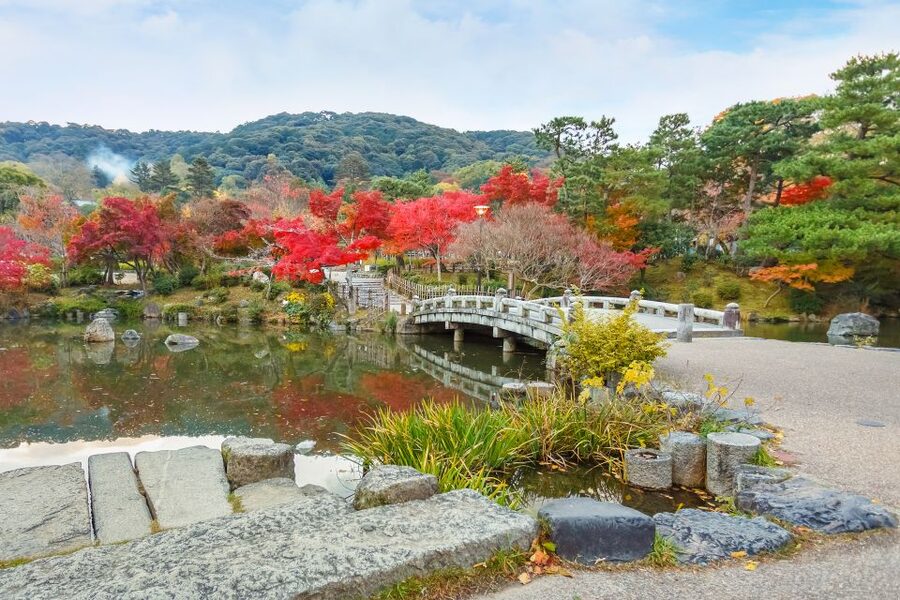
From Yasaka Shrine, you walk through Maruyama Park. The park provides a welcome change from the hard stone streets around Gion, and it leads toward Nene-no-michi, a well-known lane connected with Nene, the wife of Toyotomi Hideyoshi.
Toyotomi Hideyoshi was one of the major political leaders of late sixteenth-century Japan. Nene is associated with Entokuin, the next major stop, so the walk gives you a human connection to a period often reduced to names and dates.
The route is not only about buildings. Your guide connects streets, people, religion, and power, helping you see why this part of Kyoto carries so much historical weight. If you have already read about samurai leaders, imperial rule, or shogunates, this is a good place to fit those subjects together.
Nene-no-michi can be busy, and the stone surface calls for sensible footwear. Comfortable shoes are specifically recommended. The route is not presented as strenuous, but you should expect walking, steps, and standing at several stops.
Entokuin: a quiet Zen pause
Entokuin is the most intimate stop on the walk. It is a Zen temple with dry gardens, traditional Japanese rooms, and painted sliding doors. Compared with the grand scale of Kiyomizu Temple, Entokuin offers a quieter setting where details matter more than size.
The dry gardens are made without flowing water, using arranged stone, gravel, and carefully controlled space to suggest natural forms. Your guide helps you read the garden rather than simply taking a photograph and moving on. The traditional rooms also give you a chance to notice how Japanese interiors use open space, wood, and sliding partitions.
This stop is especially valuable if you are new to Zen architecture. You can sit with the calm atmosphere, look at the garden from the rooms, and ask questions about Buddhism, aesthetics, and temple life. One private visit even included a calligraphy experience, although that should not be treated as a guaranteed part of every departure.
The temple visit is listed at about 40 minutes. That is enough time to understand the setting without turning the tour into a long formal lecture. Guides have been praised for allowing people to pause, take photos, and rest while still keeping the route moving.
More Walking Tours in Kyoto
- Kyoto Geisha Walking Tour: Gion District & Hidden Gems
★ 4.7 · 3,273 reviews - Kyoto: Gion Magical Night Walking Tour with Geisha Trivia
★ 4.9 · 2,393 reviews - Kyoto: Gion Geisha District Walking Tour – Stories of Geisha
★ 4.7 · 2,187 reviews - Night Walk in Gion: Kyoto’s Geisha District
★ 4.5 · 2,003 reviews
Yasaka Koshin-do and Kyoto’s small-scale details
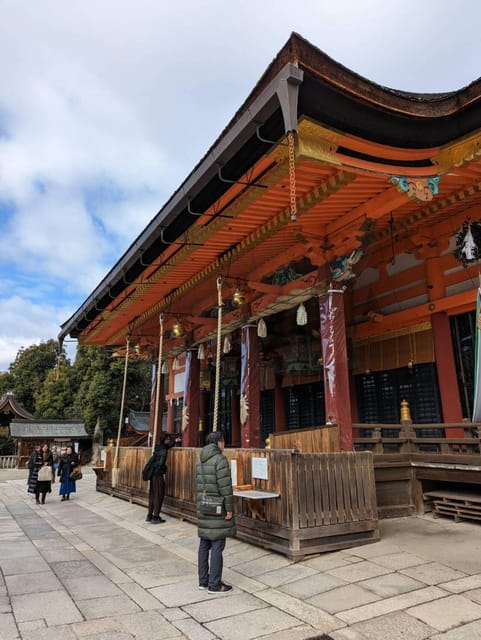
After Entokuin, the walk continues toward Yasaka Koshin-do, a small and visually distinctive temple. The planned stop lasts about 15 minutes.
This is where a private guide can add real value. Small religious sites are easy to pass without understanding what they are, and a quick photograph does not explain their purpose. Your guide can place Koshin-do within the wider mix of Buddhist and Shinto practice you have been learning about since Yasaka Shrine.
The tour also uses this part of the route to point out local customs and religious differences. You learn not only what the site is called, but how to recognize the type of place you are entering and how its traditions relate to other sites in Kyoto.
Do not expect every stop to be a grand monument. That is part of the appeal. The smaller temple helps break up the famous sights and gives you a better sense of the old neighborhood.
Yasaka-no-to, the five-storied pagoda view
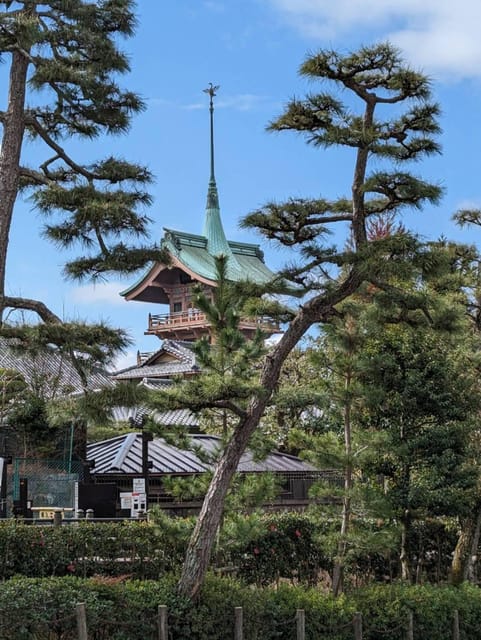
Near Koshin-do, you see Yasaka-no-to, a five-storied pagoda. The itinerary specifies an outside view, so this is a photo and orientation stop rather than an interior visit.
The pagoda is one of the route’s strongest visual moments. From the nearby street, its height and traditional form rise above the surrounding buildings, creating the classic Kyoto scene many people hope to find. Your guide points out the best viewpoint and explains the setting, so you are not left guessing which building you are looking at.
The viewpoint itself takes about 10 minutes. That may sound brief, but it is enough for photographs and a short explanation. Keep in mind that popular streets around famous Kyoto sights can be crowded, and your guide may need to manage the group carefully near photo spots.
Kiyomizu Temple and the wooden stage
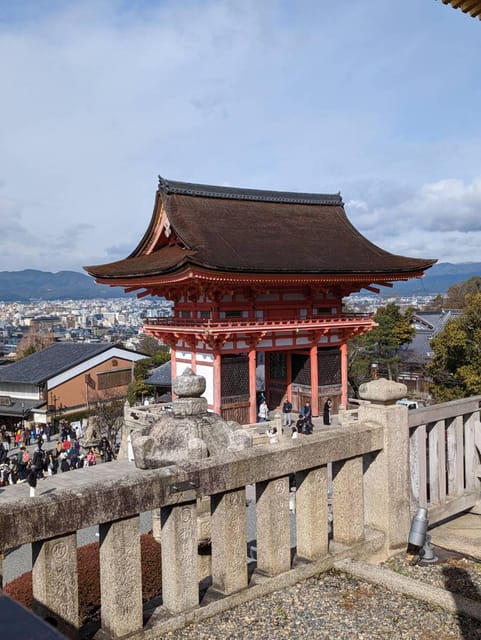
The final major stop is Kiyomizu Temple, one of Kyoto’s best-known Buddhist temples. It was originally built in the eighth century, and the main object of worship is Kannon Bodhisattva. Inside the precincts, you can see Buddhist statues and learn how the temple’s religious role differs from the shrine visited at the start.
The main hall’s wooden stage is the visual high point. It projects from the hillside and was built without nails, a detail that gives the structure both engineering interest and a strong sense of place. From the stage, you can look toward Koyasu Pagoda, the three-storied pagoda associated with prayers for an easy birth.
The view from Kiyomizu is one reason this tour earns its place on a first Kyoto visit. You get the famous scene, but with an explanation of what you are seeing and why the temple matters. The scheduled visit lasts about 35 minutes, so this is a focused introduction rather than an exhaustive exploration of every corner.
Kiyomizu can be very busy. The large number of people, especially around the main hall and popular viewpoints, may feel different from the quieter mood at Entokuin. That contrast is useful: you experience both a calm Zen temple and a major pilgrimage and sightseeing center in the same walk.
Pure water, iron shoes, and Jishu Shrine
Kiyomizu means pure water, referring to the stream that runs down from the mountain behind the temple. Many people line up to drink from the water, so you may need to wait if you want to take part.
The precincts also contain an iron stick and iron clogs donated to the temple. The iron stick is very heavy, and your guide may invite you to try lifting it. It is a small, physical detail that makes the visit more memorable than a list of dates and names.
Before the tour ends, your guide explains Jishu Shrine, associated with matchmaking. This final stop gives the visit a lighter note after the more formal discussion of Buddhist images, temple history, and wooden architecture.
The tour finishes after you leave the main hall area. It does not include transport back to your hotel or onward destination, so plan your next move before you arrive. Kiyomizu is well placed for continuing your own exploration of the eastern side of Kyoto, but the walk itself ends at the temple.
How the guide adds value
The most praised part of this experience is the teaching style. Guides use clear English, hand-drawn pictures, maps, and folders to explain subjects that can otherwise become a blur of unfamiliar names.
You may hear about the imperial family, nobility, samurai, shogunates, Shinto, Buddhism, philosophy, language, and Japanese aesthetics. The best guides adjust the balance to your interests. If you want only the basic story, you can keep moving. If you are curious about religion or politics, the private format lets you ask more involved questions.
This is also a good tour for families, though the historical material may be difficult for younger children. One family found that switching between Japanese and English helped the children follow along, but language arrangements should be confirmed when booking if that matters to you.
Some guides offer practical suggestions for the rest of your Kyoto visit. You might receive ideas for other walks, places to see, or food and sightseeing suggestions for a later destination. Those extras are not formal inclusions, but they can make the tour useful beyond its scheduled route.
Price, timing, and what you actually receive
The price is $80 per private group of up to five people. That is a strong value if you are traveling with several people, since the cost is divided across the group rather than charged per person.
For one or two people, the price is less of a bargain than a shared walking tour. You are paying for privacy, flexible questions, personal attention, and a route designed around your pace. The value is highest if you want context, not just directions to the next photo stop.
Temple admission fees are extra. Meals, drinks, insurance, and transport to and from the meeting point are also not included. Bring comfortable shoes, water, and enough time for the walk and temple visits.
You can cancel up to 24 hours before the activity for a full refund, and the reserve-now, pay-later option can help if your Kyoto schedule is still changing. Starting times depend on availability.
Who should book this Kyoto walk?
I would choose this tour early in a Kyoto stay. The explanations about shrine etiquette, Buddhist temples, and historical figures will help you understand other sites later, rather than seeing each one as a separate pretty building.
It suits first-time visitors, couples, families with older children, and anyone who prefers questions and conversation over a fixed group lecture. It is also a good match for people who want Gion and Kiyomizu but would like a quieter temple stop along the way.
You may want something else if you prefer to explore independently, dislike scheduled walking, or want to spend several hours inside Kiyomizu Temple alone. The route is also not an all-Kyoto survey. It focuses on the eastern historic district, with a strong emphasis on cultural explanation.
Should you book it?
Book this private walk if you want Kyoto to make sense, not merely look beautiful. The combination of shrine customs, Entokuin’s dry gardens, Yasaka-no-to, and Kiyomizu’s wooden stage gives you a fine first look at the city’s religious and historical character.
The strongest reason to choose it is the guide. Hisako and other guides associated with this experience have earned praise for patient explanations, personal drawings, and thoughtful answers. Since guides vary, the exact style may differ, but the private format gives you the best chance to shape the conversation.
At $80 for up to five people, it is particularly good value for a family or small group. Add temple admission and your own transport costs, wear comfortable shoes, and allow closer to two and a half hours. If those terms suit you, this is a smart, human-scale introduction to Kyoto’s eastern old town.
FAQ
Where does the tour begin?
It begins at the west gate, or red gate, of Yasaka Shrine, also called the Nishiromon Gate.
Where does the tour finish?
The tour finishes at Kiyomizu Temple, after the visit to the main hall area and the explanation of Jishu Shrine.
How long does the walking tour last?
The activity information gives a duration of two hours, while the detailed route describes a two-and-a-half-hour experience. Allow about two and a half hours so you have time for the listed visits, walking, photographs, and questions.
What is included in the price?
A live English-speaking guide is included. The private group price is $80 for up to five people.
Are temple admission fees included?
No. Admission fees to the temples are not included. Meals, drinks, insurance, and transport to and from the meeting point are also excluded.
What should I bring?
Bring comfortable shoes. The tour involves walking between Yasaka Shrine, Entokuin, Yasaka Koshin-do, the pagoda viewpoint, and Kiyomizu Temple.
Just added around Kyoto
- Sekka Cotton Furoshiki Class★ 5.0 · 19 reviews
- Kyoto Sword Experience – includes Museum Ticket/Ninja Experience★ 4.5 · 149 reviews
- Scenic Green Tea Fields of Hidden Kyoto & Local Tea Exp (Private)★ 5.0 · 32 reviews
- Secret Eastern Kyoto Biking Adventure★ 5.0 · 44 reviews
- Private Sake Tasting in Central Kyoto with Sake Sommelier★ 5.0 · 32 reviews
- Samurai School in Kyoto: Samurai for a Day★ 5.0 · 202 reviews
- SHIRAKAWA Japanese Culture Experiences with private English staff★ 5.0 · 16 reviews
- A Privately Guided Photoshoot in Beautiful Kyoto by a Pro★ 5.0 · 18 reviews
Historical Tours, compared.
Imperial Palace and Shogun Historical Walking Tour
Our verdict →
World Heritage Kyoto & Nara Uji Authentic Matcha Experience
Our verdict →
Kyoto Gion: 2-Hour Geisha Culture & History Walking Tour
Our verdict →
Hiroshima Historical Walking Tour – Why A-Bomb was Dropped
Our verdict →
Yanaka Walking Tour: Historic and Traditional District of Tokyo
Our verdict →
Shinjuku Historical Walking Tour & Secret Backstreets
Our verdict →
Mt. Fuji Heritage Tour: Traditional Villages, Lakes & Shrine
Our verdict →Browse the lists this tour appears in