
Reviewed · SAMURAI EXPERIENCES
Kyoto: Samurai Sword & Kimono Action Filming Experience
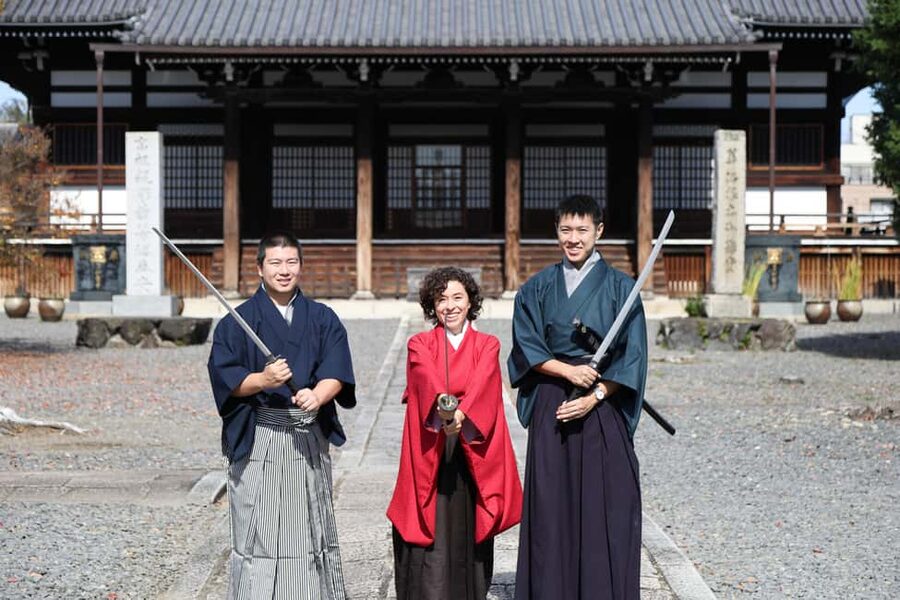
The unusual part here is the setting: you learn samurai swordplay inside Myokaku-ji Temple, a place associated with Sengoku-era warlords, including Nobunaga Oda. I like the small six-person limit and the fact that the instructors, Kesuke Irie and Kazuya Naito, are professional period-drama actors. I also like that the session ends with your own filmed action scene, not just a quick photo in costume.
The main consideration is that this is a short, playful introduction rather than a serious martial-arts lesson. The sword is a fake prop, the moves are choreographed, and you need to be comfortable with light physical activity. Pregnant women, children under five, people with back problems or other pre-existing medical conditions, and people over 95 should not take part.
Key points at a glance
- A real temple setting: Meet at the Myokaku-ji Dojo, just inside the temple gate, for a sword activity in a historic religious setting.
- Two professional actor-instructors: Kesuke Irie and Kazuya Naito lead the lesson and perform the samurai demonstration.
- Kimono rental included: You can learn about traditional kimono dressing and wear the outfit during the session.
- A six-person maximum: The small group leaves room for individual correction and makes the filming easier to manage.
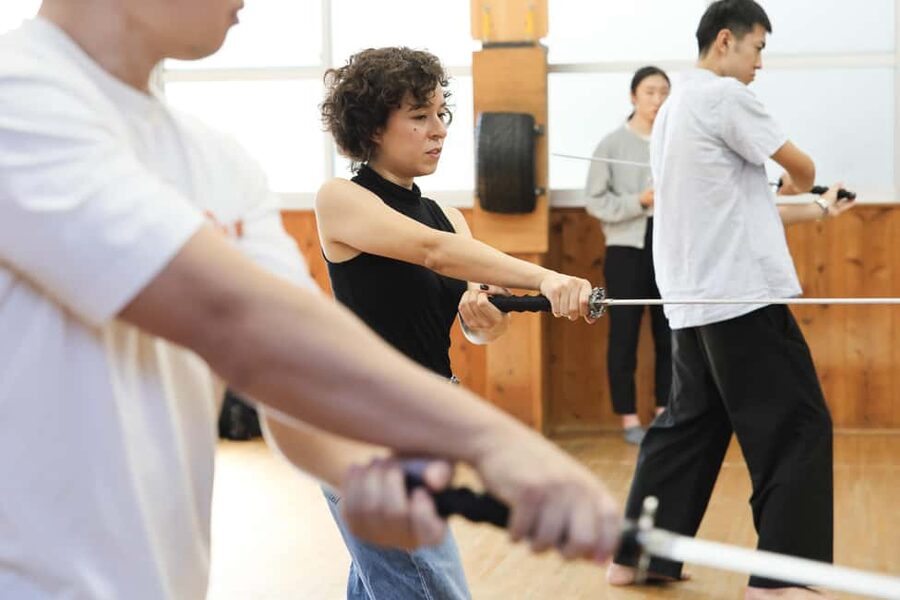
- Your own action scene: After practicing moves such as makkogiri and kesagiri, you perform a choreographed sequence on camera.
- A useful Kyoto souvenir: You receive downloadable performance footage and can also bring your own camera for photos and video.
Entering Myokaku-ji Temple for a samurai lesson
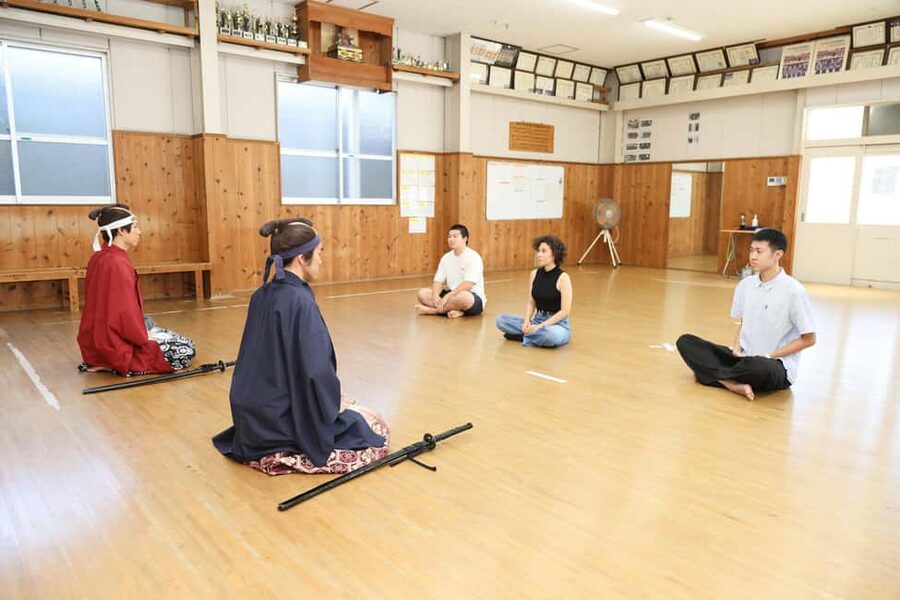
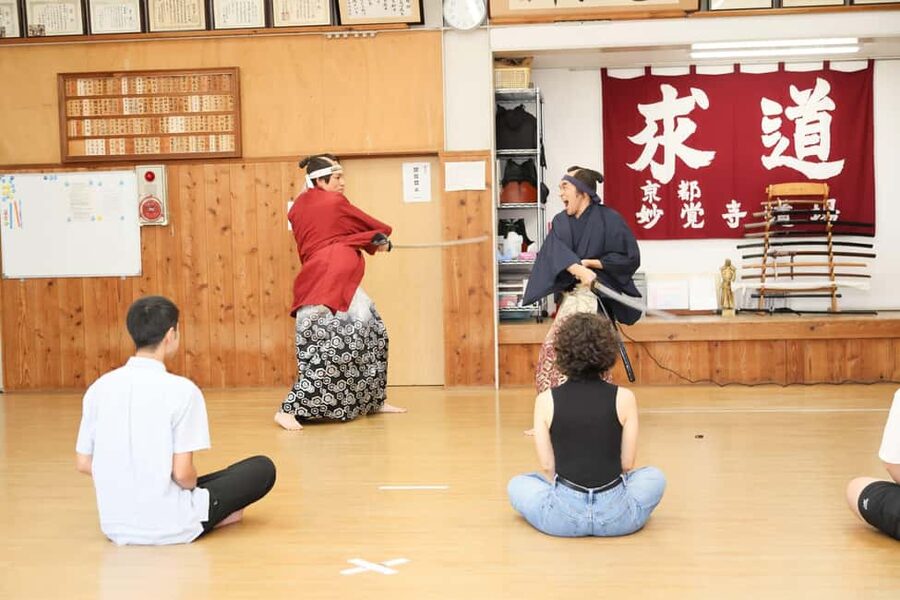
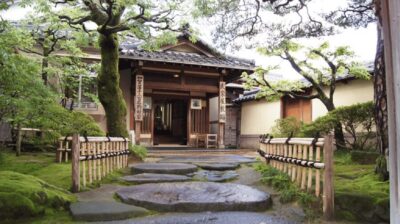
This experience begins at the Myokaku-ji Dojo, located to the left after you enter through the main gate of Myokaku-ji Temple. Transportation is not included, so you’ll need to make your own way to the temple. Take a moment to get your bearings before the session starts, since the meeting point is inside the grounds rather than at a separate street address.
The setting gives the activity more character than a standard costume studio. Myokaku-ji is presented as a historic temple where several Sengoku warlords stayed, including Nobunaga Oda about 400 years ago. You are not simply posing against a printed backdrop. You are handling a prop sword and practicing staged movements in a place tied to Japan’s samurai era.
That does not make the lesson a historical reenactment in the strict sense. The activity is designed for entertainment and filming, with choreographed swordplay and professional performers. Still, the temple setting helps explain why this experience can feel more memorable than a generic dress-up session.
The group is limited to six people. That matters here. Sword movements need room, and filming works better when the instructor can watch each person rather than manage a large crowd. A small group also makes it easier to ask questions in English or Japanese and get help with posture and timing.
More Kimono Experiences in Kyoto
- Kimono Tea Ceremony at Kyoto Maikoya, NISHIKI
★ 5.0 · 911 reviews - Kyoto: Kimono Rental with Hairstyling and Accessories
★ 4.8 · 653 reviews - Kyoto: Kimono Tea Ceremony at Orizuruya Gion
★ 4.9 · 618 reviews
Kimono dressing before the action begins
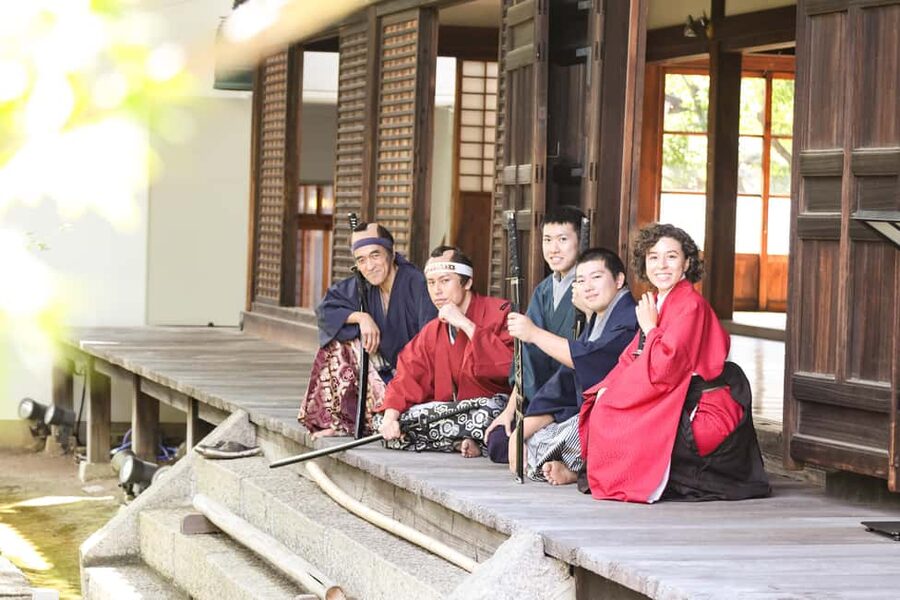
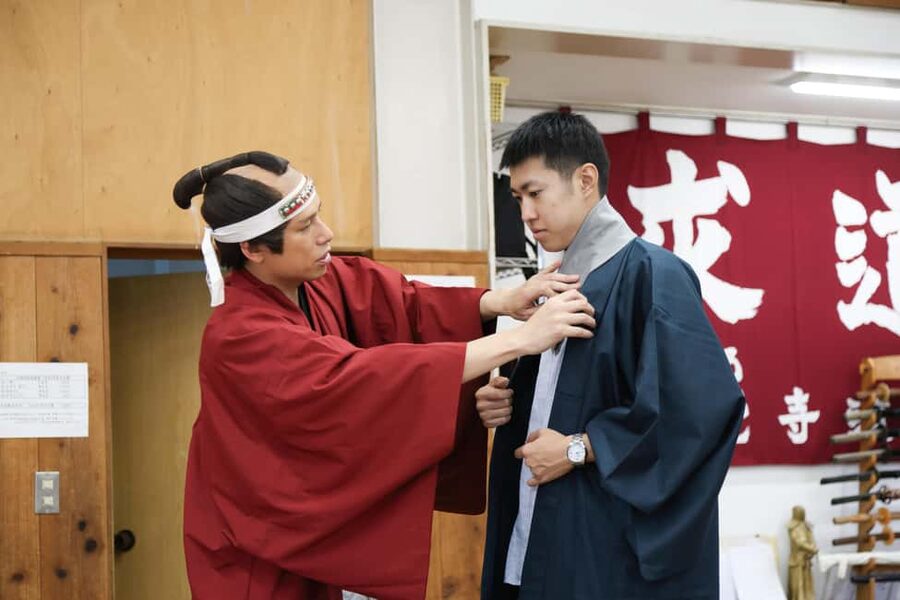
The kimono portion is part of the experience, with rental included in the $127 price. You learn about the traditional art of kimono dressing and get to wear one during the activity. The outfit gives the filming session a stronger period-drama feel, especially when paired with the sword choreography.
You should arrive in comfortable clothing that works for physical activity. This is important even though the session lasts only 70 minutes. You will be standing, moving your arms, practicing cuts, and repeating actions for the camera. Avoid treating the kimono as a reason to wear stiff or restrictive clothes underneath.
The kimono is also one reason this activity suits people who want more than sword practice. You get three elements in one short visit: traditional clothing, an introduction to samurai-style movement, and a recorded performance. If your main interest is formal kimono culture, this will be too brief and action-focused. If you want a fun way to connect clothing and cinema, it fits better.
There is a practical tradeoff. Costume dressing takes time from the actual sword lesson, and 70 minutes is not long. You should expect an efficient introduction rather than a long explanation of fabric, etiquette, or regional kimono styles. The value is in wearing the outfit and using it in the filmed scene.
Learning makkogiri and kesagiri with actor-instructors
Once dressed, you receive instruction in holding and wielding the sword. The lesson includes techniques called makkogiri and kesagiri, taught as choreographed movements for a samurai-style fight.
You are not being trained for actual combat. The wording around sword fighting can sound more serious than the activity itself, but the sword is a fake one and the goal is safe performance. Think of it as an introduction to stage swordplay, where body position, timing, and dramatic movement matter more than force.
The instructors are Kesuke Irie and Kazuya Naito, both described as actors who have appeared in Japanese films and television programs. Their professional background is useful because this activity depends on performance as much as technique. A good instructor needs to show the movement clearly, correct your timing, and help you look convincing on camera.
English and Japanese instruction is available. That does not mean every explanation will be long or technical, but it removes a major barrier for visitors who do not speak Japanese. The teaching is designed to be approachable, and the recorded scene gives you a reason to keep practicing until the motions feel natural.
You should expect some laughter. The activity asks you to act like a samurai, which can feel awkward for the first few minutes. The best approach is to commit to the role rather than worry about looking serious. You do not need stage experience. You do need to follow directions, keep your movements controlled, and accept that the final video will be part lesson and part comedy.
Watching a professional chambara performance
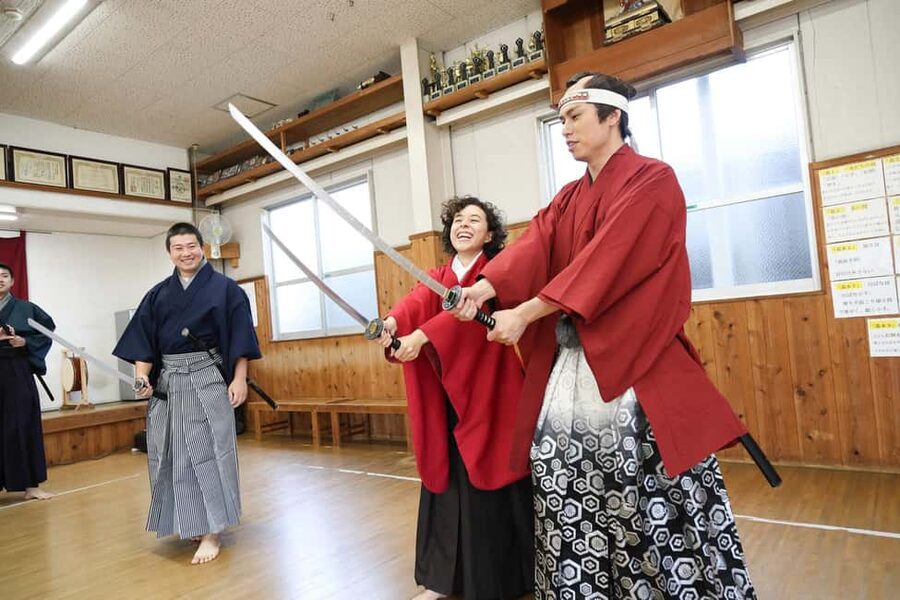
Before you perform, the instructors demonstrate professional chambara swordplay. Chambara is Japanese period action cinema, built around stylized sword fights, dramatic poses, and carefully timed movements.
This demonstration gives you a useful reference point. You can see how a simple cut becomes part of a larger sequence, and you can watch how professional actors use pauses, eye contact, and body position. The gap between their performance and your first attempt is part of the fun, not a reason to feel self-conscious.
The demonstration also adds value to the $127 price. You are not only renting a costume and waving a prop sword. You are meeting performers who use these skills in period dramas, then applying a simplified version of their work yourself.
The session remains short, so do not expect a full stage show or a long temple tour. The focus is on getting you ready for the filming segment. One useful detail from the experience is the chance to see part of the temple as well, which adds a quiet cultural pause to an otherwise energetic activity.
More Samurai Experiences in Kyoto
- Kyoto Samurai Experience
★ 5.0 · 1,294 reviews - Kyoto: Kendo and Samurai Experience with Uniform and Gear
★ 4.9 · 815 reviews - Kyoto: Samurai Sword Class by Experts in Traditional Arts
★ 4.9 · 657 reviews - Skip the lines Basic Ticket at SAMURAI NINJA MUSEUM KYOTO
★ 4.5 · 632 reviews
Filming your own samurai scene
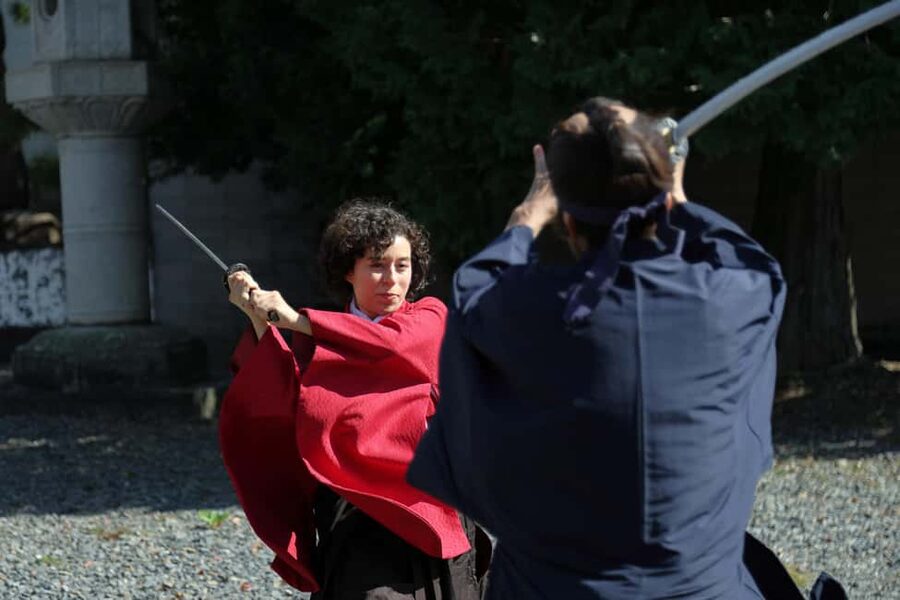
The final swordplay session is the part most likely to make this activity memorable. You perform the moves you have learned while the instructors record the action sequence. You may also use your own camera during the experience, so bring one if you want additional photos or video.
The footage is available for download afterward. That is a better souvenir than a single posed portrait because it shows the movement, the costume, the setting, and your reaction to the performance. It also gives families a way to share the experience with people at home.
Expect the finished result to be a playful action clip, not a polished film production. The instructors can guide your movements and record the scene, but your performance will depend on how willing you are to act. If you stand stiffly and treat it like a normal photo session, the video may feel flat. If you make the cuts clear and give the scene some energy, the result should be more entertaining.
The small group helps here. With no more than six participants, the instructors can organize the sequence without the crowd becoming unwieldy. Families and pairs may appreciate this format, and a parent can watch a child or teenager take part. The activity is not suitable for children under five, and anyone with a medical condition should consider the physical demands before booking.
Your own camera is welcome, but you should still follow the instructors’ directions about when and where to record. The included photography and video service uses the customer’s camera, while the downloadable performance footage provides the main take-home record.
What $127 buys you in 70 minutes
At $127 per person, this is not a bargain activity if you judge it only by time. Seventy minutes passes quickly, and the session does not include transport or a meal. You are paying for a specialized setting, costume rental, bilingual instruction, a professional performance, filming, and downloadable footage.
The price makes more sense if you would otherwise pay separately for a kimono experience, a cultural activity, and a themed photo session. Here, those pieces are combined. The value is strongest for people who care about the final video and want an activity that feels personal rather than passive.
It is less suitable if you want serious sword training or a long explanation of samurai history. You will learn basic stage movements, not a martial-arts discipline. You also should not expect a full-day cultural program. This is a compact Kyoto activity that can fit around temple visits and other sightseeing.
Free cancellation up to 24 hours before the start gives you some planning room, and you can reserve now and pay later. Check the available starting times when booking, since the activity has a fixed 70-minute format and limited group size.
Who will enjoy this Kyoto activity most
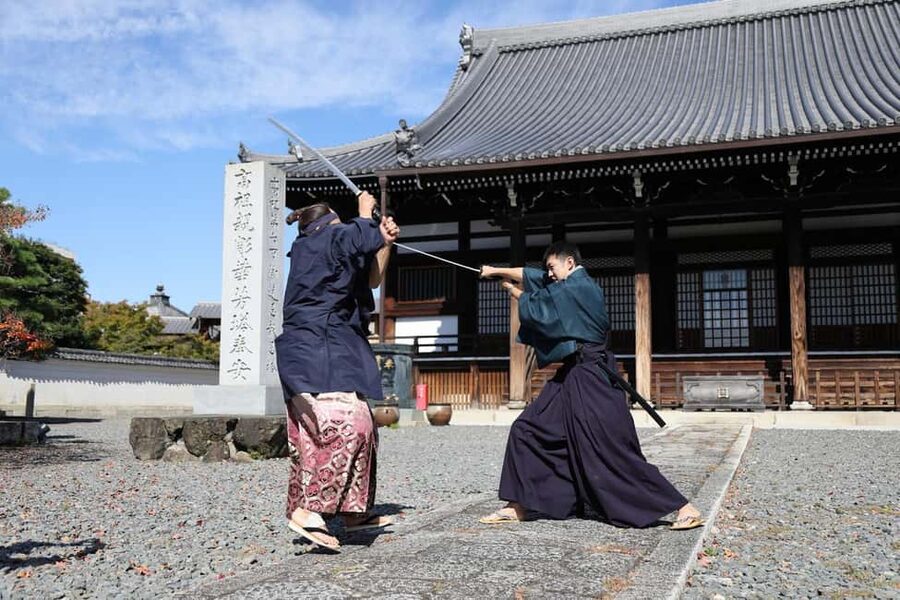
I would recommend this for families with older children, couples, friends, and solo visitors who are happy to perform in front of a camera. The atmosphere is intentionally light, and the instructors are expected to be patient, funny, and encouraging. That helps if you are nervous about acting.
It is especially good for a teenager who has outgrown standard sightseeing but still wants a distinctly Japanese experience. A parent and teenager can take part together, or one family member can watch while another joins the scene.
You should have a reasonable level of comfort with standing and moving your arms. Comfortable clothes are required, and the activity is not suitable for pregnant women, people with back problems, people with pre-existing medical conditions, or people over 95.
I would not choose it for a visitor seeking quiet temple contemplation. The setting is calm and historic, but the activity itself involves costumes, instructions, sword movements, and filming. It is also not the right choice for anyone who wants to handle a real sword. The prop is fake and the action is staged.
Practical advice before you book
Plan your route to Myokaku-ji Temple in advance because transport is not included. Once inside the main gate, look for the Myokaku-ji Dojo on the left. Arriving with enough time to find it will make the start less rushed.
Wear clothes that allow easy movement. You may be wearing a kimono over them, so bulky layers could be uncomfortable. Bring a camera if you want your own photos and video, but remember that the experience already includes photography and recording with your camera, along with downloadable performance footage.
Keep your expectations realistic. The strongest part is the combination of temple setting, actor-led instruction, costume, and a finished action clip. The weakest part is the limited time, especially if you want detailed cultural instruction or serious sword practice.
The activity has a 4.8 rating from 78 bookings, and the praise is consistent around the same points: the instructors are entertaining and patient, the filming is fun, and the finished footage becomes a memorable souvenir. Those strengths match the design of the experience. It works because you are doing something, not simply watching someone else perform.
Should you book the Myokaku-ji samurai experience?
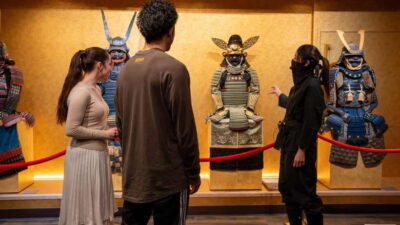
Book it if you want a lively, camera-ready Kyoto activity with a strong sense of place. The temple, kimono, professional chambara demonstration, and small group make this more personal than a basic costume rental. The downloadable video is a real advantage, especially for families and anyone who enjoys sharing trip memories.
Skip it if you want a long historical lecture, authentic combat training, or a quiet visit to a temple. At $127 for 70 minutes, the value depends on enjoying the performance and wanting the finished footage.
For most visitors who are willing to be a little silly, this is a well-focused way to play samurai for an hour. Follow the instructors, commit to the role, and let the camera capture the imperfect swordplay. That is where the experience earns its price.
FAQ
Where does the samurai sword experience take place?
It takes place at Myokaku-ji Temple in Kyoto, at the Myokaku-ji Dojo. After entering through the main gate, gather at the dojo on the left.
How long does the activity last?
The experience lasts 70 minutes. Available starting times vary, so check the schedule when selecting your date.
Is the kimono included in the price?
Yes. Kimono rental is included, and you learn about traditional kimono dressing before taking part in the activity.
Are the swords real?
No. The sword used for the activity is a fake prop. You learn choreographed movements, including makkogiri and kesagiri, for a staged performance.
Can I take photos or videos?
Yes. You may bring your own camera, and photography and video recording with the customer’s camera are included. Downloadable performance footage is also provided.
Is the activity available in English?
Yes. Instruction is available in Japanese and English. The group is limited to six participants.
Just added around Kyoto
- Sekka Cotton Furoshiki Class★ 5.0 · 19 reviews
- Kyoto Sword Experience – includes Museum Ticket/Ninja Experience★ 4.5 · 149 reviews
- Scenic Green Tea Fields of Hidden Kyoto & Local Tea Exp (Private)★ 5.0 · 32 reviews
- Secret Eastern Kyoto Biking Adventure★ 5.0 · 44 reviews
- Private Sake Tasting in Central Kyoto with Sake Sommelier★ 5.0 · 32 reviews
- Samurai School in Kyoto: Samurai for a Day★ 5.0 · 202 reviews
- SHIRAKAWA Japanese Culture Experiences with private English staff★ 5.0 · 16 reviews
- A Privately Guided Photoshoot in Beautiful Kyoto by a Pro★ 5.0 · 18 reviews
Samurai Experiences, compared.

Browse the lists this tour appears in