
Reviewed · FOOD TOURS
Kyoto: Nishiki Market and Depachika Food Tour with a Local
Kyoto’s food culture comes into focus quickly on this compact walk. You begin in Daimaru’s underground Depachika food hall, then move to Nishiki Market for local specialties before pausing at Nishiki-Tenmangu Shrine. I like the mix of polished department-store food and old-school market stalls, and I like that the tour includes actual tastings rather than only explanations. The possible snag is timing: the experience is sold as two hours, while the listed stop lengths add up to three, so confirm the day’s pace with your guide.
I also like the small maximum of nine people. That gives you a better chance to ask about unfamiliar foods, as guests did with guides such as Boris, Ai, Mao, and Richard. Just arrive early, wear good walking shoes, and carry some cash for extra purchases because the included samples are limited.
Key points at a glance
- Start underground at Daimaru Kyoto: The Depachika food hall offers a neat introduction to Japanese sweets, prepared food, local products, and international specialties.
- Taste four named foods: The included items are yuba sashimi, a soy milk donut, Nishiki gyoza, and hamo fish tempura.
- See Kyoto’s Kitchen with help: Nishiki Market sells food, produce, knives, cookware, and regional specialties, but a guide helps explain what you are seeing.
- Add a quiet shrine stop: Nishiki-Tenmangu provides a short cultural pause beside the market, with a hand-cleansing fountain and Shinto details.
- Keep the group small: The tour is limited to nine participants and operates in English.
- Plan for a fast, food-focused outing: At $42 per person, the value is strongest if you want an organized introduction rather than a long meal or a full-day cultural tour.
Why start at Daimaru’s underground food hall?
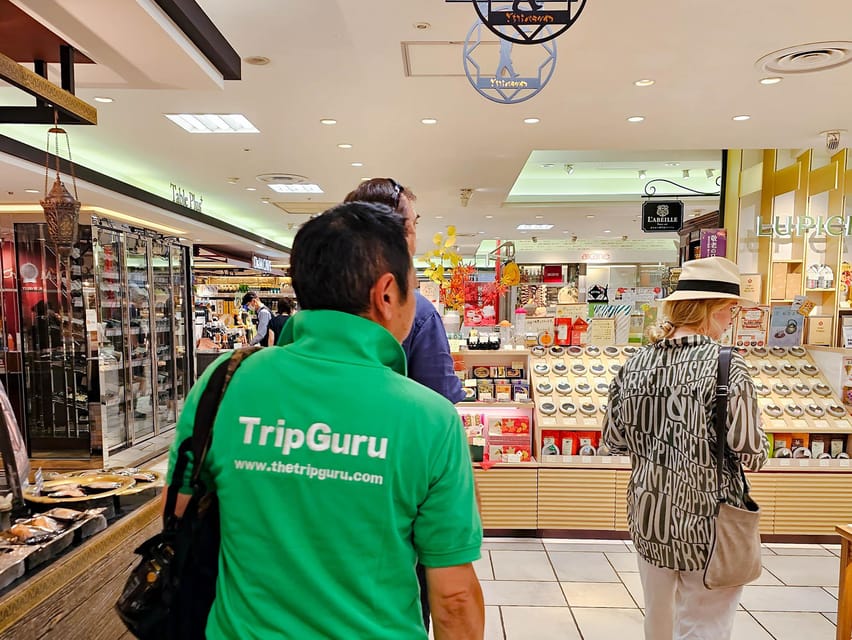
The first stop is Daimaru Kyoto, where your guide takes you below street level into a Depachika. These department-store food halls can feel confusing at first. Counters display sweets, boxed meals, delicacies, and carefully arranged foods, often with little English explanation. That is where a local guide earns the fee.
You are not simply walking past shelves. The goal is to learn how the hall works and sample selected foods. The experience includes yuba sashimi, made from tofu skin, and a soy milk donut. These two items give you a useful contrast: one is delicate and traditional, while the other is familiar in shape but tied to soy-based Japanese cooking.
The setting also helps you see a side of Kyoto that a street-market visit can miss. Daimaru presents food with precision and ceremony, while Nishiki later feels more direct and informal. One guest described spending extra time at Daimaru because there was so much to see. That is easy to understand, but it can also make the two-hour schedule feel tight.
Your guide may point out what is worth buying and what is better admired. Ai, one of the guides praised for this part of the outing, helped explain choices such as boxed meals and expensive fruit. That sort of advice matters because a Depachika can tempt you into costly impulse purchases very quickly.
More Food Tours in Kyoto
- Kyoto Night Foodie Tour in Gion (9+ dishes + 6 Sake tastings)
★ 5.0 · 1,762 reviews - Kyoto Nishiki Market Food and Culture Walking Tour
★ 5.0 · 412 reviews - Kyoto: Gion Food Tour 13 Dishes at 4 Eateries
★ 5.0 · 408 reviews
Moving through Nishiki Market
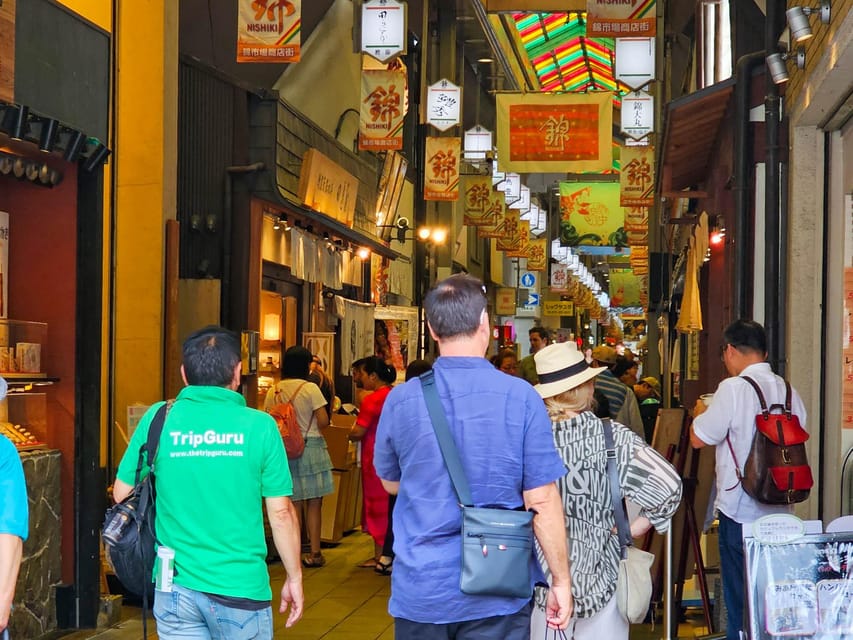
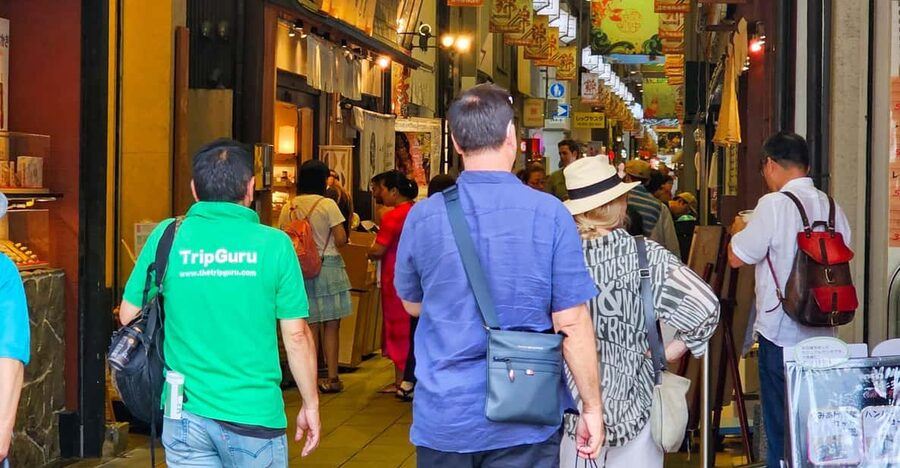
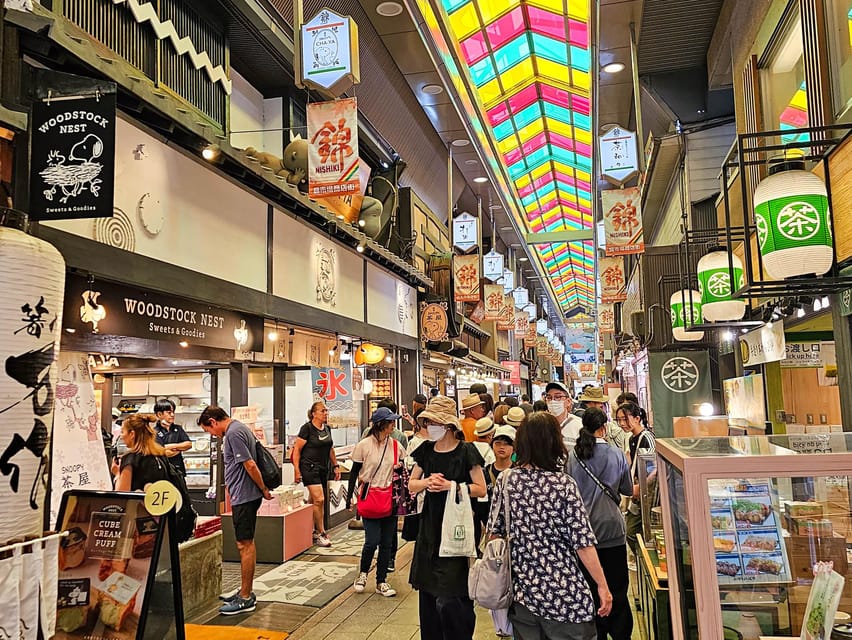
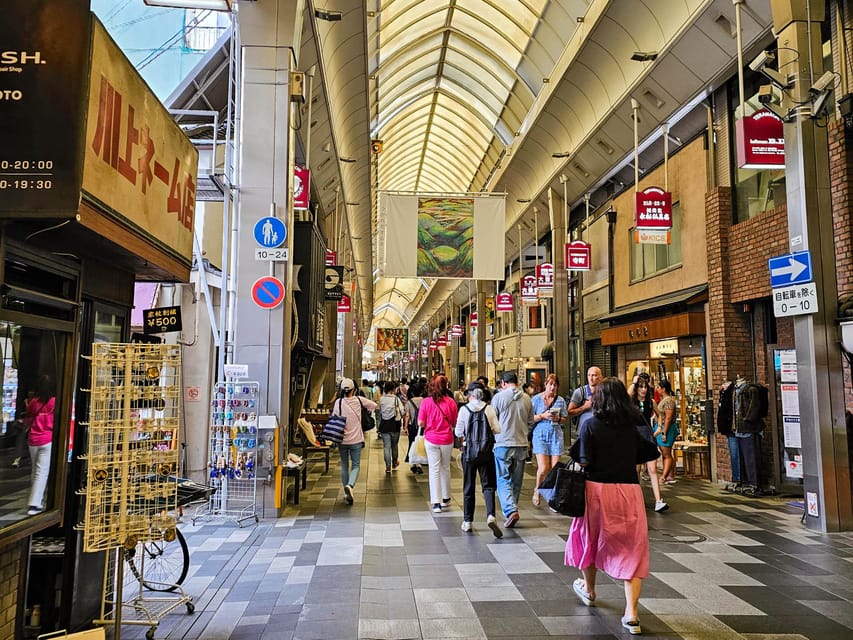
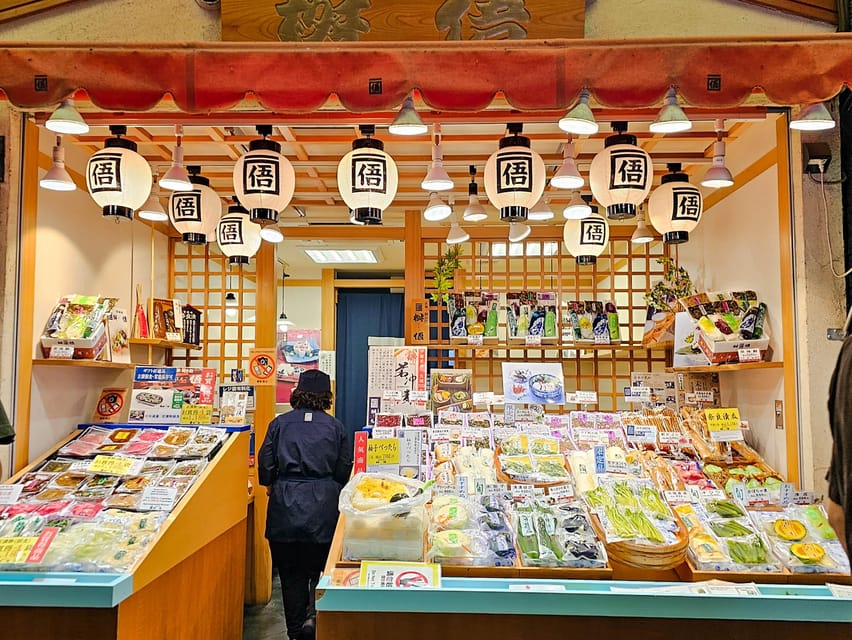
From Daimaru, the route continues to Nishiki Market, often called Kyoto’s Kitchen. The covered market stretches through a narrow shopping passage lined with food shops and specialty stalls. You may see seasonal ingredients, pickles, sweets, seafood, knives, cookware, and ready-to-eat snacks in a single short walk.
The market is not a museum. It is a working commercial street, and the passage can feel crowded, especially at busy times. You will need to keep moving, watch your footing, and stay close enough to hear your guide. This is one reason the small group helps.
The market’s appeal lies in its variety. You can look at ingredients used in Kyoto cooking, then turn to a shop selling kitchen tools or a family-run specialty. The guide provides context about how foods are eaten, what ingredients mean, and which items are connected with Kyoto.
Included tastings here are Nishiki gyoza and hamo tempura. Hamo is a local eel-like fish that requires careful preparation because of its fine bones. You may not recognize it from the name alone, which is exactly why having someone explain the dish makes the tasting more useful.
The food selection is fixed enough to give the tour structure, but the guide can also respond to the group. Boris adjusted the food choices to suit a child with a more selective palate while still offering the adults something adventurous. That is a good sign for families, though you should not expect a separate children’s menu.
Several guides have been praised for giving practical food advice. Richard was noted for taking guests to places they might not have tried alone, while Jasmine helped explain the market’s food and customs. Ai was also praised for making shoppers comfortable and suggesting what to buy after the formal tasting ends.
Still, keep your expectations clear. This is a tasting walk, not an unlimited eating tour. Extra food and drinks cost more, and you are responsible for personal purchases. If you arrive hungry, you may want to budget for something additional at the market.
A short pause at Nishiki-Tenmangu Shrine
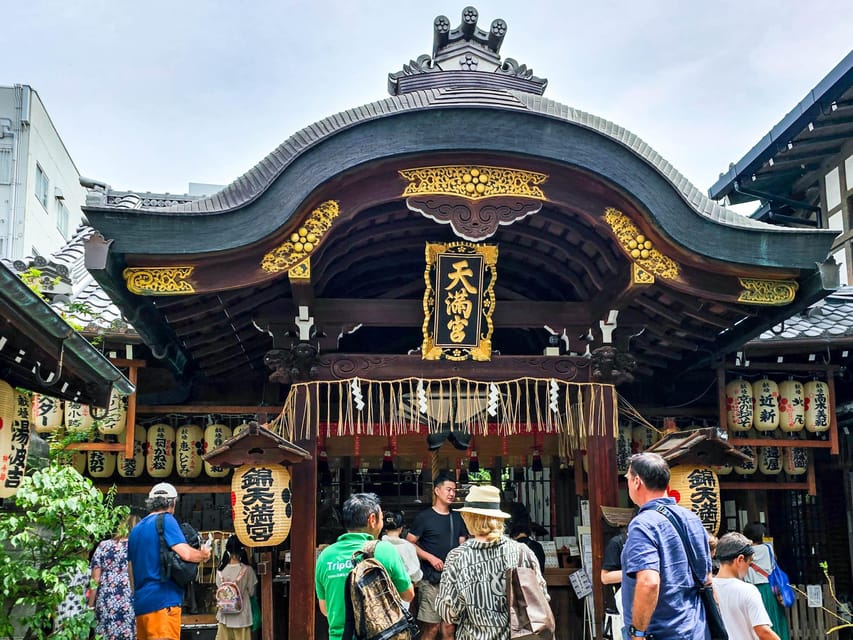
After the food stalls, the route reaches Nishiki-Tenmangu Shrine. This small Shinto site offers a change of pace from the market’s close quarters. It is dedicated to the deity of learning, and the visit introduces basic shrine customs without taking you far from the shopping streets.
Your guide should explain the hand-cleansing fountain and the meaning of different shrine features. You may also have a moment to look at the architecture and enjoy a quieter setting before the tour ends.
I like this stop because it keeps the experience from becoming only a series of snacks. Kyoto food is tied to custom, season, religion, and daily life, and even a brief shrine visit gives that broader setting. The shrine portion is not a full historical tour, though. If you want detailed religious history, you will need a longer visit elsewhere.
The official route gives 30 minutes to the shrine. The stated schedule also lists 90 minutes at Daimaru and 60 minutes at Nishiki Market, which does not match the advertised two-hour duration. Treat those figures as approximate and ask your guide at the start how much time is planned at each stop.
What the included tastings are really worth
At $42 per person, the tour’s value depends on what you want from a food experience. You are paying for four named tastings, an English-speaking guide, explanations, and help navigating two places that can be intimidating on your own.
The food alone will not equal the full price of the tour, and additional drinks are not included. If you are comfortable reading Japanese food labels, choosing stalls, and asking questions on your own, you may prefer to spend the money directly at Nishiki Market.
I think the price is reasonable for a first visit to Kyoto, particularly if you have only a morning or afternoon available. A guide helps you avoid wandering past foods you do not recognize and gives meaning to dishes that might otherwise seem like attractive but mysterious displays.
The best value comes from the information. Guests have praised guides such as Vincent, Mao, Boris, Kats, Richard, and Yoku for explaining food, culture, ingredients, and local customs. The quality of the experience depends on the guide assigned that day, but the repeated strength is the human side of the tour: questions are welcomed, choices can be explained, and the market feels easier to approach.
More Market Tours in Kyoto
- Nishiki Market Brunch Walking Tour (7 Tastings + Brunch)
★ 5.0 · 1,355 reviews - Kyoto: Nishiki Market Tea Ceremony with Koto Performance
★ 4.8 · 294 reviews - Kyoto: Nishiki Market Brunch Walking Tour-7 Tastings+Brunch
★ 4.8 · 197 reviews - Kyoto: Local Food Tasting Tour at the Nishiki Market
★ 4.7 · 135 reviews
How the small group changes the experience
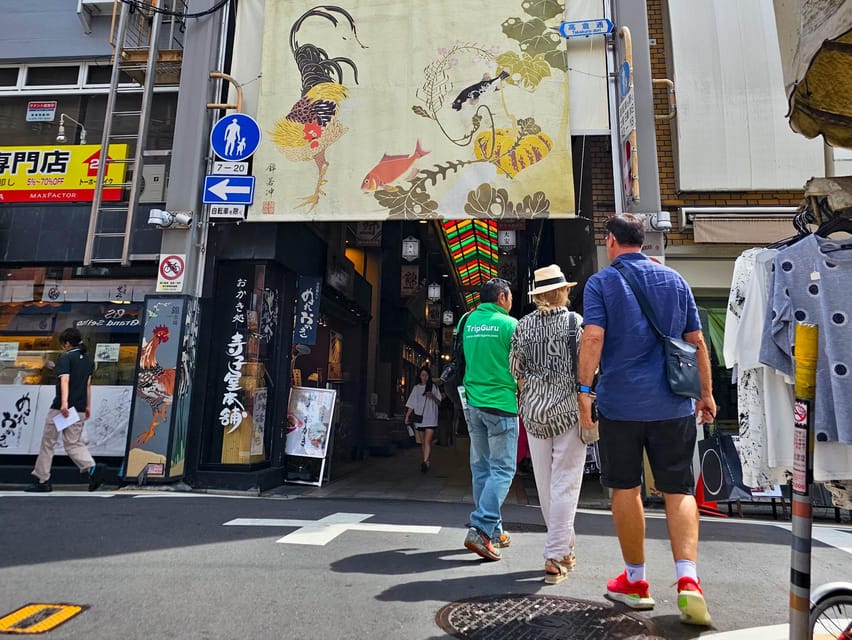
The group limit is nine people. That is small enough for a guide to hear questions and keep the group together in narrow market lanes, though it is not a private tour.
Small groups are especially useful here because food preferences can vary. You may want to try hamo while another person prefers a milder snack. A good guide can explain the options and help the group make sensible choices without pressuring anyone to buy.
One drawback is that the market itself may be crowded even when the tour group is small. A narrow passage and a popular food stall can still slow the walk. Also, a two-hour outing leaves little room for a long stop at every shop.
A scheduling mix-up was handled flexibly by Mao on one occasion, and another guide patiently allowed a group to linger at Daimaru. That suggests some room for human judgment, but do not rely on a late start or an extended shopping session. Guides wait no more than 10 minutes at the meeting point.
Meeting point, walking, and practical planning
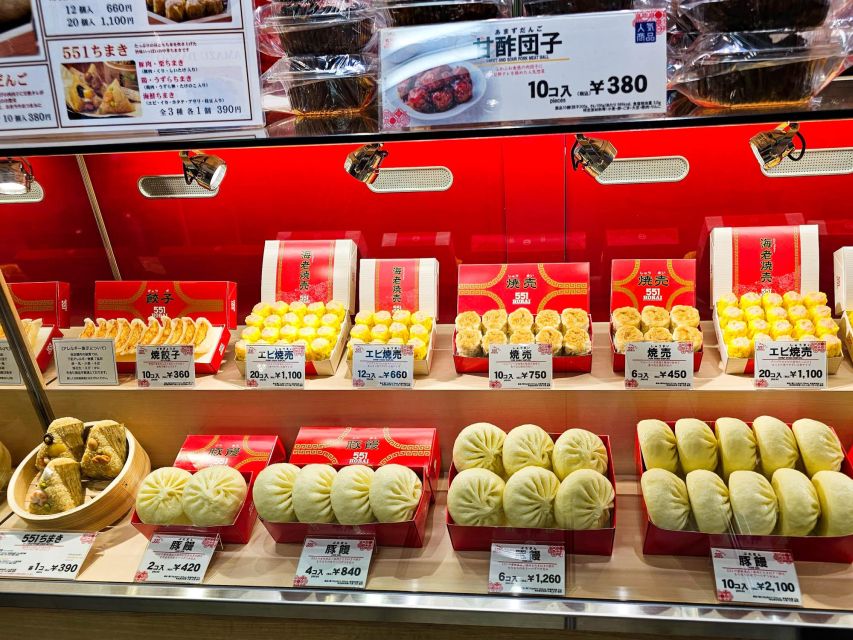
You meet at Apple Kyoto. Look for a guide wearing a TripGuru shirt or holding a TripGuru sign. Arrive at least 10 minutes early, especially if you are coming during a busy morning when traffic can take longer than navigation apps suggest.
The tour finishes at Kyoto-Kawaramachi Station, which is useful if you want to continue shopping, visit another central Kyoto sight, or return by train. Hotel pickup and drop-off are not included, so you need to reach Apple Kyoto on your own.
Wear comfortable shoes. Nishiki Market involves steady walking and standing, and the passage can be crowded. Carry a camera if you enjoy photographing food displays, but be considerate around vendors and other shoppers.
Cash is recommended. The tour includes tastings, but extra snacks, drinks, souvenirs, knives, sweets, and cookware are your responsibility. You may find plenty to buy, especially if your guide points out a specialty you would have missed.
The experience is not suitable for pregnant women or people with mobility, heart, or respiratory problems. The supplied information does not give a detailed accessibility plan, so contact the provider before booking if you have any health or mobility concern.
You can cancel up to 24 hours before the tour for a full refund, and the reserve-now, pay-later option keeps your plans flexible. Multiple start times are offered, subject to availability.
Which guide style will suit you?
The guide changes, so you cannot select a particular personality from the information provided. Past guides have included Vincent, Jasmine, Mao, Boris, Ai, Kats, Katz, Richard, Yoku, Simon, Brook, and Miya.
The most useful guide for you will be one who explains unfamiliar food without making the experience feel like a lecture. Boris was especially good at connecting food with culture and history, while Richard was praised for practical recommendations. Ai helped guests understand both the food hall and market shopping, and Mao combined food explanations with shrine customs.
If you are curious and willing to ask questions, this tour should give you more than a silent walk from stall to stall. If you prefer to browse at your own speed, the group format may feel restrictive, especially when you want to linger or make purchases.
One participant felt the tasting plan was not clear enough and wished the guide had explained what foods were scheduled. That is a useful point. At the start, ask which tastings are included and when you will receive them. It can prevent confusion and help you save room for the foods you most want to try.
Who should book this Kyoto food walk?
I would book this tour if you are new to Japanese cuisine, have only two hours free, or feel unsure about ordering food in a market setting. It is also a good first activity in Kyoto because it gives you ideas for what to eat later and points you toward areas you can revisit independently.
Families may enjoy the short format, particularly if children are open to trying new foods. A guide can help adjust choices, though picky eaters should not assume every included item will suit them.
Food-focused visitors who want a long meal, many tastings, or time to shop at every stall should choose a longer experience. The tour offers a useful sample, not a complete survey of Kyoto cooking.
FAQ
How long is the Kyoto food tour?
The experience is advertised as two hours. The listed route gives 90 minutes at Daimaru, 60 minutes at Nishiki Market, and 30 minutes at Nishiki-Tenmangu Shrine, so confirm the exact timing with your guide.
Where does the tour begin?
The meeting point is Apple Kyoto. Your guide will be wearing a TripGuru shirt or holding a TripGuru sign.
Where does the tour finish?
The tour finishes at Kyoto-Kawaramachi Station.
What food is included?
The included tastings are yuba sashimi, a soy milk donut, Nishiki gyoza, and hamo fish tempura.
Are extra food and drinks included?
No. Additional food, drinks, and personal purchases are not included in the $42 price.
Is the tour conducted in English?
Yes. The tour has a live English-speaking guide.
How many people are in the group?
The tour is limited to nine participants.
What should I bring?
Bring comfortable shoes, a camera if you want to photograph the market, and cash for extra purchases. Arrive at least 10 minutes early.
Should you book it?
Book it if you want a guided introduction to Kyoto food without giving up half a day. The combination of Daimaru’s Depachika, Nishiki Market, four specified tastings, and a shrine visit gives you a useful mix of food and culture for $42.
Skip it if you want unlimited sampling, a private guide, or complete control over how long you spend at each shop. The timing needs clarification, and the included food is only a starting point.
For most first-time Kyoto visitors with limited time, I think the tour is a sensible choice. You get help with unfamiliar dishes, a small group, and a quick education in where to keep eating after the guide says goodbye.
More Food & Drink in Kyoto
- 3-Hour Kyoto Insider Sake Brewery Tour with Tastings & Pairings
★ 5.0 · 917 reviews - Arashiyama Bamboo, Temple, Monkeys, or Secret Sake Brewery
★ 4.8 · 886 reviews - Kyoto: Insider Sake Brewery Tour with Sake and Food Pairing
★ 5.0 · 704 reviews - Kyoto Sake Brewery & Tasting Walking Tour
★ 5.0 · 623 reviews
Just added around Kyoto
- Sekka Cotton Furoshiki Class★ 5.0 · 19 reviews
- Kyoto Sword Experience – includes Museum Ticket/Ninja Experience★ 4.5 · 149 reviews
- Scenic Green Tea Fields of Hidden Kyoto & Local Tea Exp (Private)★ 5.0 · 32 reviews
- Secret Eastern Kyoto Biking Adventure★ 5.0 · 44 reviews
- Private Sake Tasting in Central Kyoto with Sake Sommelier★ 5.0 · 32 reviews
- Samurai School in Kyoto: Samurai for a Day★ 5.0 · 202 reviews
- SHIRAKAWA Japanese Culture Experiences with private English staff★ 5.0 · 16 reviews
- A Privately Guided Photoshoot in Beautiful Kyoto by a Pro★ 5.0 · 18 reviews
Food Tours, compared.
Shinjuku Food Tour (13 Dishes at 4 Local Eateries)
Our verdict →
Kyoto Night Foodie Tour in Gion (9+ dishes + 6 Sake tastings)
Our verdict →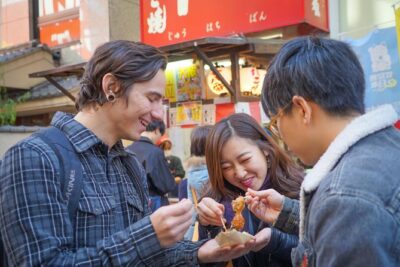
Osaka Local Foodie Walking Tour in Dotonbori and Shinsekai
Our verdict →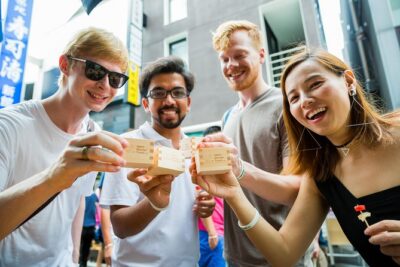
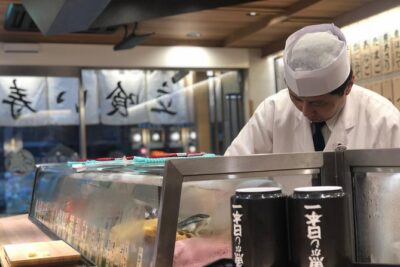
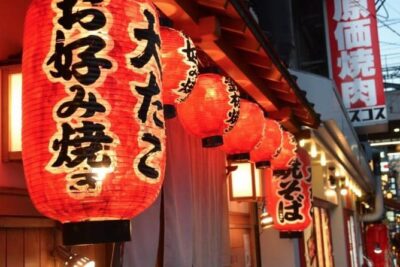
Food Tour in Ueno with 10+ Tastings of Japanese Classics
Our verdict →
Browse the lists this tour appears in