
Reviewed · TEMPLES & SHRINES
Kyoto: Immersive Arashiyama & Fushimi Inari by Private Car
Kyoto packs a lot into one day, and this private-car tour gives you a practical way to connect its far-flung sights. You move from the gardens and bamboo of Arashiyama to the tea-house lanes of Gion, then finish beneath the orange torii gates of Fushimi Inari.
I like the freedom to adjust the day around your group, and I like the comfort of an air-conditioned vehicle between stops. Guides including Lito, Hugo, and Thomas have been praised for clear English, good humor, photography help, and the ability to make the day work for different ages.
The main tradeoff is time. Starting in Osaka or Kobe means a long transfer to Kyoto, and traffic can eat into your sightseeing, especially on a Sunday or during busy periods. Entrance fees, lunch, and other drinks are also extra.
Key points to know before booking
- A private vehicle links widely separated sights: You avoid piecing together several train and bus journeys across Kyoto.
- Arashiyama gets the fullest treatment: Tenryu-ji, the bamboo grove, Okochi Sanso, the river, and free time for lunch all fit into the first part of the day.
- The route can be adjusted: The stated plan is a model course, so your guide may swap stops to match your interests and the day’s conditions.
- The guides are a major part of the experience: Lito, Hugo, and Thomas are especially praised for English, humor, cultural explanations, patience, and taking photographs.
- Fushimi Inari is the finale: You have about 75 minutes for the shrine complex and its famous torii gates.
- This is an active day: Comfortable shoes matter, and the tour is not suitable for people with mobility impairments.
Why a private car makes sense for this Kyoto route
Kyoto’s best-known sights are not gathered in one compact district. Arashiyama lies on the city’s western edge, Gion sits closer to the center, and Fushimi Inari is south of downtown. Ryōan-ji adds another west-side stop. Connecting all of these by public transport is possible, but it takes planning, transfers, and time spent waiting.
Here, your vehicle handles the long jumps. You can talk with your guide while riding, keep your group together, and return to the car between walks. That matters on a full 8 to 10 hour day, especially in summer heat or when several generations are traveling together.
The standard vehicle holds up to six people. A larger vehicle can accommodate up to nine, making the per-person price more reasonable for a family or group than it may first appear. At $236 per person, this is not a budget sightseeing option for a couple. For a larger party, though, the private transport and guide can provide fair value, particularly if you are coming from a cruise ship or have only one day for Kyoto.
Pickup and drop-off are available in central Osaka, Kobe, or Kyoto, depending on the option you choose. Pickup outside those central areas is not included. If you are at the Port of Osaka or near Universal Studios, you need to select the extra port or resort pickup option, priced at 6,500 yen per group round trip.
More Temple & Shrine Tours in Kyoto
- Kyoto: Fushimi Inari, Kinkakuji, Bamboo Grove 1 Day Bus Tour
★ 4.8 · 4,316 reviews - Kyoto: Tea Ceremony in a Traditional Tea House in Kiyomizu
★ 4.9 · 3,519 reviews - Kyoto: Tea Ceremony Ju-An at Jotokuji Temple
★ 4.9 · 3,207 reviews
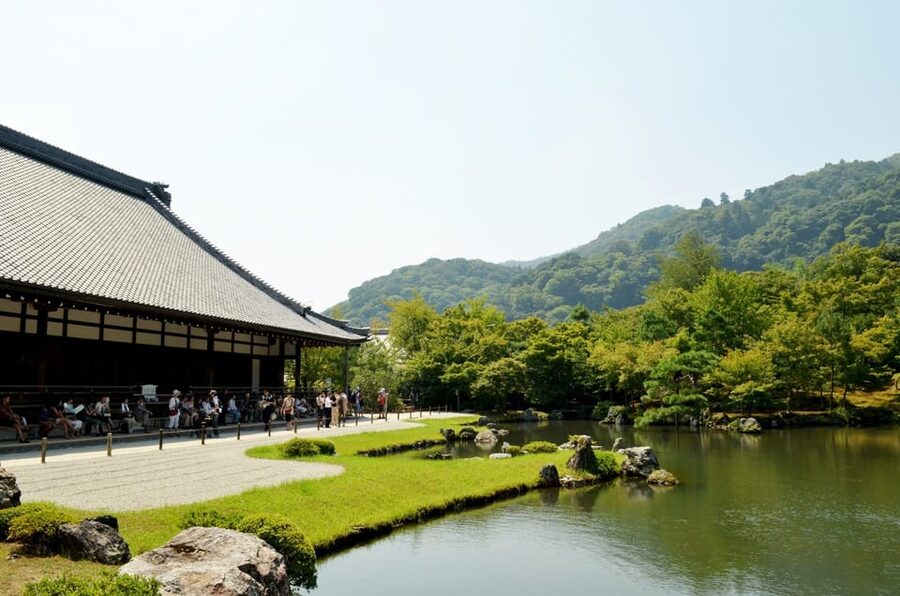
Tenryu-ji introduces Kyoto garden design
The day begins in Arashiyama at Tenryu-ji, one of Kyoto’s key Zen temple sites. You spend about an hour here with your guide, looking at the temple buildings and the garden arranged around them.
The appeal is not simply the age of the site. Tenryu-ji shows how Japanese garden design uses borrowed scenery, water, rocks, plants, open space, and carefully framed views. Your guide can help you notice the design choices rather than treating the garden as a quick photo stop.
The temple buildings are restrained, while the garden provides much of the visual drama. That contrast helps explain a basic idea in Japanese architecture: the building and its setting are meant to work together. Take your time here, because the next stop is more crowded and more visually obvious.
Entrance fees are not included in the tour price, so budget separately for the sites you enter. Ask your guide at the start of the day which admissions are needed and how the schedule will handle them.
Walking through Arashiyama’s famous bamboo grove
From Tenryu-ji, you walk toward the Arashiyama Bamboo Forest. The walk takes about 30 minutes, with time for photographs and a look at the tall bamboo rising on both sides of the path.
This is one of Kyoto’s signature scenes, and it is worth seeing even if you have encountered photographs of it many times. The narrow path, vertical bamboo, and filtered light create a very different mood from the open garden at Tenryu-ji.
Keep your expectations sensible. The grove is a famous public sight, not a private woodland walk, and the path can feel busy. Your guide can help you move through it efficiently and may know quieter corners or better places for group photographs. Lito, in particular, is praised for helping with memorable photos, which is useful when you want a picture of the whole group rather than another hurried selfie.
Wear shoes with a firm sole. The day includes several walks, paths, and temple grounds, and the tour is not designed for people with mobility limitations.
Okochi Sanso adds tea and a garden with views
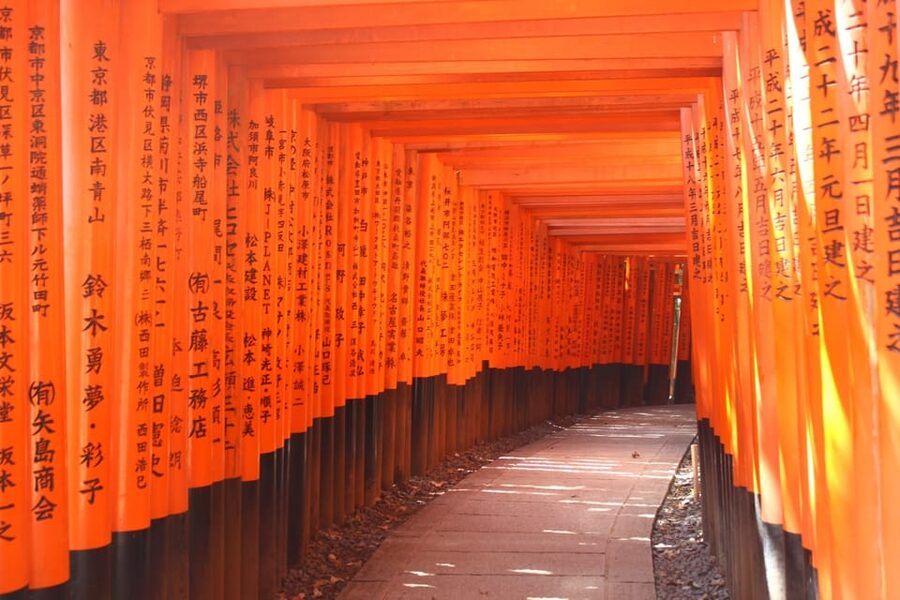
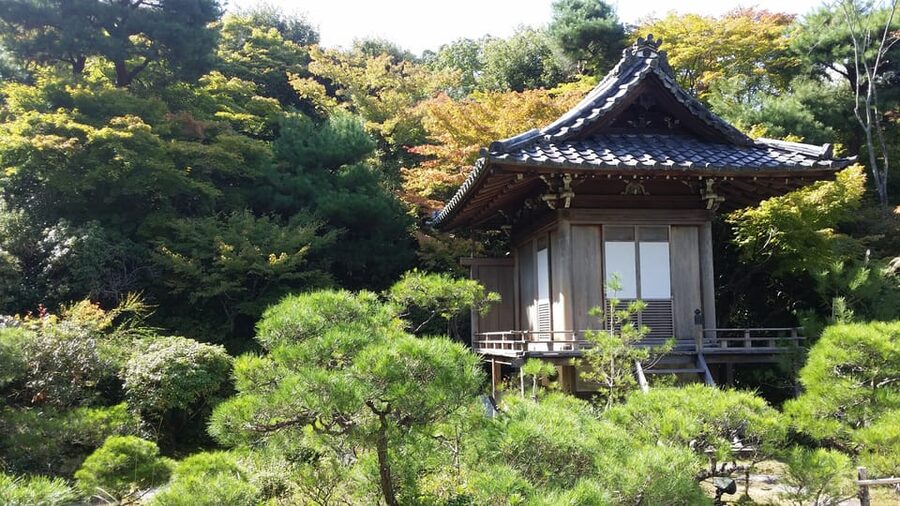
At the end of the bamboo path, you enter Okochi Sanso, the former estate of actor Denjiro Okochi. The visit lasts about 45 minutes and includes matcha, or Japanese green tea, before you explore the estate’s connected paths and garden areas.
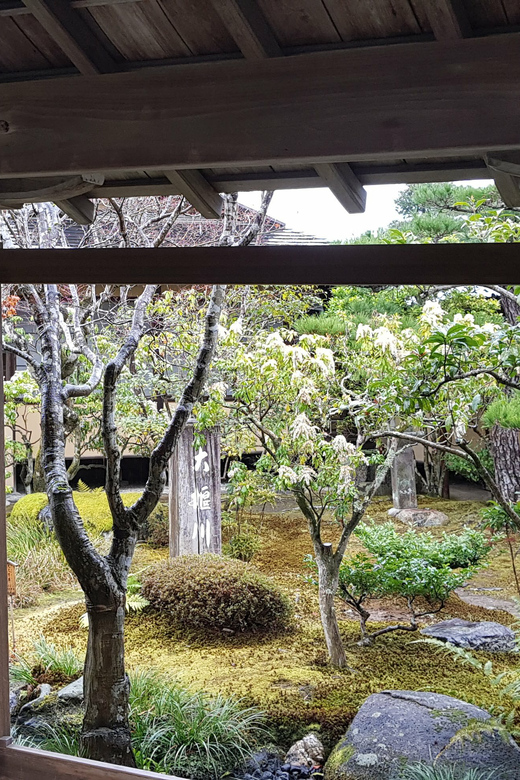
This stop gives the Arashiyama visit a slower rhythm. Instead of simply passing through a famous photo location, you have time to walk among buildings, views, and planted areas. The estate is also a useful place to see how a private garden differs from the larger temple grounds at Tenryu-ji.
The matcha is part of the admission experience, while general food and drinks beyond what is specifically included are not covered. You should not treat this as a full meal. It is a cultural pause and a chance to sit briefly before the next walk.
Same trip, a completely different kind of day:
- PERFECT KYOTO 1-Day Bus Tour
★ 5.0 · 13,518 reviews - Kyoto Geisha Walking Tour: Gion District & Hidden Gems
★ 4.7 · 3,273 reviews - Kyoto: Gion Magical Night Walking Tour with Geisha Trivia
★ 4.9 · 2,393 reviews - Kyoto: 45-Minute Tea Ceremony Lesson Experience
★ 4.3 · 2,378 reviews
River time, lunch, and a flexible Arashiyama break
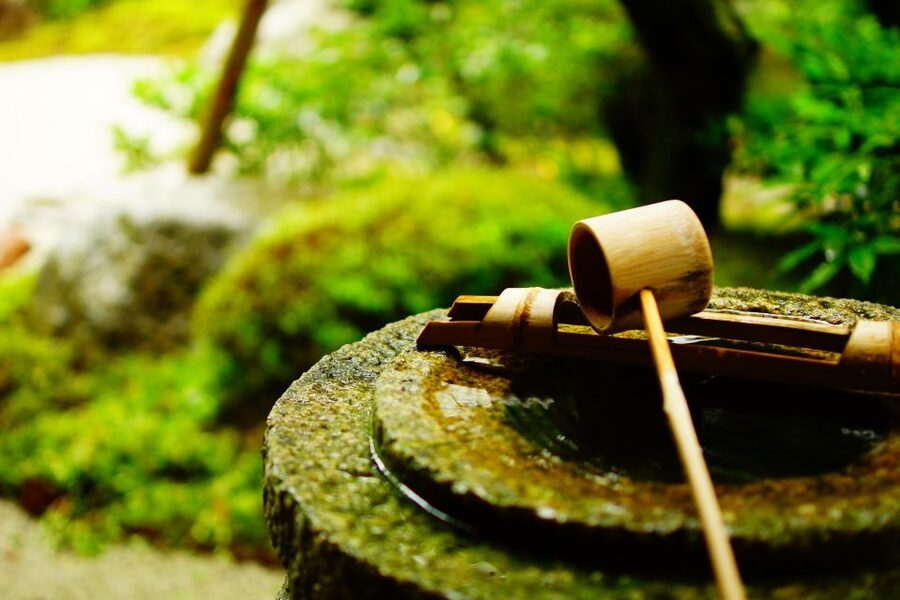
After Okochi Sanso, the route includes a walk beside the river and free time in Arashiyama for lunch and shopping. This open block is one of the tour’s most useful features because not everyone wants the same midday stop.
You can use the time for a proper meal, browse shops, or simply slow down. If your group includes children, older family members, or people with different interests, this break keeps the day from becoming a rigid march between monuments.
Lunch is not included, and no specific restaurant is promised. Your guide can help you decide how to use the time, but you should still expect to pay for your own meal. The exact length of the break may change because the full route is subject to traffic and other conditions.
Ryōan-ji and Kyoto’s quieter visual language
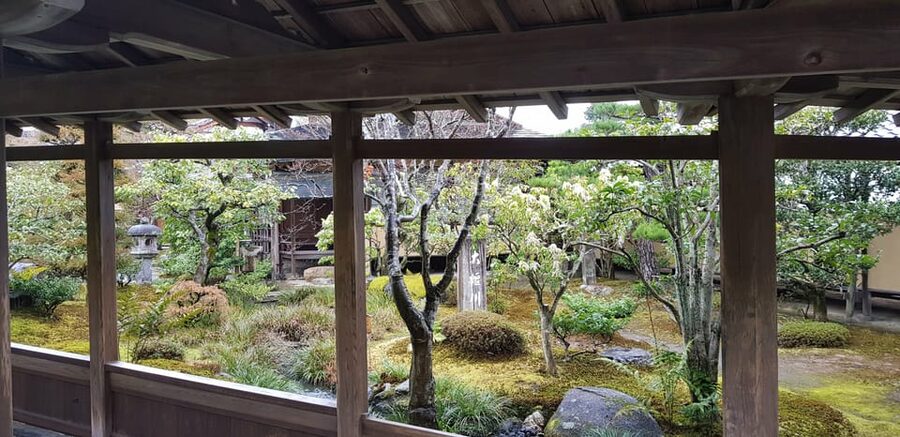
The planned route continues to Ryōan-ji for about 45 minutes. This Zen temple is best known for its spare rock garden, a sharp contrast to Arashiyama’s bamboo and water views.
The stop works well as part of the day because it gives you another way to read Japanese garden design. At Tenryu-ji, you see a garden with a broad sense of scenery and movement. At Ryōan-ji, the effect is more controlled and minimal. The fewer the elements, the more your attention turns to placement, empty space, and the act of looking.
Your guide’s explanation matters here. Without context, the garden can seem like a simple arrangement of stones. With some help, you can consider why the composition feels balanced and why the open gravel field is as important as the rocks.
The schedule gives you roughly 45 minutes, enough for a focused visit but not an extended period of quiet sitting. If Ryōan-ji is a top priority, mention that to your guide early. Since the route can change around your interests, you may be able to adjust the pace, though traffic and opening conditions still control the day.
Gion shows Kyoto’s traditional streets
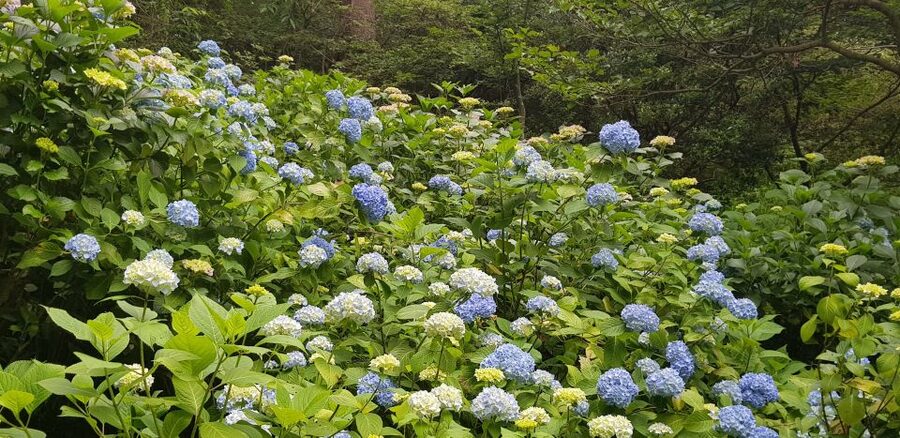
The Gion portion is brief, about 15 minutes, so think of it as an introduction rather than a long neighborhood walk. You pass along atmospheric streets with a small stream and rows of traditional tea houses and restaurants.
Gion is valuable because it shows Kyoto’s older urban character in a lived-in setting. The narrow lanes and wooden facades feel different from the formal grounds of the temples. Your guide can point out the building styles and explain how the district fits into Kyoto’s traditional entertainment and dining culture.
Do not expect a long visit here. Fifteen minutes gives you a quick look and perhaps a few photographs, but it is not enough for an extended exploration of every lane. If Gion matters more to you than another stop, ask whether the route can be adjusted.
The tour also does not promise access to tea houses or a geisha performance. You are seeing the streets and exteriors, not buying entry to a private cultural program.
Fushimi Inari ends the day beneath thousands of torii
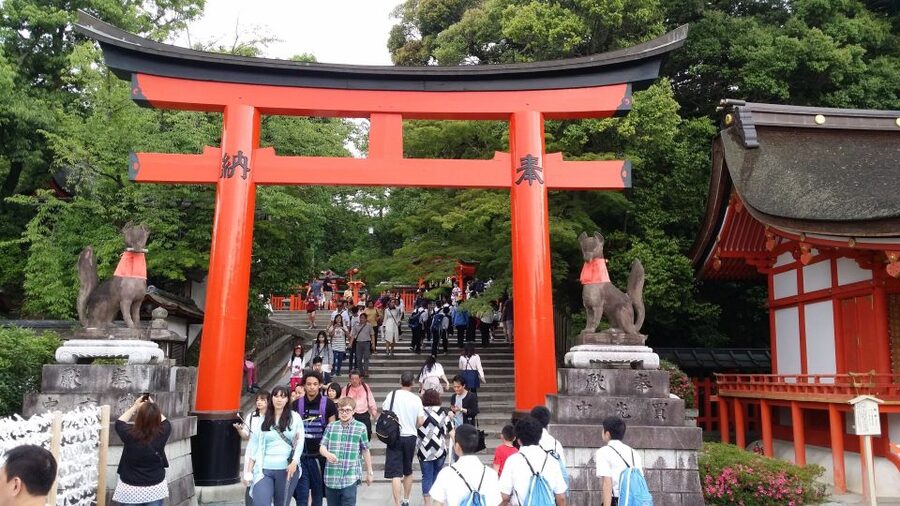
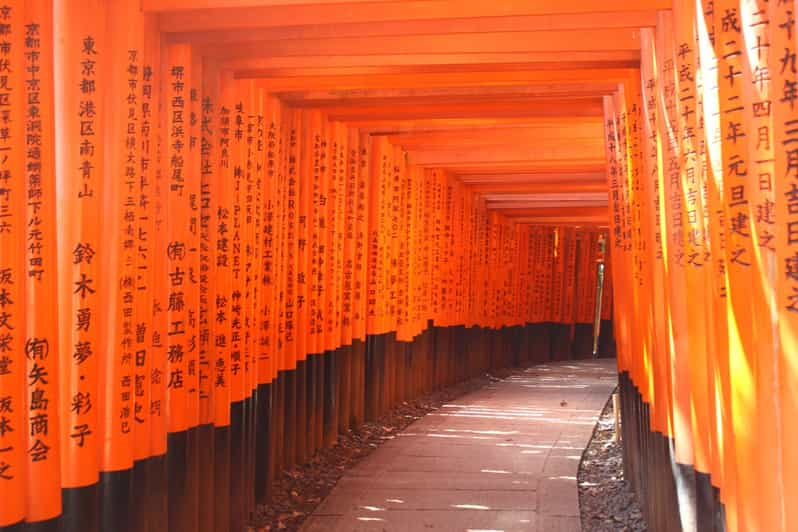
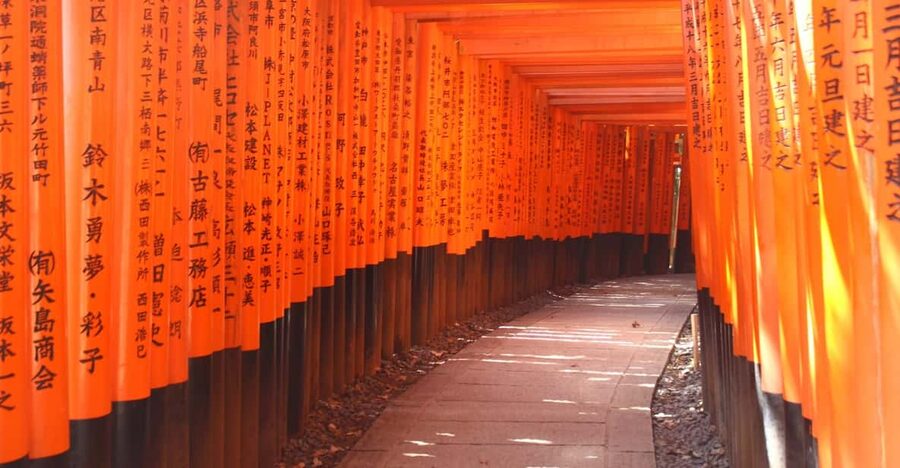
The final major stop is Fushimi Inari Taisha, with about 75 minutes for sightseeing and walking. The shrine is famous for its long corridors of orange torii gates, which rise up the wooded slopes behind the main buildings.
You do not need to walk the entire mountain route to get a strong sense of the place. Even the lower section gives you the repeating gates that make Fushimi Inari one of Kyoto’s most recognizable sights. Your guide can explain the meaning of the shrine and its connection to Inari, the Shinto kami associated with rice, prosperity, and business.
This is another active stop, with steps and uphill sections possible. The amount of walking you do will depend on your group and the time available. Tell your guide if you need a shorter route, but remember that the tour is not suitable for people with mobility impairments.
Ending here is a smart choice. The shrine provides a strong final image after the calm gardens, river walk, and old streets earlier in the day. It also gives you a different side of Kyoto’s religious life, with Shinto gates replacing the Zen temple gardens seen earlier.
The guides can shape the whole day
The most praised part of this experience is not a single monument. It is the guide. Lito, also called Angelito, is described as an English-speaking guide who has lived in Japan for many years. His strengths include cultural explanations, flexible planning, photography, and attention to less obvious sights.
Thomas is praised for being easy to talk with, informative, patient, and willing to swap stops. That flexibility helped groups adjust the route rather than follow a fixed schedule. Hugo is described as professional, well prepared, and able to communicate with both older and younger people in the same group.
You should confirm the assigned guide when booking if a particular person matters to you, since the available guide may vary. The published language is English, and the experience is private, so you are not sharing the day with unrelated groups.
The guides also bring personality to the long vehicle rides. One account highlights humor, local knowledge, photography, and even an enthusiasm for crane games and other playful interests. That may sound minor, but a guide who can connect with children, adults, and older family members can make a packed day feel far easier.
Price, timing, and what you still pay for
At $236 per person, the tour earns its price mainly through private transport, a private guide, and the ability to adjust the route. You are paying for time saved and decision-making support, not just admission to famous sights.
For two people starting in Kyoto, public transport will usually cost less. You may also prefer trains and buses if you enjoy finding your own way and want to spend longer at one temple. For six to nine people, the calculation improves because the vehicle cost and guide service are spread across the group.
Starting in Osaka or Kobe adds another consideration. You can be collected from central areas and returned after the day, but the drive to Kyoto can take a substantial part of the schedule. One visitor who came from Osaka noted that the journey could take around half an hour or longer depending on traffic, while another cruise-ship group valued the direct pickup from the port.
Traffic is the biggest variable. Sunday congestion within Kyoto has already caused a less efficient day for one group, and the stated eight to ten hour duration can shift. Keep your plans after the tour flexible, especially if you are returning to a ship or catching a train.
The price includes the private vehicle, guide, pickup and drop-off from the specified central areas, and a bottle of water. It does not include entrance fees, lunch, unlisted drinks, or pickup outside the central zones. Cancellation is free up to 24 hours in advance, and you can reserve now and pay later.
Who should book this private Kyoto day
I would choose this tour for a family, a small group of friends, or cruise passengers with one available day. It is especially useful if you want to see western and southern Kyoto without learning the transport system first.
It also suits groups with mixed interests. One person can ask about gardens, another can focus on photographs, and a child can enjoy the guide’s humor or a shopping break. The private format makes those small adjustments possible.
I would hesitate if your budget is tight, you want a slow temple-focused day, or you are comfortable using Kyoto’s trains and buses. I would also avoid it if anyone in your group has limited mobility, since the route involves walking, steps, temple grounds, and uneven paths.
Should you book it?
Book this tour if you want a highly guided, efficient day covering Arashiyama, Ryōan-ji, Gion, and Fushimi Inari in one sweep. The strongest reasons are the private vehicle, flexible route, and guides such as Lito, Hugo, and Thomas, who bring clear English and a personal touch to the schedule.
Skip it if you prefer independence or want to linger in one district. If you do book, wear comfortable shoes, allow for traffic, ask about entrance fees, and tell your guide which two or three sights matter most. That is the best way to turn a packed model route into a day that fits your group.
FAQ
How long does the tour last?
The tour lasts approximately 8 to 10 hours. Starting times depend on availability.
Where can pickup and drop-off take place?
Pickup and drop-off are available from central Osaka, Kobe, or Kyoto, depending on the option selected.
Is pickup available from the Port of Osaka?
Pickup from the Port of Osaka requires an add-on priced at 6,500 yen per group round trip. The add-on must be selected when booking.
Is pickup available near Universal Studios?
Pickup from the Universal Studios area also requires the 6,500 yen per group round-trip add-on.
How many people fit in the vehicle?
The standard vehicle accommodates up to six people. A larger vehicle can accommodate up to nine people.
Is the tour private?
Yes. This is a private group experience with a private vehicle and a live English-speaking guide.
Are entrance fees included?
No. Entrance fees are not included in the tour price.
Is lunch included?
No. Food and drinks not specifically mentioned are not included. You have free time in Arashiyama for lunch.
Is the tour suitable for people with mobility impairments?
No. The tour is not suitable for people with mobility impairments. Comfortable shoes are recommended because the day includes walking.
Can the route be changed?
Yes. The stated route is a model course, and the plan may change based on your group’s interests, traffic, and other outside conditions.
More Private Car Days in Kyoto
- Private car tour in Kyoto (up to 4)
★ 5.0 · 123 reviews - Private car tour in Kyoto (up to 9)
★ 5.0 · 74 reviews - Kyoto Day Trip using Private Car with English Driver (up to 5)
★ 5.0 · 74 reviews - Private car tour Let’s uncover secrets of majestic Kyoto history
★ 5.0 · 45 reviews
Just added around Kyoto
- Sekka Cotton Furoshiki Class★ 5.0 · 19 reviews
- Kyoto Sword Experience – includes Museum Ticket/Ninja Experience★ 4.5 · 149 reviews
- Scenic Green Tea Fields of Hidden Kyoto & Local Tea Exp (Private)★ 5.0 · 32 reviews
- Secret Eastern Kyoto Biking Adventure★ 5.0 · 44 reviews
- Private Sake Tasting in Central Kyoto with Sake Sommelier★ 5.0 · 32 reviews
- Samurai School in Kyoto: Samurai for a Day★ 5.0 · 202 reviews
- Samurai Performance and Casual Experience: Kyoto Ticket★ 4.5 · 115 reviews
- SHIRAKAWA Japanese Culture Experiences with private English staff★ 5.0 · 16 reviews
Temples & Shrines, compared.

Tea Ceremony in a Traditional Tea House in Kiyomizu
Our verdict →
Meiji Shrine, Asakusa, Skytree Bus Tour and Cruise
Our verdict →
Fushimi Inari Hidden Hiking Tour (Private Option Available)
Our verdict →
Osaka/Kyoto:Kinkakuji,Arashiyama,FushimiInariShrine,NaraPark
Our verdict →
Nikko: Kegon Falls, Lake Chuzenji & Toshogu Temple
Our verdict →
Kamakura & Enoshima Day Trip including Temple Tickets
Our verdict →Browse the lists this tour appears in