
Reviewed · SUSHI EXPERIENCES
Kyoto: Enjoy Sushi & Market Tour! Best for Family & Couple!
Kyoto’s best food lesson may begin with a fish being cut at Nishiki Market, then end with you shaping three kinds of sushi at your own worktable. I like the mix of market culture and practical cooking, and I like that you learn dishes you can repeat at home rather than simply watching someone else prepare lunch. The one catch is the price: at $77 per person for two hours, you need to value the instruction and market visit, not just the meal.
I also like the small group cap of 10, which should give you room to ask questions and get help with the rice, fish, and hand movements. The class is especially well suited to families and couples, though one less favorable experience found the instructor too distant and the hands-on time below expectations. Your experience may depend on how actively the guide works with the group.
Key points at a glance
- Watch fish preparation at Nishiki Market: See skilled vendors cut fresh fish before you use it in class.
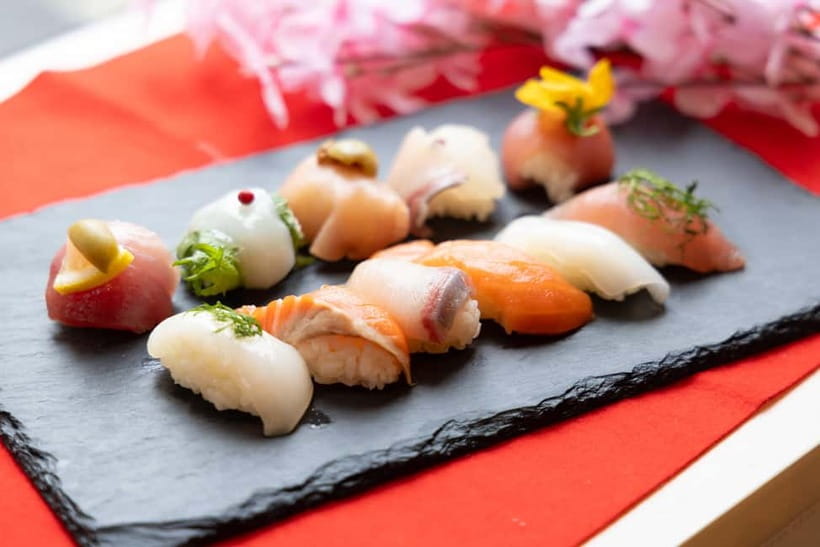
- Make three styles of sushi: Prepare nigiri, temari, and temaki, each with a different shape and technique.
- Learn the foundation of Japanese soup: Compare dashi flavors, then use dashi to make miso soup.
- Get practical Kyoto advice: A local tourism expert shares seasonal sightseeing ideas during the food session.
- Finish with dessert and coffee: Sake and beer are available for an extra charge.
- Convenient central location: The meeting point is about 10 minutes from Kyoto Station and five minutes from Shijo Station.
Starting near Shijo Station
The meeting point is in front of a building with Salon Roll hair salon on the first floor. That detail matters because the activity does not begin at a famous temple or a large landmark. You will want to identify the building before the start time and allow a little extra time to find it in central Kyoto.
The location is useful for a sightseeing day. It is about five minutes from Shijo Station and roughly 10 minutes from Kyoto Station, with Gion and Kiyomizu-dera also nearby. You can fit the class into a day exploring eastern Kyoto, though you should check your own route carefully because the activity lasts two hours and has set starting times.
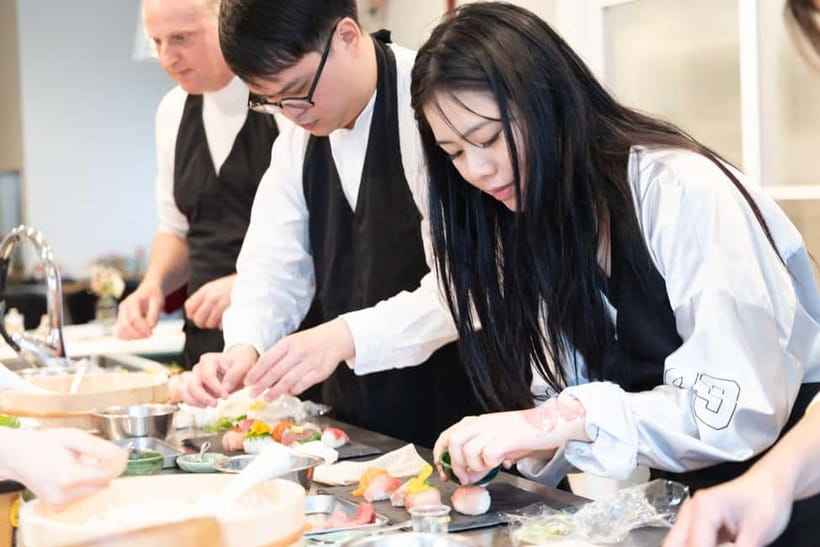
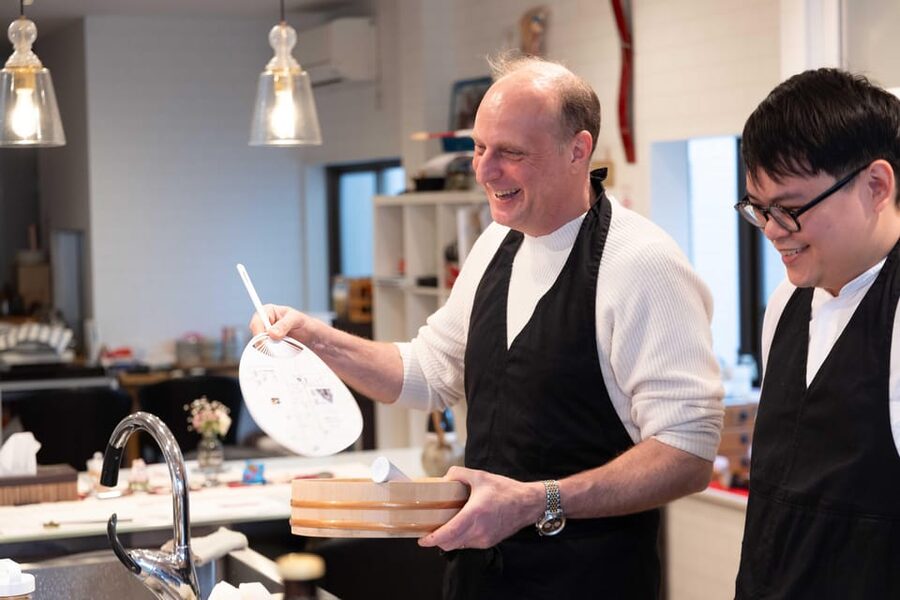
The class is offered in English and Japanese. The group is limited to 10 people, a sensible size for a cooking lesson. A group of that size can still feel social, but it is small enough that you have a fair chance of receiving help when your rice is too loose, your sushi is uneven, or your seaweed wrapper refuses to cooperate.
More Family Tours in Kyoto
- Kyoto:Family-Friendly Kimono & Yukata Experience at WARGO
★ 5.0 · 147 reviews - Ninja Experience (Family Friendly) at Samurai Ninja Museum KYOTO
★ 4.5 · 132 reviews - Samurai Sword Experience (Family Friendly)at SAMURAI MUSEUM KYOTO
★ 4.5 · 63 reviews
Nishiki Market and the fish-cutting lesson
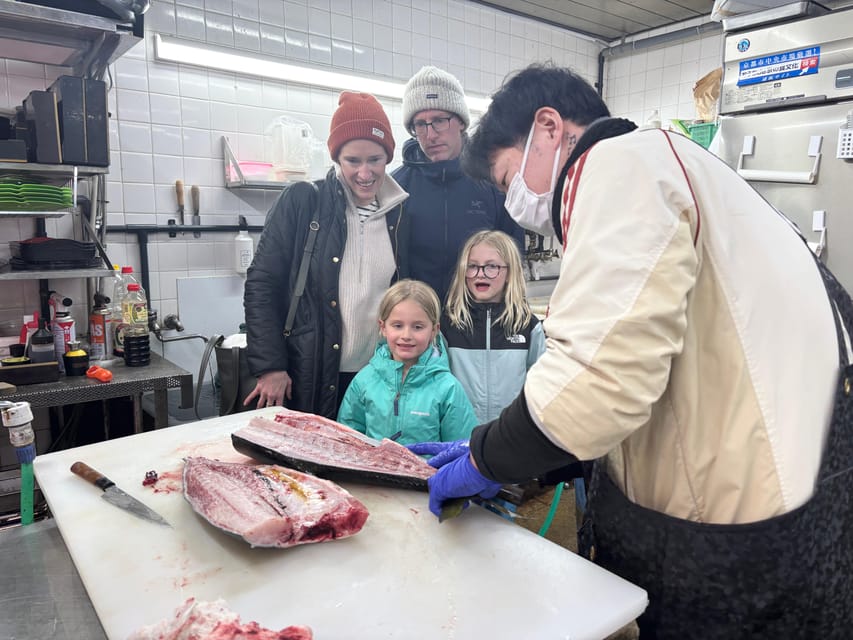
The market visit gives the class a useful Kyoto setting. Instead of starting with ingredients already arranged on a counter, you go to Nishiki Market together to select fresh fish and watch a vendor prepare it. The fish-cutting demonstration is one of the most distinctive parts of the experience, especially if you have mostly encountered sushi as a finished dish.
One review specifically described seeing salmon cut at the market. That kind of close look helps you understand the care behind sushi preparation. You see the fish handled by someone who works with it every day, then return to the class with a clearer sense of what is being served.
The market stop is also short enough to keep the class focused. This is not a full food tour through every stall in Nishiki Market. You are there mainly to connect the market ingredients with the meal you will make, so book this activity for the cooking lesson rather than expecting several hours of tasting.
The market visit may be the most valuable part for anyone curious about Japanese food culture. It shows that sushi is not only about rolling rice and fish together. Ingredient quality, cutting, texture, and presentation all matter before you even begin cooking.
Vinegar rice is the real starting point
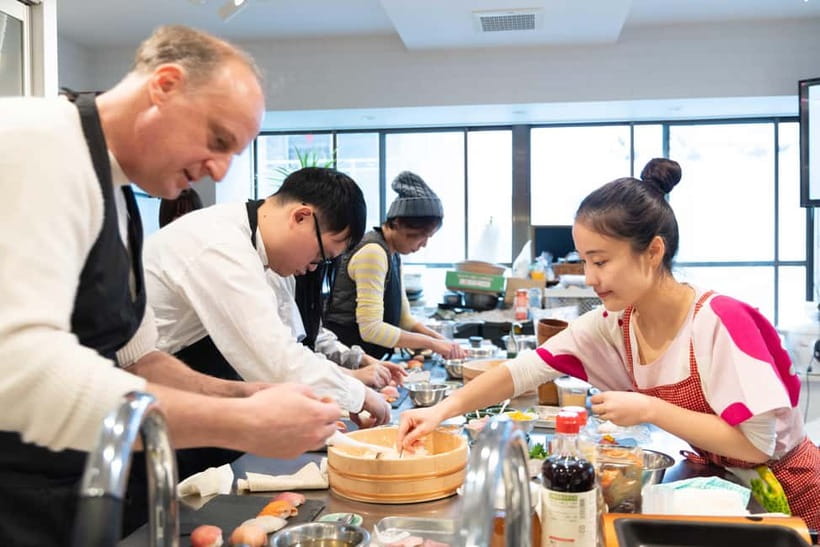
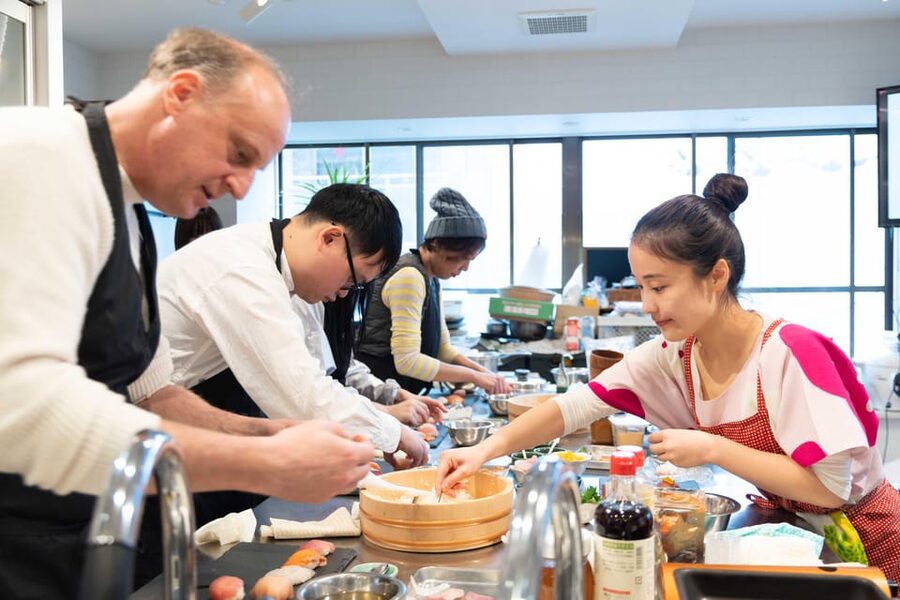
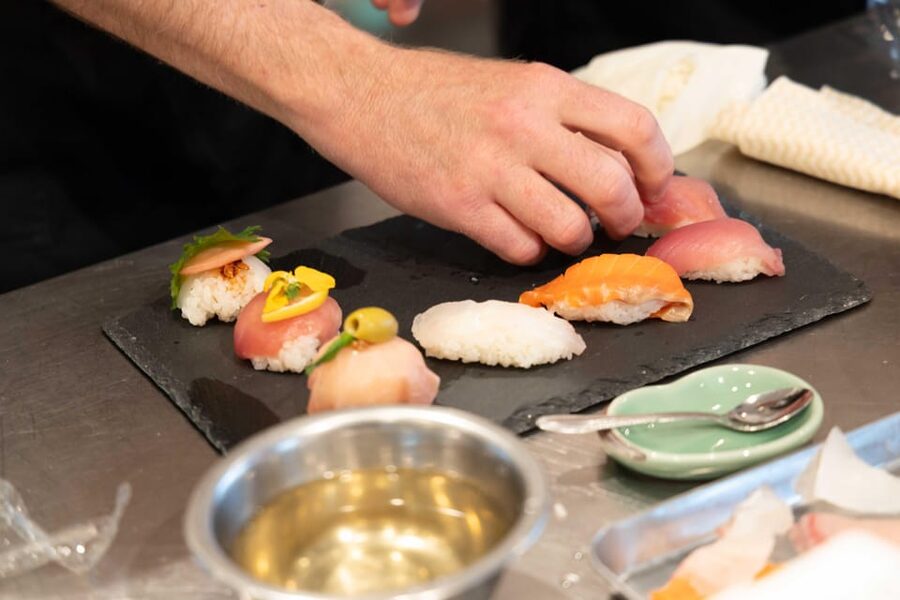
The sushi lesson begins with vinegar rice, the base that holds every style together. This is an important choice for a short class. You can buy sushi-making kits almost anywhere, but a good result depends on rice texture and seasoning, not just on filling a bamboo mat.
You learn how to prepare the rice and season it for sushi. The exact recipe is not provided, so you should expect instruction rather than a guaranteed written formula. Pay attention to the balance of rice, vinegar, and handling, since those are the skills you will need when you try this at home.
The class then moves through three forms:
- Nigiri: Hand-shaped rice topped with fish or another ingredient.
- Temari: Small, rounded sushi with a decorative look.
- Temaki: Hand-rolled sushi shaped like a cone.
The variety keeps the lesson interesting. Nigiri tests how gently you can shape rice without crushing it. Temari gives you a chance to focus on neat presentation. Temaki is more relaxed and usually feels approachable for beginners because you shape it in your hand rather than aiming for a perfectly tight roll.
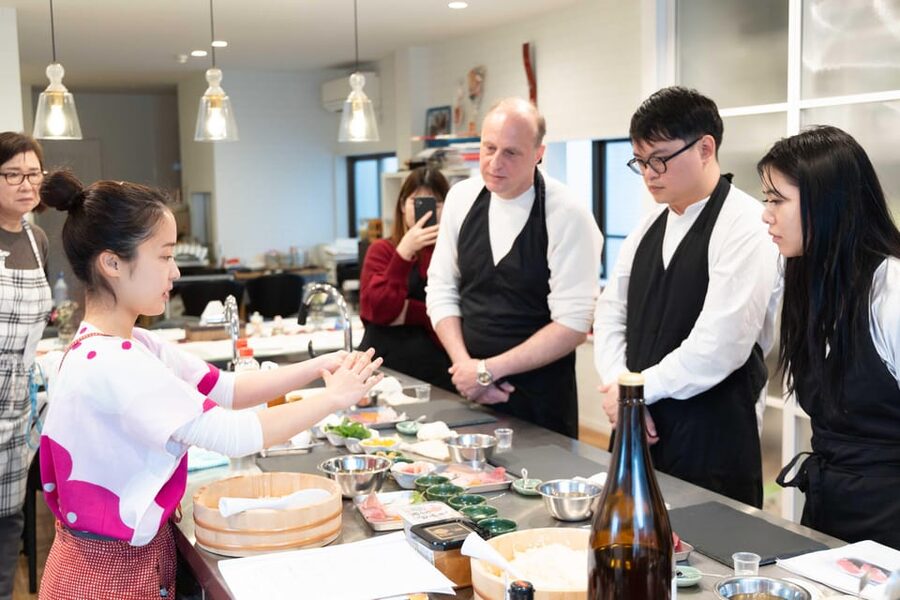
The artistic side is part of the appeal. You are encouraged to use your own creativity, so the finished sushi does not need to look identical to the guide’s version. That makes this a better fit for a family or couple who wants to make something together rather than attend a strict demonstration where everyone copies the same result.
Dashi and miso soup add depth to the meal
Sushi gets the obvious attention, but the soup lesson may teach you just as much about Japanese cooking. You learn how to make dashi, taste and compare it, and use it to prepare miso soup.
Dashi is a basic Japanese stock, so understanding its flavor gives you a useful window into everyday cooking. The tasting comparison helps show how the stock changes the soup before miso is even added. This turns the lesson from a simple recipe class into a short introduction to the building blocks of Japanese food.
The meal includes the miso soup you prepare. That gives you a chance to compare the result with familiar restaurant versions. You can also see how sushi and soup work together as a meal, rather than treating each item as a separate cooking exercise.
For home use, the miso soup lesson is practical. Sushi can seem like a special-occasion project, but miso soup is easier to repeat. If you are choosing this class for useful skills, do not overlook the dashi section.
More Market Tours in Kyoto
- Nishiki Market Brunch Walking Tour (7 Tastings + Brunch)
★ 5.0 · 1,355 reviews - Kyoto Nishiki Market Food and Culture Walking Tour
★ 5.0 · 412 reviews - Kyoto: Nishiki Market Tea Ceremony with Koto Performance
★ 4.8 · 294 reviews - Kyoto: Nishiki Market Brunch Walking Tour-7 Tastings+Brunch
★ 4.8 · 197 reviews
Sitting down to eat what you made
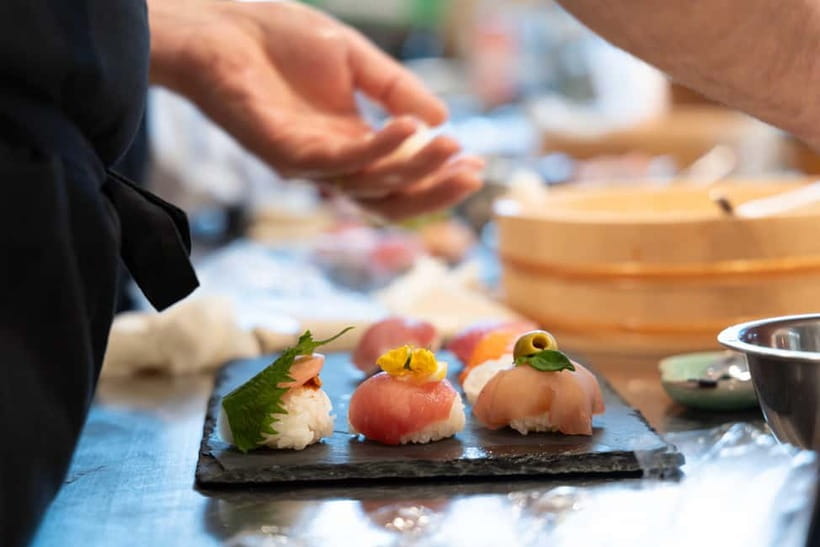
After the preparation, you sit down to enjoy the sushi and miso soup. The meal includes dessert and coffee, so the $77 price covers more than an instructional demonstration. You make the main food, eat it as part of the class, and finish with a sweet course.
One detailed family experience included sake, green tea, and a homemade matcha dessert. Green tea is not listed as a guaranteed inclusion in the activity details, so you should not book on the assumption that every session includes those exact drinks or dessert. The listed finish is dessert and coffee.
Sake and beer are available for an additional charge. That option makes sense for adults who want to add a drink, but it is not necessary for the experience. Families can skip the alcohol without losing the main cooking lesson.
The shared meal also gives the group time to talk. The class is not just a silent sequence of instructions. You can compare your sushi shapes with the people around you, ask about ingredients, and discuss Kyoto food customs. One concern raised by a less satisfied participant was limited interaction from the instructor, so I would ask questions directly and make use of the small-group setting.
Kyoto sightseeing advice between the courses
A Kyoto tourism expert shares seasonal sightseeing information during the experience. This is a useful extra, particularly if this is your first visit and your schedule is still flexible.
The information is described as seasonal rather than as a full sightseeing tour. You might get suggestions that help you choose what to see during your stay, depending on the time of year. This could be more helpful than a standard list of famous places because Kyoto changes with the calendar, though the exact advice will depend on the guide and the season.
The timing also works well. While the rice rests, the soup cooks, or the group eats, you have a natural chance to ask about Kyoto. You can ask about nearby Gion or Kiyomizu-dera, since both are close enough to make the class useful as part of a central Kyoto day.
Do not choose this activity solely for sightseeing advice. Its core purpose is food preparation. Think of the local tips as a bonus that can help you shape the rest of your visit.
Is $77 a fair price?
At $77 per person, this is not a bargain meal. If you only want to eat sushi, you can find less expensive options in Kyoto. The price makes more sense when you count the market visit, instruction, ingredients, meal, dessert, coffee, and the chance to prepare several dishes yourself.
The group limit of 10 helps support the price. Private instruction would cost much more, while a large class could leave you watching from the back. Here, you are paying for access to a guide, a prepared cooking space, a market connection, and a meal you help create.
The value is strongest for:
- Families looking for a shared activity with a clear beginning and end.
- Couples who want a food experience rather than another restaurant meal.
- First-time sushi makers who want guidance with rice and shaping.
- Home cooks who plan to repeat nigiri, temari, temaki, or miso soup.
- Visitors who enjoy learning about ingredients as much as eating them.
The value is weaker if you expect a long market tour, a large amount of fish, or constant one-to-one instruction. One participant felt that the fish did not justify the price and wanted more interaction. That criticism is worth taking seriously. This is a short class, so the quality of the guide’s attention matters.
The strong overall rating of 4.8 from 20 reviews points to a generally successful experience, with especially warm responses to the guides’ kindness, teaching, and flexibility. Still, the mixed account suggests you should set realistic expectations: this is a compact workshop, not a full professional sushi apprenticeship.
Family, couple, and accessibility notes
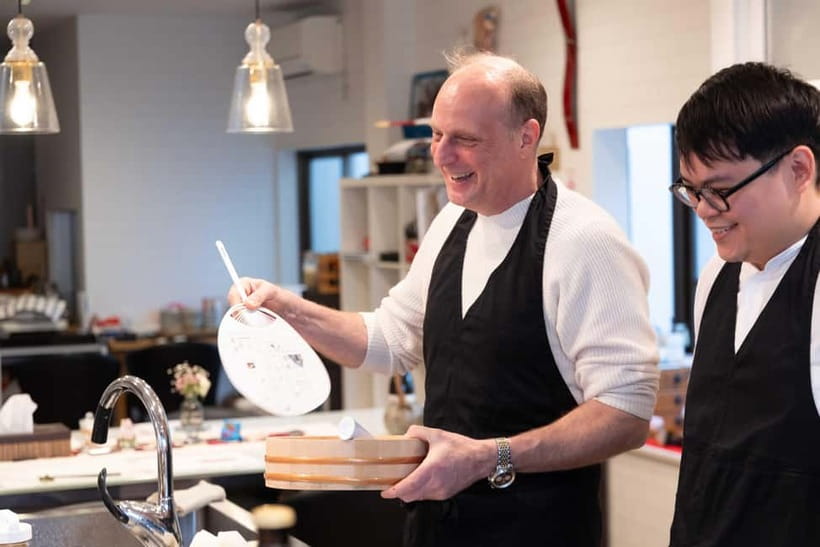
The activity is marketed as a good choice for families and couples, and the format supports that claim. Children and adults can work on separate sushi shapes, compare results, and share the final meal. The three styles also create natural variety, so the activity is not just repeating one rolling motion for two hours.
Couples may like the creative element. You can make different versions of the same dish and see whose temari looks more polished. It is a friendly kind of competition, with the useful advantage that imperfect sushi still gets eaten.
The activity is wheelchair accessible. Smoking is not allowed indoors. Languages are English and Japanese, and the group is limited to 10 people.
The experience runs for two hours. That is long enough to cover the market connection, rice, sushi, dashi, miso soup, eating, and a little conversation, but it leaves little room for delays. Arrive ready to begin rather than expecting a slow, open-ended food afternoon.
Booking and cancellation details
You can cancel up to 24 hours in advance for a full refund. The reserve-now, pay-later option lets you hold a place without paying immediately, which is useful while you are still arranging Kyoto days.
Check the available starting times before you book. Since the class is near central sights, you can plan it around Gion, Kiyomizu-dera, or Kyoto Station, but avoid scheduling another fixed activity too tightly afterward.
Should you book this sushi class?
Book it if you want to make food, not merely eat it. The strongest reasons are the Nishiki Market fish-cutting stop, the three sushi styles, the dashi comparison, and the chance to take simple techniques home. The small group and central location add practical value.
I would especially recommend it to families, couples, and first-time sushi makers. It is also a good choice for a rainy Kyoto day because the main lesson takes place indoors, with the market visit adding a short outdoor section.
Skip it if your priority is a long market tour, a luxury meal, or highly personalized professional instruction. At $77, the workshop needs an engaged guide to feel worthwhile. Go in expecting a friendly, compact class with a meal at the end, and you are more likely to find the price fair.
FAQ
How long does the sushi and market experience last?
The activity lasts two hours.
Where is the meeting point?
Meet in front of a building with Salon Roll hair salon on the first floor.
How far is the activity from Kyoto Station?
The meeting point is about 10 minutes from Kyoto Station and about five minutes from Shijo Station.
Which types of sushi will I learn to make?
You will learn to prepare nigiri, temari, and temaki sushi.
Is food and drink included?
The experience includes sushi, miso soup, dessert, and coffee. Sake and beer are available for an extra charge.
Is the activity available in English?
Yes. The instructor can teach in English or Japanese.
More Sushi Experiences in Kyoto
- Sushi Making in Kyoto! Same-day bookings welcome!
★ 5.0 · 713 reviews - The Original Small-Group Sushi Making Class in Kyoto
★ 5.0 · 436 reviews - Kyoto: Small-Group Authentic Sushi Making Workshop
★ 5.0 · 137 reviews - Sushi – Authentic Japanese Cooking Class – the best souvenir from Kyoto!
★ 5.0 · 93 reviews
Just added around Kyoto
- Sekka Cotton Furoshiki Class★ 5.0 · 19 reviews
- Kyoto Sword Experience – includes Museum Ticket/Ninja Experience★ 4.5 · 149 reviews
- Scenic Green Tea Fields of Hidden Kyoto & Local Tea Exp (Private)★ 5.0 · 32 reviews
- Secret Eastern Kyoto Biking Adventure★ 5.0 · 44 reviews
- Private Sake Tasting in Central Kyoto with Sake Sommelier★ 5.0 · 32 reviews
- Samurai School in Kyoto: Samurai for a Day★ 5.0 · 202 reviews
- SHIRAKAWA Japanese Culture Experiences with private English staff★ 5.0 · 16 reviews
- A Privately Guided Photoshoot in Beautiful Kyoto by a Pro★ 5.0 · 18 reviews
Sushi Experiences, compared.
Sushi Making Tokyo Roll and Authentic Japanese Sushi Class
Our verdict →
Sake Omakase in Tokyo: Guided Tasting by Certified Sommeliers
Our verdict →
Browse the lists this tour appears in