
Reviewed · CYCLING TOURS
Kyoto: Early Bird E-Bike Tour with Lunch
Fushimi Inari before breakfast crowds is the clever hook here. You start early, ride straight to Kyoto’s famous red torii gates, then spend the day linking temples, canals, river paths, and old neighborhoods that are scattered across the city. The e-bike keeps the hills and long distances manageable.
I like the small group of eight and the practical rhythm: coffee at a local café, real sightseeing stops, then a sit-down lunch rather than a hurried snack. I also like that guides such as Julian, Indra, Karl, and Carl have been praised for adjusting the pace and sharing useful local details. The main drawback is simple: seven hours on a bike is a long day, and this tour is not suitable if you cannot ride comfortably or have back problems.
Key points to know before booking
- Fushimi Inari comes first: You reach the shrine early, when the day is still quieter.
- The e-bike matters: Kyoto’s spread-out sights and uphill sections are much easier with electric assistance.
- You cover a lot: The route includes Fushimi Inari, Tofukuji, Ginkakuji, Nanzenji, Heian Shrine, Gion, and Higashi Honganji.
- Coffee and lunch are included: You get a café break and a proper sit-down meal, plus water.
- The group stays small: A maximum of eight people allows room for questions and some flexibility.
- Plan for a full morning and afternoon: Wear comfortable clothes, bring sun protection, and arrive 15 minutes early.
Why an e-bike is a smart way to see Kyoto
Kyoto looks compact on a map, but its major sights are spread over the southern and eastern parts of the city. Walking between Fushimi Inari, Ginkakuji, Nanzenji, Gion, and Higashi Honganji would take a great deal of time. Public transport helps, but it does not put you beside every canal, temple lane, and riverside stretch.
The e-bike gives you a middle ground. You move farther than you could on foot, but you still travel at street level. You can see the Kamo River, Shirakawa Canal, quiet connecting streets, and the changing feel of each district instead of spending much of the day underground or inside a taxi.
You do need to be comfortable riding in an urban setting. The tour includes a 15-minute safety briefing before departure, and the guide leads the group throughout the day. Still, this is a cycling tour, not a sightseeing bus with a short pedal at the end. If you have not ridden a bike in years, the seven-hour length deserves serious thought.
More Bike Tours in Kyoto
- Hidden Kyoto E-Biking tour
★ 5.0 · 1,843 reviews - Bike Tour Exploring North Kyoto plus Lunch
★ 5.0 · 1,087 reviews - Arashiyama Bamboo Forest & Hidden Gems Bike Tour (Early Bird)
★ 5.0 · 613 reviews
Starting near Kyoto Station
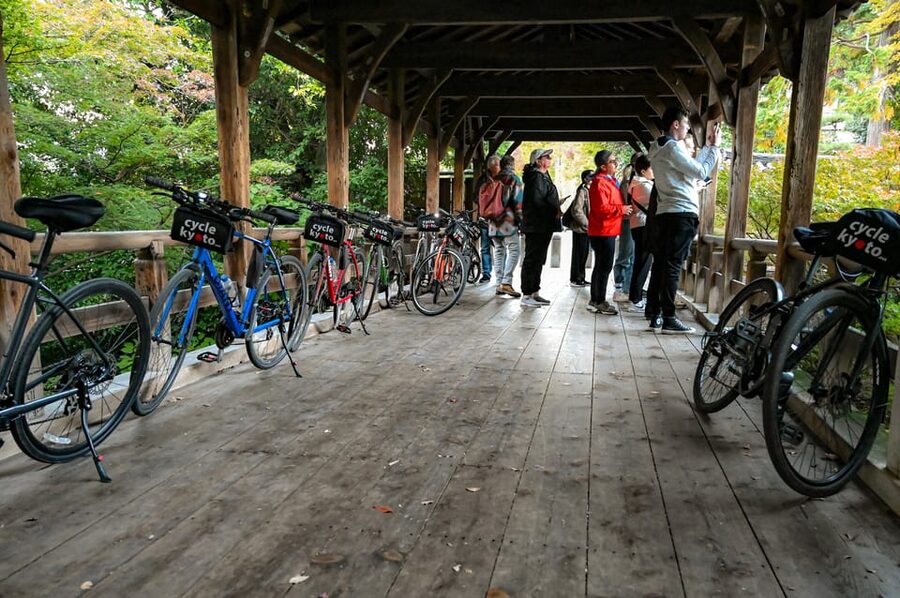
The meeting point is at Cycle Kyoto, a short walk from JR Kyoto Station. From the station, walk past Avanti, cross at the traffic lights, pass the Daily Yamazaki convenience store, and take the next left.
Arrive 15 minutes before the start. That gives you time to find the shop, get fitted with the e-bike and helmet, and listen to the safety briefing without rushing. The early start is part of the value here, so do not treat the meeting time casually. Missing the group at the beginning would be especially inconvenient on a route with so many separate stops.
The tour is conducted in English. With a maximum of eight participants, you should be able to hear the guide and ask questions without shouting across a large group. Several guides have led this route, including Julian, Indra, Karl, and Carl. The individual guide can change, but the format remains focused and personal.
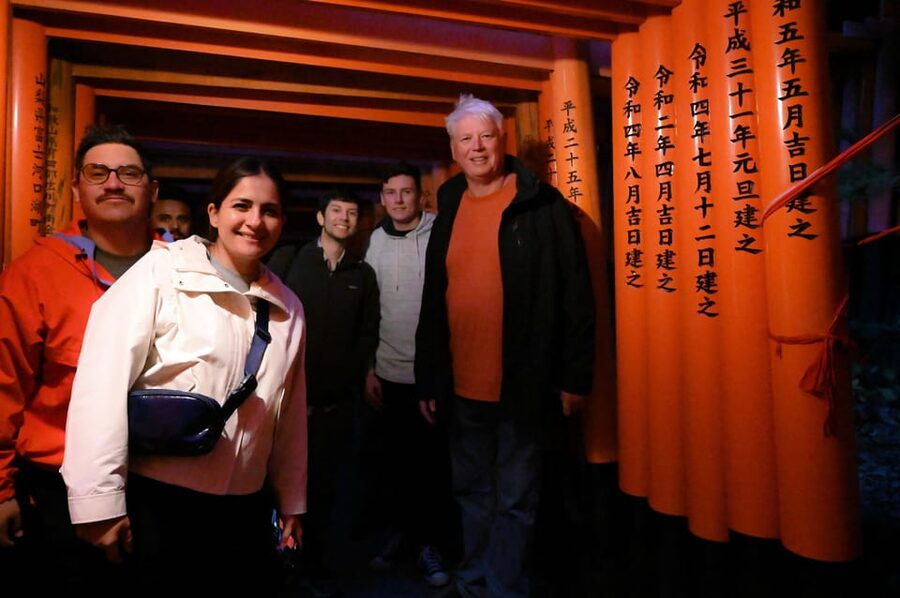
Fushimi Inari before the crowds
The first major stop is Fushimi Inari Taisha, reached after the short orientation and a ride south. This is a strong opening because the shrine is one of Kyoto’s most popular sights, and timing makes a real difference.
Fushimi Inari is famous for its long rows of vermilion torii gates climbing the wooded slopes of Mount Inari. The guided stop lasts about 45 minutes, enough to see the main shrine area and walk through part of the gate-lined route. You get the atmosphere of the place before the busiest part of the day arrives.
The early hour also gives the stop a more peaceful feel without pretending the shrine is empty. You should still expect other people, but arriving before the crowds is far better than reaching it late in the morning.
Wear shoes that are comfortable for walking as well as cycling. The shrine visit is not simply a photo stop beside the entrance. You will be on your feet, and the route can include steps and slopes.
Tofukuji and the first stretch of the ride
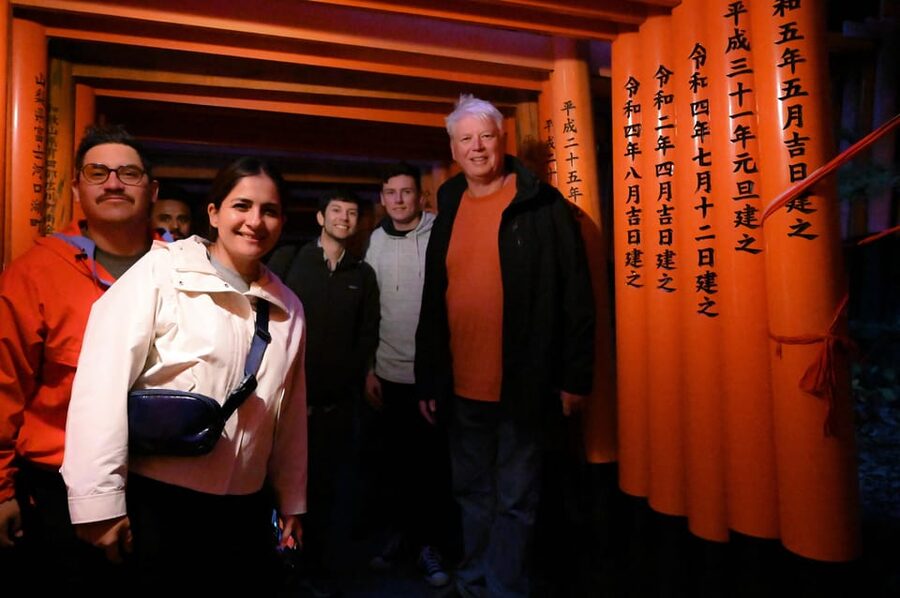
From Fushimi Inari, the route continues to Tofukuji Temple. The supplied schedule gives the temple a shorter place in the morning flow than Ginkakuji or Nanzenji, but it adds useful variety to the route.
Tofukuji is known for its temple grounds and traditional architecture, and the stop helps you see more than Kyoto’s headline attractions. The tour does not simply shuttle between the most famous names. It links major temples with the streets and river corridors between them.
This is also where the e-bike begins to show its value. You are not burning your energy on the first few miles, which matters because the afternoon still includes several stops. One of the strongest practical points from the tour feedback is that the bicycles were well maintained and easy to ride. That is important on a full-day route.
Same trip, a completely different kind of day:
- PERFECT KYOTO 1-Day Bus Tour
★ 5.0 · 13,518 reviews - Kyoto: Fushimi Inari, Kinkakuji, Bamboo Grove 1 Day Bus Tour
★ 4.8 · 4,316 reviews - Kyoto: Tea Ceremony in a Traditional Tea House in Kiyomizu
★ 4.9 · 3,519 reviews - Kyoto Geisha Walking Tour: Gion District & Hidden Gems
★ 4.7 · 3,273 reviews
Coffee at a local café
After the southern temple stops, you pause for 20 minutes at one of the guide’s favorite local cafés. Morning coffee is included, but snacks and extra drinks are not, so bring some money if you want more than the planned refreshment.
I like this break because it gives the day a human scale. Kyoto sightseeing can become a procession of gates, gardens, and photographs. Sitting down for coffee lets you reset, ask the guide about what you have seen, and prepare for the longer ride north.
The café is presented as a local favorite rather than a famous attraction. That means the appeal is the setting and the guide’s personal choice, not a landmark you need to visit independently. The exact café may vary, so book this tour for the overall route rather than for a specific coffee shop.
Riding beside the Kamo River to Ginkakuji
The next section heads up the Kamo River before crossing toward Ginkakuji. This is one of the best parts for seeing Kyoto between the formal sights.
The river ride gives you open space after the denser temple areas. It also breaks up the day with a change of scenery. You are not only moving from one ticketed attraction to another. You see how Kyoto’s neighborhoods connect, with the guide pointing out details along the way.
The route then reaches Ginkakuji, the Silver Pavilion, one of Kyoto’s UNESCO-listed sites. The guided visit lasts about an hour, making it one of the day’s main stops.
Ginkakuji is valued for its restrained design, carefully arranged grounds, and gardens rather than flashy decoration. You can expect time to look at the buildings, paths, and garden details with context from the guide. This is a place where a few well-timed explanations help, since the appeal is often in proportion, texture, and layout rather than one giant monument.
The site can be busy, even on an early tour, and the schedule is active. You will not have unlimited time to wander every corner at your own pace. In return, you see it as part of a much wider Kyoto route.
The Path of Philosophy and Nanzenji
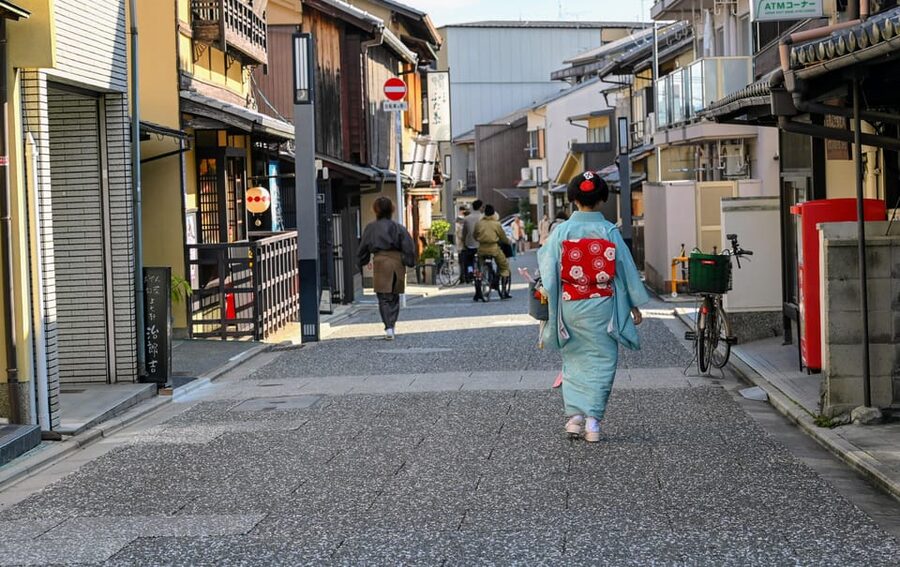
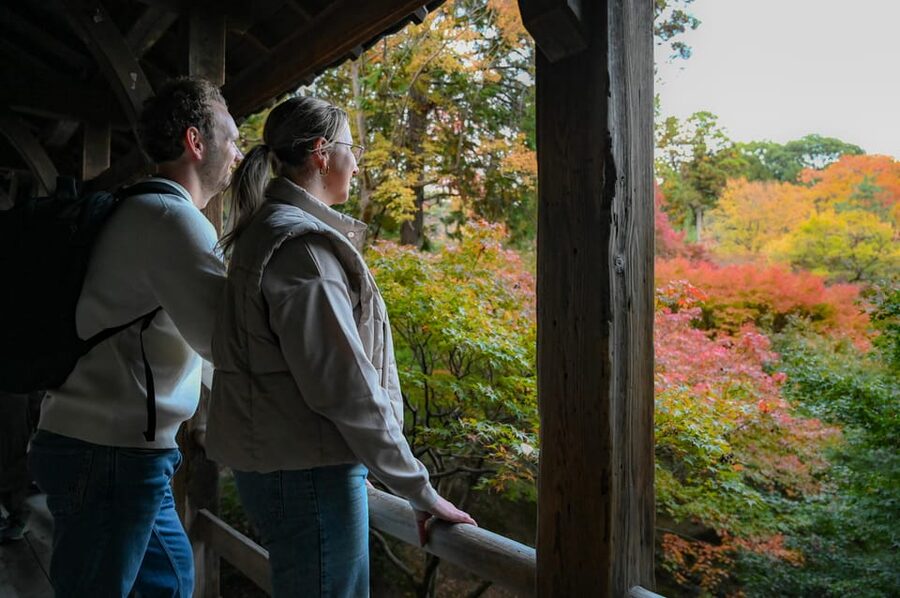
After Ginkakuji, the group rolls slowly south along the Path of Philosophy. This famous walkway follows a canal and is especially appealing because the pace drops. You are close to the water, moving through a calmer stretch after the formal temple visit.
The exact feel of the path changes with the season, but the tour information specifically highlights the slow ride. That is useful: this is not a race between attractions. The guide can keep the group together and allow time for photographs.
The route continues to Nanzenji Temple, where the guided visit lasts about 35 minutes. Nanzenji’s grounds bring together traditional gardens, religious buildings, and a striking red brick aqueduct. The aqueduct is one of the more unexpected sights in the itinerary. It adds a European-looking industrial note to an otherwise strongly traditional temple setting.
You should see Nanzenji as a compact, varied stop rather than a long free period. The grounds are broad, and 35 minutes gives you a good introduction but not an exhaustive visit. If Nanzenji is your personal priority, you may want to return independently for more time.
Lunch as a real break
A sit-down lunch follows the central temple visits and lasts about 40 minutes. Lunch is included, which improves the value of the tour and keeps you from losing time searching for a restaurant during the busiest part of the day.
The meal is not just a box handed over while you stand beside your bike. You get a chance to sit, eat, and recover before the final sequence of sights. That matters on a seven-hour tour, especially in warm weather or after a morning of walking around temple grounds.
The exact restaurant and menu are not specified, so do not book this expecting a particular dish. Think of lunch as a practical, included meal that keeps the route moving. Snacks and extra drinks are not included, and carrying water is still a good idea even though water is provided.
Heian Shrine and the road to Gion
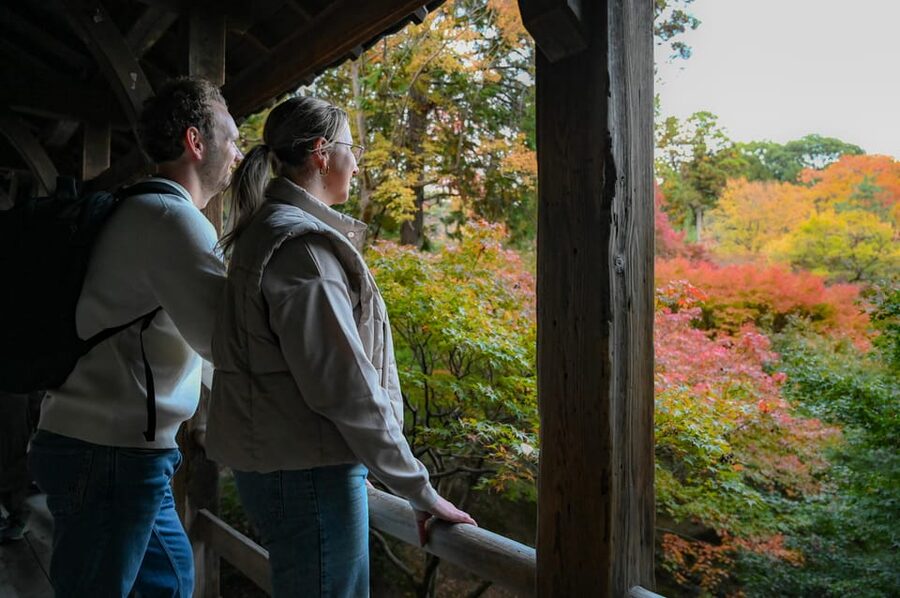
After lunch, the route includes a 30-minute visit to Heian Shrine. The shrine is known for its large entrance gate and broad grounds, giving you another change in scale after the quieter lanes around the Path of Philosophy.
The stop helps show how varied Kyoto’s religious sites can be. Fushimi Inari is defined by torii gates and a mountainside route. Ginkakuji is controlled and garden-focused. Nanzenji feels like an extensive temple complex. Heian Shrine offers a more open, formal setting.
The final riding section heads south along the Shirakawa Canal and through Gion. This is a particularly good way to enter the district. Instead of arriving only at a major street, you approach through the canal-side scenery and traditional streets that give Gion much of its character.
The guide leads a 50-minute visit through Gion. You should keep your expectations sensible. Gion is a living neighborhood, not a theme park, and the tour is designed for respectful sightseeing from public streets. Follow the guide’s instructions about photography and personal space.
Higashi Honganji and the return to base
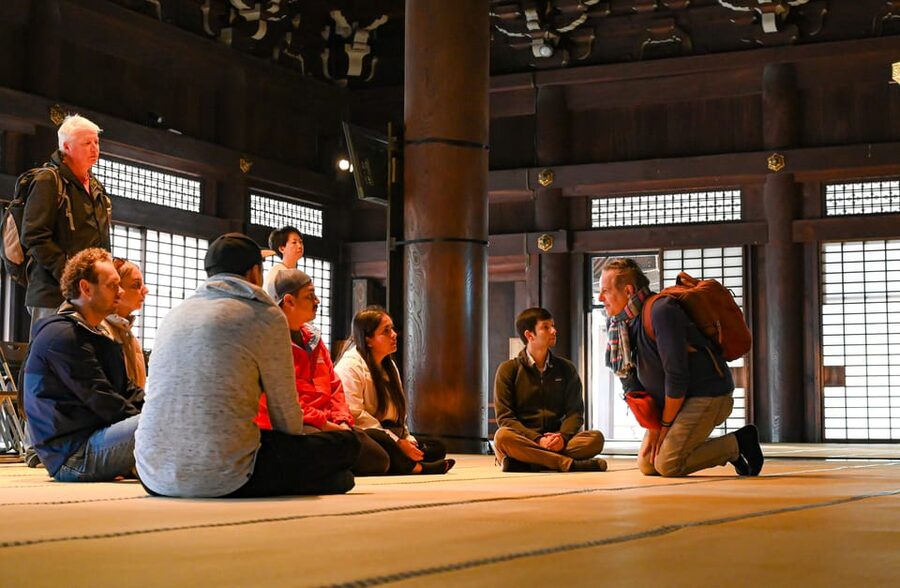
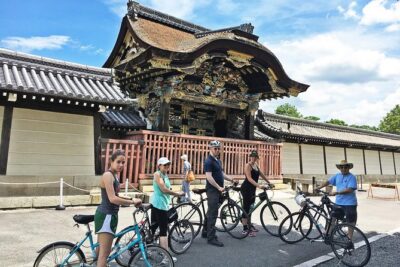
The last major stop is Higashi Honganji Temple, with about 50 minutes for a guided visit. The temple gives the tour a strong closing point before the ride back to Cycle Kyoto.
Its location also makes practical sense. After the southern and eastern sections of the route, the group finishes closer to Kyoto Station before returning to the starting point. You do not end in a remote corner of the city with the added problem of finding your way back.
By this point, you will have spent much of the day alternating between riding, walking, temple visits, food, and short pauses. The sequence is full, but it is not all one kind of activity. That variety is why the day can feel manageable even though the schedule is ambitious.
What the $135 price really includes
At $135 per person, this is not a cheap bike rental. It is a guided full-day experience that includes the e-bike, helmet, water, morning coffee, a sit-down lunch, and an English-speaking guide.
The value depends on how you would otherwise see Kyoto. If you planned to rent a regular bicycle, navigate the route yourself, pay separate admission fees where required, find lunch, and work out how to connect all these districts, the guided format saves effort and planning. You also gain explanations at each major stop.
The price is less attractive if you prefer long, unstructured visits at one or two temples. The itinerary moves steadily, and the included meal and coffee are useful but not luxurious features. I see the cost as fair for someone who wants a broad first look at Kyoto in one day and values a guide’s local context.
The strongest practical praise has focused on the guides and bicycles. Julian has been described as upbeat and well informed about Japan, while Karl and Carl were praised for useful details, flexibility, and a willingness to pause for photographs or coffee. Indra was also singled out for making the day educational and enjoyable. Those details suggest the guide can shape the experience, so asking who is leading your departure may be worthwhile if that information is available when you book.
Who should book this Kyoto bike tour
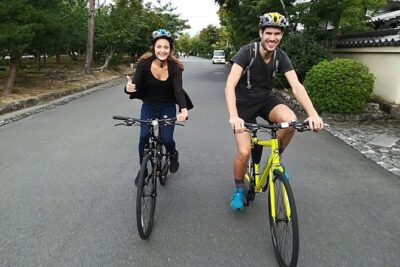
I would choose this tour if you want to cover several major sights in one day without spending the whole day on buses. It suits active visitors who enjoy seeing a city from the street and who want a guide to handle the route.
It is also a good choice for a first visit to Kyoto. You get a wide sample of the city: a famous shrine, major Buddhist temples, a river, a canal, traditional neighborhoods, gardens, and a proper meal. You can then decide which places deserve a longer return visit.
You should think twice if you want a slow temple day, dislike fixed schedules, or are not comfortable on a bike. The tour is not suitable for pregnant women, people with back problems, or people who cannot ride. Warm clothing, gloves, comfortable shoes, a hat, and sunscreen are sensible choices. Smoking, alcohol, and drugs are not allowed.
Free cancellation is available up to 24 hours before departure, and you can reserve now and pay later. Check the available start time because the early departure is central to the experience.
Should you book it?
Book this tour if you want Kyoto’s major eastern and southern sights tied together by an active, well-planned route. The early visit to Fushimi Inari, the riverside riding, included coffee and lunch, and the small group make the $135 price easier to justify.
Skip it if your ideal day means lingering at one temple or avoiding a long period on two wheels. For most reasonably fit visitors who can ride confidently, this is a strong way to see a large part of Kyoto before the city gets fully busy.
FAQ
How long does the Kyoto e-bike tour last?
The tour lasts seven hours, including the safety briefing, sightseeing stops, coffee break, lunch, and the ride back to Cycle Kyoto.
Where does the tour meet?
The meeting point is Cycle Kyoto. From JR Kyoto Station, walk past Avanti, cross at the traffic lights, pass the Daily Yamazaki convenience store, and take the next left.
How early should I arrive?
Arrive 15 minutes before the scheduled start time. This allows time to find the meeting point and complete the short safety briefing.
Is the tour conducted in English?
Yes. The tour includes a live English-speaking guide.
What is included in the price?
The price includes the e-bike, helmet, morning coffee, water, a sit-down lunch, and the live guide. Snacks and extra drinks are not included.
Is this suitable for someone who cannot ride a bike?
No. The tour is not suitable for people who cannot ride a bike. It is also not suitable for pregnant women or people with back problems.
What should I bring?
Bring comfortable clothes, shoes suitable for biking, warm clothing, gloves, a hat, sunscreen, and a camera. Carrying water is also recommended, even though water is provided.
More Electric Bike Rides in Kyoto
- 5 Top Highlights of Kyoto Full Day Bike Tour (E-bike option)
★ 5.0 · 511 reviews - E-Bike Tours of the highlights of Kyoto!!!
★ 5.0 · 291 reviews - Kyoto: City Secrets eBike Tour
★ 4.9 · 196 reviews - Pedal Adventure Kyoto’s iconic landmarks on an e-bike tour
★ 5.0 · 189 reviews
Just added around Kyoto
- Sekka Cotton Furoshiki Class★ 5.0 · 19 reviews
- Kyoto Sword Experience – includes Museum Ticket/Ninja Experience★ 4.5 · 149 reviews
- Scenic Green Tea Fields of Hidden Kyoto & Local Tea Exp (Private)★ 5.0 · 32 reviews
- Secret Eastern Kyoto Biking Adventure★ 5.0 · 44 reviews
- Private Sake Tasting in Central Kyoto with Sake Sommelier★ 5.0 · 32 reviews
- Samurai School in Kyoto: Samurai for a Day★ 5.0 · 202 reviews
- A Privately Guided Photoshoot in Beautiful Kyoto by a Pro★ 5.0 · 18 reviews
- Samurai Performance and Casual Experience: Kyoto Ticket★ 4.5 · 115 reviews
Cycling Tours, compared.
Arashiyama Bamboo Forest & Hidden Gems Bike Tour (Early Bird)
Our verdict →

Browse the lists this tour appears in