
Reviewed · CYCLING TOURS
Kyoto: City Secrets eBike Tour
Kyoto’s best moments often happen between the famous sights. This 9-kilometer e-bike ride links major temples with quiet lanes, mountain roads, shrine grounds, and small local places that are hard to reach by bus. Guides including Yuta, Henry, Sean, Michael, and Shizuka bring strong local knowledge and a personal touch to the ride.
I like the way the tour mixes the Golden Pavilion with less-visited Zen settings, and I like the small group limit of eight people. The electric bikes also make the occasional hill far less daunting. The main consideration is that you need to be a confident cyclist: some descents, cobbled paths, and tight turns require care.
Key points to know before you book
- About 9 kilometers by e-bike: You cover a useful stretch of Kyoto without the strain of a standard bicycle.
- Golden Pavilion plus quieter Kyoto: The route pairs a famous sight with temples, shrines, back streets, and Zen gardens.
- Small groups of up to eight: It is easier to ask questions and stay together on city streets.
- Strong English-speaking guides: Yuta, Henry, Sean, Michael, and Shizuka are among the guides praised for history, culture, safety, and local recommendations.
- A 225-minute outing: This is a substantial half-day experience, not a quick city spin.
- Arrive early and ride carefully: Meet at NORU 15 minutes before departure. The tour is for people aged 13 and older who can ride confidently and are at least 140 centimeters tall.
Why an e-bike makes sense in Kyoto
Kyoto is a good cycling city in theory, but its size, traffic, hills, and spread-out sights can make a regular bicycle tiring. The electric assistance changes the calculation. You still pedal, but the bike takes much of the sting out of uphill sections and lets you arrive at temples without feeling spent.
The route covers about 9 kilometers, which is enough to give you a feel for several parts of the city without turning the afternoon into an endurance test. Most of the ride is described as easy, with flatter streets mixed with occasional hills. One review notes a steep section followed by a rewarding downhill ride. Another points out that cobbles, sharp turns, and a fast descent require basic bike confidence.
Your guide leads the group through quieter streets where possible. That matters in Kyoto, where a direct route between major sights can put you on busy roads. You still need to watch traffic, obey red lights, keep left, and pay attention to the guide. The ride is not a closed-road excursion.
The bikes, helmets, and attraction admission are included. Riders have also received water and, in wet conditions, ponchos. Those practical touches are useful, especially in Kyoto’s summer heat or during a sudden shower, though weather support should not be treated as a guarantee for every departure.
More Bike Tours in Kyoto
- Hidden Kyoto E-Biking tour
★ 5.0 · 1,843 reviews - Bike Tour Exploring North Kyoto plus Lunch
★ 5.0 · 1,087 reviews - Arashiyama Bamboo Forest & Hidden Gems Bike Tour (Early Bird)
★ 5.0 · 613 reviews
The Golden Pavilion gives the tour a famous anchor
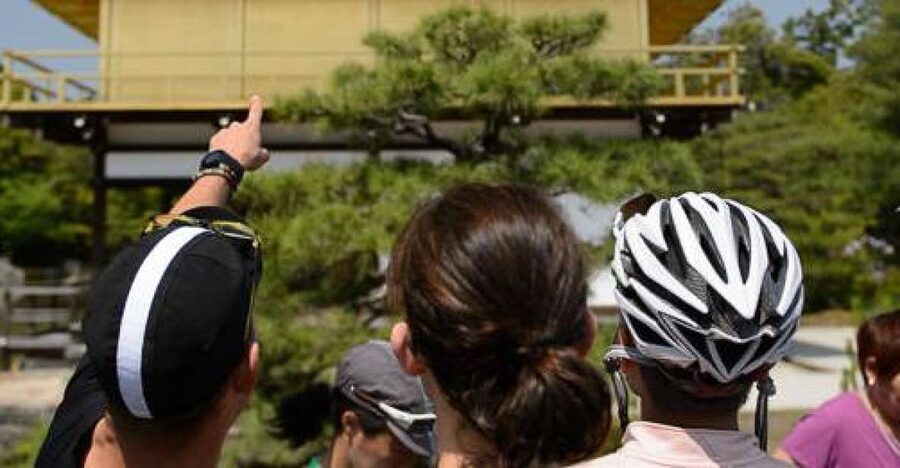
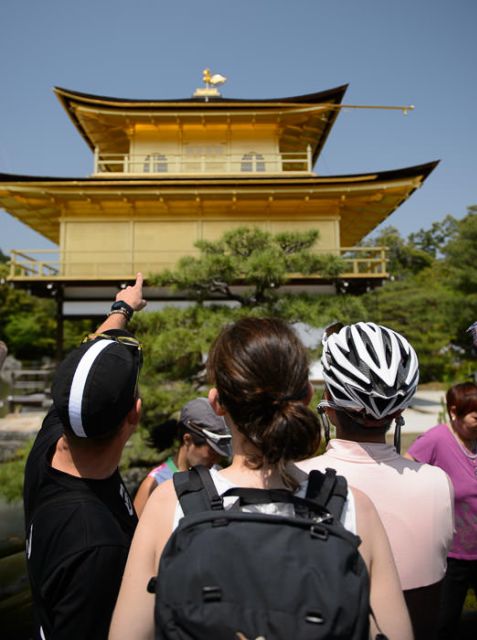
Kinkaku-ji, better known as the Golden Pavilion, is the most instantly recognizable stop on this experience. Its gold-covered upper stories reflect across the pond, and the surrounding gardens give you a chance to slow down after the ride.
The appeal here is obvious, but so is the limitation. The Golden Pavilion is one of Kyoto’s busiest sights, so it will not provide the quiet atmosphere found later in the tour. Your time is also shared between cycling and several stops, which means this is not the right outing if you want to study every temple hall at length.
Still, including Kinkaku-ji gives the tour a useful balance. You get the famous Kyoto image, then move away from the standard sightseeing circuit. That combination works better than spending the entire afternoon at crowded landmarks.
Daitoku-ji and the quieter side of Zen
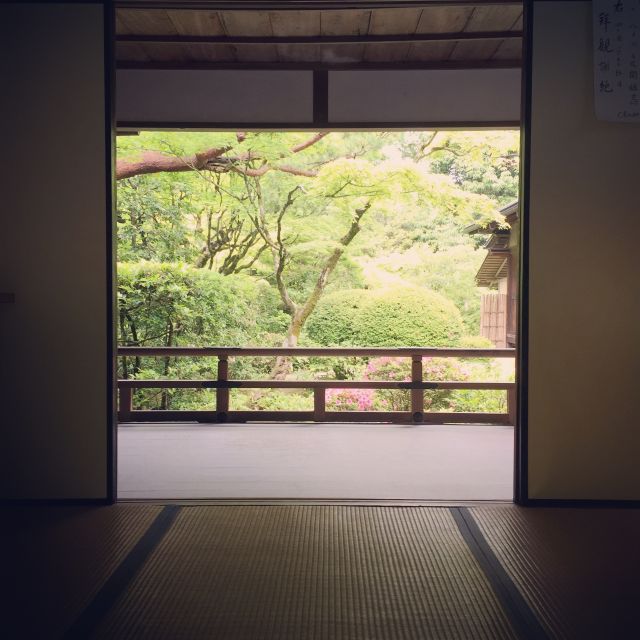
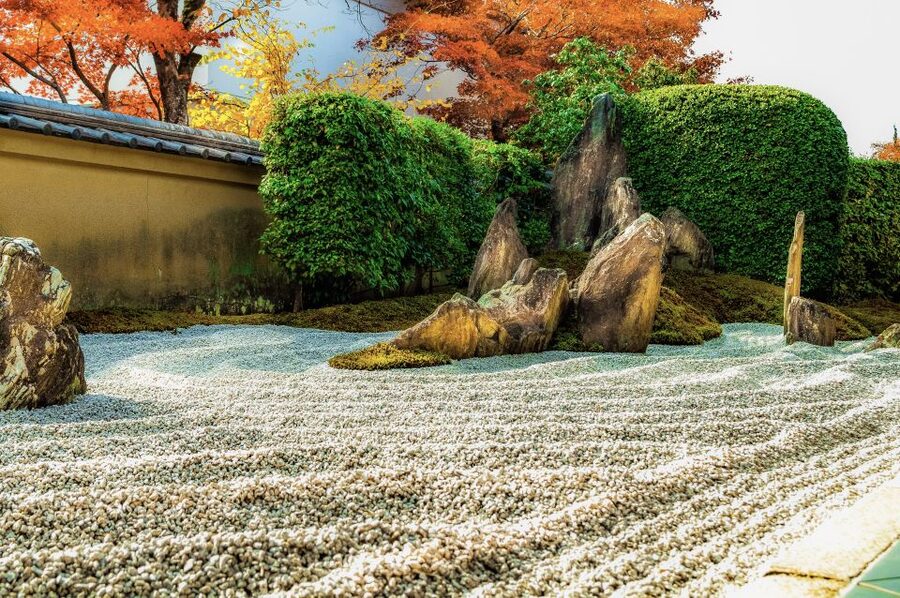
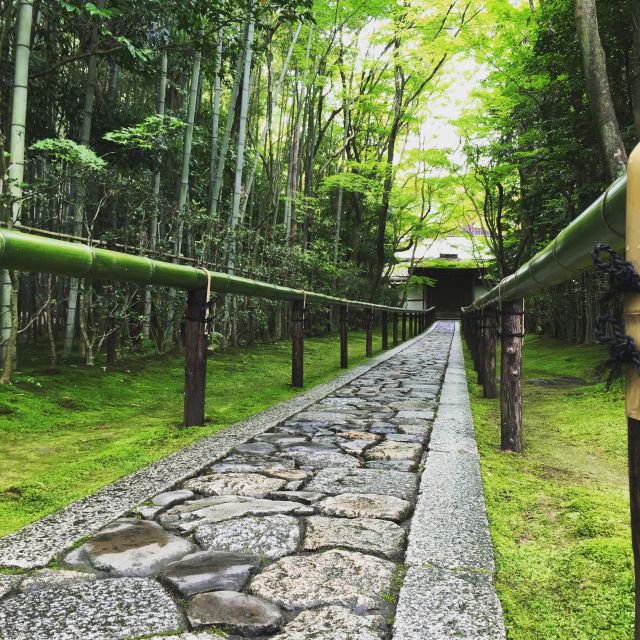
The tour often reaches the Daitoku-ji area, a major center of Zen Buddhism. The exact stops can vary, but the experience is built around temple compounds, gardens, and quieter religious spaces rather than only headline attractions.
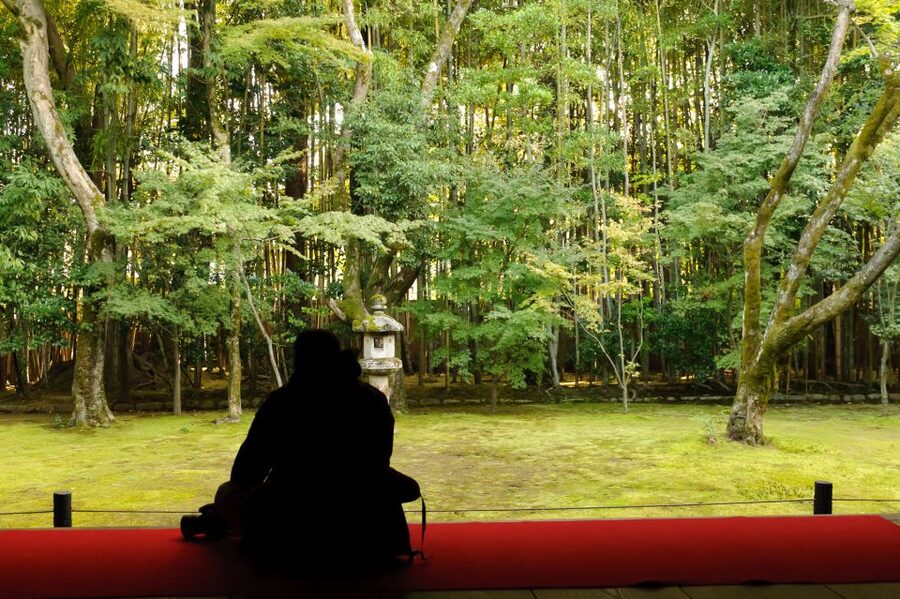
This is where the guide’s interpretation matters most. A temple garden can look like a simple arrangement of rocks, gravel, moss, and clipped trees if you do not know how to read it. Guides such as Yuta have explained Zen ideas, religious customs, and the meaning behind what you are seeing, turning a silent garden into a more thoughtful stop.
Some departures have included a tea experience at Daitoku-ji, while other highlights have included peaceful monastery settings and traditional tea rooms. You should not assume every group will follow exactly the same sequence, but the route clearly gives Zen gardens more than a passing glance.
I especially like the change of pace here. The bicycle gets you through the city quickly, but the temple gardens ask you to sit still. You may hear birds, notice the sound of gravel underfoot, and enjoy a pause from Kyoto’s crowded central streets.
Geisha streets and old Kyoto lanes
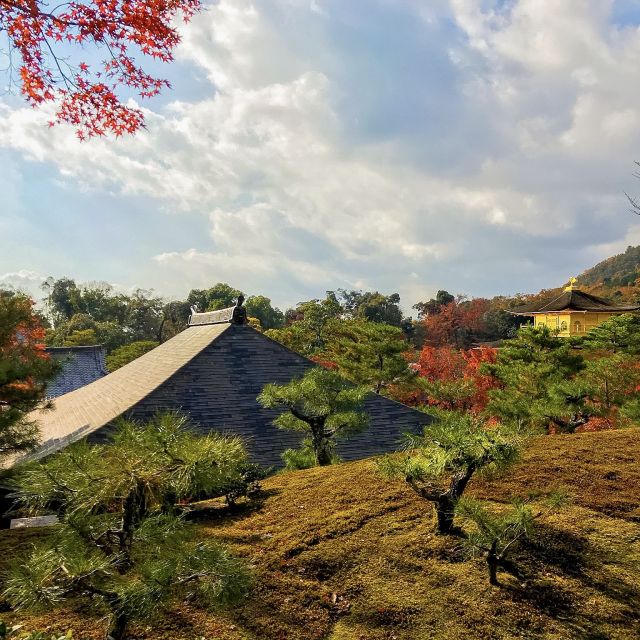
Another part of the ride passes through Kyoto’s oldest geisha district. The point is not simply to look for geisha. It is to see a traditional neighborhood, understand something about the city’s entertainment culture, and notice the narrow lanes and older buildings that are easy to miss from a bus or taxi.
You may encounter geisha or maiko, but that should be treated as luck rather than a promised part of the tour. The more dependable benefit is the chance to move through a historic district at bicycle speed, slow enough to notice details but fast enough to cover ground.
Several of the guides are praised for taking groups through back streets and less-touristed areas. That approach can make Kyoto feel more like a living city than a string of monuments. You may see ordinary neighborhoods, local traffic patterns, mountain streams, and small cafes alongside the formal religious sites.
The guide’s role is important here. A good leader keeps the group together, explains when to stop, and prevents the ride from becoming a nervous search for the next turn. Yuta, Henry, Sean, and Michael are repeatedly singled out for making the route feel safe and personal.
Same trip, a completely different kind of day:
- PERFECT KYOTO 1-Day Bus Tour
★ 5.0 · 13,518 reviews - Kyoto: Fushimi Inari, Kinkakuji, Bamboo Grove 1 Day Bus Tour
★ 4.8 · 4,316 reviews - Kyoto: Tea Ceremony in a Traditional Tea House in Kiyomizu
★ 4.9 · 3,519 reviews - Kyoto Geisha Walking Tour: Gion District & Hidden Gems
★ 4.7 · 3,273 reviews
Shrines, knowledge, and the changing scenery
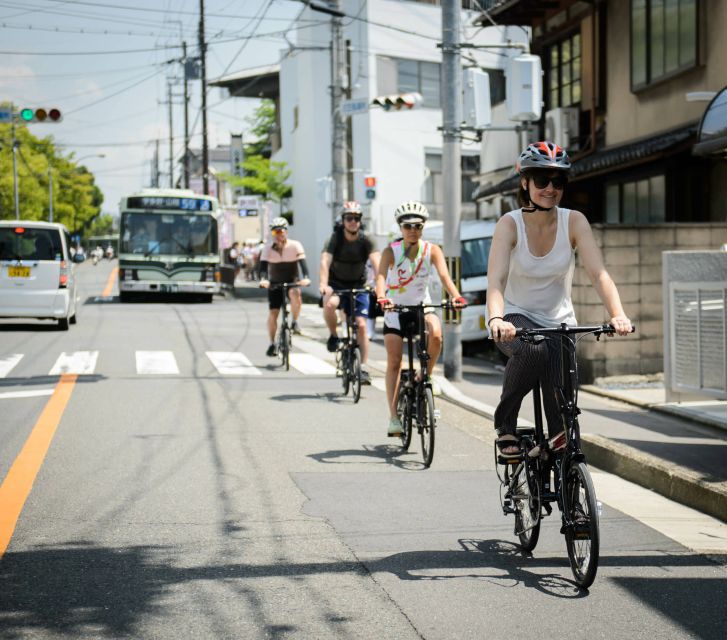
The route includes shrines and temples connected with learning, history, and local religious life. One advertised highlight is Kyoto’s shrine of knowledge, while the wider ride includes several places of worship and cultural interest.
You will not spend hours at each stop. That is a strength if you want variety. The ride keeps moving, allowing you to see several parts of Kyoto in a single morning or afternoon. It is also a limitation if you prefer long, quiet visits with plenty of time for photography or personal reflection.
The scenery changes as the group leaves busier areas. Urban streets give way to leafy lanes, streams, temple grounds, and mountain roads. One route section has included a panoramic downhill ride and a stop near a river where the group could cool down. These details may vary by departure, but they show how the experience uses Kyoto’s physical contours rather than treating the city as a flat collection of attractions.
Your guide may also point out photo locations, explain local customs, or recommend restaurants for the rest of your stay. The value is not only what happens during the 225 minutes. You leave with a clearer sense of how to spend the next few days.
A 1,000-year-old cafe and traditional treats
Food is not the main purpose of the outing, but small refreshment stops add character. Some tours have included a visit to a very old family-run mochi shop or cafe, with sweet samples and tea. Another account describes a chilled drink at a 1,000-year-old cafe.
These stops give the ride a welcome local texture. A snack break also helps you reset after cycling and creates time to ask the guide questions without trying to talk over traffic. You should regard the specific food or cafe as route-dependent rather than a fixed meal included in the price.
The same applies to tea ceremonies. A tea stop at Daitoku-ji has been part of some outings, and traditional tea rooms have featured among the highlights. If a formal tea ceremony is essential to your Kyoto plans, confirm the current route before booking. If you simply want a culturally meaningful pause, the experience appears designed to provide one.
What the guides add to the ride
The guide is the heart of this experience. The bicycle gets you from place to place, but the stories give the stops their meaning.
Yuta is praised for explaining Zen Buddhism, Japanese history, religion, social customs, and Kyoto life with warmth and humor. He has also been attentive to heat, provided breaks, and adjusted the pace to keep groups comfortable. Henry is noted for combining major sights with smaller local places, while Michael has been praised for bringing history to life and making the ride fun.
Sean and Shawn are also described as friendly, careful, and generous with information. Shizuka has led groups through the Golden Pavilion and Daitoku-ji while explaining Zen ideas. Names and assignments can change, so you cannot book a particular guide unless the operator confirms it.
What you can reasonably expect is an English-speaking guide who does more than point at buildings. The best moments come when the guide explains why a place matters, answers questions, and connects a temple or street to the wider story of Kyoto.
How difficult is the cycling?
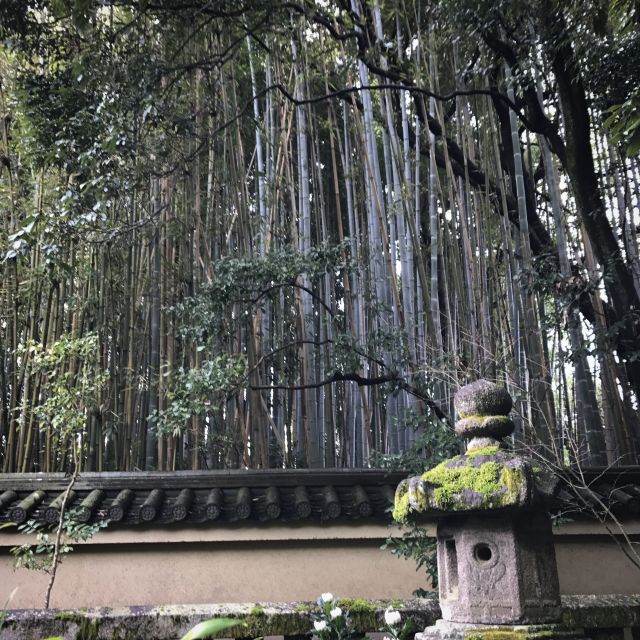
You do not need to be an athlete. The electric assistance handles much of the effort, and most of the route is described as manageable. Several riders in their comments found the bikes comfortable and easy to use, including families with teenagers.
You do need to ride a bicycle confidently in an urban setting. The route includes traffic lights, narrow streets, occasional hills, cobblestones, tight corners, and at least one faster descent. Your guide will help with safety, but you remain responsible for controlling the bike.
The tour is not suitable for anyone under 140 centimeters tall, and the stated minimum age is 13. If you are uneasy on a bicycle, have trouble with quick turns, or dislike riding near traffic, a walking or coach tour may be a better fit.
The weather also matters. Heavy rain, storms, or other severe conditions can lead to cancellation with a full refund. Light rain does not necessarily end the ride, and ponchos have been available on wet outings, but Kyoto’s weather can change quickly.
Is $127 a fair price?
At $127 per person, this is not a budget way to see Kyoto. You are paying for 225 minutes, an e-bike, helmet, English-speaking guidance, and entrance fees, plus the convenience of moving between several districts without arranging separate transport.
The value improves if you want a compact introduction to Kyoto’s temples, gardens, neighborhoods, and cycling routes. A private taxi between the same types of stops could cost more, while public transport would not give you the same access to quiet back streets or the same continuous commentary.
The price is less attractive if you mainly want the Golden Pavilion. You can visit that on your own for less, and the tour gives you limited time at each stop because it covers so much ground. I would think of the fee as payment for access, transport, interpretation, and route planning rather than for one attraction.
The group limit helps justify the cost. Eight people is small enough for the guide to notice your pace, answer questions, and manage road crossings without the feel of a large coach excursion.
Timing, meeting point, and cancellation details
Choose from the listed departure times of 9:00 am, 9:30 am, or 1:00 pm. The morning departures leave you with the rest of the day, while the afternoon option can work well after a morning arrival or a slower start.
Meet at NORU and arrive at least 15 minutes early. This is important. Missing the departure can mean losing the booking, and a late arrival is not treated as a minor delay.
The booking information says you can cancel up to 24 hours ahead for a full refund, while the operational notes also state a 12-hour cutoff. Because those details do not match, confirm the current cancellation deadline when you reserve. Missed departures and no-shows are non-refundable, while weather cancellations by the supplier are refunded in full.
Who should book the Kyoto City Secrets eBike Tour?
I would choose this ride if you are visiting Kyoto for the first time and want a broad orientation, or if you are returning and have already seen the most famous temples. It works particularly well for active couples, families with confident teenagers, and anyone who prefers streets and local districts to a full day inside formal attractions.
It is also a smart choice early in your stay. The guide can point you toward restaurants, neighborhoods, and places worth revisiting. Several guides have offered useful suggestions for the days after the ride.
I would hesitate if you want a slow, deeply focused temple visit, dislike city cycling, or need a fully predictable itinerary. The route balances major sights and quieter places, but the exact mix can shift with weather, traffic, temple access, and the guide’s judgment.
Should you book it?
Book this tour if you want to understand Kyoto through movement. You will see the Golden Pavilion, ride through an old geisha district, pause in Zen gardens, and reach quieter corners that are awkward to connect by public transport.
The strongest reason to go is the combination of electric-bike ease and excellent personal guiding. The main caution is equally clear: you must be comfortable on a bike and willing to trade long visits at a few sights for a varied half-day route.
For many visitors, that is a good bargain. Kyoto becomes more coherent when its temples, neighborhoods, hills, and quiet lanes are seen as parts of one city rather than isolated stops.
FAQ
How long is the Kyoto City Secrets eBike Tour?
The tour lasts 225 minutes, or 3 hours and 45 minutes.
How far do you cycle?
The planned route covers about 9 kilometers.
What is included in the price?
An English-speaking guide, an e-bike, a helmet, and entrance fees to the attractions are included.
Where does the tour meet?
The meeting point is NORU.
What departure times are available?
The listed departure times are 9:00 am, 9:30 am, and 1:00 pm. You should arrive 15 minutes before your chosen departure.
Who can join the ride?
The experience is designed for people aged 13 and older who can ride a bicycle confidently. It is not suitable for anyone under 140 centimeters tall.
More Electric Bike Rides in Kyoto
- 5 Top Highlights of Kyoto Full Day Bike Tour (E-bike option)
★ 5.0 · 511 reviews - E-Bike Tours of the highlights of Kyoto!!!
★ 5.0 · 291 reviews - Pedal Adventure Kyoto’s iconic landmarks on an e-bike tour
★ 5.0 · 189 reviews - Kyoto: Hidden Gems E-Bike Tour with Local Japanese Guide
★ 4.9 · 189 reviews
Just added around Kyoto
- Sekka Cotton Furoshiki Class★ 5.0 · 19 reviews
- Scenic Green Tea Fields of Hidden Kyoto & Local Tea Exp (Private)★ 5.0 · 32 reviews
- Secret Eastern Kyoto Biking Adventure★ 5.0 · 44 reviews
- Kyoto Sword Experience – includes Museum Ticket/Ninja Experience★ 4.5 · 149 reviews
- Private Sake Tasting in Central Kyoto with Sake Sommelier★ 5.0 · 32 reviews
- Samurai School in Kyoto: Samurai for a Day★ 5.0 · 202 reviews
- SHIRAKAWA Japanese Culture Experiences with private English staff★ 5.0 · 16 reviews
- A Privately Guided Photoshoot in Beautiful Kyoto by a Pro★ 5.0 · 18 reviews
Cycling Tours, compared.
Arashiyama Bamboo Forest & Hidden Gems Bike Tour (Early Bird)
Our verdict →

Browse the lists this tour appears in