

Reviewed · CYCLING TOURS
5 Top Highlights of Kyoto Full Day Bike Tour (E-bike option)
Kyoto’s five biggest sights are spread across the city, and this tour links them by bicycle in one long, energetic day. You’ll move from Arashiyama’s bamboo to Fushimi Inari’s red torii gates, then on to Gion, Kiyomizu-dera, and the Golden Pavilion without spending the day waiting for buses. The e-bike option is worth serious thought, since the route can reach 27 miles and includes plenty of walking.
I like the mix of famous temples and ordinary Kyoto streets, including river paths, rice fields, gardens, and quieter corners. I also like the small group, capped at eight people, and the guide-led route. Guides including Rob, Cass, Peter, and Ray are praised for clear safety signals, cultural context, photo help, and adjusting the pace to the group. The catch is simple: this is a full-body day, not a gentle sightseeing ride. Heat, hills, crowds, and accumulated kilometers can leave you tired.
The key points at a glance
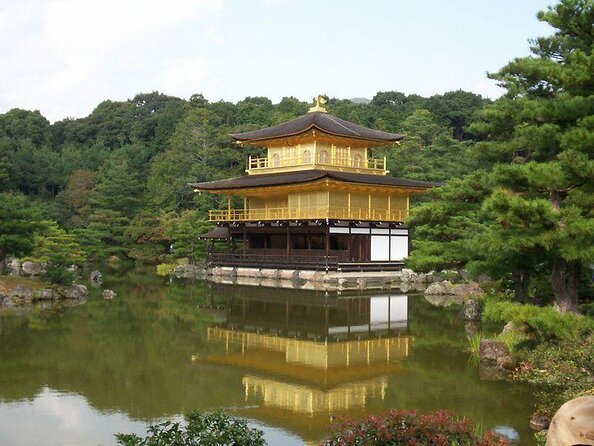
- Five major sights in one day: Arashiyama, Fushimi Inari, Gion, Kiyomizu-dera, and Kinkakuji.
- Up to 44 kilometers of riding: Expect a serious outing with both cycling and walking.
- Optional e-bike support: You pay extra and need confirmation, but assistance can help on inclines and in hot weather.
- Small groups of up to eight: Your guide can give clearer directions and adjust attention more easily.
- More than temple hopping: The route can include river paths, rice fields, gardens, local streets, and everyday Kyoto scenes.
- Useful inclusions: Bike, helmet, water, admission fees, light lunch, snacks, and an English-speaking bilingual guide are included.
Why a bicycle works so well in Kyoto
Kyoto’s sights are not arranged in one tidy sightseeing district. Arashiyama sits in the west, Fushimi Inari in the south, Kiyomizu-dera and Gion are farther east, and Kinkakuji is in the northwest. That makes a standard city tour a puzzle of trains, buses, traffic, and walking.
A bicycle gives you a better sense of the spaces between the famous stops. You may ride beside waterways, pass through residential streets, and see rice fields or gardens that would vanish behind a bus window. The route also helps you avoid some of Kyoto’s worst traffic delays.
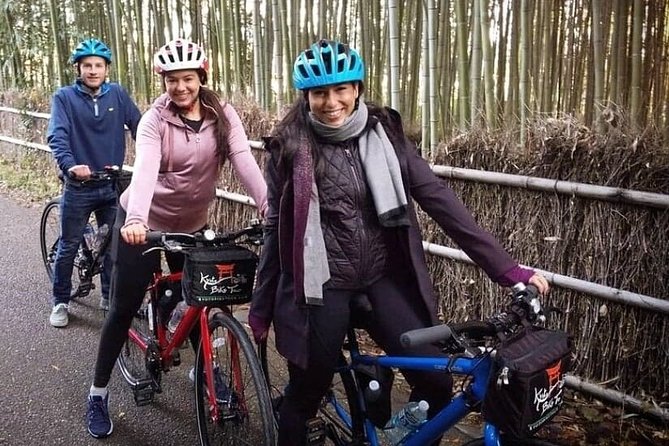
This is not a casual rental ride where you follow a map at your own speed. You stay with a guide, stop at the sights, and ride as a group. That matters in a city where pedestrians, cars, narrow streets, and busy temple approaches can make navigation distracting.
More Bike Tours in Kyoto
- Hidden Kyoto E-Biking tour
★ 5.0 · 1,843 reviews - Bike Tour Exploring North Kyoto plus Lunch
★ 5.0 · 1,087 reviews - Arashiyama Bamboo Forest & Hidden Gems Bike Tour (Early Bird)
★ 5.0 · 613 reviews
Starting at 8:30 a.m. in Saga-Arashiyama
The tour begins at Saga-Arashiyama Station, at 11-1 Sagatenryuji Kurumamichicho, Ukyo Ward. Starting here makes sense because the bamboo forest is one of the first major sights, and an early departure gives you a head start before the day becomes hotter and more crowded.
The early start also sets the pace for the rest of the day. You should eat a hearty breakfast before arriving. Lunch and snacks are included, but this is a long physical outing, and the first part of the day can pass quickly before you have a proper meal.
Your guide provides the bicycle, helmet, water, and route direction. Several guides are associated with this experience, including Rob, Cass, Peter, and Ray. The exact guide is not guaranteed, but the strongest praise focuses on guides who communicate clearly, watch the group closely, and explain both history and present-day culture.
Bamboo Forest Street: beautiful, brief, and busy
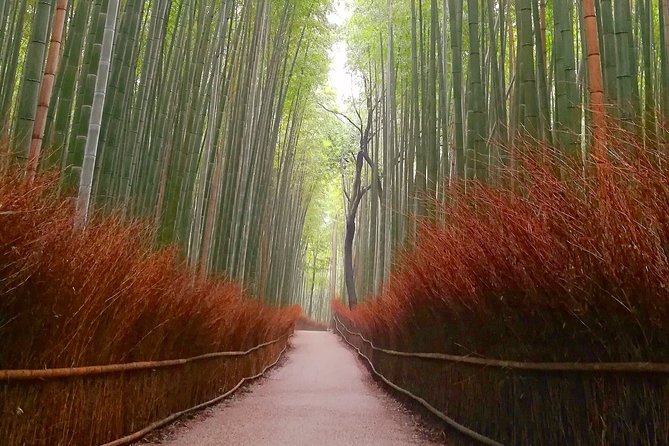
The first stop is Bamboo Forest Street, with about 20 minutes to walk among the tall bamboo. The sound is part of the appeal. Stems creak and leaves shift overhead, creating a quiet, unusual atmosphere even when other people are nearby.
Twenty minutes is enough for a taste and some photographs, but not a long wandering session. That short stop is useful on a day with five major attractions, though you should not expect the relaxed pace of a stand-alone Arashiyama visit.
Arashiyama has plenty more to offer, but this tour keeps moving. The payoff is that you get a broad view of Kyoto rather than spending most of the day in one district.
Fushimi Inari and the red torii tunnel
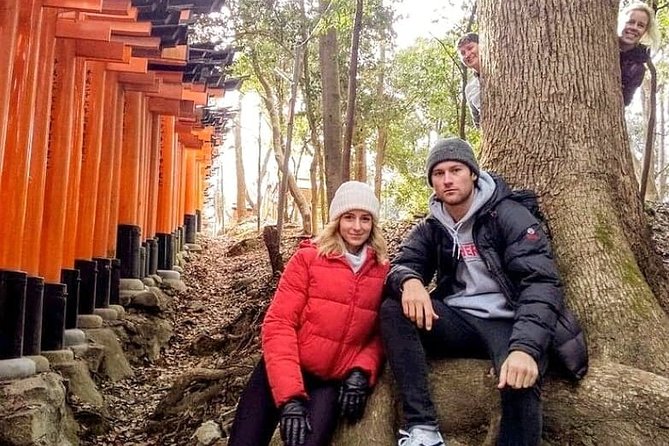
At Fushimi Inari-taisha, you’ll have about 30 minutes to walk through the famous red torii gates. This is one of Kyoto’s most recognizable sights, and the repeating gates create an immediate sense of place.
The key practical point is time. Fushimi Inari’s full mountain route takes much longer than 30 minutes, so this stop focuses on the lower approach and the iconic tunnel rather than a complete climb. You get the memorable setting without sacrificing the rest of the city.
The shrine can be crowded, especially around its most photographed areas. A guide can help keep the group together and point out where to pause, but you will not have unlimited time for photographs or quiet exploration.
Same trip, a completely different kind of day:
- PERFECT KYOTO 1-Day Bus Tour
★ 5.0 · 13,518 reviews - Kyoto: Fushimi Inari, Kinkakuji, Bamboo Grove 1 Day Bus Tour
★ 4.8 · 4,316 reviews - Kyoto: Tea Ceremony in a Traditional Tea House in Kiyomizu
★ 4.9 · 3,519 reviews - Kyoto Geisha Walking Tour: Gion District & Hidden Gems
★ 4.7 · 3,273 reviews
Gion: old streets and careful cultural context
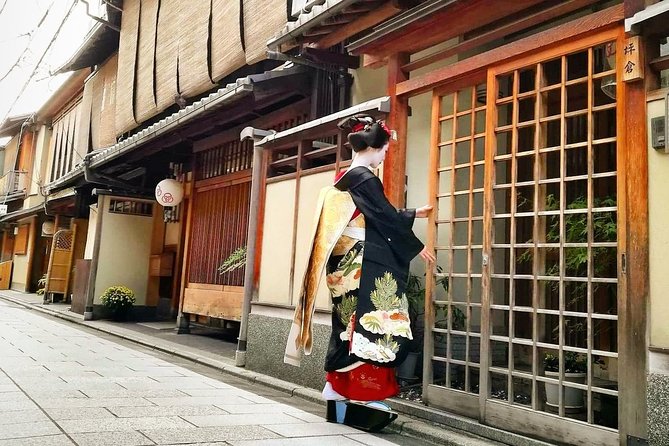
The 20-minute stop in Gion introduces Kyoto’s historic geisha district and the world of geisha and maiko. It is a short visit, but it breaks up the temple schedule with a look at a living neighborhood rather than a single religious site.
Gion is a place to behave thoughtfully. Keep your distance from people, avoid blocking narrow lanes, and listen to your guide’s advice about photography and local customs. The value here is not simply spotting a costume. It is gaining some context for the district and its role in Kyoto’s traditional culture.
Because the stop is brief, think of Gion as an introduction. You will see the old streets and receive background, but you will not have time for a long neighborhood walk.
Kiyomizu-dera and Kyoto from above
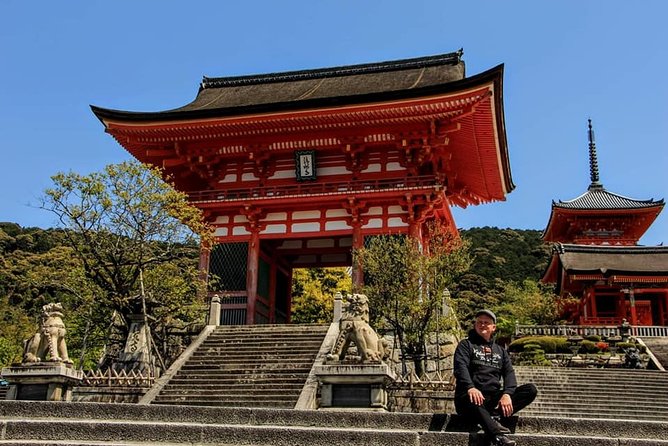
Kiyomizu-dera gets the longest scheduled stop, about one hour. That makes sense. The temple is one of Kyoto’s defining sights, and its hillside position gives you one of the city’s classic views.
You’ll have time to enter the temple grounds, take in the architecture, and look across Kyoto. The approach and temple grounds also require walking, so the hour adds to the physical demands already created by the bicycle route.
This is one point where a guide adds real value. A good explanation can help you understand why the temple matters instead of reducing the visit to a quick photograph from a famous platform. Guides on this tour are also praised for finding good photo angles and taking pictures for the group, a welcome touch when you are traveling as a couple or family.
Kinkakuji, the Golden Pavilion
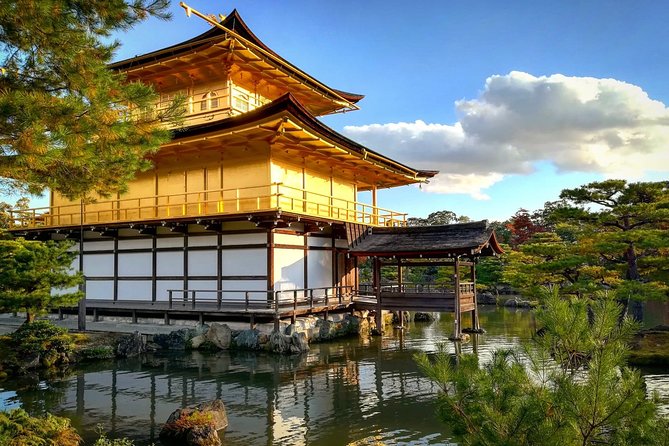
The final major sight is Kinkakuji, the Golden Pavilion, with about 30 minutes to see the temple and its setting. The pavilion’s gold surface reflected over the pond is one of Kyoto’s most familiar images, and it delivers a strong finish to the sightseeing portion of the day.
As with Fushimi Inari, the scheduled time is focused. You’ll see the main view and walk through the grounds, but this is not an unhurried garden visit. The tour’s purpose is to cover five headline sights in one day, so each stop has a clear limit.
By this point, the day’s distance matters. The Golden Pavilion may be the last major stop, but your legs have already handled many kilometers, hills, crossings, and temple walks.
What the cycling is really like
The advertised distance can reach 44 kilometers, or about 27 miles. That is a substantial ride for most people, even though it is divided into sections with sightseeing breaks, lunch, snacks, and rest opportunities.
You should have a moderate level of physical fitness. Several accounts describe the outing as a serious workout, while others note that even novice cyclists managed it with a patient guide and regular stops. Your comfort will depend on your usual cycling habits, the weather, and how you respond to hills.
The route is not only urban riding. It can include paved paths beside the river, quieter outskirts, streams, gardens, rice fields, and local streets. That variety is one of the best parts of the day, but it also means you should stay alert and follow the guide’s signals.
Rob is especially praised for using clear, intuitive signals around cars and pedestrians. That detail matters if city cycling makes you nervous. The small group also makes it easier for a guide to check that everyone is keeping up.
Should you pay extra for the e-bike?
The standard bicycle is included. An e-bike costs extra and needs confirmation, so request it when booking rather than assuming one will be available.
I would strongly consider the e-bike if you are not a regular cyclist, are concerned about hills, or are visiting during hot weather. It can make the long route more manageable, particularly when the kilometers begin to add up. Families and mixed-ability groups may also find it useful, since one person can choose assistance while another rides a regular bicycle.
That said, the e-bike does not turn this into an effortless sightseeing day. You still ride for much of the day, walk through five major attractions, and deal with heat, sun, and crowds. One fit rider found a regular bicycle entirely adequate, so you do not need to upgrade automatically.
Guides, group size, and the human side of the tour
The tour uses native English-speaking bilingual guides. Names associated with the experience include Rob, Cass, Peter, and Ray, and each is described as bringing a slightly different strength.
Rob is praised for safety, cultural insight, patience, and photography. Cass is noted for making the day fun, looking after riders in heat, and taking good pictures. Peter receives strong marks for history, conversation, and keeping mixed-ability families comfortable. Ray is described as attentive, informative, and good at guiding groups through crowded sights.
The group limit is eight people. That is small enough for a guide to notice if you need water, are falling behind, or want help with a photograph. It also keeps the ride more personal than a large bus excursion.
The route can be adapted to the group’s needs, but do not expect a private custom tour. You are still joining a fixed full-day plan with five named attractions and a demanding distance.
Food, water, weather, and what to bring
The price includes bottled water, snacks, and a light lunch. That saves you from finding food during a tightly timed day, though you should still eat well before the 8:30 a.m. start.
Tell the operator about food allergies or restrictions when booking. The meal is described as light, so anyone who needs substantial fuel should plan breakfast carefully.
Wear comfortable clothing for cycling and walking, and use sunscreen or other sun protection. Rain is another real consideration. The tour requires good weather, and bad conditions can lead to a new date or a full refund. One account describes a torrential downpour during a tour, with the guide finding shelter and waiting until it was safe to continue. That is useful reassurance, but you should still check the forecast and dress sensibly.
The tour ends back at the starting meeting point. There is no hotel pickup or drop-off, so you need to arrange your own way to Saga-Arashiyama Station.
Is $172.44 a fair price?
At $172.44 per person, this is not the cheapest way to see Kyoto. You are paying for a full day, a bicycle, helmet, guide, admission fees, water, lunch, snacks, and a route that links distant sights without making you solve the city’s transport puzzle yourself.
The value is strongest if you have only a day or two in Kyoto. You can cover the city’s essential sights while also seeing ordinary streets and quieter paths between them. A bus or taxi-based plan may reduce physical effort, but it can lose time to traffic and show you less of the city in between stops.
The e-bike costs extra, which raises the total. Still, for many people that surcharge may be cheaper than discovering halfway through the day that the route is beyond their comfort level.
Who should book this Kyoto bike tour?
I would recommend it to active adults, older cyclists who are comfortable riding for several hours, couples, families with members aged 16 or older, and anyone with limited time who wants a broad first look at Kyoto.
It also suits people who want more than a checklist. The guides add stories about Japanese culture, philosophy, daily life, and local customs, while the route includes parts of Kyoto you might miss from a bus.
I would hesitate if you dislike cycling in cities, have limited mobility, want slow temple visits, or prefer choosing your own meal and sightseeing pace. The age minimum is 16, and the day requires moderate fitness. If you are uncertain, choose the e-bike and arrive ready for a workout, not a lazy pedal.
My booking verdict for the five-highlight route
Book this tour if your goal is to see Kyoto’s biggest sights efficiently while still feeling the city under your own power. The mix of Arashiyama, Fushimi Inari, Gion, Kiyomizu-dera, and Kinkakuji is hard to match in one day by ordinary transport.
The strongest reasons to go are the small group, careful guides, cultural explanations, photo help, and the chance to ride through everyday Kyoto between the headline stops. The main warning is just as clear: 44 kilometers plus temple walking is a lot.
Choose the e-bike if you have any doubts about hills or heat. Eat breakfast, use sun protection, tell the operator about food restrictions, and keep the next evening easy. For an active first day in Kyoto, this is a high-value way to get your bearings fast and see a remarkable amount of the city.
FAQ
How long does the Kyoto bike tour last?
The tour lasts approximately seven to eight hours. It starts at 8:30 a.m. and ends back at the meeting point.
Where does the tour begin?
The meeting point is Saga-Arashiyama Station, at 11-1 Sagatenryuji Kurumamichicho, Ukyo Ward, Kyoto.
Where does the tour end?
The activity ends back at the starting meeting point.
How far can the group ride?
The route can cover up to 27 miles, or 44 kilometers.
Is an e-bike included?
A standard bicycle is included. An e-bike costs extra and requires confirmation.
What sights does the tour visit?
The scheduled stops are Bamboo Forest Street, Fushimi Inari-taisha Shrine, Gion, Kiyomizu-dera Temple, and Kinkakuji Temple, also called the Golden Pavilion.
Is lunch included?
Yes. A light lunch and snacks are included, along with bottled water.
Are admission fees included?
Yes. Admission fees for the included stops are covered.
What is the minimum age?
Participants must be at least 16 years old.
How many people can join the tour?
The maximum group size is eight people.
What fitness level is needed?
You should have a moderate level of physical fitness. The day combines substantial cycling with walking at several temple and shrine sites.
Can I cancel for a refund?
You can cancel at least 24 hours before the start time for a full refund. Cancellations or changes made less than 24 hours before the start time are not accepted for a refund. If poor weather or an insufficient number of participants cancels the tour, you can choose another date or receive a full refund.
More Full-Day Tours in Kyoto
- Full Day Biking Tour Exploring the Best of Kyoto
★ 5.0 · 498 reviews - Kyoto: Private Full-Day Tour by Car
★ 4.9 · 109 reviews - Full-Day Sightseeing to Kyoto Highlights
★ 5.0 · 77 reviews - Kyoto: Full-Day City Highlights Bike Tour with Light Lunch
★ 5.0 · 52 reviews
More Electric Bike Rides in Kyoto
- E-Bike Tours of the highlights of Kyoto!!!
★ 5.0 · 291 reviews - Kyoto: City Secrets eBike Tour
★ 4.9 · 196 reviews - Pedal Adventure Kyoto’s iconic landmarks on an e-bike tour
★ 5.0 · 189 reviews - Kyoto: Hidden Gems E-Bike Tour with Local Japanese Guide
★ 4.9 · 189 reviews
Just added around Kyoto
- Sekka Cotton Furoshiki Class★ 5.0 · 19 reviews
- Kyoto Sword Experience – includes Museum Ticket/Ninja Experience★ 4.5 · 149 reviews
- Scenic Green Tea Fields of Hidden Kyoto & Local Tea Exp (Private)★ 5.0 · 32 reviews
- Secret Eastern Kyoto Biking Adventure★ 5.0 · 44 reviews
- Private Sake Tasting in Central Kyoto with Sake Sommelier★ 5.0 · 32 reviews
- Samurai School in Kyoto: Samurai for a Day★ 5.0 · 202 reviews
- SHIRAKAWA Japanese Culture Experiences with private English staff★ 5.0 · 16 reviews
- A Privately Guided Photoshoot in Beautiful Kyoto by a Pro★ 5.0 · 18 reviews
Cycling Tours, compared.
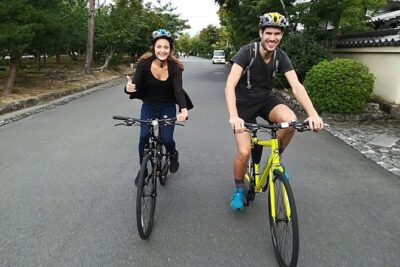
Arashiyama Bamboo Forest & Hidden Gems Bike Tour (Early Bird)
Our verdict →

Browse the lists this tour appears in