
Reviewed · CALLIGRAPHY CLASSES
Kyoto: Calligraphy class at Buddhist temple in city center
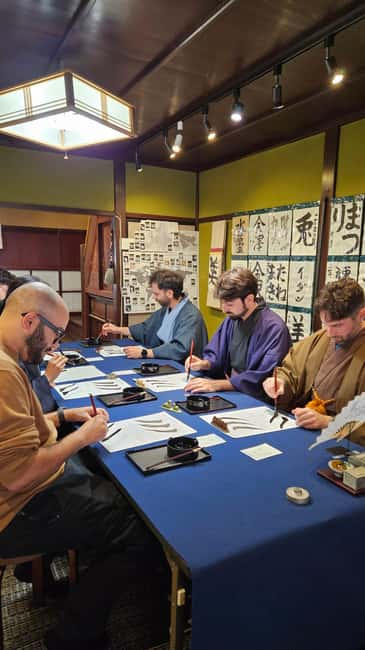
The most memorable part of this Kyoto activity is not simply painting a Japanese character. It is sitting on tatami inside a Buddhist temple, learning how each brushstroke is built, then taking home a piece that you made yourself. The class is led by an experienced Japanese calligraphy teacher, with translation in English, Spanish, Japanese, or Dutch.
I like two things right away: the small group of no more than six, which allows for useful one-on-one tips, and the fact that your final work is a real souvenir rather than a shop purchase. The teacher also prepares a small keychain with your chosen character, a thoughtful extra.
The main consideration is physical. Most of the lesson takes place seated on the floor on a zabuton, and the desks are limited. Calligraphy also looks easier than it is, so expect a calm but focused lesson, not a quick craft project.
Key points to know before booking
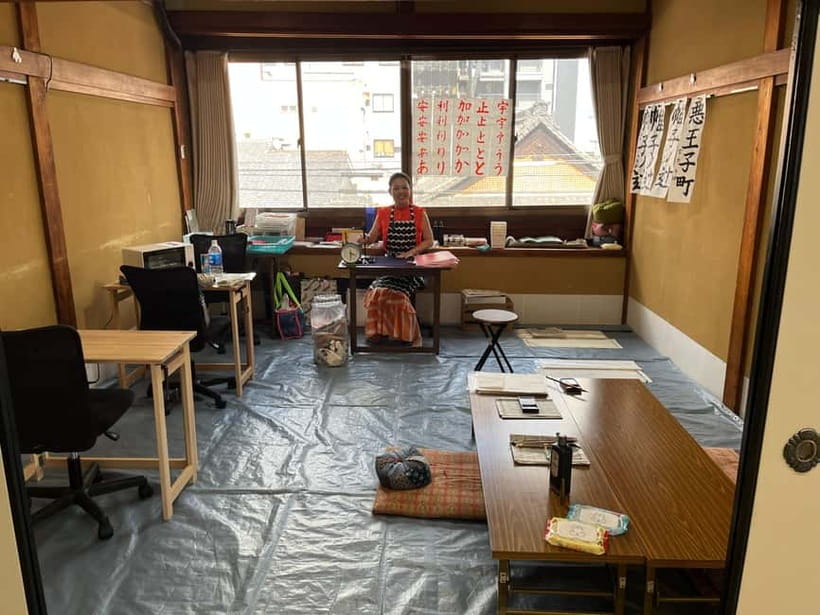
- Temple setting: The workshop takes place in a traditional Japanese room at Seigan-ji Temple, in the Shinkyogoku shopping street near central Kyoto.
- A proper lesson: You practice brush handling, basic lines, and your chosen character before making the final piece.
- Small and personal: Groups are limited to six, with a Japanese instructor and a translator or guide.
- Useful souvenir: You create your own work on shikishi, a special square art board, and receive a character keychain.
- Bring a word in mind: You can choose from examples, but arriving with several ideas makes the process easier.
- Floor seating matters: Tatami and zabuton are part of the experience, but sitting low may be uncomfortable for some people.
A quiet art lesson in central Kyoto
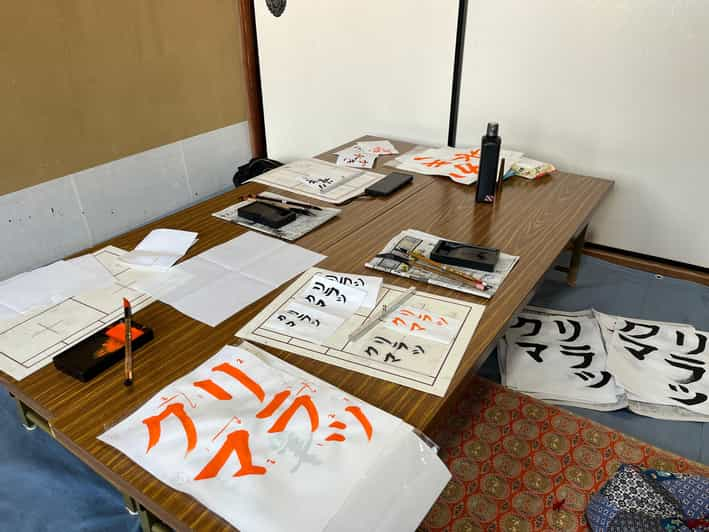
Kyoto is full of famous temples, but many sightseeing stops ask you to look, take a picture, and move on. This class gives you a reason to slow down. For 70 minutes, you sit with brush, ink, and paper and try to make one character look balanced.
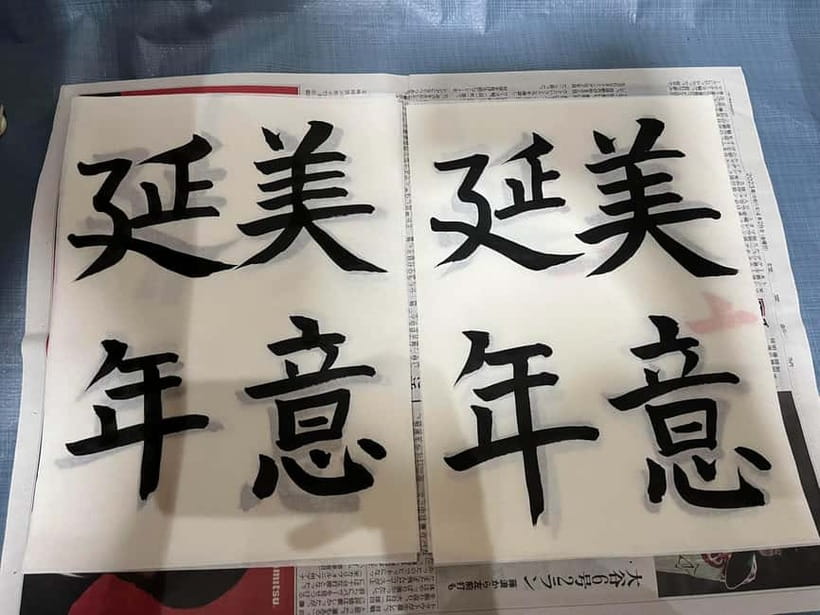
That sounds simple until you try it. Japanese calligraphy, or shodo, depends on the order, pressure, speed, and finish of each stroke. The teacher shows you how to use the tools and how to make basic lines before asking you to write a full kanji.
I like this gradual approach. You are not handed a brush and told to copy a pretty example. You first learn enough about the materials and movements to understand why your finished character looks the way it does.
The class is also a good cultural introduction. Calligraphy is part of Japanese school education, and it teaches more than handwriting. You get a brief look at the structure and origin of kanji, the traditional tools, and the idea that a person can express feeling through controlled movement.
More Calligraphy Classes in Kyoto
- Kyoto: Japanese Calligraphy Class
★ 4.8 · 89 reviews - Kyoto: Japanese Calligraphy Workshop
★ 4.7 · 84 reviews - Kyoto: Local Home Visit and Japanese Calligraphy Class
★ 5.0 · 66 reviews
Finding the red lantern at Seigan-ji Temple
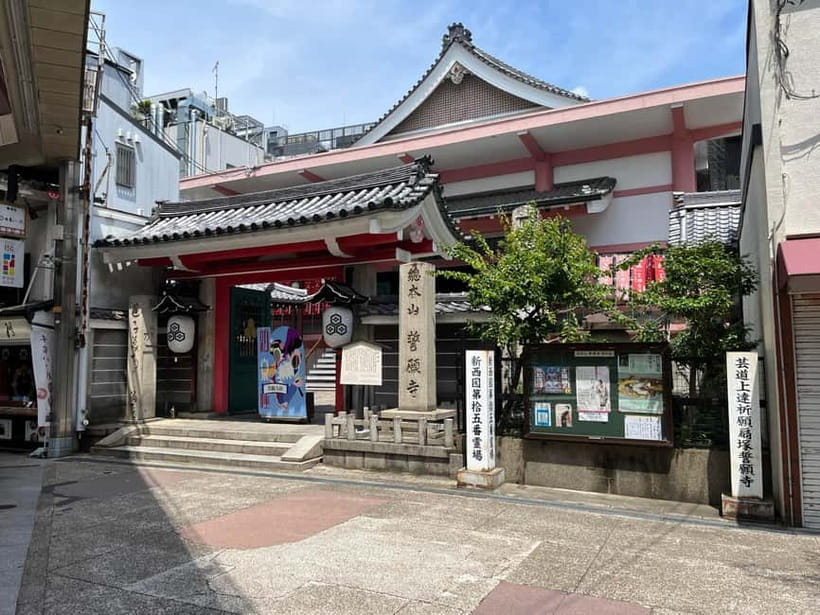
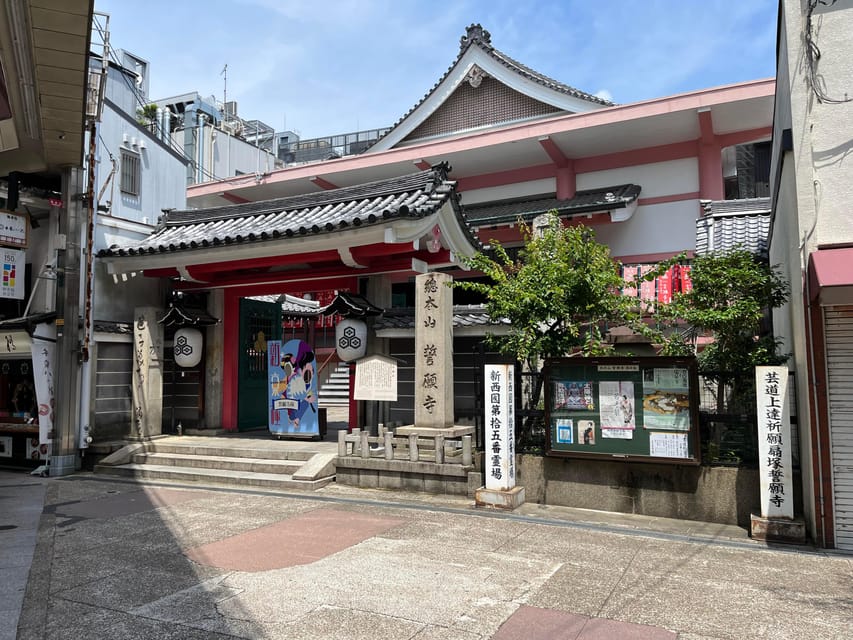
The meeting point is in front of Seigan-ji Temple in the covered Shinkyogoku shopping street. Look for the person holding a red lantern on a stick under the roofed street.
This detail matters. The temple sits in a busy central shopping area, and the meeting instructions are precise because the workshop is not something you arrange by walking up the temple stairs. Do not climb the stairs to find the class, and do not ask the monks or temple workers if you are in the right place. Wait outside for the person with the lantern.
Read the voucher carefully after booking, since it contains the essential meeting information. If you are concerned about finding the spot, the provider gives an email address and phone number for questions.
The central location makes this easy to pair with time around Nishiki Market and the Shinkyogoku area. I would not schedule it as a rushed stop between distant temples. Give yourself enough time to find the covered street and gather outside before the start.
What happens during the 70-minute class
The session follows a clear sequence. First, the teacher and translator introduce themselves. Depending on the language booked, your support may be in English, Spanish, Japanese, or Dutch. Several class participants specifically appreciated the way the translator worked alongside the Japanese teacher, explaining instructions while keeping the pace relaxed.
Next comes the important choice: what will you write? You can choose a kanji or word from the examples provided, but it is better to think of a few possibilities before arriving. You might choose a word connected to a value, a place, a name, or a personal memory. The teacher can then demonstrate the strokes needed for that character.
The tools are explained before you begin. The included materials are washi paper, a brush, ink, bunchi, and shitakami. You do not need to bring a calligraphy kit.
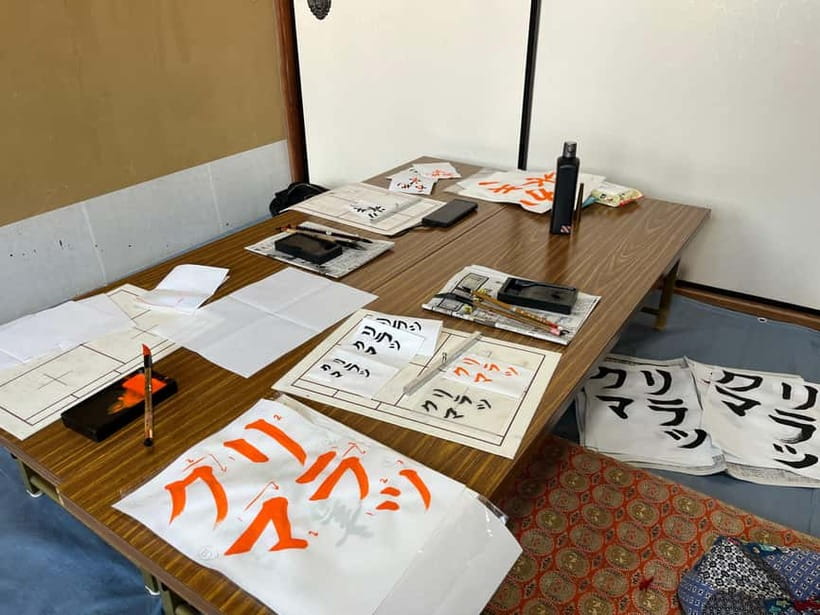
You then practice basic lines. This is where the activity becomes more than a photo opportunity. You learn that a line is not just a line. The brush angle, the pressure on the paper, and the point at which you lift the brush all affect the result.
After that, you practice the chosen character. The teacher demonstrates it step by step, while the translator makes the instruction clear. The class is designed for beginners, and the emphasis is on improvement rather than producing perfect work immediately.
Once you have practiced enough, you make the final version on a shikishi board. This special square cardboard is more suitable for display than ordinary practice paper. You take your finished artwork home, along with the small keychain made by the teacher with your chosen character.
The timing is sensible, but do not over-practice. The guidance specifically warns that writing too much can tire your arm and hurt the final result. I would treat the practice sheets as part of the lesson, not as a contest to fill every inch of paper.
The temple room and tatami experience
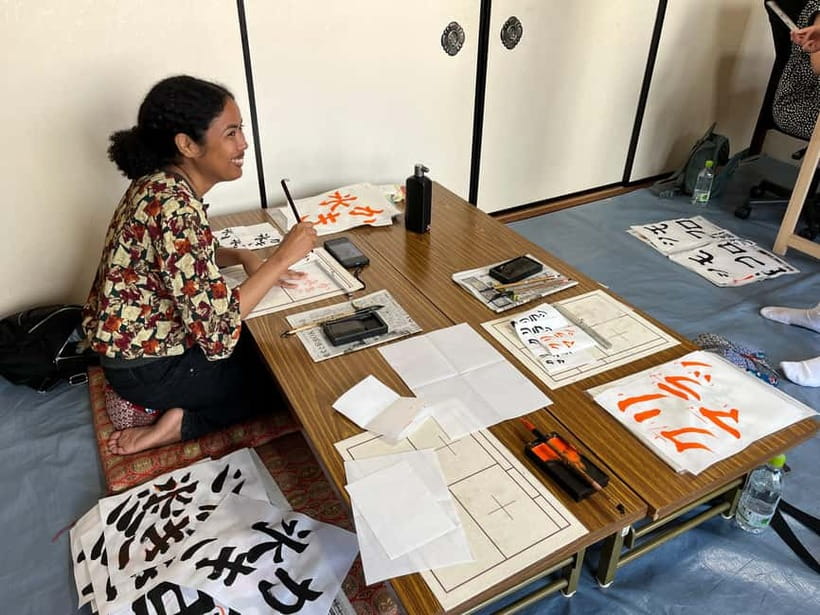
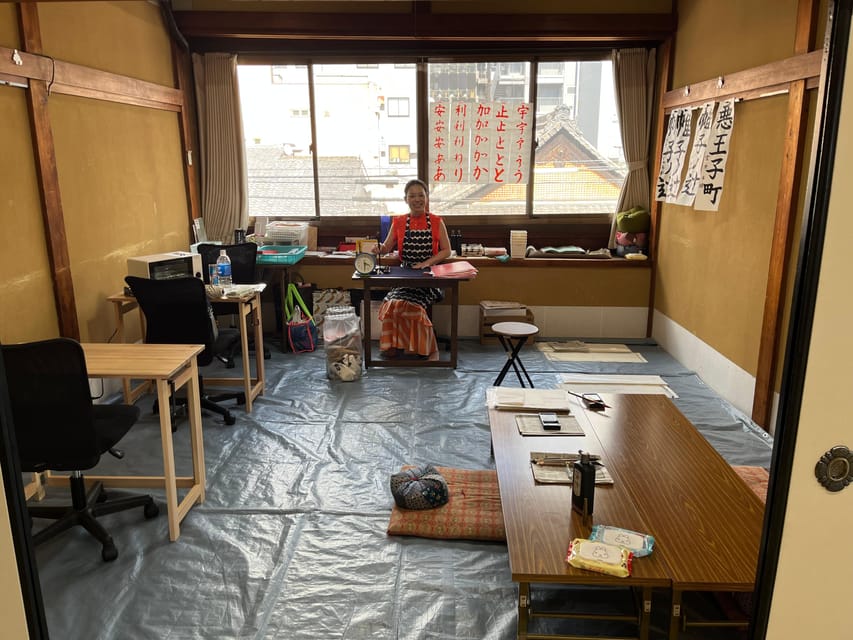
The workshop takes place in a washitsu, a Japanese-style room with tatami flooring. Sliding doors and the traditional room setup give the class a setting that feels connected to the art rather than placed in a generic activity studio.
You will usually sit on the floor on a zabuton. Some desks are available, but they are limited. This is one of the few real drawbacks, especially if you have knee, hip, or leg problems or simply find floor seating difficult.
The room is not promised to be silent. It tends to be quiet because everyone is concentrating, but there is conversation, instruction, and translation. That balance works well. You get a peaceful setting without the pressure of a formal meditation session.
The temple location adds meaning, but it should not be confused with a full temple tour. The focus is the calligraphy lesson. You receive access to a traditional room and a sense of the temple setting, not a broad guided history of every building or religious practice.
More Temple & Shrine Tours in Kyoto
- Kyoto: Fushimi Inari, Kinkakuji, Bamboo Grove 1 Day Bus Tour
★ 4.8 · 4,316 reviews - Kyoto: Tea Ceremony in a Traditional Tea House in Kiyomizu
★ 4.9 · 3,519 reviews - Kyoto: Tea Ceremony Ju-An at Jotokuji Temple
★ 4.9 · 3,207 reviews - Fushimi Inari Hidden Hiking Tour (Private Option Available)
★ 5.0 · 1,750 reviews
How much personal help can you expect?
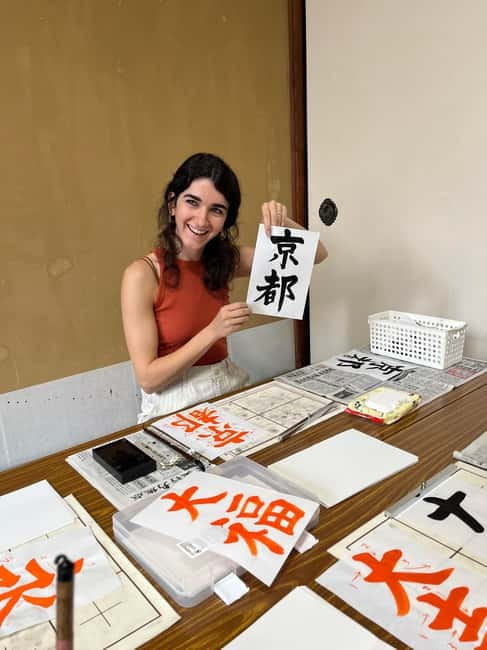
The group limit is six, and that number makes a difference. A full class of six is still small enough for the teacher and translator to watch your work. Smaller sessions can feel especially personal, with some participants receiving direct advice on names and individual strokes.
The teacher has more than a decade of calligraphy experience, and some information describes around 15 years of practice. She demonstrates the work with ease, but the class is not just a performance. You get time to hold the brush, make mistakes, and adjust your technique.
The guides also help create a friendly atmosphere. Jose is named in several class accounts as a guide, translator, and photographer, and Saskia is also mentioned as a guide. Other sessions may have a different language assistant, so do not assume a particular person will lead every booking.
Photos are another useful touch. The guide may take pictures while you practice and complete your artwork. That gives you a record of the process without having to stop and manage your own camera.
The translation setup is worth noting. The Japanese instructor may not speak English, so the translator is an important part of the class rather than an optional extra. The available languages are English, Spanish, Japanese, and Dutch.
Choosing a character you will want to display
The best preparation is deciding what you might write. You can use the provided examples, but arriving with two or three ideas saves time and gives the teacher a better sense of what you want.
A single kanji is often easier to complete than a long phrase, especially during a 70-minute beginner lesson. The character still needs to be explained and practiced, so a simple choice lets you spend more time improving the brushwork.
Names can work well, though the result may involve selecting suitable kanji or writing a name in an appropriate form. The supplied information confirms that participants have practiced names and taken home boards featuring them, but the exact treatment of your name will depend on the teacher.
Think about display before choosing. Your final work is created on a square board, so select something you would be happy to see on a wall, mantel, or shelf. A word with personal meaning usually makes a better souvenir than a character chosen at the last second.
Do not worry if your first attempts are uneven. That is the point of the practice stage. The teacher gives corrections, and the translator helps explain them. You are learning a traditional art in a short session, not being tested for professional-level precision.
Is $55 a fair price?
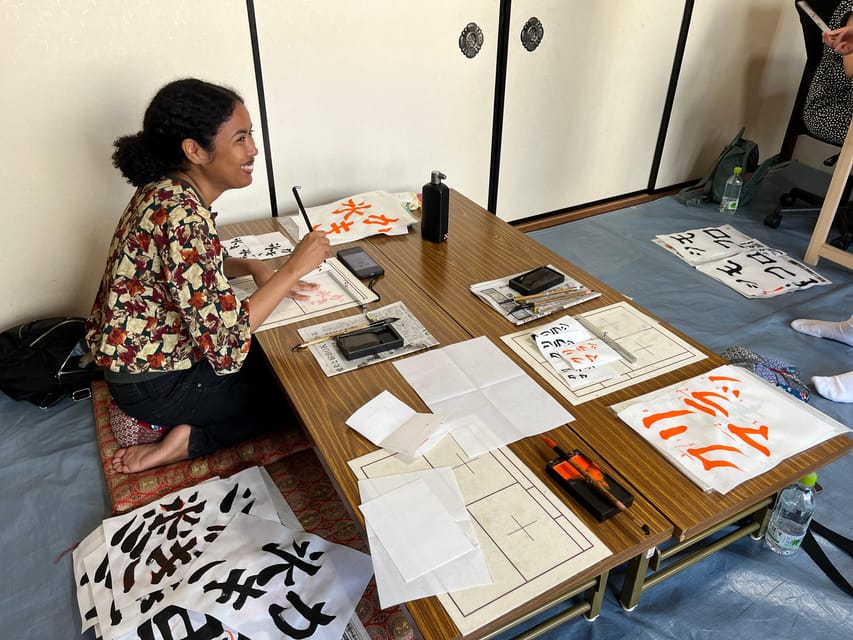
At $55 per person, this is not the cheapest hands-on activity in Kyoto. The value comes from the combination of setting, instruction, included supplies, finished artwork, translation, and a personalized gift.
You are not paying only for an hour of materials. The lesson includes the use of traditional tools, guided practice, access to a temple washitsu, help choosing and writing a character, and a shikishi board to take home. The keychain adds a second, smaller memento.
I consider the price fair for someone who wants a personal cultural activity rather than another sightseeing admission. It is particularly good value if you care about the final object. A shop-bought souvenir may cost less, but it will not carry the memory of learning and making it yourself.
The value is weaker if you dislike crafts, need a fully passive activity, or are mainly looking for a detailed temple history talk. This is a beginner art lesson with a temple setting, not a general Kyoto tour.
Who will enjoy this class most?
This works well for solo visitors, couples, families with older children, and small groups of friends. The class is gentle in pace but requires concentration, so children need to be able to sit quietly, handle a brush, and follow instructions.
The activity is not suitable for children under the listed minimum age restrictions, babies under one, or visually impaired people. The supplied age information lists children under two, three, four, and five as unsuitable, so families should check the exact restriction shown for their booking before reserving.
Left-handed participants can take part, but the brush technique may feel more challenging. One left-handed participant found it useful to try the right hand as well. If you write left-handed, expect to need extra patience rather than special equipment.
The activity is listed as wheelchair accessible, but most seating is on the floor and desks are limited. If you need a chair or table arrangement, confirm the practical setup before booking, since the standard format involves sitting on a zabuton.
I would also skip it if you need food or drinks during the activity. Nothing is served, although vending machines are outside the temple. Smoking, vaping, alcohol, and drugs are not allowed, and you must wear shoes or socks rather than go barefoot.
Booking, cancellation, and the best time to fit it in
The class lasts about 70 minutes, with starting times shown when you check availability. Its central location makes it easy to fit into a day around Shinkyogoku and Nishiki Market.
I would place it in the middle of a busy Kyoto day, not at the end of one when your legs and attention are already worn out. The class itself is restful, but sitting on the floor and concentrating on brushwork takes energy in a different way.
You can cancel up to 24 hours in advance for a full refund, and the reserve-now, pay-later option keeps your schedule flexible. Those policies are useful if you are planning a Kyoto itinerary around weather or changing temple hours.
Still, read the voucher after booking. The meeting point instructions are too specific to ignore, and arriving at the wrong part of the temple could cause unnecessary confusion.
My verdict: a personal souvenir with real instruction
You should book this class if you want to do something with your hands, learn a little about Japanese culture, and leave Kyoto with an object that has your own uneven but meaningful brushwork on it.
I especially like the patient teaching, the small group, the traditional room, and the chance to choose your own word. The teacher and language guides appear to be the heart of the experience, and the class gives beginners enough structure to feel supported without turning the activity into a simple demonstration.
Think twice if floor seating is difficult, if you want a large temple sightseeing program, or if you are hoping to produce gallery-quality calligraphy in one hour. For everyone else, $55 buys a calm, focused lesson and a souvenir that cannot be duplicated in a store.
FAQ
How long does the Kyoto calligraphy class last?
The experience lasts about 70 minutes.
How much does the activity cost?
The price is $55 per person.
Where is the meeting point?
Meet in front of Seigan-ji Temple in the Shinkyogoku shopping street. Look for the person holding a red lantern on a stick under the covered street.
Should I enter the temple to find the workshop?
No. Do not go up the stairs or ask the monks and temple staff about the workshop. Wait outside the front of the temple for the person holding the red lantern.
What languages are available?
Instruction and translation are available in English, Spanish, Japanese, and Dutch.
What do I make during the class?
You practice basic brush lines and a chosen word or kanji, then create a final piece on shikishi, a special square art board. You take the artwork home and receive a keychain with your chosen character.
Are the calligraphy materials included?
Yes. The activity includes washi, a brush, ink, bunchi, shitakami, explanations, practice, and kanji examples.
Is the class suitable for wheelchair users?
The activity is listed as wheelchair accessible. However, most seating is on the tatami floor with a zabuton, and only a limited number of desks are available.
Just added around Kyoto
- Sekka Cotton Furoshiki Class★ 5.0 · 19 reviews
- Kyoto Sword Experience – includes Museum Ticket/Ninja Experience★ 4.5 · 149 reviews
- Scenic Green Tea Fields of Hidden Kyoto & Local Tea Exp (Private)★ 5.0 · 32 reviews
- Secret Eastern Kyoto Biking Adventure★ 5.0 · 44 reviews
- Private Sake Tasting in Central Kyoto with Sake Sommelier★ 5.0 · 32 reviews
- Samurai School in Kyoto: Samurai for a Day★ 5.0 · 202 reviews
- Samurai Performance and Casual Experience: Kyoto Ticket★ 4.5 · 115 reviews
- SHIRAKAWA Japanese Culture Experiences with private English staff★ 5.0 · 16 reviews
Calligraphy Classes, compared.
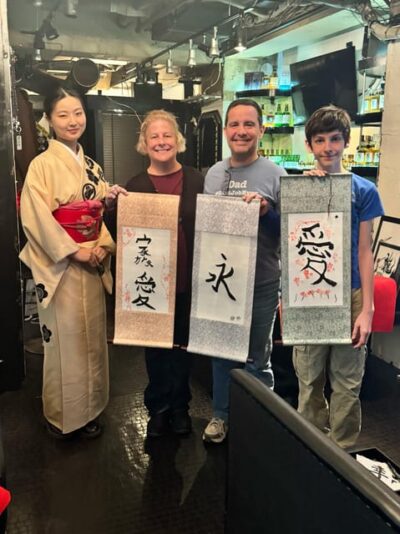
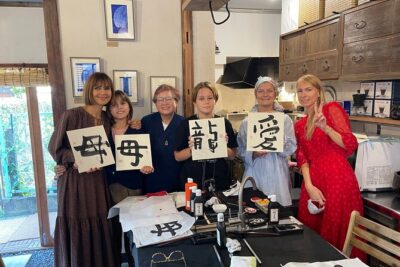
Let’s experience calligraphy in YANAKA, Taito-ku, TOKYO !!
Our verdict →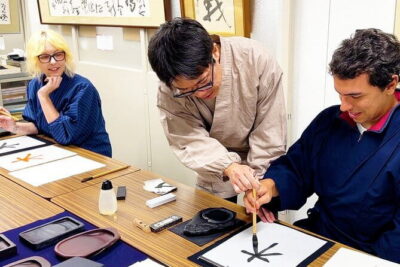
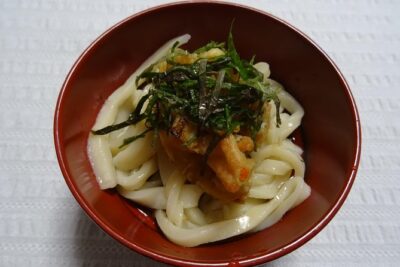
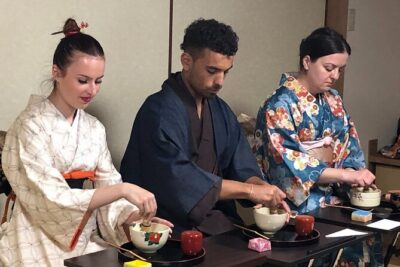
An Amazing set of Cultural experience: Kimono, Tea Ceremony and Calligraphy
Our verdict →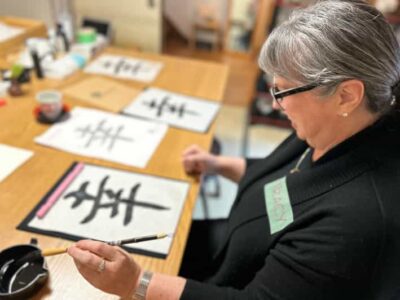
Try Mindful Calligraphy Near Kanazawa’s Ninja Temple
Our verdict →
Private Japanese Calligraphy in Kyoto – Learn Shodō with a Master
Our verdict →Browse the lists this tour appears in