
Reviewed · SUMO EXPERIENCES
Tokyo Shinjuku Sumo Show & Experience with Photo
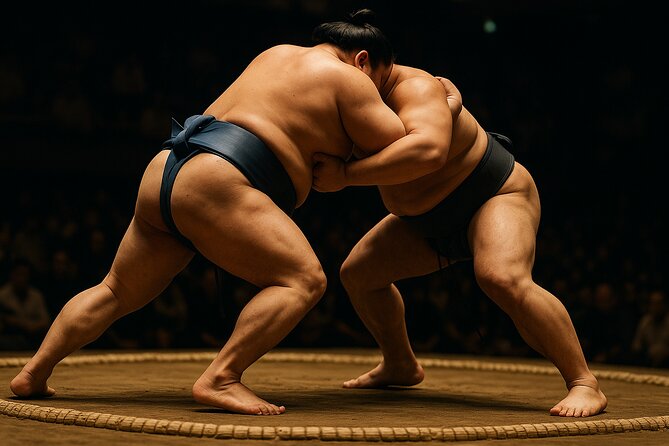
The best part of this Shinjuku experience is its close-up look at sumo’s rituals and human side. A bilingual MC explains the salt throwing, ring stomping, rules, tactics, and history before two wrestlers put those lessons into action. It is less formal than a tournament, but far more welcoming for a first introduction.
I like the clear explanations and the audience participation. You can ask questions, take photos with the wrestlers, and possibly test your strength in a friendly bout. The second big plus is the humor. Hosts such as Manny, Shane, and Mr. So have helped keep the tone light while still treating sumo with respect.
The main consideration is expectations. This is a 90-minute cultural show, not a full professional tournament, and some wrestlers may be retired. If you want serious competition, book a tournament instead. If you want an entertaining and easy-to-follow introduction, the format works very well.
Key points at a glance
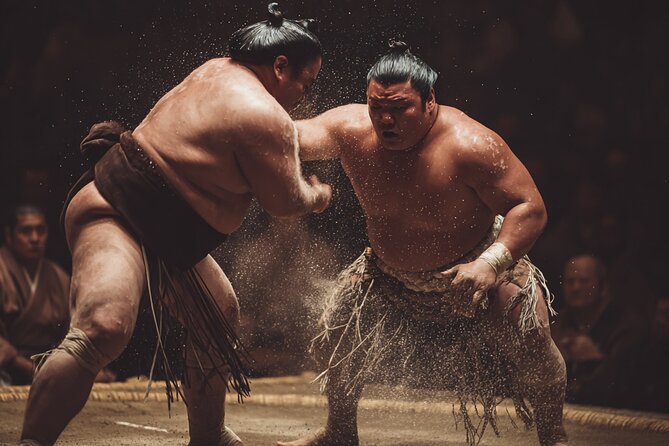
- Salt, stomping, and ceremony: See the symbolic actions that come before a sumo bout and learn why they matter.
- Two wrestlers in a close-up setting: Watch live demonstrations without the scale or formality of a major tournament.
- Audience participation: You may step onto the dohyō, challenge a wrestler, ask questions, or join a playful demonstration.
- Bilingual presentation: The MC explains rules, tactics, customs, and history in an accessible way.
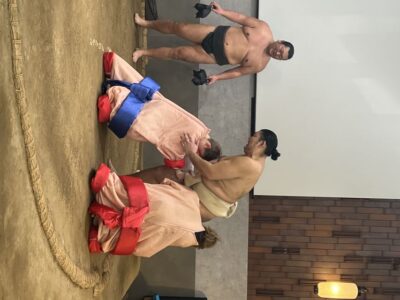
- Family-friendly humor: Children can take part, including playful bouts in inflatable sumo costumes when offered.
- Easy Shinjuku outing: The venue is near public transportation and fits neatly into a Tokyo sightseeing day.
What this Shinjuku sumo show really offers
Sumo can look simple from a distance: two large athletes, one ring, and a short burst of action. The details are more interesting. The wrestlers follow a set of rituals before they collide, and each movement has meaning tied to the sport’s religious and cultural roots.
This experience gives you those details before asking you to watch the action. That order matters. Once you know why a wrestler throws salt or stamps his feet, the ceremony stops looking like decoration and starts making sense.
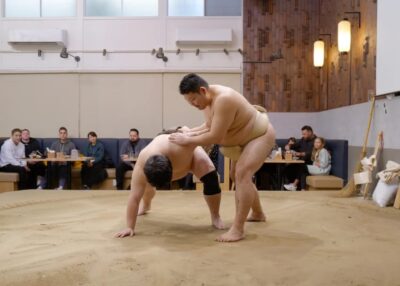
The show features two wrestlers in a traditional-style venue in Shinjuku. You get a close view of their size, speed, and balance, along with demonstrations that help explain how sumo works. The bilingual MC acts as your bridge, translating not just language but also the customs that can be hard to understand when you first encounter the sport.
I would describe the mood as lively, playful, and respectful. The wrestlers are athletes, but they also need to entertain a mixed audience of families, couples, and first-time visitors. The result is a cultural performance with real sporting skill at its center.
More Sumo Experiences in Tokyo:
- Tokyo: Sumo Show Experience with Chicken Hot Pot and a Photo
★ 4.8 · 6,678 reviews - Tokyo: Sumo Show and Dining Experience
★ 4.8 · 2,742 reviews - the SUMO show
★ 5.0 · 1,960 reviews
Salt, stomping, and the meaning of the dohyō
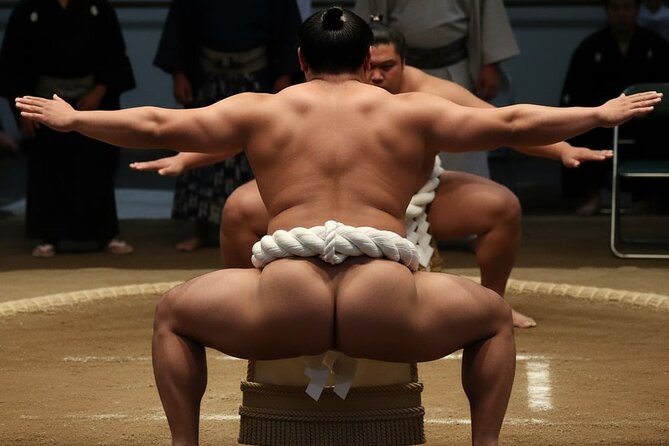
The first portion focuses on the basics. You learn about the dohyō, the raised sumo ring, and the actions that lead up to a match. Salt throwing and ring stomping are not random gestures. They are part of the ceremony and help show the sport’s sacred roots.
The MC also explains the rules and main tactics. That is useful because a bout can be over quickly. Without context, you may see only a sudden shove or a wrestler stepping outside the ring. With the explanation, you can pay attention to balance, footwork, timing, and the ways a wrestler tries to force an opponent off the dohyō.
The pace appears designed for people who know little or nothing about sumo. You do not need to study the sport before arriving. The explanations are described as clear, humorous, and easy to follow, which makes this a good first stop for anyone who has never watched a bout.
I especially like this teaching approach for families. Children can enjoy the size and energy of the wrestlers, while adults get enough background to understand what they are seeing. The show does not assume that you know Japanese terms or tournament customs.
Watching two wrestlers bring the rules to life
After the introduction, the wrestlers demonstrate their strength and technique. You see the contrast between their large frames and their quick movements, a detail that repeatedly makes an impression during the show.
This is not presented as a major tournament match. The demonstrations are meant to explain and entertain. One account describes the wrestlers as retired, while the general experience presents them as professional sumo athletes. The practical point is the same: expect skilled performers showing you how the sport works, not a scheduled championship contest.
That distinction helps set a fair expectation. You will get closer interaction and more explanation than you would at a formal competition, but less of the tension that comes with a real tournament bout. The show’s strength is access. You can see the wrestlers at close range, hear their answers, and watch them play to the room.
The wrestlers also bring humor to the event. Their role is not limited to pushing and throwing. They react to the crowd, take part in questions, and help make the sport feel personal rather than distant. For many people, that friendly contact becomes the most memorable part.
The audience challenge is the star attraction
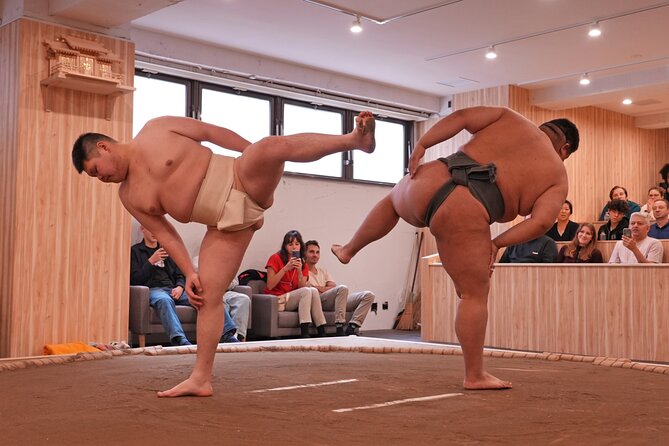
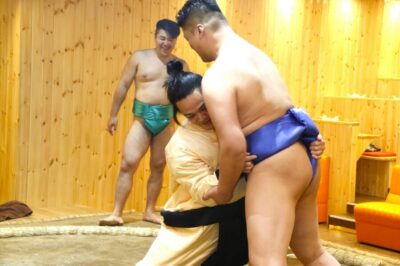
The chance to step onto the dohyō gives this outing its extra spark. Audience members may challenge a wrestler in a friendly sumo bout, and children can sometimes take part in inflatable sumo costumes. That makes for a funny sight, but it also helps explain the physical nature of the sport.
Do not expect to defeat a trained wrestler. The point is participation, not competition. You get a brief sense of how difficult it is to move someone who knows how to plant his feet and use his weight.
Participation may appeal most to families with children, but adults should not sit back too quickly. The show is built to involve the audience, and the questions and challenges make the 90 minutes feel active. If you prefer to watch quietly, you can still enjoy the demonstrations, but this is not the right pick if you want a completely hands-off performance.
The exact order and number of participants can vary. The supplied details say you will have the chance to try a friendly challenge, not that every person will wrestle. I would treat participation as a welcome possibility rather than a guaranteed turn.
More Shows & Performances in Tokyo:
- Tokyo: Samurai Restaurant Show Ticket with 2 Drinks
★ 4.5 · 1,307 reviews - Tokyo: Sumo Show and Experience in Shinjuku
★ 4.8 · 1,001 reviews - Tokyo:Luxury Sumo Show Experience & Japanese cuisine & Drink
★ 4.7 · 577 reviews - Tokyo Bay Yakatabune Dinner/Day Cruise with Japan Show and Drinks
★ 4.5 · 473 reviews
Photos and questions make the athletes approachable
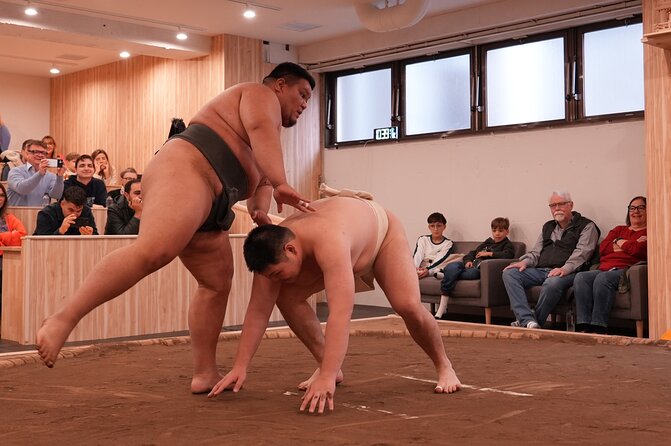
The photo session is another useful feature. You can take photos with the wrestlers after seeing them perform, giving you a souvenir that feels more personal than a standard stage picture.
You can also ask questions. This matters because sumo has an unusual lifestyle, vocabulary, and set of customs. A short answer from the athletes can put a human face on traditions that might otherwise seem formal or mysterious.
The event has featured MCs called Manny, Shane, and Mr. So in audience accounts, but the host may change by date. Each is described as helping the show move between explanation, jokes, questions, and demonstrations. I would expect a bilingual host, but I would not book around a particular MC unless the provider confirms the lineup.
The photo opportunity also works well for couples and groups. One person can take pictures while others ask questions or watch the challenge. It is a simple addition, but it helps the experience feel like an encounter rather than a lecture.
The 90-minute length fits a Tokyo evening
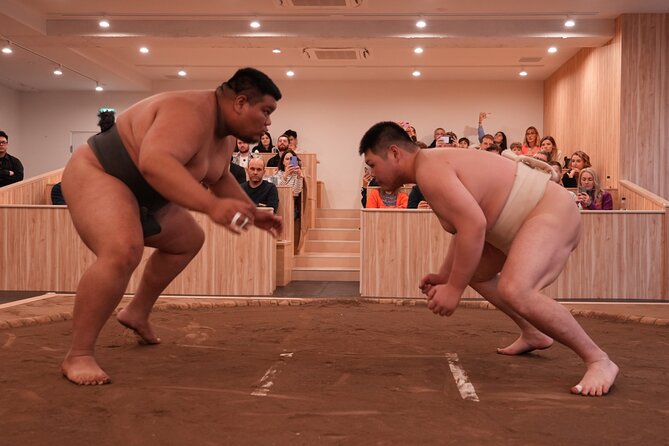
At about 1 hour and 30 minutes, this is short enough to add to a busy Tokyo plan. You can place it between sightseeing in Shinjuku and dinner, or use it as a focused evening activity.
I would allow extra time to find the venue, especially if you are coming through a large train station. The location is near public transportation and has been described as easy to find by train, but Shinjuku is still a place where a rushed departure can cause trouble. One useful tip is to allow at least 30 minutes so traffic, station exits, or a wrong turn do not make you late.
The mobile ticket keeps the arrival process simple. Confirmation comes at booking, and most people can participate. The information does not give a specific meeting procedure, so check your booking details carefully for the exact arrival instructions.
Because the show lasts only 90 minutes, it does not take over your day. That is good value for visitors who want a focused cultural activity without committing to a long tour. It also gives you a planned indoor stop if the weather is poor, though no specific weather policy is provided.
Is $79.59 a fair price?
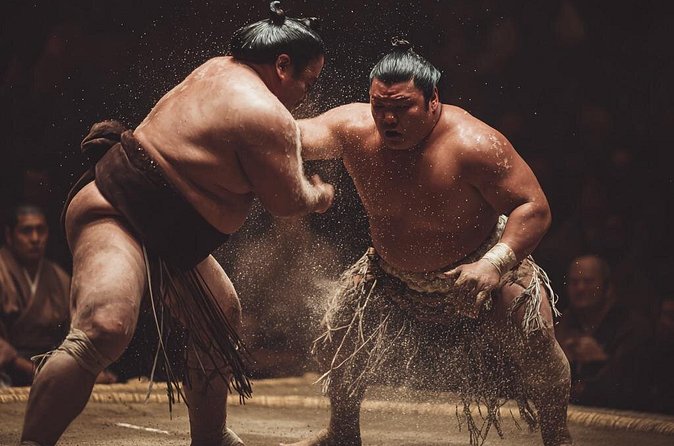
At $79.59 per person, this is not a cheap casual attraction. The value depends on what you want from sumo.
You are paying for a live presentation, two wrestlers, bilingual explanations, demonstrations, audience interaction, and a photo opportunity. You also receive context about the history, rituals, rules, and tactics of sumo. For someone who would otherwise struggle to understand the sport at a tournament, that teaching element adds real value.
The price is easier to justify if you are visiting Japan for the first time, traveling with children, or unlikely to attend a full sumo tournament. You get a concentrated introduction without needing to understand the ticketing, schedule, or etiquette of a formal competition.
The value is weaker if your only goal is to see serious matches. A tournament offers authentic sporting stakes, while this show offers explanation and access. It is also possible that a visitor who already knows sumo well will find the educational portion basic.
I would think of it as a cultural performance and introduction, not as a substitute for a tournament. At that price, the best buyers are people who value the combination of learning, laughter, and participation.
Who will enjoy this most?
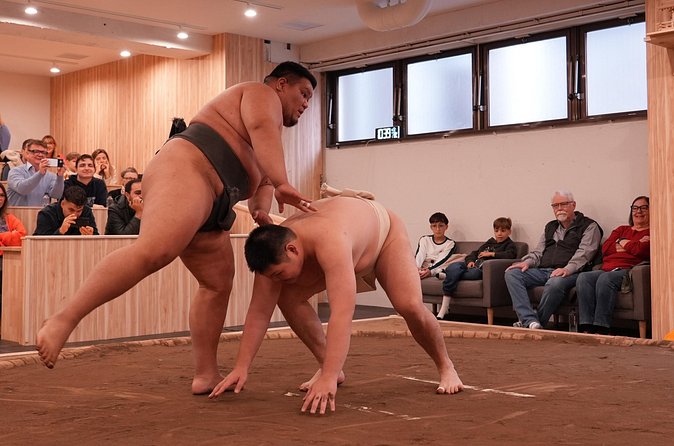
I would recommend it most strongly to:
- Families looking for an activity that keeps children involved
- First-time visitors who want to understand sumo before seeing a tournament
- Couples seeking an unusual Tokyo evening activity
- Adults interested in Japanese customs but not sure where to begin
- Visitors with only a short window for a cultural experience
- People who enjoy asking questions and joining demonstrations
The family appeal is clear. Children can see the wrestlers up close, learn the basic rules, and perhaps take part in a costume bout. Adults get historical and cultural context, plus the chance to see how much speed and technique the wrestlers have.
It may be less suitable for you if you dislike audience participation, want a quiet museum-style presentation, or expect a full-length sports event. The humor and crowd interaction are central to the format.
What could disappoint you?
The most important possible disappointment is the difference between a sumo show and a sumo tournament. The event is educational and entertaining, with friendly challenges and demonstrations. It does not promise official competition with tournament stakes.
The tone may also feel lighter than expected. That is a strength for families and newcomers, but someone hoping for a solemn, highly formal presentation may find it playful. The wrestlers perform for the audience, and the MC uses humor to keep the room engaged.
Food and drink expectations also deserve a small note. Drinks and snacks may be available for purchase during the show. One account described the included drink as a single bottled water rather than a broad choice, so do not assume a full refreshment package.
Finally, the particular MC and wrestlers may vary. Names such as Manny, Shane, Gucci, George, Ogawa, and Tani appear in audience accounts, but the booking details do not promise a fixed cast. Enjoy the format, not a specific performer lineup.
Practical booking advice for Shinjuku
The experience includes a mobile ticket and confirmation at the time of booking. It is near public transportation, and the venue has been described as easy to reach by train.
Give yourself at least 30 minutes before the start time. Shinjuku’s train network is large, and traffic can be slow. Arriving early also gives you a chance to find the traditional-style venue without beginning the show flustered.
Most people can participate, and no special athletic ability is required for the general experience. If you do not want to join a challenge, the core show remains available through the demonstrations, explanations, photos, and questions.
Free cancellation is available if you cancel at least 24 hours before the local start time. Cancellations or changes made within 24 hours are not accepted for a refund.
Should you book the Shinjuku Sumo Club experience?
I would book it if you want an approachable introduction to sumo, especially with children or first-time visitors in your group. The combination of rituals, live demonstrations, humor, questions, photos, and audience challenges gives you more than a simple stage performance.
I would skip it only if you are seeking serious tournament competition or already have a strong understanding of sumo. For everyone else, $79.59 buys a well-sized cultural experience that fits neatly into a Tokyo itinerary and leaves you better prepared to appreciate Japan’s national sport.
FAQ
How long does the Tokyo Shinjuku Sumo Show last?
The experience lasts approximately 1 hour and 30 minutes.
Where does the sumo experience take place?
It takes place at Shinjuku Sumo Club in Shinjuku, Tokyo.
What will I learn during the show?
The bilingual MC explains sumo’s history, origins, rituals, rules, tactics, and main movements. The presentation includes salt throwing, ring stomping, and pre-match ceremonies.
Can I participate in a sumo challenge?
You will have the chance to step onto the dohyō and try a friendly sumo challenge. Participation is offered as part of the audience interaction, but the details do not guarantee that every attendee will wrestle.
Can I take photos with the wrestlers?
Yes. The experience includes a photo opportunity with the wrestlers.
Is this a real sumo tournament?
No. It is an educational and entertaining show with live demonstrations and friendly audience participation. It is not presented as a formal tournament competition.
What is the cancellation policy?
You can cancel up to 24 hours before the local start time for a full refund. Cancellations or changes made less than 24 hours before the experience are not accepted for a refund.
Just added around Tokyo
- Kawagoe Japanese Food Tour : Unagi Kaiseki and Sake near Tokyo★ 5.0 · 30 reviews
- Kawagoe 4hr Private Tour with Licensed Guide (Kawagoe Dep)★ 5.0 · 13 reviews
- Little EDO Sushi Making workshop in Kawagoe★ 5.0 · 18 reviews
- 【R34】Tokyo:Private Daikoku tour in Modified R34★ 4.9 · 92 reviews
- :Tokyo,Shibuya/ Pro Photography in Kimono / English-Friendly★ 5.0 · 26 reviews
- Tokyo:Celebrate Unique Japanese New Year Tradition Festivity★ 3.9 · 20 reviews
- Tokyo: Allstar Food Tour★ 4.7 · 29 reviews
- Tokyo:Calligraphy &Make your original folding fan in Asakusa★ 5.0 · 62 reviews
Sumo Experiences, compared.
Sumo Show Experience with Chicken Hot Pot and a Photo
Our verdict →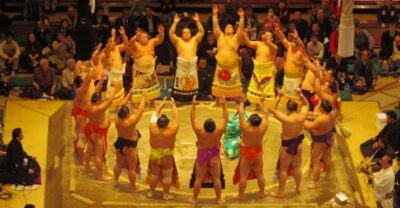
Authentic Sumo Experience in Tokyo: Enter the Sanctuary
Our verdict →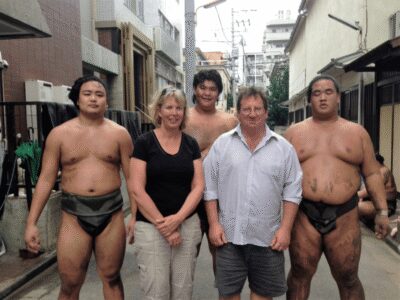
Browse the lists this tour appears in