
Reviewed · WORKSHOPS
Tokyo Shinjuku Chopsticks Making Class
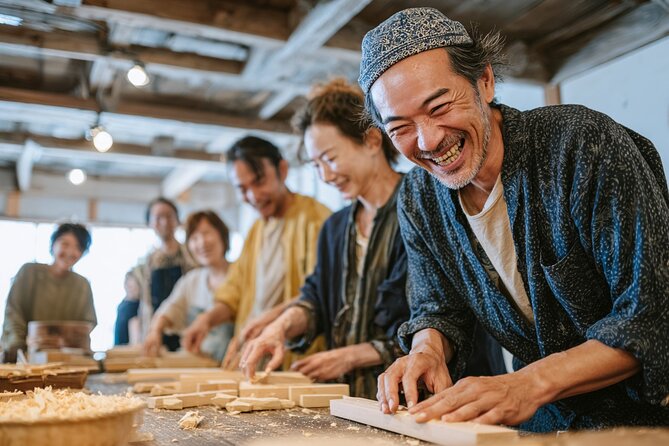
Making chopsticks here means more than buying a souvenir. You start with plain wooden sticks, then use a traditional kanna hand plane to shave them into something useful. The work is simple to understand, but shaping a matching pair takes care and a little muscle.
I like the hands-on craft and the choice of woods, since each type brings a different color, smell, and grain. I also like that English-speaking staff, including Tom, Yuki, Masa, Nana, and Sayaka, have been praised for patient, clear instruction. The main caution is that busy sessions can feel rushed, and premium wood and engraving cost extra.
Key points at a glance
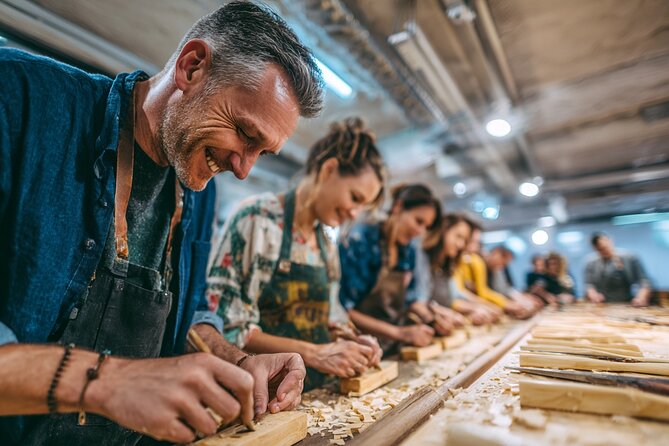
- Make the chopsticks yourself: Shape raw wooden sticks with a Japanese kanna, then sand and oil them.
- Beginner-friendly instruction: Staff guide you through each stage, and no woodworking background is needed.
- Pick your wood: Two wood choices are included, while premium varieties require a small upgrade.
- Plan about one hour: The activity begins and ends at the Nishishinjuku meeting point.
- Add a personal touch: Name engraving costs extra, reported by one participant as 2,000 yen.
- Watch the timing: Midday and crowded sessions may mean less individual help.
Turning plain wood into a Tokyo souvenir
The best part of this activity is its directness. You do not simply browse a shop and buy a pair of chopsticks made somewhere else. You take two unfinished pieces of wood and gradually give them their final shape.
The process uses a small Japanese kanna, a hand plane designed to shave thin strips from wood. You run the tool along the surface, watch the grain, and decide how much material to remove. The goal is not speed. It is to make two chopsticks that feel balanced in your hand and look like a pair.
You can expect a clear introduction before the work begins. Staff explain how to hold the wood, how to use the plane, and how to move from rough shaping toward a smoother finish. The process then moves through shaving, sanding, and oiling.
That sequence gives the hour a satisfying rhythm. At first, you are learning how the tool behaves. Next, you begin to see the chopsticks take shape. Near the end, the sanding and oiling bring out the surface and make the finished pair feel like a real object rather than a craft project.
A few more Tokyo half-days worth comparing
- 1-Day Tokyo Bus Tour
★ 5.0 · 14,250 reviews - Tokyo: TOKYO SKYTREE® Admission ticket
★ 4.5 · 11,192 reviews - Tokyo: teamLab Planets TOKYO Digital Art Museum Entry Ticket
★ 4.6 · 9,779 reviews
Why the kanna makes this more than a souvenir shop stop
The hand plane is the feature that gives the class its Japanese character. A standard craft workshop could have you paint, decorate, or assemble something. Here, you work with the material itself.
You will feel resistance when the wood is harder, and you may need to adjust your angle when the grain changes. Some people find the work easier than expected. Others discover that making two matching chopsticks takes patience and a fair bit of pressure.
That small challenge is useful. It keeps the activity from becoming a quick photo stop, but it also means you should not expect the finished pair to appear in five effortless minutes. One parent found that a child with woodworking experience had an advantage, while another participant noted that harder woods require more muscle.
If you make a mistake, staff may be able to help you correct it or start again, depending on the situation. Masa was singled out for patiently helping someone who had trouble with the first chopstick. That kind of support matters, especially when you are handling a tool for the first time.
Choosing between free and premium Japanese woods
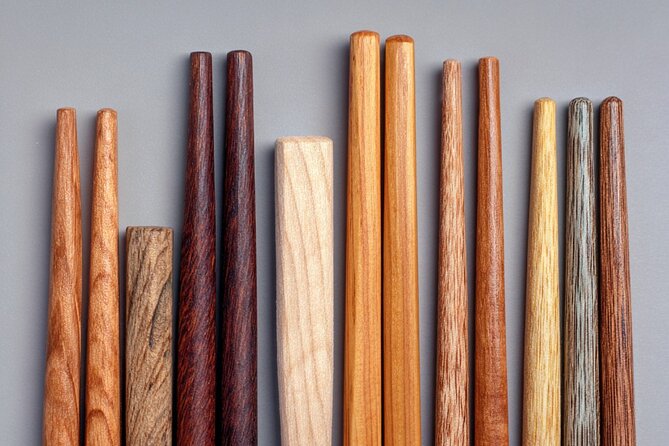
You get to select from several types of wood, each with its own texture, scent, and color. Two varieties are included in the basic price. Premium woods are available for an additional charge.
This choice is one of the more personal parts of the class. A pale, fine-grained wood gives a different look from a darker or more strongly scented option. You can ask the staff about the choices before committing, especially if you are unsure how difficult a particular wood may be to shape.
The extra charge deserves attention. The base price is about $20 per person, which is reasonable for a one-hour, guided craft activity in central Tokyo. Yet the total cost can rise if you choose premium wood and engraving. Some participants felt those add-ons were too expensive, particularly because the basic wood options are already enough to produce a good souvenir.
My practical advice is to decide your budget before you enter. You do not need premium wood or engraving to enjoy the main activity. The included options still let you shape, sand, oil, and take home a pair that you made yourself.
The one-hour work session, step by step
The class starts at 7-chōme-4-5 Nishishinjuku, in Shinjuku City. The activity ends at the same location, so you do not need to arrange transport between separate stages.
After checking in, you choose your wood and receive an explanation of the tools. The class setup has several worktables with multiple stations, allowing people in a family or small group to work side by side. The maximum group size is listed as 32, so the number of people in the room can affect how much one-to-one help you receive.
The first practical stage is rough shaping. You use the kanna to remove thin layers from the wooden sticks. This is where technique matters most. Staff may correct your grip or show you how to apply pressure, but you still do the work yourself.
Next comes smoothing. Sanding takes away the roughness left by the plane and helps even out the surface. You may need to compare the two chopsticks repeatedly, checking their length, thickness, and feel.
The final stages include oiling and finishing. Oil brings out the wood and gives the chopsticks a more complete, usable surface. You then have a handmade pair rather than two unfinished sticks.
The exact pace can vary. People who work quickly may finish in roughly an hour, while someone taking extra care or needing a replacement piece may need longer. The activity is designed to fit a short Tokyo itinerary, but it is not wise to schedule an important train departure immediately afterward.
More Hands-On Experiences in Tokyo:
- Sushi Making Tokyo Roll and Authentic Japanese Sushi Class
★ 5.0 · 3,971 reviews - Tokyo: Roll and Authentic Sushi Making Class in Asakusa
★ 4.9 · 1,957 reviews - Tokyo: Sushi Making Class in a Happi Coat near a Famous Spot
★ 4.9 · 1,377 reviews - Chopstick Making Workshop in Ginza
★ 4.8 · 1,366 reviews
English guidance from a friendly workshop team
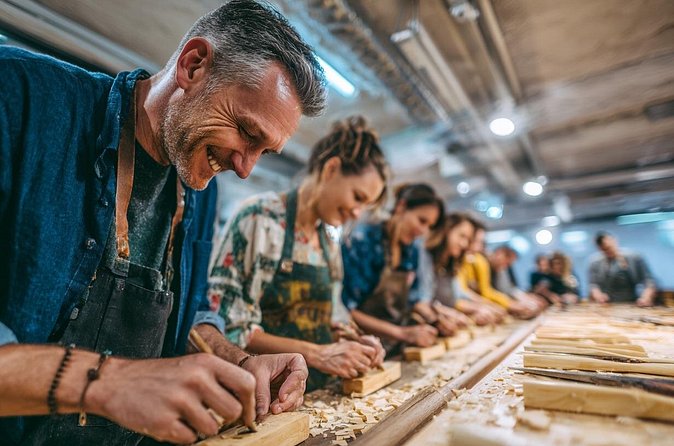
The staff are a major part of how smoothly the experience works. Tom and Yuki have been praised for explaining the process clearly in English. Masa, Nana, Sayaka, Ken, Katana, Kiwa, Yin, Mauro, Mimi, and Shae are also named by participants as helpful or attentive instructors.
Staff circulate among the tables and answer questions as the work progresses. That is useful because the right technique can be hard to understand from a single demonstration. You may need a small correction once the plane meets the wood.
The quality of support can depend on how full the room is. During a quiet visit, you might get quick help whenever you need it. At a crowded time, several people may be waiting for the same instructor. A few participants felt the explanation of technique was too brief or inconsistent when the workshop was very busy.
For the best chance of calm instruction, avoid the middle of the day if your schedule allows. The activity is still possible during a busy session, but you may need to be more patient and ask for help directly.
A good choice for families and mixed-age groups
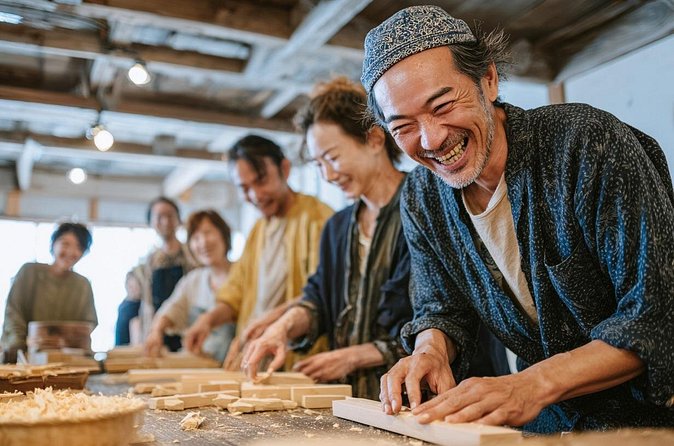
This is one of the easier Tokyo activities to share across generations. The basic idea is simple, and everyone can work on their own pair at the same table. A family group ranging from age 10 to age 84 was able to take part.
Younger children may need close supervision when using the hand plane. The tool is not presented as a dangerous stunt, but it is still a real woodworking tool, and staff assistance is important. Older children and teenagers who like making things may find this more engaging than a standard sightseeing stop.
The activity also suits adults who want a break from shrines, department stores, and train stations. It gives you something quiet and physical to focus on. You leave with a souvenir tied to your own effort, not just a shop receipt.
Couples and friends can make matching pairs or choose different woods. Solo participants can work independently while still having staff nearby. The format is social enough for a group but does not require everyone to move at the same pace.
Engraving and other extras
Laser engraving is an optional add-on. One participant paid 2,000 yen to have the chopsticks engraved, and several people chose personalization as a way to mark a Japan trip or create a gift.
Engraving makes sense if you want a named keepsake or a present. It is less essential if your main goal is learning the craft. Since it costs extra, ask about the current price and available design before you begin.
The same rule applies to premium wood. These upgrades can make the final pair more distinctive, but they are not required for a worthwhile session. The basic experience already includes the central work: shaping, smoothing, and oiling your own chopsticks.
I would treat the extras as optional enhancements, not hidden requirements. If staff explain them clearly and you choose them freely, they can add meaning. If you feel pressured to upgrade, stick with the included materials.
Location, timing, and practical planning
The meeting point is in Nishishinjuku, Shinjuku City, at 7-chōme-4-5. It is near public transportation, but you should check the address carefully before leaving. One person had trouble after receiving conflicting location details, so do not rely on an old map pin or assume the venue is in another Shinjuku-area spot.
The activity accepts mobile tickets, and booking confirmation is provided at the time of booking. Since the session lasts about one hour and returns to the starting point, it can fit between other Shinjuku plans.
I would allow extra time to find the workshop, especially if you are new to the area. Arriving early may help, but early entry depends on available space. One participant arrived about 20 minutes ahead and was allowed to begin because a seat was open. You should not count on that every time.
Service animals are allowed. The activity is also near public transportation, which helps if you are carrying luggage or planning to continue elsewhere in Tokyo.
Is $20 good value?
At about $20 per person, the basic price is fair for a guided, hands-on activity in Tokyo. You receive instruction, materials, tool use, finishing, and a pair of chopsticks to take away. The value is strongest if you care about the making process, not only the final object.
The price feels less attractive when you add premium wood and engraving. A pair of shop-bought chopsticks will cost less, and even a simple souvenir can become noticeably more expensive after upgrades.
There are also a few quality concerns to keep in mind. Some participants found the blades less sharp than ideal, which made shaving harder. Others felt the workshop was too commercial or that the staff seemed stretched during crowded periods.
Still, the class offers something a normal purchase cannot. You remember the wood, the tool, the mistakes, and the gradual change from rough stick to finished utensil. For many people, that personal connection justifies the cost.
Who should book this class?
I would recommend it to you if you enjoy making things, want a compact cultural activity, or need a souvenir that feels personal. It works especially well for families, small groups, and anyone who wants a break from conventional sightseeing.
You should be comfortable with a little physical effort. Shaping the wood is not strenuous for most people, but harder varieties can require pressure, and the work takes concentration. If you want a polished result with no trial and error, buying chopsticks may suit you better.
Choose a less crowded time if possible. Ask about the included woods before selecting an upgrade, and decide in advance if engraving fits your budget. Those three steps will help you avoid the main sources of disappointment.
Cancellation is free up to 24 hours before the scheduled start time. Changes or cancellations made within 24 hours are not accepted for a refund, and the cut-off uses Tokyo local time.
Should you book the Shinjuku chopsticks class?
Book it if you want a useful souvenir made by your own hands, not just another item from a gift shop. The kanna work, wood selection, sanding, and oiling give the hour a clear purpose, and the activity is accessible to beginners.
I would be more cautious if you are visiting at a peak time, dislike optional sales pitches, or expect premium materials to be included. The workshop can feel hectic when full, and the total price rises with better wood and engraving.
For most families, couples, and craft-minded visitors, the basic session is a good-value addition to a Tokyo itinerary. Keep the free wood, enjoy the process, and treat personalization as optional. That is the simplest way to get the most from it.
FAQ
How long does the chopsticks-making activity last?
The activity lasts approximately one hour.
Where does the activity begin and end?
It begins at 7-chōme-4-5 Nishishinjuku, Shinjuku City, Tokyo 160-0023, Japan, and ends back at the same meeting point.
Do I need woodworking experience?
No. The activity is designed for beginners, and staff guide you through shaping, sanding, and oiling the chopsticks.
Are premium woods included in the price?
Two types of wood are included. Premium woods are available for an additional fee.
Does engraving cost extra?
Yes. Engraving is an optional add-on. One participant reported paying 2,000 yen for it.
What happens if I need to cancel?
You can receive a full refund if you cancel at least 24 hours before the experience start time. Cancellations or changes made within 24 hours are not accepted for a refund.
Just added around Tokyo
- Kawagoe Japanese Food Tour : Unagi Kaiseki and Sake near Tokyo★ 5.0 · 30 reviews
- Kawagoe 4hr Private Tour with Licensed Guide (Kawagoe Dep)★ 5.0 · 13 reviews
- Little EDO Sushi Making workshop in Kawagoe★ 5.0 · 18 reviews
- 【R34】Tokyo:Private Daikoku tour in Modified R34★ 4.9 · 92 reviews
- :Tokyo,Shibuya/ Pro Photography in Kimono / English-Friendly★ 5.0 · 26 reviews
- Tokyo:Celebrate Unique Japanese New Year Tradition Festivity★ 3.9 · 20 reviews
- Tokyo: Allstar Food Tour★ 4.7 · 29 reviews
- Tokyo: West-Side Cycling and Food Tour with Guide★ 5.0 · 37 reviews
Workshops, compared.
Sushi Making Tokyo Roll and Authentic Japanese Sushi Class
Our verdict →
Ninja 1-hour Hands-on Lesson by Japanese master in Kyoto -Entry
Our verdict →
Browse the lists this tour appears in