
Reviewed · TRADITIONAL CRAFTS
TokyoSumoShow, ChickenHotPot, and Mochi-Pounding by Pro Wrestlers
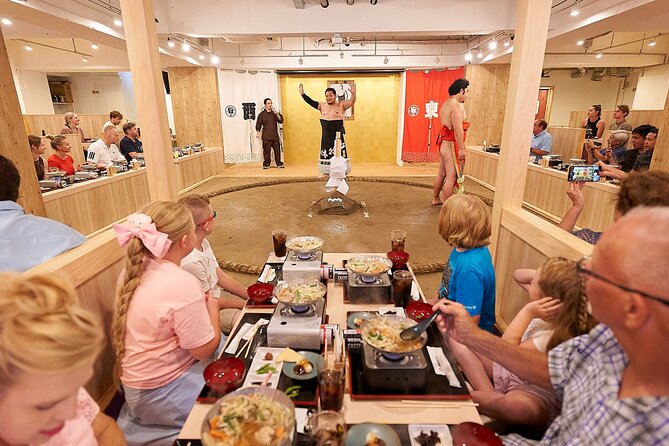
SUMOLAND puts you close to former professional sumo wrestlers, then lets you try the sport yourself. You’ll eat chicken chanko hot pot, watch a ring entrance, learn basic moves, pound mochi, and possibly face a wrestler in the ring. The show is supervised by the 63rd Yokozuna, so it has a real connection to sumo while still being built for entertainment.
I like the friendly audience participation and the way the wrestlers explain sumo in simple terms, including Japanese words and basic techniques. I also like the compact timing: at roughly 90 minutes to two hours, it fits neatly into a Tokyo day and works well for families.
The main consideration is that this is a tourist entertainment program, not a tournament, morning practice, or quiet cultural lecture. The food is well-liked overall, especially the broth and mochi, but some diners find the meal merely adequate.
Key points at a glance
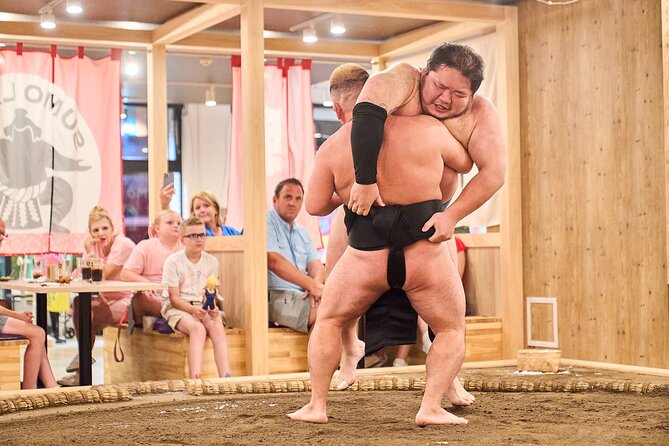
- Former professional wrestlers perform close to your table, with short bouts, demonstrations, and plenty of personality.
- Chicken chanko hot pot is part of the admission, and vegetarian or vegan meals can be arranged with at least two days’ notice.
- Children can join the mochi-pounding and sumo challenges, although participation may be limited or decided by lottery.
- The show explains basic sumo customs and techniques in English, with Japanese terms for you to practice.
- Seats are assigned by the venue, so you cannot choose a preferred location.
- Ryogoku Station is only a short walk away, with a large sumo sign and flags marking the first-floor entrance.
What SUMOLAND gets right in Ryogoku
Ryogoku is Tokyo’s sumo district, and that setting gives this experience useful context before the show even begins. SUMOLAND Tokyo Ryogoku is at 4-32-19 Ryogoku, on the first floor of Takashima Ryogoku Mansion. Look for the large sumo wrestler sign and flags near the entrance.
The format is smart. You are not asked to sit through a long lecture before anything happens. Food, demonstrations, video, comedy, audience participation, and short matches are mixed together, so the pace stays lively. One especially effective feature is the use of Japanese sumo words followed by English explanations and a chance to repeat them.
I like this approach for a first visit to Japan. You get enough explanation to understand what you are seeing, but the event never expects you to arrive knowing the rules. The former wrestlers also bring a sense of humor and personality that helps explain how demanding the sport is without turning the program into a formal class.
This is not the place to study every tournament rule or learn the full structure of professional sumo. One part of the program could use more spoken explanation about tournament history and rules, particularly during transitions between acts. If you want detailed technical instruction, plan to attend a tournament or seek out a more specialized sumo presentation as well.
More Craft Workshops in Tokyo
- Tokyo Sumo Experience: Chanko & Mochi with a Former Pro
★ 4.8 · 567 reviews - Kintsugi Experience: Art of Golden Joinery in Tokyo
★ 5.0 · 467 reviews - Tokyo Chopstick Making Workshop with Artisan
★ 5.0 · 466 reviews
A practical look at the two-hour program
The exact order may vary, but the experience generally begins with the meal and moves through several sumo-focused activities.
Chicken chanko hot pot comes first
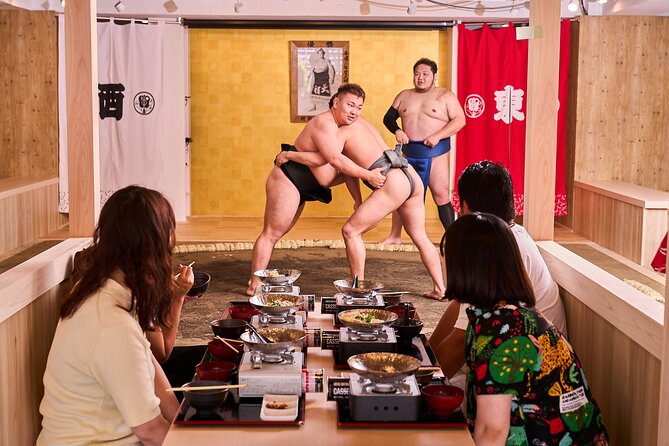
Chanko is the hearty hot pot associated with sumo wrestlers. Here, you receive chicken chanko hot pot prepared with supervision from the Isegahama stable. The meal gives you something to eat while the staff prepares the next part of the program, which makes the opening feel relaxed rather than like a sudden stage show.
The broth is important. Several comments single it out as the best part of the hot pot, and the dish is often described as healthy, filling, and tasty. Other diners find the meal simply okay. I would treat the food as a useful part of the package, not the sole reason to pay the admission price.
Alcohol and bottled water are not included. Vegetarian and vegan meals are available if requested at least two days ahead. Gluten-free and halal meals are not available, although you may bring your own food. That policy matters if someone in your group has a strict dietary need.
The ring entrance gives the show a proper start
Former top-division wrestlers make a formal entrance before the action begins. Seeing them close to the audience helps you appreciate their size and physical presence, even after they have retired from official competition.
The ring is central to the experience, and the presentation gives you a basic sense of the ceremony and focus that surround sumo. Do not expect the full ritual of an official tournament, but you will see enough structure to understand that the sport is more than two large athletes pushing each other.
Same trip, a completely different kind of day:
- 1-Day Tokyo Bus Tour
★ 5.0 · 14,250 reviews - Tokyo: TOKYO SKYTREE® Admission ticket
★ 4.5 · 11,192 reviews - Tokyo: teamLab Planets TOKYO Digital Art Museum Entry Ticket
★ 4.6 · 9,779 reviews - Tokyo: Sumo Show Experience with Chicken Hot Pot and a Photo
★ 4.8 · 6,678 reviews
Mochi pounding is the most accessible activity
The mochi-pounding segment is a natural hit with children. The wrestlers demonstrate the process, then invite people to try it. It is easy to understand, visually clear, and fun to watch even if you do not take part.
The mochi itself often receives warmer praise than the main meal. It becomes both an activity and a dessert, which is a nice way to finish the food portion. If many people want to participate, the venue may limit participation to one person per group or use a lottery. In other words, tell children they might get a turn, not that they definitely will.
The sumo show combines teaching and performance
The wrestlers demonstrate moves, strategies, and practice techniques before showing short bouts. This is where the event has its strongest balance of education and entertainment.
The demonstrations help you see why sumo is difficult. Balance, timing, footwork, posture, and force all matter. The performers also use humor, which keeps the explanations easy to follow for adults and children who may know little about the sport.
The matches are not official tournament bouts, but they are not just pretend wrestling either. The athletic performers have real sumo backgrounds, and the action can be surprisingly powerful. You get a better sense of the physical demands of sumo than you would from watching a short clip on a screen.
The audience challenge is the memorable finale
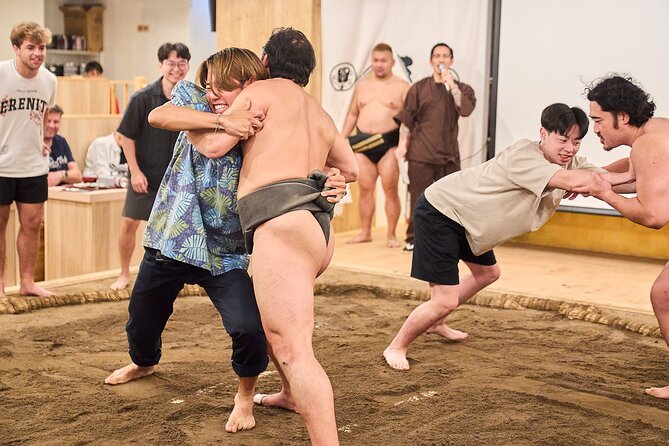
You may be invited into the ring to try a sumo challenge against a real wrestler. Children are welcome, and families often find this part especially entertaining. It is also funny to watch other people attempt the challenge, so you do not lose interest if you are not selected.
Participation is not guaranteed. If many people volunteer, the venue may limit the number of challengers or choose by lottery. That is one of the few practical points I would explain to children before arriving.
The wrestlers also pose for photographs. This is more than a quick snapshot from a distance. The close contact and informal atmosphere are a major reason the event works for families looking for a shared memory.
What the meal and show are really worth
The listed price is $106.12 per person. That is not cheap for a meal and a short performance, but the comparison should be made against the full package: admission, food, demonstrations, audience activities, photo opportunities, and a live show led by former professional wrestlers.
I see the value most clearly for a family or small group. A child can eat, learn a few sumo terms, pound mochi, watch a bout, and possibly enter the ring. Adults get cultural context and a close look at a sport that can otherwise seem difficult to understand. The event also avoids the time commitment of a full tournament day.
The value is weaker if your main goal is a refined Japanese meal. The food is not presented as a high-end dining experience, and alcoholic drinks are extra. It is also weaker for someone who wants a quiet, traditional sumo setting. SUMOLAND is deliberately lively, interactive, and designed for international visitors.
The very high overall rating and 98 percent recommendation fit the strongest parts of the program: the staff, the wrestlers, the organization, and the chance to participate. Still, the mixed comments about dinner are useful. Think of the hot pot as part of your ticket to a cultural performance, not as a standalone restaurant reservation.
Who will enjoy this most
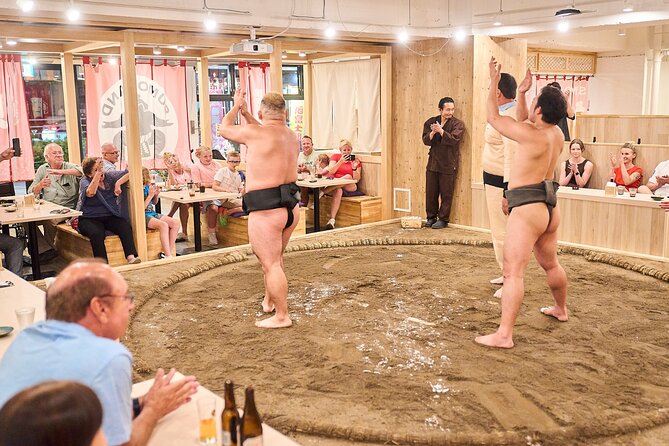
I would recommend SUMOLAND most strongly to families with school-age children and teenagers. The activities are clear, physical, and short enough to hold attention. Children can participate without needing to understand Japanese, and adults get enough explanation to appreciate what they are seeing.
It also suits first-time visitors who want an introduction to sumo before attending an official tournament. You will learn basic vocabulary, see techniques at close range, and understand why balance and force matter. That can make a later tournament easier to follow.
The experience works for couples and groups of friends too, especially if you enjoy comedy and audience participation. It is less suitable if you dislike being called on, do not want to eat a set meal, or prefer a formal cultural performance with little interaction.
Most people can take part, and the venue is near public transportation. Still, check the seating details carefully if you are visiting with a small child. Standard seats are not considered safe for holding a child on your lap, so you should reserve a place for each person. Box seats can hold up to six people and allow a child to sit on a lap.
Seats, timing, and planning your visit
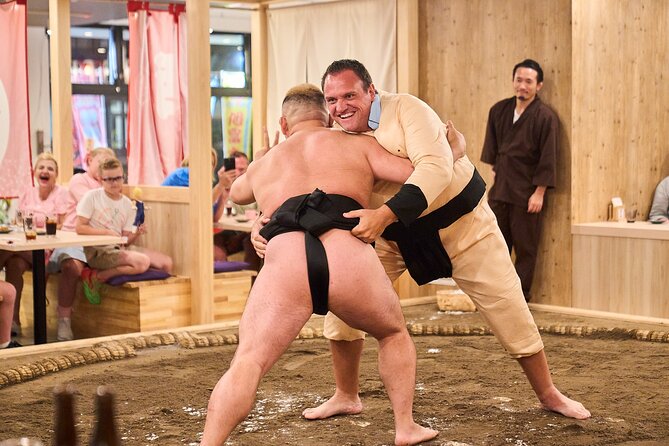
The program lasts about 90 minutes to two hours. It starts on time, so arrive a few minutes early rather than racing in at the last moment. Seating is assigned by the venue, and you cannot select a specific seat in advance.
The location is easy to pair with other Tokyo sights. Ryogoku Station is close, and the surrounding area connects well with Asakusa, Akihabara, Nihonbashi, and Tokyo Skytree. You could spend time around Ryogoku first, then attend the show, or use SUMOLAND as a compact activity between larger sightseeing stops.
Allow time to find the entrance. The sumo signage and flags help, but a first visit to an unfamiliar Tokyo neighborhood can still take longer than expected. The mobile ticket is convenient, and booking confirmation is sent within 48 hours, subject to availability.
Cancellation is flexible up to 24 hours before the start time, with a full refund. Inside that window, refunds and changes are not accepted, so do not book until your Tokyo schedule is fairly firm.
Vegetarian meals and other food restrictions
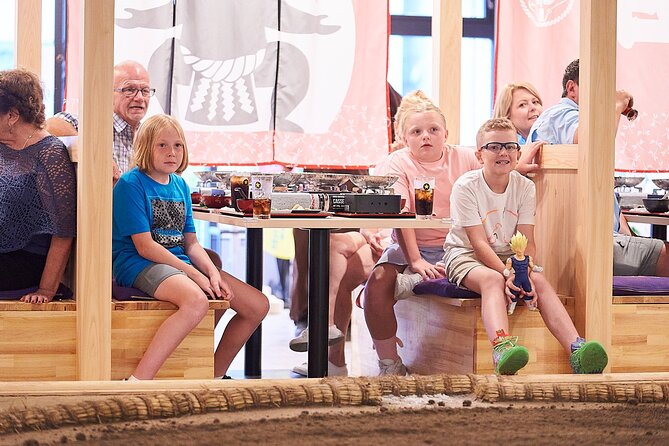
You need to request a vegetarian or vegan meal at least two days in advance. Do not assume that a last-minute request can be handled.
Gluten-free and halal meals are not available. The venue permits you to bring your own food, but you should plan this before arriving rather than expecting the kitchen to adapt the hot pot on the day.
Alcohol and bottled water are excluded. Bring water or plan to buy it separately, especially if you are visiting with children.
My verdict on the entertainment value
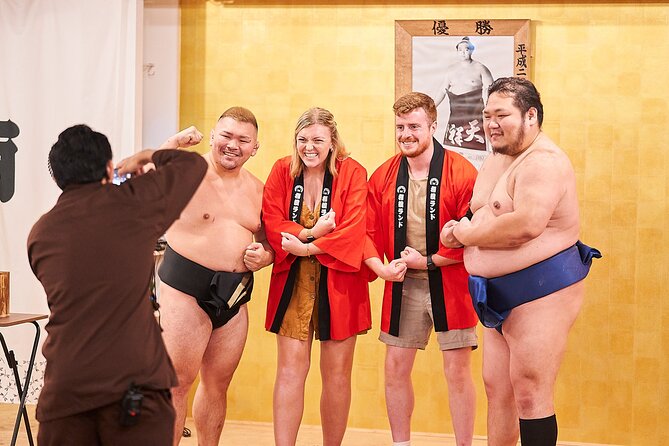
The strongest part of SUMOLAND is the combination of real athletic skill and accessible showmanship. The wrestlers explain the sport, demonstrate techniques, perform bouts, and joke with the audience. You learn enough to understand the action, but you never need to treat the event like a lesson.
I also appreciate that the program creates several kinds of memories. You might remember the wrestler’s entrance, the powerful sound of a bout, the taste of the broth, a child’s turn with the mochi mallet, or a photograph beside a retired professional. That variety helps justify the price.
The weaknesses are clear but manageable. The meal will not satisfy everyone, the program is not a formal sumo event, and audience participation may be limited. Some people will also want more explanation of tournament rules and sumo history.
Should you book SUMOLAND?
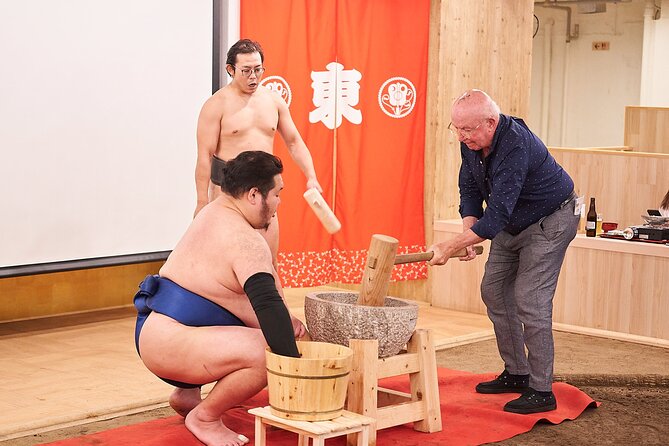
Book it if you want an easy, entertaining introduction to sumo with food and hands-on activities included. It is particularly strong for families, first-time visitors, and anyone who wants photographs and a chance to step into the ring.
Skip it if you are seeking an official tournament, a traditional morning practice, or a serious technical seminar. For most visitors, though, the combination of former professional wrestlers, chicken chanko hot pot, mochi pounding, and a short sumo challenge makes this a good use of an afternoon or evening in Ryogoku.
FAQ
Where is SUMOLAND Tokyo Ryogoku located?
It is on the first floor of Takashima Ryogoku Mansion at 4-32-19 Ryogoku, Sumida City, Tokyo 130-0026, Japan. The venue is a short walk from Ryogoku Station and is marked by a large sumo wrestler sign and flags.
How long does the experience last?
The activity lasts approximately 90 minutes to two hours.
Is the chicken chanko hot pot included?
Yes. The entrance fee includes chicken chanko hot pot. Alcoholic beverages and bottled water are not included.
Can vegetarians or vegans attend?
Yes. Vegetarian and vegan meals are available when requested at least two days in advance.
Are gluten-free and halal meals available?
No. Gluten-free and halal meals are not available, but you may bring your own food.
Can children participate?
Yes. Children are welcome to join the mochi-pounding activity and the sumo challenge. If many people want to participate, the venue may limit participation or choose participants by lottery.
Can I choose my seat?
No. Seats are assigned by the venue. Standard seats require a reservation for each person because holding a child on your lap is considered unsafe. Box seats can seat up to six people and allow a child to sit on a lap.
Just added around Tokyo
- Kawagoe Japanese Food Tour : Unagi Kaiseki and Sake near Tokyo★ 5.0 · 30 reviews
- Kawagoe 4hr Private Tour with Licensed Guide (Kawagoe Dep)★ 5.0 · 13 reviews
- Little EDO Sushi Making workshop in Kawagoe★ 5.0 · 18 reviews
- 【R34】Tokyo:Private Daikoku tour in Modified R34★ 4.9 · 92 reviews
- :Tokyo,Shibuya/ Pro Photography in Kimono / English-Friendly★ 5.0 · 26 reviews
- Tokyo:Celebrate Unique Japanese New Year Tradition Festivity★ 3.9 · 20 reviews
- Tokyo: Allstar Food Tour★ 4.7 · 29 reviews
- Tokyo: West-Side Cycling and Food Tour with Guide★ 5.0 · 37 reviews
Traditional Crafts, compared.
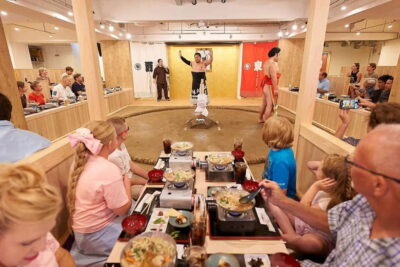
Tokyo Sumo Experience: Chanko & Mochi with a Former Pro
Our verdict →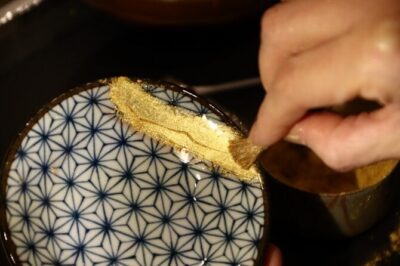
Kintsugi Experience: Art of Golden Joinery in Tokyo
Our verdict →
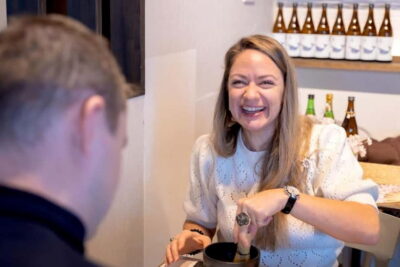
Matcha Making Experience with Mochi Sweets in Asakusa
Our verdict →
Authentic knife making experience at a blacksmith in Kyoto
Our verdict →
Roketsu dyeing experience: M course Roketsu Dyeing Experience
Our verdict →Browse the lists this tour appears in