
Reviewed · HISTORICAL TOURS
Asakusa: 3.5-hour Big-picture History Walk
Asakusa is not just Tokyo’s temple district. It is a compact lesson in how Japan moved from a closed feudal society to a modern global power. This 3.5-hour history walk connects the riverfront, Sensō-ji, Shinto worship, old theaters, pub lanes, and Edo-style streets into one clear story.
I like the small group, capped at eight, and the way the guides build the tour around ideas instead of simply naming buildings. I also like the breaks, traditional Japanese snacks, and the chance to see Asakusa beyond the main temple gate. The main drawback is the steady amount of walking, often in crowded areas and sometimes in bad weather, so it is not a good fit if you have serious mobility limits.
Key points at a glance
- Japan’s opening explained at street level: Learn why Japan isolated itself, why the Netherlands remained its trading link, and how the country reopened in the 19th century.
- Shinto and Buddhism side by side: See how two faiths shared worshipers and shaped ordinary Japanese life.
- Asakusa’s sacred and secular sides: Move from Sensō-ji and Asakusa Shrine to old entertainment streets, pubs, theaters, and working-class Tokyo.
- A rooftop view with useful orientation: Stop at the Asakusa Culture Tourist Information Center to see the area from above and understand its setting.
- Small-group guiding with personal attention: The eight-person limit makes it easier to ask questions and keep up in crowded streets.
- Traditional snacks included: Freshly made Japanese sweets and snacks add a welcome taste break during the walk.
Why this Asakusa walk is more than temple sightseeing
Many first visits to Asakusa follow a simple route: take a photograph at Kaminarimon, walk through Nakamise, visit Sensō-ji, and leave. That gives you the postcard view, but not much explanation. This walk uses the same famous sights as a doorway into bigger questions about Japan.
Why did Japan close itself to most foreign trade? Why did the Netherlands keep a special role during that period? How did Japanese art later affect French Impressionist painters? The guide uses Asakusa to connect those questions to places you can actually see.
That approach suits you if you want a clearer picture of Japan rather than a string of isolated facts. It also helps if you are visiting Tokyo early in your trip. After three and a half hours, later sights, customs, and historical references should make more sense.
The tour is in English, with a certified English-speaking guide. Previous guides have included Ai, Yasu, Taka, Yoko, Satchi, Akiko, and Jun Chan. The individual guide will shape the tone of the walk, but the strongest feedback points to patient explanations, good crowd management, and guides who answer questions beyond the basic route.
More Historical Tours in Tokyo
- Tokyo: Imperial Palace and Shogun Historical Walking Tour
★ 5.0 · 2,251 reviews - Tokyo: Imperial Palace Japanese History Walking Tour
★ 4.9 · 987 reviews - Tokyo: Imperial Palace and Shogun Walking Tour
★ 4.9 · 935 reviews
Meeting beside Exit 4 and starting at the river
The meeting point is in front of the Burger King next to Exit 4 of Asakusa Station on the Ginza Line, station G19. Step outside the exit rather than waiting underground. This is a practical meeting spot, but give yourself enough time to find the correct exit in the busy station area.
The route begins around 2-chōme-20-6 Kaminarimon and heads toward the Tokyo Cruise Asakusa Pier. The first stop is not simply a photo opportunity. The river helps you understand why Asakusa developed as a key approach to old Tokyo and why the district became tied to commerce, worship, and entertainment.
The pier portion lasts about 15 minutes. You should expect a short orientation rather than a boat ride. It gives the guide room to place Asakusa within the wider city and to explain how the water shaped movement through the area.
If you like architecture or city views, this opening is useful. If you want to reach Sensō-ji immediately, it may feel like a slow start. The value comes from the context, not from a long list of riverfront sights.
The Asakusa Culture Tourist Information Center’s useful rooftop view
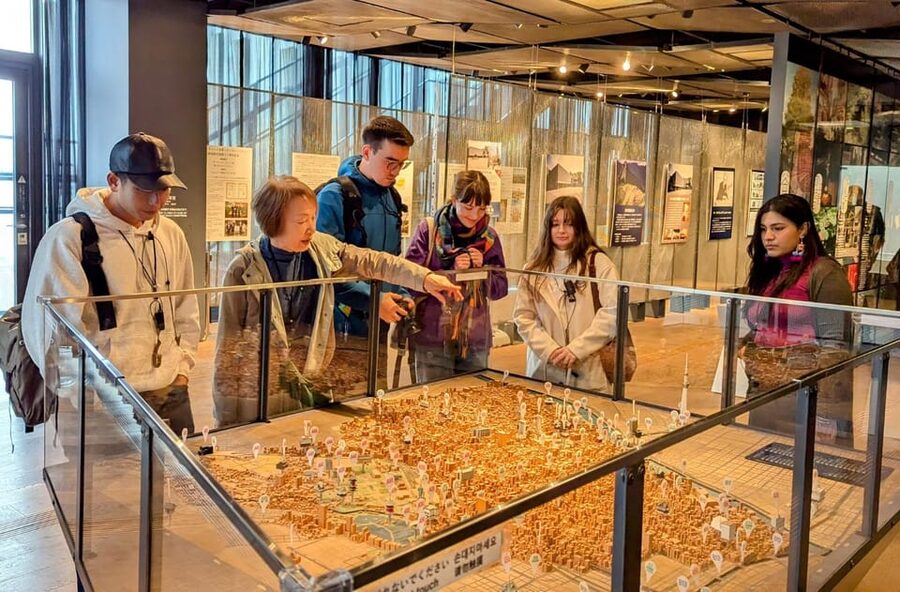
The next stop is the Asakusa Culture Tourist Information Center, with about 30 minutes of guided time. The building itself is part of the lesson. Its modern design contrasts with the older streets around it, giving you an early example of how Asakusa places contemporary Tokyo beside traditional forms.
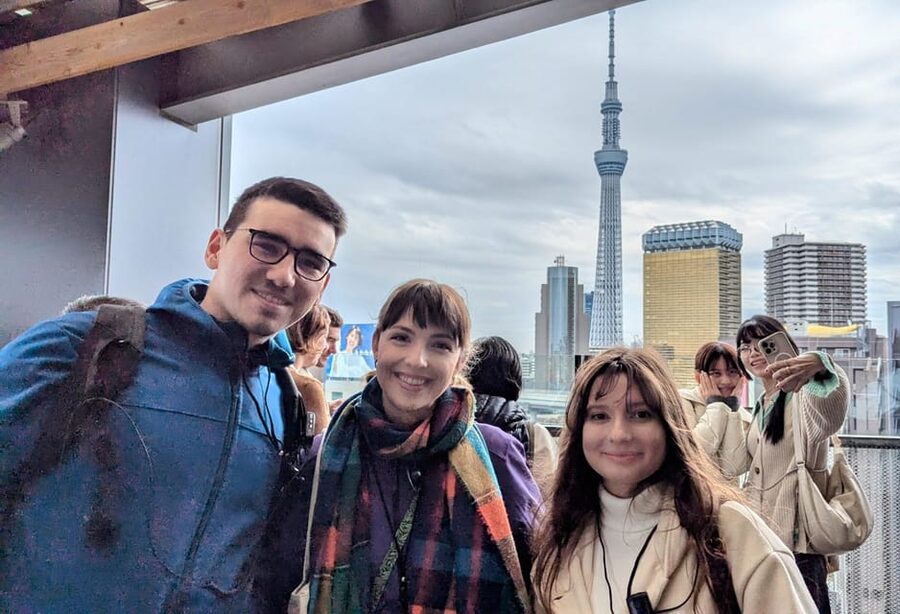
The upper view helps you get your bearings. From there, you can better understand the relationship between the temple district, shopping streets, the river, and the modern city beyond. One guide also pointed out Tokyo Skytree, including the Japanese wordplay connected to its 634-meter height. In Japanese, roku-san-yon can be read to match the digits six, three, and four.
This is one of the most useful stops for first-time visitors because Asakusa can feel like a maze at street level. A higher view turns the district into a readable map. It also gives you a pause before the denser pedestrian sections.
Kaminarimon and the famous road to Sensō-ji
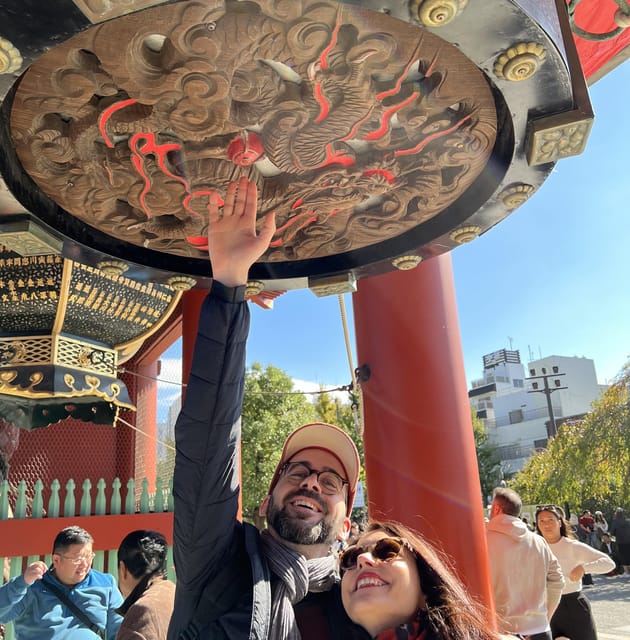
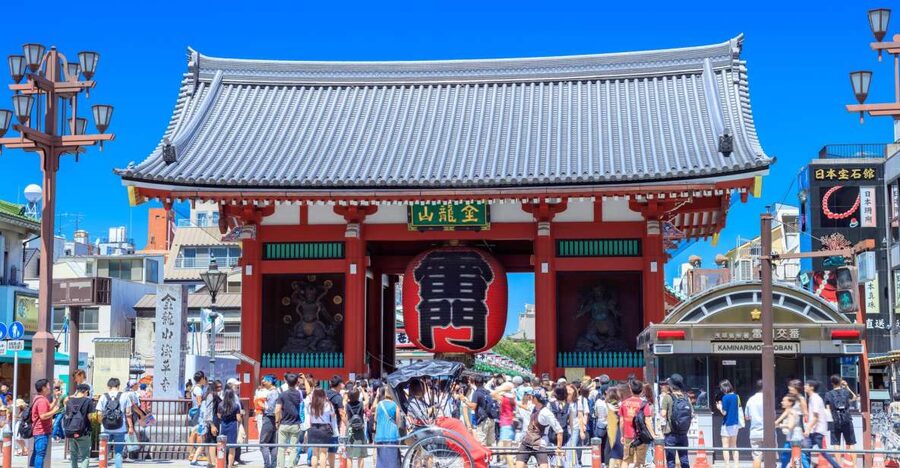
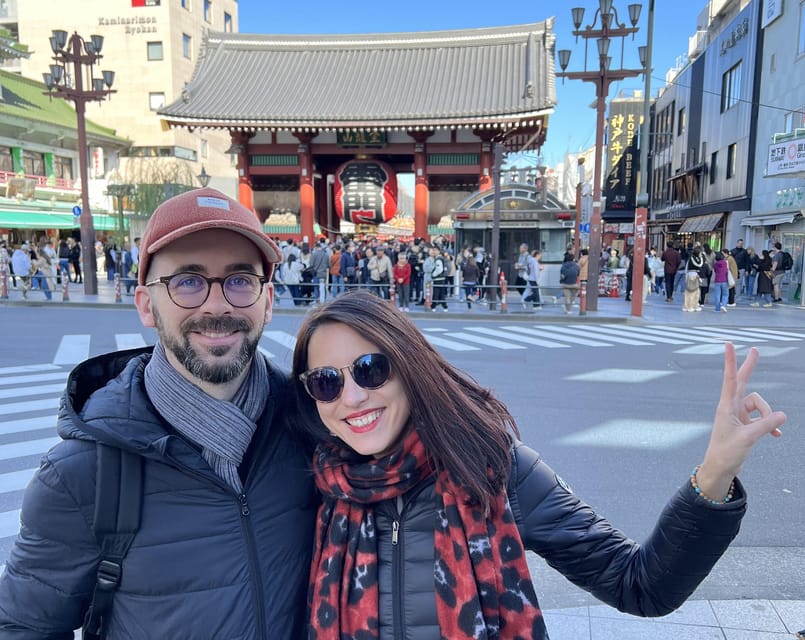
Kaminarimon, or the Thunder Gate, receives about 15 minutes. It is one of Tokyo’s most photographed entrances, but the guide gives you reasons to look beyond the giant lantern and red structure.
You will learn how the gate frames the approach to Sensō-ji and why this entrance matters as part of the worship route. The guide can also point out details that are easy to miss when you are focused on taking a picture.
From here, the walk continues along Nakamise Shopping Street for about 30 minutes. This is the main commercial approach to the temple, lined with souvenir stalls, snacks, sweets, and traditional goods. It is a busy stretch, and you may not have much room to stop wherever you wish.
The guided visit helps you read Nakamise as more than a shopping strip. It links commerce with pilgrimage and shows how sacred places have long depended on ordinary trade around them. You will also have time to notice the goods and perhaps make a note of where to return later.
This is not a shopping tour, which is good news if you prefer history to retail. One guide even adjusted the pace for people who were not interested in buying things. If you do want souvenirs, you will have a better chance of choosing well after learning what the street represents.
More Walking Tours in Tokyo
- Tokyo Tsukiji Fish Market Food and Culture Walking Tour
★ 5.0 · 3,184 reviews - Tokyo: Shinjuku Local Bar and Izakaya Guided Walking Tour
★ 4.9 · 1,794 reviews - Tokyo: Tsukiji Fish Market Food and Walking tour
★ 5.0 · 1,724 reviews - Tokyo: Asakusa Walking Tour with Sensoji Temple Visit
★ 4.8 · 1,583 reviews
Hōzōmon, Sensō-ji, and the difference between seeing and understanding
Hōzōmon Gate receives about 15 minutes before the main temple visit. This gate leads deeper into the Sensō-ji grounds and helps separate the commercial approach from the more sacred core.
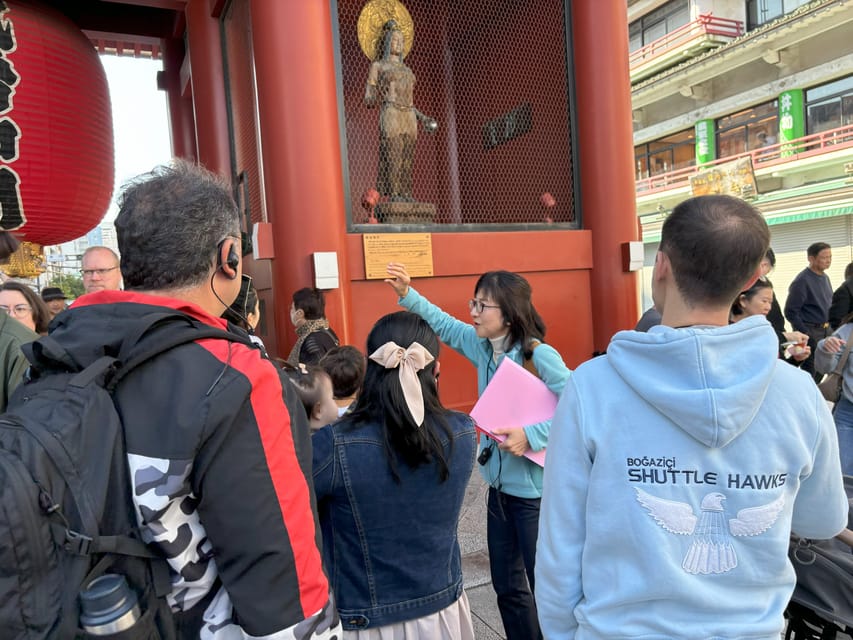
Sensō-ji itself receives the longest stop, about 45 minutes. That time matters. You are not being rushed through the grounds for a single photograph. The guide explains the temple’s place in Asakusa and uses it to discuss Japanese religious life.
The central idea is the relationship between Buddhism and Shinto. In Japan, these traditions often shared the same worshipers rather than existing as strictly separate choices. The tour explains how the two can complement one another in daily life, giving you a better way to understand why different kinds of sacred spaces sit so close together.
This section is likely the heart of the walk for anyone interested in religion. You will learn to notice the difference between a Buddhist temple and a Shinto shrine, while also seeing why the boundary has not always been rigid in Japanese life.
Sensō-ji can be crowded, especially around the main approach. The eight-person limit helps, and groups of three or more receive headsets so you can hear the guide without clustering tightly around them. Still, expect noise, foot traffic, and frequent pauses.
Asakusa Shrine and Yōgō-dō Pavilion
Asakusa Shrine receives about 15 minutes. Its presence beside Sensō-ji is central to the tour’s explanation of Japan’s two major religious traditions. Rather than treating the shrine as a separate stop with no connection to the temple, the guide shows how the pair reflects a long history of shared religious practice.
This is a good place to ask questions. If you have noticed shrine gates, temple buildings, purification practices, or different forms of prayer elsewhere in Japan, the explanation here can help sort out what you have seen.
The route then includes Yōgō-dō Pavilion for another 15-minute visit. The stop adds a quieter religious note after the main temple complex. Since this is a history-focused walk, the guide’s explanation matters more than a long period of independent sightseeing.
The route does not treat worship as an abstract subject. It connects belief with the way people use places, move through them, and combine customs in everyday life. That makes the religious section useful even if you are not deeply interested in theology.
From sacred ground to Asakusa’s entertainment district
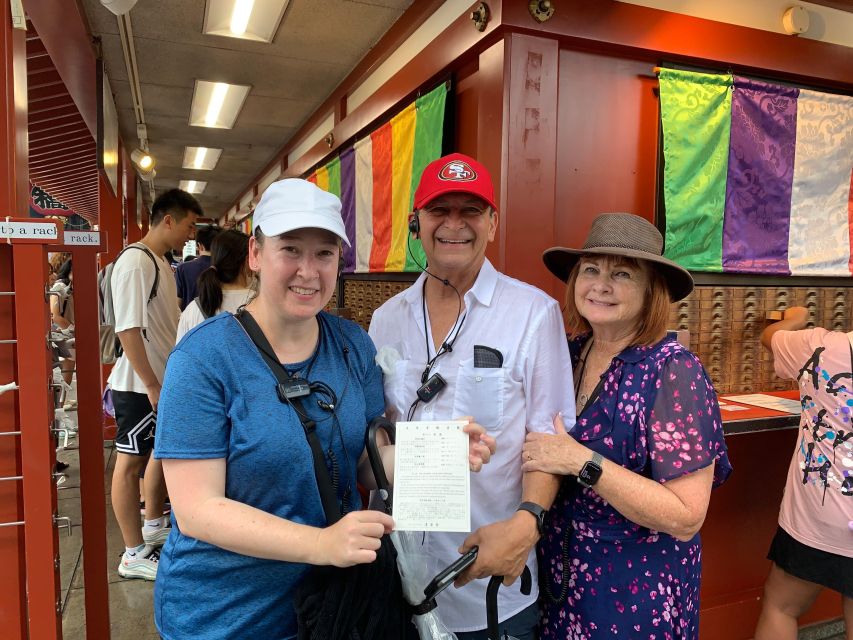
The walk changes character at Asakusa Nishi-sandō Shopping Street. You spend about 15 minutes there, with time to walk and take in the older atmosphere. This is one of the places where the tour makes its main point about human nature: people move between the sacred and the secular with little trouble.
Nearby Asakusa once served as a major entertainment center, before Shinjuku and Shibuya took that role in modern Tokyo. The guide explains the area’s former cinemas, vaudeville theaters, and performance halls, helping you picture a different period of city life.
You will not be looking only at preserved monuments. You are also seeing streets shaped by popular entertainment, ordinary work, and postwar recovery. That gives Asakusa a more human scale.
Asakusa Mokubakan follows as another 15-minute stop. The visit adds to the picture of theater and performance in the district. It is a useful counterpoint to the formal beauty of Sensō-ji because it shows how local identity also grew through shows, crowds, humor, and shared leisure.
The tour also draws comparisons between Japanese and Western ideas. One example concerns dragons, whose roles and meanings differ between East and West. Another looks at similarities in how people thought a thousand years ago. These comparisons are helpful when you want more than a list of Japanese customs. They show where cultures differ, and where human concerns remain familiar.
Hoppy Street and the working-class side of Tokyo
Hoppy Street is the final listed stop, with about 15 minutes for a visit and walk. The narrow lane is known for old-style Japanese pubs and carries the feel of postwar working-class energy and resilience.
This is not polished temple scenery. That is exactly why it belongs on the route. You see how Asakusa’s identity includes food, drink, informal gathering, and local nightlife. The area beside Sensō-ji has never been only a sacred quarter.
The contrast can be striking: incense and temple grounds on one side of the day, pub lanes and entertainment history on the other. I like this part because it keeps the tour from turning Asakusa into a museum. You get a sense of a neighborhood that people used for work and pleasure, not just a place arranged for sightseeing.
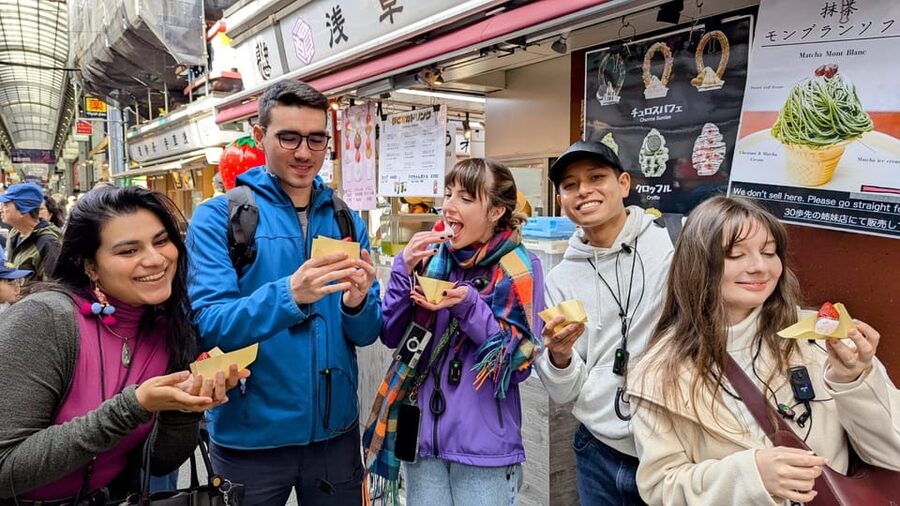
The route also includes time for traditional Japanese snacks and sweets. These are freshly made selections, not a full meal, so you should eat beforehand if you need a substantial lunch. The snack break adds pleasure and gives your feet a rest.
The Edo-period mood on a quieter shopping street
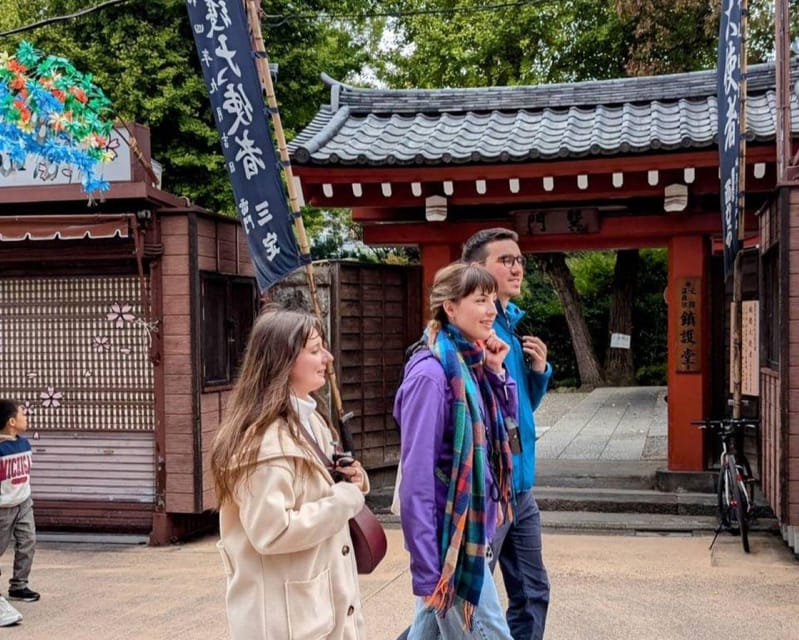
One of the tour’s quieter ideas is nostalgia. Asakusa Nishi-sandō and the surrounding old-style streets offer a break from the broad, crowded approach to Sensō-ji. The guide uses these lanes to take you back toward Edo-period Japan and the feeling of an old film set.
You should keep your expectations sensible. This is not a preserved Edo village, and the tour does not turn modern Tokyo into a stage prop. Instead, the guide points out the older mood and cultural echoes that remain in the district.
That distinction matters. You are not being asked to believe the past is untouched. You are being shown how memories of old Tokyo remain part of the present neighborhood.
Walking time, weather, and group size
The total duration is 210 minutes, or three and a half hours. A moderate amount of walking is involved, with stretches through busy streets and temple grounds. Comfortable shoes are essential, and bottled water is sensible, although vending machines are available.
The tour operates in all weather. Rain did not stop one guide from helping the group stay comfortable, but you should still dress for the forecast. Summer heat, winter cold, and wet pavement can change how enjoyable the route feels.
The group limit of eight is a real advantage. You can ask questions without fighting a large crowd, and the guide can adjust explanations to the interests of the group. Headsets are provided for groups of three or more, which helps at Sensō-ji and along busy shopping streets.
The supplier says it will try to accommodate mobility needs, but the activity is not suitable for people with mobility impairments. Families are welcome, and children under six may join without charge, though the historical focus is aimed more at adults.
Is $88 a fair price for three and a half hours?
At $88 per person, this is not the cheapest way to see Sensō-ji. You can walk around the temple district on your own for little or no admission cost. The price is easier to justify if you value interpretation, a small group, English explanations, snacks, and a carefully connected route.
You are paying for the guide’s ability to turn separate sights into one story. That includes the Netherlands and Japan’s isolation, the country’s reopening, Japanese art’s influence abroad, Shinto and Buddhism, local entertainment, and Edo-era nostalgia.
I would not choose this tour if you only want photographs or free time to shop. I would choose it if you want to understand why Asakusa looks the way it does and prefer asking questions to reading signs.
Free cancellation up to 24 hours ahead and reserve-now, pay-later booking also reduce the risk when your Tokyo schedule is still shifting.
Who should book this Asakusa history walk?
Book it if you are visiting Tokyo for the first time and want a strong introduction to Japanese history and daily culture. It also suits repeat visitors who have seen Sensō-ji but never understood how the temple district connects to entertainment, trade, and modern Tokyo.
The tour is especially good for:
- Adults who enjoy history, religion, architecture, and cultural comparison
- Families with older children who can manage three and a half hours of walking
- Small groups who prefer personal explanations
- People who want an English-speaking guide rather than an audio-only route
- Visitors who prefer local streets and neighborhood context over a shopping-focused outing
You may want to skip it if you dislike guided walks, need frequent sitting breaks, or have limited mobility. Crowds, weather, and the steady pace are part of the experience.
Should you book it?
I would book this walk if you want Asakusa to make sense rather than simply look beautiful. The strongest feature is the guide’s role in connecting temple ritual, foreign trade, art, entertainment, and ordinary city life.
Choose a morning or afternoon slot that leaves you time to stay in Asakusa afterward. The route ends with food and pub streets, so you can continue into dinner or explore the district at your own pace.
For $88, the value depends on your interests. If you want a simple temple visit, save the money and go alone. If you want a patient guide, a small group, useful historical context, and a fuller picture of Japan, this is a well-shaped half-day choice.
FAQ
Where does the tour meet?
Meet in front of the Burger King next to Exit 4 of Asakusa subway station on the Ginza Line, station G19. Step outside at Exit 4.
How long does the tour last?
The tour lasts 210 minutes, or three and a half hours.
What language is the tour in?
The live tour guide speaks English, and an English audio guide is included.
How large is the group?
The maximum group size is eight participants.
Are headsets provided?
Yes. Headsets are provided for groups of three or more so you can hear the guide clearly.
Are food or drinks included?
A selection of freshly made Japanese traditional snacks and sweets is included. Bottled water is not included, but vending machines are available.
Does the tour include hotel pickup?
No. Hotel pickup and drop-off are not included.
Is the tour suitable for children?
Families are welcome, and children younger than six may join without charge. Because the tour focuses on history, it is recommended mainly for adults.
What happens if the weather is bad?
The tour operates in all weather conditions, so you should dress appropriately and wear comfortable shoes.
Just added around Tokyo
- Kawagoe Japanese Food Tour : Unagi Kaiseki and Sake near Tokyo★ 5.0 · 30 reviews
- Kawagoe 4hr Private Tour with Licensed Guide (Kawagoe Dep)★ 5.0 · 13 reviews
- Little EDO Sushi Making workshop in Kawagoe★ 5.0 · 18 reviews
- 【R34】Tokyo:Private Daikoku tour in Modified R34★ 4.9 · 92 reviews
- :Tokyo,Shibuya/ Pro Photography in Kimono / English-Friendly★ 5.0 · 26 reviews
- Tokyo:Celebrate Unique Japanese New Year Tradition Festivity★ 3.9 · 20 reviews
- Tokyo: Allstar Food Tour★ 4.7 · 29 reviews
- Tokyo: West-Side Cycling and Food Tour with Guide★ 5.0 · 37 reviews
Historical Tours, compared.
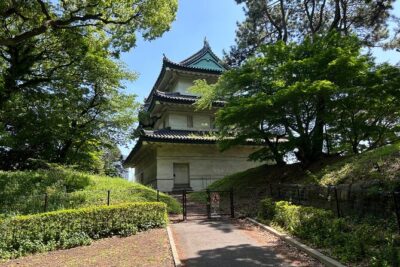
Imperial Palace and Shogun Historical Walking Tour
Our verdict →
World Heritage Kyoto & Nara Uji Authentic Matcha Experience
Our verdict →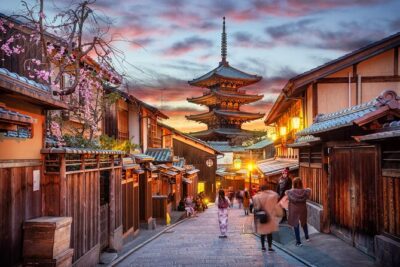
Kyoto Gion: 2-Hour Geisha Culture & History Walking Tour
Our verdict →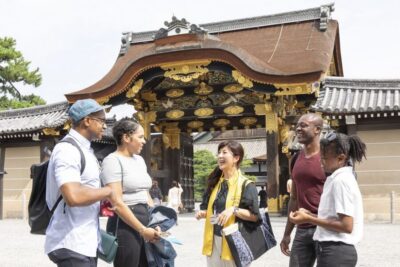
Hiroshima Historical Walking Tour – Why A-Bomb was Dropped
Our verdict →
Yanaka Walking Tour: Historic and Traditional District of Tokyo
Our verdict →
Shinjuku Historical Walking Tour & Secret Backstreets
Our verdict →
Mt. Fuji Heritage Tour: Traditional Villages, Lakes & Shrine
Our verdict →Browse the lists this tour appears in