Reviewed · MORNING
Explore Hidden Alleyway with a Local Expert (Morning tour)
Kyoto’s backstreets make far more sense from a bicycle seat. This three-hour private e-bike tour links Miyagawacho, Gion, the Imperial Palace, and the Kamo River, giving you a broad look at the city without spending the morning on foot.
I like the small-group format, which lets you ask questions and request a coffee stop or river ride. I also like that the electric bike takes the sting out of a hot day and helps you cover ground at an easy pace. The main drawback is weather: in heavy rain, the tour can switch to public transport, but that will not feel the same as cycling Kyoto.
Key points at a glance
- See five distinct Kyoto settings in three hours: old wooden lanes, geisha districts, a palace garden, a willow-lined stream, and a local river stop.
- Ride with only your own group: each guide accepts two to six people, with an additional guide available for groups of seven to twelve.
- Expect a flexible pace: guides can respond to your interests, including a requested coffee break or extra time beside the Kamo River.
- E-bikes help in heat: the battery-powered bikes make the route easier when walking feels tiring.
- Rain does not automatically cancel the tour: you can ride with a free rain poncho or use buses and the metro instead.
- Plan around the age and size rules: children must be at least 10 years old, 145 centimeters or taller, and able to ride safely on the road.
Why an e-bike works so well in Kyoto
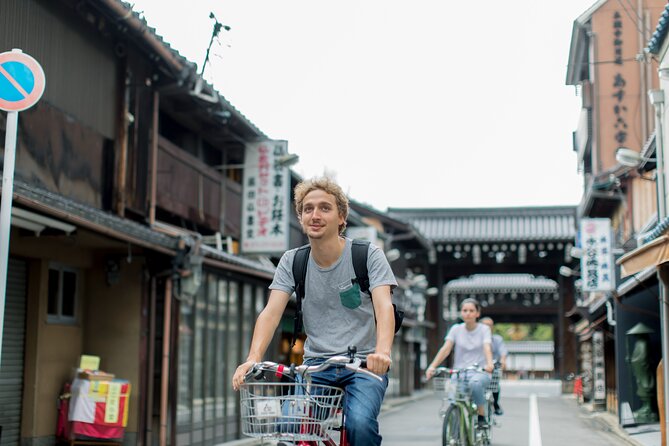
Kyoto’s main sights are spread across a wide area. Walking between Gion, the Imperial Palace, and the Kamo River can eat up much of a day, especially in summer. A bicycle gives you a better sense of the city’s layout, while the electric motor keeps the route from becoming a workout.
This is not a racing tour. The appeal is the combination of movement and explanation. You pedal through ordinary streets, pause at important places, and hear how each area fits into Kyoto’s culture. The guide handles the route, so you are not stopping every few minutes to check a map.
The private setup matters. With two to six people per guide, you can ask about Japanese religion, history, food, or daily life without waiting for a large group to catch up. Guides named Rich, Yuichi, and Annie have led this route, and the best part of the format is the chance to talk with the person riding beside you.
The bikes are also useful in hot weather. One customer described the battery-powered ride as easy even on a very hot day. You should still expect some saddle time, though. If you are not used to cycling, padded shorts or padded pants are a sensible idea.
More Morning Tours in Kyoto:
- Kyoto Early Morning Tour with English-Speaking Guide
★ 5.0 · 1,427 reviews - Kyoto: Early Morning Tour with English-Speaking Guide
★ 4.9 · 1,128 reviews - Kyoto Morning Tour from Kyoto or Osaka
★ 4.0 · 281 reviews
Miyagawacho, where old Kyoto comes into view
The first stop is Miyagawacho Kaburenjo, in one of Kyoto’s five traditional geisha districts. Miyagawacho is the city’s second-largest geisha quarter, and its narrow lane is lined with traditional wooden houses.
This is a short 15-minute stop, but it sets the tone. The architecture gives you a calmer view of Kyoto than the large temple compounds and crowded shopping streets. Look for the wooden facades, restrained entrances, and narrow proportions that make the district feel connected to an older city.
You should not expect a stage performance or a long indoor visit here. The value is in seeing the street itself and learning how a geisha district functions. Your guide can explain the difference between a maiko and a geiko, as well as the customs linked to these neighborhoods.
Take care while riding through the lane. The traditional atmosphere comes from the fact that this remains a real urban area, not a museum set. Pedal slowly and follow your guide’s instructions.
Gion and the polished side of Kyoto tradition
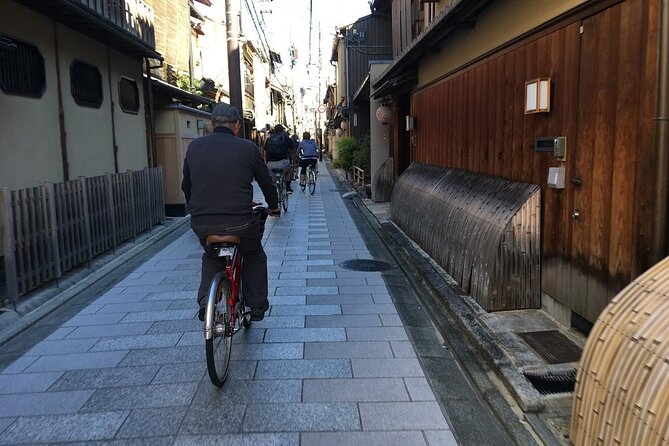
From Miyagawacho, the route continues to Gion, Kyoto’s best-known geisha district. The area developed around entertainment and tea houses, and its refined old-style character remains visible in the streets and buildings.
Again, the stop lasts about 15 minutes. That is enough for an introduction and a short look around, but not enough for a detailed walking tour of every lane. The bicycle makes the visit efficient, allowing you to see Gion as part of a larger morning rather than giving the entire tour to one neighborhood.
Gion can feel very different from Miyagawacho. Miyagawacho offers a quieter, more enclosed view, while Gion is the famous name many people associate with Kyoto’s maiko and geiko culture. Having both on the same route helps you compare them.
Be respectful here. These are not simply photo backdrops. People live and work in the district, and the tour is better when you treat the lanes as neighborhoods rather than hunting for staged encounters.
Tatsumi Bridge and a willow-lined pause
Tatsumi Bridge provides a change of pace. The route follows a small stream, with willows moving above the water. After the tight lanes of the geisha districts, this short stop gives you room to breathe and enjoy Kyoto’s quieter side.
The stated stop is about 15 minutes, so think of it as a scenic pause rather than a long rest. The stream and willows offer one of the more pleasant visual breaks on the tour, and the setting helps explain why Kyoto is often appreciated for small details rather than grand views alone.
This is also a good place to ask questions. The guides are expected to explain the places you pass, and past guide experiences have included detailed answers about Japanese history, culture, and religion. The private format makes that exchange easier than it would be on a large group ride.
A few more Kyoto half-days worth comparing
- PERFECT KYOTO 1-Day Bus Tour
★ 5.0 · 13,518 reviews - Kyoto: Fushimi Inari, Kinkakuji, Bamboo Grove 1 Day Bus Tour
★ 4.8 · 4,316 reviews - Kyoto: Tea Ceremony in a Traditional Tea House in Kiyomizu
★ 4.9 · 3,519 reviews - Kyoto Geisha Walking Tour: Gion District & Hidden Gems
★ 4.7 · 3,273 reviews
Cycling through Kyoto Imperial Palace grounds
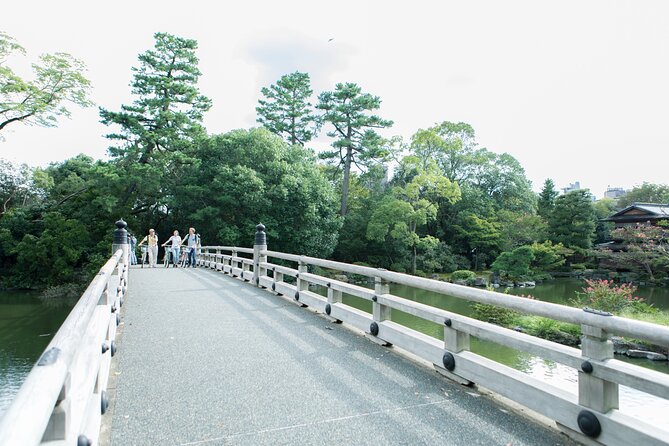
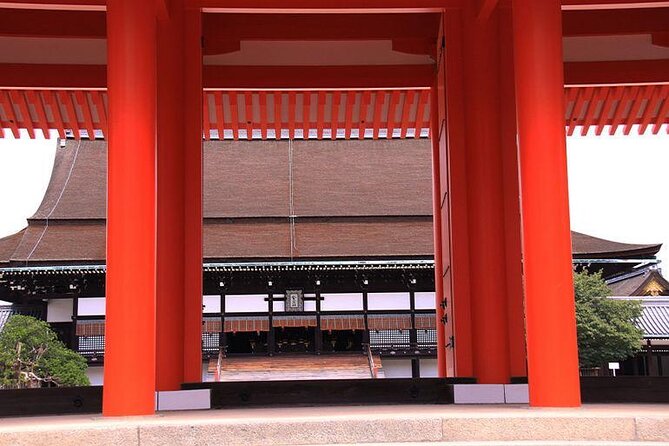
The Kyoto Imperial Palace is the most substantial stop. It was once the residence of Japan’s Imperial Family and is now open to the public as a national garden with seasonal flowers.
You spend about 20 minutes here and cycle along gravel paths. That detail matters. This is not a fast road section, and the surface may feel different from the paved streets around Gion. Stay at a comfortable speed and listen to the guide’s directions.
The palace grounds offer a broader, more spacious view of Kyoto. After the narrow wooden lanes and streams, the open garden changes the mood. You get a sense of the scale and order associated with the former imperial center without committing to a long palace visit.
The route only passes through the grounds rather than promising an extensive interior tour. If your priority is a detailed look at palace buildings, this experience may feel brief. If you want to connect the palace with Kyoto’s neighborhoods in one morning, the stop works well.
Seasonal flowers add another reason to enjoy this section, though the exact appearance depends on when you visit. The route is not built around one particular bloom, so you are not paying for a narrowly timed flower experience.
A quiet rest beside the Kamo River
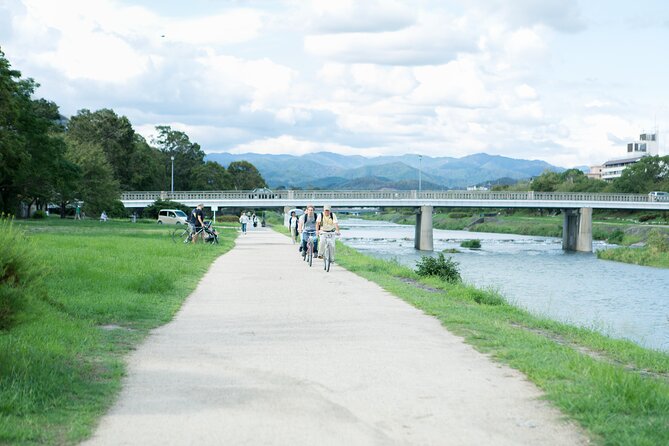
The final stop is Kashiwayacho, where you can relax beside the Kamo River. This area is described as a favorite place for local residents, and it gives the tour an unhurried ending.
The river stop lasts about 20 minutes and includes admission. In practical terms, it is a chance to sit, cool down, and talk with your guide after the more active parts of the morning. One group requested a coffee break, and the guide fitted it into the morning, which shows how the private format can work when you communicate your preferences.
The Kamo River is also a useful place to ask for local suggestions. Guides such as Rich and Yuichi have been praised for offering tips as well as explanations, and the river pause gives you time to ask about the rest of your Kyoto visit.
Do not expect a long riverside meal or a full café stop built into every departure. The standard plan is a short rest. If you want coffee, tell the guide early so the schedule can be adjusted if possible.
What the three-hour schedule really gives you
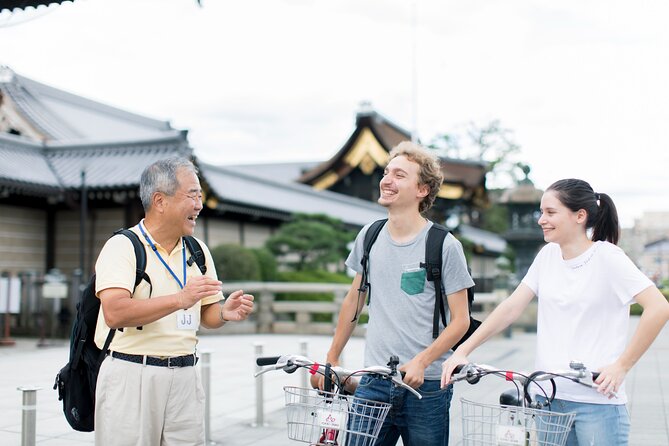
Three hours is enough to cover a wide section of Kyoto, but it is not enough for extended visits at every stop. You are sampling five areas, not completing five separate walking tours.
That tradeoff is the point. You see a lot, learn how the districts relate to one another, and save your legs for later. Several people have found the tour ideal near the start of a Kyoto stay because it helps them get their bearings quickly.
The 9:00 a.m. start is useful. It puts you on the road before the day becomes hotter and gives you the rest of the day for temples, food, shopping, or a slower return to a favorite neighborhood. An early departure may also make the ride feel less tiring.
The tour ends back at the starting point, at 552-13 Higashiaburanokōjichō in Shimogyo Ward. Since the activity returns to its origin, you do not need to plan a separate pickup at the end.
Private guiding, language, and flexibility
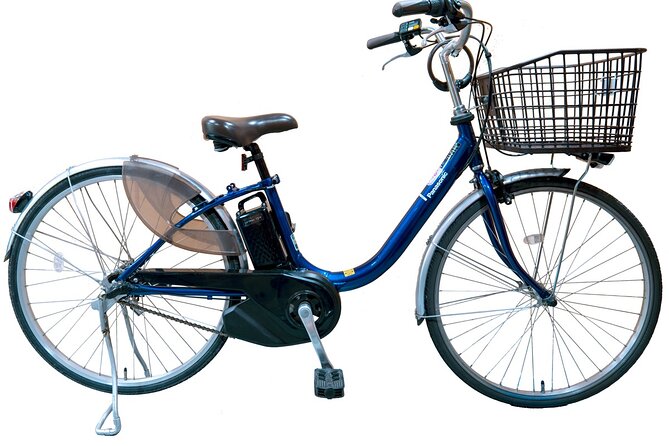
The group limit is two to six people per guide. Solo bookings are not accepted, so this is designed for couples, families, or small groups traveling together. For seven to twelve people, an extra guide can be arranged.
A private guide is especially useful if your group has mixed interests. One person can ask about Kyoto’s past, another can focus on geisha districts, and another can request more time by the river. The pace can also be adjusted rather than fixed to the speed of a large group.
Guide quality matters more on a small tour because so much depends on conversation. Rich is described as handling questions across history and culture, while Yuichi has been praised for helping groups move comfortably through the streets and offering practical tips. Annie has also been described as attentive and generous with explanations. These names indicate the kind of personal guiding available, but your assigned guide may differ.
One caution is worth keeping in mind. In heavy rain, one guide was found less able to exchange detailed information in English. That does not mean every guide will have the same limitation, but if detailed English conversation is central to your plans, it is sensible to confirm language expectations before booking.
Heat, rain, and the practical side of riding
The tour operates in rain rather than automatically canceling. You have two choices: continue by bicycle with a free rain poncho, or switch to a walking tour using public buses or the metro, with that transport included in the tour fee.
That policy gives you flexibility, but it also means a wet-day booking may turn into a very different experience. If the forecast calls for steady heavy rain, I would choose the public transport option rather than expect the same pleasure from cycling.
On a warm day, the e-bike is a real advantage. You still pedal and must ride safely on the road, but the battery assistance reduces the effort. Bring normal sun and heat protection suitable for the season, though the supplied details do not specify additional equipment beyond the bicycle and rain poncho when needed.
Children must be at least 10 years old and 145 centimeters or taller. They also need to ride safely on the road without assistance. This is not a child trailer or beginner cycling activity.
Is $103.04 good value?
At $103.04 per person, this is not the cheapest way to see Kyoto. You are paying for a private guide, an e-bike, equipment rental, and a route that covers several districts in one morning.
The value is strongest for people who want orientation and conversation. A guide removes the work of route planning, the e-bike saves time between districts, and the private setup lets you shape the morning. If you tried to cover the same ground on foot and paid for several separate guided visits, the price could make more sense.
It is less compelling if you prefer to spend an hour or more at one site, or if you already know Kyoto well. The Imperial Palace and each geisha district receive short visits, so the tour favors range over depth.
The 4.9 rating from 61 reviews and 98 percent recommendation figure suggest a consistently strong experience, especially for guide quality, route variety, and ease of riding. One recurring practical lesson is to request a coffee break if that matters to you, and to consider padded clothing if your body is not used to bicycle saddles.
The cancellation information supplied for this experience is inconsistent. One section says you can cancel at least three days before the tour by 6:00 p.m. Japan time for a refund, while another says the booking is non-refundable and cannot be changed. Confirm the current rule with KCTP before paying.
Who should book this Kyoto cycling tour?
I would choose this tour for a first or second day in Kyoto. It gives you a useful map of the city and may help you decide where to return later. It also suits anyone who wants to see more than walking allows, especially during hot weather.
It is a good match for:
- Couples and small groups who want a private pace
- Visitors interested in geisha districts and traditional streets
- People who want history and culture explained while they move
- Active visitors who prefer cycling to long walks
- Groups who value local tips and the chance to ask many questions
I would hesitate if you dislike riding on roads, need a completely weatherproof plan, or want long indoor visits at the Imperial Palace and geisha districts. This is a moving overview, not a single-site study tour.
Should you book it?
Book it if you want a practical introduction to Kyoto that combines old neighborhoods, imperial grounds, water, and local streets in one morning. The e-bike, private format, and adaptable pace make the $103.04 price easier to justify, particularly for a small group.
Skip it if your ideal morning is slow photography, extended temple visits, or a guaranteed bike ride in any weather. For most fit visitors who can ride safely, though, this is a smart way to cover a lot of Kyoto before lunch and still have energy for the rest of the day.
FAQ
What time does the tour start?
The tour starts at 9:00 a.m.
How long does the e-bike tour last?
The tour lasts approximately three hours.
Where does the tour start and finish?
It starts at 552-13 Higashiaburanokōjichō, Shimogyo Ward, Kyoto, 600-8235, Japan, and ends back at the same meeting point.
How many people can join one guide?
A guide accepts a minimum of two and a maximum of six people. For groups of seven to twelve, an additional guide can be arranged. One-person participants are not accepted.
What happens if it rains?
The tour can continue by bicycle with a free rain poncho, or you can switch to a walking tour using buses or the metro. Public transport is included in the tour fee.
Can children join the tour?
Children must be at least 10 years old, at least 145 centimeters tall, and able to ride a bicycle safely on the road without assistance.
Is the tour refundable or changeable?
The supplied booking information gives conflicting cancellation terms. One section says cancellation at least three days before the tour date by 6:00 p.m. Japan time may qualify for a refund, while another says the experience is non-refundable and cannot be changed. Confirm the applicable policy with KCTP before booking.
Just added around Kyoto
- Sekka Cotton Furoshiki Class★ 5.0 · 19 reviews
- Secret Eastern Kyoto Biking Adventure★ 5.0 · 44 reviews
- Kyoto Sword Experience – includes Museum Ticket/Ninja Experience★ 4.5 · 149 reviews
- Scenic Green Tea Fields of Hidden Kyoto & Local Tea Exp (Private)★ 5.0 · 32 reviews
- Private Sake Tasting in Central Kyoto with Sake Sommelier★ 5.0 · 32 reviews
- Samurai School in Kyoto: Samurai for a Day★ 5.0 · 202 reviews
- SHIRAKAWA Japanese Culture Experiences with private English staff★ 5.0 · 16 reviews
- A Privately Guided Photoshoot in Beautiful Kyoto by a Pro★ 5.0 · 18 reviews
Morning, compared.
Kyoto Early Morning Tour with English-Speaking Guide
Our verdict →
Private-group Morning Cycling Tour in Hida-Furukawa
Our verdict →