
Reviewed · HISTORICAL TOURS
Private Guided Historical Sightseeing Tour in Kyoto
Kyoto packs centuries of religion, food, theater, and old-town streets into a tight urban area, and this tour tries to give you the highlights in one brisk half-day. You move from the red torii of Fushimi Inari to Kiyomizu-dera, Zen gardens, Nishiki Market, Pontocho, and Gion.
I like two things here: the private format lets a good guide adjust the pace, and the route covers both famous sights and everyday Kyoto, including food stalls and old entertainment districts. Guides such as Julian, Johannes, Robert, Ricardo, and Ken have been praised for clear explanations and useful restaurant advice. The drawback is serious: several bookings suffered from late communication or a guide who never arrived.
Key points at a glance
- Seven major Kyoto stops in four hours: You see shrines, temples, a market, and two traditional districts.
- Private guiding: Only your group participates, so the pace can be adjusted to your interests and walking ability.
- Excellent individual guides are possible: Julian, Johannes, Robert, Ricardo, Oscar, Andrea, Diego, and Ken have all been singled out for strong guiding.
- The route is fast: Most temple and shrine visits receive only 30 minutes, so this is an introduction rather than a leisurely study.
- Pickup is offered: One guide reportedly met a group at its hotel, but you should confirm the exact meeting plan.
- Operations are uneven: Missed appointments, unclear times, and unanswered messages make confirmation especially important.
What this four-hour Kyoto route is trying to do
This is a greatest-hits tour for a first look at old Kyoto. In roughly four hours, you visit seven places that represent different sides of the city: Shinto worship at Fushimi Inari and Yasaka, Buddhist temples at Kiyomizu-dera and Kennin-ji, traditional food at Nishiki Market, and evening entertainment culture in Pontocho and Gion.
The route is not designed for quiet, detailed visits. Six stops last about 30 minutes, while Pontocho receives an hour. That tells you how to use the tour: let the guide explain what you are seeing, ask questions, take a few photographs, and mark places you may want to revisit on your own.
Because it is private, you are not tied to a large group’s pace. That matters in Kyoto, where some people want temple architecture, others want food, and some simply need more time to walk carefully. The strongest guiding accounts describe flexible routes using walking, trains, and taxis, with the pace adjusted for older members of the group.
More Historical Tours in Kyoto
- Kyoto Gion: 2-Hour Geisha Culture & History Walking Tour
★ 5.0 · 1,186 reviews - Kyoto: Nijo-jo Castle and Ninomaru Palace Guided Tour
★ 4.7 · 1,020 reviews - Kyoto: Imperial Palace & Nijo Castle Guided Walking Tour
★ 4.7 · 453 reviews
Fushimi Inari and its famous red gates
Fushimi Inari-taisha is the visual starting point many people associate with Kyoto. The shrine sits at the foot of Mount Inari, and its long rows of orange-red torii gates create one of the city’s most memorable walks.
With only 30 minutes here, you will not cover the entire mountain path. You can expect a focused visit near the lower shrine area, with time to understand the role of Inari worship and see the gates up close. Ask your guide about the meaning of the shrine, the customs of shrine visits, and why the torii appear in such great numbers.
This short stop is useful because a local guide can give structure to a site that otherwise becomes a quick photo stop. The limitation is obvious: if the gates are your main reason for booking, half an hour may feel rushed.
Kiyomizu-dera and the wooden terrace
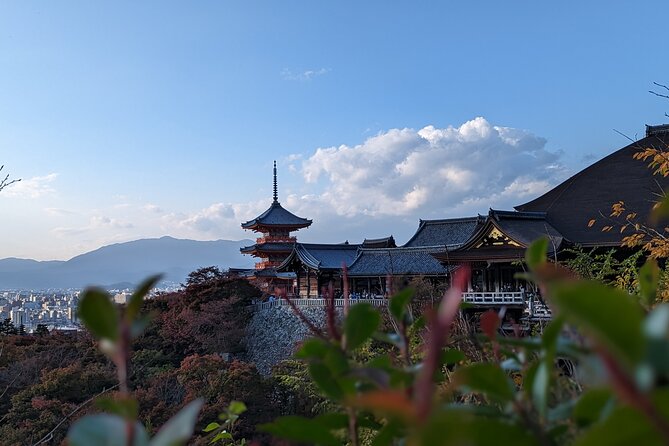
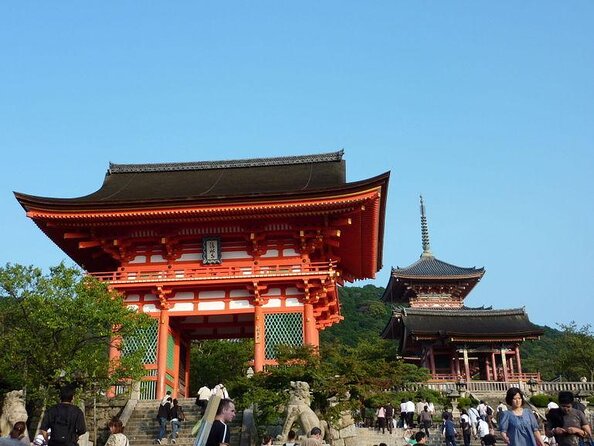
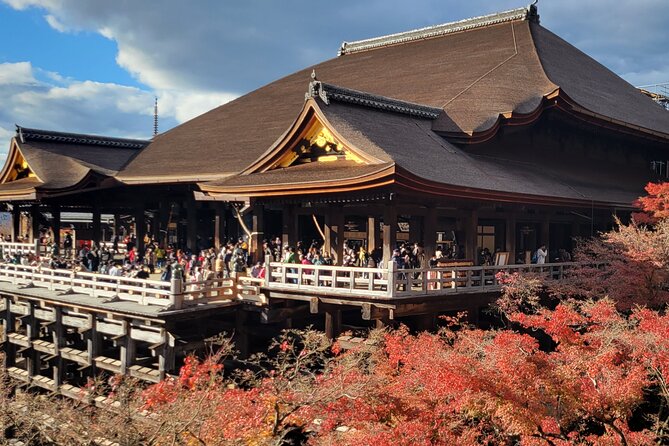
Kiyomizu-dera offers one of Kyoto’s best-known temple settings, with its large wooden terrace and views across the city. It is also one of the places where a guide’s explanation adds real value. The temple is not just a scenic platform. Its buildings, religious traditions, and hillside setting all help explain why this corner of Kyoto attracts so many visitors.
The visit is scheduled for 30 minutes, including admission. That gives you enough time to reach the principal areas, hear the basic story, and look out from the terrace. It does not leave much room for a slow architectural inspection or wandering every lane around the temple.
Wear shoes suitable for walking and expect a busy setting. The approach to Kiyomizu-dera is part of the experience, but it can also make the clock move quickly. If this temple matters most to you, tell the guide early so the visit can receive extra attention if the schedule allows.
Kennin-ji for a quieter Zen pause
Kennin-ji provides a change of mood after the larger tourist sights. This Zen temple sits in the Gion area and offers a more composed setting, with spaces intended for reflection and attention to form.
The tour gives Kennin-ji about 30 minutes. That is enough for an introduction to Zen practice, temple design, and the cultural role of the site. A good guide can point out details you might otherwise pass without noticing and explain how Zen influenced Japanese arts.
This stop may appeal most to you if you want more than famous photographs. Still, the short visit means you should not expect a long period of silence or a detailed study of every room and garden. Treat it as a carefully chosen sample of Kyoto’s temple culture.
Same trip, a completely different kind of day:
- PERFECT KYOTO 1-Day Bus Tour
★ 5.0 · 13,518 reviews - Kyoto: Fushimi Inari, Kinkakuji, Bamboo Grove 1 Day Bus Tour
★ 4.8 · 4,316 reviews - Kyoto: Tea Ceremony in a Traditional Tea House in Kiyomizu
★ 4.9 · 3,519 reviews - Kyoto Geisha Walking Tour: Gion District & Hidden Gems
★ 4.7 · 3,273 reviews
Yasaka Shrine at the edge of Gion
Yasaka Shrine brings you into one of Kyoto’s major Shinto sites. It is closely connected with Gion and with traditional festivals, so it helps link the city’s religious life to its old neighborhoods.
The 30-minute stop lets you see the shrine grounds and ask about Shinto customs. Guides have been praised for explaining the importance of shrines and temples rather than simply naming them. That distinction matters. Without context, a shrine can look like another attractive gate and roof. With context, you begin to understand the gestures, offerings, and layout.
Yasaka is also a practical transition point. From here, the tour can move naturally into Gion’s lanes and the cultural districts around the Kamo River. Expect people, activity, and limited time for photography.
Nishiki Market, where Kyoto gets edible
Nishiki Market is the tour’s food-focused stop. Its narrow passage is lined with shops selling Kyoto foods, snacks, and ingredients. You get about 30 minutes, so this is more of a tasting and orientation visit than a full market meal.
I like this part of the route because food gives you a direct way into local life. Ask your guide what is especially associated with Kyoto and which items are best suited to a quick bite. One guide on this tour was praised for introducing street food, and another offered restaurant suggestions that helped extend the day beyond the scheduled route.
The market can feel tight and crowded, so stay aware of your group and avoid blocking shop entrances. If you want a relaxed lunch, you will probably need to return later. The brief stop is best for sampling, learning, and noting places for a second visit.
Pontocho and Gion after the temples
Pontocho receives the longest scheduled visit, one hour, and that is a sensible choice. This narrow district beside the Kamogawa River is known for traditional restaurants, evening dining, and old-style wooden buildings. It gives you a feel for Kyoto’s entertainment culture without requiring a formal performance.
Your guide can explain how Pontocho differs from Gion and point out the character of the lane. The setting is especially atmospheric later in the day, though the tour schedule does not promise a particular start time or evening light. You should also remember that the famous restaurants here can be expensive, and this tour does not include a meal.
The final 30-minute Gion visit adds Kyoto’s best-known traditional district. Its old streets and teahouse connections make it an important part of the city’s cultural identity. You may hear about geisha culture and, if you are fortunate, spot a geisha or maiko moving between appointments. Do not treat this as guaranteed, and give people space rather than turning the encounter into a spectacle.
Gion rewards respectful behavior. Walk quietly, follow local instructions, and avoid photographing private entrances or anyone who does not welcome it. A guide can help you understand the difference between a public street and a working neighborhood.
What a good guide adds to the day
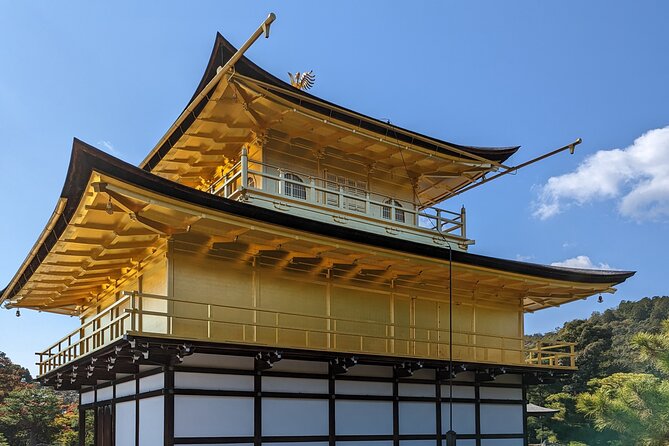
The strongest part of this experience is not the list of places. You can visit all seven areas independently. The value comes from having someone connect them.
Julian has been praised for bringing Kyoto’s history to life. Johannes has been described as friendly, engaging, and strong on Shinto, street food, and local culture. Robert has received praise for explaining both the sites and Japan more broadly. Ricardo has been credited with adapting the pace for an older group, while Oscar was appreciated for making a short tour productive.
Andrea reportedly answered questions and offered restaurant suggestions. Diego was praised for meeting a group at its hotel, which removed some of the stress of finding a starting point. Ken was described as warm, empathetic, and highly informed about Japanese culture.
These names are useful indicators of the kind of guide you may receive, but they are not a guarantee of assignment. The company may send someone else. The private format gives the guide room to adapt, yet the quality of your day will depend heavily on that individual.
Price, pace, and what you are really buying
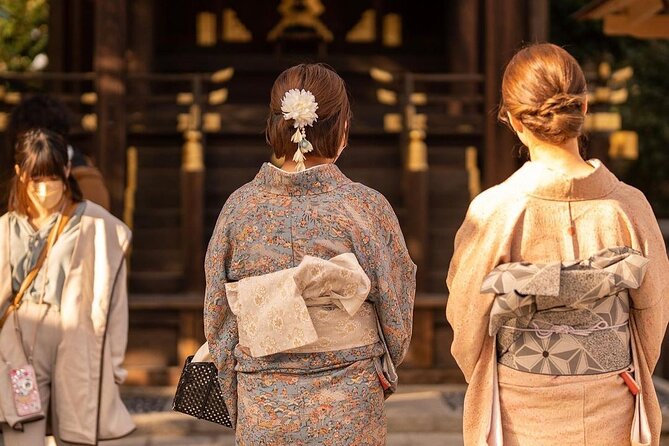
At $85 per person, the tour is reasonably priced if you want a private introduction and your group has several people sharing the guide. You are paying for route planning, explanations, and the convenience of moving through several parts of Kyoto in one block of time.
The value drops if you mainly want transportation or long visits at each temple. Four hours is not enough to explore every stop fully, and the tour does not promise a slow meal, extended shopping, or a complete Mount Inari walk. You are buying orientation, not an exhaustive Kyoto tour.
Admission is described as included in the itinerary, but one booking account reported confusion about entry costs. Another reported being told that admissions were not included. Because the information is inconsistent, confirm exactly what the $85 covers before you go, especially for temple entry.
Pickup is offered, and public transportation is nearby. Guides have used trains, walking, and taxis, but transport arrangements can vary. Confirm your pickup point, start time, and whether transport fares are extra.
The main risk: communication and missed appointments
I would not ignore the operational problems attached to this tour. Several bookings involved a guide who did not appear, an unreachable phone number, unanswered messages, or a cancellation close to the date. One group waited an hour at the collection point. Another had a time mismatch, with the app showing noon and the guide expecting 1 p.m.
That is a major concern in Kyoto, where a lost half-day can affect temple reservations, meals, and later plans. One group also had trouble after flight delays and missed the tour, so you should allow a generous arrival margin and respond quickly to any operator message.
You can cancel for a full refund up to 24 hours before the start time. Changes made inside that period are not accepted, and poor weather or failure to meet the minimum number may lead to a different date or a refund. Those rules are standard enough, but they do not solve the problem of a no-show on the day.
Before committing, send a clear message asking for the exact meeting point, local start time, pickup details, guide contact, admission coverage, and transport arrangements. Save the confirmation and the operator’s contact information. If you receive no reply, treat that as a warning rather than waiting until the morning of the tour.
Who should book this Kyoto tour?
This suits you if you have only a few hours, want a private guide, and prefer an overview of east and central Kyoto before choosing where to return. It is also a good match for families or mixed-ability groups that need a flexible pace.
It works less well for temple specialists, serious photographers, or anyone who wants to hike far up Mount Inari. You will spend much of the time moving between short visits. Independent visitors who are comfortable with Kyoto’s trains and maps may get more value by selecting two or three sites and staying longer.
The best version of this tour is a focused introduction led by a strong guide. The worst version is a wasted morning caused by poor communication. That gap is unusually wide, so confirmation matters as much as the sightseeing itself.
Should you book it?
Book this tour if you value personal explanation, have limited time, and can confirm the arrangements before arrival. The route gives you a useful first look at Kyoto’s temples, shrines, food culture, and historic districts, and the right guide can make the four hours informative and easygoing.
I would hesitate if your schedule is tight, you need guaranteed coordination, or you cannot tolerate losing half a day. In that case, choose an option with a stronger record of confirmed communication. If you do book, contact Konnichiwa-japan well ahead of time and again shortly before departure. The sights are excellent. The booking follow-through needs watching.
FAQ
How long is the private Kyoto sightseeing tour?
The tour lasts approximately four hours.
How much does the tour cost?
The listed price is $85 per person.
Is this a private tour?
Yes. Only your group participates.
Which places are included?
The route includes Fushimi Inari-taisha Shrine, Kiyomizu-dera Temple, Kennin-ji Temple, Yasaka Shrine, Nishiki Market, Pontocho District, and Gion.
Is hotel pickup available?
Pickup is offered. Confirm the exact pickup location and time before the tour.
Are admission tickets included?
The itinerary identifies admission tickets as included, but one booking account reported confusion about entry costs. Confirm this point directly before departure.
Is the tour suitable for most people?
The tour states that most people can participate and that it is near public transportation.
Can I cancel for a full refund?
Yes, if you cancel at least 24 hours before the experience start time. Cancellations inside 24 hours are not refunded.
What happens if the weather is poor or the minimum number is not met?
If poor weather causes cancellation, you will be offered another date or a full refund. If the minimum number is not met, you will be offered another date or experience, or a full refund.
Just added around Kyoto
- Sekka Cotton Furoshiki Class★ 5.0 · 19 reviews
- Kyoto Sword Experience – includes Museum Ticket/Ninja Experience★ 4.5 · 149 reviews
- Scenic Green Tea Fields of Hidden Kyoto & Local Tea Exp (Private)★ 5.0 · 32 reviews
- Secret Eastern Kyoto Biking Adventure★ 5.0 · 44 reviews
- Private Sake Tasting in Central Kyoto with Sake Sommelier★ 5.0 · 32 reviews
- Samurai School in Kyoto: Samurai for a Day★ 5.0 · 202 reviews
- SHIRAKAWA Japanese Culture Experiences with private English staff★ 5.0 · 16 reviews
- A Privately Guided Photoshoot in Beautiful Kyoto by a Pro★ 5.0 · 18 reviews
Historical Tours, compared.
Imperial Palace and Shogun Historical Walking Tour
Our verdict →
World Heritage Kyoto & Nara Uji Authentic Matcha Experience
Our verdict →
Kyoto Gion: 2-Hour Geisha Culture & History Walking Tour
Our verdict →
Hiroshima Historical Walking Tour – Why A-Bomb was Dropped
Our verdict →
Yanaka Walking Tour: Historic and Traditional District of Tokyo
Our verdict →
Shinjuku Historical Walking Tour & Secret Backstreets
Our verdict →
Mt. Fuji Heritage Tour: Traditional Villages, Lakes & Shrine
Our verdict →Browse the lists this tour appears in