
Reviewed · CYCLING TOURS
Hidden Kyoto E-Biking tour
Kyoto’s best moments are often found between the famous temples. This small-group e-bike ride links Kinkakuji and Kitano Tenmangu with quiet lanes, Zen gardens, and lesser-known temple grounds. Guides such as Yuta, Michael, Sean, Henry, and Shizuka bring the stops to life with stories about Zen, Shinto, geisha, samurai, and Japanese customs.
I especially like the easy pace and the good mix of major sights and calmer corners. The e-bikes make hills far less daunting, while the group size, capped at eight, keeps the ride personal. The main drawback is that this is still a bicycle tour, so steep sections, descents, rain, and traffic awareness matter. Anyone who is not comfortable riding should choose another Kyoto experience.
Key points at a glance
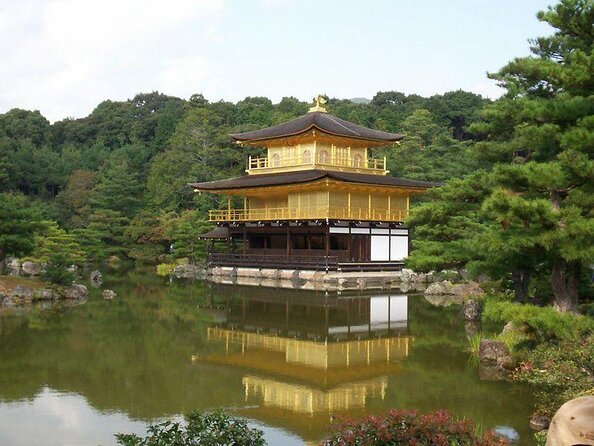
- Kinkakuji and quiet temple lanes: See Kyoto’s famous Golden Pavilion area, then move away from the busiest sightseeing routes.
- E-bikes handle Kyoto’s hills: The pedal-assist bikes make the ride manageable for people who have not cycled recently.
- Five culturally different stops: Visit Kinkakuji, Daitokuji, Kitano Tenmangu, Koto-in, and Zuihoin.
- Strong guiding is central to the experience: Yuta, Michael, Sean, Henry, and Shizuka are praised for clear English and engaging stories.
- A real small-group outing: The maximum is eight people, with a bike, helmet, and water provided.
- Plan around the firm timing rules: Arrive 15 minutes early, and cancel or change the booking at least 24 hours ahead.
Why a bicycle works so well in northern Kyoto
This is not a race, a city cycling workout, or a quick checklist of temples. It is a half-day ride of roughly 7 to 8 kilometers, with regular stops for explanation and sightseeing. You start at NORU Kyoto Bike Tours in Kamigyō Ward, collect a foldable rental bike and helmet, and receive help getting set up before heading out.
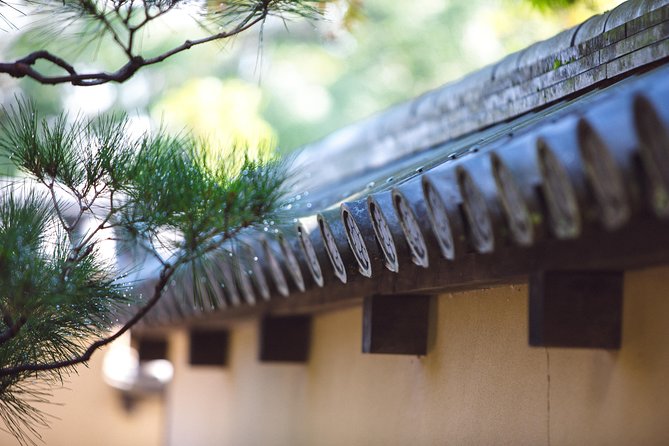
I like the way the bicycle connects the sights. On foot, these temples can feel scattered across northern Kyoto. By bike, you spend less time waiting for buses and more time seeing ordinary streets, walls, gardens, and neighborhood corners between the major stops.
The route is described as easy and safe, and the electric assistance keeps the effort modest. Still, easy does not mean completely effortless. The route includes hills, and one account specifically mentions steep sections and descents. You should be able to start, stop, steer, and control a bicycle confidently.
The pedal assist is especially useful if you have not ridden for years. One person who had not cycled in more than a decade managed the tour, while another parent and a 13-year-old child completed it in drizzly conditions. That gives you a fair sense of the tour’s level: accessible to many people, but not suitable for someone who cannot ride at all.
More Bike Tours in Kyoto
- Bike Tour Exploring North Kyoto plus Lunch
★ 5.0 · 1,087 reviews - Arashiyama Bamboo Forest & Hidden Gems Bike Tour (Early Bird)
★ 5.0 · 613 reviews - 5 Top Highlights of Kyoto Full Day Bike Tour (E-bike option)
★ 5.0 · 511 reviews
Kinkakuji: Kyoto’s famous first impression
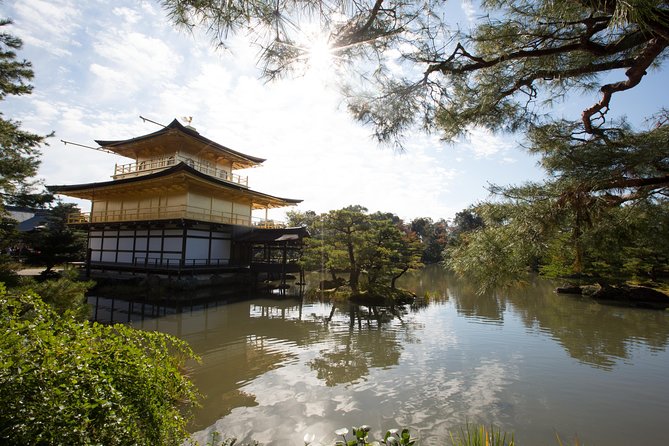
Kinkakuji, the Golden Pavilion, is the best-known stop on the route. Its gold-covered upper stories reflect in the pond, creating one of Kyoto’s most recognizable scenes. It is a major attraction, so this is not the quietest part of the outing, but it gives the tour a strong opening landmark.
The value here is not only the photograph. Your guide can provide the setting and cultural context before the ride moves toward less crowded places. Guides have been praised for explaining the differences between Shinto and Buddhism, temple etiquette, and the role of Zen in Japanese culture.
You should expect a sightseeing stop rather than a private or empty temple visit. The tour’s promise is not to remove all crowds from Kyoto. It is to pair major sights with quieter places that are harder to reach on a standard bus route.
Daitokuji: a temple complex with breathing room
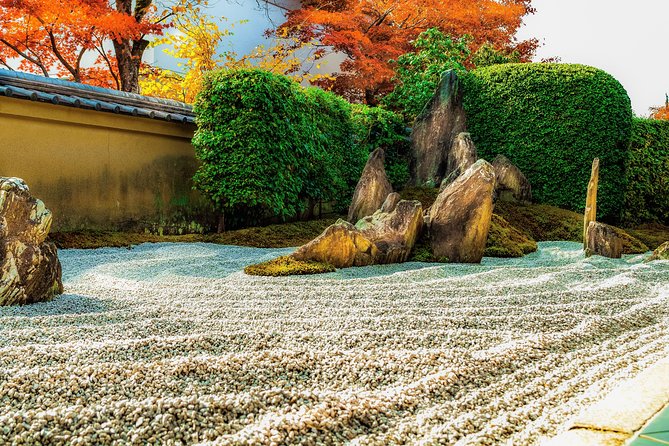
Daitokuji is a large temple complex connected with Zen practice. It gives the ride a different feel from Kinkakuji. Instead of one instantly recognizable building, you get a broader religious setting made up of temple grounds, gates, gardens, and smaller spaces.
This is one of the places where a guide adds real value. Zen gardens can look simple at first glance. With a good explanation, their design, restraint, and purpose become easier to appreciate. Yuta is particularly praised for sharing his interest in Zen Buddhism, while other guides have explained Japanese religious traditions in a clear, approachable way.
Allow yourself time to listen here. One piece of criticism about the tour was that a guide sometimes talked too long, leaving less time to explore. That is a fair caution for anyone who prefers a fast-moving ride. The guide’s storytelling is a major reason to book, but the balance can depend on the person leading your group and the interests of the people riding with you.
Kitano Tenmangu: a shrine with a different character
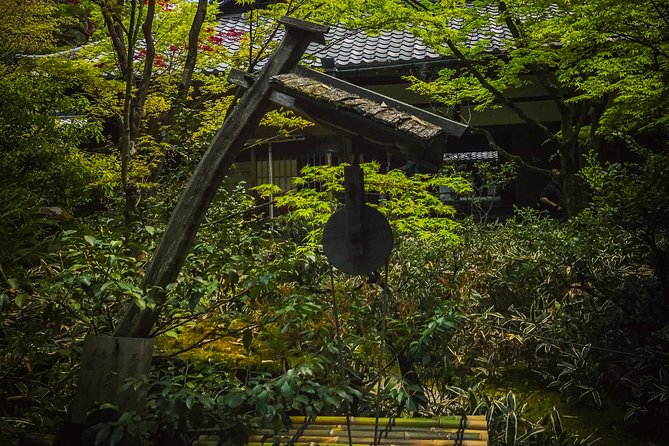
Kitano Tenmangu introduces you to Shinto rather than Buddhist temple culture. It is an important shrine with a distinct atmosphere and a useful chance to compare the two traditions during one outing.
Your guide may explain how to behave at a shrine, how it differs from a temple, and what you are seeing at the entrance and worship areas. The tour also includes practical etiquette, which can make the rest of your Kyoto sightseeing feel more informed and respectful.
This stop helps prevent the tour from becoming a string of similar-looking buildings. Kinkakuji, Daitokuji, and Kitano Tenmangu each offer a different visual and religious setting. You are not just collecting photographs. You are building a basic framework for understanding Kyoto’s sacred places.
Same trip, a completely different kind of day:
- PERFECT KYOTO 1-Day Bus Tour
★ 5.0 · 13,518 reviews - Kyoto: Fushimi Inari, Kinkakuji, Bamboo Grove 1 Day Bus Tour
★ 4.8 · 4,316 reviews - Kyoto: Tea Ceremony in a Traditional Tea House in Kiyomizu
★ 4.9 · 3,519 reviews - Kyoto Geisha Walking Tour: Gion District & Hidden Gems
★ 4.7 · 3,273 reviews
Koto-in and Zuihoin: the quieter part of the ride
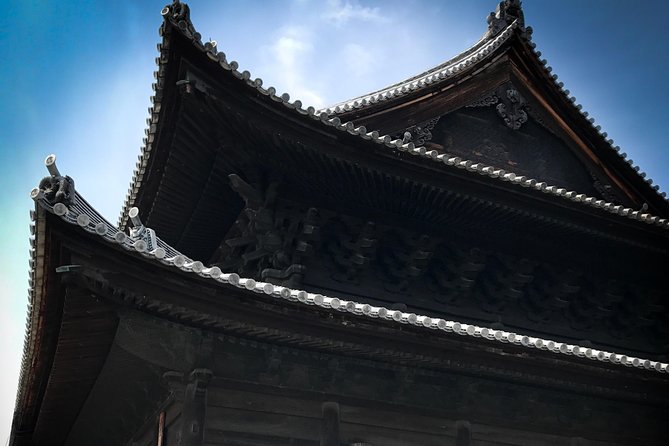
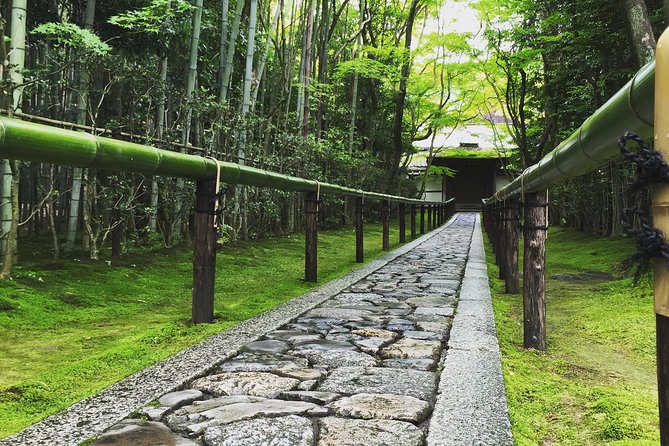
Koto-in and Zuihoin are where the route earns its Hidden Kyoto name. These stops offer more intimate temple spaces and gardens, with fewer people than the city’s headline attractions. The appeal is in the details: a calm garden, a narrow approach, a simple architectural line, or the quiet rhythm of a temple compound.
Koto-in is associated with the more secluded side of Daitokuji, while Zuihoin is another temple within the complex. The supplied route does not promise a long visit at each site, so think of them as carefully chosen glimpses rather than extended independent explorations.
This is also where the cycling matters most. The ride through backstreets gives you a look at Kyoto beyond its formal monuments. You may pass small residential roads and peaceful corners that are easy to miss from a taxi or bus.
A tea stop has also been part of the experience described by several riders, including a charming place with a long history of more than 1,000 years and 28 generations. Since the precise stop can vary, treat this as a possible feature rather than a guaranteed part of every departure. If included, it adds a welcome pause and a local story to the temple visits.
The guides make or break the morning
The route is good, but the guide is the heart of this tour. Yuta receives especially strong praise for his English, his calm manner, and his ability to explain Zen, geisha and maiko traditions, samurai-era Japan, temple etiquette, and local food recommendations.
Michael is described as an excellent storyteller with a background teaching Japanese history. Sean is praised for clear explanations, broad cultural knowledge, and preparing rain equipment in poor weather. Henry brings long experience living in Japan, while Shizuka has led small groups through temples, backstreets, and hillier sections.
You should expect plenty of spoken explanation. That is a strength if you want context rather than a simple ride. It may be less appealing if you prefer to move quickly and spend most of the time taking photographs.
I would tell you to listen actively, then ask questions. The best parts of the tour seem to come when the guide connects a site to something you are already curious about, such as Shinto practice, Zen ideas, the history of geisha, or how to behave at a shrine.
What the e-bike and route feel like
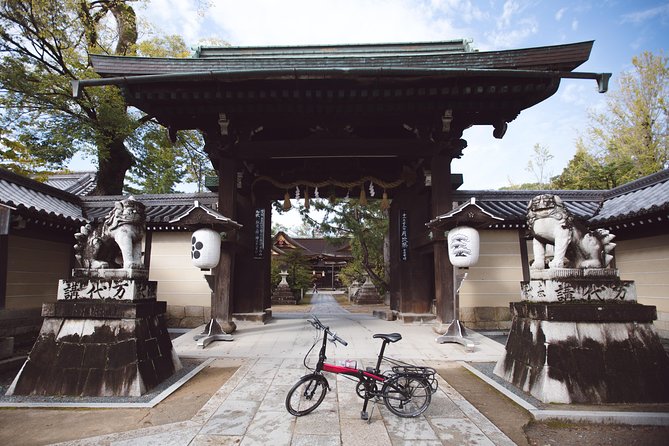
The included bikes are electric and described as easy to use. You receive basic training before setting off, so you do not need to be an experienced e-bike rider. The pedal assistance is useful on inclines and helps conserve energy during a warm or muggy Kyoto morning.
The bikes are foldable rental models, though the important benefit for you is not the folding feature. It is the electric support, which lets you cover more ground without arriving at each temple tired and overheated.
You will ride on quieter streets for much of the route, but this is still an urban bicycle tour. Pay attention to the guide, keep a steady pace, and be honest about your comfort level. The minimum age is 13, and most people who can ride a bicycle should be able to take part.
Weather deserves attention. The tour requires good weather, and poor conditions can lead to a rescheduled outing or a full refund. If the ride goes ahead in light rain, bring your own raincoat or poncho if you have one. Rain-ready gear may be available, but personal waterproof clothing is the safer plan.
Timing, meeting point, and group size
The tour lasts about 3 hours and 45 minutes. Departure options are listed at 8:30, 9:00, 12:30, and 1:00. You return to the same NORU Kyoto Bike Tours meeting point at 429-22 Takigahanachō, Kamigyō Ward.
Arrive at least 15 minutes before departure. This is not a flexible suggestion. If you arrive late and miss the group, you are not entitled to a refund.
The group maximum is eight people. That is a useful size for a bicycle outing because the guide can keep an eye on the riders, answer questions, and manage temple stops without the feel of a large organized procession.
The activity is near public transportation, but the information provided does not specify the best station or bus stop. Check the route from your accommodation before the morning of the tour, and allow extra time for finding NORU.
Is $116 a fair price?
At $116 per person, this is not the cheapest way to see Kyoto. You are paying for more than bicycle hire, though. The price includes the bike, helmet, water, an English-speaking route coordinator, and nearly four hours of guided sightseeing.
The value is strongest if you want an efficient introduction to northern Kyoto and would otherwise spend money on local transport, bicycle rental, and separate admission or guiding arrangements. You also get access to a route that would be less obvious to plan on your own.
The price is less attractive if you only want to cycle casually or photograph the Golden Pavilion. You could visit some major Kyoto sights independently for less. The tour earns its cost through the combination of transportation, small-group guiding, cultural explanation, and lesser-known stops.
The 99 percent recommendation figure and 5.0 rating from 1,844 reviews indicate unusually consistent approval, but you should still match the format to your style. The one clear criticism is useful: long explanations may reduce free exploring time. If you want a guide-led cultural outing, that is likely a benefit. If you want a brisk ride, it may feel slow.
Who should book this Kyoto ride?
I would recommend it to first-time visitors who want to get their bearings early in a Kyoto stay. The route gives you famous landmarks, quieter temple spaces, local streets, and practical suggestions for food and shopping.
It also suits returning visitors who have already seen Fushimi Inari, Arashiyama, or the main downtown sights. The northern temple area offers a calmer change of pace, and the bicycle lets you connect places that may feel inconvenient by foot.
Families with children aged 13 and older can consider it, provided everyone can ride confidently. It can also suit older riders who are comfortable on bicycles, since the electric assistance reduces the physical load. One couple in their 60s found the ride manageable, including hills and descents.
You should skip it if you cannot ride a bicycle, dislike outdoor activities in uncertain weather, or want complete control over how long you spend at each temple. Nonparticipants and people who cannot ride do not receive refunds.
Booking and cancellation details to keep in mind
You can cancel for a full refund up to 24 hours before the start time. Changes made less than 24 hours ahead are not accepted, and late arrivals, no-shows, and missed bookings are nonrefundable and cannot be transferred.
The provider can cancel because of poor weather or because the minimum number of participants is not reached. In that case, you are offered another date or experience, or a full refund.
Book early if your Kyoto schedule is tight, then protect the meeting time. A small-group tour with several departure slots can fill, and missing the start is an expensive mistake.
Should you book the Hidden Kyoto E-Biking tour?
Book it if you want Kyoto explained as you move through it. The strongest parts are the quiet streets, the mix of Buddhist temples and Shinto shrines, the electric bicycles, and guides such as Yuta, Michael, Sean, Henry, and Shizuka who bring useful cultural context to the ride.
I would make this one of the first activities in Kyoto if you enjoy history, gardens, local neighborhoods, and active sightseeing. At $116, it asks more than a basic bike rental, but it gives you a route, a guide, equipment, and a small group.
Skip it only if cycling is not for you or if you prefer to linger alone at each site. For everyone else, this is a practical way to see famous Kyoto without spending the whole morning in the thick of the main sightseeing crowds.
FAQ
How long does the Hidden Kyoto E-Biking tour last?
The tour lasts approximately 3 hours and 45 minutes.
How far do you ride?
The route covers approximately 7 to 8 kilometers, or about 4.3 to 4.9 miles, depending on the route description used.
What sights are included?
The route includes Kinkakuji Temple, Daitokuji Temple Complex, Kitano Tenmangu Shrine, Koto-in, and Zuihoin.
Is the bike included?
Yes. A rental e-bike and helmet are included in the tour price.
Is water provided?
Yes. Water is included.
What is the minimum age?
The minimum age is 13.
How many people can join the tour?
The maximum group size is eight people.
Where does the tour start and end?
It starts at NORU Kyoto Bike Tours, 429-22 Takigahanachō, Kamigyō Ward, Kyoto, and returns to the same meeting point.
What departure times are available?
Listed departure times are 8:30, 9:00, 12:30, and 1:00.
What happens if the weather is poor?
If the tour is canceled because of poor weather, you are offered a different date or a full refund.
Can I cancel for a refund?
You can cancel up to 24 hours before the experience start time for a full refund. Cancellations or changes made less than 24 hours ahead are not accepted.
More Electric Bike Rides in Kyoto
- E-Bike Tours of the highlights of Kyoto!!!
★ 5.0 · 291 reviews - Kyoto: City Secrets eBike Tour
★ 4.9 · 196 reviews - Pedal Adventure Kyoto’s iconic landmarks on an e-bike tour
★ 5.0 · 189 reviews - Kyoto: Hidden Gems E-Bike Tour with Local Japanese Guide
★ 4.9 · 189 reviews
Just added around Kyoto
- Sekka Cotton Furoshiki Class★ 5.0 · 19 reviews
- Kyoto Sword Experience – includes Museum Ticket/Ninja Experience★ 4.5 · 149 reviews
- Scenic Green Tea Fields of Hidden Kyoto & Local Tea Exp (Private)★ 5.0 · 32 reviews
- Secret Eastern Kyoto Biking Adventure★ 5.0 · 44 reviews
- Samurai School in Kyoto: Samurai for a Day★ 5.0 · 202 reviews
- Private Sake Tasting in Central Kyoto with Sake Sommelier★ 5.0 · 32 reviews
- SHIRAKAWA Japanese Culture Experiences with private English staff★ 5.0 · 16 reviews
- A Privately Guided Photoshoot in Beautiful Kyoto by a Pro★ 5.0 · 18 reviews
Cycling Tours, compared.

Arashiyama Bamboo Forest & Hidden Gems Bike Tour (Early Bird)
Our verdict →

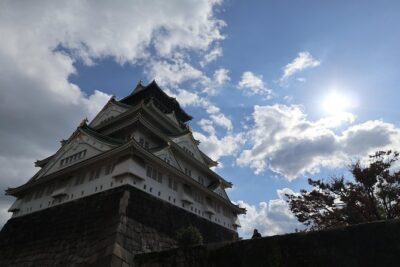
5-Hour Osaka Bike Tour to the Neighborhood of Osaka Castle
Our verdict →Browse the lists this tour appears in