
Reviewed · CYCLING TOURS
E-Bike Tours of the highlights of Kyoto!!!
Kyoto makes sense from a bicycle seat. You can slip through quiet lanes, ride beside the Kamo River, and reach temple grounds without spending the day on crowded buses. This small-group e-bike tour covers the city’s famous sights while giving you a look at ordinary streets, old houses, shops, and local life.
I especially like the choice between an east-side course and a west-side course. I also like that guides such as Philippe, Kevin, and Niall add history and cultural context instead of simply pointing at buildings. The main caution is that this is still a long outing with plenty of riding, and the route details need checking before you book because the two courses visit different sights.
Kyoto by e-bike at a glance
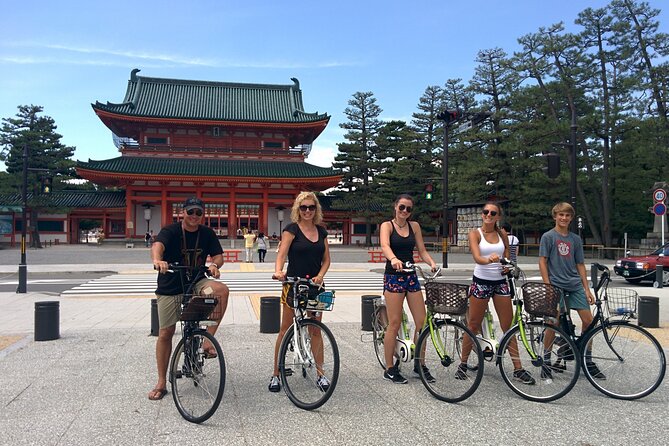
- Choose your side of the city: The east course visits Heian Shrine, Ginkakuji, and the Philosopher’s Walk. The west course includes Kinkakuji, Arashiyama Bamboo Forest, and Ryoan-ji.
- Ride beyond the postcard sights: The route uses backstreets, riverside paths, and quieter lanes where you can see Kyoto homes, shops, and daily routines.
- E-bikes make the distance manageable: Most routes are described as fairly flat, but you still need moderate physical fitness and confidence on a bicycle.
- Guides shape the day: Philippe, Kevin, and Niall are praised for clear explanations, local insight, friendly company, and flexibility around crowds or road closures.
- Plan for a half to full day: The experience lasts about 3.5 to 6 hours, with the usual tour lasting around 5.5 hours.
- Lunch is on you: Food is not included, though the group may stop at a grocery store for picnic supplies if the timing and route allow.
Why Kyoto works so well on two wheels
Kyoto’s major sights are spread across a broad city. A bus can get you from one famous temple to another, but it often leaves you standing in traffic or waiting with a crowd. Walking gives you a closer look, though it limits how much ground you can cover.
A bicycle offers a useful middle path. You can move between districts under your own power, then park and explore temple gardens on foot. The electric assist matters here. You are not pedaling a heavy rental bike up every slight incline, and you can arrive at the next stop with enough energy to pay attention.
This is not a nonstop race through Kyoto. The riding is broken into sections, with time to walk around temples, hear explanations, take photographs, and pause for food. That balance is one of the tour’s strongest features. You get the pleasure of cycling without spending all day staring at the road.
The route also gives you a better sense of how Kyoto fits together. You may pass geisha houses in Gion, Shinto shrines, Buddhist temples, traditional homes, small stores, and newer city streets in one outing. The contrast is part of the appeal.
More Bike Tours in Kyoto
- Hidden Kyoto E-Biking tour
★ 5.0 · 1,843 reviews - Bike Tour Exploring North Kyoto plus Lunch
★ 5.0 · 1,087 reviews - Arashiyama Bamboo Forest & Hidden Gems Bike Tour (Early Bird)
★ 5.0 · 613 reviews
The east course: gardens, canals, and quieter temple grounds
The east-side course is the better choice if you want gardens, religious sites, and a calmer ride. It includes Heian Shrine, Ginkakuji Temple, and the Philosopher’s Walk, with additional cycling through eastern Kyoto.
Heian Shrine and its spacious garden
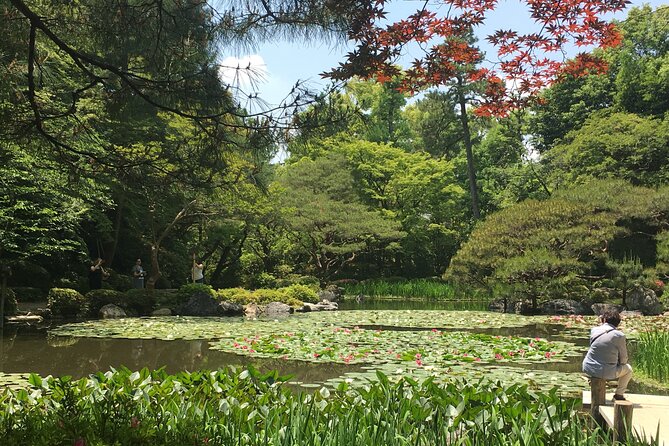
Heian Shrine is known for its large torii gate and bright shrine buildings, but the garden is the reason to allow time here. The grounds include three large ponds and broad areas of plant life, giving you a break from city streets.
The shrine itself recreates the style of an earlier imperial capital. A guide can help explain how the site connects to Kyoto’s past, as well as the customs you see at a Shinto shrine. The included admission is useful because you do not need to decide at the gate whether the garden is worth the extra cost.
This stop is also a good example of the tour’s rhythm. You ride into the area, leave the bicycles behind, and explore at walking speed. If you prefer quiet garden views to a long list of monuments, Heian Shrine may be your favorite stop.
Ginkakuji and the art of the Japanese garden
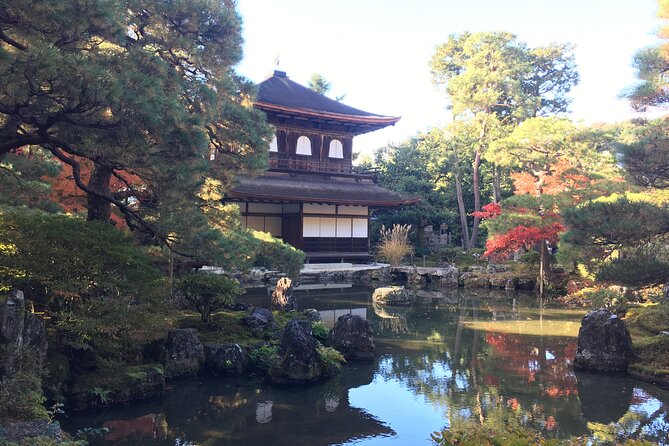
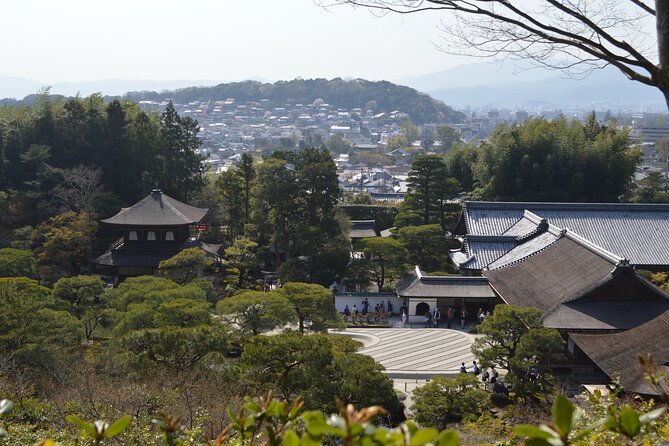
Ginkakuji is often called the Silver Pavilion, though its appeal is not a silver-covered exterior. The temple grounds are the main event, with carefully shaped sand, moss, trees, paths, and small changes in elevation.
The setting offers a useful lesson in Japanese garden design. Instead of treating the garden as decoration around a building, the design guides your eye from one view to the next. A guide can point out details you might otherwise pass without noticing.
Expect this stop to be popular. The grounds are beautiful, but the paths can feel busy at peak times. Your guide’s role is especially helpful here, since the explanation turns a walk through a pretty garden into a clearer look at Zen ideas and Kyoto’s visual culture.
Same trip, a completely different kind of day:
- PERFECT KYOTO 1-Day Bus Tour
★ 5.0 · 13,518 reviews - Kyoto: Fushimi Inari, Kinkakuji, Bamboo Grove 1 Day Bus Tour
★ 4.8 · 4,316 reviews - Kyoto: Tea Ceremony in a Traditional Tea House in Kiyomizu
★ 4.9 · 3,519 reviews - Kyoto Geisha Walking Tour: Gion District & Hidden Gems
★ 4.7 · 3,273 reviews
The Philosopher’s Walk beside the canal
The Philosopher’s Walk is one of the most pleasant cycling sections on the east course. It follows a canal through a green corridor, with a slower pace than the city roads.
You should not expect a long, uninterrupted bike trail. The route is shared with pedestrians and includes places where you may need to ride carefully or walk the bicycle. That is not a problem if you treat it as a scenic passage rather than a speed workout.
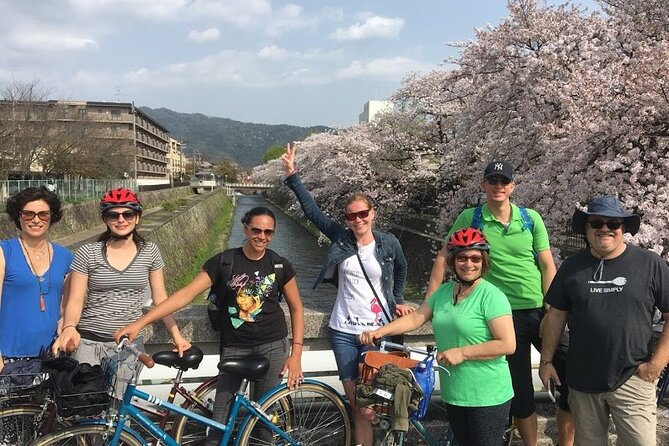
This part of the tour is often singled out for its peaceful feel. It gives you time to look around, take photographs, and notice the small bridges and homes along the water. In spring, the trees are a major draw, but the path has appeal in any season because it changes the mood of the day.
The west course: Kyoto’s famous sights in one ride
The west-side course is the more obvious choice if you want Kyoto’s headline attractions. It combines Kinkakuji, the Arashiyama Bamboo Forest, and Ryoan-ji, three places that can be awkward to connect by public transport in a single day.
Kinkakuji and the Golden Pavilion
Kinkakuji is one of Kyoto’s most recognizable sights. The upper levels of the pavilion are covered in gold leaf, and the building reflects across the pond in front of it.
The visit is relatively short, listed at about 45 minutes. That makes sense. Kinkakuji is a focused stop, not a sprawling temple complex where you can wander for hours. You follow the path, take in the pavilion from several angles, and listen as the guide explains its place in Kyoto’s story.
The drawback is crowding. The Golden Pavilion attracts people at nearly all times, so this will not feel like a private temple visit. The bicycle helps by making the journey between major sights less tiring, but it cannot remove the crowds at the attraction itself.
Arashiyama Bamboo Forest
The Bamboo Forest is another short but memorable stop. Tall bamboo creates a narrow corridor that feels different from almost anywhere else in Kyoto, especially when you look upward and let the stalks frame the sky.
The listed time is about 30 minutes. That is enough for a walk through the best-known section, but not enough for a long exploration of all Arashiyama. Go in with the right expectation: this is a striking passage through the grove, not a full-day visit to the district.
The grove is famous, so it can be crowded. Your guide may help you approach it by less obvious streets, but the central path remains a popular place. The advantage of arriving by bike is that you avoid making this one part of a complicated chain of trains and buses.
Ryoan-ji and its famous rock garden
Ryoan-ji provides a quieter change of pace after the Golden Pavilion and bamboo grove. Its rock garden is made of carefully placed stones set in pale gravel, with a design that invites different readings rather than one fixed answer.
This is a stop where a guide adds real value. Without context, you may see stones and raked lines. With an explanation of the garden’s imagery and the ideas connected to Zen practice, you have more to think about as you sit and look.
The visit takes about 40 minutes. That is enough to spend time in front of the garden, but you may wish you had longer if you enjoy Japanese gardens. Still, the compact schedule works well as part of a day that also includes two major west Kyoto sights.
The best part may be the streets between temples
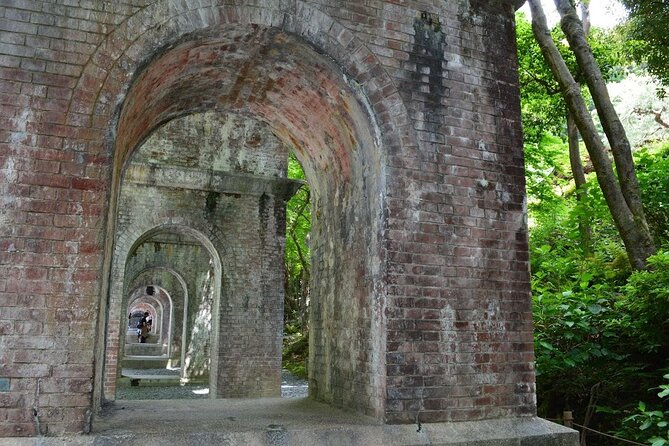
The temples are the obvious selling point, but I would not judge this tour only by its entrance tickets. Several of the strongest moments come between stops.
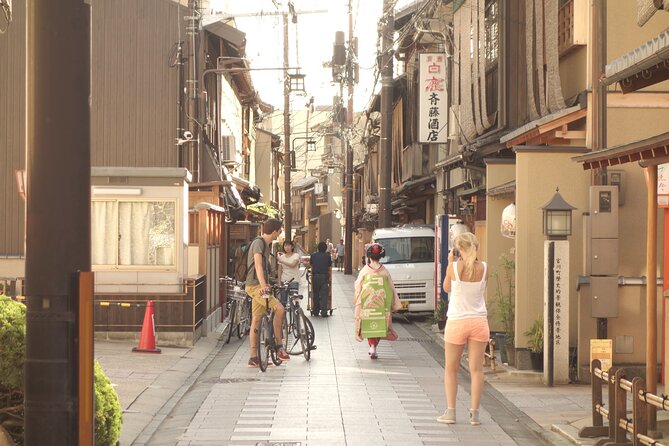
Guides lead through smaller streets and lanes where you can see changing house styles, neighborhood shops, and the practical side of Kyoto. You may ride along the Kamo River or pass through Gion on roads you might not choose alone. That is a useful service in a city with a confusing street pattern.
The route is designed with safety in mind, and the use of less crowded streets helps. Still, you are riding in a real city. Some roads are shared with cars, pedestrians, and other bicycles. One poor experience specifically raised concerns about bicycle quality and crowded streets, so it is sensible to inspect your bike before setting off and speak up if something feels wrong.
Most of the route is described as flat, and the e-bike assist makes the distance easier. Even so, you need a moderate level of fitness. You should be comfortable starting, stopping, steering, and riding for several hours with breaks.
Guides who make the history easier to follow
The guide can make or break a city cycling tour. Philippe is praised for his explanations of Kyoto, Japanese history, religion, and daily life, as well as for adjusting plans around festivals and road closures. His artistic eye also helps draw attention to small details in gardens and streets.
Kevin is described as friendly, multilingual, and especially good at making the day feel personal. He explains temple design and religious practice, but he also talks about local houses and everyday life. Niall brings a similar mix of historical explanation and relaxed conversation.
The guide style appears to be more than a string of dates and names. You can ask questions, stop for photographs, and learn why a shrine or garden looks the way it does. Some groups have chosen lunch supplies at a local grocery store and eaten a picnic, though lunch itself is not included and the exact arrangement depends on the day.
The advertised maximum is eight people, while the description also refers to groups of no more than six. That is still much smaller than a large bus tour, but I would confirm the expected group size when booking if a very intimate outing matters to you.
Price, timing, and practical value
At $109.43 per person, this is not the cheapest way to see Kyoto. You are paying for the guide, e-bike rental, facility fees, and entry to the included temple or shrine sites. Lunch is extra.
The value improves if you would otherwise pay separate admission fees, rent a bicycle, and spend money on taxis or local transport between distant districts. You also save planning time. Connecting Ginkakuji, the Philosopher’s Walk, and Heian Shrine, or linking Kinkakuji, Arashiyama, and Ryoan-ji, takes real effort on your own.
The duration varies from about 3.5 to 6 hours, with the main description giving roughly 5.5 hours. That variation likely reflects the selected course and schedule, so check the exact option before paying. The tour begins and ends at Kyoto Fun E-Bike Tours & Rentals, at 222-2 Koyamacho, Kita Ward, Kyoto 603-8152.
A mobile ticket is included, and the meeting point is near public transportation. Wear comfortable clothes and shoes, bring water, and leave room in your schedule for a longer half-day if the tour runs close to six hours.
Free cancellation is available up to 24 hours before the start time. Poor weather can cause cancellation, with a new date or full refund offered. The same applies if the minimum number of participants is not reached.
Who should book this Kyoto bike tour?
I would choose the east course if you want gardens, canals, a gentler mood, and fewer headline attractions. Pick the west course if Kinkakuji, Arashiyama, and Ryoan-ji are high on your list and you want to connect them without working out the transport yourself.
This tour suits adults, couples, friends, and older families with confident cyclists. It is a good fit for anyone who wants history and culture but does not want to spend every hour inside a bus or train. The e-bike is a major help, though it does not remove the need for basic cycling ability.
I would think twice if you dislike city riding, tire quickly on a bicycle, or want long, unhurried visits at each temple. The schedule moves across a large area, and popular sights can still be crowded.
Should you book it?
Yes, if you want to see Kyoto through both its famous temples and its ordinary streets. The combination of e-bike travel, quiet lanes, river paths, gardens, and thoughtful guiding gives you a fuller sense of the city than a simple attraction-to-attraction transfer.
Before booking, confirm whether you are choosing the east or west course, check the expected duration and group size, and plan for lunch separately. If you do that, this is a strong-value way to cover a lot of Kyoto without reducing the city to a checklist.
FAQ
How long does the Kyoto e-bike tour last?
The experience lasts approximately 3.5 to 6 hours, with the main tour description giving an average duration of about 5.5 hours.
Which sights are included on the east-side course?
The east course includes Heian Shrine, Ginkakuji Temple, and the Philosopher’s Walk. The Philosopher’s Walk is only visited on the east course.
Which sights are included on the west-side course?
The west course includes Kinkakuji Temple, Arashiyama Bamboo Forest, and Ryoan-ji Temple.
Is the bicycle rental included?
Yes. An e-bike, a guide, and landing and facility fees are included in the price.
Is lunch included?
No. Lunch is not included. The group may choose food from a local grocery store for a picnic, but this is not part of the listed inclusions.
Where does the tour begin and end?
The tour begins at Kyoto Fun E-Bike Tours & Rentals, 222-2 Koyamacho, Kita Ward, Kyoto 603-8152, Japan. It ends back at the meeting point.
How many people can join the tour?
The listed maximum is eight participants. The tour description also refers to a small group of no more than six, so confirm the expected group size when booking.
What happens if the weather is poor?
The experience requires good weather. If it is canceled because of poor weather, you will be offered another date or a full refund.
More Electric Bike Rides in Kyoto
- 5 Top Highlights of Kyoto Full Day Bike Tour (E-bike option)
★ 5.0 · 511 reviews - Kyoto: City Secrets eBike Tour
★ 4.9 · 196 reviews - Pedal Adventure Kyoto’s iconic landmarks on an e-bike tour
★ 5.0 · 189 reviews - Kyoto: Hidden Gems E-Bike Tour with Local Japanese Guide
★ 4.9 · 189 reviews
Just added around Kyoto
- Sekka Cotton Furoshiki Class★ 5.0 · 19 reviews
- Kyoto Sword Experience – includes Museum Ticket/Ninja Experience★ 4.5 · 149 reviews
- Scenic Green Tea Fields of Hidden Kyoto & Local Tea Exp (Private)★ 5.0 · 32 reviews
- Secret Eastern Kyoto Biking Adventure★ 5.0 · 44 reviews
- Private Sake Tasting in Central Kyoto with Sake Sommelier★ 5.0 · 32 reviews
- Samurai School in Kyoto: Samurai for a Day★ 5.0 · 202 reviews
- SHIRAKAWA Japanese Culture Experiences with private English staff★ 5.0 · 16 reviews
- A Privately Guided Photoshoot in Beautiful Kyoto by a Pro★ 5.0 · 18 reviews
Cycling Tours, compared.

Arashiyama Bamboo Forest & Hidden Gems Bike Tour (Early Bird)
Our verdict →

Browse the lists this tour appears in