
Reviewed · CYCLING TOURS
Early Bird E-biking through East Kyoto
Kyoto’s famous sights are spread out, and this early-morning e-bike tour links them in one long, well-planned day. You’ll ride beside the Kamogawa River, slip through Gion backstreets, and reach temples that would take far longer to cover on foot. I like the small groups, capped at eight, and the chance to start at 8:00 a.m., before the busiest crowds gather.
I also like that lunch and a cafe stop are built into the day, rather than leaving you to hunt for food while watching the clock. The main caution is physical: you’ll ride for hours through city streets, along paths, and up some inclines, so you need to be comfortable on a bicycle and alert around traffic and crowds.
Key points to know before booking
- Nine major Kyoto stops: The route includes Fushimi Inari, Tofuku-ji, Ginkaku-ji, the Philosopher’s Path, Nanzen-ji, Heian Shrine, Gion, and Higashi Hongan-ji, with river riding between them.
- Small groups matter: A maximum of eight people makes it easier to hear the guide and adjust the pace.
- A full day on two wheels: Plan on six to seven hours, with several hours of actual riding.
- Food is part of the plan: Lunch near Ginkaku-ji and a favorite Kyoto cafe stop are included.
- Good for first-time visitors: You see major sights and quieter lanes in one sweep of eastern Kyoto.
- Know the limits: The minimum age is 13, the minimum height is 145 centimeters, and moderate fitness is required.
Why an e-bike is a smart way to see East Kyoto
This is not a short bicycle outing with one temple at the end. It is a full day that strings together southern Kyoto, the eastern temple district, central riverside paths, Gion, and one major temple near Kyoto Station.
That distance is the main reason the e-bike helps. You can cover far more ground than you could on foot, yet still move slowly enough to notice small streets, canals, wooden houses, and everyday Kyoto scenes. The motor assistance also takes some sting out of the hills and the length of the day.
The bikes do not make the ride effortless. One part of the route includes slightly uphill sections, and some paths and roads can be crowded. You need to manage your own bicycle, watch the road, and keep up with the group. If you are not a confident cyclist, a walking or bus-based tour may suit you better.
The 8:00 a.m. start is a real advantage. Fushimi Inari is one of Kyoto’s most popular sights, and arriving early gives you a better chance to enjoy the shrine before the thickest crowds. The early start also leaves enough time for a long route without turning every stop into a rushed photo break.
More Bike Tours in Kyoto
- Hidden Kyoto E-Biking tour
★ 5.0 · 1,843 reviews - Bike Tour Exploring North Kyoto plus Lunch
★ 5.0 · 1,087 reviews - Arashiyama Bamboo Forest & Hidden Gems Bike Tour (Early Bird)
★ 5.0 · 613 reviews
Starting at Cycle Kyoto near Kyoto Station
The tour begins at Cycle Kyoto, at Higashikujō Nishisannōchō in Minami Ward. The meeting point is near public transportation, but allow time to find the shop and get settled before the 8:00 a.m. departure.
A helmet and e-bike are provided. The minimum age is 13, and riders must be at least 145 centimeters tall. That height rule matters because a poor bike fit becomes uncomfortable quickly on a six to seven hour outing.
One useful lesson from the tour’s feedback is to take bike size seriously at the start. Most people found the bicycles comfortable and in good condition, but one family had to insist on larger bikes for taller teenagers. If you have already supplied height details, still check the fit before setting off. You want a stable riding position from the first kilometer.
The group limit of eight is another strong feature. A guide can give clearer instructions, notice if someone is falling behind, and answer questions without shouting across a large pack. The exact guide varies. Past departures have been led by people including Indra, Jay, Juan, Paul, Carl, Jaime, Mayco, Julian, Sean, and Shaune. English communication was praised often, though the quality of historical explanation can depend on the individual guide.
Fushimi Inari, where the day begins with vermilion gates
The first ride takes about 25 minutes along the river to Fushimi Inari-taisha Shrine. You then leave the bikes and spend roughly 30 minutes exploring on foot.
Fushimi Inari is known for its long rows of orange torii gates climbing Mount Inari. You will not hike the entire mountain on this tour, but even a short walk into the gate tunnels gives you the essential experience. The shrine is dedicated to Inari, a Shinto deity linked with rice, business, and prosperity, and fox statues appear throughout the grounds as Inari’s messengers.
The early timing is especially useful here. By later morning, the lower approach can feel packed. Keep in mind that 30 minutes is enough for an introduction and photographs, not a full mountain hike. If walking through the entire torii route is high on your list, you would need to return separately.
Tofuku-ji and a quick look at Zen temple design
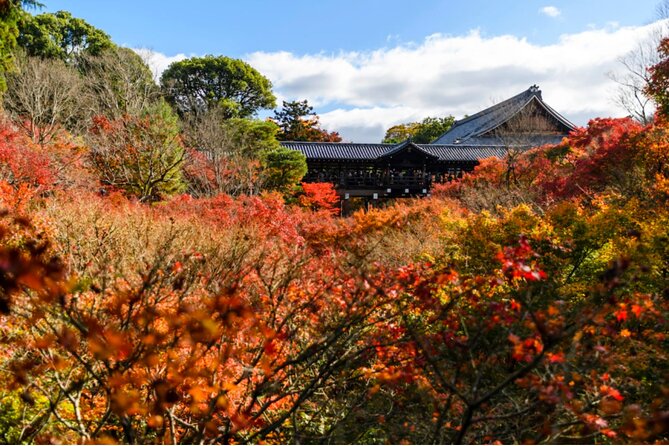
From Fushimi Inari, it takes about 15 minutes to reach Tofuku-ji. The stop lasts around 30 minutes and includes a pause at a picturesque bridge.
Tofuku-ji is one of Kyoto’s important Zen temples, with broad grounds, wooden buildings, and a setting that is especially famous for autumn color. The tour does not promise a long interior visit or a full garden study, so think of this as a focused introduction.
That short stop works well in a day packed with sights. You get a sense of the temple’s scale and architecture without using up the time needed for the rest of the route. If Tofuku-ji is a personal priority, note the limited time and consider returning on your own.
Same trip, a completely different kind of day:
- PERFECT KYOTO 1-Day Bus Tour
★ 5.0 · 13,518 reviews - Kyoto: Fushimi Inari, Kinkakuji, Bamboo Grove 1 Day Bus Tour
★ 4.8 · 4,316 reviews - Kyoto: Tea Ceremony in a Traditional Tea House in Kiyomizu
★ 4.9 · 3,519 reviews - Kyoto Geisha Walking Tour: Gion District & Hidden Gems
★ 4.7 · 3,273 reviews
The Kamogawa River gives you room to breathe
The itinerary then shifts from temple grounds to a longer ride beside the Kamogawa River, lasting about 30 minutes.
This is one of the best parts of the day for understanding Kyoto as a living city rather than a string of monuments. The river corridors offer a break from traffic and let you settle into the bike. You may see people walking, exercising, or simply enjoying the open space.
River riding also helps explain the route’s value. A bus can move you between attractions, but it cannot give you the same close view of the spaces between them. You experience the changing pace of the city as you pedal from the southern temples toward the eastern district.
Ginkaku-ji and lunch near the Silver Pavilion
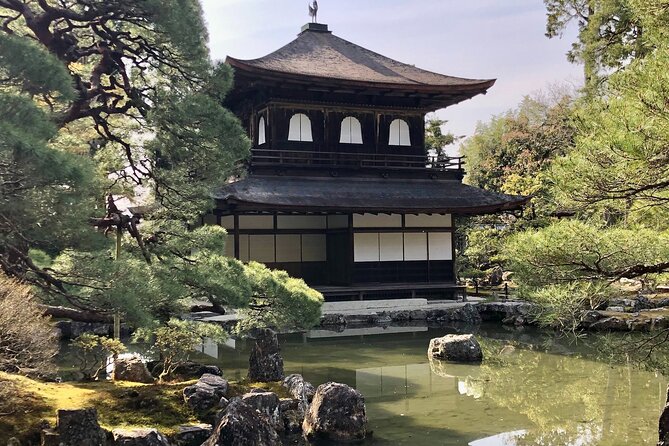
Ginkaku-ji, often called the Silver Pavilion, is one of the day’s main temple visits. The total stop lasts about 45 minutes and includes lunch at a nearby restaurant.
The temple is admired for its restrained design and garden, not for the silver coating its name might suggest. Its mossy paths, carefully shaped scenery, and quiet proportions offer a sharp contrast to the bright torii gates at Fushimi Inari.
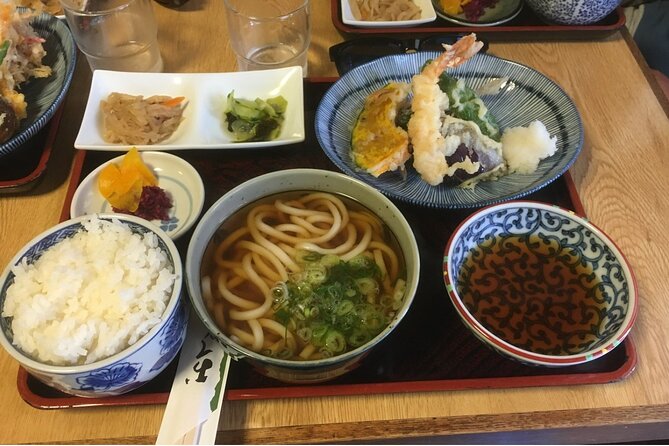
Lunch is a practical inclusion. After several hours of riding, you will appreciate not having to search for a restaurant or make a separate decision about where to eat. The meal location is near the Silver Pavilion, and the exact restaurant can vary. During very busy periods, eating in one of Kyoto’s most visited areas can mean a less personal setting and fewer choices than you might find away from the main sights.
That is a fair trade on a tightly timed route. The guide handles the stop, and you can return to the bikes without spending the afternoon waiting for a table.
The Philosopher’s Path slows the pace
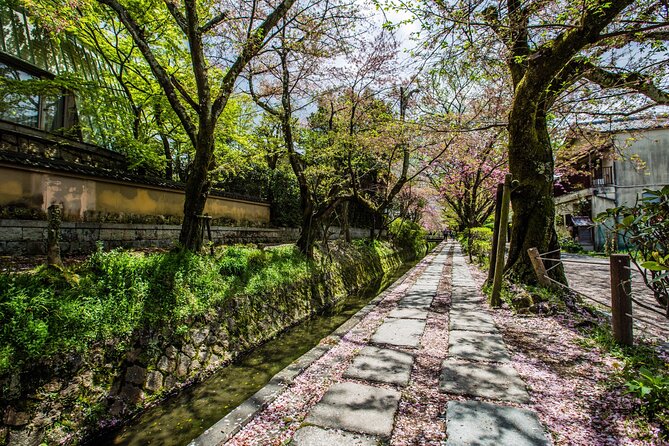
After Ginkaku-ji, you cycle along the Philosopher’s Path for about 45 minutes. This canal-side route connects several eastern Kyoto temples and is especially attractive during cherry blossom season.
The path is not a racetrack. You may share it with walkers, and the surface and traffic flow can vary. Ride carefully and expect the guide to adjust the pace around people. The appeal is the setting: water, trees, small bridges, and side streets that link the major temples.
This is also one place where the tour schedule may feel tight during peak seasons. If blossoms are at their best, you may want more time for photographs than the planned ride allows. Tell your guide early if a short photo stop matters to you, but remember that the group still needs to stay on schedule.
Nanzen-ji, one of Kyoto’s grandest temple complexes
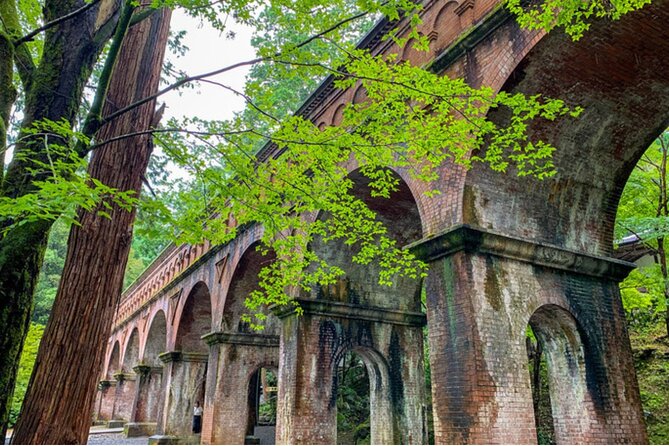
Nanzen-ji receives about 45 minutes, including time to walk through the grounds.
The complex has a strong sense of scale, with a large entrance gate, temple buildings, gardens, and the well-known brick aqueduct that passes through the grounds. The aqueduct is an unusual sight in temple-focused Kyoto and makes this stop different from the earlier shrines.
Nanzen-ji rewards a guide who can explain how Zen institutions worked and how the buildings fit together. Guides such as Jay, Juan, Indra, and Shaune were praised for mixing history, culture, humor, and practical suggestions. Still, guide style can vary. One departure had a guide who offered little explanation and checked information on a phone, so I would not book this solely for a guaranteed lecture at every stop.
The small group gives you the best chance to ask questions. Use it. Ask about the temple’s layout, the aqueduct, or the differences between Shinto shrines and Buddhist temples.
Heian Shrine adds scale and color
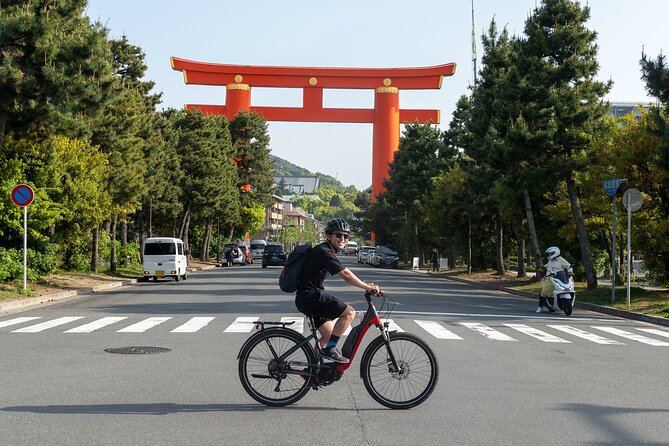
The ride continues to Heian Shrine, where you spend about 35 minutes walking through the courtyard.
Heian Shrine is easy to recognize for its large torii and broad open grounds. The courtyard feels grand and formal, with vivid shrine buildings that differ from the muted wood and moss of many eastern temples.
This is a good visual change late in the day. By this point, you have seen intimate paths, river scenery, Zen compounds, and a canal walk. Heian Shrine gives you a more ceremonial setting before the route turns toward Gion.
The visit is mainly a courtyard stroll. If you want to explore every garden area or spend time inside each building, you will need a separate visit.
Gion by bicycle, with a chance to see Kyoto’s old lanes
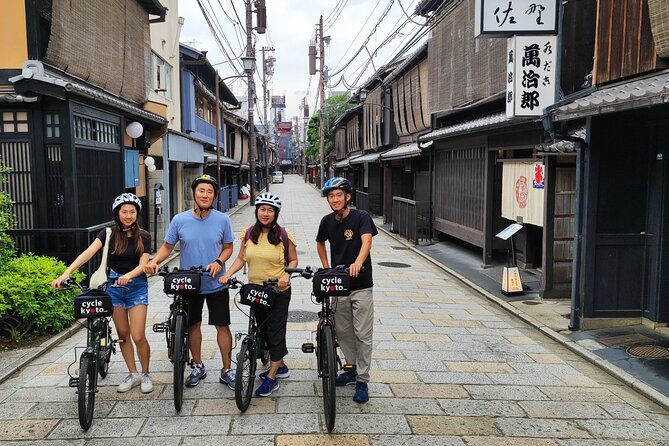
The Gion section lasts about 45 minutes and takes you through backstreets of Kyoto’s famous entertainment district.
This is where the bicycle offers something a large vehicle cannot. You can move through narrow lanes and see the contrast between quiet residential corners and the traditional architecture around the district’s better-known streets. You might catch a glimpse of a Maiko or Geiko, but that is never guaranteed and should not be the sole reason to book.
Gion requires care. Some roads are narrow, and people may step into the street without warning. Stay close to the guide, keep your speed under control, and do not stop in the middle of a lane for photographs.
The best part is often the route between the headline sights. A guide can point out streets and areas you might miss if you simply followed a map from one temple to the next.
Higashi Hongan-ji and the final cafe stop
The last sightseeing stop is Higashi Hongan-ji, where you spend about 15 minutes walking through its large wooden prayer halls. The tour also includes a stop at a favorite Kyoto cafe.
Higashi Hongan-ji is a useful final stop because it is close to the main Kyoto Station area and offers a different kind of religious architecture. Its wooden halls are imposing and spacious, with a plain power that feels different from the gardens and shrines earlier in the day.
Fifteen minutes is brief, so expect a quick look rather than a full visit. The cafe stop adds a welcome pause near the end of a long ride. Several guides have been praised for choosing pleasant local coffee spots that people would not have found alone.
The tour then returns to the original meeting point. You finish with the convenience of ending where you started, though you may be ready for a quiet evening after six to seven hours of riding and sightseeing.
The guides can shape the whole experience
The strongest guide reports describe people who combine route control with local insight. Indra, Jay, Juan, Paul, Julian, Sean, and others were praised for explaining Kyoto’s culture, answering questions, adding humor, and adjusting the route to the group when possible.
Juan, in particular, was described as someone who knew Kyoto’s neighborhoods, food, and history well and could make the day feel like an outing with a local friend. Other guides were praised for safety, clear English, and a comfortable riding pace.
But you should keep expectations realistic. The tour is not a scripted museum lecture, and the depth of explanation may vary. One disappointing experience involved limited storytelling, little detail at the monuments, and too much reliance on a phone for information. If detailed interpretation is your main goal, ask questions actively and make clear what interests you.
The route itself remains useful even when the commentary is lighter. You still have a guide for navigation and safety, plus the efficiency of a prearranged day.
Is $138.74 a fair price?
At $138.74 per person, this is not a cheap way to rent a bicycle and wander. The price pays for the e-bike, helmet, guide, small group, temple admission at Ginkaku-ji, lunch, cafe stop, and the planning needed to connect nine areas of Kyoto.
The value is strongest if you have limited time or want a first-day orientation. You can see far more than you would on foot, avoid planning several train and bus connections, and gain access to backstreets that are hard to link together without local route knowledge.
The value is weaker if you are already an experienced Kyoto cyclist, prefer to set your own pace, or want long visits inside each temple. You could visit many of these places independently for less money, but you would lose the convenience, transport between them, and guide support.
The tour is often booked well in advance, with an average booking lead time of 37 days. That suggests planning ahead is sensible, especially if your Kyoto dates are fixed.
Who should book this e-bike day?
I would recommend it to first-time Kyoto visitors who want a broad introduction and are comfortable riding in a city. It is also a good fit for people who enjoy seeing ordinary streets between major sights rather than moving only from station to station.
It suits couples, families with teenagers who meet the age and height rules, and small groups that want a social day without joining a large bus tour. The e-bike makes the distance manageable, but it does not remove the need for balance, awareness, and moderate fitness.
I would hesitate if you dislike cycling near cars or people, need lots of time at each temple, or want a quiet, highly detailed religious tour. The day covers a lot of ground, and that means some stops are necessarily brief.
The experience requires good weather. If poor weather cancels the tour, you are offered another date or a full refund. You can also cancel for a full refund up to 24 hours before the start time, but changes or cancellations inside that window are not accepted. Tell the operator about dietary needs ahead of time.
FAQ
How long does the East Kyoto e-bike tour last?
The tour lasts approximately six to seven hours, starting at 8:00 a.m. and returning to the original meeting point.
Where does the tour begin and end?
It begins at Cycle Kyoto, Higashikujō Nishisannōchō, Minami Ward, Kyoto. The activity ends back at the same meeting point.
What sights are included?
The route includes Fushimi Inari-taisha Shrine, Tofuku-ji Temple, the Kamogawa River, Ginkaku-ji Temple, the Philosopher’s Path, Nanzen-ji Temple, Heian Shrine, Gion, and Higashi Hongan-ji Temple.
Are the e-bike and helmet provided?
Yes. An e-bike and helmet are provided as part of the tour.
Is lunch included?
Yes. Lunch at a nearby restaurant is included during the Ginkaku-ji stop. Dietary requirements should be provided ahead of time.
How many people can join the tour?
The maximum group size is eight people.
What is the minimum age and height?
The minimum age is 13 years old, and the minimum height is 145 centimeters.
Do I need to be physically fit?
You should have a moderate level of physical fitness and feel comfortable riding a bicycle for several hours. The route includes some uphill sections, busy areas, and slightly uneven surfaces.
What happens if the weather is poor?
The tour requires good weather. If it is canceled because of poor weather, you will be offered another date or a full refund.
Should you book it?
Book this tour if you want to cover a large slice of eastern and southern Kyoto in one day, enjoy cycling, and value a guide who can handle the route, food stops, and timing. The small group, early departure, e-bike, lunch, and mix of famous temples and backstreets give it real practical value.
Skip it if you want to linger at every temple, dislike city cycling, or prefer to explore at your own speed. For the right rider, this is one of the most efficient ways to get your first feel for Kyoto, but it works best when you accept that the day favors breadth and movement over long, quiet temple visits.
More Electric Bike Rides in Kyoto
- 5 Top Highlights of Kyoto Full Day Bike Tour (E-bike option)
★ 5.0 · 511 reviews - E-Bike Tours of the highlights of Kyoto!!!
★ 5.0 · 291 reviews - Kyoto: City Secrets eBike Tour
★ 4.9 · 196 reviews - Pedal Adventure Kyoto’s iconic landmarks on an e-bike tour
★ 5.0 · 189 reviews
Just added around Kyoto
- Sekka Cotton Furoshiki Class★ 5.0 · 19 reviews
- Kyoto Sword Experience – includes Museum Ticket/Ninja Experience★ 4.5 · 149 reviews
- Scenic Green Tea Fields of Hidden Kyoto & Local Tea Exp (Private)★ 5.0 · 32 reviews
- Secret Eastern Kyoto Biking Adventure★ 5.0 · 44 reviews
- Private Sake Tasting in Central Kyoto with Sake Sommelier★ 5.0 · 32 reviews
- Samurai School in Kyoto: Samurai for a Day★ 5.0 · 202 reviews
- Samurai Performance and Casual Experience: Kyoto Ticket★ 4.5 · 115 reviews
- SHIRAKAWA Japanese Culture Experiences with private English staff★ 5.0 · 16 reviews
Cycling Tours, compared.
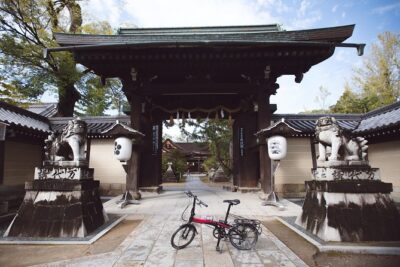
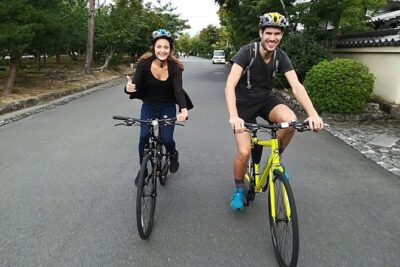
Arashiyama Bamboo Forest & Hidden Gems Bike Tour (Early Bird)
Our verdict →

Browse the lists this tour appears in