
Reviewed · SUSHI EXPERIENCES
Sushi – Authentic Japanese Cooking Class – the best souvenir from Kyoto!
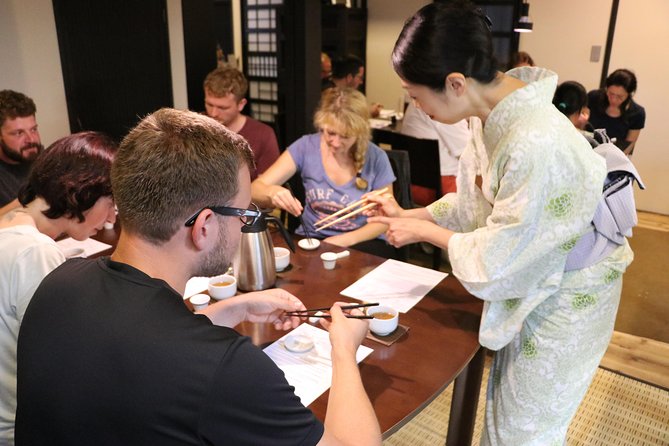
Kyoto’s best souvenirs do not always fit in a suitcase. In Kaori’s home-style kitchen, you learn to make several kinds of sushi, dashi soup, pickled ginger, and properly seasoned sushi rice. The lesson also covers Japanese table manners and the food customs behind the meal, so this is more than a roll-and-eat workshop.
I like the hands-on format: you do the measuring, shaping, and preparation instead of watching a chef work from across the room. I also like the practical takeaway, since Kaori provides recipes and a four-page guide covering manners, food, sushi rice, soup, and pickled ginger.
The main consideration is finding the meeting point. Kyoto addresses can be confusing, and one poor experience involved a taxi driver who could not locate the house. Use the provided Google Maps pin carefully and allow time to get there.
Key things to know before booking
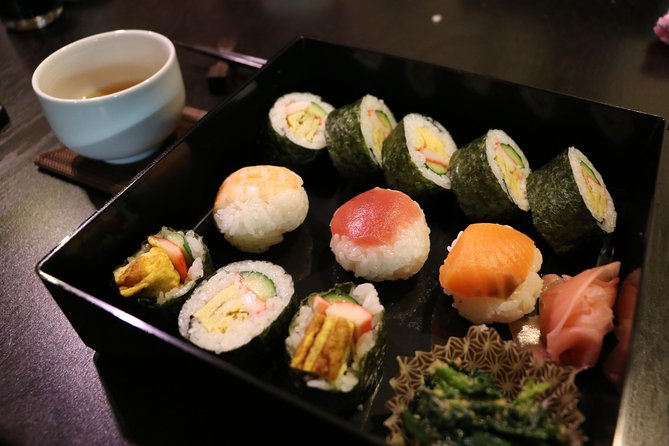
- You make a full Japanese meal: Expect sushi, soup, pickled ginger, and sushi rice rather than one narrow demonstration.
- Kaori teaches in English: Her clear explanations cover technique, food culture, umami, and table manners.
- The class takes place in a home kitchen: The setting feels personal and relaxed, but it is not a restaurant or formal culinary school.
- You eat what you prepare: An aperitif and Japanese green tea are included with the meal.
- The lesson suits beginners and families: Children have taken part, and the instructions are paced so first-time cooks can follow.
- Plan around the 11:30 a.m. start: The activity lasts about two hours and ends back at Roujiya.
What makes this Kyoto sushi class different
Many sushi classes focus on the final shape of the roll. This one gives you a wider view of Japanese cooking. You learn how flavor begins with basic ingredients, how rice is treated, and why small table habits matter.
Kaori introduces umami, the savory taste associated with ingredients such as kombu seaweed and bonito flakes. You also learn to make dashi, the simple broth that forms the base of many Japanese dishes. It is a small lesson, but it helps explain why Japanese food can taste full without being heavy.
The class also includes pickled ginger, often served between bites of sushi. Here, it is not just a garnish placed on the side. You learn how it fits into the meal and how to prepare it.
This wider approach gives the class more value than a quick sushi assembly session. You leave with techniques, recipes, and a better sense of how Japanese food is organized at the table.
More Cooking Classes in Kyoto
- Ramen Cooking Class at Ramen Factory in Kyoto
★ 5.0 · 1,937 reviews - Kyoto: Ramen Cooking Class at a Ramen Factory with Souvenir
★ 4.9 · 532 reviews - Kyoto: Ramen, Gyoza, and Onigiri Cooking Class
★ 5.0 · 445 reviews
Arriving at Roujiya in central Kyoto
The meeting point is Japanese Cooking Class Roujiya, at 22-58 Nishinokyo Ikenouchicho, Nakagyo Ward, Kyoto, postal code 604-8375. The activity begins at 11:30 a.m. and returns to the same location after roughly two hours.
The address is near public transportation, but Kyoto’s street system can trip up drivers. The supplied information reportedly includes a Google Maps location pin after booking, and you should rely on that rather than typing only the street address into a taxi app.
I would not cut this close. Give yourself extra time, especially if you are coming from another part of Kyoto or carrying luggage. The one clear negative experience involved a driver failing to find the address and a long wait for help. That does not appear to reflect the cooking itself, but it is a real practical issue.
You do not receive hotel pickup or drop-off, so transport is your responsibility. The mobile ticket is useful, but keep the meeting details easy to access on your phone.
A welcoming home-kitchen setting
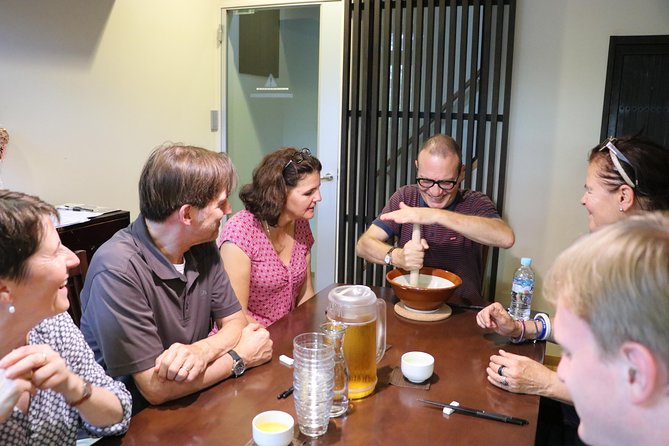
The class takes place in Kaori’s beautiful kitchen, where she welcomes you as if you have been invited into her home. That setting is central to the experience. You are not simply seated at a counter while someone performs a recipe. You work in a personal kitchen with an instructor who can watch your progress and correct small mistakes.
The room is described as clean and well arranged, with a test-kitchen feel that makes the steps easy to follow. That matters for sushi, since rice texture, hand pressure, and cutting technique can be difficult to judge from a video.
The atmosphere also suits people who want some conversation. Kaori shares food customs and culinary background while you prepare and eat. Her English is repeatedly described as strong, which is important when a recipe depends on small details.
The group size needs a little clarification. The experience is promoted as small group, with an overview that describes a cap of eight people. The booking information also lists a maximum of 13 people per booking and a maximum of 12 participants. Since those figures do not match perfectly, ask the operator if group size matters greatly to you.
The first lesson: umami and dashi
The class begins with an introduction to taste, including umami and its place in Japanese cooking. This gives you a useful framework before you start preparing the meal.
You then learn about dashi, a broth made with seaweed and bonito flakes. Dashi is not complicated, but it rewards careful handling. The point is less about memorizing a recipe and more about understanding how Japanese cooks build flavor from a few ingredients.
This portion is especially useful if you cook at home. Sushi often gets all the attention, yet the soup and seasoning work show how much Japanese cooking depends on balance. The class connects the ingredients to the finished meal, rather than treating each item as an isolated task.
If you have children with you, the lesson offers enough variety to keep them involved. Younger participants can take part in preparation and see how a few familiar ingredients become a complete meal.
More Sushi Experiences in Kyoto
- Sushi Making in Kyoto! Same-day bookings welcome!
★ 5.0 · 713 reviews - The Original Small-Group Sushi Making Class in Kyoto
★ 5.0 · 436 reviews - Kyoto: Small-Group Authentic Sushi Making Workshop
★ 5.0 · 137 reviews - Kyoto: Sushi Making Class with Sushi Chef
★ 4.8 · 64 reviews
Sushi rice, rolls, and the work of your hands
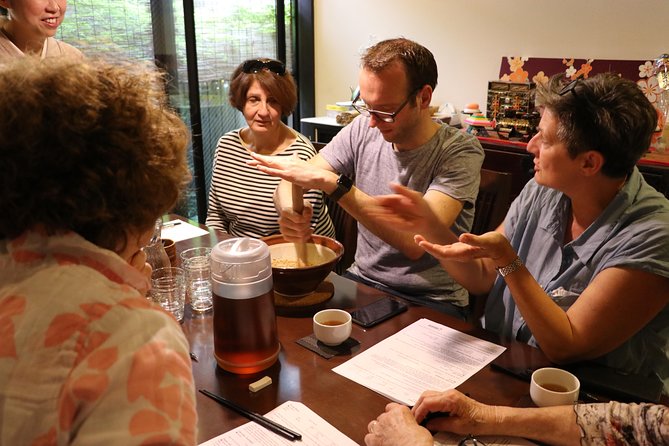
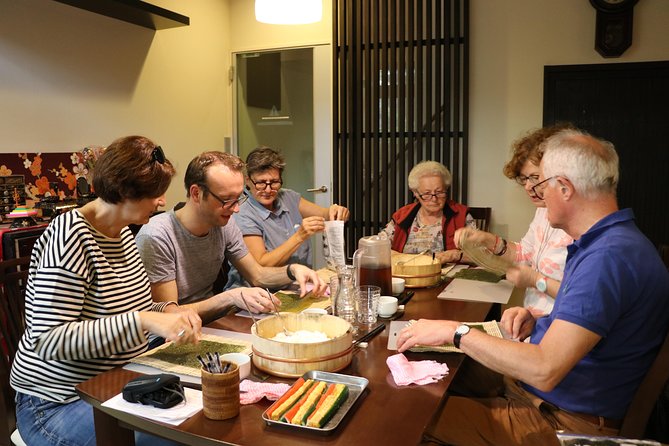
Rice is the foundation of good sushi, and the class gives it proper attention. You learn how to prepare sushi rice and why it needs to be treated carefully. One memorable detail is the instruction to fan the rice, a step that helps with the final texture and temperature.
You also make several types of sushi. The supplied information does not specify every style, so do not book expecting a fixed list of particular rolls. The useful point is that you practice more than one form and learn the stages with guidance from Kaori.
This is where the class earns its hands-on reputation. You do not need prior cooking experience. Kaori demonstrates each stage, explains why it matters, and checks that you can repeat it. That makes the experience suitable for a first attempt, while still offering useful corrections to someone who thinks they already know how to make sushi.
The finished pieces may not have restaurant-perfect shapes. That is part of the fun. You get the satisfaction of seeing your own work become lunch, and the recipes give you a fair chance of trying again at home.
Pickled ginger, table manners, and food culture
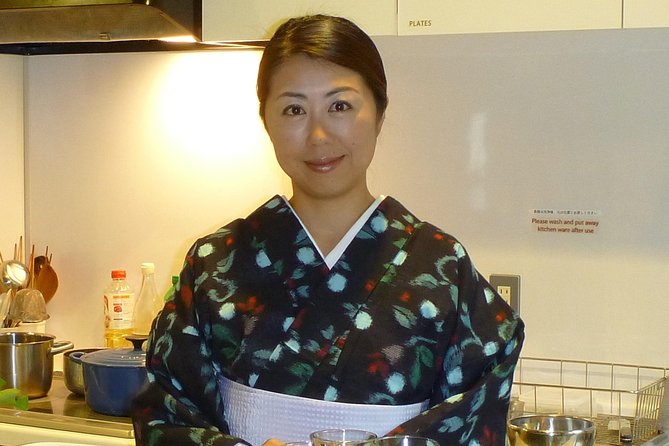
The class also covers pickled ginger and Japanese dining etiquette. These details help explain how sushi is eaten, not just how it is made.
Japanese table manners can feel unfamiliar if you have only encountered them as isolated rules. Kaori places them in the context of the meal, including how ingredients are served and how chopsticks are used. A particularly interesting cultural point concerns the shorter length of Japanese chopsticks compared with Chinese chopsticks.
That kind of information gives the lesson a human scale. You are not memorizing facts for a quiz. You are learning why ordinary objects and habits look the way they do.
The four-page handout is a useful part of the experience. It includes Japanese manners, food information, and recipes for sushi rice, soup, and pickled ginger. Keep it in your luggage. It is far more useful than a decorative souvenir because it can help you recreate the meal later.
Eating the meal you prepared
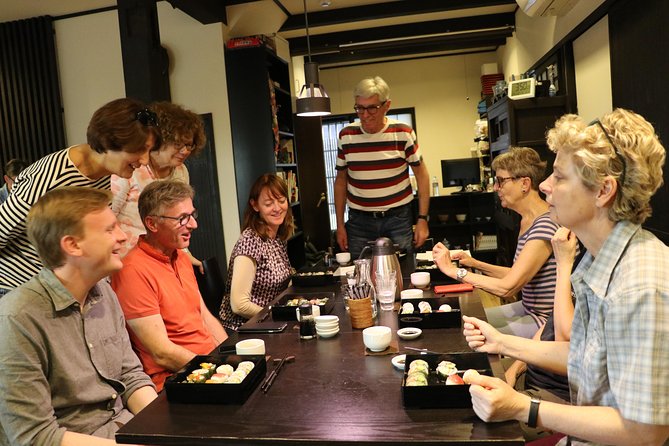
After the cooking, you sit down to eat the sushi and soup you made. This is the payoff, but it is not the only reason to book the class. The meal lets you test the techniques immediately, while the steps are still fresh in your mind.
An aperitif and Japanese green tea are included. One class account also notes that tea, sake, and beer were offered after the cooking for an additional charge. The included items and any optional drinks may vary, so do not assume sake or beer is part of the $72.67 price.
The meal is substantial enough that you should arrive ready to eat. You are not simply sampling one finished piece. You prepare several dishes, then share the results at the end.
For couples, this works nicely as a relaxed midday activity. For families, it provides a shared task without requiring anyone to sit still through a long lecture. For friends, the mistakes and finished sushi create an easy social rhythm.
Is $72.67 a fair price?
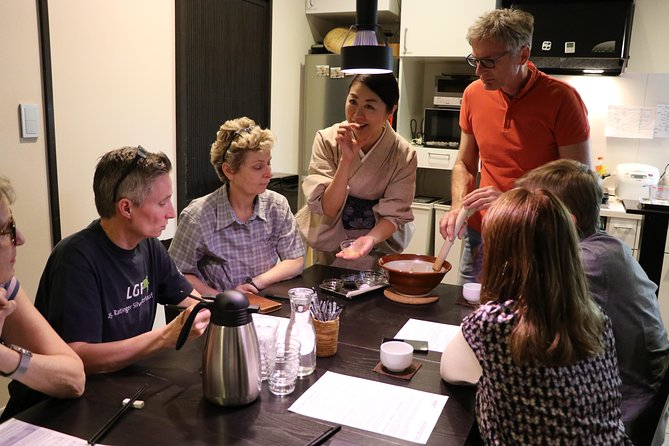
At $72.67 per person, this is not a cheap lunch. You are paying for more than the food, though. The price includes ingredients, the English-speaking instructor, recipes, the meal, an aperitif, and Japanese green tea.
The better question is what you want from the activity. If you only want to eat sushi, a restaurant will cost less and offer more polished food. If you want to understand how the rice, soup, broth, and etiquette fit together, the class offers stronger value.
You also receive a repeatable skill. The recipes and explanations can be used after you return home, and the lesson gives you enough confidence to try. That makes the class a good choice for someone who sees food as part of the trip rather than just fuel.
The small-group format, if the group is close to the advertised cap of eight, adds value. You receive more direct help than you would in a large demonstration. Since the booking information lists higher possible maximums, confirm the expected group size if personal attention is your top priority.
Who should book this class?
I would recommend it to first-time sushi makers, couples, families, and anyone who wants a food activity with cultural context. Children have taken part successfully, and the teaching style is patient and clear.
It is also a good match for someone who wants to learn rather than simply watch. You need to be willing to handle ingredients, follow instructions, and eat the food you prepare.
This may not suit you if you want an advanced chef’s course, a professional kitchen, or a highly formal restaurant lesson. The setting is a private home kitchen, and the tone is friendly and personal. That is the appeal, but it also means the experience is not designed as a technical certification course.
People with dietary requirements should mention them at booking. The operator specifically asks for dietary information in advance, but the supplied details do not promise that every restriction can be accommodated.
Timing, booking, and cancellation
The class runs for about two hours and starts at 11:30 a.m. You return to the meeting point when it ends. Since there is no hotel transfer, build transport time into your morning plan.
Confirmation is sent within 48 hours, subject to availability. The class is often booked around 40 days ahead, so reserve early if your Kyoto dates are fixed.
Free cancellation is available up to 24 hours before the local start time. Cancellations made less than 24 hours before the activity, along with late changes, are not refunded.
My verdict: a useful souvenir from Kyoto
I would book this class if I wanted a practical Kyoto memory that continued after the trip. Kaori’s lesson combines sushi, soup, pickled ginger, etiquette, and food culture in a manageable two-hour format. The recipes and handout give you something to use later, and the meal makes the lesson feel complete.
The only real warning is logistical: confirm the map pin, allow extra time, and clarify the group size if that matters to you. At $72.67, the value comes from the teaching and the skills, not from the amount of food alone.
Choose it if you want to make lunch, understand more about Japanese cooking, and return home with a recipe booklet instead of another souvenir magnet.
FAQ
Where does the cooking class take place?
The class takes place at Japanese Cooking Class Roujiya, 22-58 Nishinokyo Ikenouchicho, Nakagyo Ward, Kyoto, 604-8375, Japan.
What time does the class start?
The class starts at 11:30 a.m.
How long does the experience last?
The activity lasts approximately two hours.
Does the class end at the same place where it starts?
Yes. The activity ends back at the Roujiya meeting point.
What food do you learn to prepare?
You learn to prepare several types of sushi, sushi rice, Japanese soup, and pickled ginger.
Is the class taught in English?
Yes. An English-speaking cooking instructor leads the class, and Kaori provides explanations in English.
Are food and ingredients included?
Yes. The meal and all cooking ingredients are included in the price.
Are drinks included?
An aperitif and Japanese green tea are included. One class account also notes that sake and beer may be available for an extra charge.
Is hotel pickup available?
No. Hotel pickup and drop-off are not included.
Can I cancel for a full refund?
Yes, if you cancel at least 24 hours before the experience start time. Late cancellations and changes made within 24 hours are not accepted for a refund.
Just added around Kyoto
- Sekka Cotton Furoshiki Class★ 5.0 · 19 reviews
- Kyoto Sword Experience – includes Museum Ticket/Ninja Experience★ 4.5 · 149 reviews
- Scenic Green Tea Fields of Hidden Kyoto & Local Tea Exp (Private)★ 5.0 · 32 reviews
- Secret Eastern Kyoto Biking Adventure★ 5.0 · 44 reviews
- Private Sake Tasting in Central Kyoto with Sake Sommelier★ 5.0 · 32 reviews
- Samurai School in Kyoto: Samurai for a Day★ 5.0 · 202 reviews
- SHIRAKAWA Japanese Culture Experiences with private English staff★ 5.0 · 16 reviews
- A Privately Guided Photoshoot in Beautiful Kyoto by a Pro★ 5.0 · 18 reviews
Sushi Experiences, compared.
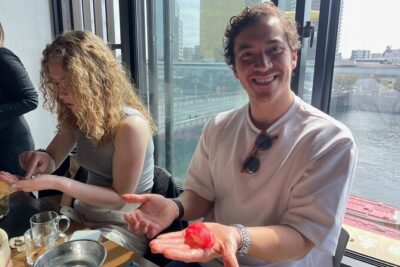
Sushi Making Tokyo Roll and Authentic Japanese Sushi Class
Our verdict →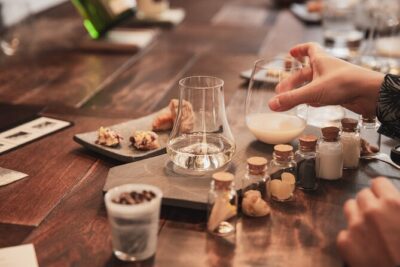
Sake Omakase in Tokyo: Guided Tasting by Certified Sommeliers
Our verdict →
Browse the lists this tour appears in