
Reviewed · WALKING TOURS
Kyoto Arashiyama Walking Tour: Bamboo, Monkeys, Gardens & Secrets
Arashiyama is famous for its bamboo, but the best reason to take this tour is that it links the district’s major sights into one sensible walk. You move from shrine and garden to temple, river, and mountain, with a guide explaining what you are seeing instead of simply chasing the next photo stop.
I like the wide mix of sights and the way guides such as Teri, Marie, and Mari add history, shortcuts, photos, and local tips. I also like the small-group limit of 12, which matters in a busy part of Kyoto. The main catch is the steep 20 to 25 minute walk up to Monkey Park, plus a possible meeting-point confusion that you should check before leaving.
Key points to know before you book
- Five to six hours on foot: This is a full half-day walk, not a quick bamboo photo stop.
- Seven distinct Arashiyama sights: You see Nonomiya Shrine, Okochi Sanso Garden, the Bamboo Forest, Tenryuji Temple, Togetsukyo Bridge, Monkey Park, and surrounding streets.
- A real uphill finish: The path to Monkey Park is steep in places and takes about 20 to 25 minutes.
- Small groups capped at 12: Private and small-group options let you choose between personal attention and a lower price.
- Lunch is not included: You get about 35 minutes for a quick meal at the end, but food costs extra.
- Check the start details carefully: The route refers to Saga-Arashiyama Station, while the supplied meeting information also names Monkey Park Iwatayama.
Why this Arashiyama walk works well
Arashiyama can feel scattered on a first visit. The famous bamboo path is close to one set of sights, Tenryuji sits nearby, the bridge crosses the river, and Monkey Park is across the water and up a hill. You can visit all of these alone, but it takes some planning to put them in the right order.
This tour handles that route for you. It begins around the Saga-Arashiyama area, moves through the bamboo and temple district, crosses toward Togetsukyo Bridge, then finishes with the hike to Monkey Park. That order gives you a useful sense of how the district fits together.
The guide’s role is important here. Teri, Marie, Mari, Osin, Aron, and Maricel are among the guides associated with the experience, though your guide depends on the date and group. The strongest guide reports describe clear explanations, good timing, friendly conversation, and useful back routes that avoid some of the worst crowds.
You should expect English throughout. The group can include up to 12 people, though private and small-group choices are offered. A smaller group is worth considering if you want to ask questions or need a little more help with the walking route.
More Garden Tours in Kyoto
- Kyoto Zen Meditation & Garden Tour at a Zen Temple with Lunch
★ 5.0 · 441 reviews - Kyoto Arashiyama Bamboo forest & Garden Half-Day Walking Tour
★ 5.0 · 413 reviews - Kyoto: Zen Garden, Zen Mind (Private)
★ 5.0 · 126 reviews
Starting near Saga-Arashiyama Station
The route begins at Saga-Arashiyama Station, where you have about 20 minutes to meet the group and get oriented. This is the most practical rail connection from Kyoto Station according to the supplied directions, with one report placing the ride at about 25 minutes.
Pay close attention to the station name. Kyoto has several stops using Arashiyama in their names, and they are not close together. Saga-Arashiyama, Arashiyama Station on the Hankyu line, and Arashiyama Station on the tram line can lead you to very different parts of the district.
This is the kind of small detail that can ruin a smooth morning. Check the exact meeting point, station name, and map pin before setting out. The information supplied for this tour also names Arashiyama Monkey Park Iwatayama as the start and end point, while the route itself begins at Saga-Arashiyama Station. That mismatch is worth confirming directly with Japanify Tours before your tour day.
There is no hotel pickup. You make your own way to the start, so allow extra time if you are not familiar with Kyoto’s rail system.
Nonomiya Shrine and the bamboo approach
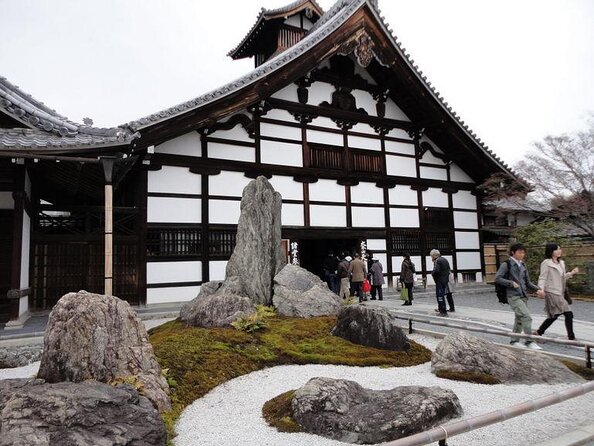
Nonomiya Shrine is a small Shinto shrine with an unusual connection to the imperial court. Unmarried imperial princesses traditionally came here for purification before serving as priestesses at Ise Shrine.
The stop lasts about 10 minutes, so do not expect a long temple visit. Its value is the explanation. Without context, it can look like a compact shrine beside a busy tourist route. With a guide, you get a quick lesson in ritual, imperial custom, and the religious traditions that shaped Arashiyama.
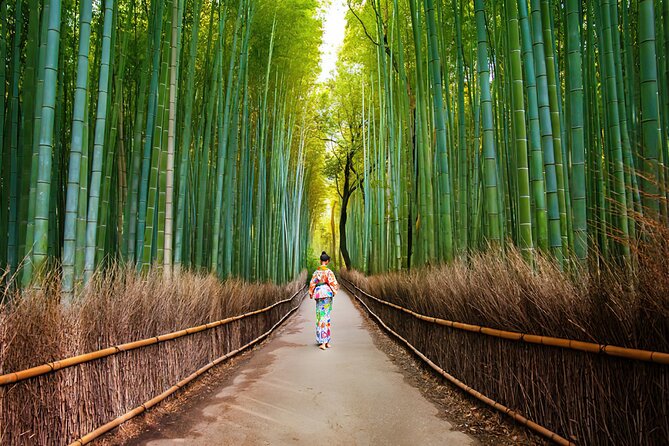
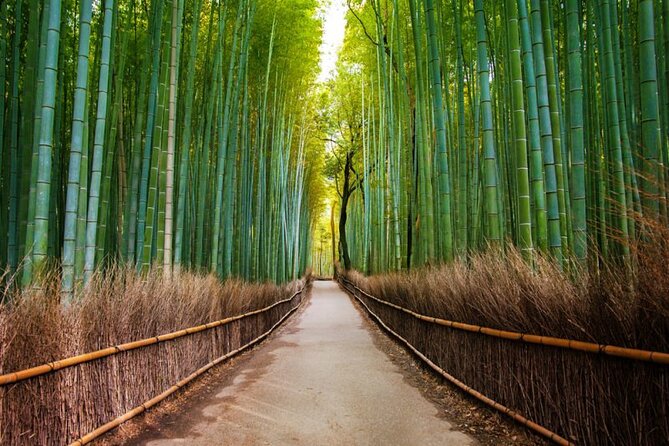
From here, you head toward the Bamboo Forest. The path through the bamboo takes around 30 minutes. Tall stalks close in on both sides, making this one of Kyoto’s most recognizable walks.
Keep your expectations sensible. The bamboo path is beautiful, but it is also one of the most photographed places in Kyoto. The guide can help you use quieter side routes and find better angles, but no tour can make the main grove empty at popular times.
The bamboo section is more enjoyable when you treat it as part of a longer cultural walk rather than the entire event. You get time for photos, but you also keep moving toward the less obvious parts of Arashiyama.
Okochi Sanso Garden, a quieter change of pace
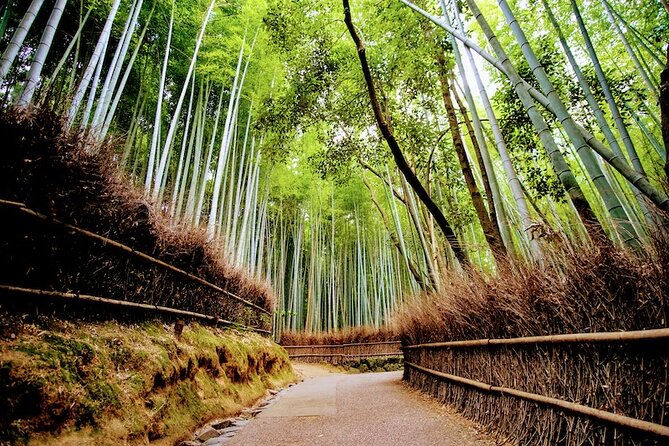
At the end of the Bamboo Forest sits Okochi Sanso Garden, the former villa of a famous Japanese actor. The visit lasts about 30 minutes and provides a sharp change from the crowded bamboo lane.
This is one of the strongest parts of the route for visitors who want gardens rather than only famous landmarks. The garden is designed for strolling and quiet views, with the surrounding hills adding to the feeling of space. The supplied tour information includes admission here, which helps justify the price.
The garden is also a useful reason to take the guided route. It is easy to rush past the entrance or miss the significance of the villa when you are focused on the bamboo. Your guide can explain why this private retreat matters and point out the details that make the grounds different from a standard public park.
You have about half an hour, so this is a guided overview rather than a long, slow garden visit. If you like Japanese gardens, you may wish the schedule allowed more time. Still, it adds depth to a day that could otherwise be mostly crowded paths and animal watching.
More Walking Tours in Kyoto
- Kyoto Geisha Walking Tour: Gion District & Hidden Gems
★ 4.7 · 3,273 reviews - Kyoto: Gion Magical Night Walking Tour with Geisha Trivia
★ 4.9 · 2,393 reviews - Kyoto: Gion Geisha District Walking Tour – Stories of Geisha
★ 4.7 · 2,187 reviews - Night Walk in Gion: Kyoto’s Geisha District
★ 4.5 · 2,003 reviews
Tenryuji Temple and its Sogenchi Garden
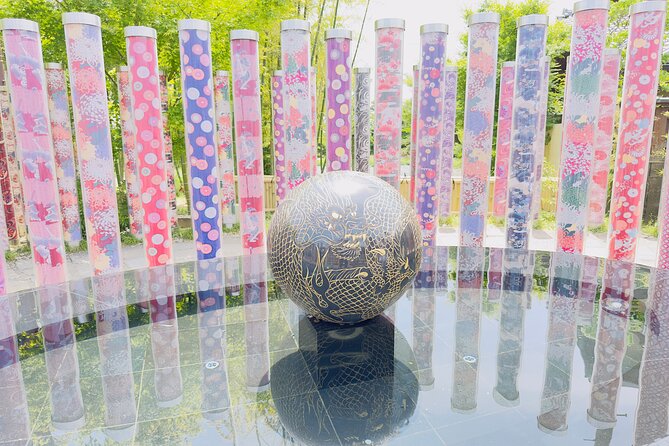
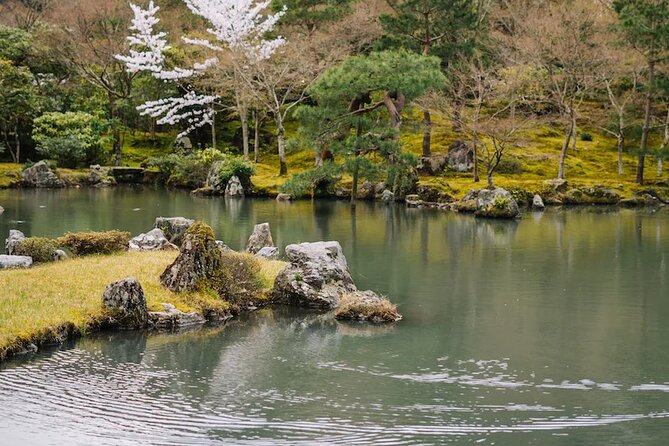
Tenryuji Temple is the major temple stop and receives about 35 minutes. Its Sogenchi Garden is a UNESCO World Heritage Site and is widely regarded as one of Japan’s finest gardens.
This is where the tour’s historical explanations earn their keep. The temple and garden are not simply scenic backdrops. The arrangement of water, rocks, trees, and borrowed mountain views reflects Japanese garden design, while the temple provides the religious setting.
Thirty-five minutes is enough for a useful introduction and photos, but it is not enough for every building and corner. If Tenryuji is a personal priority, consider returning on your own after the tour. The advantage of seeing it with the group is that you understand the basic setting before deciding where to spend more time.
The schedule also means you keep moving. Guides such as Teri and Marie are praised for managing the clock while still making room for questions and photographs. That matters on a route with seven stops and a fixed finish.
Togetsukyo Bridge and the Hozu River
After the temple area, the walk continues toward Togetsukyo Bridge. You spend about 15 minutes here, taking in the Hozu River and the mountains around Arashiyama.
The bridge is one of the district’s signature views. It is not an elaborate monument, and the stop is brief, but it gives you the broad view that the narrow bamboo paths cannot provide. This is a good place to understand why Arashiyama became such a popular retreat.
The bridge also marks a change in the day. The early part focuses on shrines, gardens, and temple grounds. From here, the tour becomes more physical as you prepare for Monkey Park.
Wear shoes with a firm sole. You will be walking for several hours before reaching the hill, and the route includes ordinary streets as well as paths through scenic areas.
The Monkey Park hike is the tour’s workout
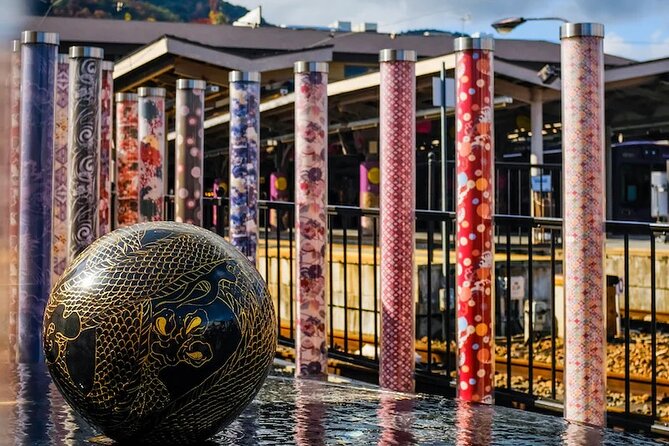
Monkey Park is the final major stop, and reaching it requires a 20 to 25 minute uphill hike. The path is described as somewhat steep, so this is not a flat sightseeing walk.
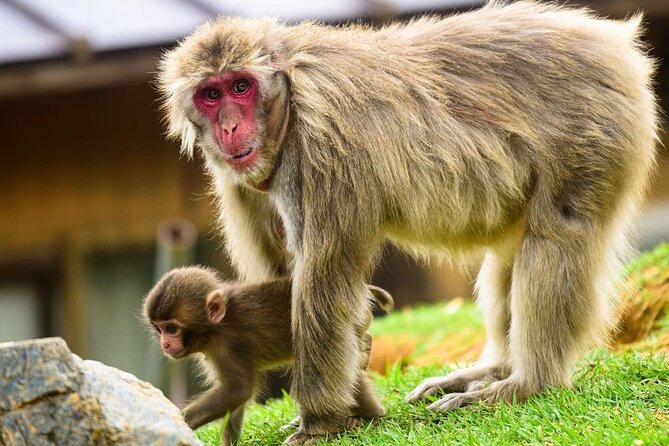
The effort pays off with views over Arashiyama and the chance to see Japanese macaques moving freely around the park. You are not visiting a small indoor animal display. The monkeys are the attraction, but you still need to follow park rules and use common sense around them.
This part is especially appealing for families and animal lovers. One 13-year-old reportedly called it a favorite day in Japan, while another account described being nervous around the monkeys despite enjoying the visit. That is a fair warning: the animals are entertaining, but not every person will feel relaxed near them.
The climb can be harder in hot, humid weather. Bring water, take the ascent at your own pace, and do not book this route if a steep 20 to 25 minute climb would be a serious problem. Most participants can join, but the tour clearly requires the ability to reach the hilltop.
The supplied information lists Monkey Park admission as included in one place and as paid in another. Confirm this point when booking so you know if the $65.57 price covers every entry fee.
Lunch, shopping, and the finish
The tour allows about 35 minutes for a quick lunch break at the end. Lunch is not included, and the tour does not promise a restaurant reservation, so think of this as free time to buy food in the area.
The supplied end instructions also mention shopping for souvenirs or returning toward the station after Monkey Park. Since the meeting information gives Monkey Park as both start and finish, you should confirm the actual end point and how much help the guide provides with the return route.
The tour is listed at five to six hours, but some experiences have run closer to four and a half hours depending on pace and group conditions. If you have a train reservation, dinner booking, or another fixed plan, leave a buffer rather than scheduling it immediately after the advertised finish.
What the $65.57 price gets you
At $65.57 per person, this is not the cheapest way to see bamboo and a bridge. You can walk through much of Arashiyama without paying for a guide, and several sights can be reached independently.
The value comes from the route planning, included admissions where specified, and historical explanation. You are also paying for help with a busy district where the best sequence is not always obvious. Guides have been praised for taking quieter back streets, answering questions, helping with photographs, and keeping the group on schedule.
The price makes the most sense if you want to see several major sights in one half-day and prefer not to manage maps, train connections, temple entrances, and the Monkey Park route yourself. It is less compelling if you only want a quick bamboo walk or prefer to linger at one temple.
Private and small-group choices let you trade price for personal attention. Solo bookings are allowed, but the tour needs at least two guests to operate. If only one person books, it may be canceled, with rescheduling or a full refund offered.
Who should book this walk?
I would choose this tour for a first visit to Kyoto, especially if Arashiyama is unfamiliar and you want the major sights covered in one organized outing. It also suits families with older children, couples who want photos and cultural background, and anyone who likes a full walking day.
The tour is a good match if you enjoy variety. In one outing, you get a shrine, bamboo grove, private garden, major temple, river bridge, mountain path, and monkeys. That range is the reason the experience feels fuller than a standard Bamboo Forest visit.
I would think twice if you dislike crowds, steep paths, or fixed schedules. Arashiyama can be very busy, and even good route planning cannot remove the crowds entirely. You also get limited time at each major stop, so independent visitors who like to linger may prefer their own plan.
Bring comfortable shoes, water, and weather-appropriate clothing. One useful note from the supplied experience details is that Arashiyama can feel cooler than central Kyoto, so a light extra layer may help.
Should you book the Arashiyama walking tour?
Book it if you want a well-organized introduction to Arashiyama and are comfortable walking for five hours with a steep climb at the end. The strongest parts are the range of stops, the garden and temple context, the quieter side streets, and the guides’ care with timing and photographs.
Skip it if your main goal is a slow visit to one garden, if you cannot manage the Monkey Park hike, or if you want complete freedom over how long you stay at each site. Before paying, confirm the exact meeting point, the Monkey Park admission charge, and the expected finish time.
For most first-time visitors who want to see more than bamboo, the $65.57 price is reasonable. You get a practical route through a complicated district, a bilingual English-speaking guide, and a useful mix of culture, scenery, and wildlife.
FAQ
How long does the Arashiyama walking tour last?
The advertised duration is approximately five to six hours. Some listed experiences have taken about four and a half hours, so leave extra time after the tour if you have another booking.
What sights are included?
The route includes Nonomiya Shrine, Okochi Sanso Garden, the Bamboo Forest, Tenryuji Temple and its Sogenchi Garden, Togetsukyo Bridge, and Monkey Park Iwatayama.
Is admission included in the price?
The tour information lists admission to the itinerary sites as included, including Okochi Sanso and Tenryuji. It also separately says Monkey Park admission is paid, so confirm this specific fee before booking.
How difficult is the walk to Monkey Park?
The hike takes about 20 to 25 minutes and includes a somewhat steep section to the hilltop. You should be able to manage this climb to take part fully in the tour.
Is lunch included?
No. The tour includes about a 35-minute lunch break, but lunch and dinner are not included in the price.
What language is the tour offered in?
The tour is offered in English. German or Italian may be possible if you ask the provider before booking.
How many people can join the tour?
The maximum group size is 12 people. Private and small-group options are available.
Can a solo visitor book?
Yes, but at least two guests are required for the tour to operate. If only one person books, the tour may be canceled, with rescheduling or a full refund offered.
Can I cancel for a full refund?
You can cancel at least 24 hours before the local start time for a full refund. Cancellations or changes made less than 24 hours before the start time are not accepted for a refund.
Just added around Kyoto
- Sekka Cotton Furoshiki Class★ 5.0 · 19 reviews
- Kyoto Sword Experience – includes Museum Ticket/Ninja Experience★ 4.5 · 149 reviews
- Scenic Green Tea Fields of Hidden Kyoto & Local Tea Exp (Private)★ 5.0 · 32 reviews
- Secret Eastern Kyoto Biking Adventure★ 5.0 · 44 reviews
- Private Sake Tasting in Central Kyoto with Sake Sommelier★ 5.0 · 32 reviews
- Samurai School in Kyoto: Samurai for a Day★ 5.0 · 202 reviews
- Samurai Performance and Casual Experience: Kyoto Ticket★ 4.5 · 115 reviews
- SHIRAKAWA Japanese Culture Experiences with private English staff★ 5.0 · 16 reviews
Walking Tours, compared.

Kyoto Geisha Walking Tour: Gion District & Hidden Gems
Our verdict →
Imperial Palace and Shogun Historical Walking Tour
Our verdict →
Shinjuku Local Bar and Izakaya Guided Walking Tour
Our verdict →

Nishiki Market Brunch Walking Tour (7 Tastings + Brunch)
Our verdict →
Tokyo Castle & Imperial PalaceーShogun Walking Tour
Our verdict →
Osaka Local Foodie Walking Tour in Dotonbori and Shinsekai
Our verdict →Browse the lists this tour appears in