
Reviewed · TRADITIONAL CRAFTS
Your Own HANKO Name Seal Activity in Kamakura.
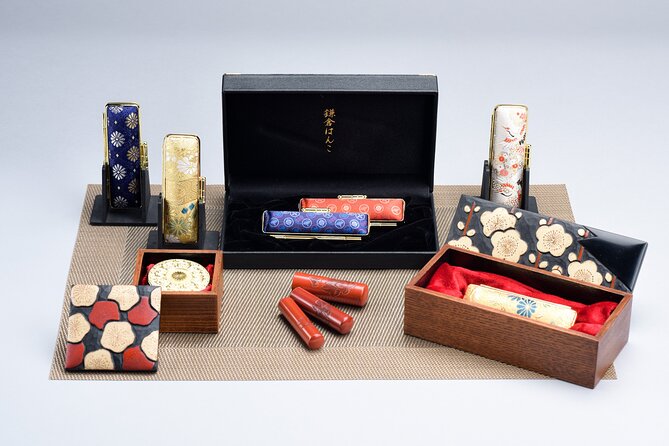
A Japanese hanko name seal is more than a souvenir stamp. It represents your identity, and this private Kamakura workshop lets you shape one from the ground up. You learn how foreign names work in katakana, choose a font and material, and receive a seal finished with hand carving. The rough cut is machine-assisted, but the final work is done by a craftsman.
I like the personal attention, since the activity is private, and I like the chance to ask questions directly about Japanese seal culture. The owner, Mitsuhiro, is known for careful explanations and a relaxed manner. The main drawback is timing: the workshop is offered in the morning, while the finished seal is collected later in the afternoon, so you need to fit both stops into your Kamakura day.
Key points to know before booking
- A private 45-minute workshop: Your group receives the shop’s full attention rather than joining a large class.
- Your name becomes katakana: You get help choosing Japanese characters and a typeface suited to your name and preferred style.
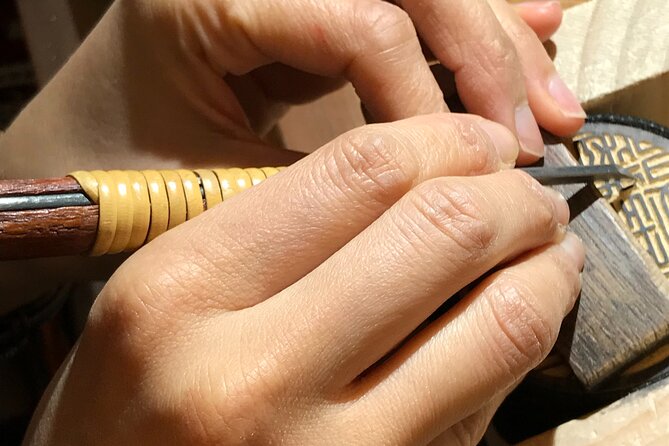
- Hand-finished craftsmanship: A machine makes the rough cut, then a craftsman completes the fine carving by hand.
- Pickup takes planning: You choose an afternoon collection time, or request shipping instead of returning to the shop.
- The base option keeps things simple: Upgrades include horn, wood, gemstones, extra typefaces, cases, and other finishes.
- The shop is close to Kamakura Station: The meeting point is about a five-minute walk south of the station.
Why a hanko makes a better souvenir than another trinket
Kamakura offers plenty of souvenirs, but a hanko has one useful advantage: it carries your name in a form made for you. You are not simply buying a factory-made object. You are deciding how your name should look in Japanese, then receiving a seal engraved for your own use.
In Japan, hanko seals can represent a person’s identity. This workshop gives you an introduction to that role without pretending that a visitor’s souvenir seal is the same as every official seal used in daily Japanese life. You learn about different types, scripts, ink colors, materials, and uses before making your choices.
I especially like the cultural context. The activity is not just a quick personalization service where you pick a color and wait. The explanation comes first, which helps you understand why the shape and characters matter. If you enjoy Japanese crafts, calligraphy, or small objects with a story behind them, this has more meaning than a standard shop purchase.
More Craft Workshops in Kamakura:
- Tokyo Sumo Experience: Chanko & Mochi with a Former Pro
★ 4.8 · 567 reviews - Kintsugi Experience: Art of Golden Joinery in Tokyo
★ 5.0 · 467 reviews - Tokyo Chopstick Making Workshop with Artisan
★ 5.0 · 466 reviews
At Kamakura Hanko, the lesson comes first
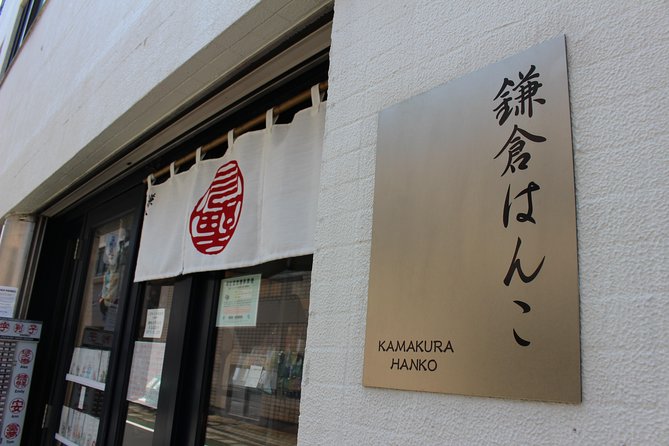
The meeting point is Kamakura Hanko, at 5-6 Onarimachi, near Kamakura Station. The shop sits south of the station and is described as less than five minutes away on foot, making it easy to add to a day that includes Kamakura’s temples and streets.
The workshop begins with the history and culture of Japanese name seals. You learn about the different styles of hanko and how they are used. The explanation also covers materials and the advantages of each, along with the role of ink and cases.
Mitsuhiro, the proprietor, guides the process and answers questions. English communication is available, and the activity is designed for international visitors who may be starting with no knowledge of Japanese scripts. You do not need to arrive knowing how to write your name in Japanese.
This early explanation is one of the strongest parts of the experience. It gives you a reason for each design decision. Instead of choosing a decorative font at random, you can ask how a character works, what a particular style suggests, and which option fits your name.
Turning your name into katakana
The core design step is writing your name in katakana. Katakana is the Japanese script commonly used for many foreign names, and the shop helps you select characters that reflect your name and personality.
You then choose the type of seal and the font. The workshop recommends a katakana style suitable for an official seal, although you can also consider other typeface options. This is where the experience becomes personal. Two people with similar names can leave with very different-looking hanko because the characters, arrangement, and font choices change the final result.
Take your time here. A seal is small, so every line matters. You may find that a straightforward design works better than one packed with too many decorative elements. Ask Mitsuhiro to explain the practical difference between the available styles before you decide.
The activity uses your name rather than assigning you a random Japanese name. That makes the final object easier to connect with, and it gives you a clear story to tell when you show it to friends.
Materials, colors, and the cost of upgrades
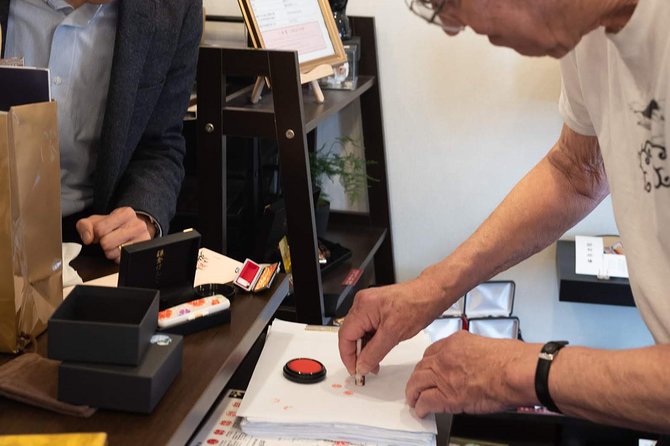
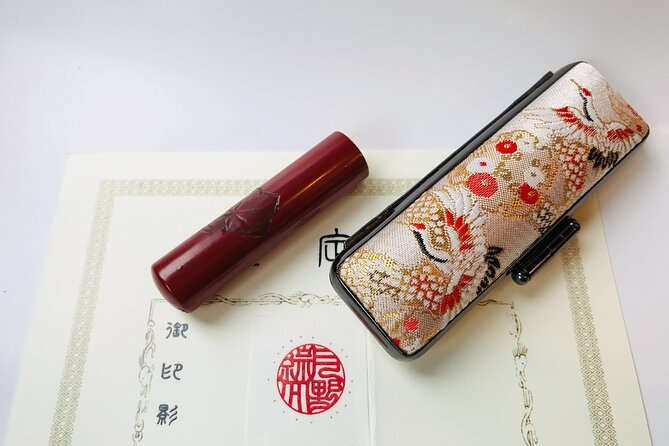
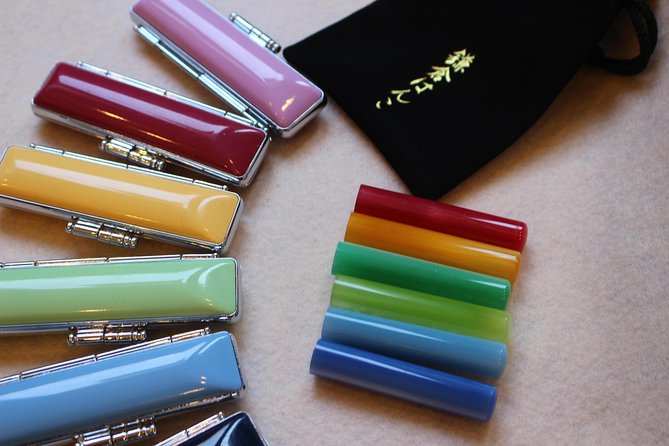
The standard package includes the engraving fee and a seal, along with an original pouch. The supplied details describe the basic material as acrylic in the design instructions, with a choice of color. The inclusions also identify Japanese boxwood, so you should confirm the exact base material at booking or during the workshop.
Additional materials can include horn, wood, or gemstone, with an extra fee. Some people choose wood for its natural feel, while others prefer the standard option to keep the price under control. The available choices give you room to make the souvenir more personal, but the upgrades are not required for a good result.
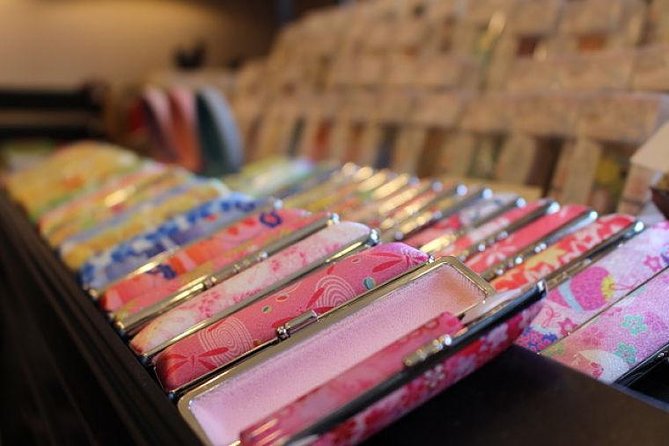
You can also pay extra for an upgraded typeface. A case is sold separately, and case styles and colors are available to choose from. Some case options include kimono fabric, according to the experience details, but you should ask about the current choices and prices on the day.
The base price is $131.65 per person. That is a considerable amount for a 45-minute activity, especially before optional materials, a case, or red ink. The value depends on what you want. If you only need a cheap souvenir, this is not the right purchase. If you want instruction, a private appointment, and an individually engraved item made in Japan, the price makes more sense.
Ask about the total cost before confirming upgrades. That keeps the choice in your hands and avoids surprises at checkout.
A few more Kamakura half-days worth comparing
- Tokyo: Kamakura & Enoshima Day Trip including Temple Tickets
★ 4.5 · 1,375 reviews - From Tokyo: Kamakura & Enoshima 1-Day Bus Tour
★ 4.5 · 189 reviews - Kamakura Historical Walking Tour with the Great Buddha
★ 5.0 · 129 reviews - Kamakura Private Tour: Temples, Nature, and the Great Buddha
★ 5.0 · 121 reviews
How the engraving is finished
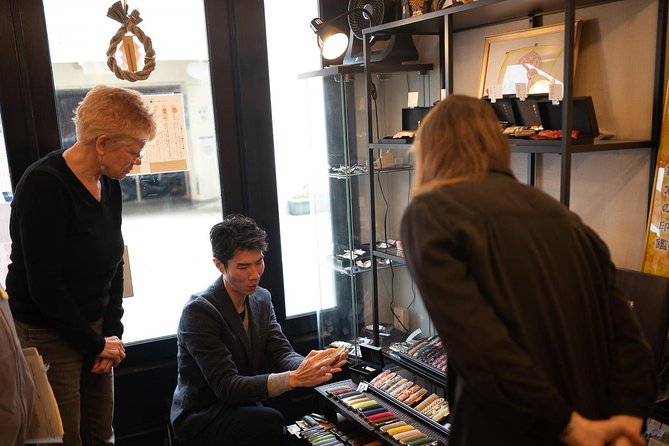
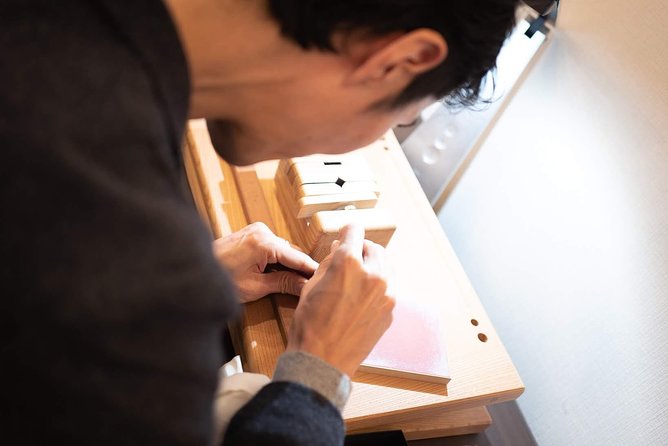
The shop combines modern precision with traditional handwork. An engraving machine makes the initial rough cut, then a craftsman adds the final touches by hand.
That method is worth understanding. The machine helps create a clean starting point and keeps the process practical for a short workshop. The hand finishing gives the piece its crafted character. You are not spending 45 minutes carving the entire seal yourself, but you are making the decisions that guide the finished object.
The seal is prepared after your morning appointment. You choose an afternoon pickup time, and the completed item is intended to be ready then. Some people have collected their seals about two hours later, while shipping is also possible if you do not want to return to the shop.
Shipping is not included. You may request delivery to your hotel or another destination, and international shipping is also mentioned as an option. Confirm the fee, delivery timing, and destination before you choose this route.
Planning the morning workshop and afternoon pickup
The experience takes about 45 minutes, but your schedule needs to allow for more than 45 minutes. The activity is available in the morning, while pickup takes place in the afternoon. That split can work well if you are spending the day in Kamakura, but it is awkward if you have a tight train schedule or plan to leave town immediately.
Arrive punctually. The shop needs time to prepare the design and engraving, and the instructions specifically ask you to be on time. A late arrival could reduce the time available for questions and choices.
A practical plan is to book the workshop early, visit another Kamakura sight afterward, have lunch, and return at your chosen pickup time. If you want a slower day, ask about shipping instead. Shipping adds a cost, but it may save you from crossing town again or changing your train plans.
The shop is near public transportation, and the activity ends at the same meeting point. It is a simple arrangement, but you should treat the pickup as part of the booking rather than an optional afterthought.
What you receive and what you do not
The included package covers the hanko, engraving in katakana, and an original pouch. The descriptions also refer to Japanese boxwood, while the material instructions describe acrylic as the standard choice. Confirm this detail if the material matters to you.
The following items are not included:
- Shipping, if you choose delivery instead of pickup
- Extra fees for horn, wood, or gemstone
- Typeface upgrades
- A separate hanko case
- Red ink
The pouch is useful for protecting the seal, but a case gives you a more finished presentation. If you intend to display the hanko or give it as a gift, budget for the case. If you simply want to use it occasionally, the included pouch may be enough.
Red ink is also separate. The seal itself is the focus of the activity, so remember that you may need to buy ink if you want to stamp it right away.
Who will get the most from this experience
I would recommend this workshop to anyone who values personal souvenirs and wants more than a quick purchase. It suits couples, friends, and families who enjoy making matching or contrasting items. Since the activity is private, your group can ask questions without worrying about keeping up with strangers.
It is also a good choice for people interested in Japanese writing. You do not need prior knowledge, and the help with katakana makes the activity approachable. Art and craft enthusiasts will appreciate the focus on materials, typefaces, carving, and finish.
The activity may be less suitable if your Kamakura visit is tightly packed. A 45-minute workshop plus later pickup can take a larger part of your day than the headline duration suggests. It is also not ideal if you want a fully hands-on carving class, because the initial engraving is done by machine and the craftsman completes the final cuts.
Families with children should consider the child’s attention span and interest in writing. The activity is designed around explanation and careful selection, not a loud or fast entertainment format.
The personal touch from a third-generation craft shop
The shop’s family connection to the craft adds weight to the visit. The proprietor is described as a third-generation maker, and that background helps explain the careful, measured presentation of the work.
The tone is another plus. You are offered choices, but the process is not built around pressuring you into expensive upgrades. You can ask about horn, wood, gemstone, cases, and fonts, then decide how much you want to spend.
That matters because the listed price is only the starting point. A calm explanation lets you choose an attractive base seal without feeling that the basic version is somehow inadequate. If you want a more luxurious material or a special case, you can add it because it suits you, not because the workshop depends on it.
The finished seal also gives you a lasting link to Kamakura. It is small enough to pack easily, personal enough to remember, and connected to a real Japanese tradition rather than a generic logo.
Booking, cancellation, and practical details
Confirmation is provided when you book, and mobile tickets are accepted. The activity is near public transportation, and most people can take part. It is a private activity for your group only.
Free cancellation is available up to 24 hours before the local start time. Cancellations made less than 24 hours ahead are not refunded, and changes inside that period are not accepted.
The experience is often booked well ahead, with an average booking time of about 59 days. That does not guarantee that every date sells out, but it is a useful warning if your Kamakura plans are fixed. Book early if the morning time and afternoon pickup matter to you.
Should you book the Kamakura hanko workshop?
Book it if you want a personal, useful souvenir and are willing to give the activity a full morning appointment plus an afternoon collection window. The best parts are the private setting, the clear explanation of hanko culture, the help with katakana, and the hand-finished result.
Skip it if you only want a low-cost keepsake, dislike making several design choices, or cannot return later for pickup. Before paying, confirm the standard material, check the cost of upgrades, and decide whether pickup or shipping fits your schedule.
For the right visitor, this is a thoughtful Kamakura purchase. You leave with your own name in Japanese, a story about how it was made, and a small object that feels personal long after the trip ends.
FAQ
How long does the hanko activity take?
The workshop lasts approximately 45 minutes.
Where does the experience take place?
It takes place at Kamakura Hanko, at 5-6 Onarimachi, Kamakura, Kanagawa 248-0012, Japan.
How far is the shop from Kamakura Station?
The shop is described as about a five-minute walk south of Kamakura Station.
Is the activity private?
Yes. Only your group participates in the activity.
What language is used for the name design?
Your name is written in katakana, and the shop helps you select suitable Japanese characters and a typeface.
What is included in the standard price?
The package includes the hanko, katakana engraving, and an original pouch.
Is a hanko case included?
No. A hanko case is sold separately.
Are upgraded materials available?
Yes. Horn, wood, and gemstone materials are available for an additional fee. Typeface upgrades also cost extra.
Can the finished seal be shipped?
Yes. Shipping is possible if you request it instead of collecting the seal, but the shipping cost is not included.
When can I collect the finished hanko?
You choose an afternoon pickup time on the day of the experience. The workshop itself is available in the morning.
Can I cancel for a full refund?
Yes, if you cancel at least 24 hours before the experience start time. Cancellations and changes made less than 24 hours ahead are not accepted for a refund.
Just added around Kamakura
- First time in Kamakura? Enjoy a Tour of All Must-sees!★ 5.0 · 15 reviews
- Kamakura Tours Half Day or Full Day Tours with a local guide.★ 5.0 · 12 reviews
- Buddha, Bamboo & Zen – Bespoke Kamakura Private Walking Tours★ 5.0 · 25 reviews
- Exciting Kamakura – One Day Tour from Tokyo★ 5.0 · 40 reviews
- Kamakura Bamboo Forest and Great Buddha Private Tour★ 5.0 · 12 reviews
- Tokyo Yokohama Night View Tour With Kamakura And Enoshima★ 3.5 · 14 reviews
- Tokyo: Day Trip to Kamakura in Spanish – Spanish★ 4.9 · 22 reviews
- Kamakura Temples Private Guided Tour from Tokyo★ 4.8 · 21 reviews
Traditional Crafts, compared.
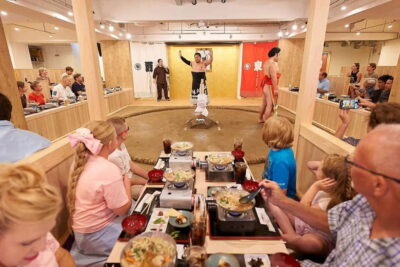
Tokyo Sumo Experience: Chanko & Mochi with a Former Pro
Our verdict →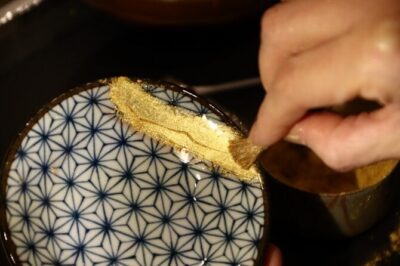
Kintsugi Experience: Art of Golden Joinery in Tokyo
Our verdict →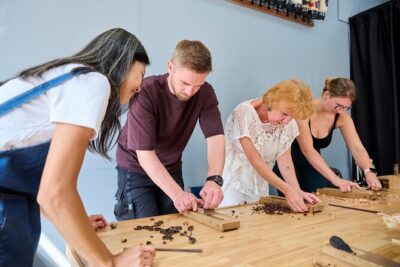

Matcha Making Experience with Mochi Sweets in Asakusa
Our verdict →
Authentic knife making experience at a blacksmith in Kyoto
Our verdict →
Roketsu dyeing experience: M course Roketsu Dyeing Experience
Our verdict →Browse the lists this tour appears in