
Reviewed · KAMAKURA TOURS
Tokyo Yokohama Night View Tour With Kamakura And Enoshima
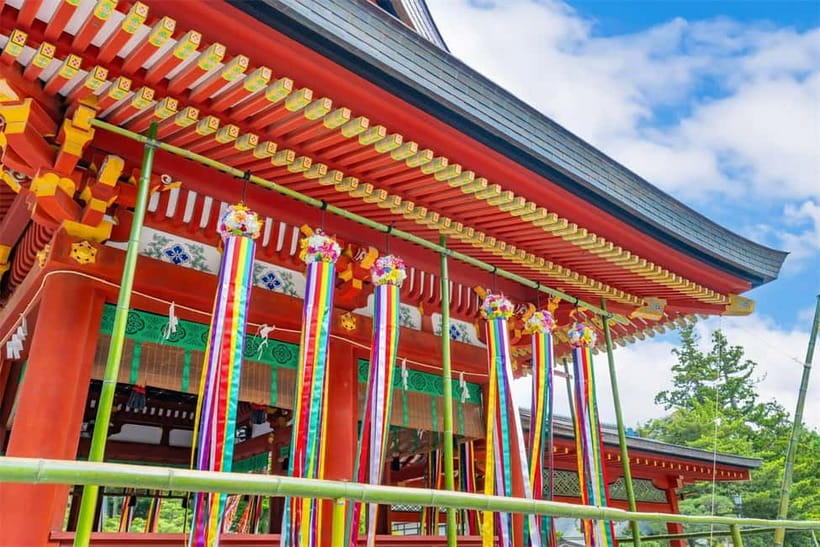
The best part of this day is the Enoden train ride, a short, old-fashioned trip that links sea views, quiet homes, and Kamakura’s famous Slam Dunk crossing. I also like the mix of places: Enoshima’s myths and shrines feel very different from samurai-era Kamakura, while Yokohama brings a modern harbor finish.
You should know what you are buying, though. This is a long day with a lot of road time, and the Yokohama portion can feel short after the morning’s sightseeing. The guide can make a major difference: guides such as KO have been praised for being caring and informative, while some smaller groups have received only basic commentary.
Key points to know
- The Slam Dunk crossing is a real photo stop: You can visit the railroad crossing near Kamakura Koko-Mae Station seen in the anime.
- Enoshima combines shrines and legend: The island’s five-headed dragon story adds a fun layer to the visit.
- Your Enoden fare is included: The train ride is one of the day’s most memorable experiences.
- Kamakura’s main sights are tightly packed into one visit: You get Tsurugaoka Hachimangu and Komachi Street, but not a slow, open-ended day.
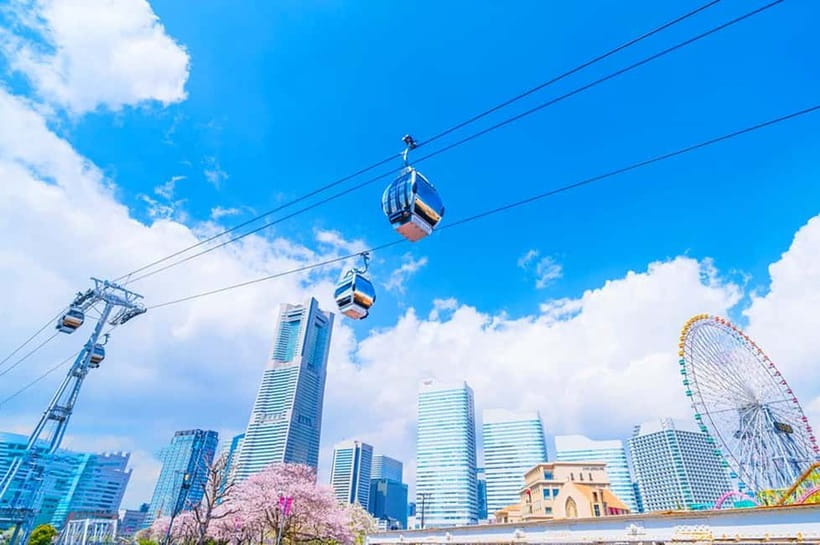
- Yokohama time is flexible but self-directed: You can choose the Red Brick Warehouse, the Air Cabin, or the giant ferris wheel, with extra admission paid separately.
- Expect a full 10 hours: Bring good walking shoes, water, sunscreen, and some cash.
Why this Tokyo day trip works
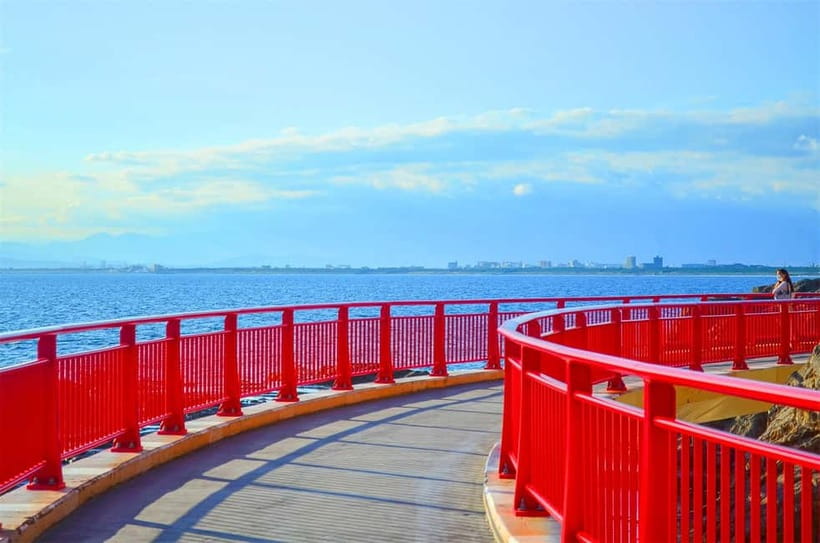
This tour gives you three very different sides of the Kanto region in one outing. Enoshima is a small coastal island with shrines and sea air. Kamakura offers major religious sites, samurai connections, and old shopping lanes. Yokohama closes the day with harbor lights and modern city views.
At $82 per person, the price is reasonable if you want one organized day covering all three areas. Your fee includes the driver, guide, pickup and return at the designated Tokyo point, and the Enoden train ride. Meals, personal purchases, the Yokohama Air Cabin, and the ferris wheel cost extra.
The tradeoff is time. You leave Tokyo at 11:00 a.m. and return around 10:00 p.m., with bus rides of roughly 90 minutes in the morning, 40 minutes after Kamakura’s train stops, 75 minutes toward Yokohama, and another hour back to Tokyo. Traffic and holiday crowds can stretch the return even later.
I would choose this tour for a first look at the coast south of Tokyo, especially if you want transportation arranged for you. I would not choose it if you prefer spending a whole day in one town or want long, quiet visits at each shrine.
A few more Kamakura half-days worth comparing
- Tokyo: Kamakura & Enoshima Day Trip including Temple Tickets
★ 4.5 · 1,375 reviews - From Tokyo: Kamakura & Enoshima 1-Day Bus Tour
★ 4.5 · 189 reviews - Kamakura Historical Walking Tour with the Great Buddha
★ 5.0 · 129 reviews
Starting near Tokyo MODE GAKUEN
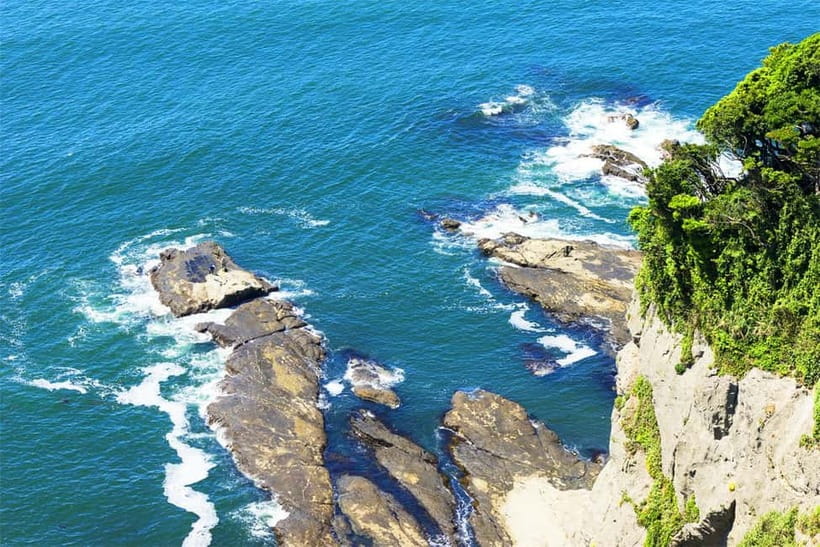
The meeting point is Tokyo MODE GAKUEN at 1-7-3 Nishi-Shinjuku, Shinjuku-ku. Departure is scheduled for 11:00 a.m. You should arrive ready for a full day, since the group heads out by coach and does not return until late evening.
The vehicle depends on group size, so you cannot select a particular bus or van in advance. If fewer than 13 people join, the guide may also drive, and the commentary may be limited to basic explanations. In a larger group, you may get fuller guidance, but the exact experience depends on the assigned guide.
English, Japanese, and Chinese service is available. You receive the next day’s pickup time, guide details, and vehicle plate information by email before 9:00 p.m. Japan time. Keep an eye on your inbox, especially if you are staying in a large hotel or have a busy Tokyo schedule.
Enoshima, where sea views meet old legends
The first main stop is Enoshima Island, with about 100 minutes for photos and sightseeing. A bridge connects the island to the mainland, and the approach gives you a clear sense of its compact coastal setting.
Enoshima Shrine dates back to 552 AD and is linked to prayers for good luck, creativity, and wealth. The island’s best-known story tells of a five-headed dragon that once troubled the area until a goddess appeared and created Enoshima. It is a playful legend, but it gives the shrine visit more character than a simple walk through a religious site.
Look for the Money-Washing Water Dragon Shrine. Local belief says that rinsing coins there can bring prosperity. Treat it as a small ritual rather than a promise, and keep a few coins handy if you want to take part.
The 100-minute stop is enough for a focused visit, photos, and some shrine time. It is not enough for an unhurried exploration of every path, shop, and viewpoint on the island. You may need to choose between lingering at the shrine area and simply enjoying the coast.
Riding the Enoden through the Shonan Coast
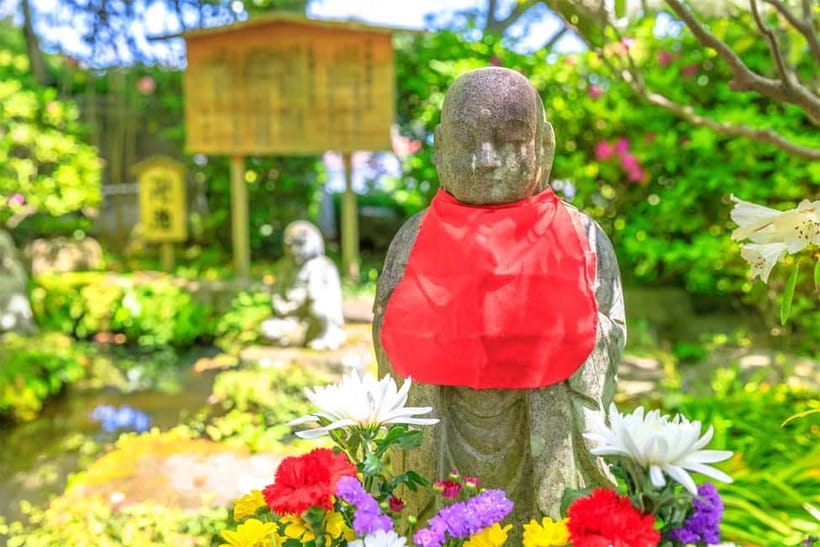
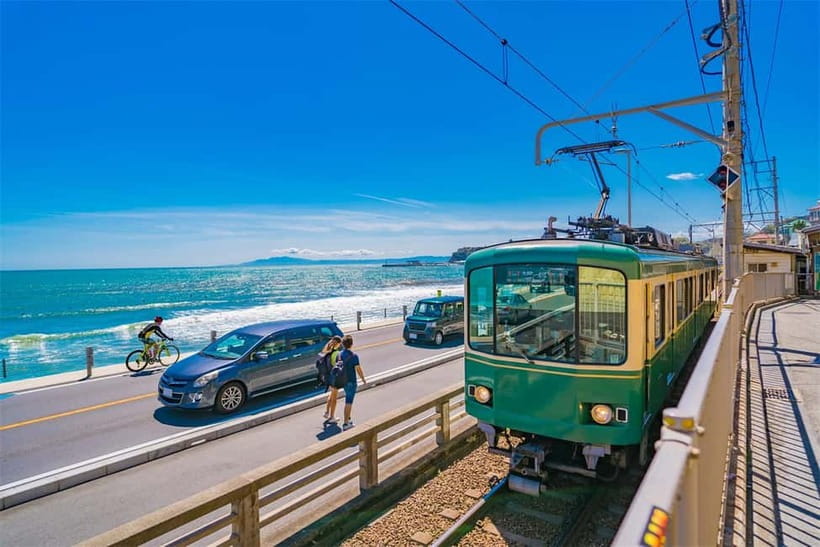
The included Enoden ride is one of the strongest reasons to book this trip. Rather than staying on the coach, you board the local train and ride through the area for about 20 minutes, with a panoramic section of roughly 15 minutes noted in the schedule.
The Enoden has a nostalgic feel. It runs close to the coast and passes older homes and narrow streets, giving you a quick look at everyday Kamakura that a highway ride cannot provide. The train is not a long scenic railway journey, but its short length works well in a packed day.
This is also the practical link between Enoshima and Kamakura. You avoid returning to the coach immediately and get a pleasant change of pace. Keep your camera ready, but do not expect every view to be perfectly clear from a moving carriage.
Same trip, a completely different kind of day:
- Kamakura Private Tour: Temples, Nature, and the Great Buddha
★ 5.0 · 121 reviews - Kamakura Walking Tour – The City of Shogun
★ 5.0 · 100 reviews - Kamakura 8 hr Private Walking Tour with Licensed Guide from Tokyo
★ 5.0 · 80 reviews - Tokyo: Kamakura & Enoshima Day Tour with Pickup & Train Ride
★ 4.1 · 61 reviews
The Slam Dunk crossing at Kamakura Koko-Mae
At Kamakura Koko-Mae Station, you get free time for sightseeing and photos. The station is famous because the nearby railroad crossing appears in Slam Dunk, where Hanamichi Sakuragi waves to Haruko.
For fans of the anime, this can be the emotional high point of the tour. The setting is still a working crossing, so use care around the road and tracks and follow your guide’s timing. For anyone unfamiliar with the show, the stop is still a pleasant coastal photo opportunity, but its importance comes mainly from the anime connection.
The schedule allows about 20 minutes around Kamakura High School and the station area. That is enough for the classic photo, but not for a long walk through the neighborhood. This is a quick, focused stop rather than a broad Kamakura tour.
Tsurugaoka Hachimangu and the samurai heart of Kamakura
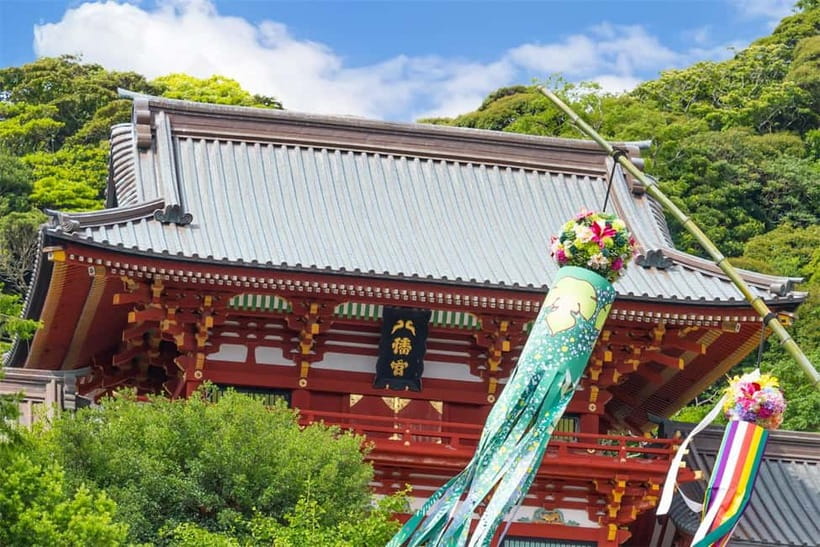
After the train section, the coach takes you to Tsurugaoka Hachimangu Shrine. You have about 80 minutes for a guided visit and photos, which gives this important site more breathing room than the Slam Dunk stop.
Tsurugaoka Hachimangu is one of Japan’s Three Great Hachiman Shrines and is closely tied to samurai history. Its broad approach and formal shrine grounds create a very different mood from Enoshima’s island setting. This is the place where a guide’s explanation matters most, since the buildings and rituals make more sense when you understand their role in Kamakura’s past.
You should wear shoes suited to walking and outdoor paths. The tour involves a fair amount of time on foot, and the day includes several transitions between stations, shrine grounds, streets, and coach stops.
The visit is well chosen for a first introduction to Kamakura, though it does not cover every major temple in town. If you have already visited Kamakura and want smaller temples or longer time at the Great Buddha, this schedule may feel limited.
Komachi Street for snacks and small purchases
Komachi Street gives you a break after the shrine. This lively lane runs toward Kamakura Station and is lined with souvenir shops, snacks, and small places to browse.
You have free time here rather than a tightly directed tasting program. That is useful because you can decide how to spend it. Try a local snack, look for a small souvenir, or simply walk the lane and watch the flow of people.
Bring some cash. Certain places may not accept credit cards, and the tour specifically advises having money on hand. Meals are not included, so budget separately for food and drinks during the day.
Komachi Street is also where the schedule can feel compressed. Between shrine time, shopping, and the next coach departure, you may need to make quick choices. I would avoid planning a full meal here unless you know the available time clearly.
Yokohama after sunset
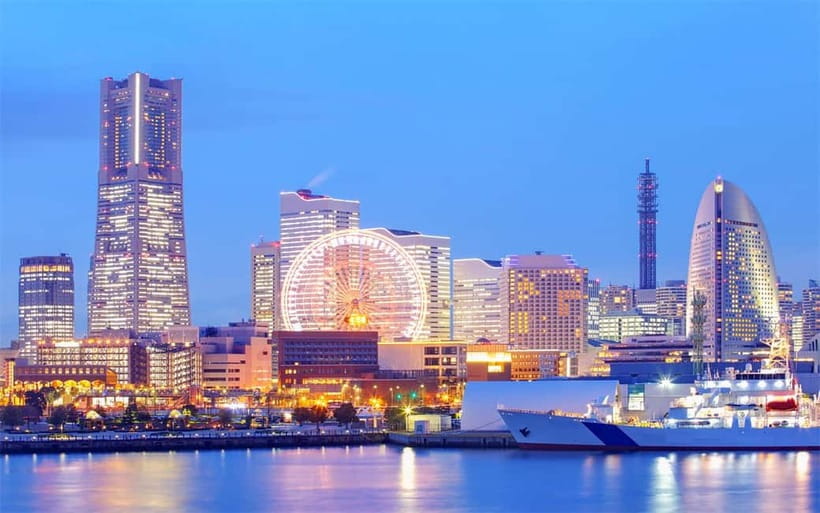
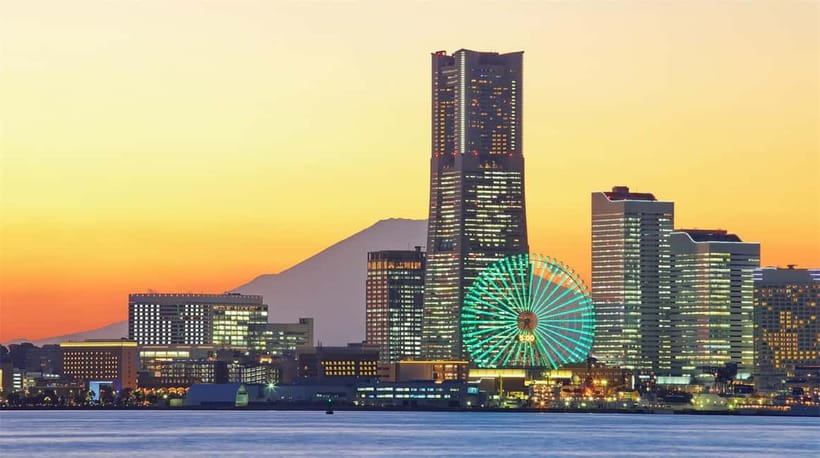
The final major section gives you about two and a half hours in Yokohama. This is the most flexible part of the day, with sightseeing and free time rather than one fixed attraction program.
Yokohama works well as a finale because the city shifts the mood from historic shrines to harbor lights, modern streets, and evening views. You can use your time in several ways:
- Ride the Yokohama Air Cabin from Sakuragicho Station toward the Red Brick Warehouse.
- Take the large ferris wheel for a wide night view.
- Visit the Yokohama Red Brick Warehouse for shops, cafes, and seasonal events.
- Walk near the harbor and enjoy the city at your own pace.
The Air Cabin and ferris wheel are not included. You pay admission separately, and you may need to decide whether the cost is worthwhile after already paying for the tour. The Red Brick Warehouse itself is the easier choice if you want browsing, food, and photos without adding another ticket.
A key limitation is that two and a half hours can disappear quickly. If you ride the Air Cabin, visit the warehouse, and queue for the ferris wheel, little time remains for simply walking. One practical plan is to choose one paid attraction and leave the rest of your time for the waterfront.
The tour description promises sunset and night views, but exact light conditions depend on the season, traffic, and the pace of the earlier stops. Bad weather or holiday congestion can lead to changes, less time at attractions, or a later return.
How much driving should you expect?
This is not a rail-based day trip from start to finish. The Enoden ride is memorable, but much of the day takes place in a shared coach or van.
The road sections add up to several hours. That can be a relief if you do not want to navigate Japanese trains and transfers, especially when visiting Enoshima and Kamakura for the first time. It also means you spend less time walking between distant sights.
The average score is 3.5 from 14 bookings, and the main weakness is clear: some people found the day too rushed and felt there was too much time in the vehicle. Others found the day smooth and well arranged, with the guide making a strong difference. One particularly useful detail is that group size may feel comfortable, but a smaller group can mean the guide is also driving and offers only basic commentary.
I would treat the coach as the price of convenience. If you want maximum time at each stop, use public transport and split the destinations across separate days. If you want to see all three areas without handling the planning yourself, the driving is easier to accept.
What to bring and how to prepare
Wear comfortable shoes. You will walk around Enoshima, the train stations, Kamakura’s shrine grounds, Komachi Street, and Yokohama.
Bring water, sunscreen, and a camera. Food is not allowed inside the vehicle, so eat during designated breaks rather than packing a meal for the coach. Cash is useful for snacks, shrine-related purchases, and places where cards may not be accepted.
The tour is not suitable for wheelchair users. It is also not ideal for anyone who needs a relaxed pace, dislikes long road journeys, or wants guaranteed time at every stop.
Free cancellation is available up to 24 hours before departure, and you can reserve now while paying later. Those policies help if your Tokyo plans are still shifting, but they do not change the basic nature of the day: this is a full shared tour with a fixed route and several short visits.
Who should book this Enoshima and Yokohama tour?
Book it if you want a broad introduction to the coastal towns south of Tokyo in one day. It suits first-time visitors, anime fans, people interested in shrines and samurai-era Kamakura, and anyone who prefers a guide and arranged transport.
The tour is especially appealing if the Slam Dunk crossing matters to you. The Enoden ride is another real highlight, since it adds local atmosphere instead of keeping you on the coach all day.
Think twice if Yokohama is your main goal. You may feel shortchanged after spending the morning in Enoshima and Kamakura. A separate Yokohama evening would give you more time for the Air Cabin, ferris wheel, Red Brick Warehouse, and harbor walk.
I would also ask about the guide style when booking if possible. Guides such as KO have been praised for warm, informative service, while the tour can be much less satisfying when the guide is mainly occupied with driving. At $82, the tour offers solid value for transport and variety, but the value depends heavily on how much you want convenience over free time.
FAQ
Where does the tour begin and end?
The meeting point is Tokyo MODE GAKUEN at 1-7-3 Nishi-Shinjuku, Shinjuku-ku, Tokyo. The tour returns to the same location.
What time does the tour leave?
The scheduled departure time is 11:00 a.m. The total duration is about 10 hours.
Which languages are available?
Live guide service is available in English, Japanese, and Chinese.
Is the Enoden train ride included?
Yes. Admission for the Enoden train ride is included in the tour price.
Are the Air Cabin and ferris wheel included?
No. The Yokohama Air Cabin and ferris wheel require separate payment, as do meals and personal purchases.
What happens if the weather or traffic is bad?
Bad weather, traffic, or holiday congestion may cause a later return, shorter visits, itinerary changes, or cancellations. Keep your schedule open after the tour.
Just added around Kamakura
- First time in Kamakura? Enjoy a Tour of All Must-sees!★ 5.0 · 15 reviews
- Buddha, Bamboo & Zen – Bespoke Kamakura Private Walking Tours★ 5.0 · 25 reviews
- Your Own HANKO Name Seal Activity in Kamakura.★ 5.0 · 24 reviews
- Kamakura Tours Half Day or Full Day Tours with a local guide.★ 5.0 · 12 reviews
- Exciting Kamakura – One Day Tour from Tokyo★ 5.0 · 40 reviews
- Kamakura Bamboo Forest and Great Buddha Private Tour★ 5.0 · 12 reviews
- Tokyo: Day Trip to Kamakura in Spanish – Spanish★ 4.9 · 22 reviews
- Kamakura Temples Private Guided Tour from Tokyo★ 4.8 · 21 reviews
Kamakura Tours, compared.

Kamakura & Enoshima Day Trip including Temple Tickets
Our verdict →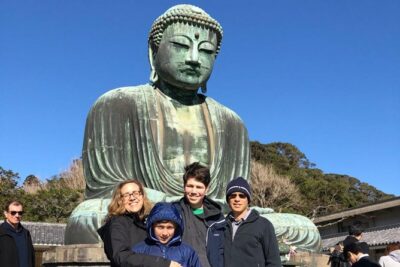
Kamakura Historical Walking Tour with the Great Buddha
Our verdict →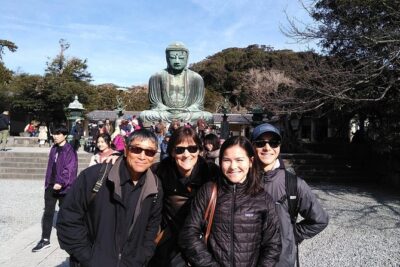
Kamakura 8 hr Private Walking Tour with Licensed Guide from Tokyo
Our verdict →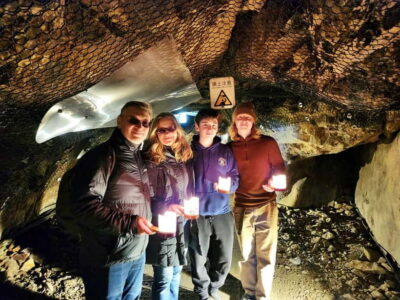
Kamakura Private & Customizable Tour – All-in-One Experience
Our verdict →
Browse the lists this tour appears in