
Reviewed · HISTORICAL TOURS
Kamakura Walking Tour – The City of Shogun
Kamakura packs centuries of Japan into a walkable half-day: a samurai-era shrine, a crowded food street, a giant bronze Buddha, and a hillside temple with coastal views. This tour gives you that sweep without leaving you to guess which gate, statue, or ritual matters.
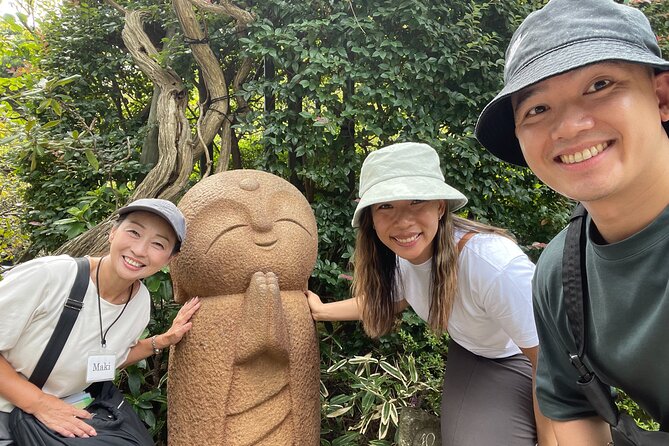
I like the small maximum group of 10, which gives guides such as Miyu, Midori, and Maki room to answer questions and help with photos. I also like the route’s useful finish at Hase Station, leaving you near more sights, cafés, and the coast instead of sending you back to the starting point.
The main consideration is cost beyond the $35 tour price. Transportation and admission fees add about 1,200 yen, and the route includes a fair amount of walking and standing. If you want a slow temple visit or a full day at each major sight, this compact tour may feel brisk.
Key points to know before you book
- Four major stops in about three and a half hours: You see Tsurugaoka Hachimangu, Komachi Street, the Great Buddha, and Hasedera in one clear route.
- Guides make the difference: Miyu, Midori, and Maki are praised for explaining Buddhist temples, Shinto shrines, customs, and local history in an easy-to-follow way.
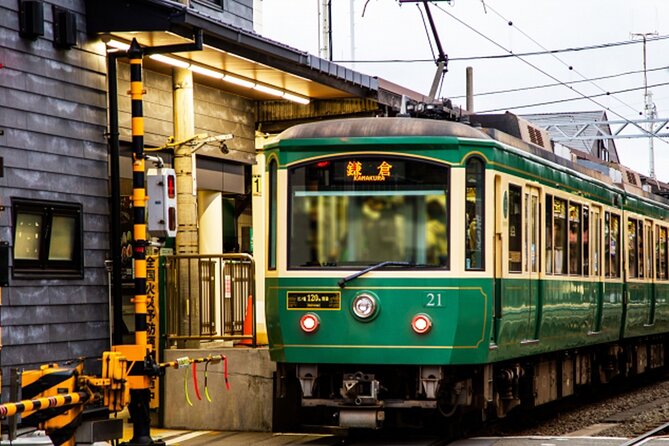
- The Enoden adds local flavor: The route includes riding this small coastal railway, with transportation costs paid separately.
- A useful small-group format: The group is capped at 10 people, making it easier to ask questions and stay connected with your guide.
- A strong first visit to Kamakura: You get the main landmarks, cultural context, and suggestions for what to do after the tour.
- Plan for extra fees: The listed $35 price covers the guide, while admission and transportation are not included and total about 1,200 yen.
Why this Kamakura route works well
Kamakura is easy to reach from Tokyo, but its sights are spread across several neighborhoods. A first-time visit can turn into a hunt for train platforms, temple entrances, and explanations of customs that are not always obvious.
This tour solves that problem with a simple westward route. You meet at the Kamakura City Tourist Information Center at 10:00 a.m., visit the city’s major religious sites, and finish at Hase Station. The route has a natural rhythm: shrine first, shopping street next, then the Great Buddha and Hasedera.
I find that order useful because it introduces Kamakura through its political and religious past before moving into its best-known statues and temple gardens. You are not just collecting photos. You get a basic map of how the city fits together.
The guide is central to the experience. Miyu is praised for answering questions and suggesting places to see later in the day. Midori is described as especially good at showing fun spots between the main sights and taking photos. Maki is praised for making Buddhist and Shinto traditions easy to understand, including how modern Japanese people continue those customs.
The tour is also family-friendly in tone. One account specifically describes children enjoying the route, while another calls the experience relaxed and fun. Still, the group walks between sites and uses public transportation, so comfortable shoes matter.
More Walking Tours in Kamakura
- Kamakura Historical Walking Tour with the Great Buddha
★ 5.0 · 129 reviews - Kamakura 8 hr Private Walking Tour with Licensed Guide from Tokyo
★ 5.0 · 80 reviews - Kamakura: Private Guided Walking Tour with Local Guide
★ 4.8 · 60 reviews
Tsurugaoka Hachimangu, Kamakura’s grand starting point
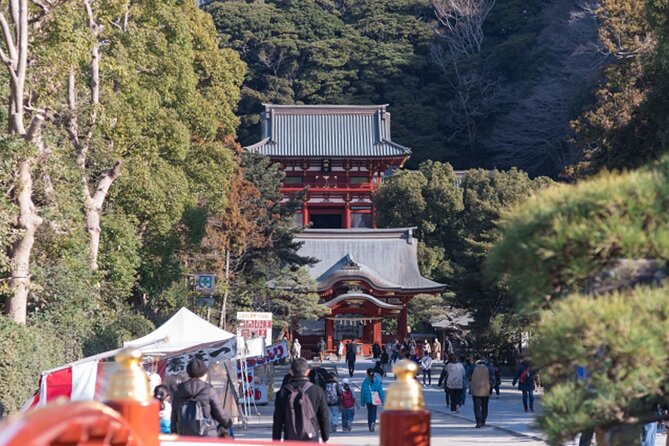
Your first stop is Tsurugaoka Hachimangu, Kamakura’s major Shinto shrine. Minamoto no Yoritomo founded it in the 12th century and dedicated it to Hachiman, a Shinto deity connected with warriors and the Minamoto clan.
That background gives the rest of the tour a clear starting point. Kamakura was not simply a seaside town with attractive temples. It became the center of Japan’s shogunate government, and this shrine helped link political authority, military power, and religious practice.
You have about 30 minutes here. Admission is free, which is helpful because the later stops charge entrance fees. Your guide can explain how to approach a Shinto shrine, what the gates and worship areas mean, and how present-day visitors carry out familiar rituals.
The visit is not designed as an exhaustive tour of every building. Thirty minutes lets you take in the main approach and key details, but it will feel short if you want to linger, photograph every structure, or explore every side path.
That is the tradeoff throughout this experience. You receive context and a strong overview, not unlimited time at each site. For a first look at Kamakura, I think the balance works. If Tsurugaoka Hachimangu is your main reason for visiting, return later after the guided walk.
Komachi Street, snacks, and a change of pace
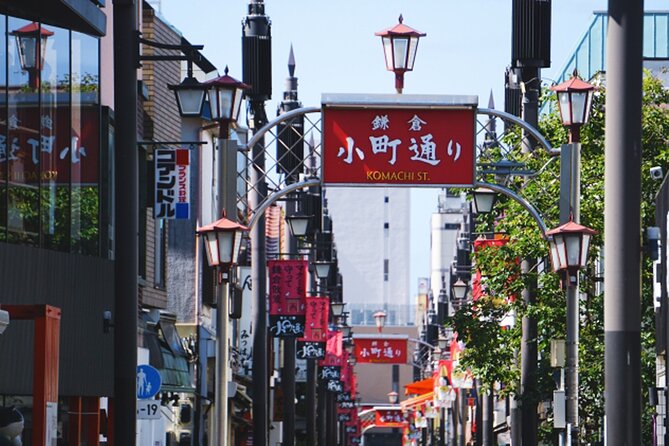
From the shrine area, the tour moves to Komachi Street. This pedestrian shopping road is one of Kamakura’s best-known places for food, souvenirs, and quick local tastes.
The scheduled visit lasts about 20 minutes. That is enough to see the street, learn where it fits into the city, and perhaps choose something to eat, but it is not a dedicated food tour. The description promises local cuisine and food suggestions, yet the supplied route gives only a short stop here.
I would treat this as a sampler. Look for traditional snacks, small sweets, and shops selling local goods, then make a note of anything you want to revisit after the tour. Your guide may also point out less obvious places to eat, and the experience is designed to leave you with ideas for the rest of the day.
This short stop also breaks up the temple visits. Kamakura can become a procession of gates, statues, and incense if you see too many religious sites in a row. Komachi Street brings you back to everyday town life before the route continues.
Because the street is popular, it can feel crowded, especially during busy periods. Stay close enough to hear your guide and keep your schedule in mind. The group still has two major sights ahead.
Riding the Enoden to the Great Buddha
The route includes transportation, and the experience specifically features riding the Enoden train. This small railway is part of the pleasure of moving around Kamakura. It links the central city with Hase and the coast, and it gives the tour a change of scenery between walking stops.
Transportation is not included in the $35 price. The stated combined amount for transportation and admission is about 1,200 yen, so bring enough yen or be prepared to pay those costs separately. The exact mix depends on the route and entrances used.
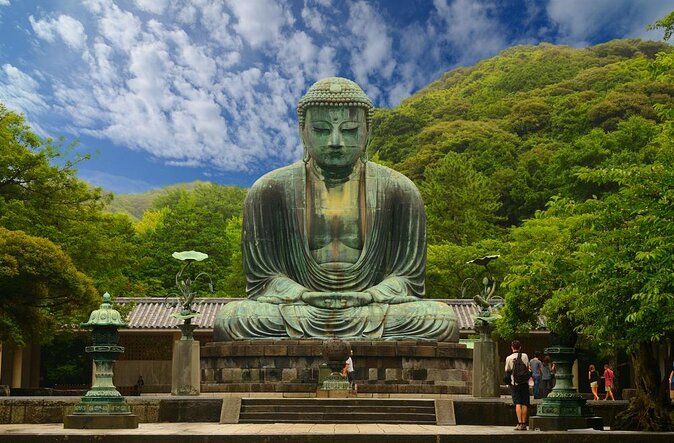
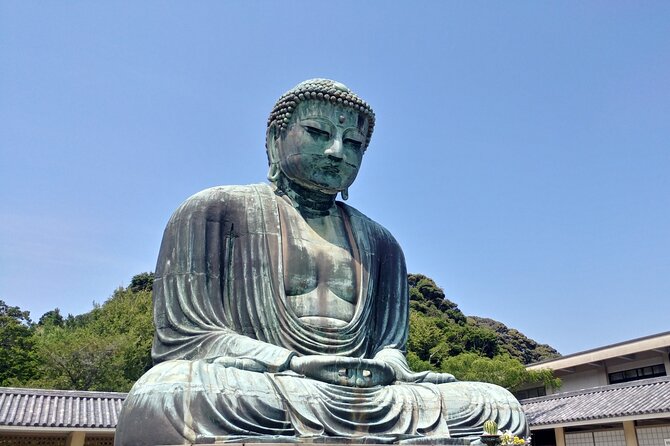
At Kotoku-in, you meet Kamakura’s most famous image: the Great Buddha. The bronze statue is about 13.35 meters, or 44 feet, tall, and dates from the 13th century. Admission is not free, and it is part of the additional cost.
You have around 30 minutes at the site. That gives you time to take in the statue from the front, notice its scale against the surrounding grounds, and hear why it matters. The guide can also help explain the Buddhist setting and how this image differs from the Shinto shrine visited earlier.
The Great Buddha is visually simple, which is part of its power. It does not need a complicated interior or a long explanation to make an impression. The useful part of having a guide here is learning how the statue fits into Kamakura’s religious identity rather than treating it as a giant bronze photo stop.
One practical limitation is time. You probably will not have a long, quiet meditation here. The stop is built for orientation and appreciation before moving to Hasedera.
More Historical Tours in Kamakura:
- World Heritage Shirakawa-go and Experience Tours from Kanazawa
★ 5.0 · 4,049 reviews - Tokyo: Imperial Palace and Shogun Historical Walking Tour
★ 5.0 · 2,251 reviews - World Heritage Kyoto & Nara Uji Authentic Matcha Experience
★ 5.0 · 1,573 reviews - Kyoto Gion: 2-Hour Geisha Culture & History Walking Tour
★ 5.0 · 1,186 reviews
Hasedera and the best views of the tour
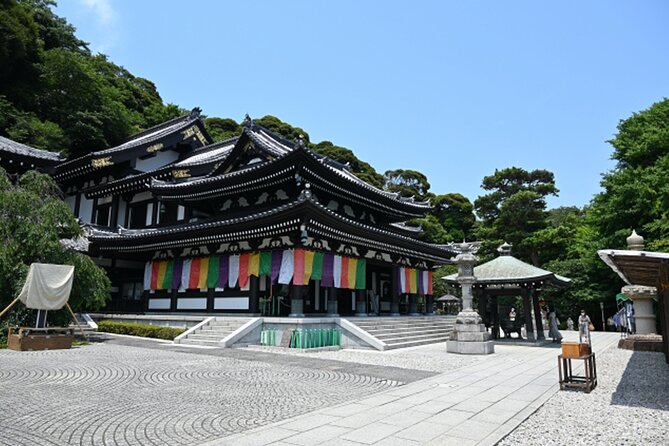
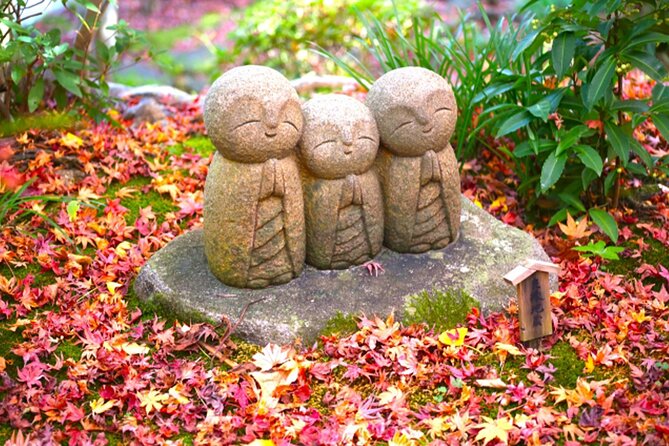
Hasedera, also called Hase Kannon Temple, receives the longest scheduled stop at about 40 minutes. It is known for peaceful gardens, a tall wooden statue of Kannon, and views toward the coast and the city.
The longer visit makes sense. Hasedera has more than one point of interest, and your guide can explain the temple’s Buddhist role while you move through its grounds. You may find the gardens especially welcome after the noise of Komachi Street and the steady movement between sites.
The description also highlights artistic treasures and coastal views. Hasedera brings those elements together better than any other stop on the route. You can appreciate the religious art, the hillside setting, and the view without needing to plan separate transport between them.
The hillside layout may require stairs or sloped walking, although the available information does not give a detailed accessibility assessment. Anyone who finds prolonged walking difficult should consider asking the provider for current route details before booking.
Hasedera is also where the tour’s cultural explanations can feel most useful. Shinto shrine customs and Buddhist temple practices are not identical, yet a short visit to both can blur together without guidance. A clear explanation helps you notice the difference in architecture, ritual, and purpose.
The tour ends at Hase Station, close to Hasedera and the Great Buddha area. That is a practical finish. You can continue exploring Hase, seek out coastal views, or use the Enoden to move elsewhere without retracing the morning’s route.
What the guides add to the experience
The strongest feature here is not a special ticket or a rare access arrangement. It is the guide’s ability to turn a sequence of famous places into a story.
Miyu is praised for being engaging, answering questions, and offering ideas for the afternoon. That matters because the tour ends early enough for you to continue independently. A guide who gives useful next steps can save you from wasting the rest of your day deciding what to do.
Midori is described as warm, well informed, and good with families. Her route includes extra points of interest between the headline stops, along with photo help. If you care about pictures, a guide who knows where to pause can add real value.
Maki receives praise for her energy, kindness, personal approach, and clear explanations of temples, shrines, and modern Japanese customs. Her strength appears to be connection, not just information. That can help children and adults stay interested during historical explanations.
The actual guide depends on the date. You should not assume you will receive a particular person, but these names show the kind of guiding style to expect: friendly, conversational, and focused on making history understandable.
Is $35 a fair price?
At $35 per person, the tour is reasonably priced for a 3.5-hour guided route, especially with a group limit of 10. The guide fee is included, while admission and transportation cost about 1,200 yen extra.
The value comes from structure and explanation. You could visit these places independently, but you would need to plan the route, work out the Enoden connection, pay each admission, and learn the religious and historical background on your own.
The tour does not include lunch or a full food experience. Komachi Street gives you a chance to browse and choose food independently, but you should budget extra if local dishes or snacks are part of your plan.
I would book this for a first Kamakura visit, particularly if you have only one day in the city. Repeat visitors who already know the temples may prefer a slower, more focused outing. You could also spend more time at Tsurugaoka Hachimangu or Hasedera without a schedule.
Timing, group size, and what to bring
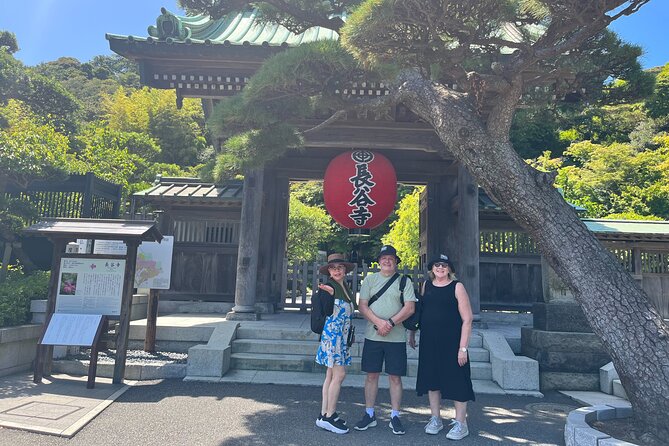
The meeting time is 10:00 a.m. at the Kamakura City Tourist Information Center. The tour ends at Hase Station, and the total duration is approximately three hours and 30 minutes.
A mobile ticket makes the booking side simple. Confirmation is provided at booking, and the activity is near public transportation. Service animals are allowed, and most people can participate, though the route’s walking and hillside temple areas are worth considering.
The maximum group size is 10. That is small enough for direct questions, but it is still a group walk, not a private tour. If you want to stop for long photographs or spend extra time at one shrine, the fixed schedule may limit you.
Bring comfortable walking shoes, water, and money for about 1,200 yen in transportation and admissions. You may also want extra time after the tour for food, shopping, or more sightseeing around Hase.
The experience requires good weather. If poor weather cancels the tour, you are offered another date or a full refund. You can also cancel for a full refund up to 24 hours before the start time. Changes or cancellations made less than 24 hours before the start are not accepted.
Who should book this Kamakura walking tour?
I would recommend it to first-time visitors who want the main Kamakura sights explained in plain language. It suits people who prefer a guided overview before exploring alone, families who benefit from a friendly pace, and anyone unsure how to connect the central shrine area with Hase.
It is also useful if you want a practical introduction to both Shinto and Buddhism. Tsurugaoka Hachimangu and Hasedera are not interchangeable, and the Great Buddha adds a memorable focal point between them.
I would be more cautious if you dislike group schedules, have difficulty walking between sites, or want a food-focused tour. The route includes food opportunities but does not replace lunch. It also covers four major stops in a limited time, so every site receives an introduction rather than a long, unhurried visit.
Should you book it?
Book this tour if you want a well-organized first look at Kamakura, with the Great Buddha, Hasedera, Tsurugaoka Hachimangu, Komachi Street, and the Enoden connected in one morning. The guides are the main reason to choose it, especially if you value clear explanations, family-friendly conversation, photo help, and suggestions for the rest of your day.
Skip it if you already know Kamakura well or want to spend an entire morning at one temple. For most first-time visitors, though, the $35 guide fee is a fair exchange for a manageable route, local context, and a finish at Hase Station that leaves the afternoon open.
FAQ
Where does the Kamakura walking tour start?
The tour starts at the Kamakura City Tourist Information Center, 1-chōme-1-1 Komachi, Kamakura, Kanagawa 248-0006, Japan.
What time does the tour begin?
The scheduled start time is 10:00 a.m.
Where does the tour end?
The tour ends at Hase Station, 2 Chome-14 Hase, Kamakura, Kanagawa 248-0016, Japan.
How long does the tour last?
The tour lasts approximately three hours and 30 minutes.
What sights are included?
The route visits Tsurugaoka Hachimangu Shrine, Komachi Street, Kotoku-in and the Kamakura Great Buddha, and Hasedera Temple.
Are transportation and admission included?
No. Transportation and admission fees are not included in the tour price. The stated total for these additional costs is about 1,200 yen.
How many people can join the tour?
The maximum group size is 10 people.
Can I cancel for a full refund?
Yes. You can cancel at least 24 hours before the local start time for a full refund. If poor weather cancels the experience, you are offered another date or a full refund.
Just added around Kamakura
- First time in Kamakura? Enjoy a Tour of All Must-sees!★ 5.0 · 15 reviews
- Kamakura Tours Half Day or Full Day Tours with a local guide.★ 5.0 · 12 reviews
- Buddha, Bamboo & Zen – Bespoke Kamakura Private Walking Tours★ 5.0 · 25 reviews
- Your Own HANKO Name Seal Activity in Kamakura.★ 5.0 · 24 reviews
- Exciting Kamakura – One Day Tour from Tokyo★ 5.0 · 40 reviews
- Kamakura Bamboo Forest and Great Buddha Private Tour★ 5.0 · 12 reviews
- Tokyo Yokohama Night View Tour With Kamakura And Enoshima★ 3.5 · 14 reviews
- Tokyo: Day Trip to Kamakura in Spanish – Spanish★ 4.9 · 22 reviews
Historical Tours, compared.

Imperial Palace and Shogun Historical Walking Tour
Our verdict →
World Heritage Kyoto & Nara Uji Authentic Matcha Experience
Our verdict →
Kyoto Gion: 2-Hour Geisha Culture & History Walking Tour
Our verdict →
Hiroshima Historical Walking Tour – Why A-Bomb was Dropped
Our verdict →
Yanaka Walking Tour: Historic and Traditional District of Tokyo
Our verdict →
Shinjuku Historical Walking Tour & Secret Backstreets
Our verdict →
Mt. Fuji Heritage Tour: Traditional Villages, Lakes & Shrine
Our verdict →Browse the lists this tour appears in