
Reviewed · HISTORICAL TOURS
Walking Through History: Hiroshima’s Path to Peace
Hiroshima’s Peace Park is most powerful when its monuments are connected by a human story. This two-hour walk takes you from the ruined Atomic Bomb Dome through memorials for children, Korean victims, and all those lost in the bombing, then ends at the Gates of Peace.
I like the small group size, capped at eight, and the way the route keeps moving without rushing every stop. I also like the guides’ interactive style. Sheraz often invited questions and asked the group to work out answers, while Ghani adjusted the pace for people with knee trouble or a need for extra photo stops.
The main thing to consider is that this is a serious subject, not a light sightseeing stroll. The museum visit is self-guided because guides cannot speak inside, and the listed 10 minutes is not enough for a full museum visit, so you should plan extra time if your schedule allows.
Key points to know before booking
- Eight important Peace Park sites: The route links the Dome, Peace Bell, Korean Victims Monument, Children’s Peace Monument, Peace Flame, memorial hall, cenotaph, museum, and Gates of Peace.
- Guides with an academic approach: Ghani, Sheraz, Shiraz, Cva, and Sharain have led this experience, with clear explanations and time for questions.
- A flat, manageable walk: The route is described as an easy walk, though you should still wear comfortable shoes.
- Museum ticket included: Your entrance ticket is purchased in advance, but the museum portion is on your own.
- Good value at $31.63: You receive two hours of guided context, a small group setting, and museum admission.
- Flexible cancellation: You can receive a full refund if you cancel at least 24 hours before the start time.
Why a guided walk helps at Hiroshima Peace Park
You can walk through Peace Park on your own, but the monuments do not always explain their connections clearly. A guide gives the route a shape, moving from the physical remains of the bombing to personal stories, international remembrance, and Hiroshima’s call for peace.
That order matters. The Atomic Bomb Dome gives you the first shock. The smaller monuments then widen the story. You learn that remembrance includes Korean victims and survivors, children, named individuals, and people whose lives are represented through testimony and photographs.
The two-hour format is useful if you are visiting Hiroshima on a day trip from Kyoto or fitting the park between train connections. It gives you a focused introduction without taking an entire day. One visitor who came from Kyoto specifically wanted to make the most of limited time and found the visit worthwhile.
You should not expect a slow, private meditation at every monument. The group has nine stops to cover, and some scheduled visits are only 10 minutes. That is enough for a well-placed explanation and a look around, but not enough to read every plaque or linger at every display.
More Historical Tours in Hiroshima
- Hiroshima Historical Walking Tour – Why A-Bomb was Dropped
★ 4.8 · 893 reviews - Hiroshima Peace (Heiwa) Walking Tour at World Heritage Sites
★ 5.0 · 872 reviews - Miyajima Half-day Trip Historical Walking Tour
★ 5.0 · 284 reviews
Starting with the Atomic Bomb Dome
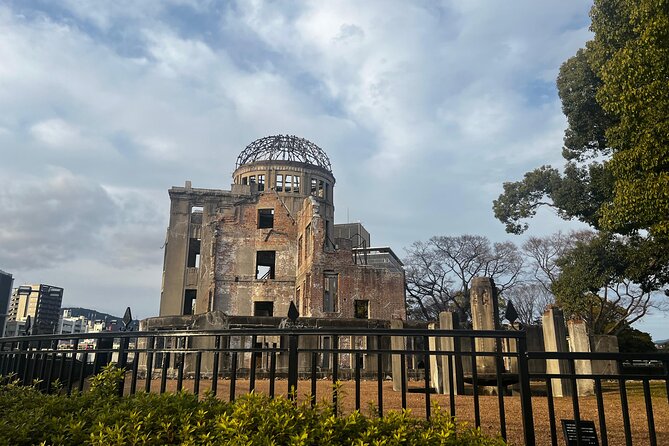
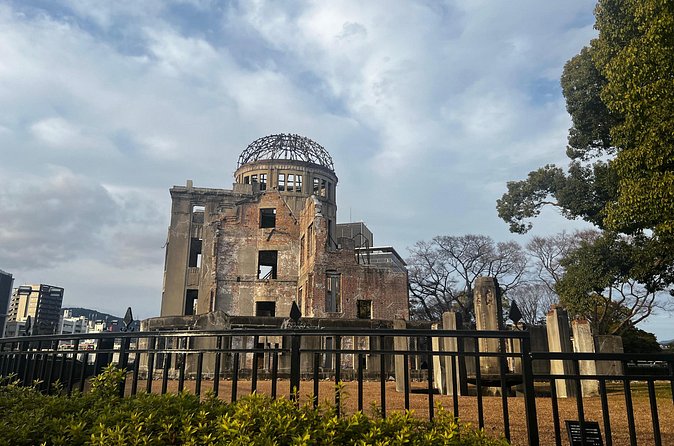
The route begins at 1-chōme-10-1 Ōtemachi in Hiroshima’s Naka Ward and moves first to the Atomic Bomb Dome. This ruined building is the visual anchor of the Peace Park, and it gives the tour an immediate sense of place.
The Dome is not presented as a restored attraction. Its damaged structure remains because Hiroshima chose to preserve it as a warning and a symbol of peace. Your guide explains the bombing and the building’s place in the city’s memory, while you have time to take in the structure for yourself.
The scheduled stop is about 20 minutes, which is a sensible opening length. You have enough time to listen, look closely, and ask questions without beginning the walk in a rush. The admission is free.
A guide-led explanation is especially helpful here because the Dome can seem almost abstract in photographs. In person, its surviving framework makes the event feel immediate. You will also begin to understand why Hiroshima’s memorial message focuses so strongly on preventing nuclear war.
The Peace Bell and international remembrance
The Peace Bell takes about 10 minutes. Its purpose is simple and direct: harmony, unity, and a world without nuclear weapons. The deep sound of the bell is meant to encourage reflection rather than offer a complicated historical explanation.
Next comes the Monument to Korean Victims and Survivors. This is one of the route’s most important stops because it broadens the story beyond a single national experience. The monument recognizes Korean people who suffered in the atomic bombing and acknowledges their place in Hiroshima’s past.
I value the inclusion of this monument. A tour focused only on Hiroshima’s Japanese victims would leave out an important part of the human story. The stop also creates room for discussion about remembrance, reconciliation, and whose experiences receive attention in public memory.
The timing is short at 10 minutes per stop. That works well if your guide gives a focused explanation, but you may want to return later if you wish to spend longer with either monument. The park is free to enter, so revisiting these sites after the tour is straightforward.
Sadako’s cranes and the Children’s Peace Monument
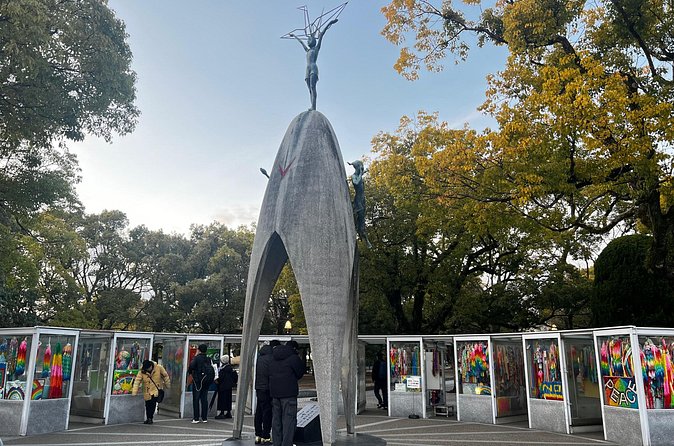
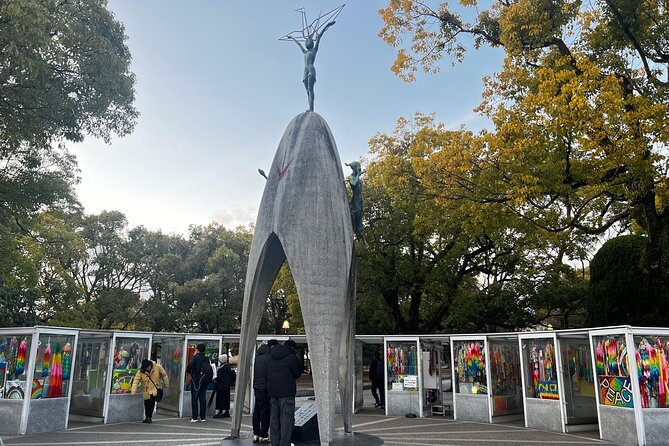
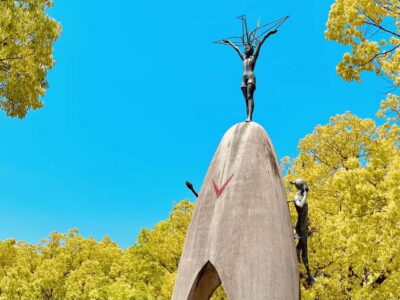
The Children’s Peace Monument is dedicated to children who died because of the bombing. Its story is linked to Sadako Sasaki, a young girl who folded paper cranes while hoping to survive.
This stop often gives the tour its most personal emotional focus. The monument is not only about a large historical event. It connects that event to a child, a family, and the enduring image of paper cranes as a symbol of hope.
You have about 10 minutes here. Your guide can explain the monument’s meaning, but the subject deserves quiet attention too. Good guiding is important at a place like this, and the guides on this route are described as giving people time to ask questions, take photographs, and reflect.
If you have children with you, this may be one of the easiest monuments to discuss in clear terms. The story of Sadako offers a human entry point without turning the subject into entertainment.
More Walking Tours in Hiroshima
- Hiroshima City 4hr Private Walking Tour with Licensed Guide
★ 5.0 · 437 reviews - Hiroshima Walking Tour Why A Bomb was dropped to Hiroshima
★ 5.0 · 347 reviews - Hiroshima: History of Hiroshima Group Walking Tour
★ 4.8 · 266 reviews - Hiroshima: Food and Culture Guided Walking Tour with Dinner
★ 4.9 · 212 reviews
The Peace Flame and the victims’ memorial hall
The Peace Flame has burned continuously since 1964. It represents Hiroshima’s commitment to a world without nuclear weapons and is intended to remain lit until nuclear arms are abolished.
You will spend about 10 minutes here before moving to the Hiroshima National Peace Memorial Hall for the Atomic Bomb Victims. The hall offers a quieter setting, with personal stories, photographs, and survivor testimony. Its purpose is remembrance through individual lives rather than only dates and statistics.
This is where the value of a guide becomes clear. A good explanation can prepare you for the shift from outdoor monuments to personal records. Ghani, Sheraz, and the other guides are described as adding local stories and background, while still allowing the group to absorb what it sees.
The scheduled 20 minutes at the memorial hall is longer than at most outdoor stops, but you should still see it as an introduction. If survivor accounts matter greatly to you, you may want additional time later in your visit.
The walk is generally flat, and one guide slowed the pace for a participant with a recent knee injury. That does not make the route effortless, especially in hot weather, but it does suggest a considerate approach to group pacing. Wear comfortable shoes and bring what you need for the weather.
The cenotaph and the line it asks you to remember
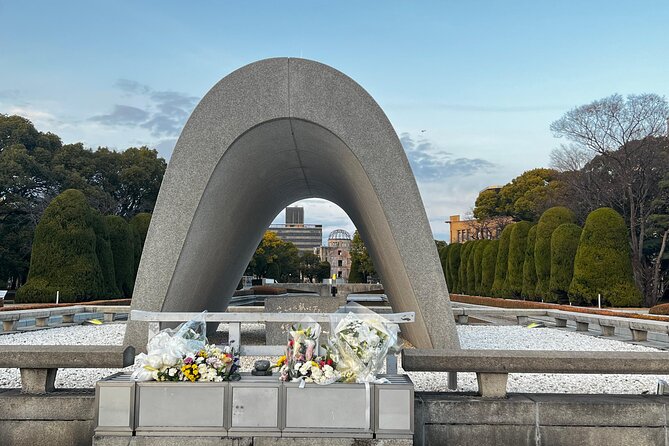
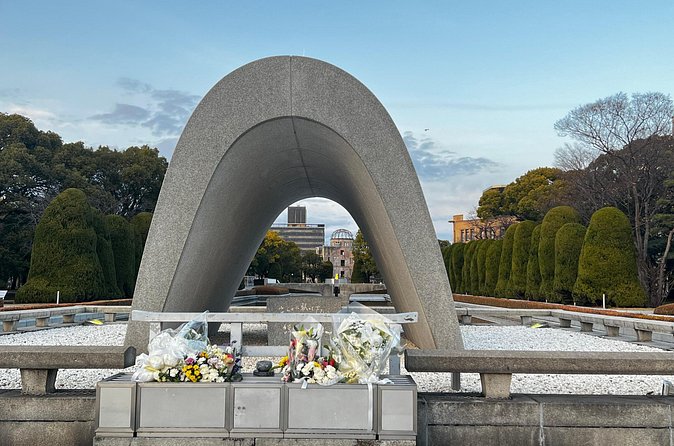
The Hiroshima Peace City Monument Cenotaph for the Atomic Bomb Victims is an arched memorial inscribed with the words: Let all the souls here rest in peace, for we shall not repeat the evil.
It holds the names of known victims and aligns with the Peace Flame and the Atomic Bomb Dome. The alignment is one of the park’s most meaningful visual details. Your guide can help you notice how the memorials relate to one another rather than treating each monument as an isolated object.
The stop lasts about 10 minutes. That gives you time to understand the inscription and look along the memorial axis. It is also a useful point to ask questions about Hiroshima’s peace message and how the city presents its past.
The tour’s approach is strongly centered on the victims and on peace. That is appropriate for this park, but you should know the historical framing may not spend equal time on Japan’s role as a wartime aggressor. One participant wanted more emphasis on that side of the story. If you want a fuller account of Japan’s wartime expansion and the wider Pacific War, add another museum or history experience to your Hiroshima plans.
The Peace Memorial Museum visit
The Hiroshima Peace Memorial Museum is the most substantial stop, but the scheduled time shown for it is only 10 minutes. Your entrance ticket is included and purchased in advance, which helps you avoid the long admission line.
Your guide will not accompany you through the exhibits. Guides are not allowed to speak inside, so you visit independently. This is an important distinction when comparing the tour with a private museum tour. The walk gives you context before entry, then the museum supplies its own displays, photographs, objects, and survivor accounts.
In practical terms, I would treat the 10 minutes as the transition into the museum rather than your complete visit. If the museum is a major reason for coming to Hiroshima, leave extra time after the tour. The guided portion will help you know what you are looking at, but it cannot replace a careful visit inside.
The prepaid ticket is still a useful benefit. It removes one small task from a busy day and can matter when you are working around trains or a tight sightseeing plan.
Finishing at the Gates of Peace
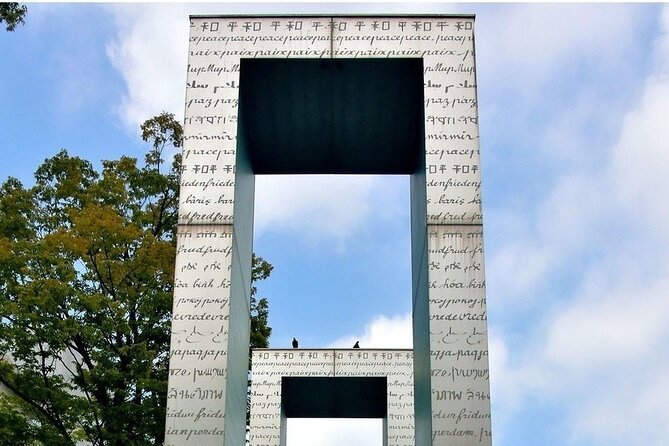
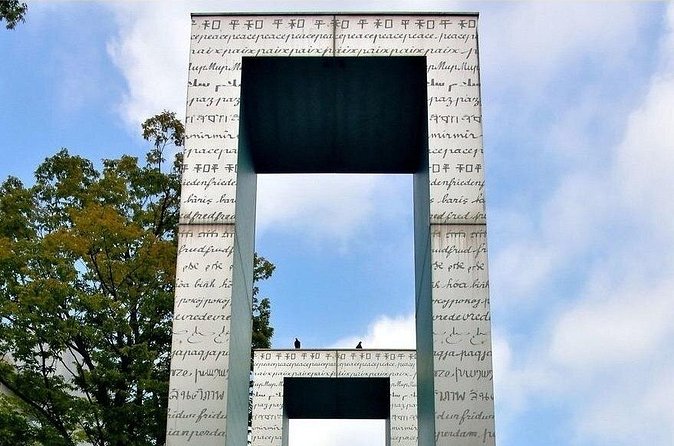
The final stop is the Gates of Peace at 4-15 Nakajimachō. Ten glass gates carry the word peace in multiple languages, giving the route a broad international ending.
After the heavier memorials, this is a fitting place to finish. The gates shift the message from Hiroshima’s specific tragedy toward a shared hope for peace. The tour ends here, rather than returning you to the starting point, so check your onward route before you begin.
The walk takes about 20 minutes at this final stop. That gives you more time than several earlier monuments, though exact pacing depends on the group and the guide. The route’s end point is also useful if you want to continue exploring the park on your own.
Guides, group size, and the feel of the walk
The experience is led by Ghani Explorer, with Ghani, Sheraz, Shiraz, Cva, and Sharain named among the guides who have conducted it. The guide you receive may vary, but the common pattern is an academic, question-friendly style.
Sheraz is described as using questions to involve the group rather than giving a nonstop lecture. Ghani is noted for patience, local anecdotes, and adjusting the pace for physical needs. Sharain is described as prepared, pleasant, and enthusiastic. These details matter because two hours of memorial history can feel heavy if the guide simply recites facts.
The group is limited to eight people. That is small enough for questions and easier pacing, while still giving you the energy of a shared visit. You should not expect a fully private tour, but you are unlikely to disappear into a large crowd.
Service animals are allowed, and the activity is near public transportation. Most people can take part, though the tour includes considerable walking and several outdoor stops. On hot days, the guide has paused in the shade and allowed people room to rest and reflect.
Is $31.63 a fair price?
At $31.63 per person, the price is reasonable if you want structure and historical explanation during a short Hiroshima visit. The cost covers a two-hour guided walk, a group of no more than eight, and admission to the Peace Memorial Museum.
The strongest value is not the number of monuments. You could see many of them for free. The value comes from the connections between them, the opportunity to ask questions, and the time saved by having the route organized.
The museum ticket adds practical value, but do not assume the price buys a full guided museum tour. The museum visit is independent, and you may want to spend more time there than the schedule allows.
Free cancellation up to 24 hours before the start gives you useful flexibility. A cancellation made less than 24 hours ahead is not refundable, and changes in that window are not accepted.
Who should book this Hiroshima walk?
I would choose this tour if you are visiting Hiroshima for one day, arriving from Kyoto, or prefer a clear introduction before exploring the museum alone. It also suits you if you want a small group and a guide who can answer questions about the memorials.
It is a good match for first-time visitors who might otherwise walk past important details. It can also help families discuss the park’s difficult subject in a thoughtful, organized way.
You may want something else if you prefer a private tour, need extensive time at each monument, or want a full account of Japan’s wartime actions alongside the bombing and peace movement. In that case, use this walk as an introduction and add more historical material afterward.
Final verdict: a strong introduction to Hiroshima
This is a focused, well-paced way to meet Hiroshima’s Peace Park. The route covers the major memorials, includes the Korean Victims Monument and the Children’s Peace Monument, and gives you a prepaid museum entry without pretending the museum can be covered in 10 minutes.
I would book it for the small group, the patient pacing, and the guides’ ability to make the memorials understandable without stripping away their seriousness. Just wear comfortable shoes, allow extra museum time, and come prepared for an emotional visit.
FAQ
How long does the Hiroshima peace walk take?
The guided experience lasts approximately two hours.
How much does the tour cost?
The listed price is $31.63 per person.
How many people can join the tour?
The group has a maximum of eight participants.
Is the Peace Memorial Museum ticket included?
Yes. The entrance ticket is included and purchased in advance.
Does the guide accompany me inside the Peace Memorial Museum?
No. Guides are not allowed to speak inside the museum, so you visit it on your own.
Where does the tour begin?
The starting point is 1-chōme-10-1 Ōtemachi, Naka Ward, Hiroshima, 730-0051, Japan.
Where does the tour end?
The tour ends at the Gates of Peace, 4-15 Nakajimachō, Naka Ward, Hiroshima, 730-0811, Japan.
Can I cancel for a full refund?
Yes, if you cancel at least 24 hours before the experience start time. Cancellations or changes made less than 24 hours ahead are not accepted for a refund.
Just added around Hiroshima
- Full Day Hiroshima and Miyajima Tour by Bullet Train from Kyoto★ 4.5 · 120 reviews
- Hiroshima Saijo Sake Tasting Tour with visit to 7 Breweries★ 5.0 · 104 reviews
- The Peace Memorial to Miyajima : Icons of Peace and Beauty★ 4.5 · 31 reviews
- Shore Excursion from Hiroshima Port : Private Tour in Hiroshima★ 5.0 · 17 reviews
- Okunoshima Rabbit Island Cycling Tour with Local Guide★ 4.5 · 17 reviews
- Hiroshima & Miyajima All-Inclusive Tour w/Licensed guide Pancho★ 5.0 · 54 reviews
- Private Full Day Hiroshima Tour★ 4.5 · 29 reviews
- Hiroshima Private Tour with a Local – Highlights & Hidden Gems★ 4.5 · 24 reviews
Historical Tours, compared.
Imperial Palace and Shogun Historical Walking Tour
Our verdict →
World Heritage Kyoto & Nara Uji Authentic Matcha Experience
Our verdict →
Kyoto Gion: 2-Hour Geisha Culture & History Walking Tour
Our verdict →
Hiroshima Historical Walking Tour – Why A-Bomb was Dropped
Our verdict →
Yanaka Walking Tour: Historic and Traditional District of Tokyo
Our verdict →
Shinjuku Historical Walking Tour & Secret Backstreets
Our verdict →
Mt. Fuji Heritage Tour: Traditional Villages, Lakes & Shrine
Our verdict →Browse the lists this tour appears in