
Reviewed · HISTORICAL TOURS
Asakusa: Tokyo Skytree Exploration and History Tour
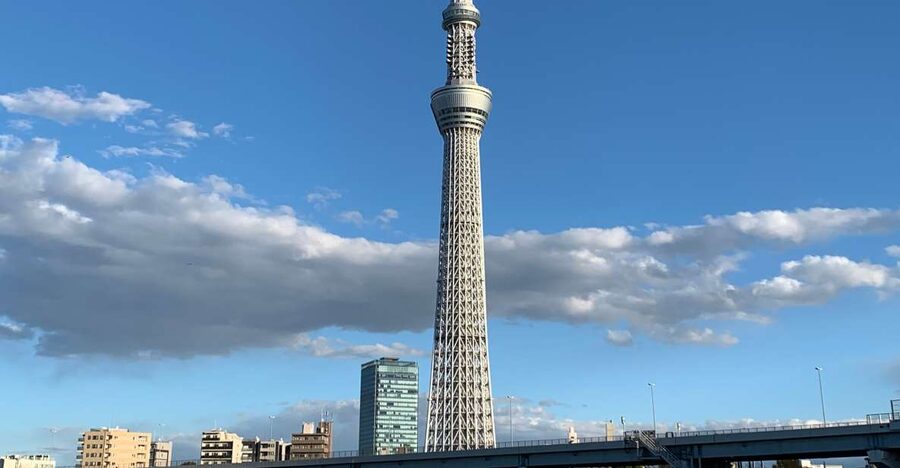
Tokyo Skytree is the headline, but the best part begins at street level. This Asakusa history walk links the Sumida River, Kaminarimon, Nakamise Street, Senso-ji, and Asakusa Shrine to Japan’s shift from isolation to modern life. You do not just collect photos. You learn why these places matter.
I like the small group, limited to eight, and the way the tour joins old Tokyo to new Tokyo with a quick train ride. I also like the care shown by guides such as Machiko, Keiko, Aki, and Yasu, who have helped with photos, rest breaks, local food guidance, and even taxi arrangements. The main drawback is physical: you will walk for much of the 210 minutes, sometimes through crowds and up and down stairs, with little scheduled time to sit.
Key points to know before booking
- Asakusa gives the Skytree context: You learn about religion, trade, politics, and Japan’s opening to the outside world before viewing the city from above.
- Both Skytree decks are included: Your ticket covers the Tembo Deck at 350 meters and the Tembo Galleria at 450 meters.
- The group stays small: With no more than eight participants, it is easier to ask questions and keep close to the guide.
- The walk uses major Asakusa landmarks: Kaminarimon, Nakamise Street, Hozomon Gate, Senso-ji, and Asakusa Shrine all have a place in the story.
- You pay for more than admission: At $116 per person, the value depends on how much you want guided history, help inside the tower, and the convenience of reserved entry.
- Plan for warm-weather effort: A 30°C day made rest and water important for one group, while another found the walking tiring in the rain and cold.
Why this tour works better than a Skytree visit alone
A visit to Tokyo Skytree can give you grand views, but the city below may look like a vast spread of buildings and roads. This tour gives you a way to read it. First you walk through Asakusa, where sacred sites, shopping streets, and the Sumida River bring Japan’s past into view. Then you cross to the tower and look back at the same city from high above.
That order matters. You first see Tokyo at human scale, with incense smoke, temple gates, market stalls, and local streets. Later, from 350 and 450 meters, you see how enormous the modern capital has become.
The experience lasts 210 minutes and uses an English-speaking guide. An English audio guide is also included. The group is capped at eight, which is especially useful in crowded Asakusa, where a large party can easily split at a crossing or gate.
The tour begins in front of the Burger King beside Exit 4 of Asakusa subway station on the Ginza Line. You need to leave the station at Exit 4 rather than wait underground. The end point is Tokyo Skytree, so you do not return to Asakusa.
More Historical Tours in Tokyo
- Tokyo: Imperial Palace and Shogun Historical Walking Tour
★ 5.0 · 2,251 reviews - Tokyo: Imperial Palace Japanese History Walking Tour
★ 4.9 · 987 reviews - Tokyo: Imperial Palace and Shogun Walking Tour
★ 4.9 · 935 reviews
The Sumida River sets the historical stage
The first part takes you toward the Tokyo Cruise Asakusa Pier for about 15 minutes of guided sightseeing and walking. The Sumida River is not just a scenic opening. It helps explain why Asakusa grew as a center of movement, commerce, entertainment, and worship.
Here the guide discusses Japan’s long period of limited contact with the outside world and the pressure that eventually forced the country to reopen. You get the broad political story while standing in a real place connected to travel and trade.
That approach is one of the tour’s strongest features. Instead of presenting Japanese history as a list of dates, the guide ties it to the river and the streets you are using. The result is easier to remember, especially if this is your first visit to Japan.
The pace is generally relaxed, but you should still expect steady movement. One guide made a point of offering water and rest opportunities on a hot, sunny day. That kind of attention matters, since Tokyo heat can make a three-and-a-half-hour walk feel longer than it looks on paper.
Tokyo’s history begins at the Asakusa information center
The Asakusa Culture Tourist Information Center is the next stop, with around 15 minutes of guided sightseeing. Its location near Kaminarimon makes it a useful orientation point before you enter the busiest part of the district.
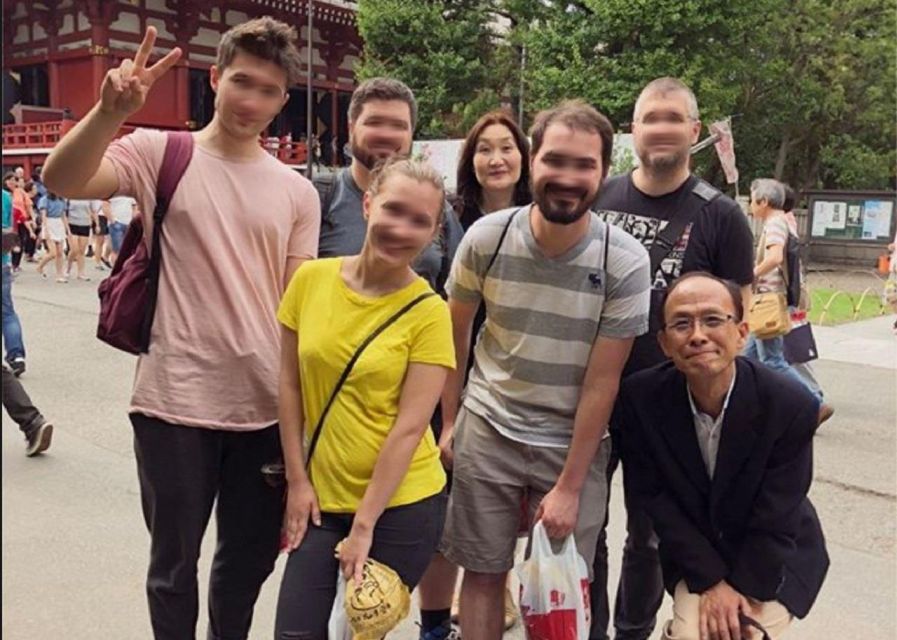
This is where the tour starts connecting the large national story to everyday Asakusa. You may hear how the district developed around Senso-ji and how its religious importance shaped the streets around it. The guide also helps you understand the difference between a temple and a shrine, a useful distinction when several sacred sites appear close together.
A small group helps here. You can ask why a symbol appears on a gate, what a particular building is used for, or how local customs fit into the scene. Guides have also made time for photographs and questions instead of pushing the group from one stop to the next.
Kaminarimon and Nakamise Street
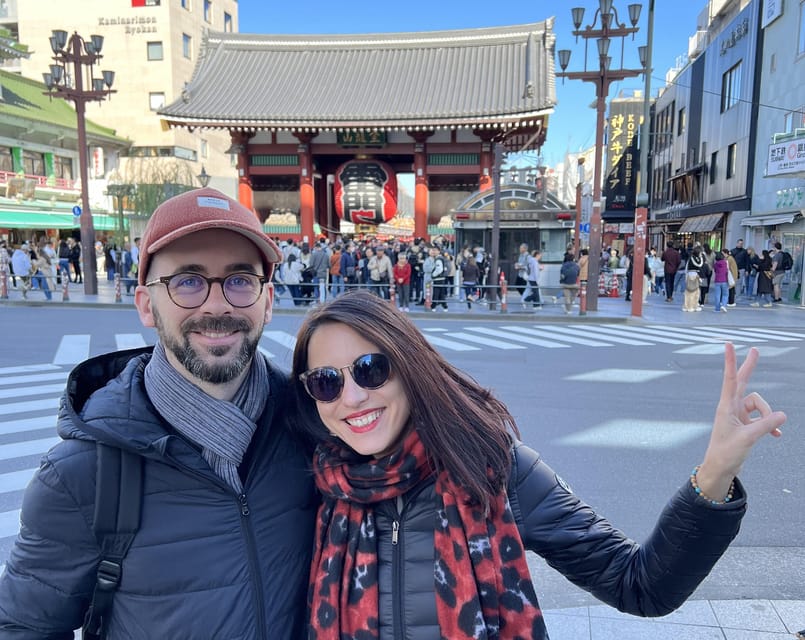
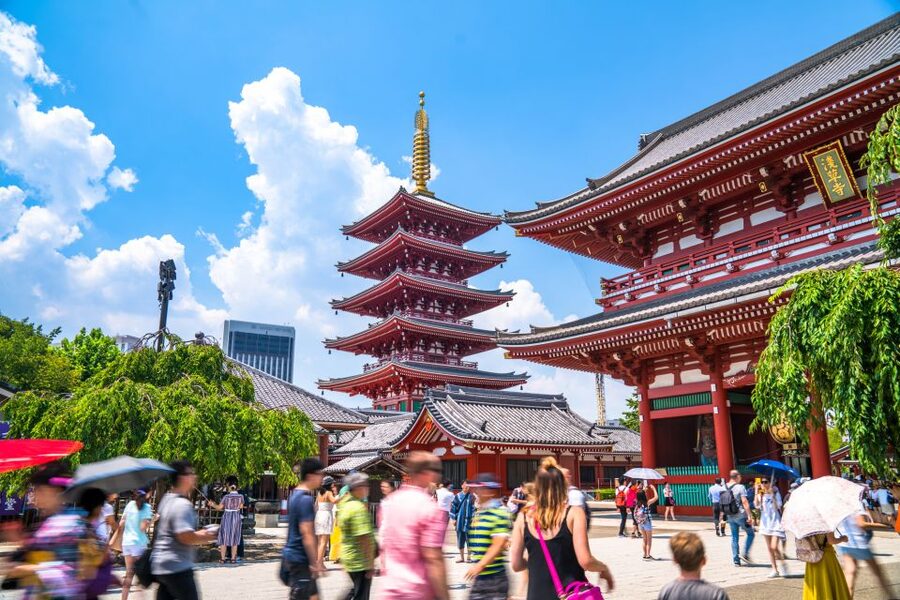
Kaminarimon, or Thunder Gate, is one of Tokyo’s most recognizable entrances. The giant lantern and guardian figures make it an obvious photo stop, but the guide’s explanation gives the gate more weight than a quick snapshot.
You then walk along Nakamise Shopping Street for roughly 30 minutes. This is the liveliest stretch of the route, lined with souvenir shops and traditional snacks. You get time to look around, and one guide included small food tastings while explaining which treats appeal to both local shoppers and people visiting from abroad.
Do not expect a long shopping session. The group still has a schedule, and Nakamise can be packed. If you see something you want, ask how much time you have before buying. The stop works best as a guided introduction, with enough freedom to sample or browse but not enough for a leisurely market afternoon.
This section also shows the tour’s balance. You are not kept in lecture mode. There is history, but there is also room for photos, food, and the simple pleasure of watching the street move around you.
Same trip, a completely different kind of day:
- 1-Day Tokyo Bus Tour
★ 5.0 · 14,250 reviews - Tokyo: TOKYO SKYTREE® Admission ticket
★ 4.5 · 11,192 reviews - Tokyo: teamLab Planets TOKYO Digital Art Museum Entry Ticket
★ 4.6 · 9,779 reviews - Tokyo: Sumo Show Experience with Chicken Hot Pot and a Photo
★ 4.8 · 6,678 reviews
Hozomon Gate, Senso-ji, and Asakusa Shrine
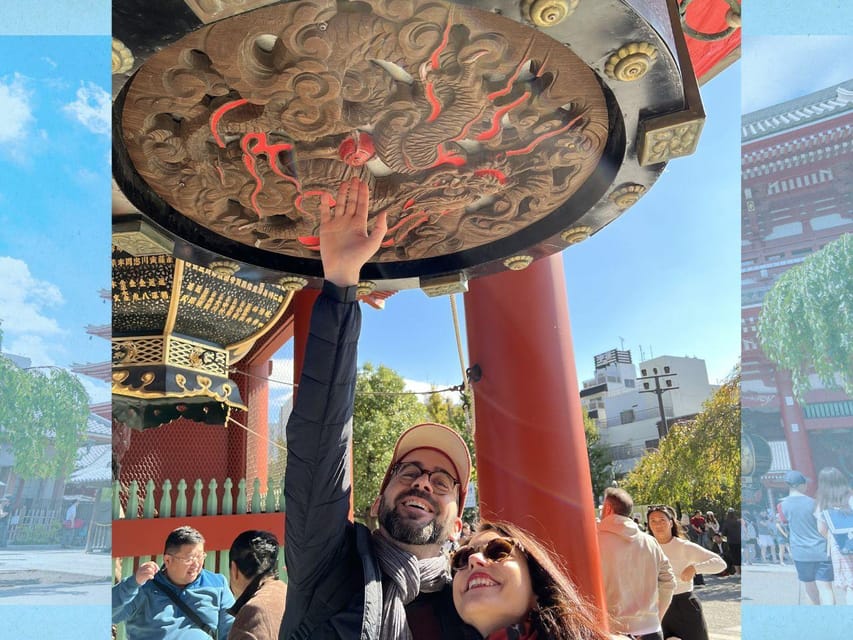
Hozomon Gate leads into the main grounds of Senso-ji, Tokyo’s famous Buddhist temple. The tour allows about 15 minutes at the gate and another 15 minutes at Senso-ji itself.
Your guide explains the meaning behind the architecture, religious symbols, and approach to the temple. That is useful because Senso-ji can feel like a wall of visual details: lanterns, statues, smoke, roofs, offerings, and visitors performing familiar rituals. The explanation helps you understand what you are seeing without turning the visit into a dry classroom lesson.
Senso-ji is also where the difference between tourist appeal and religious importance becomes clear. It is a major sight, but it remains a place of worship. A good guide helps you move through it respectfully and explains customs rather than treating the temple as a backdrop.
The final Asakusa stop is Asakusa Shrine, also given about 15 minutes. Its close relationship to Senso-ji makes it a useful comparison. You can see how Buddhist and Shinto traditions exist side by side in the same historic district, while learning why each site has its own identity.
The route is not difficult in a technical sense, but it is not a seated tour. Expect pavement, crowds, stairs, and repeated stops on your feet. If you are in your 60s or simply prefer a slower pace, wear supportive shoes and tell the guide early when you need water or a short pause.
The two-minute ride from old Tokyo to the Skytree
After Asakusa, the group takes a train across the Sumida River to Tokyo Skytree Station. The ride itself lasts about two minutes, but it gives the tour a neat change of scale.
You have just been walking among temple gates and market stalls. Suddenly, you are heading toward one of the clearest symbols of present-day Tokyo. The train fare is not included, and the stated cost is JPY160. Bring cash or a suitable transit payment method so this small extra does not slow the group.
This transfer is one reason the tour feels more thoughtfully planned than a simple neighborhood walk followed by a tower ticket. The route makes the contrast part of the experience. You do not merely visit two separate attractions. You move from one to the other in the same sequence that the tour has been explaining: tradition, change, and modern city life.
Tokyo Skytree at 350 meters
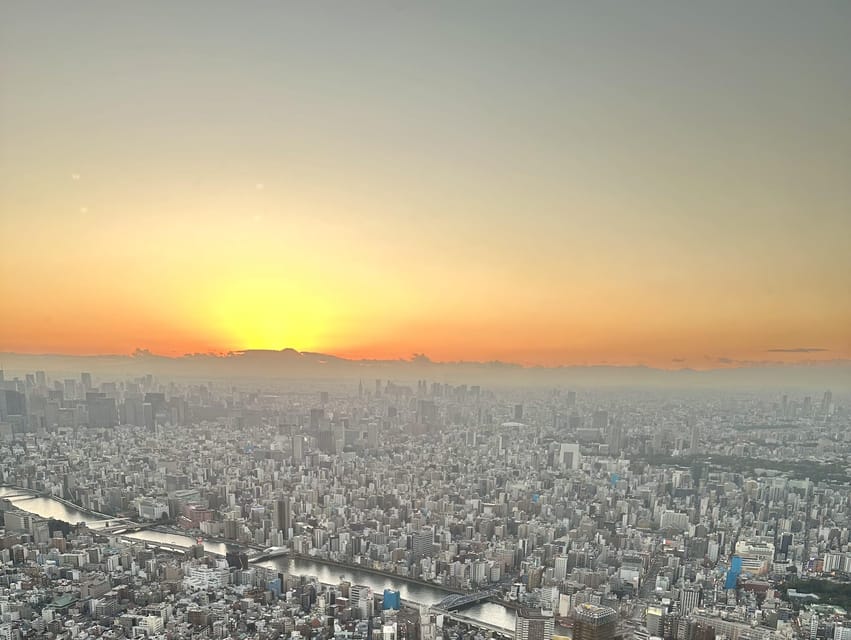
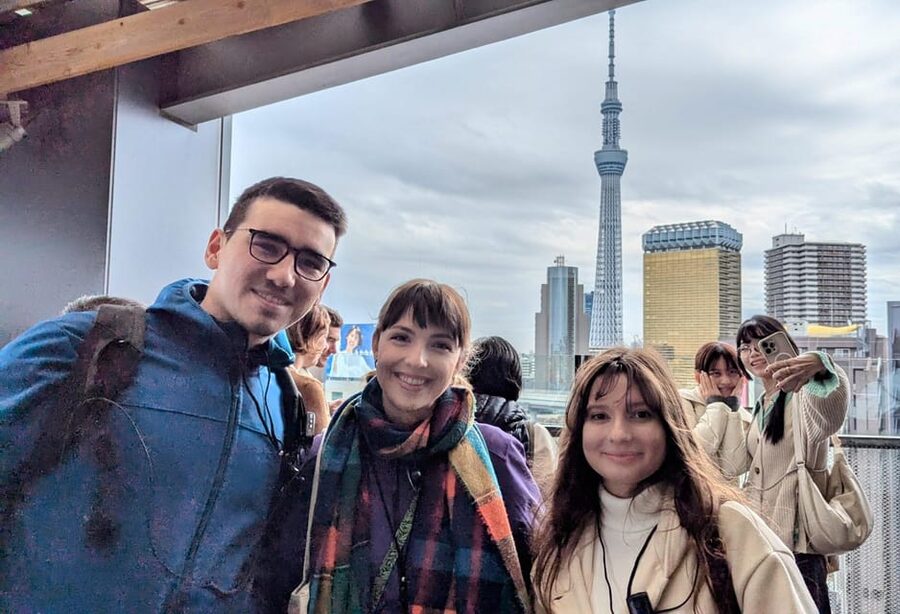
At Tokyo Skytree, your admission covers the Tembo Deck at 350 meters. The guide accompanies you and helps point out major landmarks across the city. That assistance is valuable because Tokyo can be hard to read from above, especially on a hazy day when individual neighborhoods blur together.
The deck gives you the classic high-level city view, with streets, rail lines, waterways, and blocks of buildings spreading in every direction. If you have already seen Tokyo from street level, this is your chance to understand its sheer size.
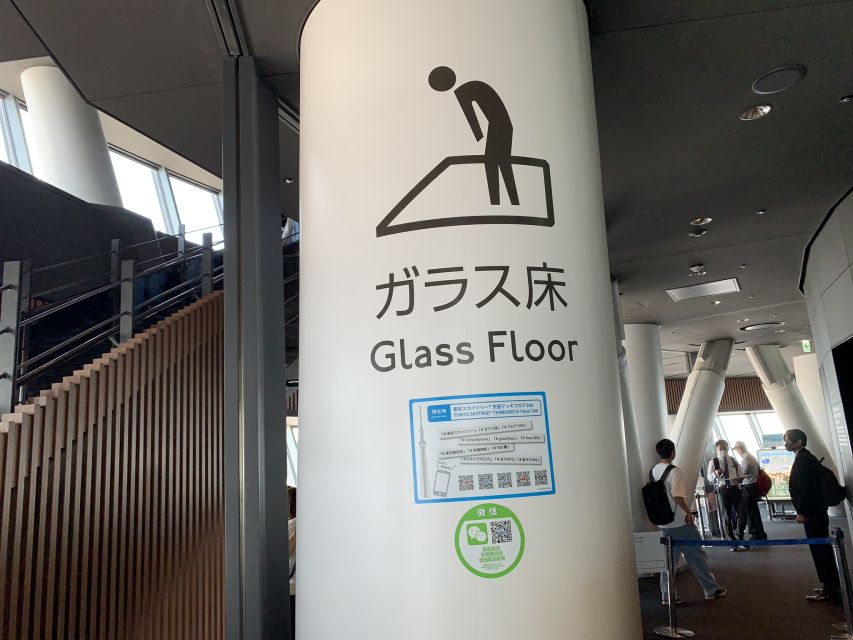
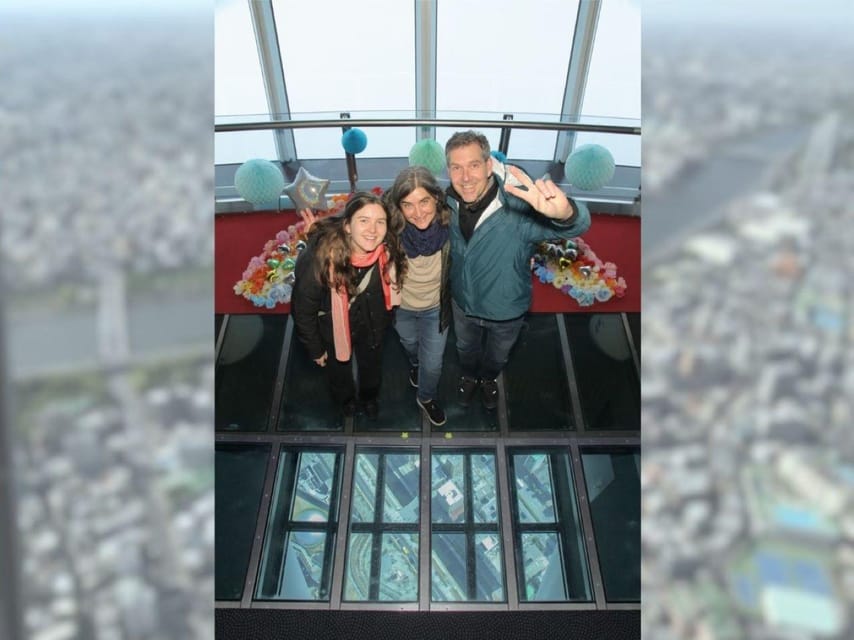
The tour also includes access to the glass floor. Looking straight down through the panels is a short, memorable thrill, even if you are happy to keep both feet firmly planted on solid ground most of the time.
A commemorative photo is available, with the option to buy a downloadable copy. You can also send a Skytree-exclusive postcard anywhere in the world. These are optional extras, not part of the basic cost, but they give you a physical souvenir beyond ordinary phone pictures.
The Tembo Galleria at 450 meters
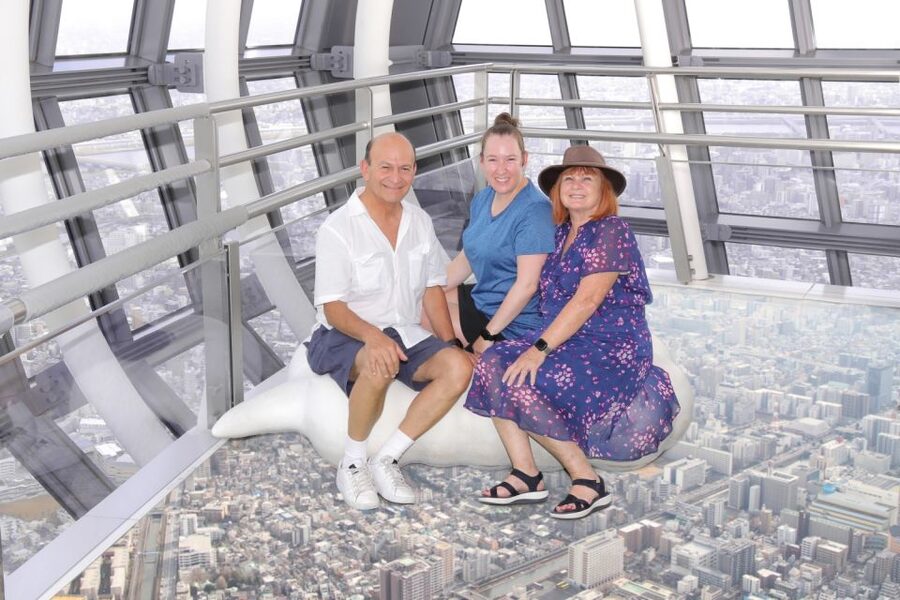
The upper stop takes you to the Tembo Galleria at 450 meters. This is the part to save for clear weather if you have any control over your schedule, since the value of a high observation deck depends heavily on visibility.
The height changes the feeling of the view. At 350 meters, Tokyo feels enormous. At 450 meters, the city spreads farther and the major landmarks become more like points in a huge urban pattern. Your guide can help you identify places you may want to visit later.
The tower portion lasts about an hour in total, with roughly 30 minutes listed for each observation level. That is enough time to see both decks without turning the visit into a race. Still, do not expect a long private sightseeing session. You are part of a guided schedule, and the group may need to move together.
What $116 buys you
At $116 per person, this is not a budget walking tour. You are paying for both Skytree observation decks, an English-speaking guide, a small group, and a history-focused route through Asakusa.
The value is strongest if you want someone to explain what you are seeing. Buying a tower ticket alone costs less than the full tour price, but it does not give you a guide through Kaminarimon, Nakamise, Senso-ji, and Asakusa Shrine. It also does not connect the old district to the tower in one organized outing.
The admission tickets are included, and the tour offers skip-the-ticket-line access. However, the operator warns that advance Skytree tickets are tied to a date and cannot be refunded or changed. The booking is non-refundable, so you should commit only when your Tokyo schedule is firm.
Train fare is extra, at JPY160 from Asakusa Station to Tokyo Skytree Station. Hotel pickup and drop-off are not included. These are small costs, but knowing them in advance helps you judge the total price fairly.
The guides are a major part of the experience
The strongest element here is the human guidance. Machiko has been especially attentive to comfort, including bringing vegan restaurant guides after learning about a participant’s diet. Keiko has made space for shopping, questions, photos, and detailed explanations at both Asakusa and Skytree.
Aki has guided groups through wet, cold weather while using an English headset so people could follow along. Yasu has been praised for clear explanations of Asakusa’s historic sites and for helping with photos. One participant also appreciated help organizing a taxi to a subway station.
The feedback is not entirely perfect. One softly spoken guide was difficult to hear unless standing close. In a crowd, this matters. Stay near the guide and use the included headset or audio support when available. The experience works best when you speak up if you cannot hear.
Who should book it?
I would choose this tour if you have one half-day for Asakusa and Skytree and want the two to make sense together. It suits first-time Tokyo visitors, history fans, and anyone who likes having a local guide explain customs, symbols, and major sights.
It is also a good fit for small families or couples who want help with photos and navigation but do not want a large coach group. The limited size of eight keeps the experience personal.
I would think twice if you want a slow temple visit, a long shopping stop, or plenty of café time. The schedule is relaxed compared with a rushed sightseeing group, but it still involves several hours on your feet. Hot weather, rain, and crowds can make the walk tiring.
Should you book the Asakusa and Skytree tour?
Book it if you want meaning before height. The tour’s real strength is the link between Asakusa’s religious and historic sites and Skytree’s modern view of Tokyo. You get the famous photos, but you also gain a clearer idea of how the city and country changed.
Skip it if you only want to ride up Skytree, or if you prefer to explore temples and markets entirely at your own pace. At $116, the price makes sense for the guide, small group, and combined admission, not for the tower ticket alone.
For most visitors with limited time, this is a useful first look at eastern Tokyo. Wear good shoes, carry water, arrive at Exit 4 on time, and stay close enough to hear the guide. The reward is a half-day that moves from river, gate, temple, and market to one of the highest views in Japan.
FAQ
Where does the tour meet?
It meets in front of the Burger King restaurant beside Exit 4 of Asakusa subway station, station code G19, on the Ginza Line. You should step outside at Exit 4.
Where does the tour finish?
The tour finishes at Tokyo Skytree.
How long does the experience last?
The stated duration is 210 minutes.
What language is the live tour conducted in?
The live tour is conducted in English.
Is an audio guide included?
Yes. An English audio guide is included.
How large is the group?
The group is limited to eight participants.
Are Tokyo Skytree tickets included?
Yes. Entry to the 350-meter Tembo Deck and the 450-meter Tembo Galleria is included.
Is the train ride included in the price?
No. The train fare from Asakusa Station to Tokyo Skytree Station costs JPY160 and is not included.
Are hotel pickup and drop-off provided?
No. Hotel pickup and drop-off are not included.
Can I cancel or change the booking?
The activity is non-refundable. Skytree tickets purchased in advance cannot be refunded or changed to another date.
Just added around Tokyo
- Kawagoe Japanese Food Tour : Unagi Kaiseki and Sake near Tokyo★ 5.0 · 30 reviews
- Kawagoe 4hr Private Tour with Licensed Guide (Kawagoe Dep)★ 5.0 · 13 reviews
- Little EDO Sushi Making workshop in Kawagoe★ 5.0 · 18 reviews
- 【R34】Tokyo:Private Daikoku tour in Modified R34★ 4.9 · 92 reviews
- :Tokyo,Shibuya/ Pro Photography in Kimono / English-Friendly★ 5.0 · 26 reviews
- Tokyo:Celebrate Unique Japanese New Year Tradition Festivity★ 3.9 · 20 reviews
- Tokyo: Allstar Food Tour★ 4.7 · 29 reviews
- Tokyo: West-Side Cycling and Food Tour with Guide★ 5.0 · 37 reviews
Historical Tours, compared.

Imperial Palace and Shogun Historical Walking Tour
Our verdict →
World Heritage Kyoto & Nara Uji Authentic Matcha Experience
Our verdict →
Kyoto Gion: 2-Hour Geisha Culture & History Walking Tour
Our verdict →
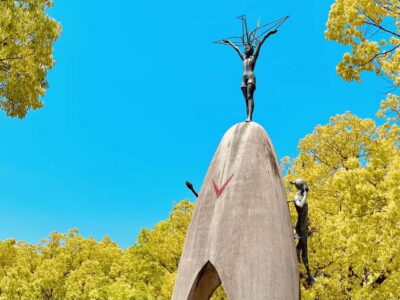
Hiroshima Historical Walking Tour – Why A-Bomb was Dropped
Our verdict →
Yanaka Walking Tour: Historic and Traditional District of Tokyo
Our verdict →
Shinjuku Historical Walking Tour & Secret Backstreets
Our verdict →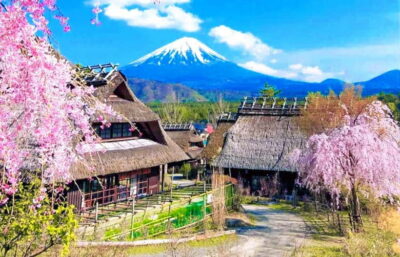
Mt. Fuji Heritage Tour: Traditional Villages, Lakes & Shrine
Our verdict →Browse the lists this tour appears in