
Reviewed · TEMPLES & SHRINES
Tokyo Morning Tour: Meiji Shrine, Asakusa & Fish Market
Tokyo wakes up early, and this four-and-a-half-hour tour puts you in the middle of that first wave. You begin at peaceful Meiji Shrine, move on to fresh sushi and sashimi at Tsukiji Outer Market, then finish among the old lanes and temple sights of Asakusa. The food stops are a real draw, especially if you want more than a quick photo of Tokyo.
I like the clear mix of Shinto tradition and everyday eating. I also like the route’s useful shape: it starts in Harajuku and ends in Asakusa, leaving you well placed to continue sightseeing. The main drawback is pace. Three major areas in 270 minutes means you will walk, sample, and listen, but you will not have hours to browse every market stall or shop.
Key points to know before booking
- Meiji Shrine begins the morning quietly, with an hour devoted to one of Tokyo’s best-known Shinto sites.
- Tsukiji Outer Market gets the longest stop, at about 110 minutes, with sushi, sashimi, and time to look around.
- Asakusa ends the tour, combining Senso-ji Temple, historic streets, snacks, shopping, and traditional sweets.
- Guides bring different strengths, with Yosuke, Lax, Lex, Yo yo, Remu, and Ken praised for clear English and cultural insight.
- Public transport is not included, so allow about 550 yen in addition to the $83 tour price.
- A fire ceremony has appeared on some guide-led visits, but it is not listed as a guaranteed part of this tour.
Why this route works for a first Tokyo morning
This tour gives you three very different views of Tokyo without making you cross the city on your own. Meiji Shrine offers calm and ritual. Tsukiji supplies the appetite. Asakusa brings temples, old-fashioned treats, and a more traditional street scene.
That contrast is the best reason to book. Tokyo can feel hard to read during your first day. One minute you are surrounded by bright signs and department stores, and the next you are standing beneath a wooden shrine gate. A guide helps connect those scenes instead of leaving you with a string of attractive but disconnected stops.
The timing also makes sense. Morning is a good fit for Tsukiji, where food activity is central to the visit. It suits Meiji Shrine, too, since the grounds are a calmer place to begin before the rest of your day gathers speed.
The tour lasts 270 minutes, or four and a half hours. That is long enough for useful explanations and tastings, but short enough to leave your afternoon open. You finish in Asakusa rather than returning to Harajuku, which saves you from retracing the route.
More Market Tours in Tokyo
- Tokyo Tsukiji Fish Market Food and Culture Walking Tour
★ 5.0 · 3,184 reviews - Tokyo: Tsukiji Fish Market Food and Walking tour
★ 5.0 · 1,724 reviews - Tokyo: Tsukiji Fish Market Guided Walking Tour
★ 4.9 · 1,397 reviews
Meeting at IKEA Harajuku
The meeting point is in front of IKEA HARAJUKU. Check the exact starting time when you book, since several start times may be available.
This is a practical starting place for Meiji Shrine, though you should allow time to locate the guide and group in the busy Harajuku area. The tour does not include your public transport fare. The expected cost is about 550 yen, so keep some transport money separate from the $83 tour price.
Because the tour moves between districts, wear shoes suitable for walking. The schedule includes shrine grounds, market lanes, temple approaches, and shopping streets. You do not need specialist equipment, but this is not a sit-down bus tour.
Meiji Shrine: a calm lesson in Shinto
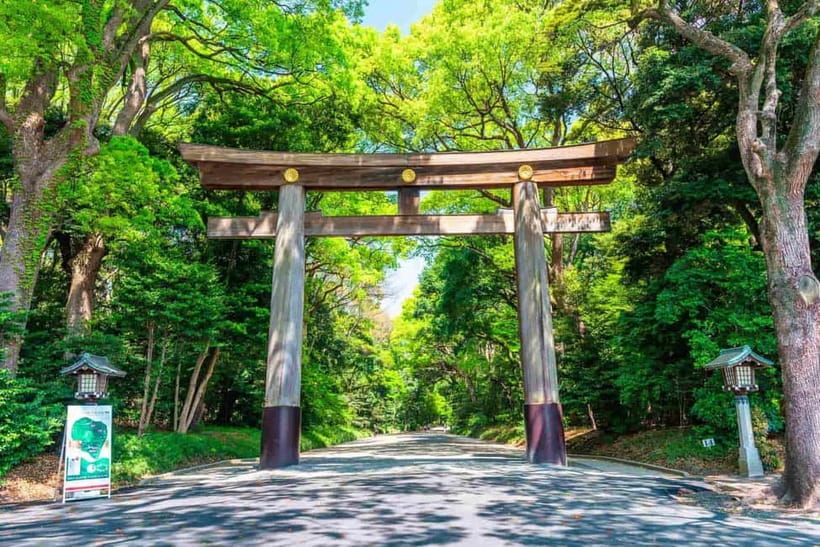
The first scheduled visit lasts about an hour at Meiji Shrine, or Meiji Jingu. This is the part of the morning that gives the tour its quiet start.
A guide can make the shrine easier to understand by explaining Shinto customs rather than simply pointing out the torii gates and offering hall. The guides praised most often for this tour, including Yosuke, Lex, Yo yo, Remu, and Ken, have been described as clear and engaged when discussing Japanese religion and customs.
That context matters. Shinto is not simply a collection of old buildings. It is a way of approaching sacred spaces, nature, purification, offerings, and respect. The value of having a guide here is learning what to do and why it matters, without treating the visit like a photo stop.
Several guide experiences have also included explanations of the difference between Shinto and Buddhism. One guide-led visit included a fire ceremony, which was described as a powerful part of the morning. You should treat that as a possible feature of a particular visit, not a promise, since the listed route specifically guarantees Meiji Shrine but does not name a fire ceremony.
An hour is a sensible amount of time. You can see the main areas and absorb the explanation without using up the whole morning. The tradeoff is that you will not have unlimited time for a slow walk through every part of the grounds.
Tsukiji Outer Market: the tour’s main food stop
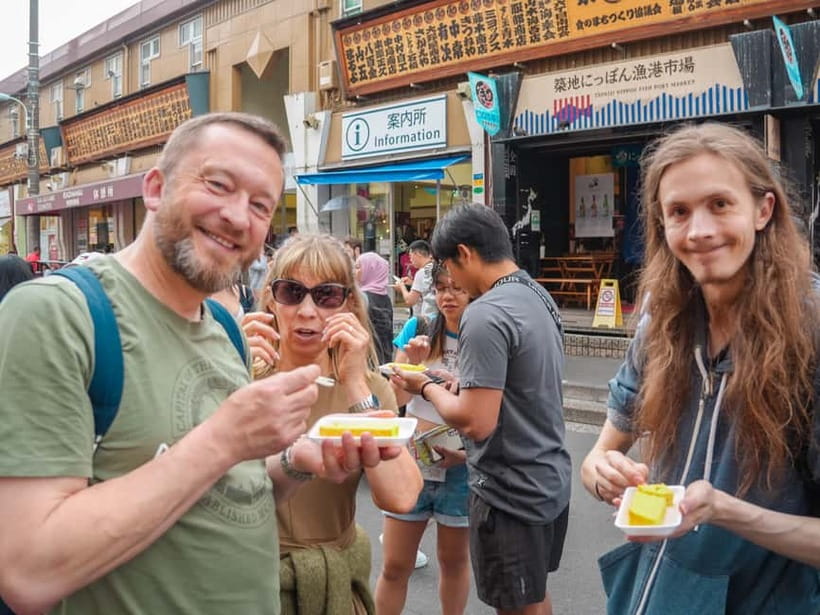
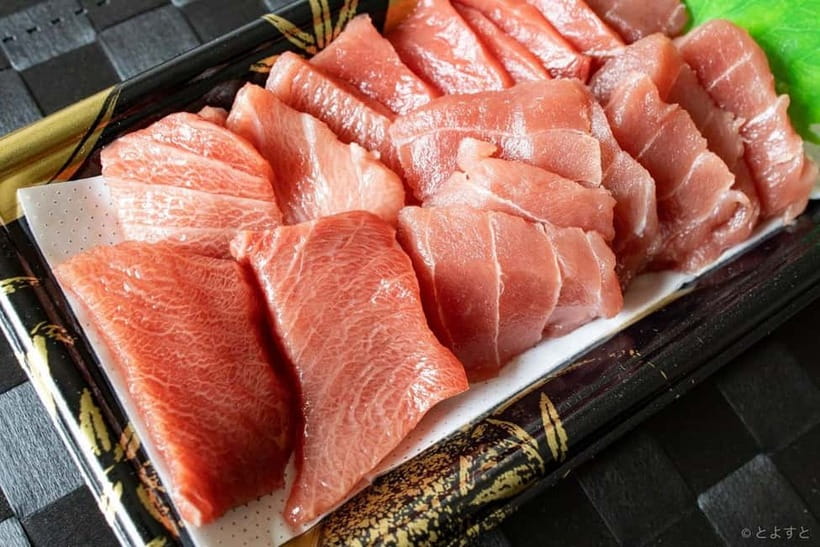
The Tsukiji Outer Market visit lasts about 110 minutes, making it the longest section of the tour. That tells you where the schedule places its emphasis: this is not just a quick look at a market sign. You have time to see stalls, hear about the area, and try fresh sushi and sashimi.
The experience is built around small tastes rather than one formal restaurant meal. You may also find other market foods as you walk. The supplied details specifically point to sushi and sashimi here, so anyone choosing this tour should be comfortable with seafood as a central part of the morning.
I like this stop because it connects food with place. You are not only being told that Japanese cuisine values freshness. You are seeing how a market district presents seafood, prepared foods, and snacks to people starting their day.
The market can also be the most crowded and stimulating section of the route. Stall lanes require attention, and 110 minutes can pass quickly if you want to browse, eat, and ask questions. The guide helps keep the group moving, but you should not expect a long, unhurried meal.
If sushi or sashimi is not appealing to you, the value of this section will depend more on your interest in food culture than on the tasting itself. That is worth considering before you pay. The tour is not designed as a general sightseeing walk with optional food. Eating is one of its main purposes.
More Temple & Shrine Tours in Tokyo
- Tokyo: Meiji Shrine, Asakusa, Skytree Bus Tour and Cruise
★ 4.7 · 1,986 reviews - Tokyo: Asakusa Walking Tour with Sensoji Temple Visit
★ 4.8 · 1,583 reviews - Tokyo Panoramic 1 Day: Meiji Shrine, Asakusa, Odaiba and SKYTREE®
★ 4.5 · 1,222 reviews - Tokyo: Zen Meditation at a Private Temple with a Monk
★ 5.0 · 510 reviews
Asakusa and Senso-ji: temple views with snacks
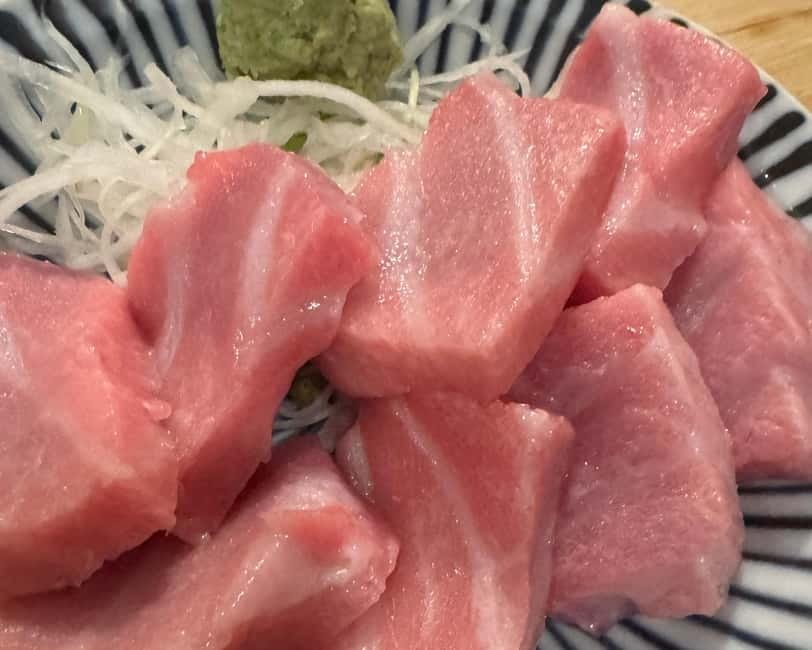
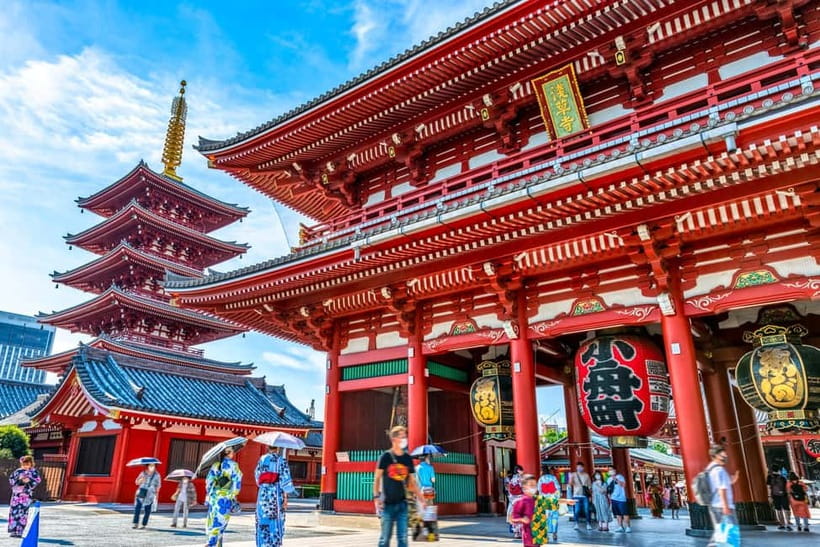
The final stop is Asakusa, where you spend about an hour walking, sightseeing, shopping, and eating. This is a lively change of mood after Meiji Shrine and Tsukiji.
Senso-ji Temple is included, along with its admission. The temple gives the tour a strong visual finish, with a historic setting and plenty to discuss about Buddhism. Guides have explained the relationship and differences between Buddhism and Shinto, which helps you understand why both traditions appear in the same morning.
The food here is less seafood-focused. The tour highlights crispy croquettes and traditional Japanese sweets while you walk through the district. These are useful tastes for anyone who wants to try ordinary Japanese snack foods without committing to another full meal.
Asakusa is also where you finish. That matters more than it may seem. You can continue exploring after the guide leaves instead of spending time returning to the starting point. If you want to linger near Senso-ji, browse shops, or seek out more food, the tour ends in a convenient place for doing so.
The one-hour limit keeps the route moving, but it also means you may need to choose. You can listen carefully, taste several items, and take photographs, but extensive shopping will have to wait until after the official tour.
The guides make the cultural side worthwhile
The strongest theme in the guide feedback is not a single landmark. It is the quality of the explanations and personal care.
Yosuke has been described as positive, fluent in English, attentive to a parent and child, and ready to answer questions about history, culture, and religion. Lax has been praised for thoughtful guiding, clear communication, patience, and strong knowledge of Japan. Lex has been noted for making Meiji Shrine understandable and engaging.
Yo yo is another name that appears often in the supplied feedback. She has been described as warm, passionate, and well informed, with a talent for making families feel comfortable. Remu has been praised for explaining Shinto and Buddhism and for making the morning both informative and enjoyable. Ken has also been praised for explaining Japanese culture clearly.
Guide quality can vary from one departure to another, so you should not book expecting one specific person unless the operator confirms that guide. Still, the range of names and the repeated praise for English ability suggest that the cultural explanation is a serious part of the experience, not an afterthought.
The private-tour possibility is also worth noting. One past departure had only one participant, creating a private experience with extra conversation and recommendations. You should not assume your group will be that small, but the tour may sometimes offer a more personal format.
What the $83 price buys you
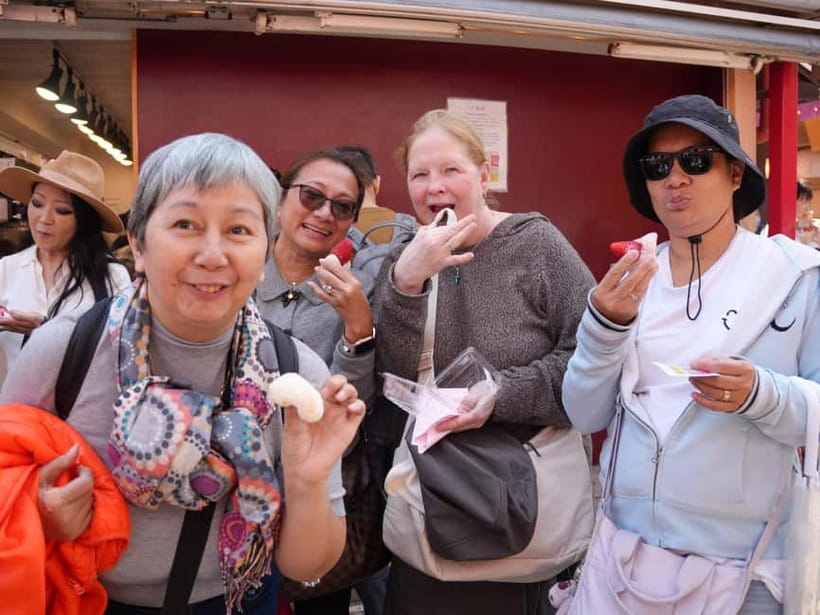
At $83 per person, this is not the cheapest way to visit Meiji Shrine, Tsukiji, and Asakusa. You can reach the districts independently for much less, especially if you already understand Tokyo’s transport system and know where you want to eat.
The price makes more sense if you want three things: an English-speaking guide, food guidance at Tsukiji and Asakusa, and cultural context at the shrine and temple. Photos taken during the tour are included as well, along with historical explanations and admission to Meiji Jingu Shrine, Tsukiji Fish Market, and Senso-ji Temple.
The included admissions are useful, though the greater value lies in the guiding. Tokyo’s major sites are easy to photograph on your own. It is harder to know how Shinto practice differs from Buddhism, how to approach a shrine respectfully, or which market foods fit your interests when you are facing many stalls at once.
You also need to add about 550 yen for public transportation. This is a modest extra, but include it when comparing the tour with a self-guided morning.
Who will enjoy this morning most
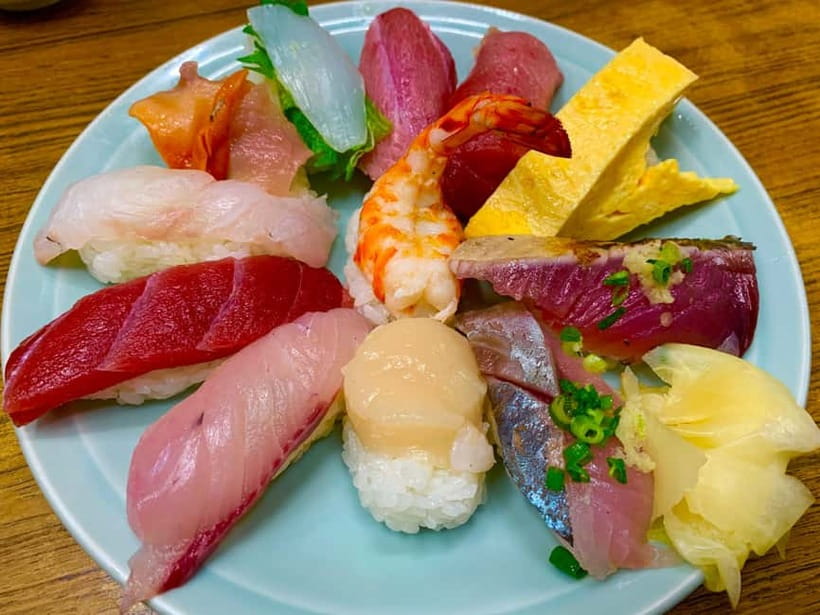
I would recommend this tour to first-time visitors who want a quick cultural foundation before exploring Tokyo independently. Families may also find it helpful, particularly with a guide who can explain unfamiliar customs and keep the route organized.
It suits people who enjoy tasting food in small portions, asking questions, and walking through several districts. It is especially useful if you want Shinto and Buddhist sites explained in plain English rather than simply photographed.
The tour is less suitable if you dislike seafood, want a slow meal, or prefer to spend an entire morning in one neighborhood. It may also feel rushed if shopping is your main goal. Asakusa offers time to browse, but not enough for a serious shopping session before the tour ends.
Practical details to keep in mind
The tour is in English and led by a live guide. Photos are included, and the listed admissions are covered. You pay the transport fare separately, at about 550 yen.
You can cancel up to 24 hours before the experience for a full refund. The reserve-now, pay-later option also gives you some flexibility while your Tokyo plans are still taking shape.
Start in front of IKEA HARAJUKU and finish in Asakusa. That one-way design is convenient, but it also means you should plan your next activity from Asakusa rather than expecting to return to Harajuku.
Should you book this Tokyo morning tour?
Book it if you want a guided introduction to Tokyo that balances religion, food, and historic streets. The route is well chosen, the guides have received strong praise for English and cultural explanations, and the 110-minute Tsukiji stop gives the food portion real weight.
Skip it if you want a relaxed market breakfast, extensive shopping, or a completely independent morning. The schedule is compact, seafood is central, and public transport costs extra.
For most first-time visitors, I see the best value in using this as your Tokyo orientation. You finish in Asakusa with enough context to keep exploring on your own, and you have already experienced three sides of the city before lunch.
FAQ
How long does the tour last?
The tour lasts 270 minutes, which is four and a half hours.
Where does the tour start?
The meeting point is in front of IKEA HARAJUKU.
Where does the tour finish?
The tour finishes in Asakusa.
Is the tour conducted in English?
Yes. The experience includes a live English-speaking guide.
What places are visited?
The route includes Meiji Shrine, Tsukiji Outer Market, and Asakusa, including Senso-ji Temple.
How much public transportation should I budget for?
Public transportation is not included. The expected fare is around 550 yen.
Is food included?
The experience highlights fresh sushi and sashimi at Tsukiji, plus croquettes and traditional sweets in Asakusa. The provided details do not specify a separate meal package.
Are admission fees included?
Admission to Meiji Jingu Shrine, Tsukiji Fish Market, and Senso-ji Temple is included.
Can I cancel for a full refund?
Yes. You can cancel up to 24 hours in advance for a full refund.
Can I reserve now and pay later?
Yes. The activity offers a reserve-now, pay-later option.
More Morning Tours in Tokyo
- Tokyo: Sumo Morning Practice Viewing Tour
★ 4.8 · 570 reviews - Tokyo: Sumo Morning Training Visit
★ 4.4 · 370 reviews - Tokyo: Sumo Morning Practice Tour at Sumida City
★ 4.8 · 308 reviews - Tokyo Sumo Morning Practice Tour at Stable
★ 5.0 · 298 reviews
More Fish Market Walks in Tokyo
- Tokyo Sushi Making Class in Tsukiji with Professional Chef
★ 5.0 · 1,177 reviews - Tsukiji Fish Market Guided Tour and Sushi Making with Pro Chef
★ 5.0 · 775 reviews - Tokyo: Tsukiji Fish Market Food and Culture Walking Tour
★ 4.7 · 757 reviews - Tsukiji Fish Market: Street Food & Culture Walking Tour
★ 5.0 · 669 reviews
Just added around Tokyo
- Kawagoe Japanese Food Tour : Unagi Kaiseki and Sake near Tokyo★ 5.0 · 30 reviews
- Kawagoe 4hr Private Tour with Licensed Guide (Kawagoe Dep)★ 5.0 · 13 reviews
- Little EDO Sushi Making workshop in Kawagoe★ 5.0 · 18 reviews
- 【R34】Tokyo:Private Daikoku tour in Modified R34★ 4.9 · 92 reviews
- :Tokyo,Shibuya/ Pro Photography in Kimono / English-Friendly★ 5.0 · 26 reviews
- Tokyo:Celebrate Unique Japanese New Year Tradition Festivity★ 3.9 · 20 reviews
- Tokyo: Allstar Food Tour★ 4.7 · 29 reviews
- Tokyo: West-Side Cycling and Food Tour with Guide★ 5.0 · 37 reviews
Temples & Shrines, compared.

Tea Ceremony in a Traditional Tea House in Kiyomizu
Our verdict →

Meiji Shrine, Asakusa, Skytree Bus Tour and Cruise
Our verdict →
Fushimi Inari Hidden Hiking Tour (Private Option Available)
Our verdict →
Osaka/Kyoto:Kinkakuji,Arashiyama,FushimiInariShrine,NaraPark
Our verdict →
Nikko: Kegon Falls, Lake Chuzenji & Toshogu Temple
Our verdict →
Kamakura & Enoshima Day Trip including Temple Tickets
Our verdict →Browse the lists this tour appears in