
Reviewed · HISTORICAL TOURS
Tokyo: Imperial Palace, the history of Japan (ENGLISH GUIDE)
The most revealing part of this tour is that it treats the Imperial Palace grounds as a history lesson, not just a pretty garden walk. You’ll trace the former Edo Castle, once the base of power more than 350 years ago, and learn why the main castle no longer exists.
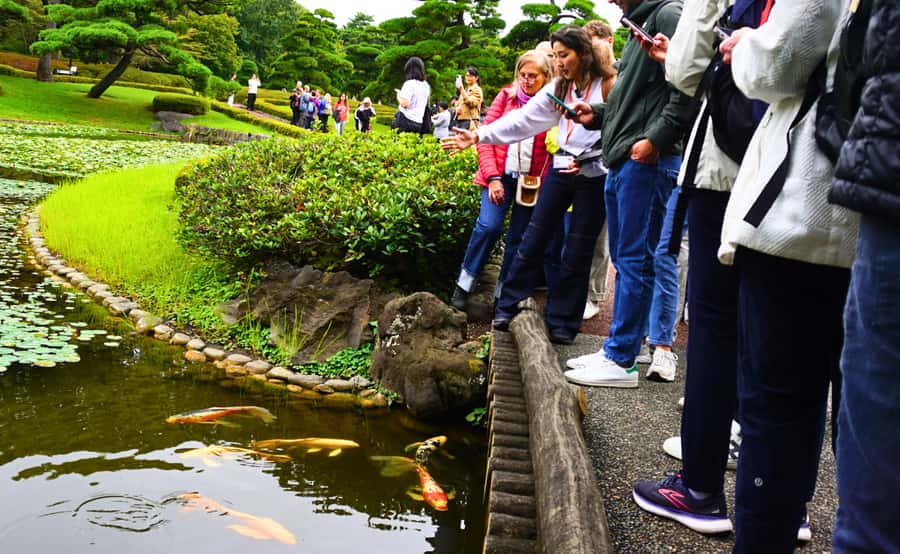
I like the mix of palace ruins and peaceful gardens, which gives the visit both context and breathing room. I also like the chance to see a special breed of koi found only here, plus trees representing different parts of Japan.
One important point needs clearing up before you book: the title says English guide, but the detailed information lists French as the tour language. Confirm the language with Sunrise Adventure before paying, especially if you do not speak French.
Key points to know before you go
- Edo Castle is the real subject: The tour focuses on the former castle grounds and the forces that shaped Japan.
- The main castle is gone: Your guide explains why, and you can see a miniature model of the former palace.
- Look for the special koi: The fish are a small but memorable detail found only within this setting.
- The meeting point is easy to reach: Meet near Starbucks at Wadakuramon Fountain Park, a 5 to 10 minute walk from Tokyo or Otemachi Station.
- The tour stays outside the inner palace: You visit the eastern gardens and historic grounds, not the emperor’s private compound.
- Language requires a check: The listing names French, although the title says English guide.
Why the former Edo Palace matters
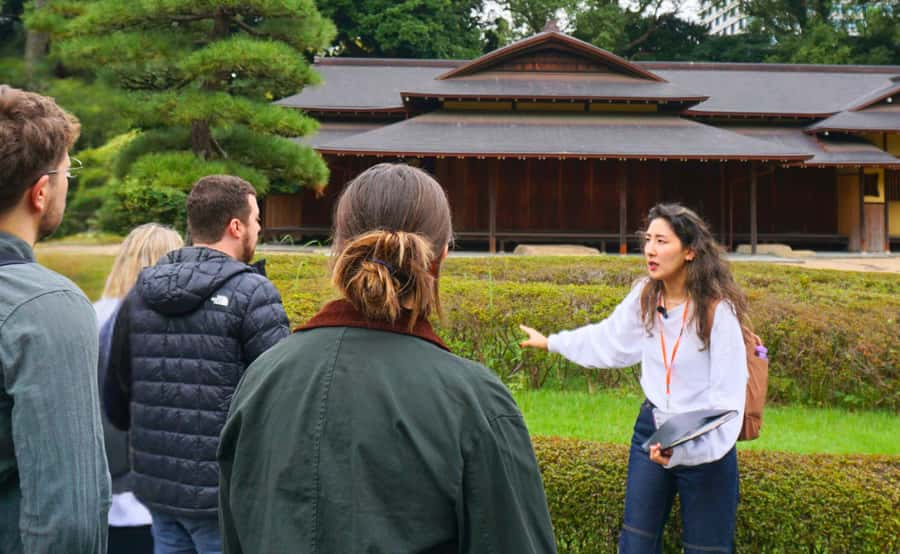
Tokyo’s Imperial Palace can seem formal and distant from the street. The eastern gardens make it easier to understand. Beneath the clipped greenery and broad paths is the former Edo Castle, the political center of Japan during the Tokugawa shogunate.
That is the useful idea this tour brings into focus. You are not simply looking at a royal residence. You are walking through the old base of military and political power that helped shape Japan before the modern imperial era.
The main castle itself is gone, but that absence becomes part of the story. Your guide explains why it disappeared, rather than asking you to accept an empty space without context. A miniature structure of the former palace helps you picture what once occupied the site.
I find this approach more useful than a quick photo stop. A garden can be lovely on its own, but it becomes much more memorable when you understand what happened there and why the buildings changed.
More Historical Tours in Tokyo
- Tokyo: Imperial Palace and Shogun Historical Walking Tour
★ 5.0 · 2,251 reviews - Tokyo: Imperial Palace Japanese History Walking Tour
★ 4.9 · 987 reviews - Tokyo: Imperial Palace and Shogun Walking Tour
★ 4.9 · 935 reviews
Meeting at Wadakuramon Fountain Park
The tour begins outside the palace grounds, near Starbucks in Wadakuramon Fountain Park. From Tokyo Station or Otemachi Station, allow about 5 to 10 minutes on foot to reach the park.
Your guide waits near the fountain with a SUNRISE ADVENTURE sign. This is a practical meeting point, but Tokyo Station has many exits and can feel confusing, so do not leave the navigation until the last minute. Arrive early enough to locate the fountain and Starbucks without rushing.
The meeting instructions are strict. If you are more than 10 minutes late, the group may leave without you. That matters in Tokyo, where a small wrong turn inside a large station can cost several minutes.
At the end, you return to the same meeting point. This makes the tour easier to fit around other plans near Tokyo Station, Marunouchi, or Otemachi.
Entering through Otemon Gate
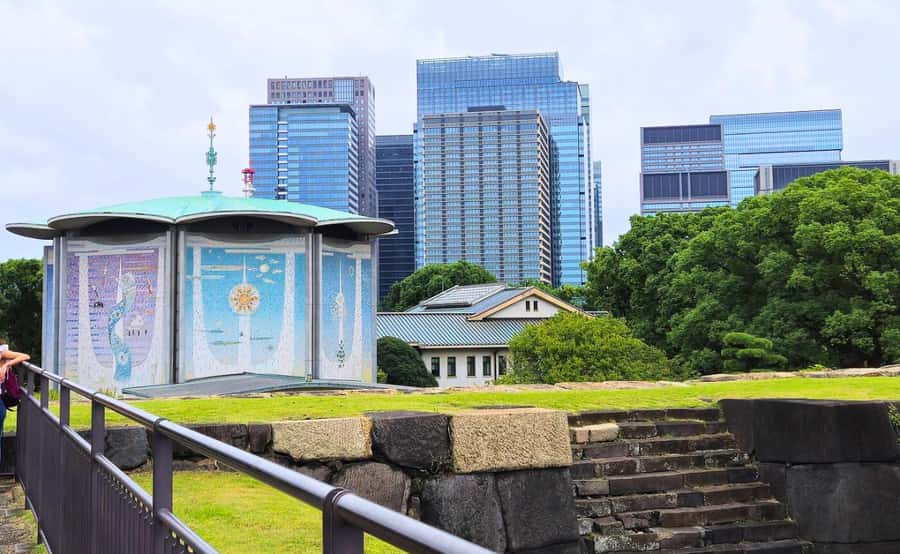
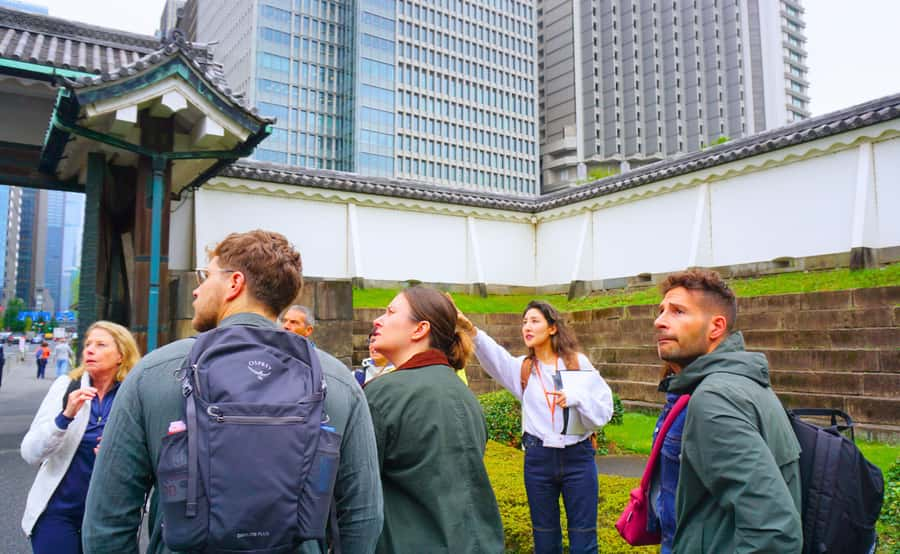
From the park, you walk with the guide to Otemon, the large main gate of the Imperial Palace’s eastern grounds. Passing through this gate provides a natural change of scene: modern Tokyo gives way to stone walls, open space, gardens, and the remains of Edo Castle.
The gate is more than an entrance for photographs. It helps you picture how strongly the castle complex was protected and organized. Your guide uses the grounds to explain the former soldiers’ barracks and the military role of the site.
This is where the guided format earns its $40 price. You could walk through the gardens independently, but you might miss the connection between the walls, barracks, ruins, and the larger political story. A guide also gives you someone to ask about Japan’s mythology, language, imperial family, and historical changes.
The experience appears suited to a small group. One account describes a group of five, which allowed easy conversation and questions, but group size is not stated as a fixed guarantee. If your group is similarly small, you should have a more personal visit than on a large, scripted walking tour.
The eastern gardens and the vanished castle

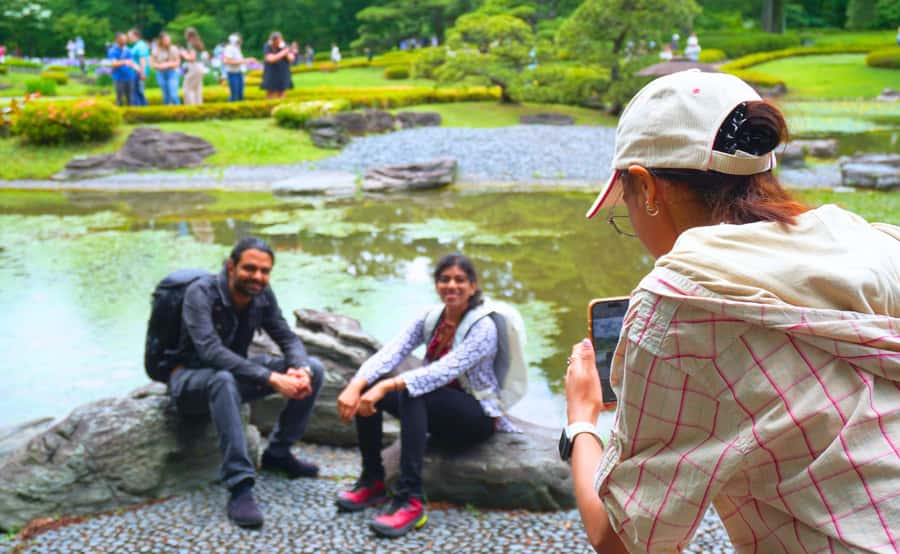
The gardens are the calm center of the walk. You stroll among oriental garden scenery while moving across the former palace grounds, with historic stonework and ruins nearby.
The appeal is the contrast. You can pause for photographs, then turn to a wall or foundation and hear about the people who once used the site. The gardens soften the scale of the former castle complex, while the ruins keep the visit tied to real events.
The tour also includes trees from different prefectures of Japan. This is a fine detail for anyone interested in the country beyond Tokyo. Rather than seeing the capital as a self-contained city, you get a small reminder of Japan’s regional identity within the palace grounds.
Do not expect a reconstructed castle interior. The main castle no longer survives, and the activity does not provide access to the inner palace. If you want grand rooms, imperial ceremonies, or a look inside the modern palace compound, this is not that visit.
What you get instead is an outdoor history walk through the former base of Edo Castle. That distinction is important when comparing this tour with palace photo stops or private imperial-area visits.
Same trip, a completely different kind of day:
- 1-Day Tokyo Bus Tour
★ 5.0 · 14,250 reviews - Tokyo: TOKYO SKYTREE® Admission ticket
★ 4.5 · 11,192 reviews - Tokyo: teamLab Planets TOKYO Digital Art Museum Entry Ticket
★ 4.6 · 9,779 reviews - Tokyo: Sumo Show Experience with Chicken Hot Pot and a Photo
★ 4.8 · 6,678 reviews
The barracks, koi, and best photo spots
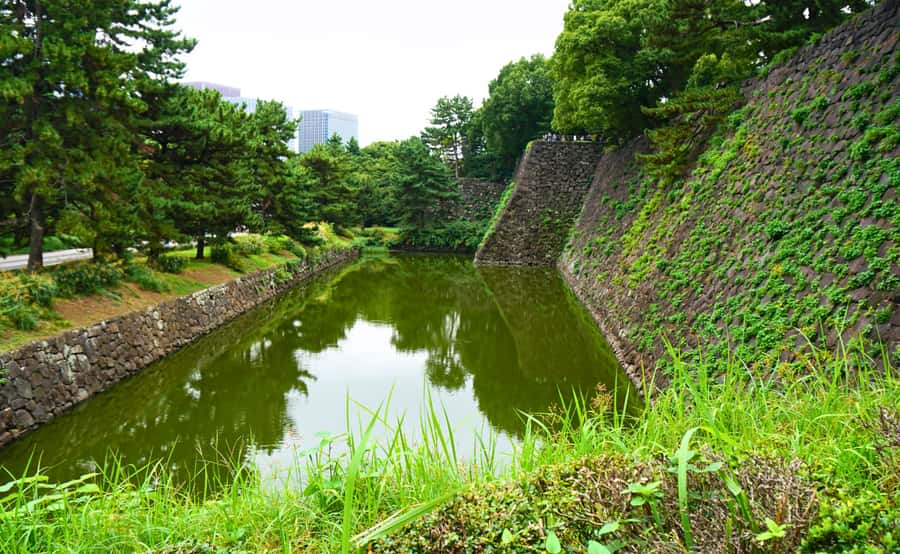
The former soldiers’ barracks add another human detail to the site. The castle was not only a residence or symbol of authority. It was also a working center with military functions and people supporting its daily life.
The special koi are one of the tour’s more unusual features. The information describes them as a unique breed found only here. They may not be the main reason to book, but they give the walk a specific detail to look for, especially if you enjoy gardens, ponds, and traditional Japanese design.
Your guide also points out good photo locations. Expect opportunities around the gardens, historic remains, gate areas, and ornamental features. The appeal is not a single famous viewpoint. It is the mix of stone, water, trees, and palace history within one compact visit.
Bring a camera, but leave room for listening. The best photographs here will mean more if you know what you are looking at.
Nicolas and the guide’s role
Nicolas is identified in the available material as a Franco-Japanese guide. His role appears to go beyond reciting dates. He explains the history of the site and the imperial family, while also answering questions about Japanese mythology, the Japanese language, and Japan more broadly.
That range can make a difference. The history of Edo Castle is easier to follow when you can stop and ask how a term is pronounced, how a myth fits into Japanese culture, or how the imperial family connects to the country today.
The strongest praise centers on the guide’s command of the subject and his willingness to discuss many topics. One description calls him a fountain of knowledge, while another points to the way he shared small secrets of the park. Those comments suggest an open, conversational style rather than a rigid speech.
Still, check the language. The product title says English guide, while the included details say French guide and list French as the language. Nicolas is described as Franco-Japanese, but that alone does not confirm an English-language tour. Ask Sunrise Adventure directly before booking.
Is $40 a fair price?
At $40 per person, this is not the cheapest way to enter a public garden. You are paying for interpretation, organization, and a guided historical walk rather than admission to a special indoor collection.
The value is strongest if you want Japan’s political history explained in place. The guide connects the castle ruins, soldiers’ barracks, vanished main structure, gardens, koi, and imperial family into one story. That can save you from wandering through attractive grounds without understanding their importance.
The price is less compelling if you only want photographs or a quiet garden stroll. The eastern gardens can be enjoyed without a paid guide, and this activity does not include entry to the inner palace.
For a first visit to Tokyo, I think the cost can be reasonable if history is high on your list and the language works for you. The small-group feel described by one participant also improves the value, since questions and conversation become part of the visit. Just remember that a small group is not guaranteed in the supplied details.
Weather, clothing, and walking comfort

This is an outdoor walking tour in good weather or bad. Wear clothing suited to the forecast, and choose comfortable shoes for walking across palace grounds and garden paths.
There is no promise of indoor shelter or a weather cancellation built into the description. That means a hot, wet, or cold day could change how much you enjoy the visit. Check the forecast and dress accordingly.
Smoking, drones, alcohol, drugs, littering, and skateboards are not allowed. These rules fit the formal character of the palace grounds, so pack lightly and keep the visit respectful.
The activity ends back at the starting point. You can then continue around Tokyo Station or Otemachi, but avoid scheduling something that requires a precise departure time unless the tour duration is confirmed directly. The provided details do not state how long the walking tour lasts.
Who should book this palace walk?
I would choose this experience if you want a readable introduction to the history of Japan and prefer learning while walking. It suits visitors who enjoy old foundations, gardens, political history, cultural questions, and small details such as regional trees or unusual koi.
It is also a good fit if you want to ask questions rather than listen silently. The experience described around Nicolas includes discussion of mythology, language, and the imperial family, so curious participants should get more from it than people seeking only a quick landmark stop.
Families with older children may appreciate the castle story and model, though no specific child policy is provided. History fans will likely find the former Edo Castle site more rewarding than a simple garden visit.
I would hesitate if you need guaranteed English, want access to the inner palace, dislike outdoor walking, or are mainly looking for a grand surviving castle building. The missing main castle is central to the experience, not a minor inconvenience.
The tour accepts cancellation up to 24 hours in advance for a full refund, and you can reserve now and pay later. Those terms give you some flexibility, but the language question still deserves an answer before you commit.
Should you book this Imperial Palace tour?
Book it if you want the eastern gardens explained through the story of Edo Castle and Japan’s changing political life. At $40, the guide is the main value, especially if you get a small group and a conversational visit like the one described with Nicolas.
Do not book it expecting entry into the inner palace or a preserved castle interior. Confirm the guide language first, since the information is inconsistent about English and French.
For the right visitor, this is a thoughtful way to see the Imperial Palace grounds: attractive, practical, and grounded in the history beneath your feet.
FAQ
Where does the Imperial Palace tour start?
Meet near the Starbucks at Wadakuramon Fountain Park, close to the fountain. The park is about a 5 to 10 minute walk from Tokyo Station or Otemachi Station.
Where does the activity end?
The tour ends back at the original meeting point near Wadakuramon Fountain Park.
Does the tour enter the inner palace?
No. The activity visits the eastern gardens and the former Edo Castle grounds, but it does not include access to the inner palace.
Is the guide English-speaking or French-speaking?
The title identifies an English guide, while the detailed information lists French as the tour language and includes a French guide. Confirm the language with Sunrise Adventure before booking.
What happens if I arrive late?
If you do not arrive within 10 minutes of the meeting time, the group may begin without you. Plan extra time to find the fountain and Starbucks.
Can I cancel for a full refund?
Yes. You can cancel up to 24 hours before the activity for a full refund. You can also reserve and pay later.
Just added around Tokyo
- Kawagoe Japanese Food Tour : Unagi Kaiseki and Sake near Tokyo★ 5.0 · 30 reviews
- Kawagoe 4hr Private Tour with Licensed Guide (Kawagoe Dep)★ 5.0 · 13 reviews
- Little EDO Sushi Making workshop in Kawagoe★ 5.0 · 18 reviews
- 【R34】Tokyo:Private Daikoku tour in Modified R34★ 4.9 · 92 reviews
- :Tokyo,Shibuya/ Pro Photography in Kimono / English-Friendly★ 5.0 · 26 reviews
- Tokyo:Celebrate Unique Japanese New Year Tradition Festivity★ 3.9 · 20 reviews
- Tokyo: Allstar Food Tour★ 4.7 · 29 reviews
- Tokyo: West-Side Cycling and Food Tour with Guide★ 5.0 · 37 reviews
Historical Tours, compared.
Imperial Palace and Shogun Historical Walking Tour
Our verdict →
World Heritage Kyoto & Nara Uji Authentic Matcha Experience
Our verdict →
Kyoto Gion: 2-Hour Geisha Culture & History Walking Tour
Our verdict →
Hiroshima Historical Walking Tour – Why A-Bomb was Dropped
Our verdict →
Yanaka Walking Tour: Historic and Traditional District of Tokyo
Our verdict →
Shinjuku Historical Walking Tour & Secret Backstreets
Our verdict →
Mt. Fuji Heritage Tour: Traditional Villages, Lakes & Shrine
Our verdict →Browse the lists this tour appears in