
Reviewed · SUMO EXPERIENCES
Tokyo: Family Sumo Workshop & Live Wrestling Show with Lunch
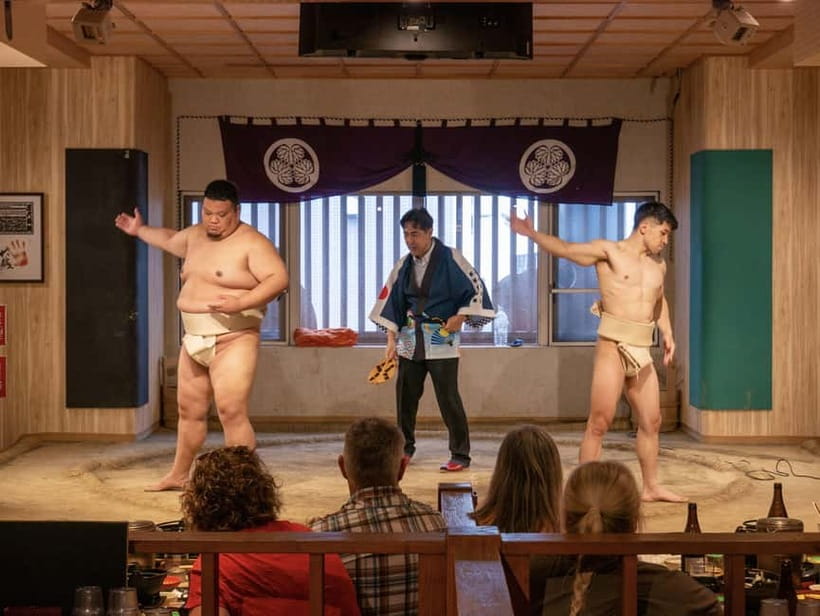
The best part of this Ryogoku sumo workshop is the close range. You are not peering at wrestlers from the back of a huge stadium. You are near the dohyo, hearing the slap of bodies, watching the rituals, and deciding if you want to step onto the clay yourself. I like the mix of real instruction and good-natured comedy, and I like that the lunch gives the sport a cultural context rather than ending the moment the wrestling stops.
I also appreciate the family setup. Children can watch safely, adults can film, and brave volunteers can put on a padded suit and challenge a former professional. The main consideration is that this is a short exhibition and workshop, not a full tournament, so serious sumo fans may want to pair it with a tournament visit or a trip to a morning stable practice.
Key points to know before you book
- Former pros in the ring: Learn basic sumo movements directly from wrestlers who competed professionally.
- Three simple drills: Try shiko leg stomps, teppo pushing practice, and suri-ashi sliding footwork.
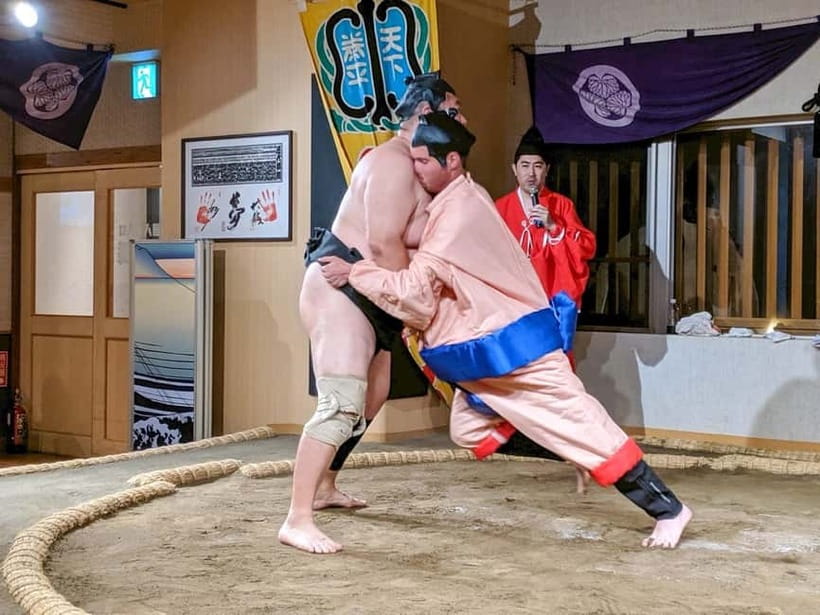
- A real physical challenge: Volunteer for a padded-suit bout against a much larger wrestler, or stay seated and film.
- A generous hotpot lunch: Mini chanko nabe includes meat and vegetables, with vegetarian, vegan, and allergy-friendly options arranged ahead.
- English guidance: The MC explains rituals, rules, training, and the cultural role of sumo in clear English.
- Good value at $60: The price covers the show, ring access, instruction, photographs, and lunch in a 105-minute session.
Why Ryogoku is the right place for a sumo workshop
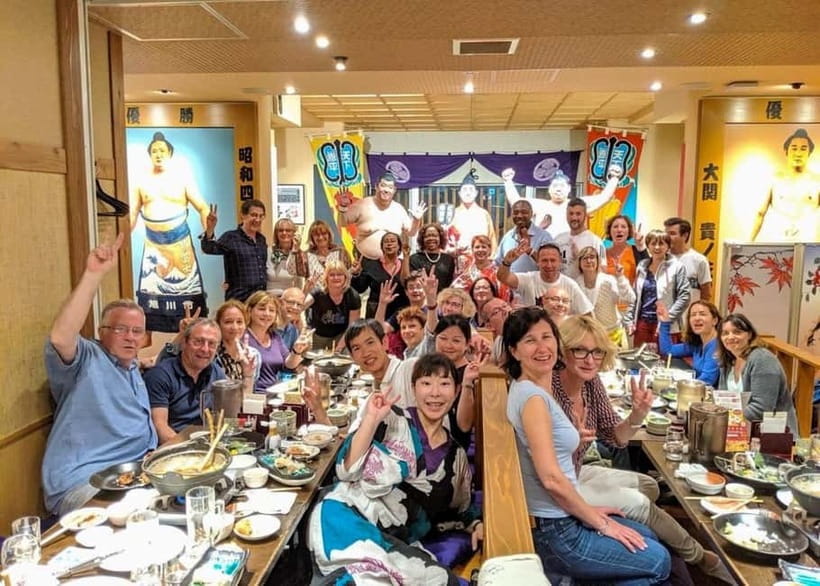
Ryogoku is Tokyo’s sumo neighborhood, and that setting matters. Sumo is not just a sport you watch for a few minutes. It carries its own customs, gestures, clothing, food, and strict rules of conduct. In Ryogoku, you are in the part of Tokyo most closely linked with that world.
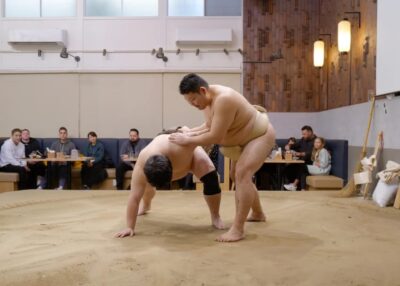
This activity brings the action into a smaller venue where you can see the wrestlers clearly. The format is friendly and theatrical, but the movements are not fake. You will see the strength behind the sport as the wrestlers perform training drills and a full-speed exhibition bout.
The English-speaking MC explains what you are seeing as it happens. You learn why wrestlers throw salt, what the shiko stomp represents, and how the pre-bout rituals prepare the competitors. That commentary is useful because sumo can look mysterious if you only see the striking and pushing.
You meet at the shop near the face-in-hole photo board. Look for the guide holding a smartphone showing AlvaJapan. The directions ask you to wait outside until 10:00 AM rather than entering early, so build that into your morning plan.
More Family Tours in Tokyo
- Ninja Experience (Family Friendly) at Samurai Ninja Museum TOKYO
★ 5.0 · 441 reviews - Samurai Sword Experience (Family Friendly)at SAMURAI MUSEUM TOKYO
★ 5.0 · 168 reviews - [1 Group Only] Tokyo Shinjuku Food Tour for Family
★ 5.0 · 147 reviews
The first hour: rituals, drills, and a full-speed bout
The opening 60 minutes are the heart of the experience. The wrestlers introduce the basic forms of sumo, then show how those movements connect to an actual bout.
Shiko, teppo, and suri-ashi
The first drills give you a useful sense of how difficult sumo training really is. Shiko is the familiar leg-lifting and stomping exercise. It looks simple until you try to control your balance, raise your leg, and bring it down with purpose.
Teppo is a pushing drill, traditionally practiced against a wooden post. Here, you learn the idea through guided practice. It helps explain how a wrestler develops power through the legs and hips instead of relying only on the arms.
Then comes suri-ashi, the sliding footwork used to keep the feet close to the ground. You remove your shoes before entering the ring and practice the movement under instruction. It is a small detail, but it changes how you understand the sport. Sumo is not simply two huge people charging forward. Balance, stance, timing, and foot position decide a great deal.
You do not need athletic training to take part. The ring drills are optional, and you can remain seated, watch, and record the action. That makes the session work for mixed groups, including families where one person wants to participate and another prefers to observe.
The demonstration match
After the drills, the wrestlers show you what the techniques look like at speed. Expect a sharp change in energy. The sound of bodies colliding is surprisingly powerful in an intimate venue, and the slap of a hand or foot gives the bout a physical edge.
The MC helps keep the demonstration understandable. You learn the basic rules and see how the pre-bout rituals lead into the match. The tone is light, but the wrestling itself gives you a real sense of force, agility, and control.
This is not a professional tournament match with a full-day program of bouts. It is an exhibition designed to teach and entertain. For most first-time visitors, that is a strength. You get explanations, direct contact, photographs, and a chance to ask questions rather than sitting quietly for hours trying to follow an unfamiliar sport.
More Sumo Experiences in Tokyo:
- Tokyo: Sumo Show Experience with Chicken Hot Pot and a Photo
★ 4.8 · 6,678 reviews - Tokyo: Sumo Show and Dining Experience
★ 4.8 · 2,742 reviews - the SUMO show
★ 5.0 · 1,960 reviews - Tokyo Shinjuku Sumo Show & Experience with Photo
★ 5.0 · 1,750 reviews
Stepping into the dohyo
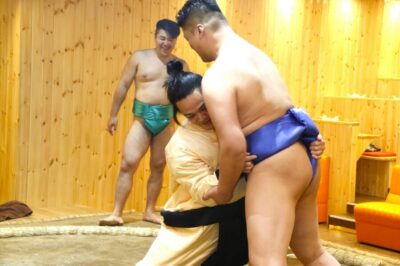
The most memorable choice comes after the demonstration. You can enter the ring and try the movements, or volunteer for a short challenge against a former wrestler.
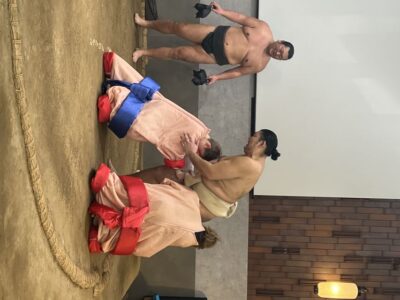
For the challenge, you wear a padded sumo suit. The extra padding keeps the contest safe and turns it into a comic spectacle. The wrestler is still vastly stronger, of course, and pushing a 160-kilogram opponent out of the ring is not a realistic goal. The fun is in feeling the difference between your effort and the wrestler’s controlled resistance.
Several people describe the bout as the moment that made the activity special. That makes sense. Watching sumo explains the sport, but trying to move a former professional gives you a quick, unforgettable lesson in weight and balance.
You should be in good health if you volunteer. Loose sportswear is recommended, and shoes come off before you enter the ring. Do not feel pressured to participate. Sitting ringside, filming, and cheering can be just as enjoyable, especially for younger children or anyone with mobility concerns.
Parents may film, and there is free photo time with the wrestlers. Bring your own phone or camera. The photo session is a useful chance to slow down after the noisy bouts and get a family picture that is more personal than a standard attraction photo.
The chanko lunch explains the wrestler’s daily life
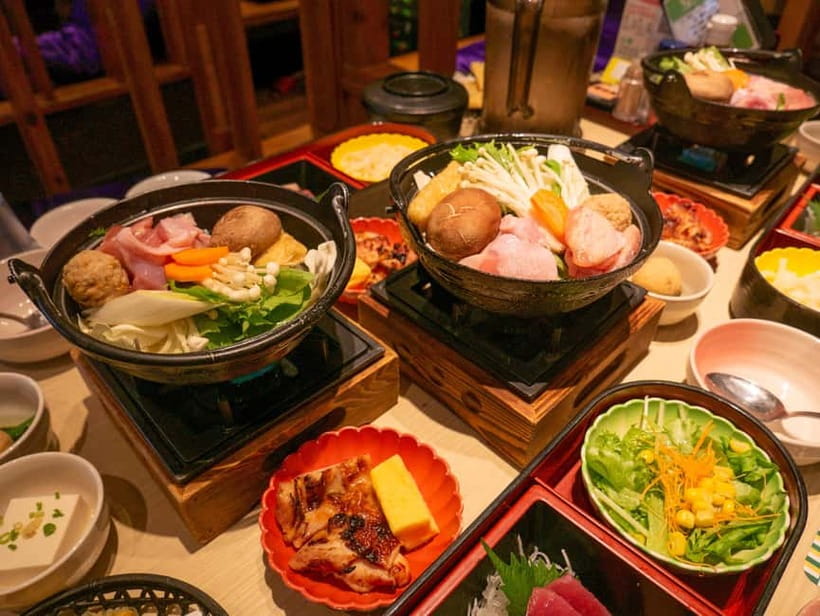
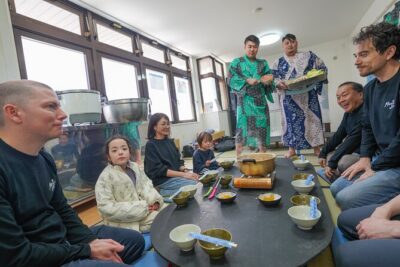
The final 60 minutes focus on food. You sit down for a mini chanko nabe, the hotpot associated with sumo wrestlers. The meal contains broth, vegetables, and protein, and it is served hot after the physical demonstration.
The portion is described as hearty, and you may want to avoid a large breakfast. Several sessions have left people surprised by how much food is served. This is not a tiny tasting portion meant to be finished in two bites.
The meal also adds useful context. Chanko is not presented as a novelty dish for tourists. It is connected to the daily routine that supports a wrestler’s body and training. Your host explains the role of the hotpot and why it is such a practical meal for a sumo stable.
The food has been one of the strongest parts of the experience. It is filling, familiar enough for many children, and social in a way that suits a family activity. The lunch also gives you time to ask questions after the more active part has ended.
Dietary planning is important. Vegetarian, vegan, halal-style requests, and allergy-friendly meals can be arranged, but you must give notice at least 48 hours in advance. The venue does not hold official Halal certification. It can avoid pork and alcohol, but it cannot promise strict protection from cross-contamination, so people with severe allergies or strict dietary requirements should ask before booking.
A good family activity, with a few limits
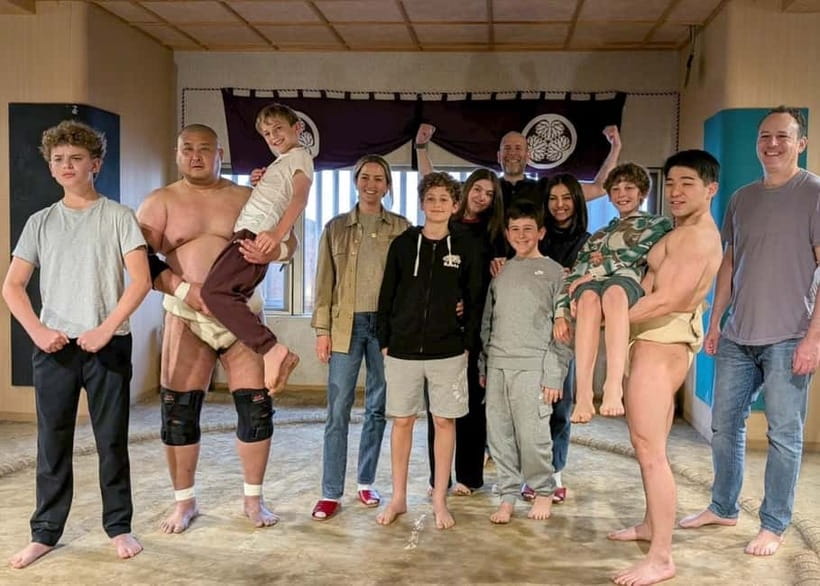
This workshop is built for families. Children can watch the wrestlers, join simple drills, and laugh at the padded-suit challenges. The hosts use humor and clear explanations, which helps younger visitors stay interested during the cultural portions.
The activity is also suitable for adults traveling without children. Solo visitors can join the group, cheer for other volunteers, and take part themselves. The format encourages interaction, so you are not left alone simply because you did not arrive with a large party.
The age and meal rules need attention. Children under five do not receive meals under the child rate. If a child under five needs lunch, book that child at the adult rate. Children aged six and older cannot use the child rate.
Wheelchair access is listed, but ring drills still involve entering the dohyo and removing shoes. If you need a specific accommodation, confirm the details before booking rather than assuming every activity will work exactly as shown.
The main limitation is the group format. The event may not be held if the minimum number of participants is not reached. If attending is a fixed priority, the private reservation option is the safer choice.
Is $60 a fair price?
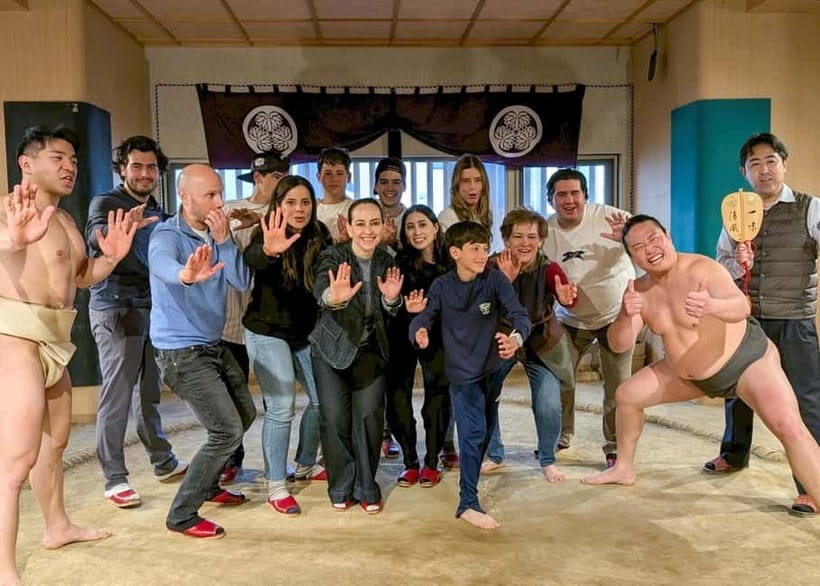
At $60 per person, this is a strong value for a 105-minute Tokyo activity. The price includes admission, an English-speaking host, former professional wrestlers, ring access, training, the padded challenge equipment, photo time, and lunch.
The value is not only in the number of inclusions. You receive several different experiences in one morning: a cultural explanation, a live demonstration, physical participation, personal photographs, and a Japanese meal linked to the sport. Buying those pieces separately would be difficult.
Still, you should know what you are paying for. This is not a ticket to a major sumo tournament, and you will not see a full schedule of official bouts. It is a compact introduction with a strong entertainment element. If your goal is to study professional sumo in a formal setting, look for a tournament or training-stable visit instead.
For a family, the price works especially well because adults and children can share the same activity without splitting up. For a solo visitor, the price remains reasonable if you are interested in trying the ring and eating chanko. If you only want to take a quick photograph with a wrestler, it may offer more than you need.
Practical planning for your morning
The activity lasts 105 minutes, with about 60 minutes devoted to the ring show and about 60 minutes to lunch. The timing gives you room to add another Ryogoku sight afterward, but you should not plan a rushed connection immediately after the session.
Wear loose sportswear if you plan to enter the ring. You will remove your shoes, and comfortable clothing makes the drills and padded challenge easier. If you prefer to observe, ordinary casual clothing is sufficient.
Bring a phone with enough storage for video. The demonstration, audience challenges, and group photographs create plenty of moments worth recording. Ask before filming close-up footage if you are unsure, but the activity specifically allows audience members to film.
Use the guide’s WhatsApp contact if you get lost. Follow the meeting instructions carefully, especially the request to wait in front of the store until 10:00 AM. There is a separate entrance for the activity, which helps you avoid unnecessary waiting.
Cancellation is flexible up to 24 hours before the start time, and you can reserve now and pay later. That is useful in Tokyo, where weather, jet lag, and changing plans can affect a morning schedule.
Who should book this sumo experience?
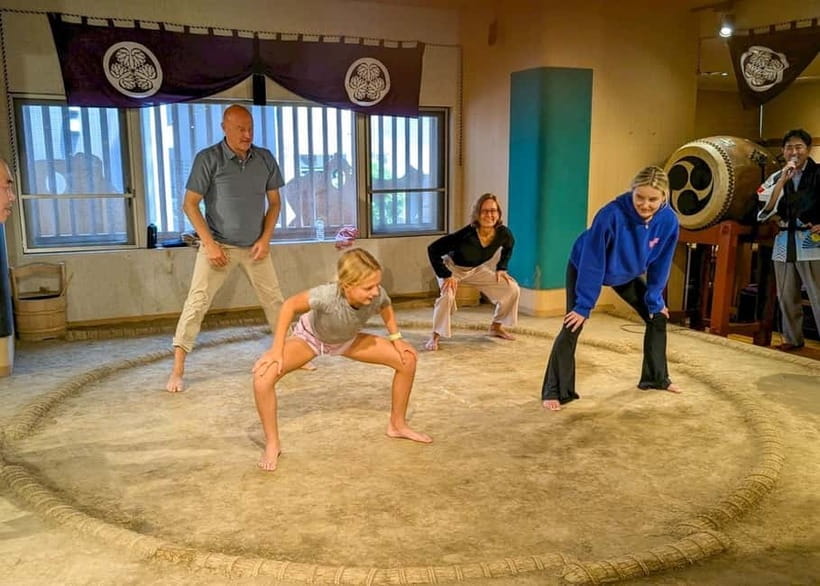
I would choose this workshop if you want a hands-on introduction to Japanese culture rather than a passive photo stop. It is particularly good for families, first-time visitors, and anyone who wants a clear explanation of sumo without committing to a full tournament day.
You should also book it if food matters to your sightseeing. The chanko lunch is not an afterthought. It gives the morning a satisfying finish and explains how sumo wrestlers eat and train.
Think twice if you dislike audience participation, loud demonstrations, or staged humor. You can remain seated, but the activity is designed to be lively and interactive. Serious sumo followers may find the 105-minute format too short, especially if they want official competition rather than an exhibition.
Should you book it?
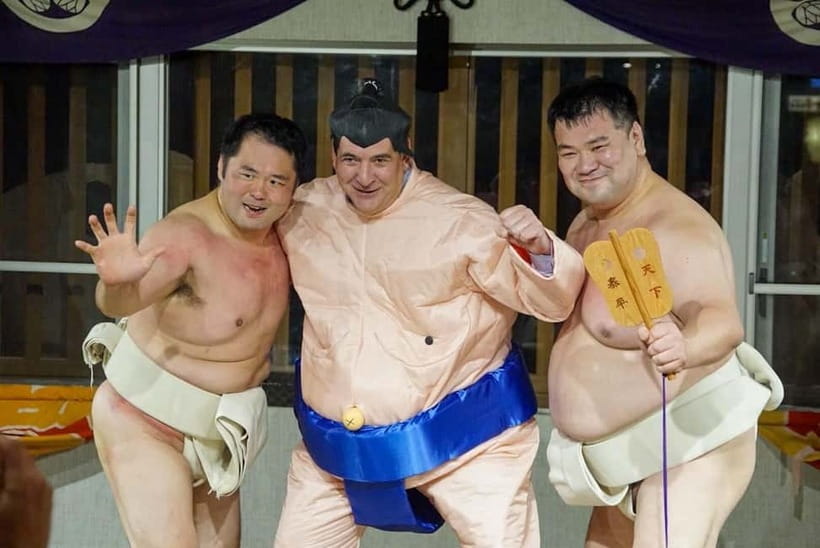
Yes, if you want a friendly, active, family-ready way to understand sumo in Ryogoku. The best value comes from taking part in at least one drill, asking questions, and staying for the chanko lunch.
Book with advance notice for dietary needs, choose the private option if the minimum group size worries you, and do not feel obliged to wrestle. Watching from the side is fine. But if you are healthy and willing to wear the padded suit, stepping into the dohyo will probably be the story you remember most from this Tokyo morning.
FAQ
How long does the sumo workshop last?
The activity lasts 105 minutes. The ring demonstrations and training take about 60 minutes, followed by about 60 minutes for the chanko hotpot lunch.
Is the workshop conducted in English?
Yes. The instructor and MC provide English guidance, with explanations of sumo rituals, training, rules, and history.
Can I enter the sumo ring?
Yes. Ring access is included, and you can try shiko, teppo, and suri-ashi. Ring drills are optional, and spectators may remain seated and film.
Can I wrestle a former professional sumo wrestler?
Yes. Volunteers can wear a padded sumo suit and challenge a former wrestler. Participants should be in good health before joining the challenge.
Is lunch included?
Yes. The price includes a mini chanko hotpot lunch with vegetables and protein. Alcoholic drinks and additional menu items cost extra.
Can dietary requirements be accommodated?
Vegetarian, vegan, and allergy-friendly options can be arranged with at least 48 hours’ notice. Pork and alcohol can be excluded for halal-style requests, but the venue does not hold official Halal certification and cannot guarantee avoidance of cross-contamination.
Where do I meet the guide?
Meet in front of the face-in-hole photo board at the shop. Look for the person holding a smartphone displaying AlvaJapan, and wait outside until 10:00 AM as instructed.
More Shows & Performances in Tokyo
- Tokyo: Samurai Restaurant Show Ticket with 2 Drinks
★ 4.5 · 1,307 reviews - Tokyo: Sumo Show and Experience in Shinjuku
★ 4.8 · 1,001 reviews - Tokyo:Luxury Sumo Show Experience & Japanese cuisine & Drink
★ 4.7 · 577 reviews - Tokyo Bay Yakatabune Dinner/Day Cruise with Japan Show and Drinks
★ 4.5 · 473 reviews
Just added around Tokyo
- Kawagoe Japanese Food Tour : Unagi Kaiseki and Sake near Tokyo★ 5.0 · 30 reviews
- Kawagoe 4hr Private Tour with Licensed Guide (Kawagoe Dep)★ 5.0 · 13 reviews
- Little EDO Sushi Making workshop in Kawagoe★ 5.0 · 18 reviews
- 【R34】Tokyo:Private Daikoku tour in Modified R34★ 4.9 · 92 reviews
- :Tokyo,Shibuya/ Pro Photography in Kimono / English-Friendly★ 5.0 · 26 reviews
- Tokyo:Celebrate Unique Japanese New Year Tradition Festivity★ 3.9 · 20 reviews
- Tokyo: Allstar Food Tour★ 4.7 · 29 reviews
- Tokyo: West-Side Cycling and Food Tour with Guide★ 5.0 · 37 reviews
Sumo Experiences, compared.
Sumo Show Experience with Chicken Hot Pot and a Photo
Our verdict →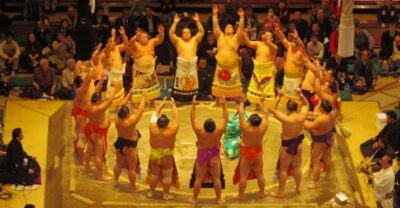
Authentic Sumo Experience in Tokyo: Enter the Sanctuary
Our verdict →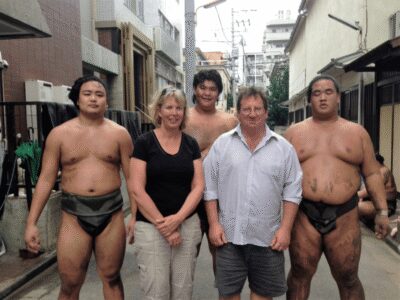
Browse the lists this tour appears in