
Reviewed · TRADITIONAL CRAFTS
Tokyo: Chopstick Making Workshop with Artisan
Making your own chopsticks is a small-scale Tokyo experience with real hands-on appeal. At Hashiyuki Chopsticks Shop & Workshop, you shape wood with traditional tools, smooth it by hand, and leave with a pair that carries your own fingerprints, choices, and perhaps a name engraved on the handle.
I like two things here: the finished chopsticks are useful, not just decorative, and the workshop gives you a quiet break from Tokyo’s fast pace. Staff members such as Angie, Yuki, Chihiro, and Victoria are patient and encouraging, even when your carving needs a rescue. The main consideration is time. One hour can feel tight, especially when the room is full or you want careful finishing.
Key points at a glance
- Choose your wood: Three wood types are included, with more than 10 options available if you want to pay extra for a higher-grade choice.
- Make the pair yourself: You shape, shave, sand, and finish the chopsticks with guidance from English- or Japanese-speaking staff.
- Add a personal touch: Optional engraving costs extra and turns the finished pair into a stronger gift.
- Small-group setting: The workshop accepts up to 10 people, though the compact room may feel busy at full capacity.
- Good value at $16: The price includes the activity, tools, materials, and your personalized chopsticks.
- Flexible booking: You can cancel up to 24 hours before the session for a full refund and reserve without paying immediately.
A quiet craft stop in Tokyo’s Taito district
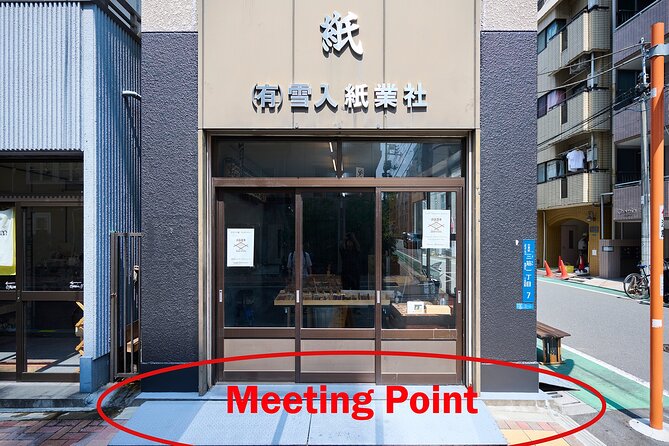
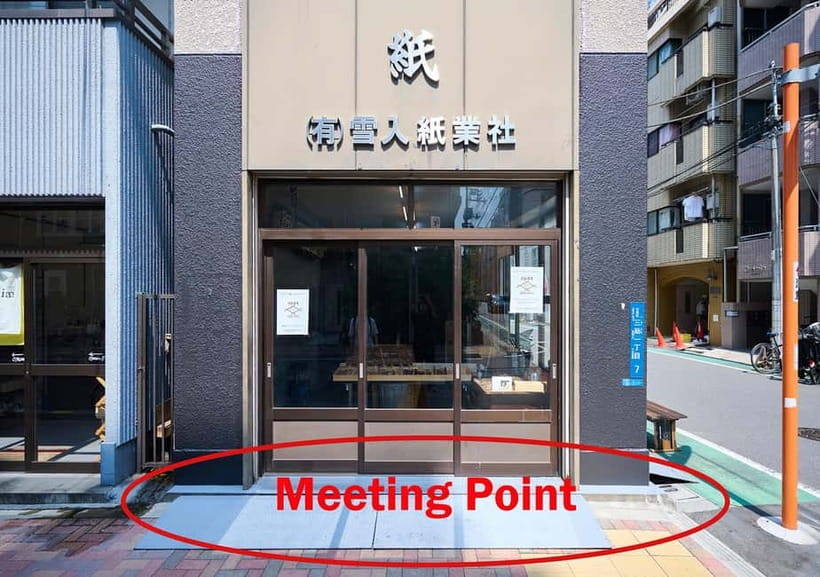
The workshop is at Hashiyuki Chopsticks Shop & Workshop, 1-7-1 Misuji, Taito-ku, Tokyo. The meeting point is also identified by the Japanese name 雪入紙業社, or Yukiirishigyosya, so keep both names handy when finding the shop.
This part of Taito is known for old-fashioned craft businesses and working neighborhoods rather than Tokyo’s biggest shopping streets. That setting matters. You are not simply buying a souvenir from a shelf. You are spending time with an everyday Japanese object and learning how a craftsperson brings it into usable form.
The location is at coordinates 35.7032168, 139.7853879. Check the exact starting time when you book, since the activity runs for about one hour and sessions have set availability.
More Craft Workshops in Tokyo
- Tokyo Sumo Experience: Chanko & Mochi with a Former Pro
★ 4.8 · 567 reviews - Kintsugi Experience: Art of Golden Joinery in Tokyo
★ 5.0 · 467 reviews - Tokyo Chopstick Making Workshop with Artisan
★ 5.0 · 466 reviews
Choosing wood before the work begins
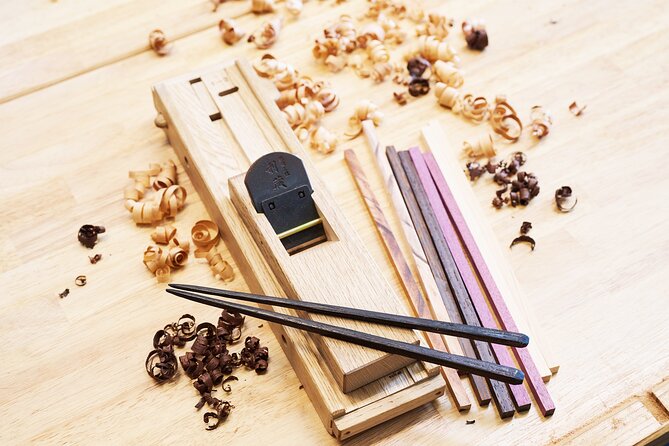
You can choose from more than 10 types of wood. Three choices are included in the base price, while higher-grade woods cost extra. This gives you a useful choice: keep the experience at the advertised price, or spend more if the material itself matters to you.
The wood selection is not just decoration. Different woods can vary in color, grain, feel, and hardness. Staff explain the differences, helping you pick something that suits your taste rather than asking you to guess from unfamiliar names.
At $16 per person, the included wood is enough to make the activity good value. You receive instruction, use the tools and materials, and take home the finished chopsticks. If you add premium wood or engraving, your final cost rises, but those extras can make sense if you are creating a gift.
I would decide on your budget before arriving. The basic workshop already gives you a personal souvenir. The additional wood options are best for someone who enjoys the material as much as the finished object.
Shaping the chopsticks with traditional tools
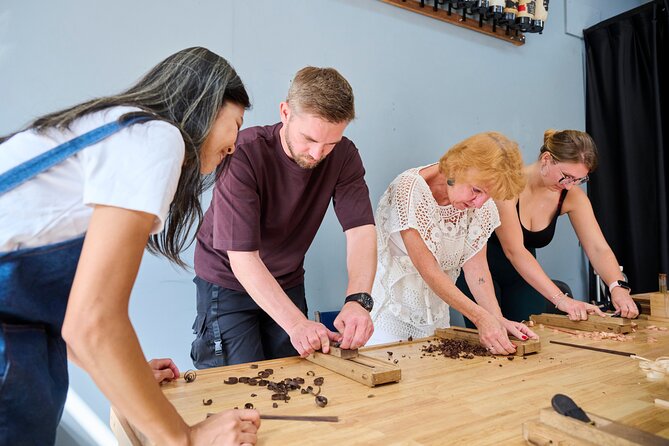
The first practical stage is shaping. You work on wooden blanks and learn how to remove material carefully. Staff demonstrate how to hold and use the tools, then stay nearby while you work.
This is beginner-friendly, but it is not entirely passive. You need to pay attention to pressure, direction, and symmetry. The aim is to create two chopsticks that look and feel like a pair, not simply sand two random pieces of wood.
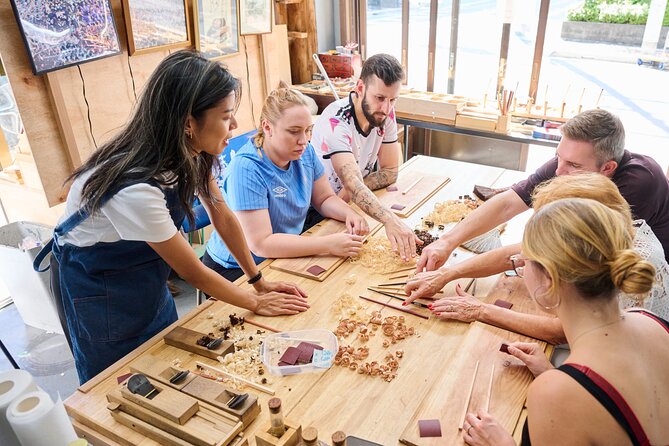
That small challenge is part of the fun. The task is simple enough for first-time makers, yet active enough to keep your hands busy. Staff can correct mistakes and help you get back on track. Several instructors, including Angie, Yuki, Chihiro, and Victoria, are praised for patient guidance and clear explanations.
The workshop can suit a family, a couple, a group of friends, or someone visiting alone. One family completed the activity with children and adults ranging from age 8 to 42. That gives you a good sense of the difficulty: children may need closer help, but the process is not limited to skilled adults.
Sanding turns rough wood into a usable pair
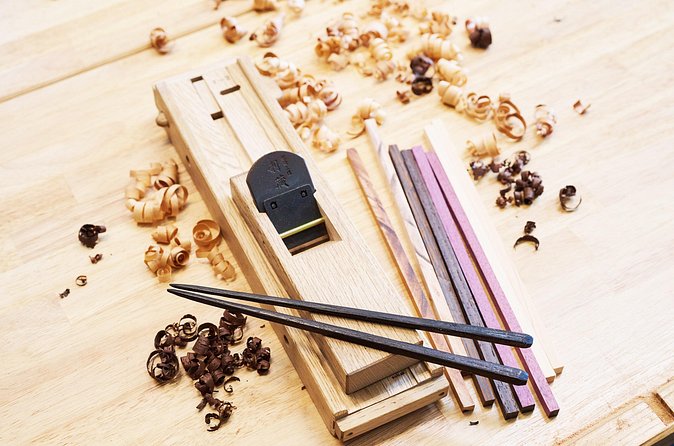
After shaping, you smooth the surface. Sanding sounds easy, but it is where the chopsticks begin to feel like a finished object rather than a craft project.
You work along the grain and pay attention to rough spots. The goal is a comfortable surface that feels natural in your hand. Staff explain how to improve the result and can point out areas you may have missed.
This stage is calm and repetitive in a good way. It gives you a break from sightseeing and screens, with a clear task in front of you. One person described the activity as peaceful, while another found it challenging without becoming stressful. That balance is probably the workshop’s strongest feature.
You should not expect museum-level precision from a one-hour class. Your pair will carry small signs of your own work, which is exactly why it makes a better souvenir than a mass-produced set. If you want a perfectly uniform finish, you may notice the limits of the short session. If you like objects with a story, the handmade quality is a plus.
Same trip, a completely different kind of day:
- 1-Day Tokyo Bus Tour
★ 5.0 · 14,250 reviews - Tokyo: TOKYO SKYTREE® Admission ticket
★ 4.5 · 11,192 reviews - Tokyo: teamLab Planets TOKYO Digital Art Museum Entry Ticket
★ 4.6 · 9,779 reviews - Tokyo: Sumo Show Experience with Chicken Hot Pot and a Photo
★ 4.8 · 6,678 reviews
Learning why chopsticks matter in Japan
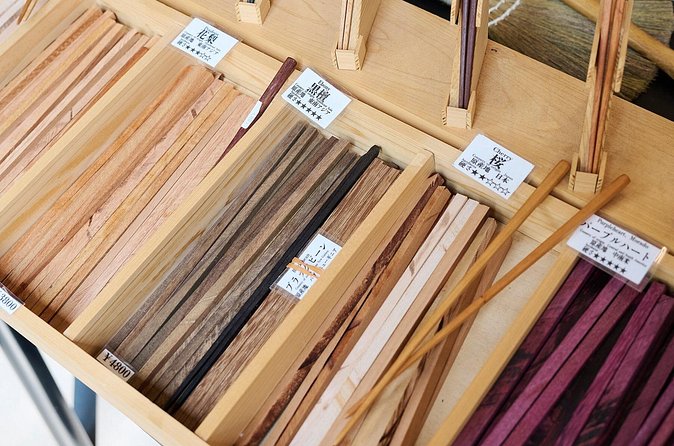
The session also explains the cultural importance of chopsticks in Japan. This adds meaning to an object you may otherwise treat as a simple utensil.
Chopsticks are part of daily life, but the workshop presents them as an example of Japanese care for ordinary things. You learn about the wood and the making process while handling the finished item yourself. That connection helps you notice the design and workmanship the next time you use chopsticks at a meal.
The cultural discussion is built into the hands-on work rather than presented as a long lecture. That makes it easy to follow, especially if you are more interested in making than listening. Staff speak English and Japanese, and English-speaking assistance is available throughout the activity.
Names such as sensei are used warmly for the instructors in the workshop setting. The staff’s approach is friendly and personal, with time for questions and casual conversation. One instructor even gave a ramen recommendation, a useful bonus if you are planning lunch nearby.
Finishing, engraving, and wrapping your souvenir
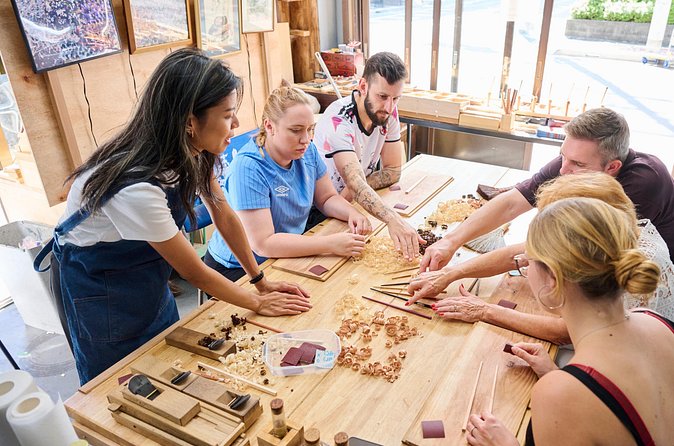
Once the shaping and sanding are complete, you can finish the chopsticks and inspect the result. The pair is wrapped beautifully, so you can use it yourself or give it as a gift.
Engraving is an optional extra. One participant particularly liked adding a name and recommended spending an additional ¥1,000 for the service. This is worth considering if you are making a present for a partner, child, friend, or family member.
The engraving also solves a common souvenir problem: a handmade object can feel personal, but a name makes the purpose even clearer. You might engrave your own name, a recipient’s name, or another short personal detail if the workshop allows it. The supplied information confirms the additional cost, but not the full range of engraving choices, so ask staff before deciding.
The finished chopsticks are ready to take home the same day. That is important for a short activity. You do not have to arrange later delivery or return to the shop.
Why the one-hour limit matters
The advertised duration is one hour. Many people finish within that window, but the pace depends on the group size, your comfort with the tools, and how carefully you want to sand.
A full session can include choosing wood, learning the technique, shaping, sanding, finishing, and arranging engraving. At a quiet time, the process may feel relaxed. At a busy time, you may feel pressure to keep moving.
One booking at 9 a.m. had only two people, which made the small setting especially comfortable. By contrast, a full group of about 10 people with only two staff members can create a tighter rhythm. Groups may not all begin at exactly the same point, so instructors may need to move quickly between participants.
If you are a perfectionist, allow yourself a mental cushion. You may be able to finish in 30 minutes if you work quickly, but the point is not to race. When choosing a time, consider a less crowded session if the schedule gives you that option. The morning is not automatically best, since one person found the timing a little rushed during a busy session.
The value of a $16 handmade souvenir
At $16 per person, this is one of the more affordable craft activities in Tokyo. The price includes the workshop, tools, materials, three wood choices, instruction, and your personalized chopsticks.
You are paying for more than a souvenir. You receive an hour of guided activity, a small lesson in Japanese craft, and an object you can use. That makes the price especially fair for someone who wants to avoid buying another anonymous keychain or printed trinket.
The value changes if you choose premium wood or engraving. Those extras are not included, so check the additional cost before committing. Engraving at ¥1,000 is a reasonable add-on for a gift, but it is not necessary for a satisfying visit.
For families, the per-person cost can add up. Still, the activity works across a wide age range, and each person makes an individual item. That is often better value than a single shared souvenir, particularly when everyone wants to take home something different.
Who will enjoy this workshop most
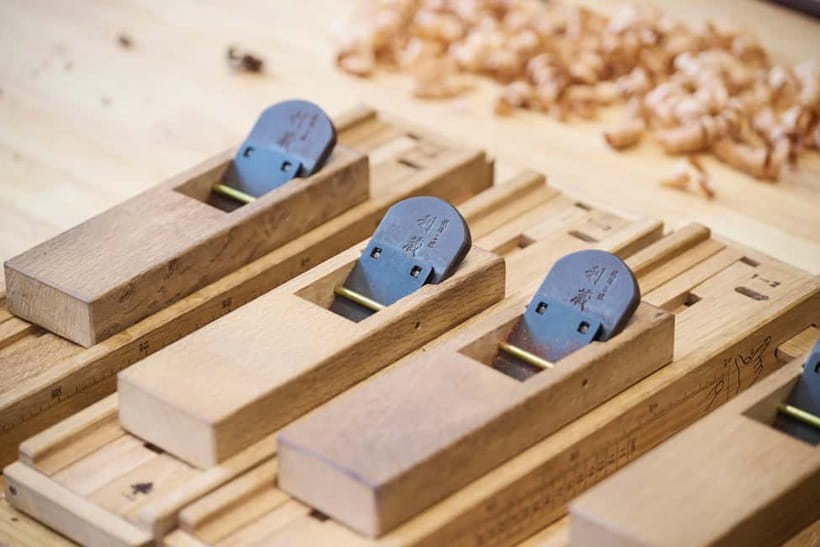
I would recommend this experience to you if you like practical crafts, small local businesses, and souvenirs with a personal connection. It is also a good choice when you need a quieter hour between larger Tokyo sights.
It suits:
- First-time craft participants who want clear instruction
- Families with older children who can follow tool guidance
- Couples looking for a shared activity
- Solo visitors who enjoy making something with their hands
- Anyone seeking a useful gift from Japan
- Visitors who want English-language support
The workshop may be less suitable if you want a long, slow craft class with extensive individual attention. The session is short, and the room can feel crowded with 10 participants. It is also not ideal if you want to sit back and watch a demonstration without doing the work yourself.
The activity is wheelchair accessible, which is useful to know when comparing small craft venues. Since the space is compact, you may still want to confirm any specific access needs when booking.
Booking, cancellation, and practical planning
The workshop offers free cancellation up to 24 hours in advance for a full refund. You can also reserve now and pay later, which helps if your Tokyo schedule is still changing.
The group limit is 10 people. That keeps the class smaller than a large bus-style activity, but a full session may still feel active in the compact room. If personal guidance matters most to you, choosing a time with fewer bookings can improve the experience.
Staff speak English and Japanese. The individual instructors vary, but the names connected with the sessions include Angie, Yuki, Chihiro, Victoria, Kaana, Tomo, and Anthony. The consistent theme is direct help while you work, not a distant demonstration from across the room.
Plan to arrive with enough time to find the shop at 1-7-1 Misuji. The Japanese sign, 雪入紙業社, may be more useful than the English name if you are checking your location.
Should you book the chopstick workshop?
Book it if you want a low-cost, hands-on Tokyo experience that ends with something you can use. The strongest reasons are the friendly instruction, the chance to choose your wood, the relaxing pace when the room is not full, and the option to add engraving for a personal gift.
Think twice if you dislike small spaces, want a long craft lesson, or need plenty of time for fine finishing. The one-hour schedule works, but it can feel rushed when all 10 places are occupied and only two staff members are helping.
For most people, I would book it, especially at $16. Choose the standard wood if you want to keep costs down, ask about the premium options if material matters to you, and consider the ¥1,000 engraving if the chopsticks are meant for someone special. You will leave with a useful object and a better sense of the care behind an ordinary part of Japanese life.
FAQ
How long does the chopstick-making workshop last?
The workshop lasts about one hour. Some people may finish in around 30 minutes, but allowing the full hour gives you time to follow the instructions and finish the chopsticks.
How much does the experience cost?
The listed price is $16 per person. Three types of wood are included, while higher-grade woods cost extra. Engraving is also an optional additional service, reported at ¥1,000.
Where does the workshop take place?
The meeting point is Hashiyuki Chopsticks Shop & Workshop, 1-7-1 Misuji, Taito-ku, Tokyo. The location is also identified by the Japanese name 雪入紙業社, or Yukiirishigyosya.
Can I use English during the activity?
Yes. The workshop provides English-speaking staff, and the activity is offered in English and Japanese.
Is the workshop suitable for beginners and children?
Yes. The activity is designed for beginners, and one family completed it with participants ranging from age 8 to 42. Staff provide guidance while you shape and sand the chopsticks.
Can I cancel or change my booking?
You can cancel up to 24 hours in advance for a full refund. The activity also offers a reserve-now, pay-later option.
Just added around Tokyo
- Kawagoe Japanese Food Tour : Unagi Kaiseki and Sake near Tokyo★ 5.0 · 30 reviews
- Kawagoe 4hr Private Tour with Licensed Guide (Kawagoe Dep)★ 5.0 · 13 reviews
- Little EDO Sushi Making workshop in Kawagoe★ 5.0 · 18 reviews
- 【R34】Tokyo:Private Daikoku tour in Modified R34★ 4.9 · 92 reviews
- :Tokyo,Shibuya/ Pro Photography in Kimono / English-Friendly★ 5.0 · 26 reviews
- Tokyo:Celebrate Unique Japanese New Year Tradition Festivity★ 3.9 · 20 reviews
- Tokyo: Allstar Food Tour★ 4.7 · 29 reviews
- Tokyo: West-Side Cycling and Food Tour with Guide★ 5.0 · 37 reviews
Traditional Crafts, compared.
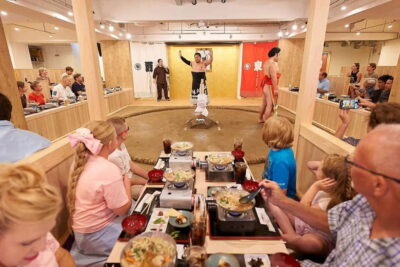
Tokyo Sumo Experience: Chanko & Mochi with a Former Pro
Our verdict →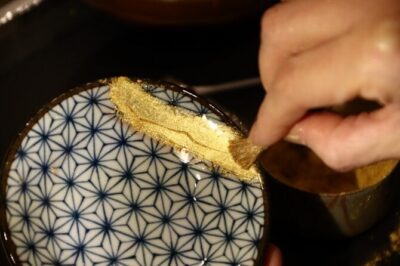
Kintsugi Experience: Art of Golden Joinery in Tokyo
Our verdict →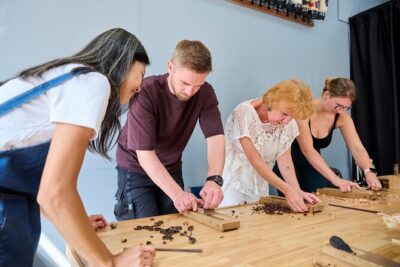
Matcha Making Experience with Mochi Sweets in Asakusa
Our verdict →
Authentic knife making experience at a blacksmith in Kyoto
Our verdict →
Roketsu dyeing experience: M course Roketsu Dyeing Experience
Our verdict →Browse the lists this tour appears in