
Reviewed · GEISHA & MAIKO EXPERIENCES
One Hour Geisha Show in Kyoto
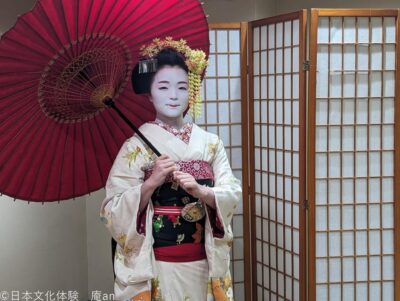
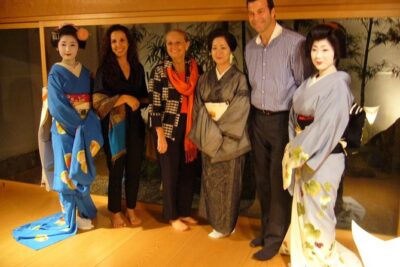
A real Maiko performance is the heart of this Kyoto experience. You sit close enough to notice the careful movements, ornate hair ornaments, white makeup, and the quiet control behind each dance. Afterward, you can ask questions, take photos, and join a traditional Japanese game.
I like the personal contact here, especially the open Q&A and photo time. I also like that guides such as Genki, Rin, Ai, and Taira Yoshino help explain what you are seeing instead of leaving you to guess at the meaning of the costume or movements.
The main consideration is that this is not an hour of nonstop dancing. The Maiko performs two short dances, usually about five minutes each, with conversation, tea, snacks, a game, and photographs filling out the visit. That format reflects the traditional style, but it is worth knowing before you book.
Key points to know before booking
- Two short dances, not a continuous one-hour show: The performance section includes traditional dances of about five minutes each.
- A rare chance to meet a real Maiko: Kyoto has only about 40 Maikos, according to the tour information.
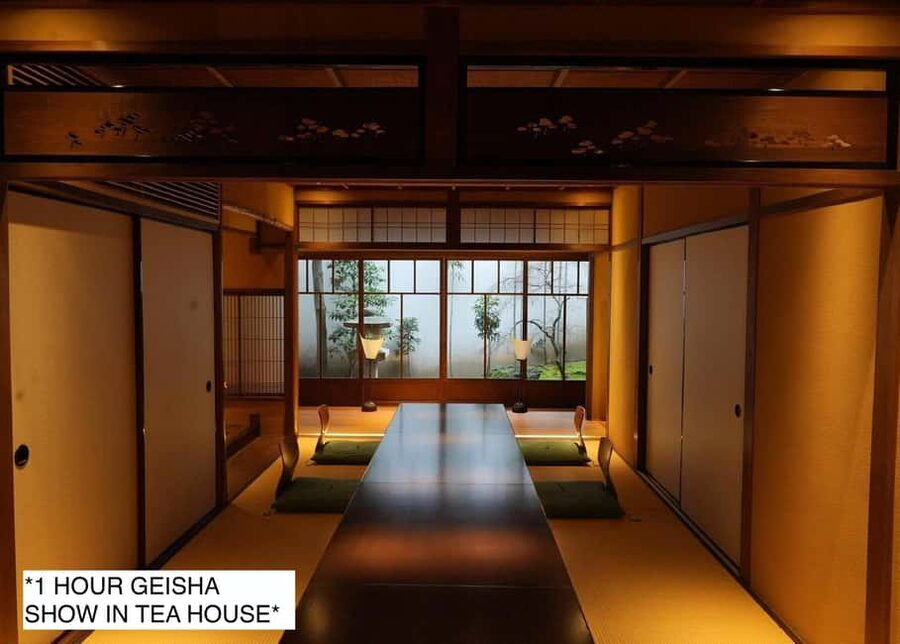
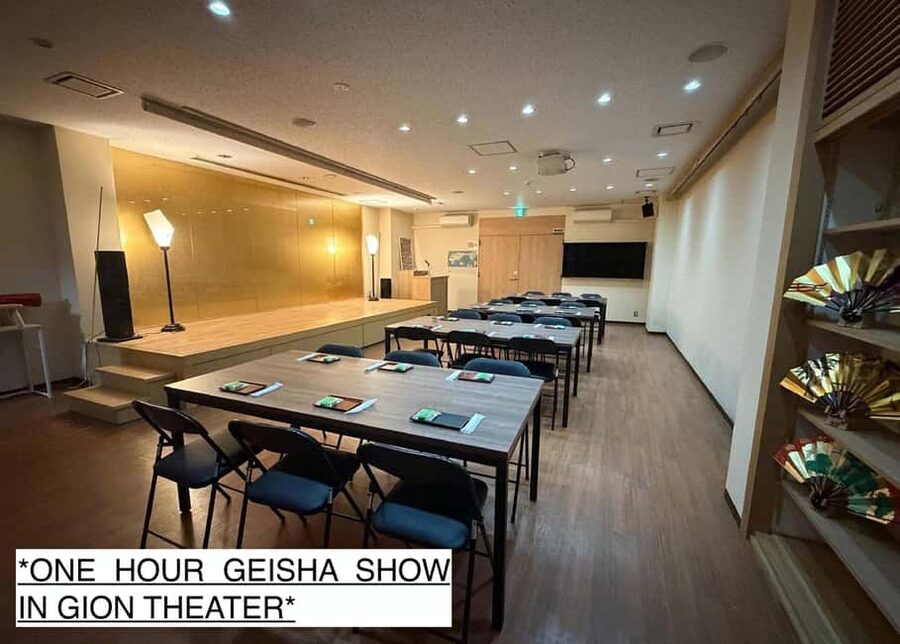
- Choose between two very different settings: The Tea House option takes place in a Kyo-Machi-ya, while the Gion Theater option uses a showhouse.
- The shrine visit belongs only to the Tea House option: That version can include about 30 minutes at Kitano Tenmangu Shrine with the Maiko.
- Photos and videos are welcome: You also get time for questions, a game, and a picture with the Maiko.
- Wear socks: Bare feet are not allowed, and the Tea House option is not wheelchair accessible.
Meeting a Maiko in Kyoto
Kyoto’s Geisha culture can be difficult to understand from a distance. You may see women in elaborate dress around Gion and wonder who they are, where they are going, and what their work involves. This experience gives you a more direct and structured introduction.
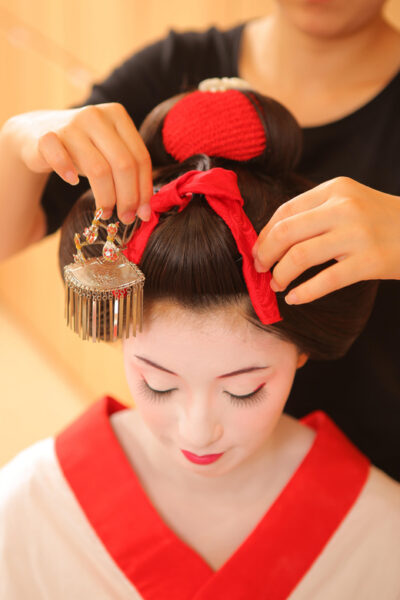
A Maiko is an apprentice Geisha. The Maiko you meet performs traditional dance and answers questions through an English or Korean-speaking guide. The guides help explain the layers of the outfit, the hair, the makeup, and the accessories, giving the visual details some meaning.
That explanation matters. Without it, the white face, long sleeves, hair ornaments, and formal posture can seem like a beautiful costume display. With it, you begin to see the discipline and etiquette behind the appearance.
The experience is also deliberately limited in scope. You are not watching a full evening of entertainment in a Geisha district. You are attending a short cultural presentation with a chance to speak with the performer afterward. I find that a better arrangement for most visitors because it gives you room to ask questions instead of simply sitting in silence.
The tour is run by GuideMe Japan, also associated with @guidemejapan on Instagram. Several guides have hosted the event, including Genki, Chihiro, Rin, Ai, and Taira Yoshino. Their role is important because the Maiko’s answers and the host’s explanations may need translation.
More Geisha Experiences in Kyoto:
- Kyoto Geisha Walking Tour: Gion District & Hidden Gems
★ 4.7 · 3,273 reviews - Kyoto: Gion Magical Night Walking Tour with Geisha Trivia
★ 4.9 · 2,393 reviews - Kyoto: Gion Geisha District Walking Tour – Stories of Geisha
★ 4.7 · 2,187 reviews
The Tea House and Gion Theater options
You need to read the booking choice carefully. These are not simply two meeting points for the same tour.
The Tea House option takes place in a Japanese Kyo-Machi-ya, or traditional Kyoto-style house. This setting gives the event a more residential and intimate feel. It is also the option connected with the walking visit to Kitano Tenmangu Shrine.
The Gion Theater option is held in a showhouse. It is wheelchair accessible, unlike the Tea House option, and it can accommodate up to 30 people. The theater may suit you if access is a priority or if you prefer a purpose-built performance space.
The Tea House option has a maximum of 23 people. That is still a group, not a private appointment, but it is small enough for a shared question period and organized photographs. The room can feel more personal, while the theater option offers a somewhat larger setup.
The shrine walk is not part of both versions. If Kitano Tenmangu Shrine matters to you, select the Tea House option rather than assuming it is included with every booking.
What happens during the performance
The program begins with an introduction to the Maiko. The host explains elements of her appearance, including the clothing, hair, makeup, and ornaments. This early explanation helps you notice details during the dance.
The Maiko then performs traditional dance. The formal dance portion is short, generally around five minutes per dance. Two dances are presented, and the arrangement may allow people on different sides of the table to see the performance clearly.
Do not expect constant motion or a stage show built around spectacle. The beauty is in the controlled gestures, measured pace, posture, and small changes in hand and head movement. The short length is part of the tradition. It preserves the sense of occasion and avoids turning the performance into a long public demonstration.
After the dances, the format becomes more conversational. The guide translates questions, and you can ask about the Maiko’s life and work, her training, her clothing, or the customs connected with the performance. The question period is one of the strongest parts of the experience because it turns a visual display into a human exchange.
You may also play a traditional Japanese game with the Maiko. Several people have identified it as Konpira Fune Fune, a game involving rhythm and quick hand movements. It is simple to understand but not always easy to win. That small moment of play changes the mood from formal observation to shared fun.
Photos and videos are welcome. You should have time for photographs with the Maiko after the game, and one visitor received a name sticker as a good-luck keepsake. That detail may not be guaranteed, but it shows the kind of personal touch that can occur during the session.
Tea, snacks, and the Kitano Tenmangu visit
Tea and traditional Japanese snacks are included. At the Tea House, you may be offered hot matcha or water, depending on your choice. Additional drinks and food are not included, so do not treat this as a meal.
The tea service adds a useful pause before or after the performance. It also helps you understand the setting as a traditional cultural gathering rather than a simple stage presentation. You should still arrive having eaten if you need a full meal.
The Tea House version can continue with about 30 minutes at Kitano Tenmangu Shrine. The Maiko joins this part of the visit, and the guide provides context along the way.
Kitano Tenmangu is a major Kyoto shrine, so the stop adds a second setting to the experience. Instead of spending the entire visit indoors, you get time to see the Maiko in a shrine environment and connect the performance with Kyoto’s religious and cultural spaces.
This portion also affects the total duration. The experience is listed as lasting from one hour to 105 minutes, depending on the option and schedule. The show itself is not a full continuous hour, and the shrine visit belongs to the Tea House option only.
More Shows & Performances in Kyoto:
- Kyoto Gion Cultural Walk & Geisha Show with Dining Options
★ 5.0 · 518 reviews - Kyoto Gion Cultural Walk & Geisha Show with Dining Options
★ 5.0 · 483 reviews - 1 Hour Geisha Show in Kyoto
★ 5.0 · 452 reviews - Kyoto: Samurai Kenbu Traditional Sword Dancing Show
★ 4.5 · 426 reviews
Why the $50 price can make sense
At about $50 per person, this is not the cheapest cultural activity in Kyoto. You are paying for a real Maiko performance, a live guide, translation support, tea, snacks, a question period, photographs, and, with the Tea House option, a shrine visit.
The value depends on what you want. If your priority is a long dance concert, this is not the right purchase. The actual dances are brief. If you want a close look at Maiko culture with access to explanations and personal questions, the price is easier to justify.
I particularly like that the program does not stop when the dancing ends. Many cultural shows give you a few minutes of performance and send you on your way. Here, the Q&A, game, and photographs provide much of the practical value.
The included guide also matters. A Maiko’s gestures and costume are not always self-explanatory, and the guide bridges that gap. Genki, Rin, Ai, Chihiro, and Taira Yoshino have all been praised for helping with translation and keeping the group involved.
The group size is another factor. With up to 23 people in the Tea House and 30 in the theater, you should not expect a private audience. Still, the group is limited enough for each person to have a reasonable chance to ask something and take a photograph.
Practical details that affect the experience
Wear socks. Bare feet are not allowed, which is especially important for the Tea House setting. Choose clean, comfortable socks that you will not mind being seen in.
Baby strollers are not allowed. Alcohol and drugs are also prohibited. These rules fit the formal setting and should not surprise you, but families with a stroller need to plan around them.
The Tea House option is not wheelchair accessible. The Gion Theater option is wheelchair accessible. Check the exact choice before paying, since the two versions have different facilities and routes.
The meeting point can vary by option. Listed locations include Umeyano, written as 梅乃 UMENO, at 302-2 Daikokucho near KOHYO Kamishichikenten, as well as Kitano Tenmangu Shrine. Your confirmation should identify the correct starting point.
Provide a phone number that works in Japan and on WhatsApp. This is used for communication before the activity, including clear instructions and last-minute contact. If you are booking for someone else, enter the actual participant’s number rather than an agency number.
The activity is offered in English and Korean. If the group contains several language groups, the explanations may take longer or feel less smooth. One participant found that different languages made some parts harder to follow. This is a fair possibility in an international group, though the guides work to keep communication moving.
Free cancellation is available up to 24 hours before the activity for a full refund. You can also reserve now and pay later, which helps if you are still arranging your Kyoto schedule.
Who will enjoy this most
I would recommend this to anyone who wants more than a quick photograph of a woman in traditional dress. You get a chance to hear explanations, ask questions, watch formal dance, and take part in a small game.
It suits first-time visitors who want a clear introduction to Maiko culture. It also works well for people who have already spent time in Gion and want to move beyond walking past tea houses and hoping to catch a glimpse of a performer.
The experience is a good fit for photographers because pictures and videos are welcome. It is also useful for families with older children who can sit quietly during the dance and take part in the question period. The game provides a lighter moment for anyone who finds a formal performance a little stiff.
It may not suit you if you want privacy, a long stage performance, or a full meal. The group can contain up to 23 or 30 people, and the Maiko is not performing continuously. Anyone over 95 is listed as unsuitable for the activity.
Should you book this Kyoto Maiko experience?
Book it if you value access and explanation as much as performance. The two short dances are beautiful, but the real strength is the full hour or so of contact around them: the introduction, translated questions, game, photographs, tea, and possible shrine visit.
Choose the Tea House option if you want the traditional Kyo-Machi-ya setting and Kitano Tenmangu Shrine. Choose the Gion Theater option if wheelchair access is important or you prefer the showhouse arrangement.
At $50, I see this as a worthwhile special-event purchase, not a bargain entertainment show. It offers a rare meeting with a real Maiko and gives you enough context to understand what you are seeing. Wear socks, confirm the meeting point, and book with realistic expectations about the short dances. Do that, and this can become one of the most distinctive cultural hours of your Kyoto visit.
FAQ
How long does the Maiko experience last?
The activity lasts from one hour to 105 minutes, depending on the option and schedule. The Maiko does not perform continuously for one hour.
How many dances are included?
The Maiko performs two traditional dances. Each dance lasts about five minutes.
Can I take photos and videos?
Yes. Photos and videos are welcome, and there is time to take a photograph with the Maiko.
Is the Kitano Tenmangu Shrine visit included?
The 30-minute Kitano Tenmangu Shrine session with the Maiko is included only with the Tea House option.
What is the difference between the two options?
The Tea House option takes place in a Japanese Kyo-Machi-ya and can include the shrine visit. The Gion Theater option takes place in a showhouse and does not include that walking visit.
Is the activity wheelchair accessible?
The Gion Theater option is wheelchair accessible. The Tea House option is not wheelchair accessible.
What languages are available?
Live guiding is available in English and Korean.
What should I wear or bring?
You must wear socks. Bare feet are not allowed. Baby strollers, alcohol, and drugs are not permitted.
More 1-Hour Experiences in Kyoto
- Ninja 1-hour Hands-on Lesson by Japanese master in Kyoto -Entry
★ 5.0 · 489 reviews - One Hour Geisha Show in Gion Kyoto
★ 5.0 · 59 reviews - Kyoto: Hands-on Takoyaki and Okonomiyaki Cooking (1 Hour)
★ 4.7 · 25 reviews - Ring making experience Completed in about 1 hour!
★ 5.0 · 141 reviews
Just added around Kyoto
- Sekka Cotton Furoshiki Class★ 5.0 · 19 reviews
- Kyoto Sword Experience – includes Museum Ticket/Ninja Experience★ 4.5 · 149 reviews
- Scenic Green Tea Fields of Hidden Kyoto & Local Tea Exp (Private)★ 5.0 · 32 reviews
- Secret Eastern Kyoto Biking Adventure★ 5.0 · 44 reviews
- Private Sake Tasting in Central Kyoto with Sake Sommelier★ 5.0 · 32 reviews
- Samurai School in Kyoto: Samurai for a Day★ 5.0 · 202 reviews
- Samurai Performance and Casual Experience: Kyoto Ticket★ 4.5 · 115 reviews
- SHIRAKAWA Japanese Culture Experiences with private English staff★ 5.0 · 16 reviews
Geisha & Maiko Experiences, compared.
Kyoto Geisha Walking Tour: Gion District & Hidden Gems
Our verdict →
Dinner with Maiko in a Traditional Kyoto Style Restaurant Tour
Our verdict →
Browse the lists this tour appears in